Vaulted Ceiling Installation and Structural Modification Costs
By Housey · Last reviewed 11th of May 2026
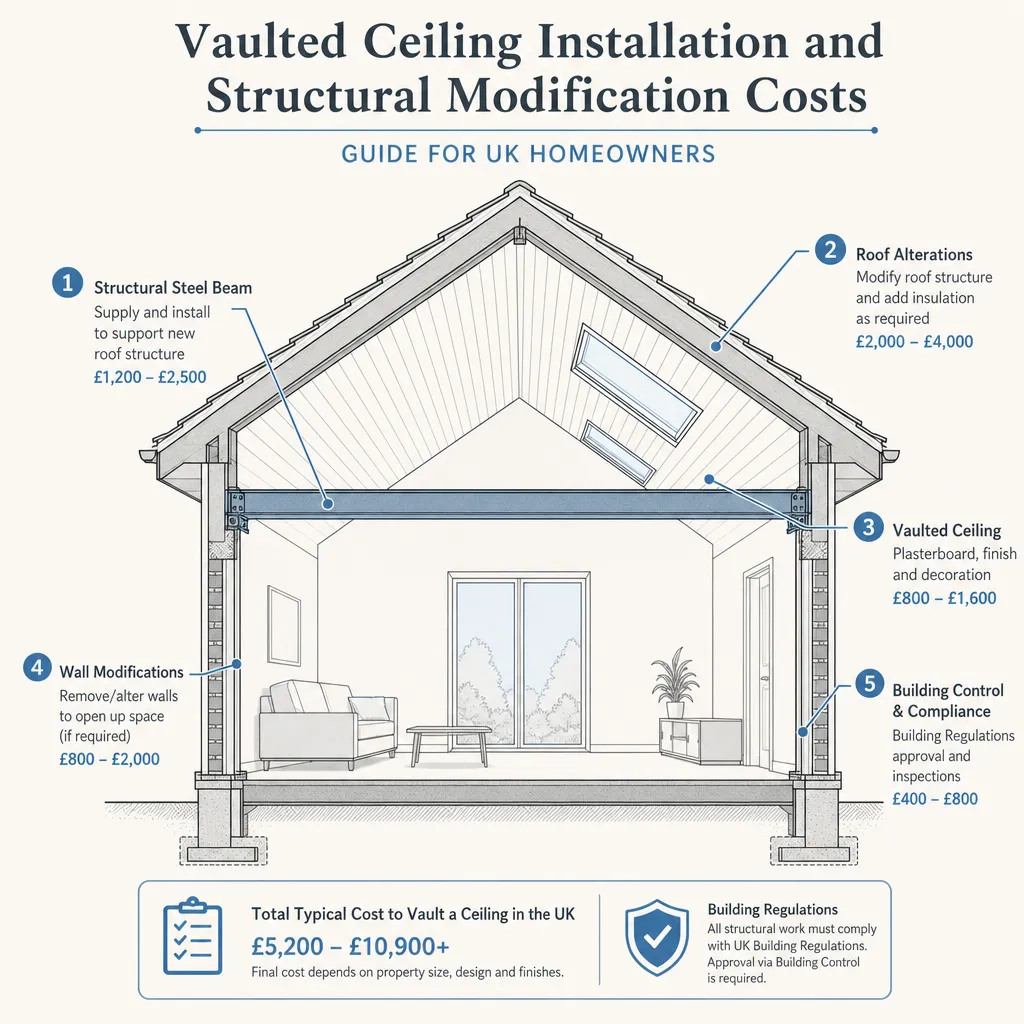
Vaulted Ceiling Installation and Structural Modification Costs
Vaulted ceilings — where the interior surface follows the pitch of the roof rather than sitting at standard joist level — have become a popular aspiration for homeowners extending to the rear, converting bungalows, or looking to transform a modest room into something more characterful. The appeal is understandable: more perceived volume, better natural light when roof windows are added, and a contemporary feel that is difficult to achieve by other means. What is less immediately obvious is the structural complexity involved: removing or modifying ceiling joists is rarely a simple operation and carries real risk if not properly engineered and approved before work starts.
Key points
- Ceiling joists in most UK homes act as structural ties, restraining the rafters from spreading outward under load and pushing the external walls apart; removing them without engineer-approved replacement is dangerous and constitutes a breach of Building Regulations Part A (structure).
- Building regulations approval is always required for structural roof modifications, covering Part A (structure), Part L (thermal performance), and Part F (ventilation); the full plans route is strongly advisable so calculations can be reviewed before work starts on site.
- Indicative UK costs for a vaulted ceiling conversion range from approximately £8,000 to £25,000+ for a single room (Indicative UK costs, last reviewed 2026-05-11); truss-rafter roofs — common in homes built between the mid-1960s and early 2000s — typically cost significantly more due to the need for full re-roofing or attic-truss replacement.
- Between-rafter insulation alone rarely achieves the required U-value of 0.18 W/m²K under Approved Document L (2021 edition); a continuous over-rafter warm-roof layer is often needed, adding depth and cost.
- A structural engineer's written calculations and site visit are required before any joist removal proceeds — these should be secured before instructing a main contractor, not as an afterthought once scaffolding is already in place.
What is a vaulted ceiling conversion?
In a standard UK house, the ceiling is fixed to the underside of the ceiling joists, which run horizontally between the external walls at eaves level. The roof sits above this plane, creating a cold roof void. A vaulted ceiling conversion removes or restructures this horizontal plane so the finished ceiling surface follows the underside of the rafters at the angle of the roof pitch.
This is structurally significant because those ceiling joists commonly function as collar ties or binder ties. Without them, the outward thrust of the rafters under loading — particularly under snow or wind — would cause the walls to spread and the ridge to drop. The engineering solution typically involves one of:
- A structural ridge beam (steel or engineered timber) that transfers ridge loads to gable end walls or purpose-built column supports, so the rafters work in bending rather than compression and thrust.
- Raised collar ties positioned higher in the roof void, reducing but not eliminating headroom gain and avoiding the need for a full ridge beam in some situations.
- Full roof redesign — the only safe option for most truss-rafter roofs, where factory-engineered members cannot be individually modified.
What does a vaulted ceiling conversion cost?
Costs depend heavily on the existing roof structure, the room's span, and the insulation approach required to meet current building regulations.
Cost by approach
Approach | Best for | Structural change required | Indicative cost range |
|---|---|---|---|
Warm-roof insulation between and over rafters — no joist removal | New extensions with roof built from scratch | Minimal — designed in from the start | £4,000–£10,000 (insulation and boarding only) |
Structural ridge beam installation | Existing gable-to-gable rooms, bungalows with cut-rafter roofs | Major — engineer required, temporary propping needed | £10,000–£25,000+ |
Raised collar tie repositioning | Where full vault height is not needed | Moderate — engineer sign-off required | £6,000–£16,000 |
Truss-rafter roof conversion | 1960s–2000s houses with factory-made truss rafters | Major — full re-roofing or attic-truss replacement usually needed | £18,000–£40,000+ |
Indicative UK costs, last reviewed 2026-05-11. Costs include structural engineering input, temporary support, insulation to Part L standard, plasterboard, and skim finish. Excludes decoration, new lighting layout, roof window installation, and scaffolding (typically add £800–£2,500 depending on height and access).
What drives the cost?
Room span. A larger span requires a heavier steel section, more complex temporary support, and more insulation. A 3m-wide bedroom vault will cost considerably less than a 6m-wide open-plan living space.
Existing roof type. Cut-rafter (purlin) roofs in pre-1965 homes are generally more adaptable than factory-made truss-rafter roofs common in later construction.
Insulation specification. Between-rafter insulation alone rarely meets the 0.18 W/m²K target under Approved Document L (2021 edition). An over-rafter layer or hybrid system adds depth, material cost, and may have implications for external tile levels and lead flashings at junctions.
Services re-routing. Electrical cables, lighting circuits, and sometimes heating pipework buried in the original ceiling void must be re-routed before or during the conversion.
Access and scaffolding. Internal temporary propping and, where tile removal is required, external scaffolding are both necessary on most conversions.
A worked example: bungalow conversion in the South West
A homeowner in Somerset wanted to vault the ceiling of a 5m × 4m living room in a 1970s detached bungalow with a cut-rafter purlin roof.
Approximate costs:
- Structural engineer site visit and written calculations: £900
- Building regulations full plans application: £600
- Temporary propping, joist removal, and making good: £1,800
- Supply and installation of structural steel ridge beam: £3,200
- Between-rafter insulation plus insulated plasterboard overlay (to achieve 0.18 W/m²K): £4,100
- Plasterboard, skim coat, and decoration: £2,800
- Electrician to re-route lighting circuit: £700
- Total (excluding VAT): approximately £14,100
- VAT (20%): approximately £2,820
- Total including VAT: approximately £16,920
Worked scenario for illustration only; actual quotes vary by region, roof condition, and specification. Indicative UK costs, last reviewed 2026-05-11.
Important limitations
This article provides general information only. Structural modifications to roofs involve significant safety, regulatory, and technical variables that differ between individual properties. Roof construction type, condition, span, loading, party wall position, and local authority requirements all affect the appropriate structural design and associated costs. Do not use this article as a substitute for a structural engineer's assessment of your specific property and roof structure.
When this becomes urgent
Contact a structural engineer or chartered surveyor immediately if you observe any of the following — particularly if ceiling joist modification has already been attempted:
- Cracks appearing in external walls, especially stepped diagonal cracking in brickwork at or near roof level.
- Signs of roof spread — visible outward lean in external walls, or gaps opening between the wall plate and rafters.
- Sticking doors or windows in rooms adjacent to the modified area, which may indicate wall movement.
- A sagging or deformed ridge line visible from outside the building.
Do not proceed with any joist removal — even partial — without a structural engineer's written approval and signed calculations.
What to ask a qualified professional
Before instructing a structural engineer or main contractor for a vaulted ceiling project:
- What type of roof structure do I have — cut-rafter or truss-rafter construction?
- What is your recommended structural solution for my span and loading — ridge beam, raised collar ties, or full roof redesign?
- What insulation specification is needed to meet current Part L requirements, and does this require an over-rafter warm-roof layer?
- Will the work trigger any Party Wall etc. Act 1996 obligations — for example, if the building is in a terrace or the roof is shared?
- Are you recommending the full plans or building notice route for building regulations, and why?
- What temporary support is required, and for how long will the room be out of use?
- Can you provide references for previous vaulted ceiling or structural roof alteration projects?
When to get professional help
Vaulted ceiling conversion requires professional input at every stage. This is not a project where contractor experience alone substitutes for an engineer's structural calculations.
Red flags that indicate you should stop and seek expert advice immediately:
- A contractor proposes removing ceiling joists without first obtaining a structural engineer's written calculations.
- A quote makes no mention of any structural engineering fee or third-party technical input.
- A contractor states that building regulations approval is not required for internal ceiling alteration work.
- Any existing sign of roof distress — spreading, movement, cracking, or deflection — is visible before work has begun.
How Housey can help
Housey connects you with experienced structural engineers and architects who can assess your roof structure, produce the required engineering calculations, and manage the building regulations process from start to completion certificate. Compare quotes from qualified specialists in your area before committing to any contractor.
Frequently asked questions
Do I need planning permission to create a vaulted ceiling?
Internal structural alterations do not generally require planning permission. However, if you plan to add roof windows as part of the conversion — which is common — these may require planning permission in conservation areas or on listed buildings. Always check with your local planning authority if you are unsure about your property's designation or planning history.
Do vaulted ceilings require building regulations approval?
Yes. Any structural modification to a roof requires building regulations approval under Part A (structure). If insulation is replaced or changed, Part L (thermal performance) also applies. The full plans route is strongly advisable so structural calculations can be reviewed by building control before any work starts on site.
Can I vault the ceiling of a truss-rafter roof?
It is possible but significantly more complex and expensive than converting a traditional cut-rafter roof. Truss rafters are engineered as complete structural units; no individual member may be removed without redesigning the whole truss. In practice, this usually means full re-roofing or replacement with attic trusses, substantially increasing cost and programme time.
How long does a vaulted ceiling conversion take?
A single-room conversion in a cut-rafter roof typically takes 3–6 weeks on site once structural calculations and building regulations approval are in place. More complex work — including steel beam installation, new insulation build-up, and services re-routing — takes longer. Expect 10–18 weeks from initial engineer appointment to completion certificate.
Will a vaulted ceiling affect my buildings insurance?
Structural alterations should be notified to your buildings insurer before work starts and again on completion. Most insurers will ask for the building regulations completion certificate and may request the structural engineer's calculations. Failure to notify before carrying out structural alterations could affect your policy in the event of a claim.
Sources and further reading
- Approved Document A: structure — GOV.UK
- Approved Document L: conservation of fuel and power — GOV.UK
- Party Wall etc. Act 1996: explanatory booklet — GOV.UK
- RICS Home Surveys Standard — RICS
- Working at height: a brief guide — Health and Safety Executive
Useful next reads
 Improvement & Build
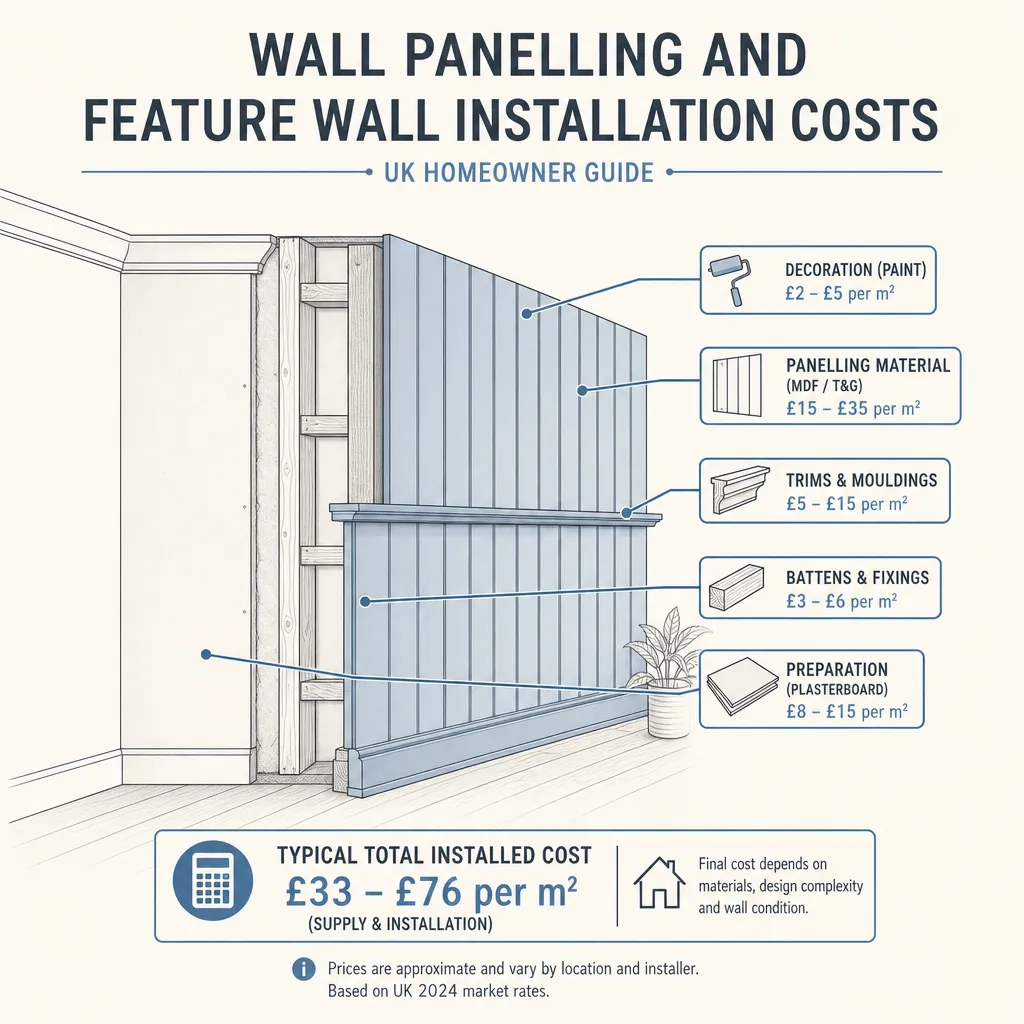
Wall Panelling and Feature Wall Installation Costs
Wall panelling installation in the UK typically costs £40–£120 per m² fully fitted, depending on panel style, material, and wall condition.
 Improvement & Build
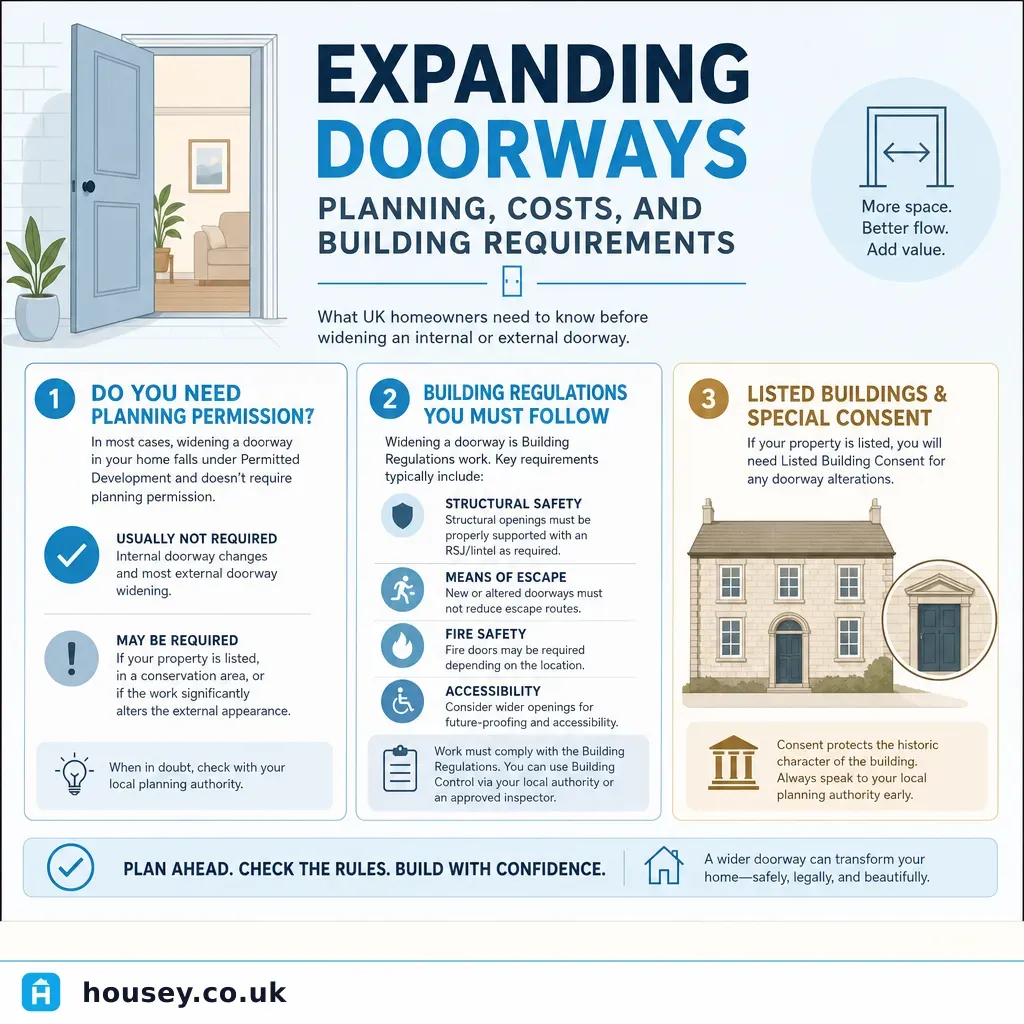
Expanding Doorways: Planning, Costs, and Building Requirements
Expanding a doorway in a load-bearing wall requires Building Regulations Part A approval and a structural engineer's lintel design.
 Improvement & Build
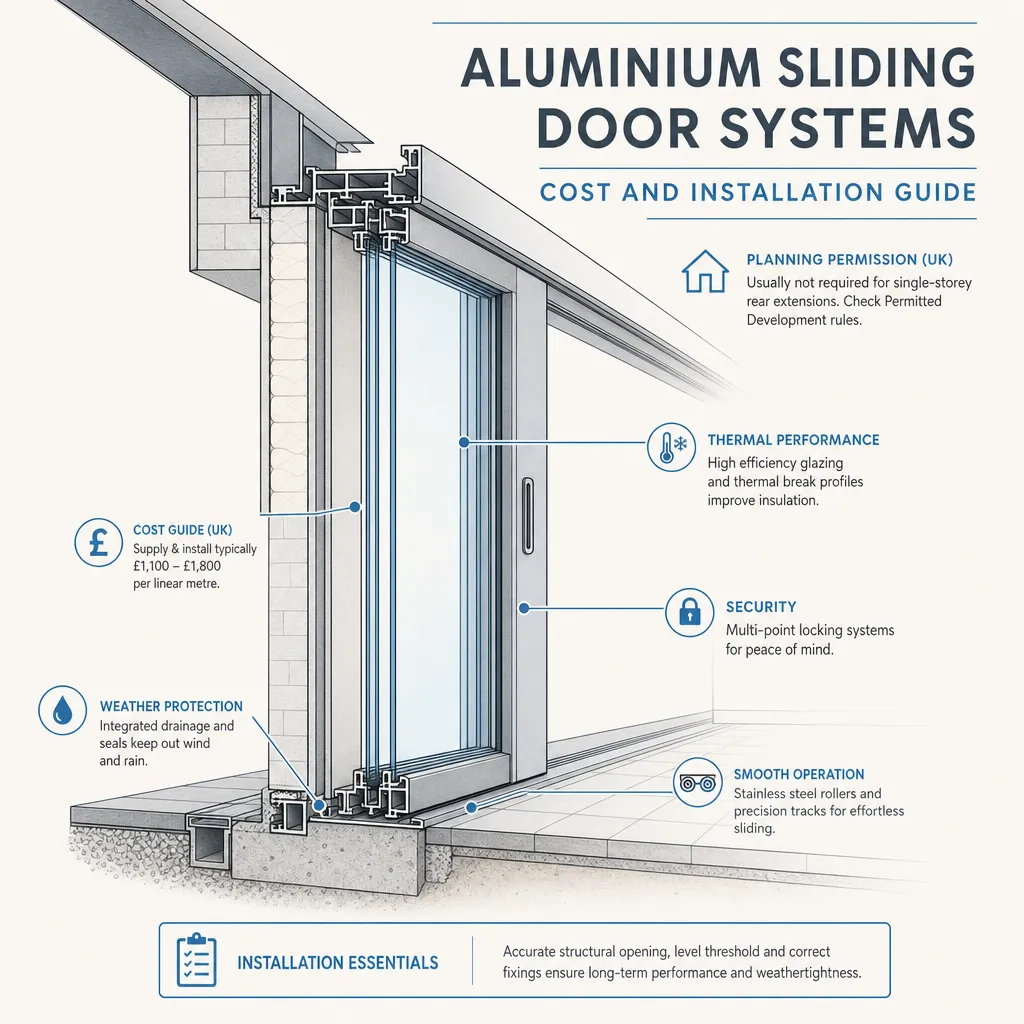
Aluminium Sliding Door Systems: Cost and Installation Guide
Aluminium sliding doors typically cost £2,500–£7,000 supply and fitted for a standard opening.
 Improvement & Build
Installing Peel-And-Stick Wallpaper: Application Techniques
Peel-and-stick wallpaper works best on smooth, emulsion-painted walls cured for at least 30 days, in rooms between 13°C and 30°C.
 Improvement & Build
Roof Skylight and Sun Tunnel Installation Costs
A standard pitched-roof skylight costs £800–£3,000 installed in the UK, including flashings and basic making good.