Wall Panelling and Feature Wall Installation Costs
By Housey · Last reviewed 11th of May 2026
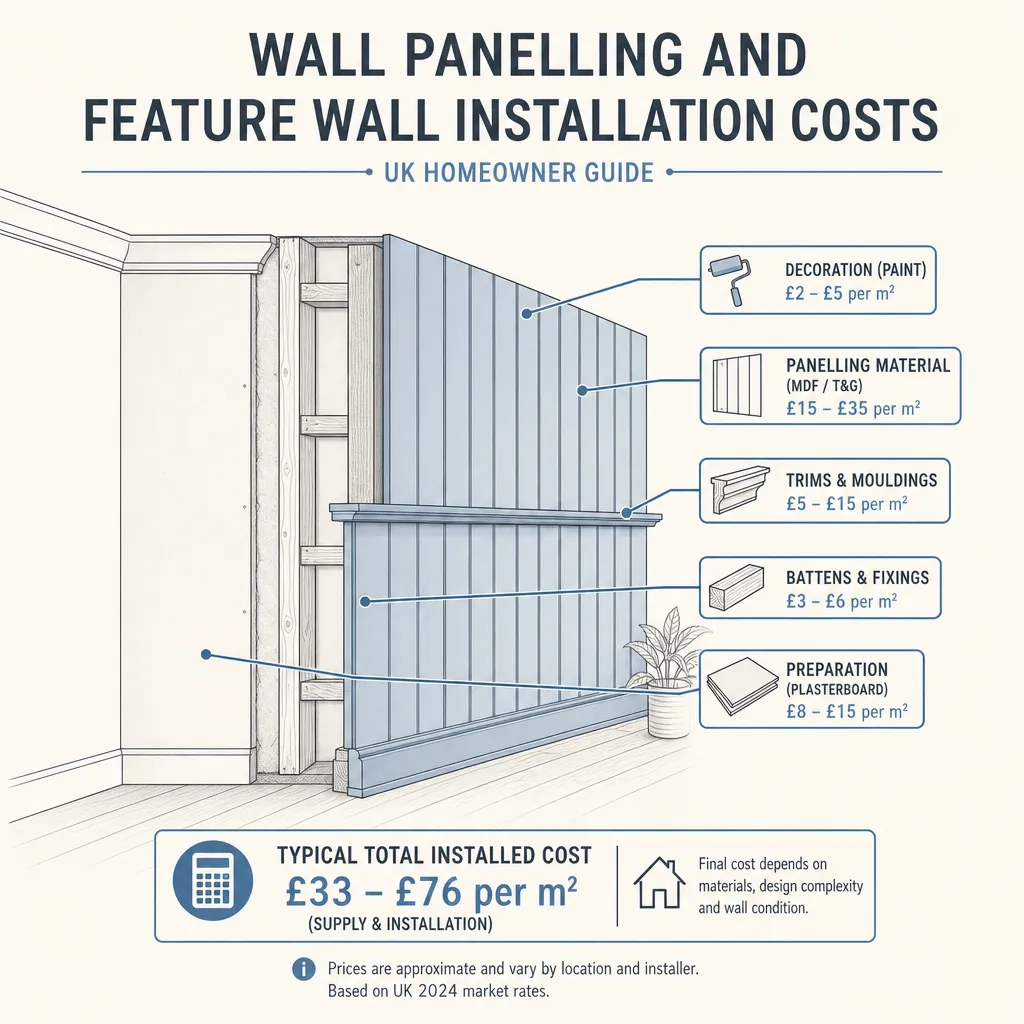
Wall Panelling and Feature Wall Installation Costs
Wall panelling has moved firmly into mainstream UK interior design, appearing in Victorian terrace hallways, 1930s semi sitting rooms, and new-build bedrooms styled with shaker-effect MDF. Homeowners typically ask about costs when planning a living room refresh, creating a headboard wall in a bedroom, or adding architectural character to a plain 1990s estate house. The gap between a basic DIY tongue-and-groove installation and a bespoke floor-to-ceiling panelled study is wide, so understanding what drives cost before requesting quotes is time well spent.
Key points
- Fitted wall panelling typically costs £40–£120 per m² installed in the UK, depending on panel style, material, and finish (indicative UK costs, last reviewed 2026-05-11).
- MDF is the most common material — it paints well, is dimensionally stable, and costs significantly less than solid timber or oak veneer panels.
- A single feature wall of 8–15 m² installed by a carpenter generally costs £400–£1,800, depending on design complexity and ceiling height.
- Moisture-resistant MDF (often labelled MR MDF) costs slightly more than standard MDF but is required in bathrooms, kitchens, and other wet areas.
- Any hardwired lighting incorporated into panelling — sconces, picture lights, or LED strips — must be carried out or certified by a Part P-registered electrician and may require Building Regulations notification.
Wall panelling cost breakdown
Cost by panel style
Panel style | Material cost per m² | Installed cost per m² | Notes |
|---|---|---|---|
Tongue-and-groove (MDF or pine) | £8–£18 | £30–£55 | Fast to fit; use MR MDF in bathrooms |
Shaker-style grid panels (MDF battens) | £12–£25 | £40–£75 | Very popular; battens fixed to a painted wall |
Raised-and-fielded MDF panels | £20–£40 | £60–£100 | More labour-intensive; classic period look |
Picture frame or geometric panels | £15–£30 | £50–£90 | Trending; requires precise marking-out |
Solid timber (oak, ash, or pine) | £40–£90 | £80–£150+ | Natural grain; can be sanded and refinished |
3D decorative or PVC panels | £10–£30 | £25–£50 | Lower labour cost; quality varies widely |
Indicative UK costs, last reviewed 2026-05-11. Quotes vary by region, wall condition, and ceiling height.
Typical project costs
Project | Approx. wall area | Indicative installed cost |
|---|---|---|
Bedroom headboard feature wall | 6–10 m² | £300–£900 |
Hallway below dado rail | 8–12 m² | £350–£1,000 |
Full living room dado panelling | 20–35 m² | £900–£3,000 |
Floor-to-ceiling library or study wall | 15–25 m² | £1,000–£3,500 |
Bathroom full-height tongue-and-groove | 10–18 m² | £450–£1,200 |
Indicative UK costs, last reviewed 2026-05-11.
What drives wall panelling costs?
Design complexity is the single biggest labour cost driver. Simple tongue-and-groove cladding can be fitted in half the time of a raised-and-fielded panel set with bespoke cornices and a chair rail moulding. Carpentry labour in the UK typically runs £150–£300 per day.
Wall condition matters significantly. A flat, plumb, and sound plaster wall can be panelled directly. Older properties with uneven plaster — common in Victorian and Edwardian homes — require additional time for packing, shimming, or re-skimming before panels sit flush.
Painting and finishing is often quoted separately. After MDF panelling is fixed, it needs filling, sanding, priming, and at least two topcoats. A professional decorator may charge £200–£600 extra for the finish on a single feature wall, depending on the complexity of the profile.
Ceiling height affects productivity. A standard 2.4 m ceiling is easy to panel; a Victorian room with 3 m or higher ceilings requires steps, scaffold boards, or a low-level tower, all of which add time.
Location — London and the South East typically carry a 20–40% labour premium over the Midlands and North.
Which wall panelling style should you choose?
- Choose tongue-and-groove if you want a cost-effective result in a bathroom, utility room, or hallway — particularly using moisture-resistant MDF in wet areas.
- Choose shaker-style MDF grid panels if you want a contemporary, widely admired result that a competent DIYer can attempt on a flat, modern wall.
- Choose raised-and-fielded or picture frame panels if you are aiming for a period or high-end classical look and are prepared for a higher labour cost.
- Choose solid timber if you want natural grain, long-term durability, and the ability to sand and refinish over decades.
- Consider 3D or PVC panels only if budget is the overriding constraint — quality varies widely and they are harder to paint convincingly.
- Consult a joiner or specialist decorator if your walls are very uneven, if you have existing coving or cornices to match, or if the property is listed.
Wall panelling checklist before getting quotes
Red flags in wall panelling quotes
- No mention of wall preparation — a flat quote for an uneven Victorian wall is likely to attract add-on charges once work starts.
- No specification of MDF grade — moisture-resistant MDF must be stated explicitly for bathroom and kitchen installations.
- Painting included at an implausibly low price — a quality painted finish on profiled panels takes time; budget quotes often omit or underestimate this stage.
- No mention of priming and filling before topcoats — bare MDF is highly porous and will not hold paint well without adequate preparation.
- Pressure to proceed without seeing a sample board showing the panel profile and proposed paint colour.
When to get professional help
Most wall panelling is within the capability of an experienced carpenter or a skilled DIYer on flat modern walls. Seek professional advice if:
- Your property is listed — consult your local planning authority before fixing anything permanently to walls, as listed building consent may be required for works affecting original features or historic fabric.
- You are working in a pre-1945 property and plan to cut or drill into textured wall or ceiling coatings — some coatings applied between the 1960s and 1980s contained asbestos, so an asbestos survey may be appropriate before disturbing suspect materials.
- You want hardwired lighting incorporated into the panelling — a Part P-registered electrician must carry out or certify the electrical installation.
How Housey can help
Housey connects homeowners with vetted local carpenters and decorators who can quote for wall panelling and feature wall projects across the UK. Describe your room, specify your chosen panel style, and compare itemised quotes from tradespeople in your area — without the uncertainty of unverified recommendations.
Frequently asked questions
Does wall panelling require planning permission?
In most cases, no — internal decorative panelling does not require planning permission. If your home is a listed building, you should consult your local planning authority before making any fixed internal alterations, as listed building consent may be required for works that affect original historic fabric.
Can I install wall panelling myself?
On a flat, modern wall, shaker-style MDF panelling is achievable for a competent DIYer with basic carpentry skills, a mitre saw, adhesive or a nail gun, and patience for the preparation and painting stages. Uneven period walls, complex mouldings, or any work involving plumbing or electrics should be left to professionals.
How long does wall panelling installation take?
A single feature wall of 10–15 m² typically takes a carpenter 1–2 days to fix, plus a return visit for painting if a separate decorator handles the finish. A full-room panelling project may take 3–5 days across installation and finishing stages.
What paint should I use on MDF wall panelling?
MDF requires a specialist MDF primer or a diluted first coat of emulsion to seal the surface before topcoats. For durability, use a furniture or woodwork paint in eggshell or satin sheen — it is harder-wearing and easier to wipe down than standard wall emulsion. In bathrooms, use a paint rated for humid environments.
Sources and further reading
- Planning permission in England and Wales — GOV.UK; when consent is needed for alterations to your property
- Building regulations approved documents (including Part P) — GOV.UK; notifiable electrical work in dwellings
- Practical Building Conservation series — Historic England; guidance for works in listed and historic properties
Useful next reads
 Improvement & Build
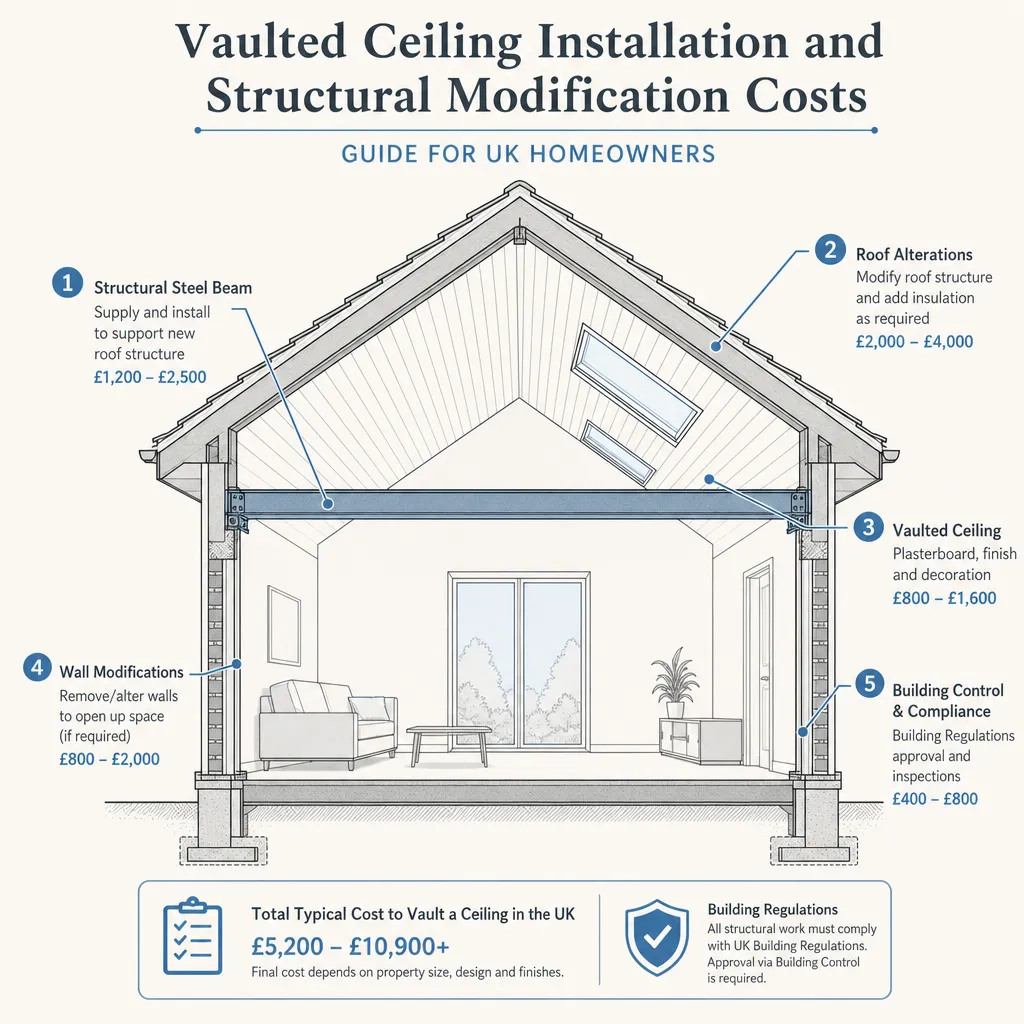
Vaulted Ceiling Installation and Structural Modification Costs
Creating a vaulted ceiling in the UK usually involves removing ceiling joists or modifying the roof structure, installing a structural ridge beam, and upgrading insulation — work that always requires a structural engineer's calculations and building regulations approval under Part A.
 Improvement & Build
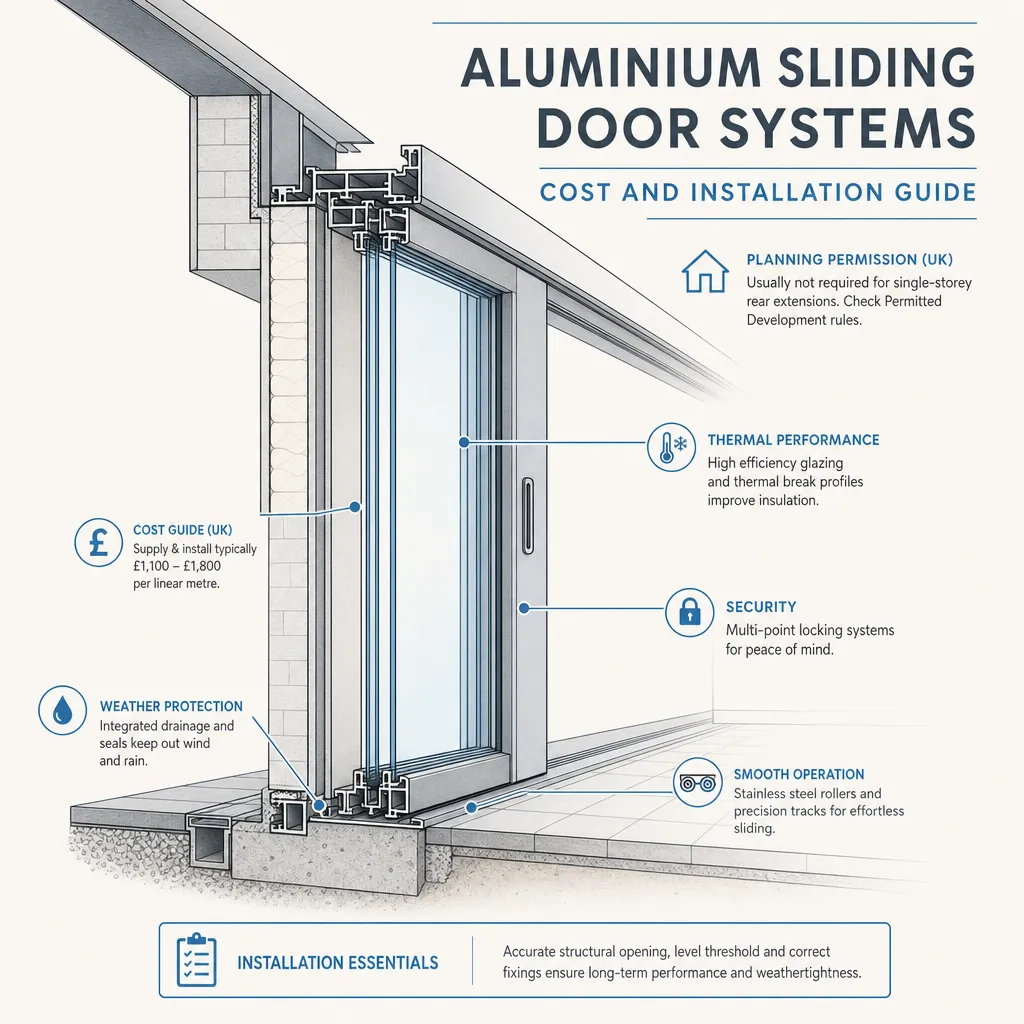
Aluminium Sliding Door Systems: Cost and Installation Guide
Aluminium sliding doors typically cost £2,500–£7,000 supply and fitted for a standard opening.
 Improvement & Build
Installing Peel-And-Stick Wallpaper: Application Techniques
Peel-and-stick wallpaper works best on smooth, emulsion-painted walls cured for at least 30 days, in rooms between 13°C and 30°C.
 Improvement & Build
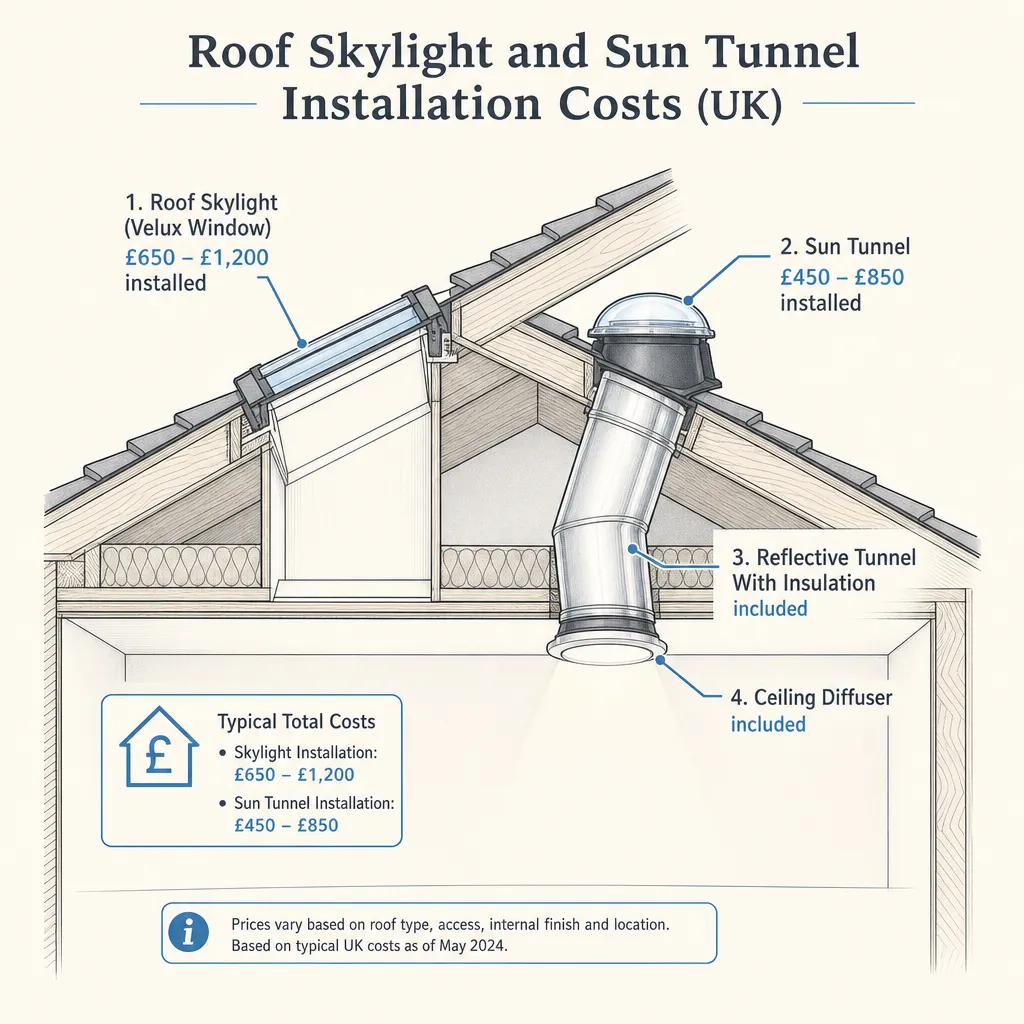
Roof Skylight and Sun Tunnel Installation Costs
A standard pitched-roof skylight costs £800–£3,000 installed in the UK, including flashings and basic making good.
 Improvement & Build
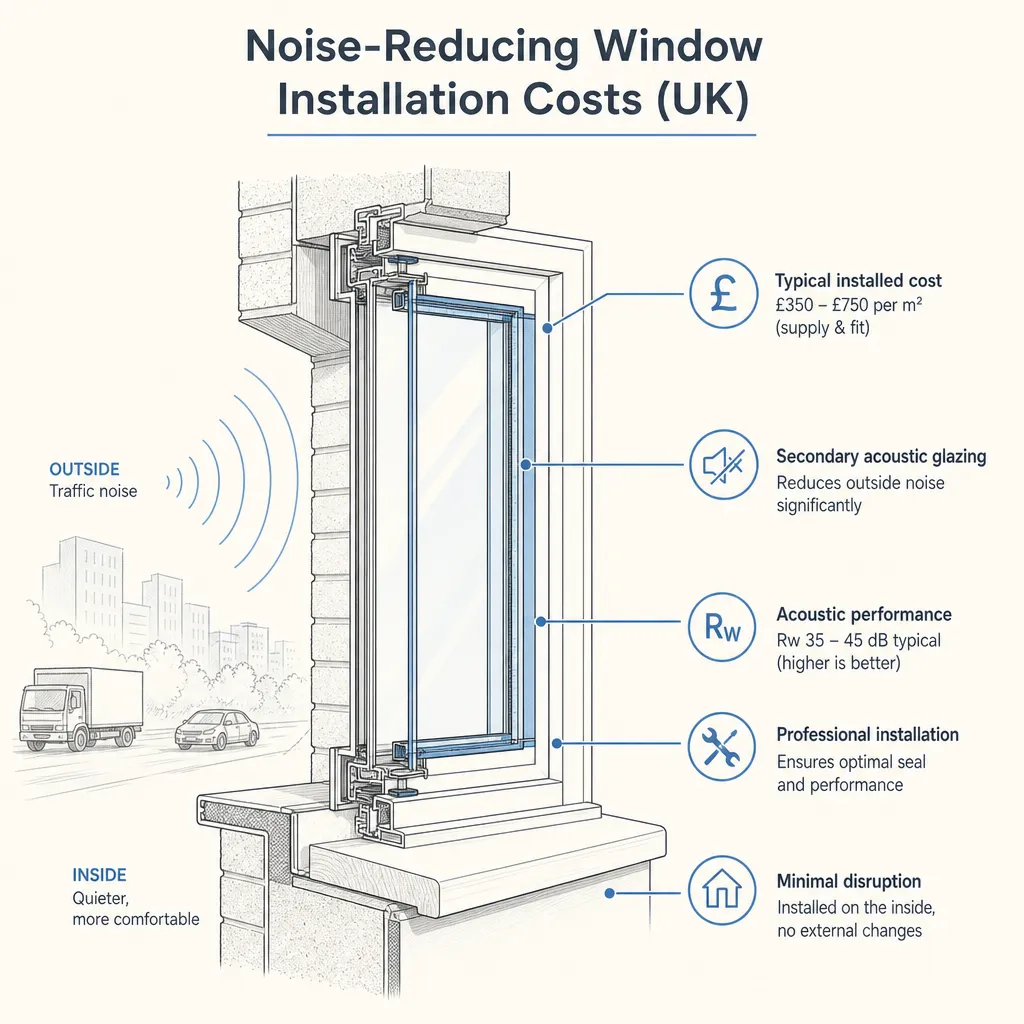
Noise-Reducing Window Installation Costs
Noise-reducing window installation in the UK typically costs £400–£1,500 per window depending on glazing specification, frame material, and property type.