Victorian-Style Windows: Authenticity, Restoration, and Modern Alternatives
By Housey · Last reviewed 11th of May 2026
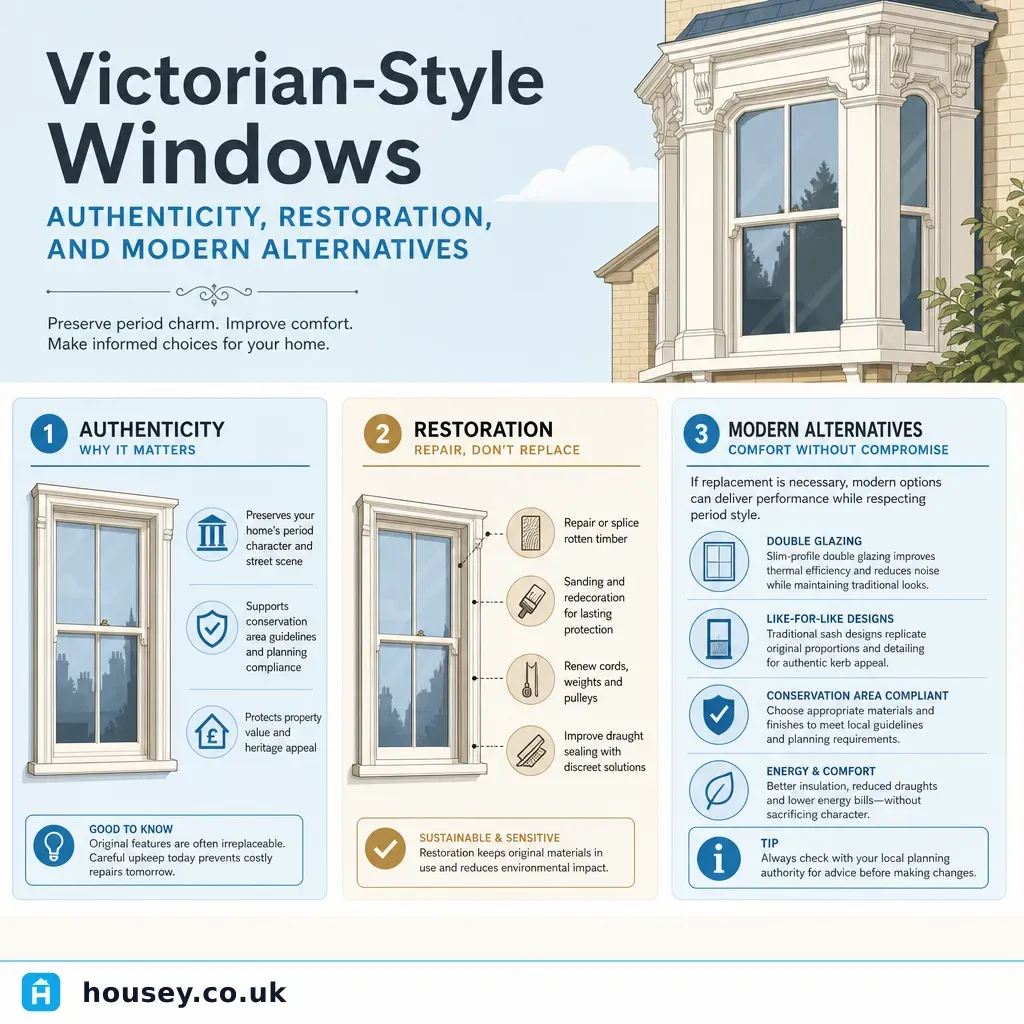
Victorian-Style Windows: Authenticity, Restoration, and Modern Alternatives
Windows are one of the most visible and character-defining features of a Victorian property. Whether you are dealing with draughty single-glazed sashes, rotting timber frames, or a need to improve energy performance, the question of how to handle Victorian windows sits at the intersection of heritage protection, planning consent, and practical home improvement. The decision matters not just aesthetically but legally: the wrong choice on a listed building or in a conservation area can require costly reinstatement.
Key points
- Victorian sash windows are typically double-hung timber sashes with thin glazing bars (early Victorian) or larger panes with minimal bars (later Victorian).
- FENSA certification is required for any replacement window installation in England, Wales, and Northern Ireland; this is separate from Listed Building Consent.
- In a conservation area, replacing original windows with non-traditional alternatives often requires planning permission even on unlisted buildings.
- Listed Building Consent is required for alterations to windows on a listed property; modern uPVC and standard aluminium units are routinely refused by conservation officers.
- Well-maintained original timber sash windows can last well over a century; draught-proofing and slim-profile double-glazed sashes are proven upgrade paths.
Types of Victorian window
Victorian windows varied considerably by decade, sub-style, and budget:
- Early Victorian sashes (1837–1860s): typically six-over-six or four-over-four double-hung sashes with thin glazing bars and horn-free stiles.
- Mid-Victorian sashes (1860s–1880s): two-over-two sashes become common as sheet glass production improved; thinner glazing bars and taller panes.
- Late Victorian transition (1880s–1901): larger single panes per sash; Queen Anne Revival properties often feature white-painted sashes with decorative coloured toplights or leaded upper lights.
- Bay windows: projecting bays with three or more sashes, often a fixed centre pane with opening side lights.
- Casement windows: more common in Arts and Crafts-influenced Victorian homes; timber frames with side-hung lights, sometimes leaded.
- Fanlights and toplights: fixed or opening fanlights over front doors; arched or rectangular stained glass is typical on better properties.
Restoration vs replacement: a comparison
Option | Best for | Not ideal for | Indicative cost per window | Planning implications |
|---|---|---|---|---|
Draught-proof and maintain original sashes | Sound frames with minor draught issues; listed and conservation properties | Severely rotted frames | £100–£400 (trade) | None — maintenance is permitted |
Slim double-glazed units in original timber sash | Listed and conservation properties wanting improved thermal performance | Tight budget | £600–£1,500 | Usually acceptable in conservation areas; preferred for listed |
Secondary glazing (fitted inside the reveal) | Listed buildings; tenants; flats | Rooms needing frequent opening | £200–£600 | No consent usually required, including listed buildings |
Like-for-like timber sash replacement | Severely damaged frames needing full replacement | Grade I/II* listed where repair is required | £700–£1,800 | Requires consent on listed; usually acceptable in conservation |
Slim-profile aluminium sash | Unlisted property; modern aesthetic | Listed buildings; traditional conservation areas | £600–£1,400 | May need permission in conservation areas |
uPVC sash | Unlisted homes outside conservation areas only | Any listed building; most conservation areas | £400–£900 | Permitted development on unlisted outside conservation areas only |
Indicative UK costs, last reviewed 2026-05-11. Prices vary by region, property type, access, and supplier. Obtain at least three quotes.
Conservation areas and listed buildings: what the rules mean in practice
Unlisted property outside a conservation area: you can replace windows under permitted development rights, provided the work is carried out by a FENSA-registered installer or covered by a building control application.
Property in a conservation area: an Article 4 Direction may remove permitted development rights for window replacement. Even where no Article 4 Direction exists, a local planning authority can require that replacements match the original character of the street. Always check with the duty planning officer before ordering windows.
Listed building (any grade): Listed Building Consent is required for any alteration that would affect the character of the building. This includes replacing original sash windows. Modern uPVC and standard aluminium windows are routinely refused for listed buildings; conservation officers typically prefer repair, secondary glazing, or slim-profile double-glazed units in timber or aluminium designed to replicate the original profile.
Decision guide: which option is right for your property?
- Choose repair and draught-proofing if the frames are structurally sound, the property is listed or in a conservation area, and budget is a consideration.
- Choose slim double-glazed timber sash replacement if frames are beyond repair, the property is listed or in a conservation area, and you want improved thermal performance with heritage compliance.
- Choose secondary glazing if Listed Building Consent makes external alteration difficult, you are a tenant, or you want a reversible thermal upgrade that avoids consent entirely.
- Choose like-for-like uPVC sash only if the property is unlisted, outside any conservation area, and you have verified no Article 4 Directions apply to the street.
- Consult a heritage consultant if you are unsure of your property's planning status, have had a previous application refused, or the property is Grade I or Grade II* listed.
Homeowner checklist: before replacing or restoring Victorian windows
What to ask before accepting a window quote
- Is the installer FENSA-registered, and will I receive the installation certificate on completion?
- What sash profile, material, and glazing unit thickness are you proposing, and why is it appropriate for this property?
- Have you worked on listed or conservation area properties of this type before, and can you provide references?
- What draught-sealing method do you use and what U-value does the proposed glazing unit achieve?
- Is VAT included in the quote?
- How long is the warranty on frames and glazing units, and what does it cover?
- What could change the price or timeline if unforeseen rot or access problems are found?
- How will cut board ends and exposed cores be sealed to prevent moisture ingress?
When to get professional help
Most window restoration or replacement projects on unlisted homes can be managed directly with a qualified installer. You should seek professional heritage advice when:
- The property is listed at any grade and you are uncertain what consent is needed.
- A planning application has been refused or an enforcement notice served relating to windows.
- Original windows include leaded, stained, or historically significant glass that requires specialist repair.
- Windows show signs of significant frame rot, structural movement around the reveal, or damp ingress linked to the window installation.
- You need to seek retrospective consent for windows already replaced without permission.
How Housey can help
Housey connects homeowners with verified professionals experienced in period window work. Find accredited window and door installers experienced with period properties through Housey, or speak with a heritage and conservation consultant if you need Listed Building Consent or conservation area advice before instructing an installer.
Frequently asked questions
Can I replace Victorian sash windows with double glazing?
On an unlisted property outside a conservation area, yes — under permitted development rules, provided a FENSA-registered installer carries out the work. In conservation areas and listed buildings, standard double-glazed units are often refused. Slim-profile double-glazed timber or aluminium sashes and secondary glazing are typically acceptable alternatives. Always check with your local planning authority before ordering any replacement windows.
How much does Victorian sash window restoration cost?
A professional draught-proof and overhaul typically costs £150–£400 per window. Full restoration including new rope, pulleys, and slim double-glazed sash units can cost £600–£1,500 per window. Costs vary with window size, extent of rot, access, and regional labour rates. These are indicative UK costs, last reviewed 2026-05-11 — obtain at least three quotes from installers experienced with period properties.
What is secondary glazing and is it suitable for Victorian homes?
Secondary glazing involves fitting a separate glazed unit on the room side of the existing window, leaving the original sash intact. It is reversible, usually requires no planning consent even in listed buildings, and reduces heat loss and noise significantly. It is a common solution where replacement glazing would not be approved. The main trade-off is needing to operate two separate units when opening the window.
Do I need FENSA certification when replacing windows on a listed building?
FENSA covers building regulations compliance for replacement windows. However, replacing windows on a listed building without first obtaining Listed Building Consent can result in an enforcement notice requiring reinstatement, regardless of FENSA certification. Both requirements may apply, but Listed Building Consent must be obtained before work begins. Always speak with a heritage consultant before instructing any window installer on a listed property.
Sources and further reading
- Windows: guidance for listed buildings and conservation areas — Historic England
- FENSA: replacement windows and building regulations — FENSA
- Planning Portal: windows, doors and rooflights — Planning Portal
- National Heritage List for England — Historic England
- Energy Saving Trust: draught-proofing and secondary glazing — Energy Saving Trust
Useful next reads
 Improvement & Build
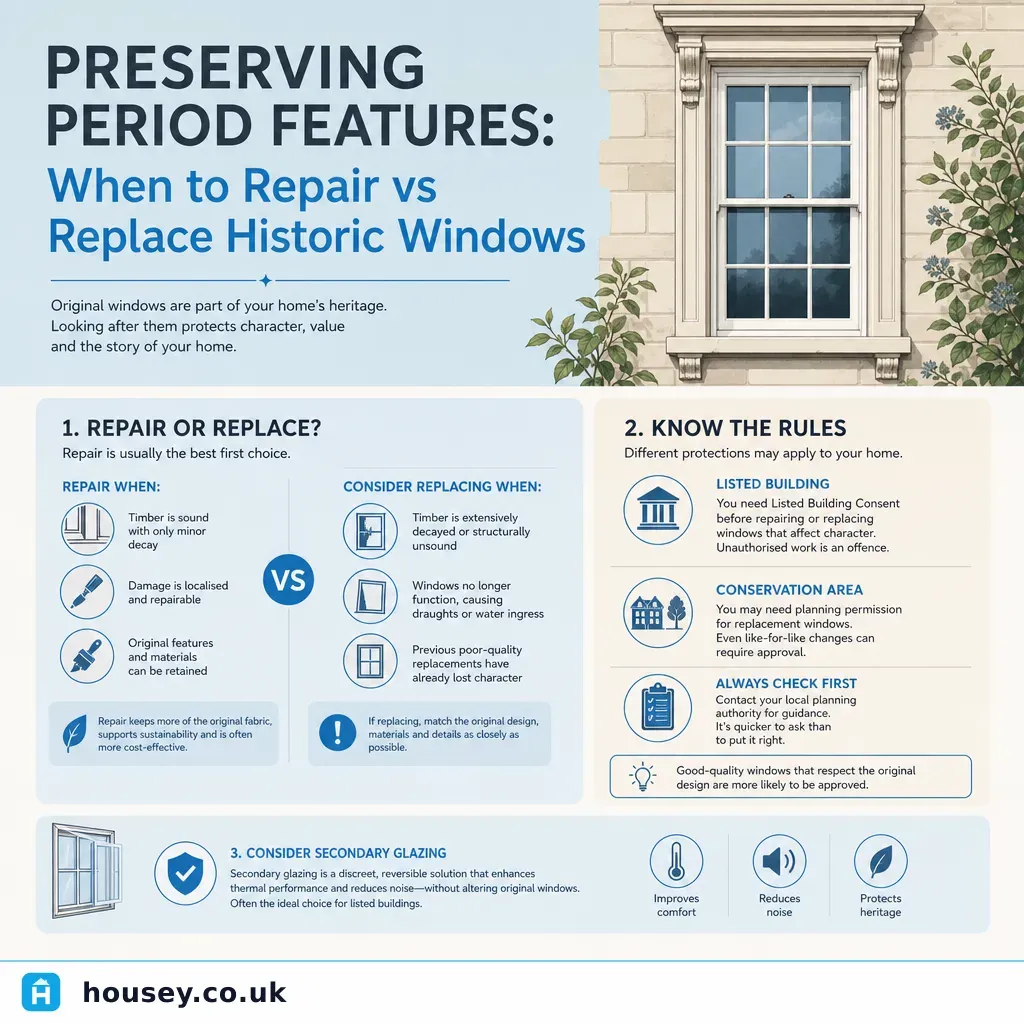
Preserving Period Features: When to Repair vs Replace Historic Windows
For most pre-1919 timber windows in listed buildings or conservation areas, repair and draught-proofing — often combined with secondary glazing — is both more appropriate and more likely to gain consent than full replacement.
 Improvement & Build
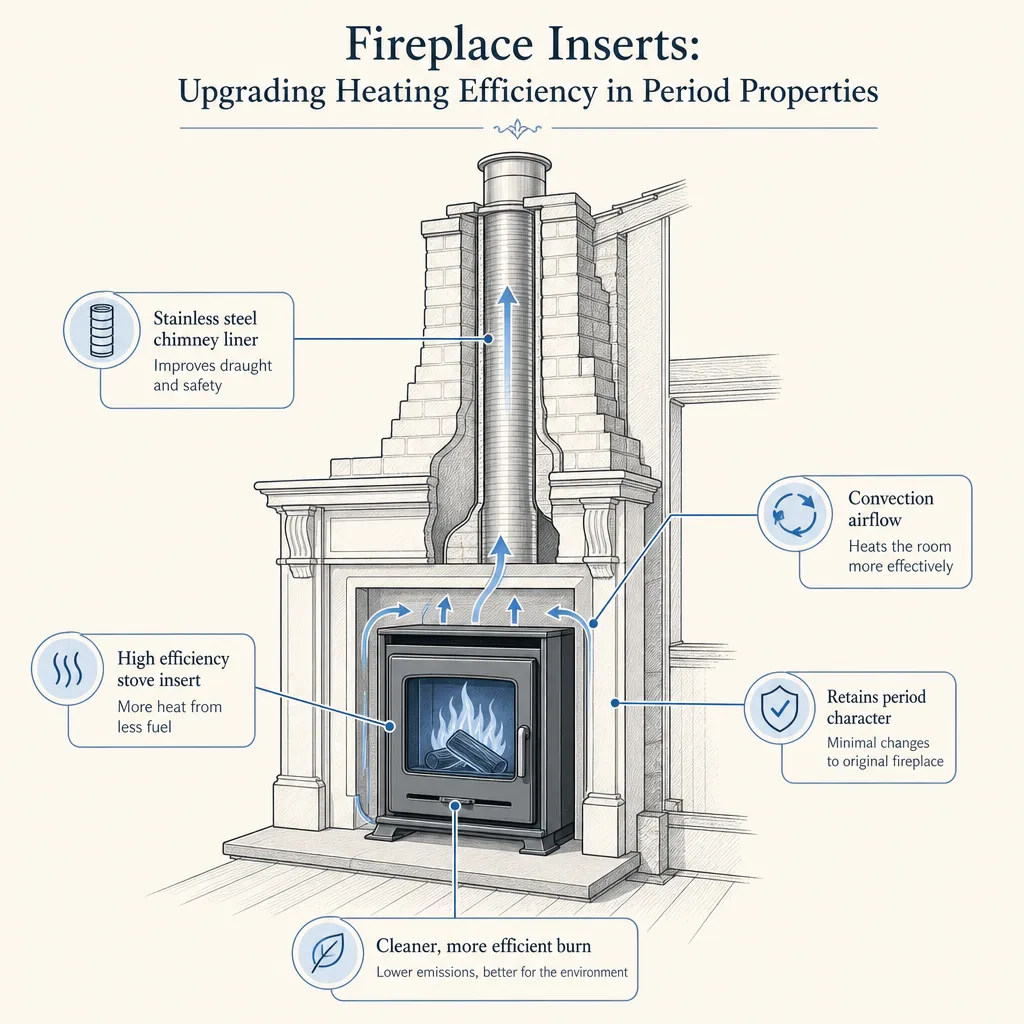
Fireplace Inserts: Upgrading Heating Efficiency in Period Properties
Fireplace inserts in period properties must comply with Building Regulations Approved Document J and, in smoke control areas, use only Defra-exempt appliances.
 Improvement & Build
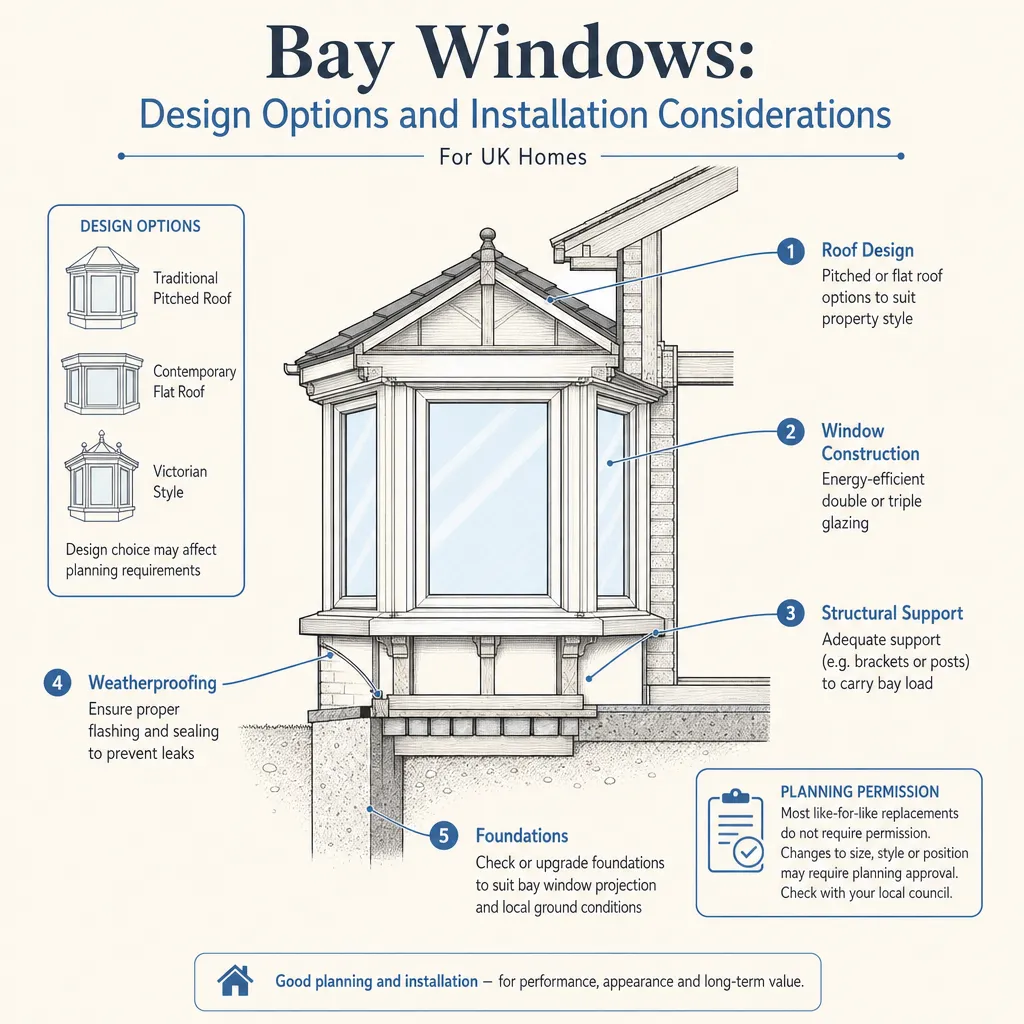
Bay Windows: Design Options and Installation Considerations
Bay windows project beyond the main wall of a house, increasing floor area and natural light.
 Improvement & Build
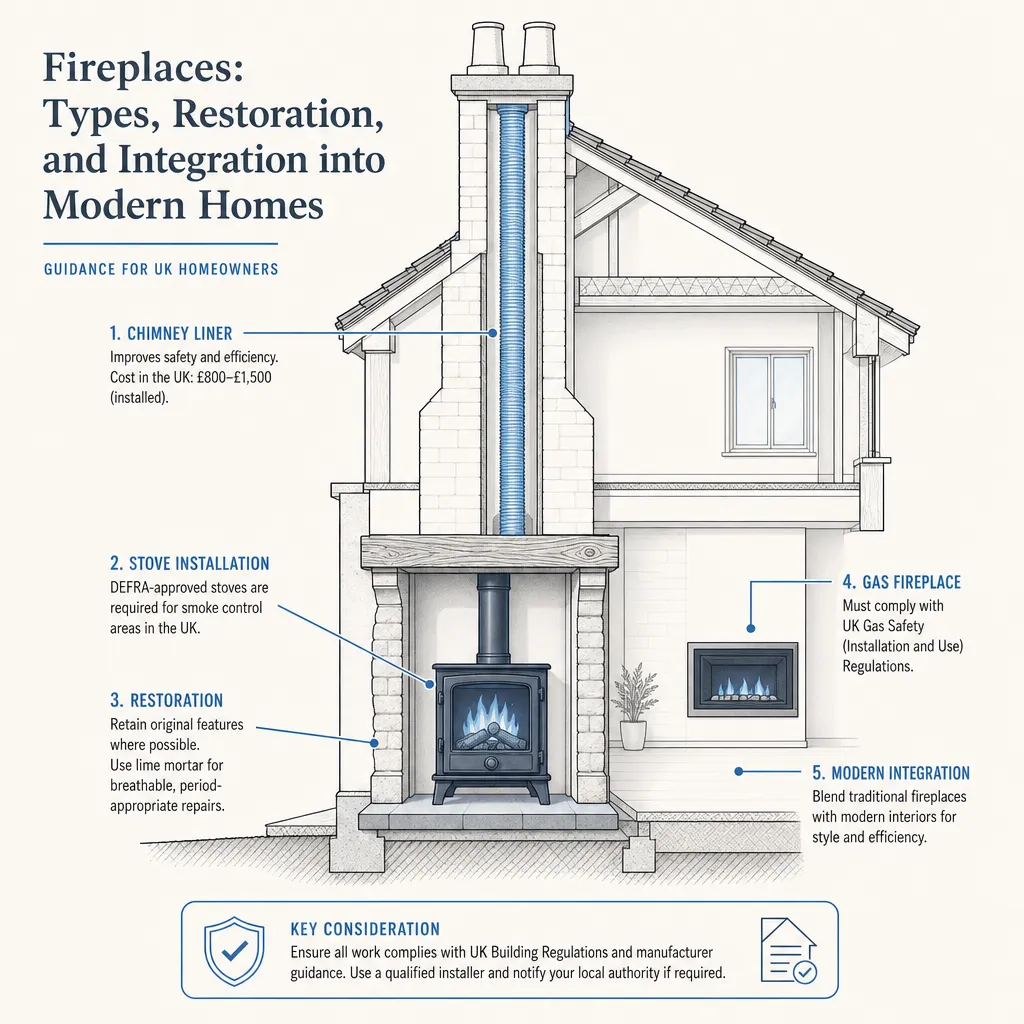
Fireplaces: Types, Restoration, and Integration into Modern Homes
UK fireplaces come in four main types: open fires, wood-burning stoves, gas fires, and electric fires.
 Improvement & Build
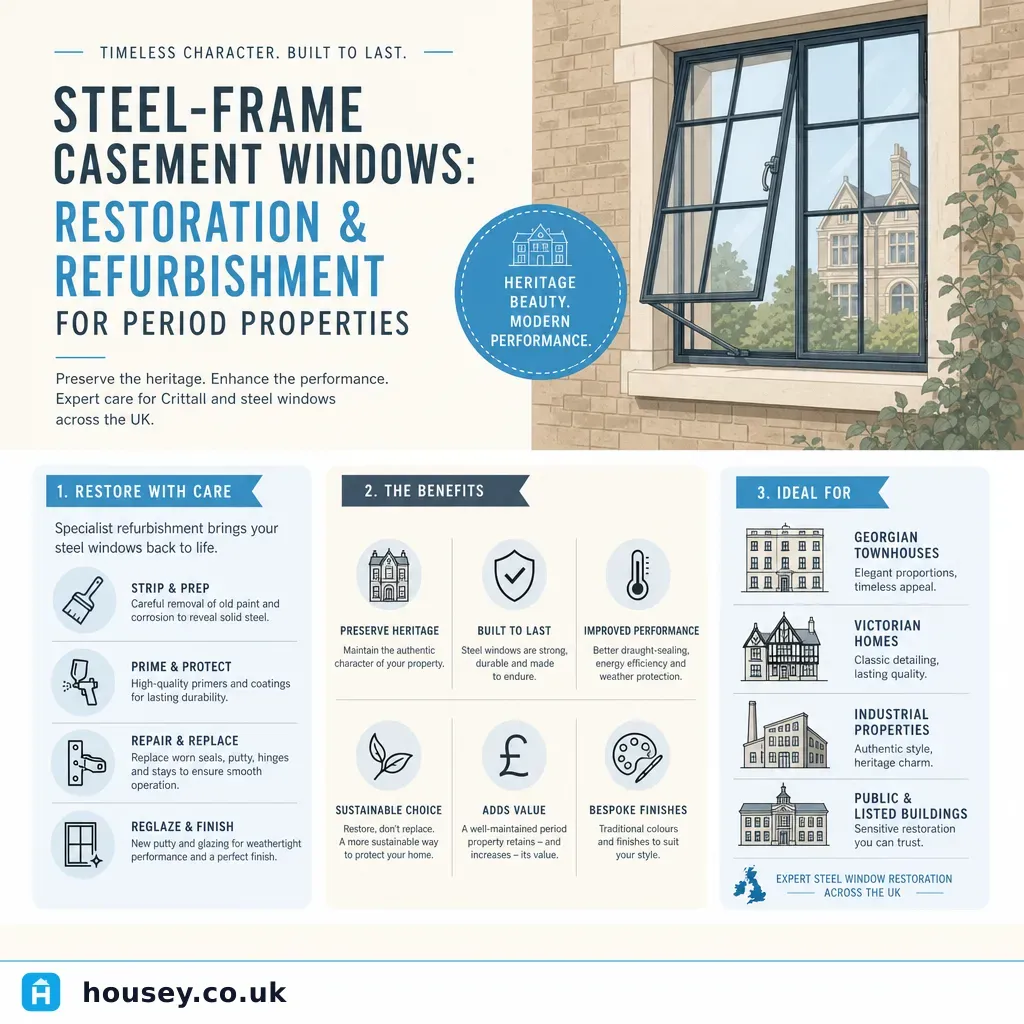
Steel-Frame Casement Windows: Restoration and Refurbishment for Period Properties
Original steel casement windows on listed buildings and conservation area properties should almost always be restored rather than replaced, as planning consent for alternative materials is usually refused.