Vinegar Applications in Garden Maintenance and Care
By Housey · Last reviewed 30th of May 2026
Vinegar Applications in Garden Maintenance and Care
Vinegar comes up regularly in UK gardening conversations as a low-cost, easily available alternative to chemical herbicides and cleaning products. For homeowners managing paths, patios, and informal borders, it can be a practical tool for specific tasks — but its limitations matter as much as its uses. Understanding what it can and cannot do, and where caution is needed, helps you use it effectively without inadvertently damaging the plants or soil you want to protect.
Key points
- Household white vinegar contains 5–6% acetic acid — enough to kill the top growth of annual weeds but insufficient to kill deep-rooted perennial weeds such as bindweed, horsetail, or bramble.
- Horticultural or industrial-strength vinegar at 20–30% acetic acid is significantly more potent and requires nitrile gloves and eye protection; skin burns and serious eye damage are real hazards at these concentrations.
- Vinegar is non-selective: it will damage or kill any plant tissue it contacts, including lawn grass, ornamental plants, and young shrubs — use with precision.
- Repeated application of neat vinegar to open soil can temporarily lower soil pH and disrupt soil microbiology; monitor soil health if use is frequent or in volume.
- Under UK plant protection product (PPP) legislation, acetic acid is not registered as a herbicide for commercial horticultural use; for private domestic gardens, personal use is not an enforcement target, but professional landscapers should take advice on permitted products.
What does vinegar actually do in the garden?
Acetic acid disrupts the cell membranes of plant tissue on contact, causing rapid dehydration of leaves and stems. This makes it effective at scorching the visible growth of annual and shallow-rooted weeds, removing moss and algae from hard surfaces, and cleaning mineral deposits such as limescale from terracotta pots and garden tools.
It is not effective for eliminating deep-rooted perennial weeds, because roots are unaffected by surface-only application, and it provides no residual weed control — acetic acid breaks down quickly in soil and leaves no lasting suppressive effect.
Where vinegar works — and where it does not
Application | Effective? | Notes |
|---|---|---|
Annual weeds on paths and patios | Yes — kills top growth | Apply on a dry, still day; reapply as seedlings return |
Moss on paved surfaces | Moderate | Kills living moss; scrub after application; pressure washing is often faster |
Perennial weeds (bindweed, bramble, horsetail) | No — top growth only | Roots survive; repeated treatment may weaken but rarely eliminates |
Weed control between paving joints | Temporary | Frequent reapplication needed; polymeric jointing sand is more durable long-term |
Limescale removal from terracotta pots | Yes | Use dilute solution; rinse thoroughly before replanting |
Slug deterrent | Limited and anecdotal | No robust UK evidence; not a reliable control method |
Lowering soil pH for ericaceous plants | Not recommended | Effect is inconsistent and short-lived; use sulphur chips or ericaceous compost instead |
Weed control near lawn edges | No | Will kill grass on contact; keep well away from any turf |
Effectiveness based on commonly reported horticultural use, last reviewed 2026-05-30. Individual results will vary with weed species, soil type, weather conditions, and application method.
How to use vinegar safely in the garden
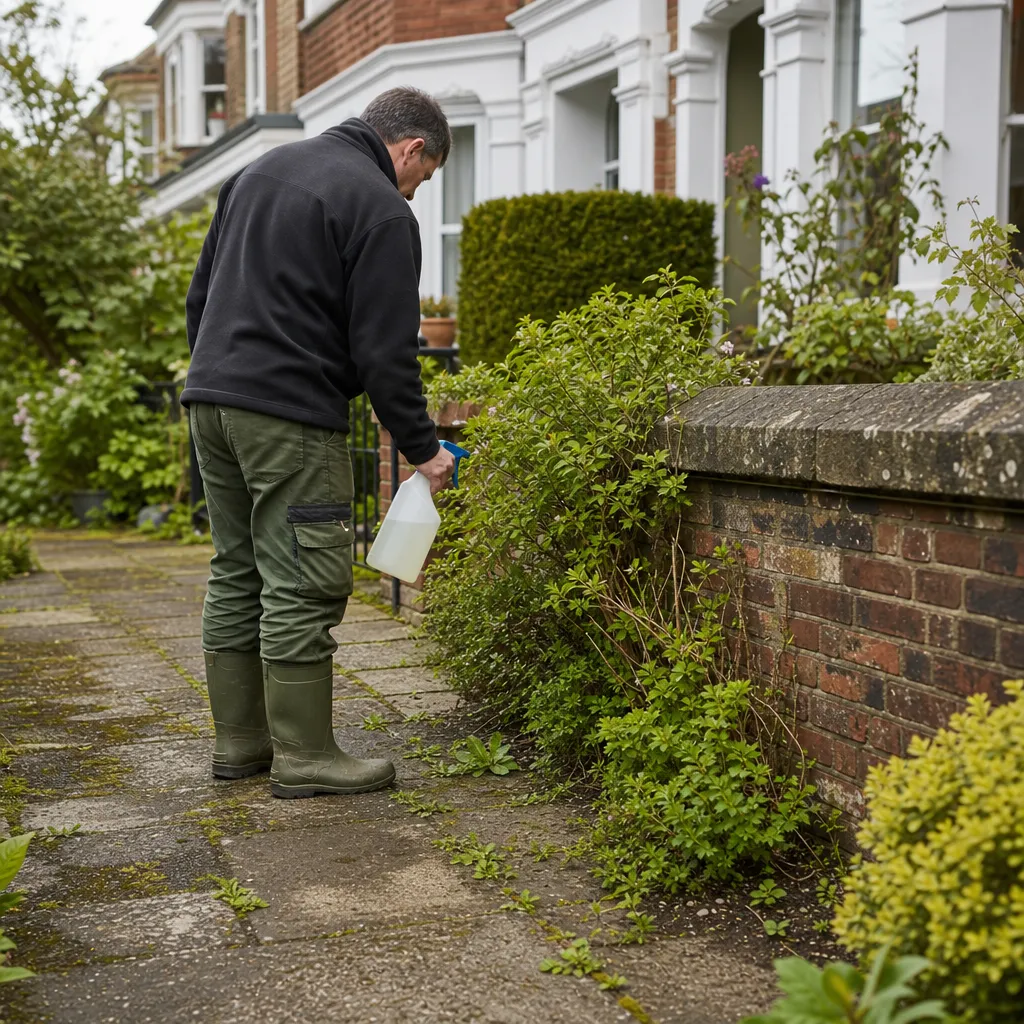
For annual weeds on paths and patios: Apply undiluted household white vinegar (5–6% acetic acid) directly to weed foliage using a spray bottle or watering can with a fine rose. Choose a dry, still day — rain within 24 hours will reduce effectiveness, and wind risks drift onto nearby plants. Most annual weeds show visible wilting within 24–48 hours. Reapply whenever new seedlings emerge; there is no residual effect.
For horticultural-strength vinegar (above 10% acetic acid):
- Wear nitrile gloves and eye protection at all times during application.
- Keep children and pets well away from treated areas until the product has fully dried.
- Avoid applying near water features, ornamental ponds, or surface drainage points.
- Check the product label for specific hazard classifications or use restrictions before purchasing.
What not to assume
- 'Natural' does not mean harmless. High-concentration acetic acid causes skin burns and serious eye damage. Handle horticultural-strength products with the same care as any classified chemical.
- Vinegar will not solve a Japanese knotweed problem. Knotweed rhizomes extend to several metres' depth; surface application of any vinegar product has no meaningful effect on the root system. Knotweed requires professional specialist treatment, and allowing it to spread to neighbouring land is an offence under Schedule 9 of the Wildlife and Countryside Act 1981.
- It is not interchangeable with systemic herbicides. Glyphosate and similar products are translocated through the plant to the root system; acetic acid is contact-only and root systems of perennials survive undamaged.
- It will not permanently sterilise soil. Despite common claims, research does not support vinegar as a reliable or lasting soil sterilant. pH effects are real but limited in depth and duration, and soil biology typically recovers.
- Commercial use requires a registered product. Landscapers and grounds maintenance contractors cannot legally use unregistered plant protection products professionally under UK PPP legislation, regardless of the active ingredient's domestic familiarity. The Health and Safety Executive (HSE) regulates approved products.
When to get professional help
Consider engaging a professional landscaper or grounds maintenance contractor if:
- A significant weed problem covers a large area and repeated vinegar application would be impractical, time-consuming, or likely to cause collateral damage to adjacent planting.
- Perennial invasive species — particularly Japanese knotweed, giant hogweed, or Himalayan balsam — are present; these require specialist treatment and may carry legal implications for spreading to neighbouring land.
- You want a structured, long-term garden maintenance plan that goes beyond reactive spot treatment of individual weeds.
How Housey can help
For larger-scale weed management, garden renovation, or ongoing maintenance programmes, Housey connects you with experienced local landscapers who can advise on sustainable weed management strategies, carry out soil improvement work, and create a maintenance plan suited to your garden's specific conditions and plant palette.
Frequently asked questions
Is household vinegar safe to use around children and pets?
Household-strength vinegar (5–6% acetic acid) is low-risk once dry, but should not be sprayed near children or pets during application. Keep them away until treated surfaces are fully dry. Horticultural-strength vinegar is significantly more hazardous and should be used only with appropriate PPE, with children and pets well away from the treated area throughout.
How often should I apply vinegar to control weeds on my patio?
Annual weed seedlings can often be controlled with a single application per flush of growth. Established weeds may need two or three applications spaced one to two weeks apart. Expect to retreat whenever new seedlings emerge — acetic acid provides no residual soil activity and no pre-emergent effect, so growth returns from seed as soon as conditions allow.
Can I use vinegar to make my soil more acidic for ericaceous plants?
This is a common garden myth. While acetic acid does temporarily lower soil pH on contact, the effect is shallow and short-lived. For sustained acidification needed by rhododendrons, azaleas, blueberries, and camellias, use elemental sulphur granules applied over time, or mulch with ericaceous compost. Test soil pH with an inexpensive meter or postal test kit before and after any treatment.
Does vinegar harm the beneficial microbes in garden soil?
Direct application of neat or high-concentration vinegar can temporarily disrupt soil microbiology. The effect is most pronounced with high-concentration products applied in volume to bare soil. Light, occasional use on paved surfaces or between path joints is unlikely to cause significant harm to the surrounding soil biome. Avoid drenching planted beds or the root zones of established shrubs and trees.
Sources and further reading
- Weeds — advice on weed control in gardens — Royal Horticultural Society
- Pesticides: using plant protection products — Health and Safety Executive
- Wildlife and Countryside Act 1981 — Schedule 9 invasive species — legislation.gov.uk
- Soil pH and nutrient availability — Royal Horticultural Society
Useful next reads
 Improvement & Build
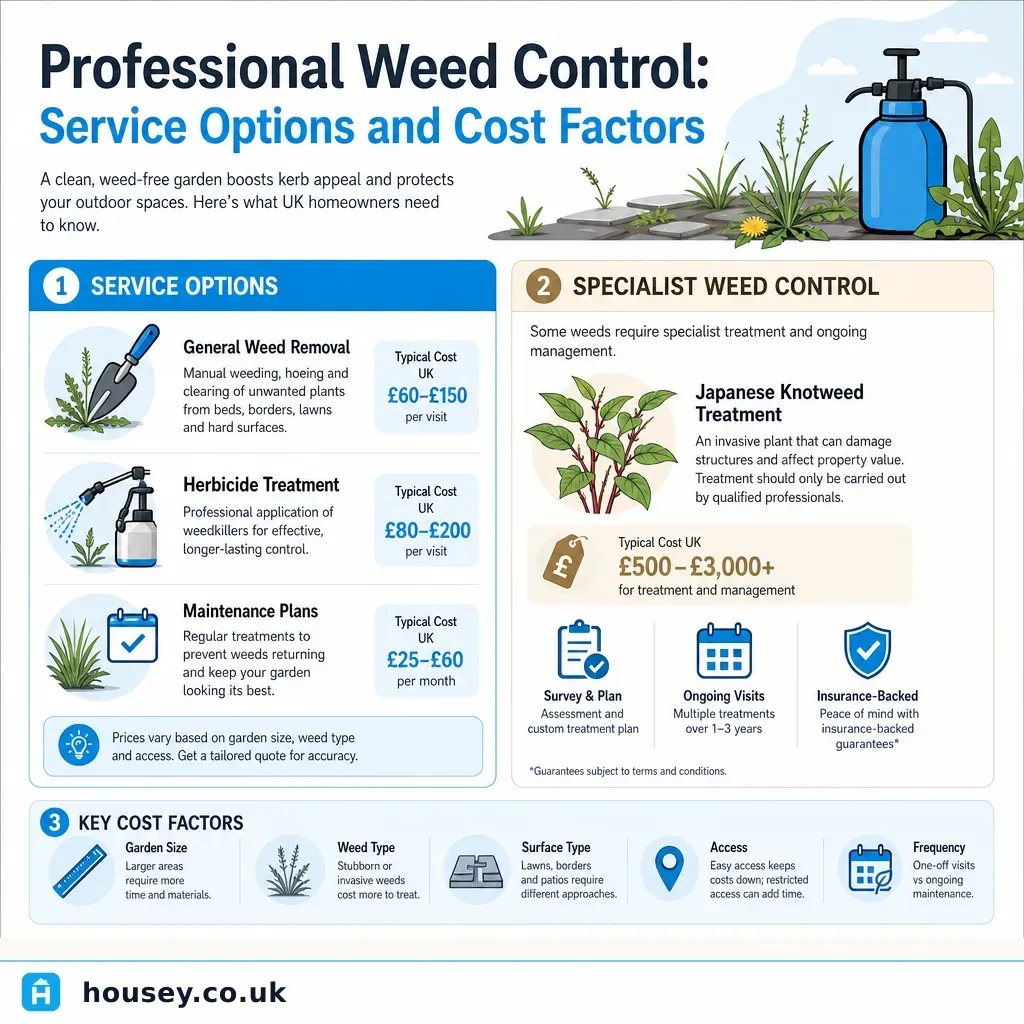
Professional Weed Control: Service Options and Cost Factors
Professional weed control in the UK typically involves herbicide treatment, manual removal, or a combination of both.
 Improvement & Build
Creating a New Garden Design for Your Property
Creating a new garden design involves assessing your space, setting a realistic budget, deciding on hard and soft landscaping, and choosing a planting scheme suited to your soil and aspect.
 Improvement & Build
Garden Pest Management: Homeowner's Essential Guide
Common UK garden pests include slugs, aphids, vine weevil, and lily beetle.
 Improvement & Build
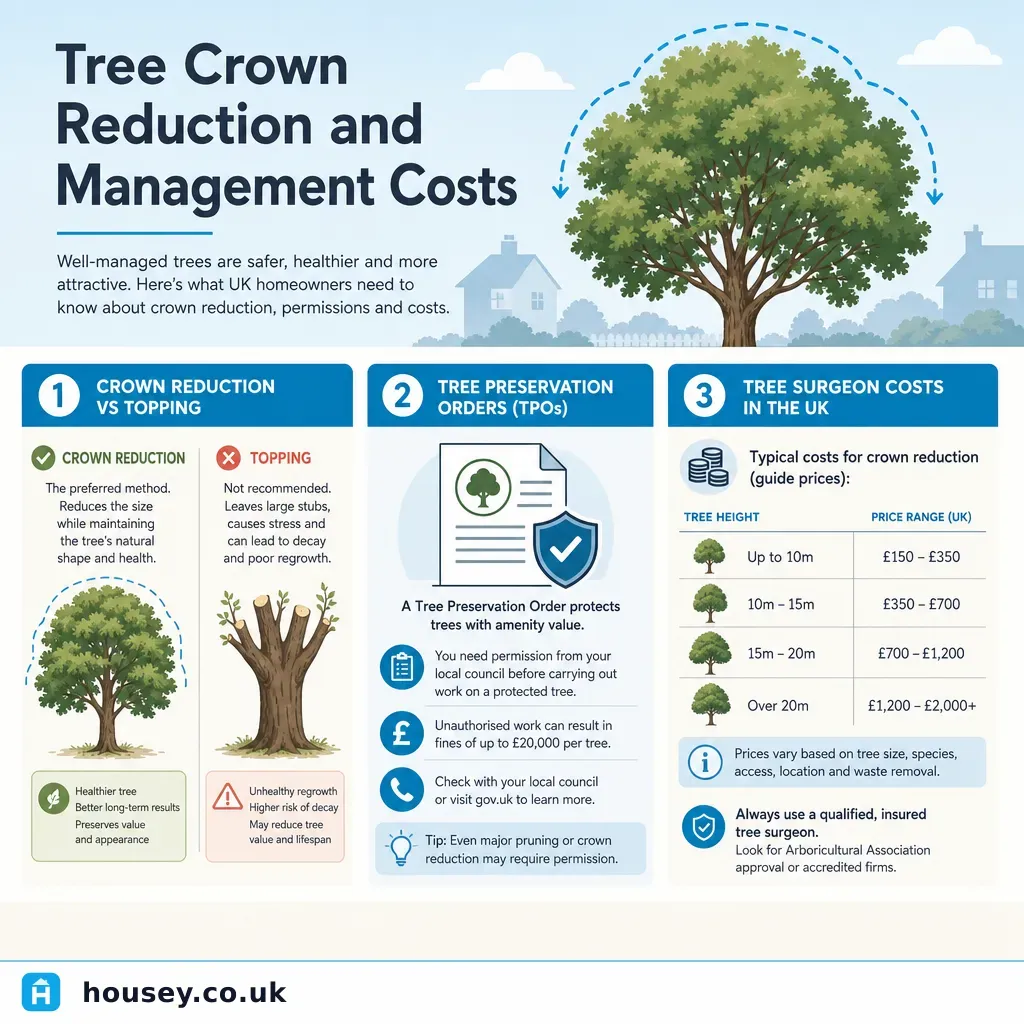
Tree Crown Reduction and Management Costs
Crown reduction reduces a tree's overall size by 15–30% while preserving its natural shape, and must follow BS 3998:2010.
 Improvement & Build
Hedge Cutting and Trimming Services: Costs and Timing
Professional hedge cutting in the UK typically costs £50–£400 depending on hedge height, length, and species.