Window Material Comparison: uPVC and Composite Options for Performance
By Housey · Last reviewed 11th of May 2026
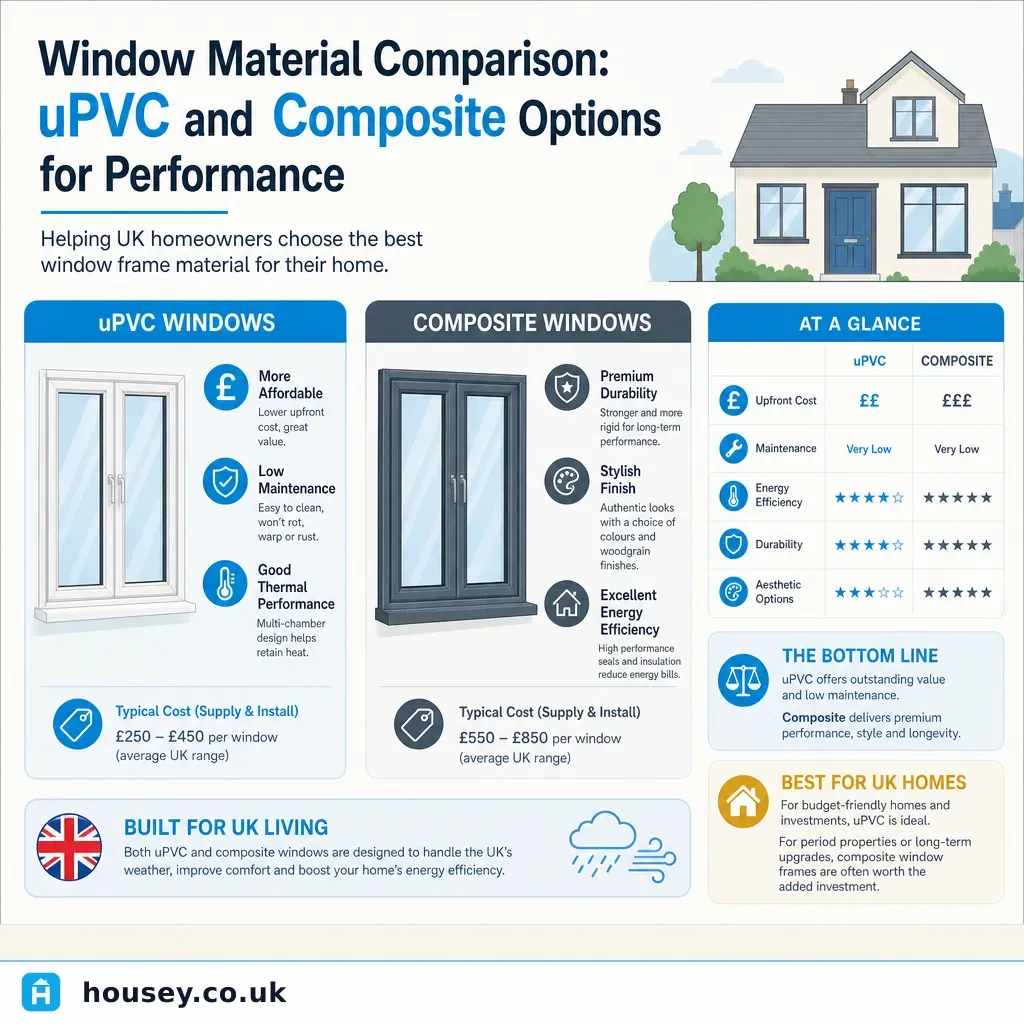
Window Material Comparison: uPVC and Composite Options for Performance
Choosing window frames is a decision most UK homeowners face once every 20–30 years, and with Building Regulations tightening energy-efficiency requirements and energy costs remaining a significant household concern, the material choice has real consequences. In the UK, uPVC (the equivalent of what North American markets call "vinyl") dominates replacement window installations, but composite frames — and alternatives including aluminium and timber — serve different property types, budgets, and planning circumstances.
Key points
- All replacement windows in England must achieve a minimum whole-window U-value of 1.6 W/m²K under Building Regulations Part L (2021); installation should be certified by a FENSA- or CERTASS-registered installer, or notified to local building control.
- uPVC (unplasticised polyvinyl chloride) is the UK term for what North American suppliers market as "vinyl windows"; the materials and performance characteristics are broadly equivalent.
- Composite window frames — most commonly aluminium-clad timber or uPVC-outer/timber-inner — typically achieve lower U-values (0.8–1.4 W/m²K) and longer quoted lifespans (40–60 years) than standard uPVC, at higher cost.
- Windows in listed buildings require listed building consent regardless of material choice; many conservation areas restrict or prohibit uPVC replacement windows.
- Thermally-broken aluminium frames now routinely achieve U-values comparable to uPVC when combined with appropriate glazing, making them a viable option where slim sightlines are a design priority.
uPVC (vinyl) windows: strengths and limitations
uPVC window frames have been standard in UK new-build and replacement markets since the 1980s. Their key advantages are low maintenance, competitive cost, and good thermal performance when combined with double- or triple-glazing and low-emissivity (low-e) glass coatings.
Thermal performance: Modern multi-chamber uPVC profiles can achieve whole-window U-values of 1.0–1.6 W/m²K with standard double glazing. Upgrading to triple glazing or warm-edge spacer bars can push performance below 1.0 W/m²K, though diminishing returns apply in most UK climate conditions.
Durability: Quality uPVC frames typically carry manufacturer guarantees of 10–20 years and realistic in-service lifespans of 20–35 years. Colour stability varies: white remains most stable; coloured or woodgrain foils can fade noticeably on south-facing elevations over 15–20 years.
Maintenance: uPVC requires periodic cleaning and hardware lubrication. Damaged frames generally need replacement rather than repair. Standard exterior paints do not adhere well to uPVC — repainting requires specialist plastic primer.
Composite windows: what the term means in the UK
In UK window terminology, "composite" refers to frames combining two or more materials. The most common configurations are:
- Aluminium-clad timber: Timber core provides structural performance and internal aesthetics; aluminium outer cladding delivers weather resistance with minimal external maintenance. Common in high-specification new-build and heritage retrofit.
- uPVC-outer / timber-inner: A lower-cost composite that provides some timber appearance internally with uPVC weathering performance externally.
- Fibreglass (GRP): Rigid and thermally stable; more common in North American markets but available in the UK for demanding specifications.
Composite frames generally offer superior thermal performance and longer stated lifespans, and are more compatible with period-property aesthetics where plain uPVC would be visually or planning-policy inappropriate.
Comparison table: four main frame materials
Frame type | Typical lifespan | Maintenance | Indicative U-value (double-glazed) | Indicative installed cost per window | Best for | Not ideal for |
|---|---|---|---|---|---|---|
uPVC (vinyl) | 20–35 years | Low | 1.0–1.6 W/m²K | £400–£900 | Standard post-war homes, cost-led replacement | Period properties, slim sightlines |
Composite (alu-clad timber) | 40–60 years | Medium | 0.8–1.4 W/m²K | £800–£2,000+ | Heritage retrofit, high-spec builds | Tight budgets, high-moisture interiors |
Thermally broken aluminium | 40–50 years | Low | 1.0–1.6 W/m²K | £600–£1,500 | Contemporary design, slim sightlines | Budget projects |
Timber | 30–60+ years | High | 1.2–1.8 W/m²K | £500–£2,000+ | Listed buildings, conservation areas | Homeowners unwilling to maintain |
Indicative UK costs, last reviewed 2026-05-11. Prices vary by window size, glazing specification, number of units, and region. Obtain at least three quotes.
Regulatory requirements: FENSA, Part L, and listed buildings
Building Regulations Part L (England, 2021): All replacement windows must meet a minimum whole-window U-value of 1.6 W/m²K. The simplest compliance route is using a FENSA-registered or CERTASS-registered installer, who self-certifies that the installation meets regulations and issues a compliance certificate. This certificate is required when selling the property.
If your installer is not scheme-registered, they must notify your local building control authority, who may inspect the installation before issuing a completion certificate.
Listed buildings: Neither uPVC nor standard aluminium is normally acceptable. Timber frames — often single-glazed with secondary glazing added internally — are the typical approach, but listed building consent is required before any window replacement.
Conservation areas: Planning permission may be required if replacement windows would not preserve the character of the area, particularly where an Article 4 direction is in place. Check with your local planning authority before ordering frames.
Which material should you choose?
- Choose uPVC if your property is a standard post-war or modern home, you want low maintenance, and you have a moderate budget. It is the appropriate choice for the majority of UK residential replacements.
- Choose composite (aluminium-clad timber) if you are retrofitting a Victorian or Edwardian property, need slim sightlines, want timber aesthetics internally, or are specifying for a Passivhaus or EnerPHit project where very low U-values matter.
- Choose thermally-broken aluminium if contemporary slim-sightline aesthetics are a priority and you can accommodate the higher cost on a post-1920s property.
- Choose timber if your property is listed, in a conservation area where uPVC is restricted, or if repairability and authenticity matter more than low maintenance.
- Consult your local planning authority before ordering frames if the property is listed, in a conservation area, or subject to an Article 4 direction.
- Ask a FENSA-registered installer or energy assessor to confirm your chosen specification meets Part L requirements before you commit to a frame type.
When to get professional help
Seek professional advice before finalising your window specification if:
- The property is listed or in a conservation area — a planning consultant or heritage architect should advise on acceptable materials and profiles.
- You are planning a whole-house energy retrofit — a PAS 2035 retrofit coordinator should model the whole thermal envelope before you specify glazing, to ensure windows are addressed in the right sequence alongside insulation and ventilation.
- There are signs of structural movement around window openings — cracks in lintels or distorted frames should be assessed by a structural engineer or RICS surveyor before new frames are fitted.
- You are considering triple glazing — condensation risk on internal surfaces and increased frame loading should be assessed for older construction types.
How Housey can help
Housey connects you with vetted, FENSA-registered window and door installers across the UK. Whether you are comparing uPVC, composite, or aluminium specifications, getting three written quotes with full glazing specifications makes comparison straightforward.
Frequently asked questions
What is the difference between uPVC and vinyl windows?
There is no functional difference — "vinyl" is simply the US-market term for the same material UK suppliers label as uPVC (unplasticised polyvinyl chloride). If you encounter "vinyl windows" in UK product marketing, it refers to uPVC-framed windows. Both share broadly the same thermal performance, lifespan, and maintenance requirements.
Do replacement windows need building regulations approval in England?
Yes. Replacement windows must comply with Building Regulations Part L (thermal performance) and Part K (safety glazing). Using a FENSA- or CERTASS-registered installer means they self-certify compliance and issue a certificate. Without scheme registration, your installer must notify local building control. Keep the certificate — it is needed when selling the property.
Are composite windows worth the extra cost?
For most standard post-war UK homes, uPVC offers good performance at moderate cost. Composite windows justify the additional investment for period properties, high-specification retrofits, or where a longer lifespan and lower U-value matter more than upfront cost. Compare U-values, guarantees, and planning acceptability, not just material type.
Can I replace windows in a conservation area without permission?
Planning permission may be required, particularly where an Article 4 direction applies or where the original windows contribute to the character of the area. Requirements vary between local authorities. Check with your local planning authority before placing any order — the consequences of replacing windows without permission can include enforcement action.
Sources and further reading
- Building Regulations Approved Document L: Conservation of fuel and power — GOV.UK
- FENSA: Find a registered installer — FENSA
- Planning Portal: Windows — Planning Portal
- Historic England: Advice on windows in traditional buildings — Historic England
- Energy Saving Trust: Double glazing guide — Energy Saving Trust
Useful next reads
 Improvement & Build
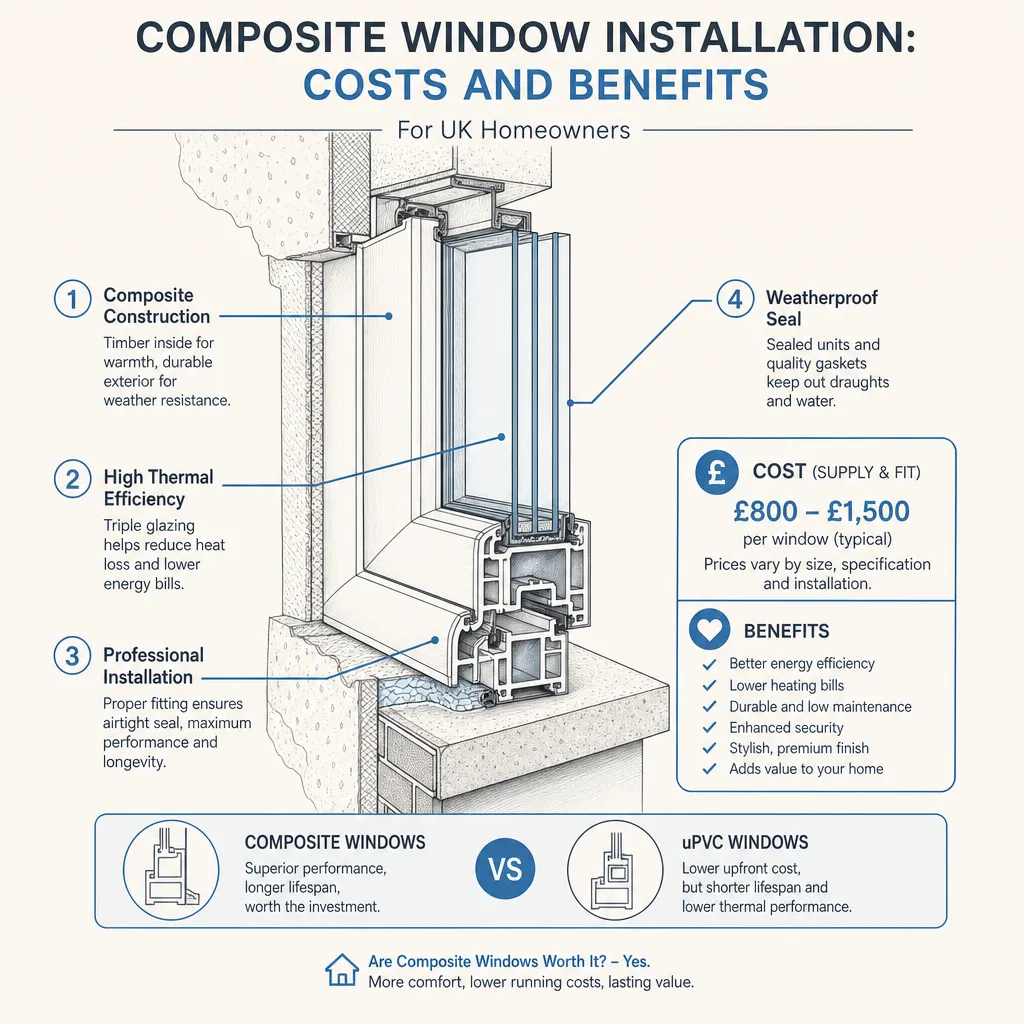
Composite Window Installation: Costs and Benefits
Composite windows combine two or more frame materials — typically a timber or aluminium core with a uPVC or aluminium outer casing — for better thermal performance and durability than standard uPVC.
 Improvement & Build
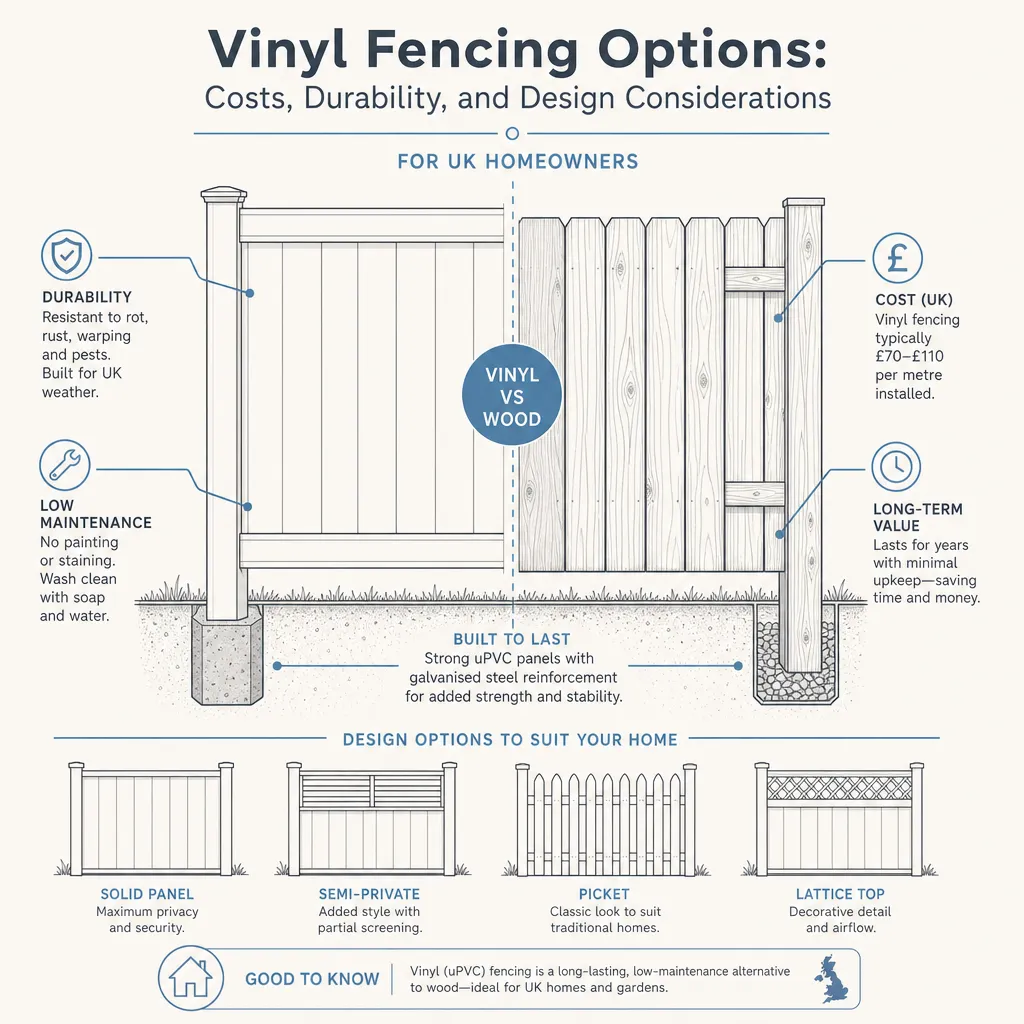
Vinyl Fencing Options: Costs, Durability, and Design Considerations
PVC (vinyl) fencing in the UK typically costs £100–£300 per linear metre installed and lasts 20–30 years with minimal maintenance.
 Improvement & Build
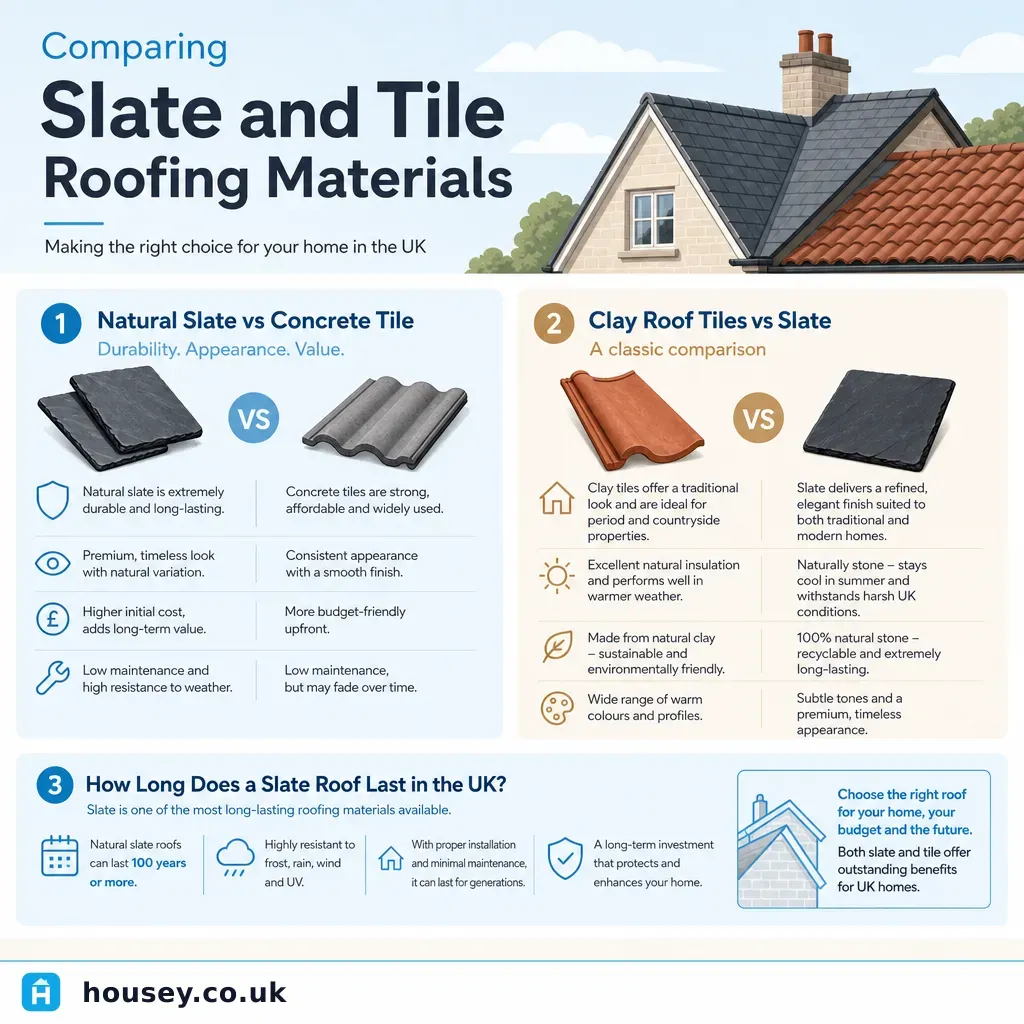
Comparing Slate and Tile Roofing Materials
Natural slate typically lasts 80–150 years and suits period and listed UK properties, while clay tiles offer 60–100 years and remain historically appropriate for Victorian and Edwardian stock.
 Improvement & Build
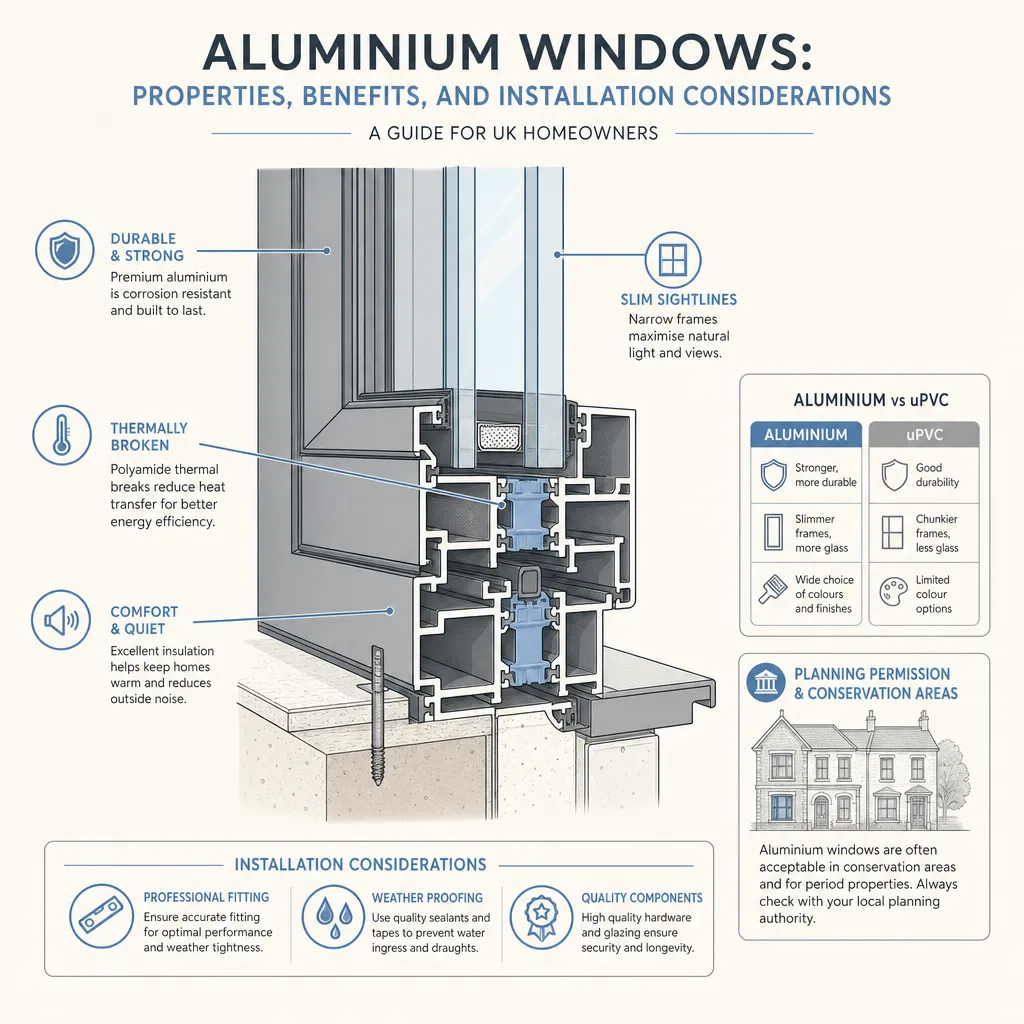
Aluminium Windows: Properties, Benefits, and Installation Considerations
Aluminium windows offer slim sightlines, long lifespan, and minimal maintenance.
 Improvement & Build
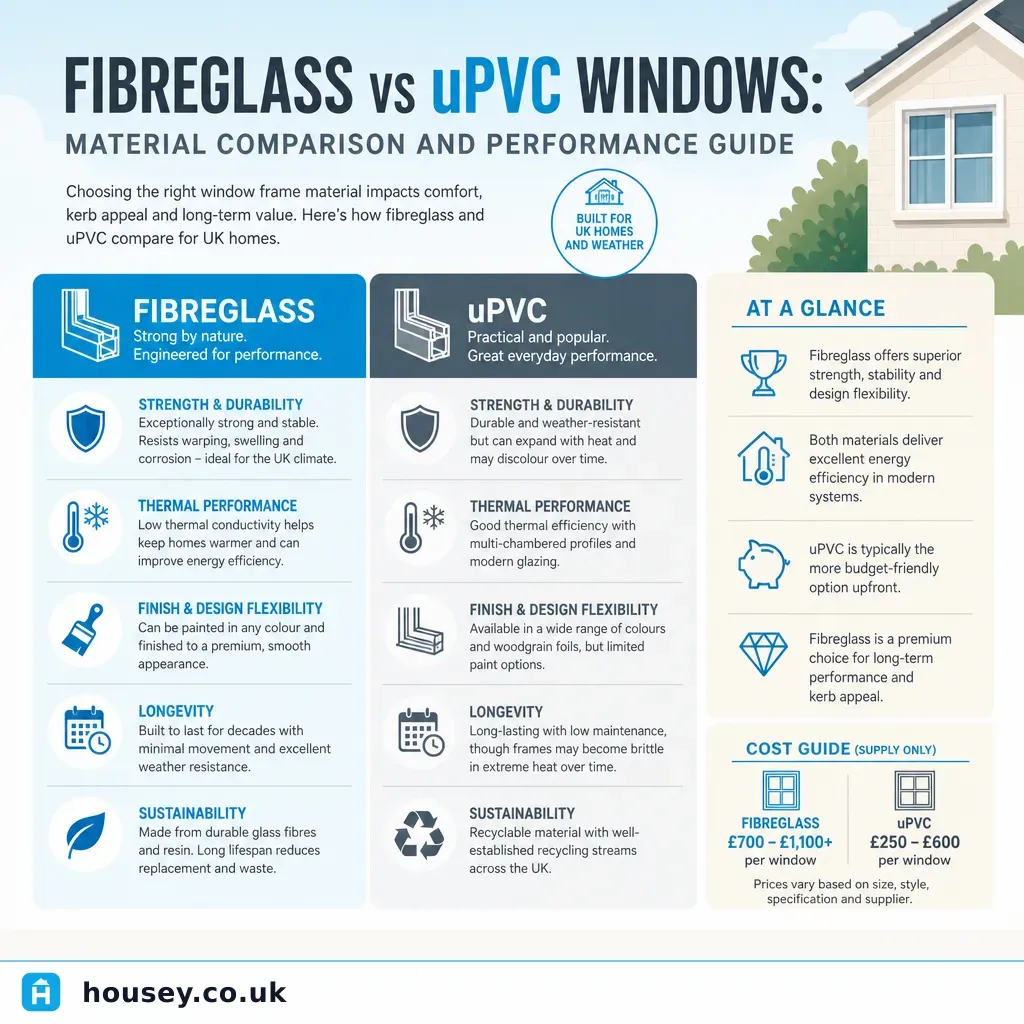
Fibreglass vs uPVC Windows: Material Comparison and Performance Guide
In the UK, vinyl windows are sold as uPVC — the dominant frame material for replacement windows.