What to Budget for Installing a Walk-In Shower Enclosure
By Housey · Last reviewed 6th of May 2026
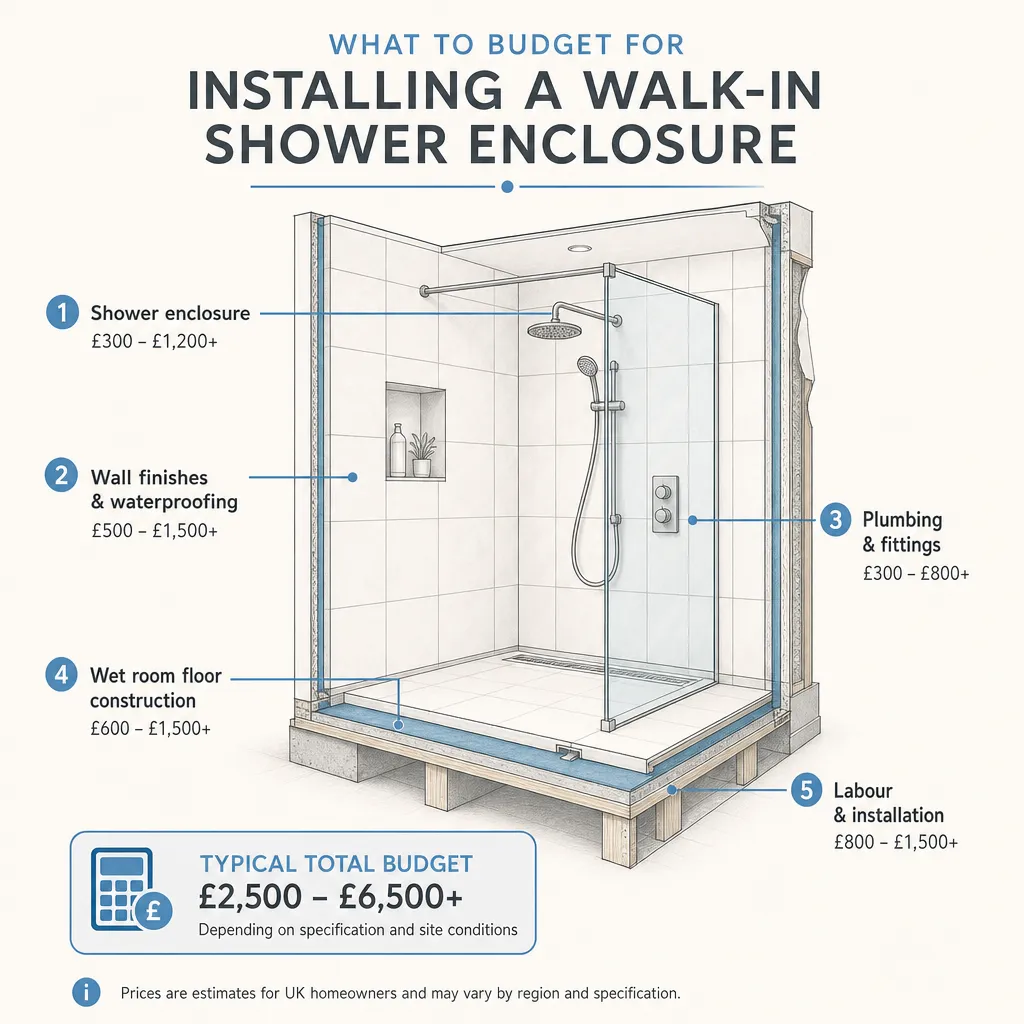
What to Budget for Installing a Walk-In Shower Enclosure
Replacing a bath or standard shower cubicle with a walk-in enclosure is one of the most popular bathroom upgrades in UK homes. The decision typically arises during a full bathroom renovation, when an ageing tray or door fails, or when accessibility becomes a priority. Costs vary widely depending on the enclosure type, floor construction, and finish — understanding the full picture before appointing a bathroom fitter helps avoid mid-project surprises.
Key points
- A walk-in shower enclosure with a tray, including supply and installation, typically costs £1,500–£3,900 in the UK depending on specification and location.
- A full wet room conversion — with tanked floor, level-access drain, and tiling — usually costs £3,000–£9,000; costs rise significantly on timber-joisted floors, which require specialist preparation.
- Building Regulations Part G requires thermostatic shower valves on new shower installations in England to prevent scalding.
- Timber-joisted floors (common in Victorian and Edwardian homes) require specialist waterproofing and drainage work to accommodate a wet room — this must be assessed before any work begins.
- Disabled Facilities Grants (DFG) of up to £30,000 are available in England for accessibility-led shower adaptations, subject to means testing and an occupational therapist's recommendation.
What type of walk-in shower are you installing?
The term "walk-in shower enclosure" covers a broad range of products and configurations. Your choice affects not only cost but also the extent of structural work involved.
Type | Description | Typical supply cost | Best for | Not ideal for |
|---|---|---|---|---|
Walk-in enclosure with tray | Fixed glass panel(s), no door, acrylic or stone resin tray | £400–£1,500 | Straightforward swap, most floor types, tighter budgets | Level-access requirements |
Frameless glass walk-in panel | Single or double frameless panels, minimalist finish | £600–£2,500 | Contemporary look, easier cleaning | Very compact bathrooms |
Wet room (tanked floor) | No tray; floor waterproofed and drained centrally | £1,000–£3,000+ materials | Level-access needs, concrete slab floors, premium bathrooms | Timber floors without specialist prep |
Walk-in corner enclosure | Two open-entry panels forming a corner | £500–£1,800 | Larger bathrooms, replacing a corner bath or cubicle | Very compact bathrooms |
All figures above are supply costs only. Installation — including plumbing, waterproofing, and tiling — adds substantially to the total.
What does installation cost in practice?
Indicative UK costs, last reviewed 2026-05-06:
Walk-in enclosure with tray (replacing existing shower, no structural work):
Item | Indicative cost |
|---|---|
Enclosure and tray (supply) | £500–£1,500 |
Plumbing — thermostatic valve, pipework, waste | £300–£600 |
Tiling or waterproof wall panels | £400–£1,200 |
Installation labour (bathroom fitter) | £300–£600 |
Total | £1,500–£3,900 |
Full wet room conversion (tanking, tiling, level-access drain):
Item | Indicative cost |
|---|---|
Floor tanking and preparation | £500–£1,500 |
Wet room drain and waste installation | £200–£500 |
Glass panel(s) | £500–£2,000 |
Floor and wall tiling | £800–£2,500 |
Thermostatic valve and shower head | £150–£600 |
Labour (bathroom fitter and plumber) | £800–£2,000 |
Total | £2,950–£9,100 |
Costs are generally higher in London and the South East. VAT at 20% applies to labour and most materials unless the work qualifies for reduced VAT (5%) under relief for works in dwellings occupied by disabled persons — ask your installer to confirm eligibility before work begins.
What drives the cost up or down?
Several factors materially affect the final bill:
- Floor structure: Wet rooms on timber-joisted floors — typical in Victorian and Edwardian terraces — require channelling for the waste pipe and a reinforced, tanked subfloor. This can add £500–£1,500 to the project and must be assessed before any commitments are made.
- Tanking quality: Proprietary tanking systems such as Schlüter Kerdi or BAL Waterproofing are more reliable than brush-applied membranes alone. Cutting corners here is the most common cause of long-term water ingress and structural damage.
- Wall and floor finishes: Large-format tiles, natural stone, and designer wall panels cost significantly more than standard ceramic tiles.
- Valve and controls: A basic fixed shower valve costs £50–£100; a quality thermostatic valve costs £150–£400; a digital shower system costs £500 or more.
- Accessibility features: Fold-down seats, grab rails, non-slip floor finishes, and wider walk-in openings add cost but may be grant-funded for eligible homeowners.
Which option is right for you?
- Choose a walk-in enclosure with a shower tray if you want a clean, modern look without major structural work, if your floor is timber-joisted, or if the budget is tighter.
- Choose a wet room if you need level-access — for accessibility or design preference — your floor is a concrete slab, or you are doing a full bathroom renovation where the investment in preparation is already justified.
- Ask a bathroom specialist or wet room installer to assess your floor structure before committing to a wet room on a timber-joisted floor — incorrect installation leads to water ingress and structural damage that is costly to rectify.
- Contact your local council's occupational therapy team first if accessibility is the primary reason — this may unlock Disabled Facilities Grant funding and affect the design specification before any contractor is instructed.
What to ask before accepting a quote
Before instructing a bathroom fitter or plumber:
- What is included in the quote — supply, labour, tiling, waste disposal?
- Who will carry out the plumbing, and are they registered with a recognised body such as CIPHE or APHC?
- How will the floor waterproofing be done, and which tanking system will be used?
- Is the shower valve thermostatic, and does the installation comply with Building Regulations Part G?
- What warranty covers the enclosure, valve, and installation workmanship?
- Will any building control notification be required for this work?
- Is VAT included, and does the work qualify for the 5% reduced VAT rate?
- What happens if additional problems are found once the existing shower or bath is removed?
When to get professional help
Most walk-in shower and wet room installations should be carried out by a qualified bathroom fitter and a registered plumber. Seek professional advice before starting if:
- You are converting a timber-joisted floor to a level-access wet room — the floor structure must be professionally assessed before any work begins
- There is evidence of existing damp, mould, or previous water damage in the bathroom — resolve the underlying cause before installing new waterproofing
- Accessibility is the main driver — speak to an occupational therapist or your local council before committing to a specification, as grant conditions may affect design choices
- The waste pipe routing is unclear or requires running beneath a structural floor joist
How Housey can help
Housey can help you find and compare quotes from experienced bathroom renovation professionals across the UK. Explore bathroom renovation and extension specialists on Housey to request quotes for your walk-in shower or wet room project.
Frequently asked questions
Do I need planning permission for a walk-in shower or wet room?
Usually not. Walk-in shower and wet room installations are internal works and do not typically require planning permission. If the bathroom is in a listed building, you may need listed building consent before starting — check with your local planning authority. Permitted development rights are not generally affected by internal bathroom renovations.
Does a walk-in shower installation need to comply with building regulations?
Building Regulations Part G requires thermostatic valves on new shower installations in England to prevent scalding. In practice, most domestic bathroom work is handled through Competent Person Schemes — a registered plumber or bathroom installer can self-certify compliance. Ask your installer to confirm Part G compliance and provide documentation before work begins.
How long does a walk-in shower installation take?
A straightforward enclosure swap with no structural work typically takes 1–2 days. A full wet room conversion — including floor tanking, tiling, and new plumbing — usually takes 3–5 days. Projects involving timber floor restructuring to accommodate a level-access drain may take up to a week or slightly longer.
Can I get a grant for a walk-in shower for accessibility reasons?
Yes. The Disabled Facilities Grant (DFG) provides up to £30,000 in England for adaptations including level-access showers and wet rooms, subject to a means test and an occupational therapist's recommendation. Grant amounts vary in Wales, Scotland, and Northern Ireland. Contact your local council's housing adaptation team to apply and arrange an assessment.
Sources and further reading
- Disabled Facilities Grant — GOV.UK
- Approved Document G: Sanitation, hot water safety and water efficiency — GOV.UK
- Find a registered plumbing and heating engineer — Chartered Institute of Plumbing and Heating Engineering (CIPHE)
- APHC member contractor search — Association of Plumbing and Heating Contractors (APHC)
Useful next reads
 Improvement & Build
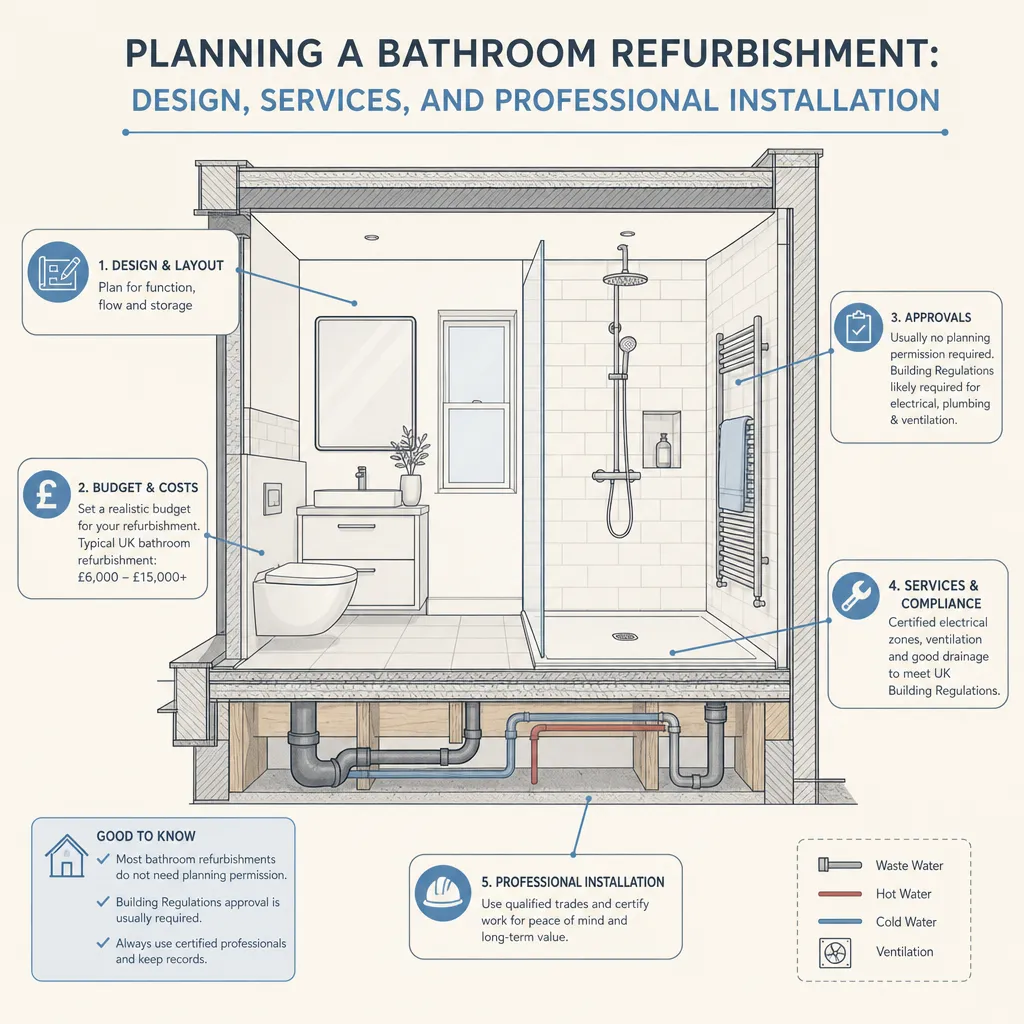
Planning a Bathroom Refurbishment: Design, Services, and Professional Installation
A bathroom refurbishment in the UK typically involves at least three trades — plumber, electrician, and tiler — and costs £4,000–£12,000 for a full project.
 Improvement & Build
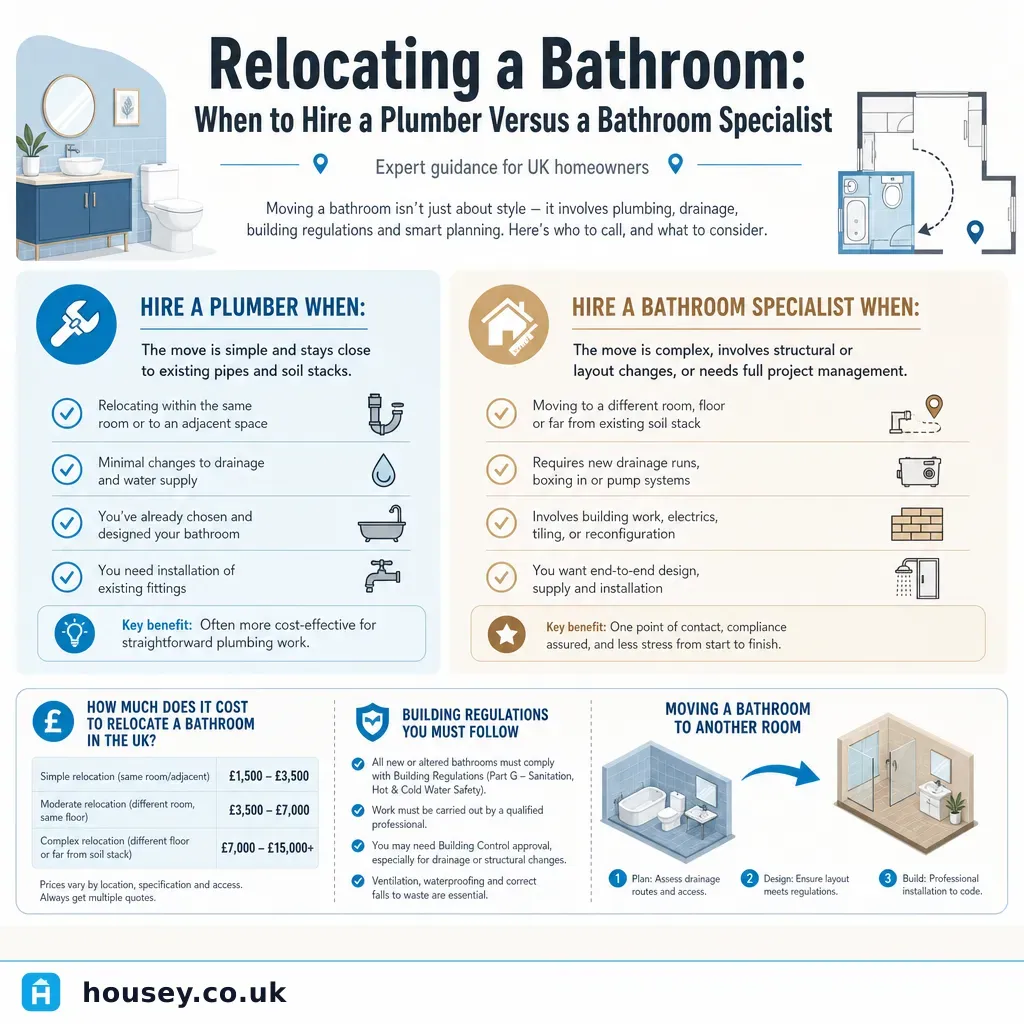
Relocating a Bathroom: When to Hire a Plumber Versus a Bathroom Specialist
Relocating a bathroom usually requires both a qualified plumber for pipework and drainage and other specialist trades for electrics, tiling, and finishes.
 Improvement & Build
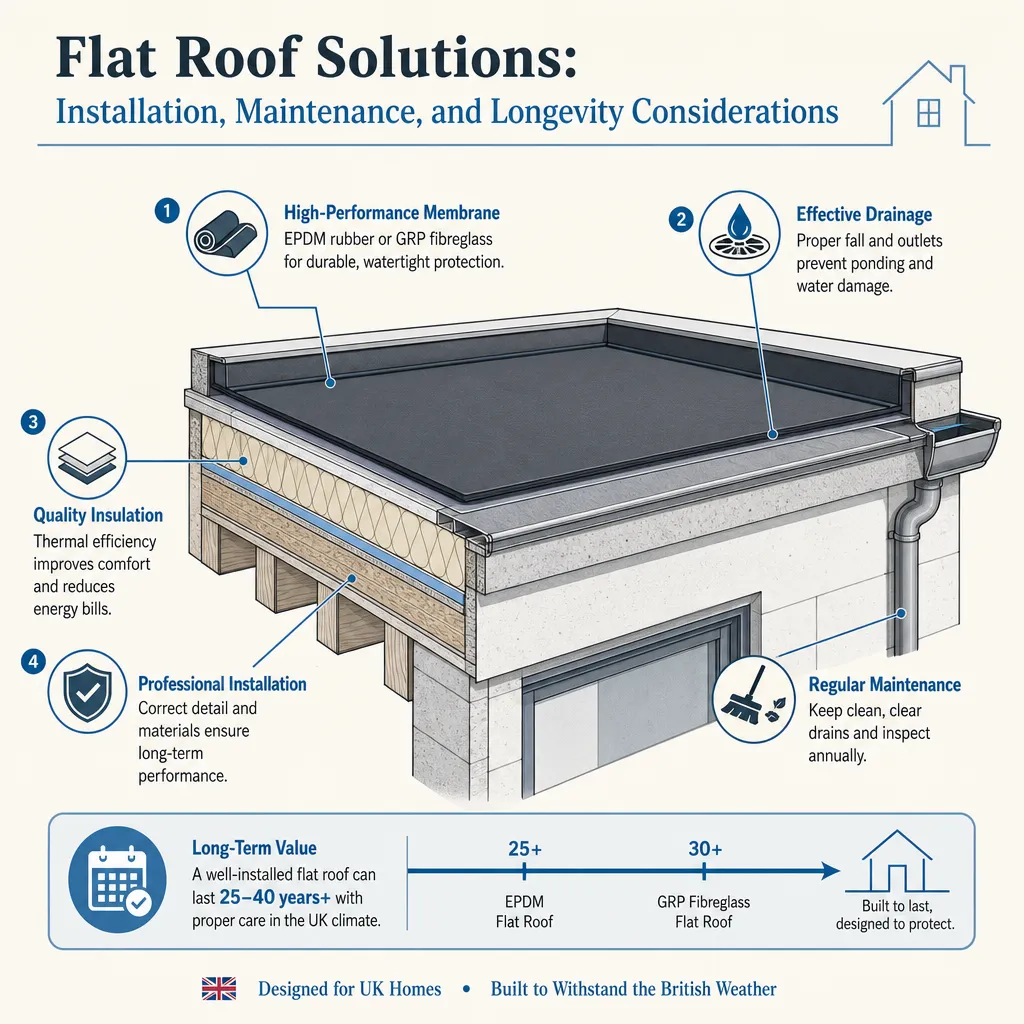
Flat Roof Solutions: Installation, Maintenance, and Longevity Considerations
Flat roofs use several waterproofing systems — EPDM rubber, GRP fibreglass, liquid-applied coatings, modified bitumen felt, lead, and zinc — each with different lifespans and installation requirements.
 Improvement & Build
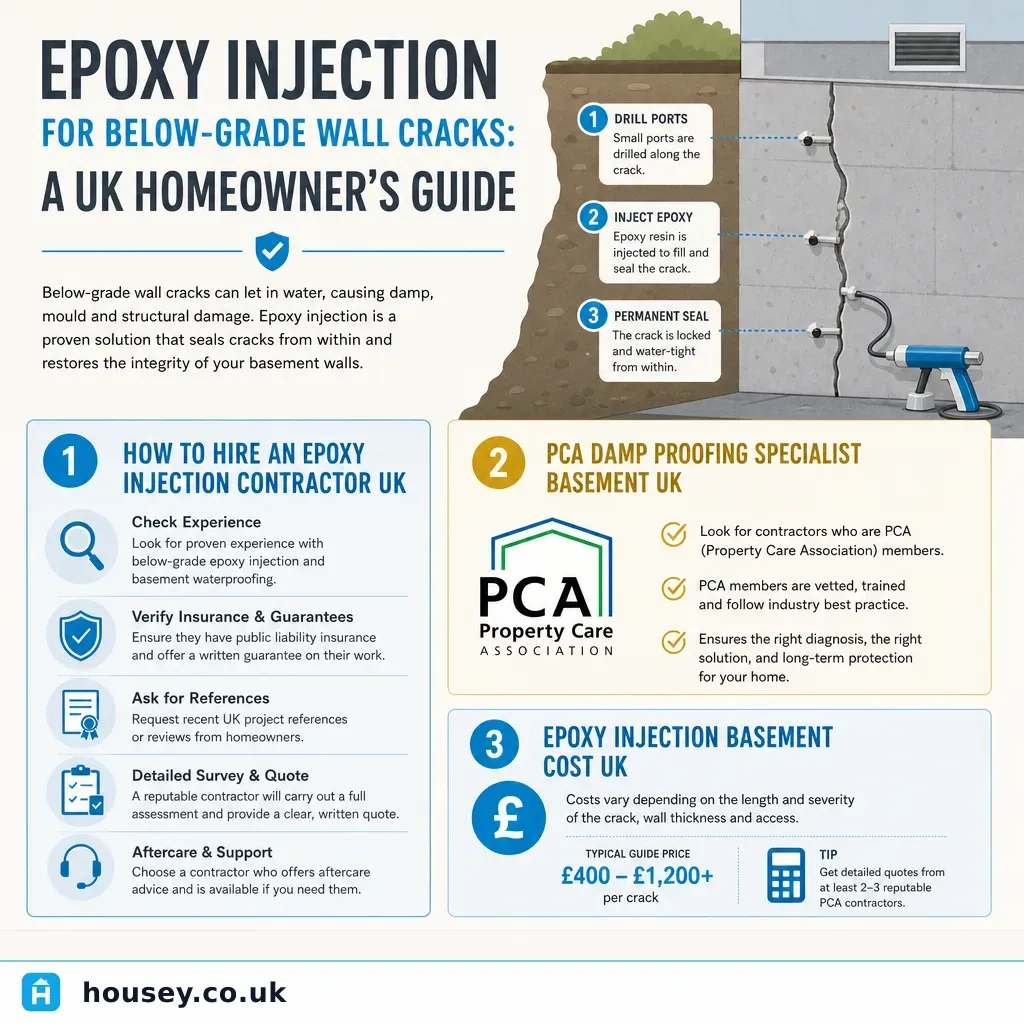
Epoxy Injection for Below-Grade Wall Cracks: A UK Homeowner's Guide
Epoxy injection seals stable, non-moving cracks in below-grade concrete walls but will not work on masonry, actively moving cracks, or as a standalone fix for habitable basement conversions.
 Improvement & Build
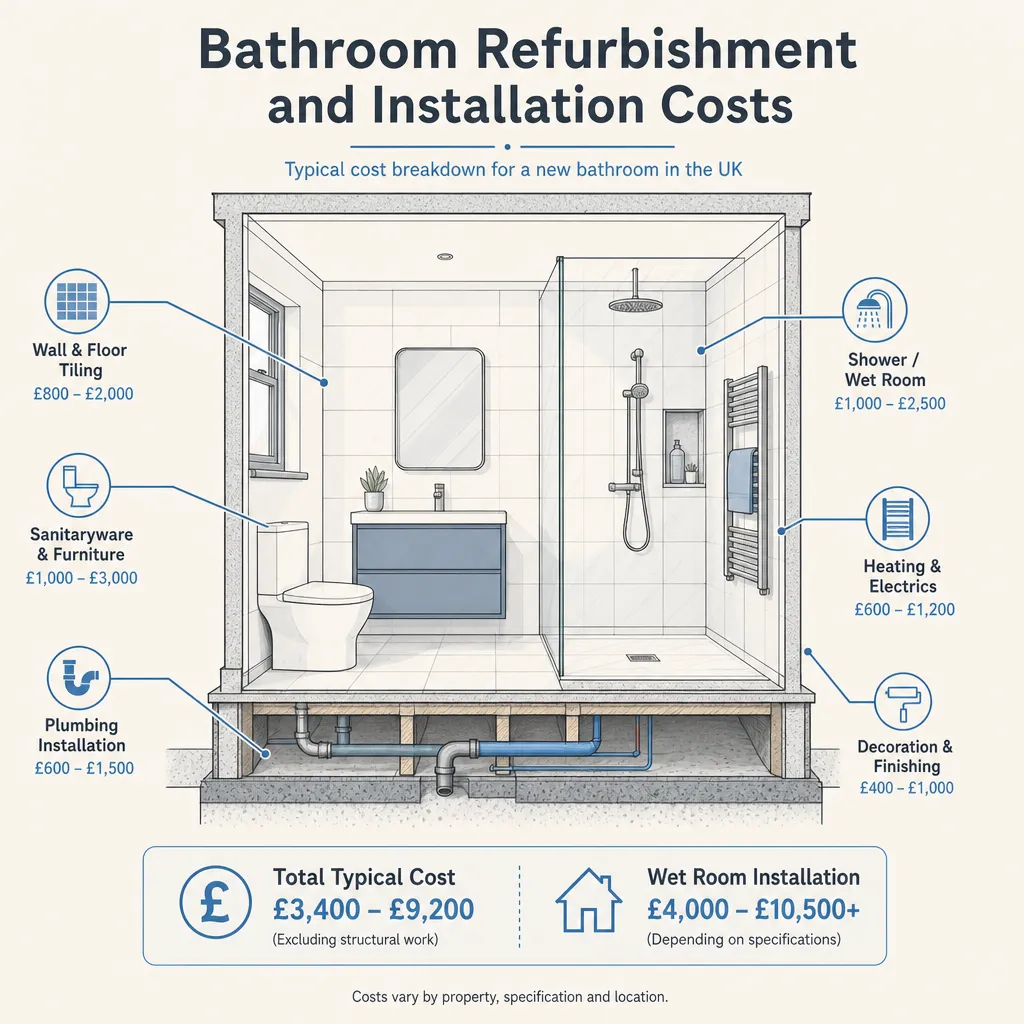
Bathroom Refurbishment and Installation Costs
A basic UK bathroom refurbishment typically costs £2,500–£5,000; a mid-range renovation with a revised layout runs £5,000–£10,000; a high-end or wet room installation can reach £12,000–£16,000 or more.