Wall-Hung Toilets: Space-Saving Installation and Maintenance Advantages
By Housey · Last reviewed 7th of May 2026
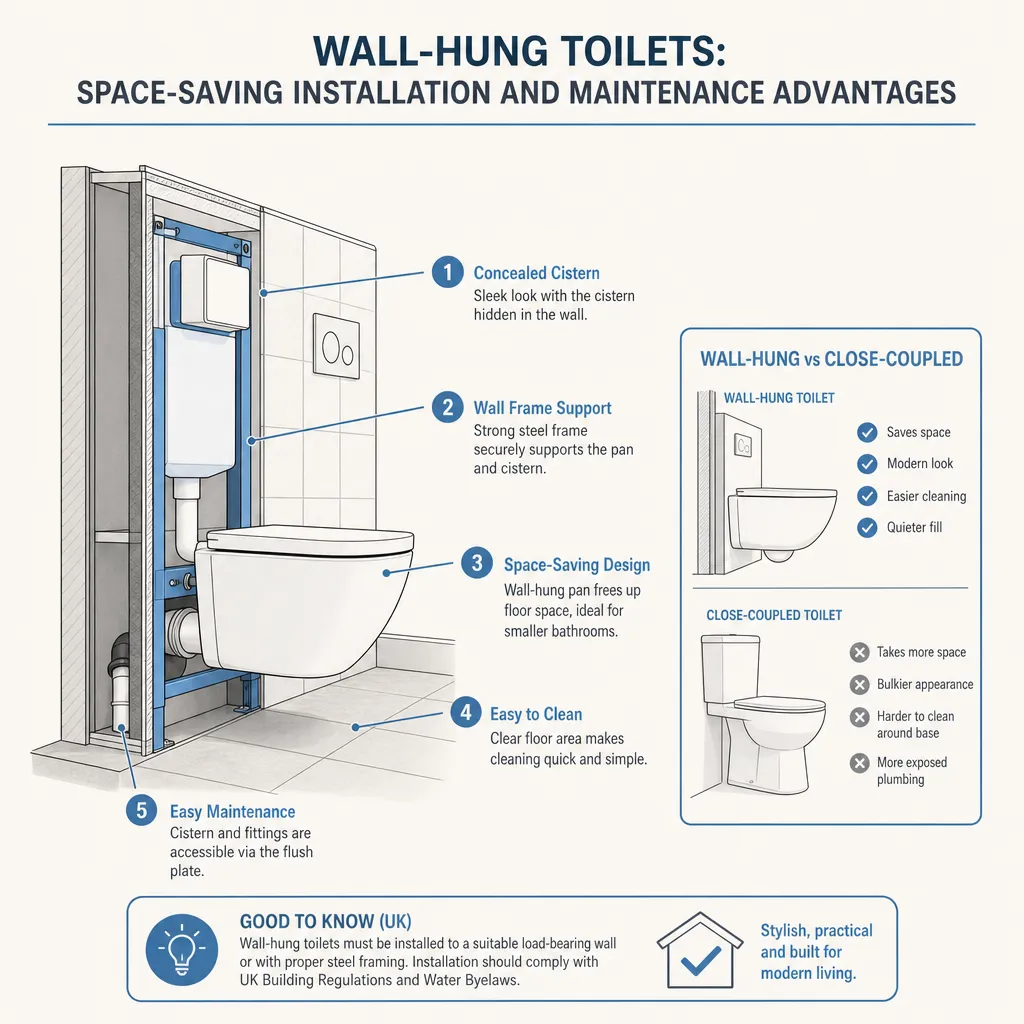
Wall-Hung Toilets: Space-Saving Installation and Maintenance Advantages
Bathroom renovations in UK homes frequently involve difficult trade-offs between aesthetics, function, and the constraints of older or smaller rooms. Wall-hung toilets have moved from high-end hotel bathrooms into mainstream domestic use, but the installation requirements are substantially different from a standard close-coupled WC — and misunderstanding those requirements is a common source of additional cost and remedial work during bathroom refits.
Key points
- Wall-hung toilets require a concealed carrier frame made from galvanised steel, which must be anchored to a structural floor and/or wall capable of supporting a static test load of at least 400kg, as specified in BS EN 997:2012+A1:2012.
- Under Approved Document G of the Building Regulations (England), new WC installations must meet water efficiency standards — a maximum 6-litre full flush, with a reduced flush option of no more than 4 litres on dual-flush cisterns.
- The concealed cistern must have a dedicated access panel — typically at minimum 300mm × 300mm — to allow future servicing without major wall disruption.
- Indicative total installation costs in the UK range from approximately £600 to £1,500 or more depending on wall construction, plumbing run changes, and tiling requirements (indicative UK costs, last reviewed 2026-05-07).
- Most carrier frame manufacturers offer guarantees of 10 to 12 years; the ceramic pan itself can last 20 years or more under normal domestic use.
How does a wall-hung toilet work?
Unlike a close-coupled toilet — where the cistern rests directly on the pan and the entire unit stands on the floor — a wall-hung toilet separates the functional components behind the finished wall surface.
The two key elements are:
- Carrier frame: a galvanised steel frame that fixes to the structural floor and/or rear wall. The concealed cistern sits inside the frame, and the toilet pan bolts to the frame's support arms at a fixed finished height — usually 40cm or 43cm from the finished floor, though some frames offer adjustable positioning.
- Pan: a wall-hung ceramic WC pan that bolts to the carrier frame and projects clear of the floor by approximately 30 to 40mm, leaving the area beneath entirely unobstructed.
Once the carrier frame is installed and the wall is finished — typically with moisture-resistant plasterboard and ceramic tiling — the frame is invisible. Only the flush plate and access panel remain visible on the finished wall surface.
Wall-hung vs close-coupled vs back-to-wall: which suits your bathroom?
Type | Approx. floor depth saving | Cistern visible | Access for servicing | Installation complexity | Indicative supply cost (pan/unit only) |
|---|---|---|---|---|---|
Wall-hung | 15–20cm | No (concealed in wall) | Via dedicated access panel | High — frame, boarding, tiling | £250–£800+ |
Close-coupled | None | Yes | Lift cistern lid | Low — direct replacement | £100–£500 |
Back-to-wall | Moderate (no exposed cistern) | No (in furniture unit or false wall) | Via removable panel or unit | Medium | £150–£600 |
Indicative UK supply costs, last reviewed 2026-05-07. Installation labour is additional and varies significantly by location and project scope.
A back-to-wall toilet is often a practical middle ground: the cistern is concealed inside a furniture unit or slim false wall rather than a full in-wall frame, making servicing more straightforward and reducing the structural demands on the wall.
Which toilet type should you choose?
- Choose a wall-hung toilet if you are undertaking a full bathroom renovation with tiling; your plumber has confirmed the wall and floor construction can support a carrier frame; the bathroom is small and maximising the visual sense of space matters; or you want the simplest floor to clean.
- Choose a close-coupled toilet if budget is the main priority; you need a straightforward replacement without any structural work or re-boarding; or the existing soil pipe position is fixed and not compatible with a wall-hung frame.
- Choose a back-to-wall toilet if you want a cleaner look without the complexity of a fully in-wall installation; you already plan a vanity unit or false wall that can house the cistern; or you want easier future access to the cistern mechanism.
- Ask a qualified plumber if you are unsure whether your wall is structural, if the existing soil pipe centreline does not align with standard carrier frame positions, or if the project involves moving or extending any part of the above-ground drainage system.
Installation requirements in detail
Carrier frame and structural support
The carrier frame is fixed to the structural floor using frame anchor bolts and, depending on wall type, to the rear wall using heavy-duty fixings. On concrete or masonry floors and walls, this is generally straightforward. On timber joist floors or stud walls, the structure must be assessed and reinforced with noggins or a purpose-made structural backing plate to achieve the required load capacity.
Key installation dimensions to clarify with your plumber before ordering:
- Frame depth behind finished wall: typically 120–150mm, depending on manufacturer
- Minimum wall cavity required: usually 150mm or more
- Pan finished height: 40cm or 43cm from finished floor level on most standard frames; adjustable frames extend this range to 38–58cm
Plumbing and drainage alignment
The soil pipe connection must align with the carrier frame's waste outlet position. Most UK frames connect to a 100mm (4") or 110mm soil pipe. If the existing soil pipe centreline does not match, the plumber may need to reroute the waste — which can involve notching floor joists and may require Building Regulations consideration depending on scope.
The cold water supply to the concealed cistern should include an isolating valve that is accessible from the access panel, allowing the cistern to be isolated without shutting off the entire bathroom water supply.
Finishing and tiling
Once the frame is installed and any plumbing connections made, the surrounding wall is usually boarded with moisture-resistant plasterboard (such as cement board or equivalent) before tiling. The access panel cut-out must be coordinated with the tile layout so it remains fully accessible after the finished surface is applied. A poorly positioned or obscured access panel is a common mistake that creates unnecessary disruption at first service.
Maintenance: realistic advantages and considerations
Advantages of wall-hung toilets for maintenance:
- The floor beneath the pan is fully clear, making mopping easier and eliminating the concealed damp risk that can develop around the base of a floor-standing toilet
- The concealed cistern is protected from dust, condensation on the exterior, and scale build-up on the outside of the unit
- The ceramic pan can typically be unbolted and replaced without disturbing the carrier frame or wall tiling
Considerations:
- Accessing the cistern mechanism for repairs — fill valve, flush valve, seals — requires opening the access panel; this is quick but slightly less convenient than simply lifting a close-coupled cistern lid
- Identifying a slow internal leak is harder when the cistern is concealed; the access panel area and any visible grout joints near the panel should be checked periodically for early signs of moisture
Red flags during installation
If a contractor proposes any of the following during a wall-hung toilet installation, ask them to reconsider before work proceeds:
- Fixing the carrier frame into an unsupported lightweight stud wall without structural reinforcement
- Positioning or tiling over the access panel so that it cannot be opened without breaking tiles
- Using a waste connection that misaligns with the soil pipe centre, introducing an unnecessary bend
- Omitting an isolating valve on the water supply within the frame
- Setting the pan height without confirming the homeowner's preference or any accessibility requirements beforehand
- Not pressure-testing the water supply connection inside the frame before boarding and tiling
When to get professional help
Wall-hung toilet installation should always be carried out by a qualified plumber — ideally one registered with the Chartered Institute of Plumbing and Heating Engineering (CIPHE) or who holds Water Regulations compliance training. Where structural wall or floor modifications are needed, a builder with relevant experience may also need to be involved.
Seek professional advice before proceeding if:
- You are unsure whether your wall construction can support the required 400kg load
- The existing soil pipe centreline does not align with standard frame positions
- You discover unexpected moisture, rot, or structural damage when opening up the wall
- The flush mechanism fails and you cannot access the cistern mechanism cleanly via the access panel
Under the Water Supply (Water Fittings) Regulations 1999 (England and Wales), new WC installations must comply with water efficiency and backflow prevention requirements. In some cases you may need to notify your water supplier before starting work — your plumber should confirm whether notification applies.
How Housey can help
Housey helps homeowners find and compare qualified local tradespeople for bathroom renovations, including plumbers and bathroom fitters experienced with wall-hung toilet and concealed cistern installations. Use the platform to request quotes and compare credentials from vetted professionals in your area before committing to a contractor.
Frequently asked questions
Can a wall-hung toilet be fitted to any wall?
Not all walls are suitable. The carrier frame must anchor to a structure capable of supporting at least 400kg. Solid masonry walls and concrete floors are usually adequate. Timber stud walls can work but need reinforcing noggins or a structural plate. Lightweight plasterboard partition walls are generally unsuitable without significant structural modification. A qualified plumber or builder should assess your wall before installation begins.
Do wall-hung toilets need Building Regulations approval?
A straightforward like-for-like WC replacement does not usually require Building Regulations approval. However, significant changes to the drainage system, soil stack alterations, or works forming part of a larger extension may bring the project within scope. New WC installations must also comply with the Water Supply (Water Fittings) Regulations 1999 on water efficiency. Check with your local building control authority if you are uncertain.
How do you fix a wall-hung toilet that is leaking?
First identify whether the leak is from the supply side — fill valve, cistern supply pipe — or the waste side at the pan-to-soil-pipe connection. Open the access panel and inspect for moisture around the fill valve and supply isolating valve. Waste leaks are usually at the pan connection. In either case, shut off the water supply and ask a qualified plumber to carry out the repair.
What height should a wall-hung toilet be set at?
Most UK carrier frames set the finished pan at 40cm or 43cm from the finished floor level. Some adjustable frames offer a range of 38 to 58cm, which suits households with specific accessibility requirements. Standard ergonomic guidance suggests 40 to 45cm suits most adults, but personal preference and accessibility needs should be confirmed with your installer before the frame is permanently fixed.
How long does a wall-hung toilet last?
The ceramic pan can last 20 years or more with normal use. The carrier frame, if correctly installed, is effectively a permanent structural element. The cistern's internal flushing mechanism — fill valve, flush valve, seals — typically needs servicing or partial replacement after 10 to 15 years, similar to a standard close-coupled cistern. Most manufacturers offer frame guarantees of 10 to 12 years.
Sources and further reading
- Approved Document G: Sanitation, hot water safety and water efficiency — GOV.UK
- Water Supply (Water Fittings) Regulations 1999 — legislation.gov.uk
- Water Regulations Advisory Scheme (WRAS) — Water Regulations Advisory Scheme
- Chartered Institute of Plumbing and Heating Engineering (CIPHE) — CIPHE
- BS EN 997:2012+A1:2012 WC pans with integral trap — overview — BSI
Useful next reads
 Improvement & Build
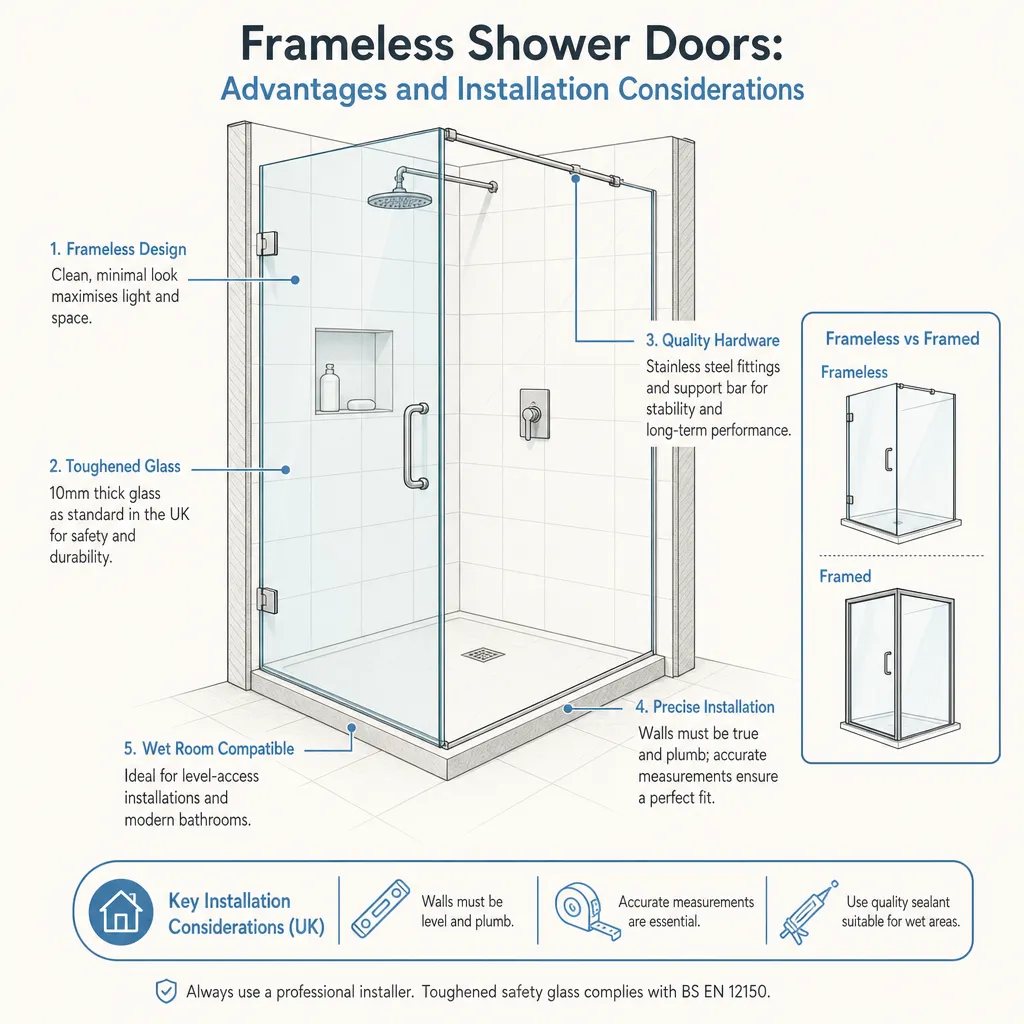
Frameless Shower Doors: Advantages and Installation Considerations
Frameless shower doors use toughened or laminated safety glass — minimum 8mm thick — without a surrounding metal frame.
 Improvement & Build
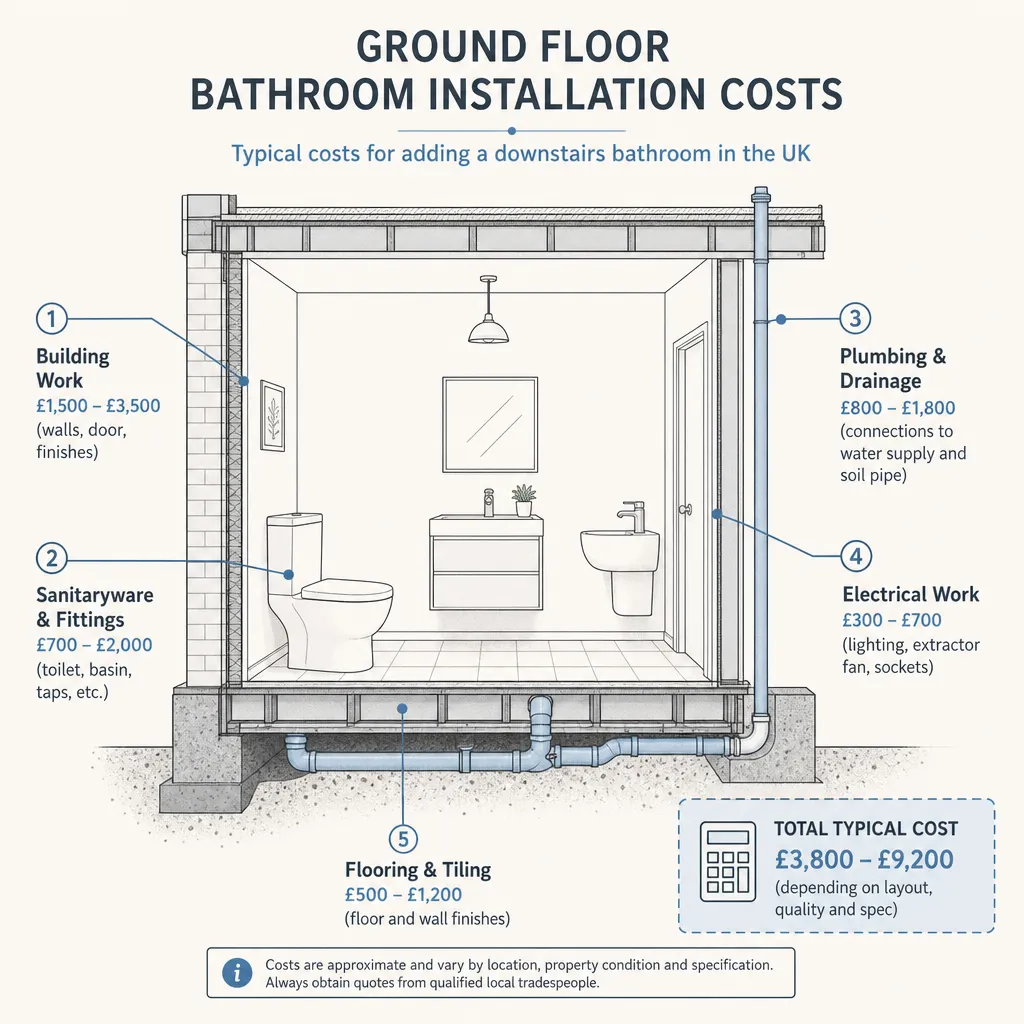
Ground Floor Bathroom Installation Costs
Installing a ground floor bathroom in the UK costs roughly £2,000–£5,000 for a basic cloakroom and £5,500–£15,000 for a shower room or wet room.
 Improvement & Build
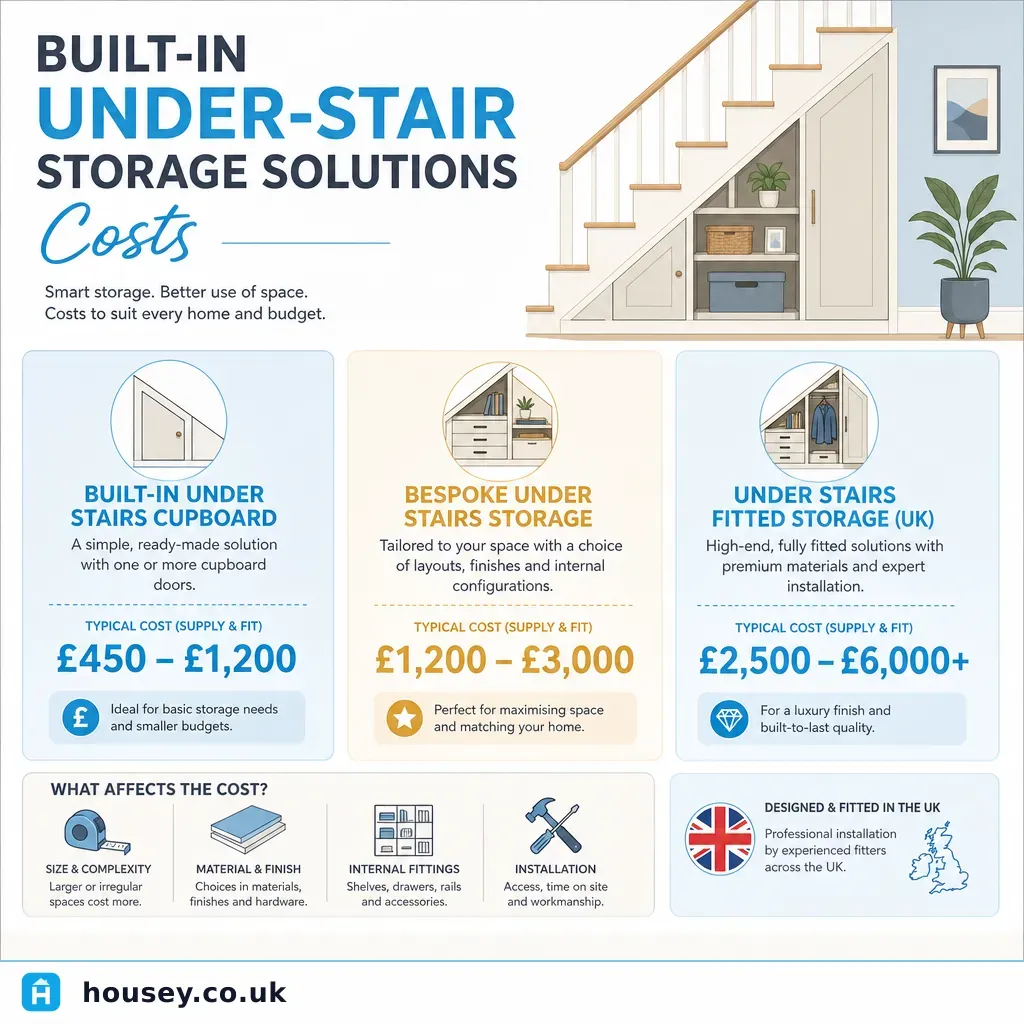
Built-In Under-Stair Storage Solutions Costs
Built-in under-stair storage in the UK typically costs £500–£1,500 for a basic fitted door and shelving unit, rising to £2,000–£5,000 or more for fully bespoke carpentry with drawers and a painted finish.
 Improvement & Build
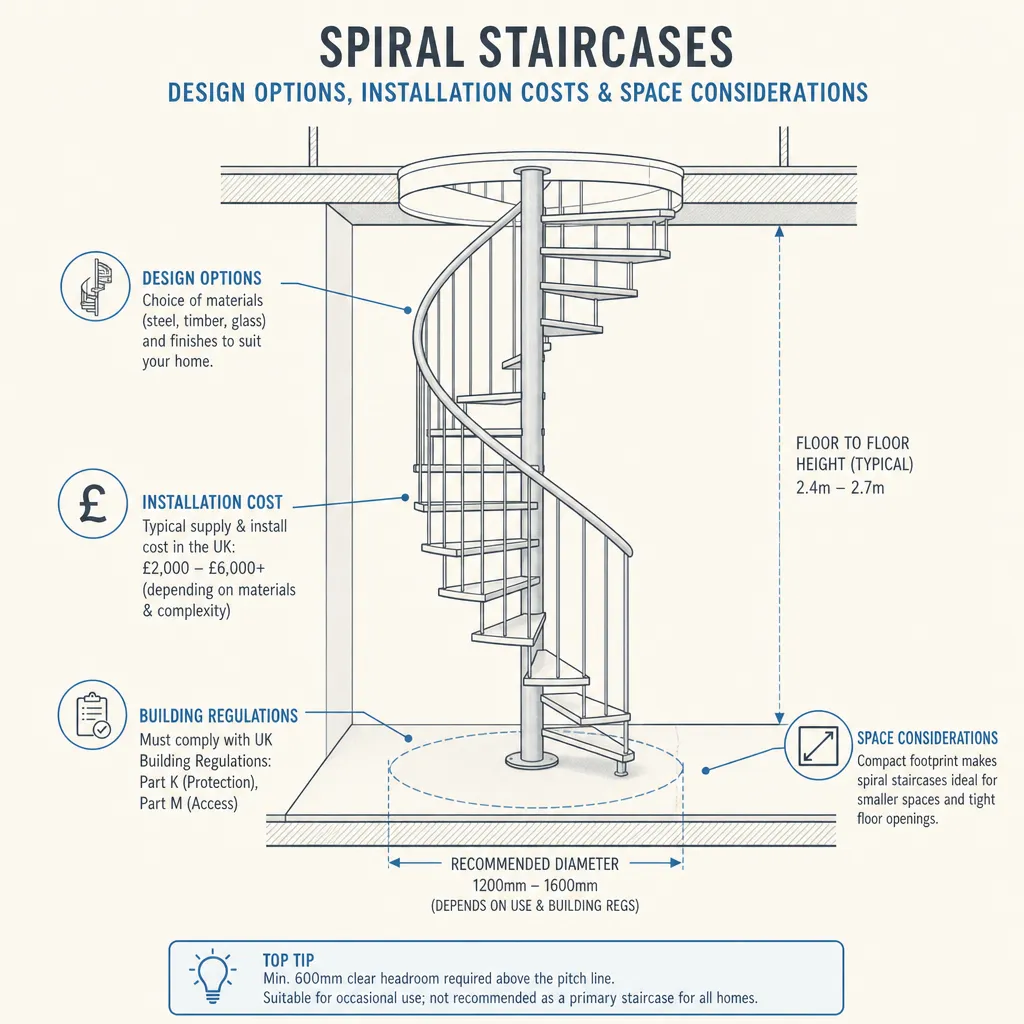
Spiral staircases: design options, installation costs and space considerations
A spiral staircase typically costs between £800 for a basic mild steel kit and £15,000 or more for a bespoke timber or glass design, fully installed.
 Improvement & Build
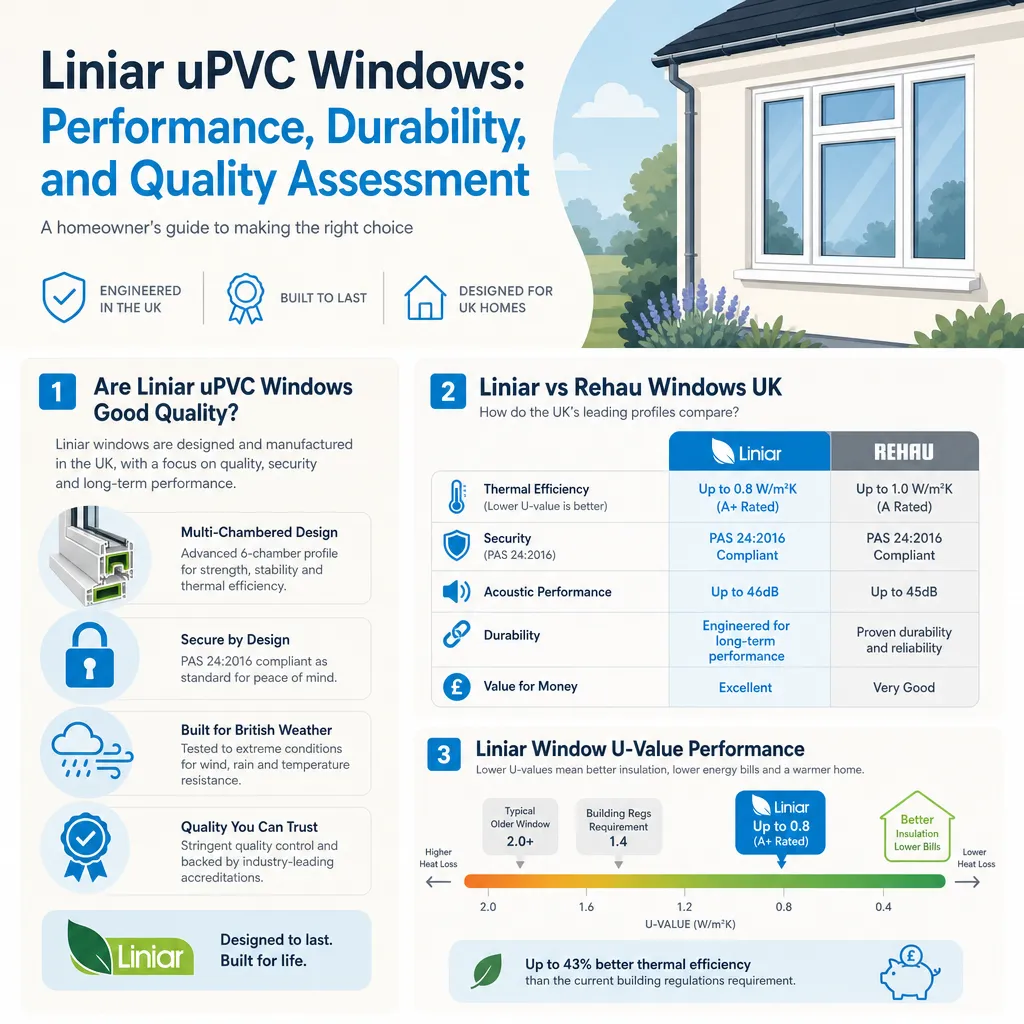
Liniar uPVC Windows: Performance, Durability, and Quality Assessment
Liniar uPVC window profiles are manufactured in the UK using multi-chambered, foamed frames.