Wall Insulation, Replastering, and Panelling: Coordinating Multiple Trades
By Housey · Last reviewed 3rd of May 2026
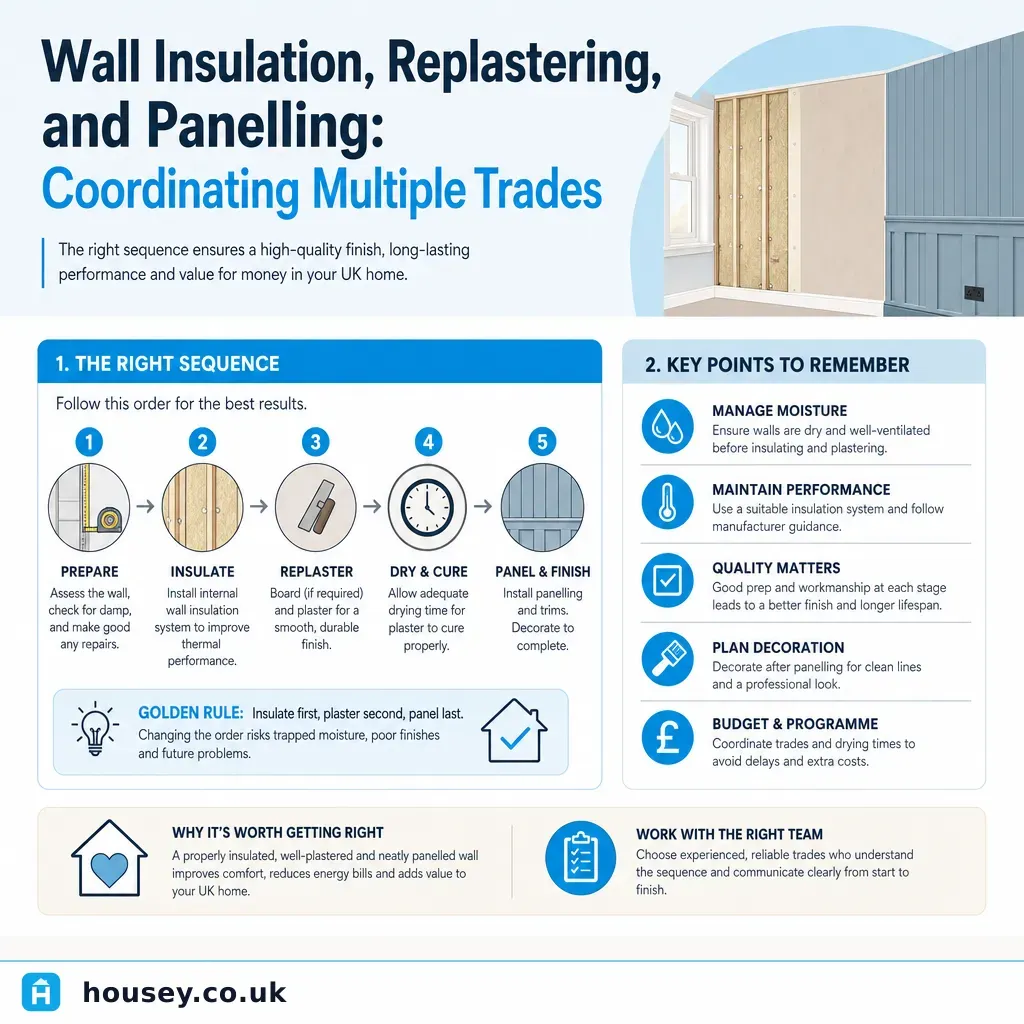
Wall Insulation, Replastering, and Panelling: Coordinating Multiple Trades
Retrofitting a wall with insulation is rarely a single-trade job — in most UK homes it triggers a chain of follow-on works involving plasterers, dry liners, electricians, decorators, and sometimes structural engineers. Getting the sequence wrong can trap moisture, damage finishes, delay inspections, or void guarantee schemes. Whether you are insulating a 1930s solid-brick semi or a 1970s cavity-wall house, understanding how the trades fit together protects both your building and your budget.
Key points
- Internal wall insulation (IWI) typically requires Building Regulations notification under Part L of the Approved Documents and, in many cases, Part C (moisture resistance).
- PAS 2035 governs publicly funded retrofit projects and requires a Retrofit Coordinator to oversee sequencing, ventilation, and moisture risk — even where only walls are being treated.
- Moving electrical sockets and switches on a target wall is mandatory before boarding begins; this requires a Part P-notifiable electrician in England and Wales.
- Cavity wall insulation is usually exempt from Building Regulations if installed to a BSI Kitemark-approved system by a CIGA-registered installer; solid-wall and external wall insulation are not.
- Wet plaster skim over insulation-backed board must dry for four to six weeks before decoration — premature painting traps moisture and promotes mould growth.
The correct trade sequence
Multi-trade retrofit projects fail most often because one trade starts before another has finished. The correct sequence for an internal wall insulation project typically runs:
- Pre-condition survey — A retrofit assessor checks moisture levels, U-values, and any damp or structural issues before any product is specified.
- Damp and structural remediation (if needed) — Cracks, rising damp, or failed pointing must be resolved first; insulation will trap and worsen pre-existing moisture problems.
- First-fix electrical — Sockets, switches, and heating controls on the target wall are moved or re-routed by a Part P-registered electrician before boarding starts.
- Insulation installation — PIR, EPS, mineral wool, or wood-fibre boards are fixed to the wall with appropriate mechanical fixings or adhesive.
- Boarding — Plasterboard is screw-fixed over the insulation, typically by a dry liner or the insulation installer as part of a full system.
- Skim coat or dry-wall finish — A 2–3 mm plaster skim is applied over taped and jointed board, or a skim-free finishing compound is used.
- Second-fix electrical — Sockets, switches, and radiator brackets are relocated flush with the finished surface.
- Decoration — Painting or wall coverings begin only after the plaster has fully dried, typically four to six weeks for a wet skim on a solid wall.
Internal wall insulation vs external wall insulation: trade coordination comparison
Factor | Internal Wall Insulation (IWI) | External Wall Insulation (EWI) |
|---|---|---|
Trades required | Insulation installer, dry liner, electrician, plasterer, decorator | Insulation installer, renderer or cladder, groundwork contractor, decorator |
Impact on living space | Reduces internal floor area by 75–100 mm per treated wall | No internal disruption |
Planning permission | Usually permitted development; check for listed or conservation area constraints | May need permission; always check with LPA |
Moisture risk | Higher — warm-side insulation can cause interstitial condensation if unventilated | Lower — moves dew point outward |
Building Regulations | Part L and Part C applicable | Part L and Part C applicable; structural anchors may engage Part A |
Indicative UK cost | £80–£120/m² installed and finished | £100–£150/m² installed and rendered |
Indicative UK costs, last reviewed 2026-05-03. Costs vary by property type, product, and region. Obtain at least three quotes.
Worked UK property scenario
Sheffield — 1930s end-of-terrace, solid 228 mm brick walls
A homeowner wants to insulate the front elevation internally with 60 mm PIR board to achieve a U-value of 0.30 W/m²K under Part L.
- Survey first: A retrofit assessor identifies hygroscopic salting at low level — evidence of past moisture ingress. A damp specialist is engaged and insulation is delayed six weeks until the wall is dry.
- Electrical re-route: Three double sockets and a light switch are moved by a Part P-registered electrician, coordinated with the insulation installer's start date.
- Insulation and boarding: The installer fits PIR boards with mechanical fixings and taped plasterboard bonded to the face. The dry liner skims over two visits.
- Drying time: The plasterer advises a six-week drying period. The decorator is booked eight weeks from plastering completion.
- Building Regulations: The installer notifies Building Control via a competent person scheme; a completion certificate is issued.
This scenario shows why a single point of coordination — a main contractor or Retrofit Coordinator — prevents trades arriving in the wrong order.
Trade coordination checklist
Red flags to watch for
- An installer who says replastering can begin the same day as boarding.
- No pre-condition survey or moisture assessment before insulation is specified.
- An electrician proposing to chase into the insulation layer to relocate sockets — this compromises the insulation and may breach fire regulations.
- A quote with no mention of vapour control measures (vapour barrier or vapour-check plasterboard).
- A contractor claiming ECO4-funded insulation does not require Building Regulations notification.
Important limitations
This article provides general information about trade sequencing for wall insulation projects in England and Wales. Rules under the Building Regulations, PAS 2035, and local planning requirements vary by property type, funding route, and location. Scotland, Wales, and Northern Ireland have their own building standards frameworks. Moisture and ventilation risks are property-specific and must be assessed by a qualified professional. Nothing here constitutes professional advice or a substitute for a site-specific survey.
What to ask a qualified professional
- What is the pre-installation moisture condition of my wall, and is it suitable for insulation now?
- Which insulation system is appropriate for my wall construction and moisture exposure class?
- Will this work require Building Regulations notification, and who is responsible for obtaining it?
- Is a vapour control layer required, and where in the build-up should it be positioned?
- What ventilation measures will offset any reduction in air permeability?
- Who is coordinating the sequence of trades on this project?
When to get professional help
Engage a retrofit assessor, Retrofit Coordinator, or building surveyor before work begins if your project involves:
- Any wall showing active damp, efflorescence, or mould before works begin
- Walls of unknown construction — for example, suspected single-leaf masonry or previously filled cavities
- Listed buildings or properties in conservation areas
- Publicly funded schemes (ECO4, HUG, or LADS) — a Retrofit Coordinator is mandatory under PAS 2035
- Work on a party wall — the Party Wall etc. Act 1996 may apply
How Housey can help
Housey connects UK homeowners with qualified insulation installers and professionals offering retrofit assessments who can advise on trade sequencing and Building Regulations compliance. An insulation assessment identifies moisture risks and specifies the right system before any work begins.
Frequently asked questions
Does internal wall insulation need Building Regulations approval?
In England and Wales, internal wall insulation that changes the thermal performance of an external wall falls under Part L and usually Part C. Most projects require a full Building Regulations application or notification via a competent person scheme. Scotland and Northern Ireland have equivalent frameworks. Always confirm with your local building control body before work starts.
How long should I wait before plastering over insulation boards?
The dwell time depends on the product. PIR and EPS boards are typically stable within 24–48 hours of fixing. Wet plaster skim applied over plasterboard bonded to insulation needs a full drying period of four to six weeks before decoration; premature painting can trap moisture and cause blistering or mould behind the finish.
Can I use a dry-wall finish instead of a wet skim after insulation?
Yes. Many modern dry-lining systems use tape, jointing compound, and a skim-free finish that eliminates the long drying time of wet plaster. This is increasingly used in domestic retrofit. Confirm with your dry liner that the finish is compatible with the insulation system specified and will accept your chosen decoration.
What is a Retrofit Coordinator and when do I need one?
A Retrofit Coordinator is a PAS 2035-qualified professional who oversees the design, specification, and delivery of energy retrofit projects. They are mandatory for projects funded through ECO4 or the Home Upgrade Grant. Even where not legally required, a Retrofit Coordinator reduces risk on complex multi-trade projects by managing sequencing, moisture risk, and compliance documentation.
Sources and further reading
- Approved Document L1B: Conservation of fuel and power in existing dwellings — GOV.UK
- PAS 2035:2023 Retrofitting dwellings for improved energy efficiency — BSI Group
- Cavity Insulation Guarantee Agency (CIGA) — CIGA
- Solid wall insulation advice — Energy Saving Trust
- Construction: managing health risks — Health and Safety Executive
Useful next reads
 Energy & Retrofit
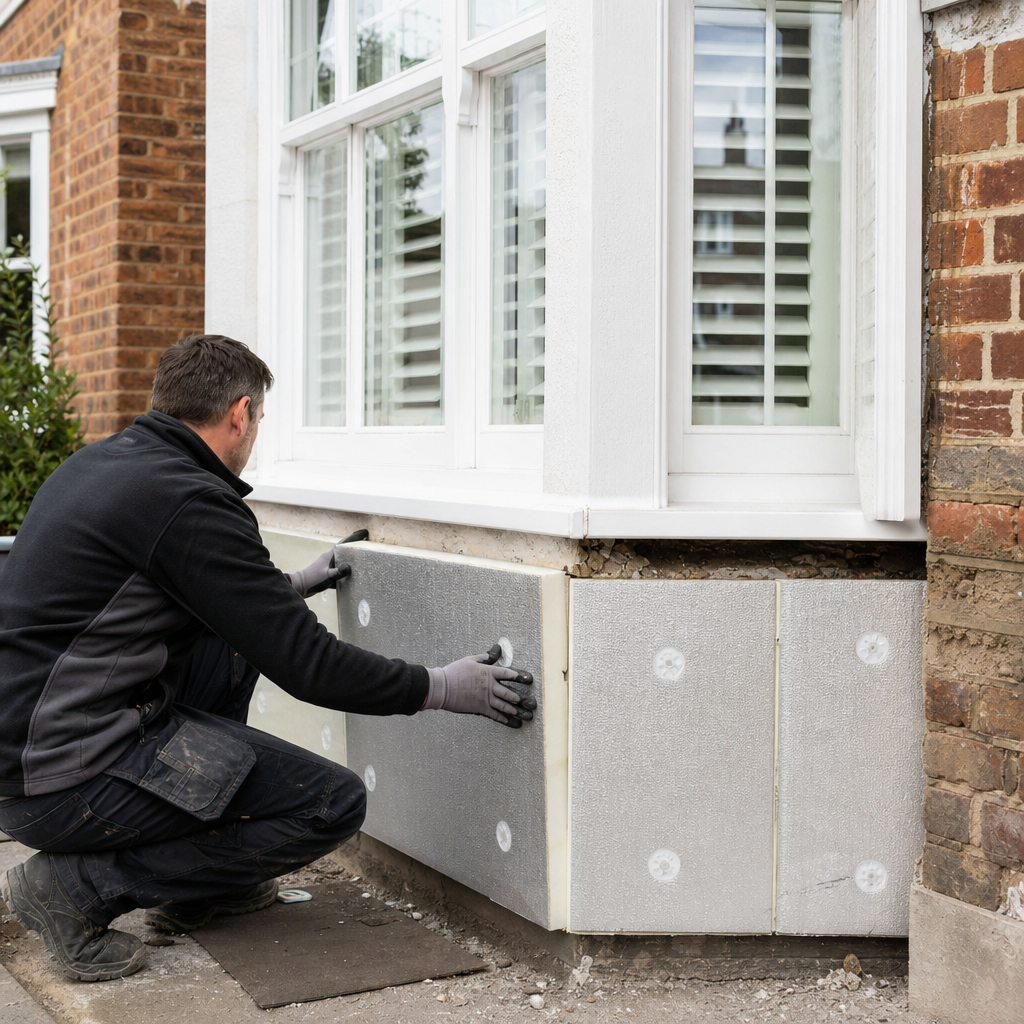
Insulating Solid Masonry Walls Under Bay Windows: Technical Guidance
Insulating solid masonry walls under bay windows requires specialist detailing at angled wall faces, window reveals, and the bay floor and ceiling junctions.
 Energy & Retrofit
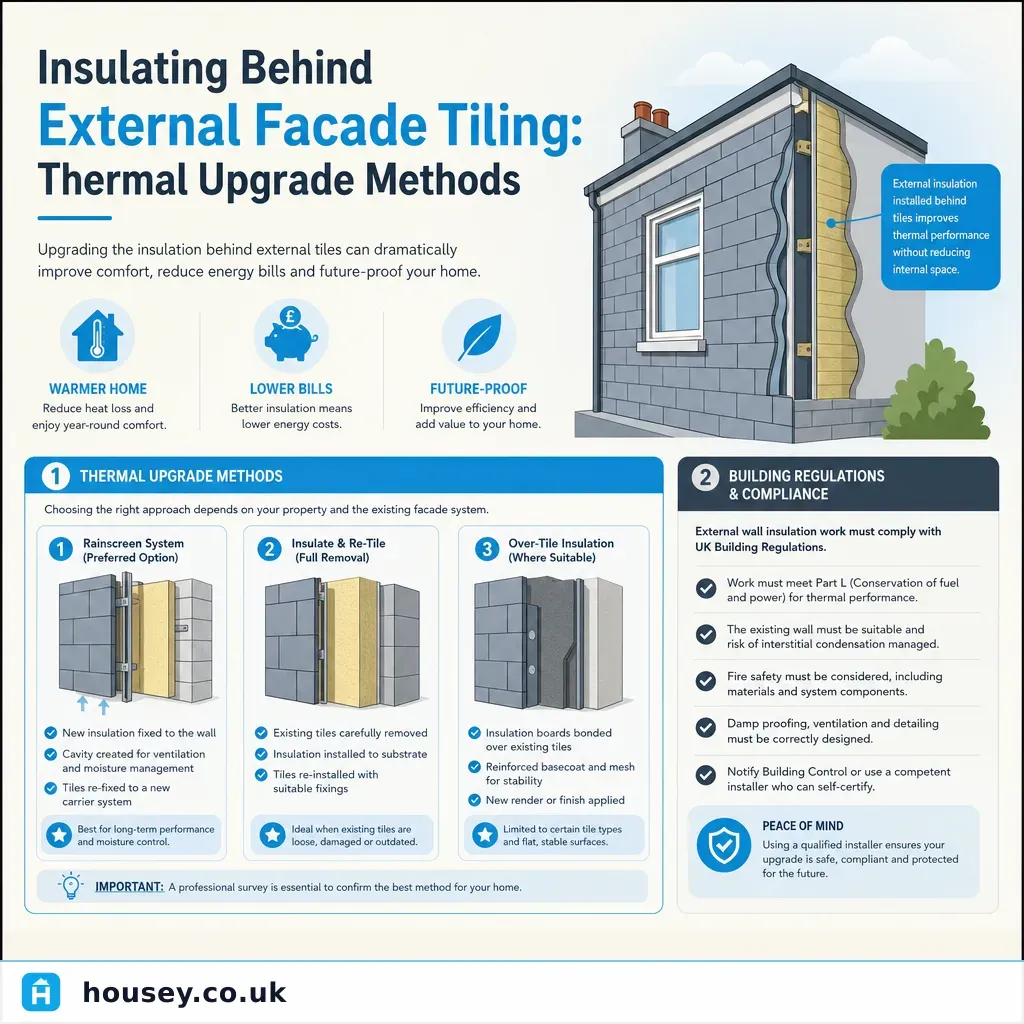
Insulating Behind External Facade Tiling: Thermal Upgrade Methods
Insulating behind external facade tiling is technically complex — the insulation layer must be compatible with tile fixings, manage moisture correctly, and comply with Building Regulations Part L.
 Energy & Retrofit
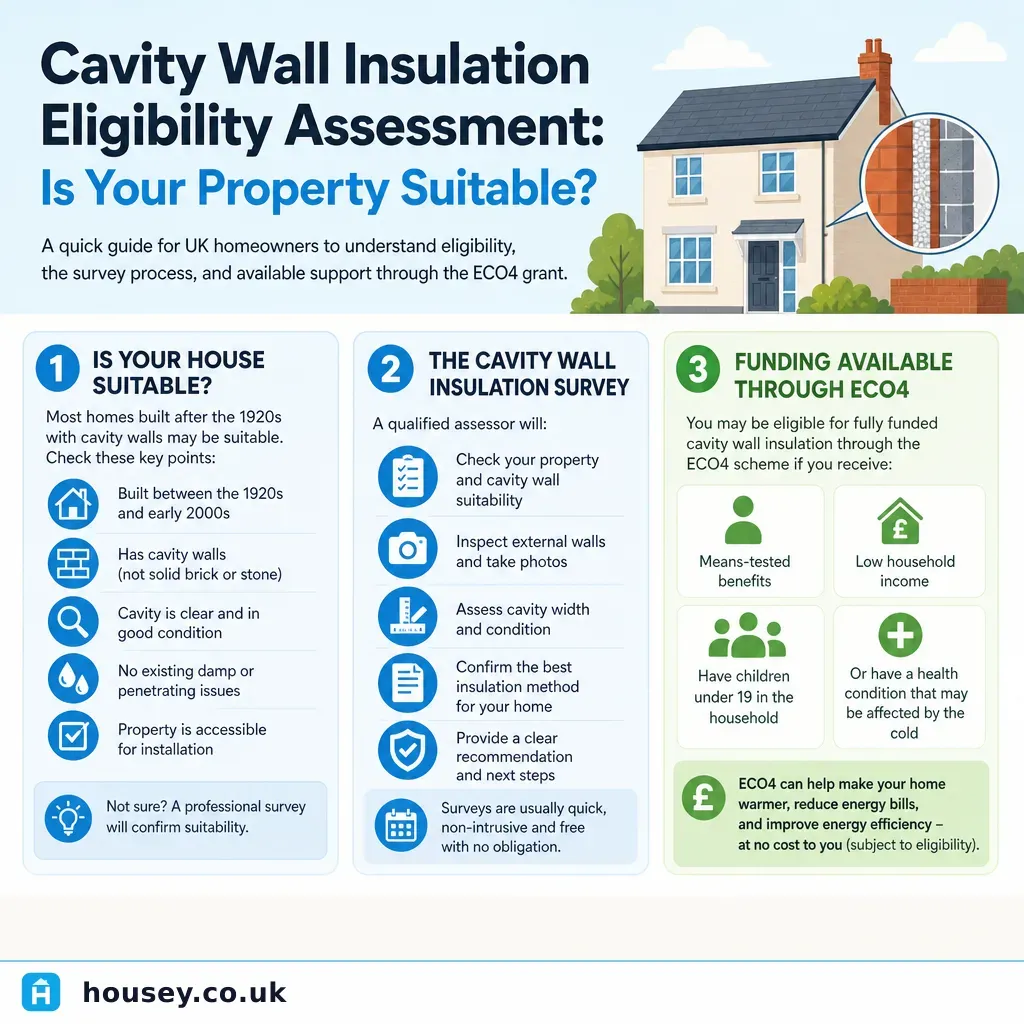
Cavity Wall Insulation Eligibility Assessment: Is Your Property Suitable?
Cavity wall insulation suits most UK homes built from around 1920 onwards with unfilled cavities at least 50mm wide in sheltered or moderately exposed locations.
 Energy & Retrofit
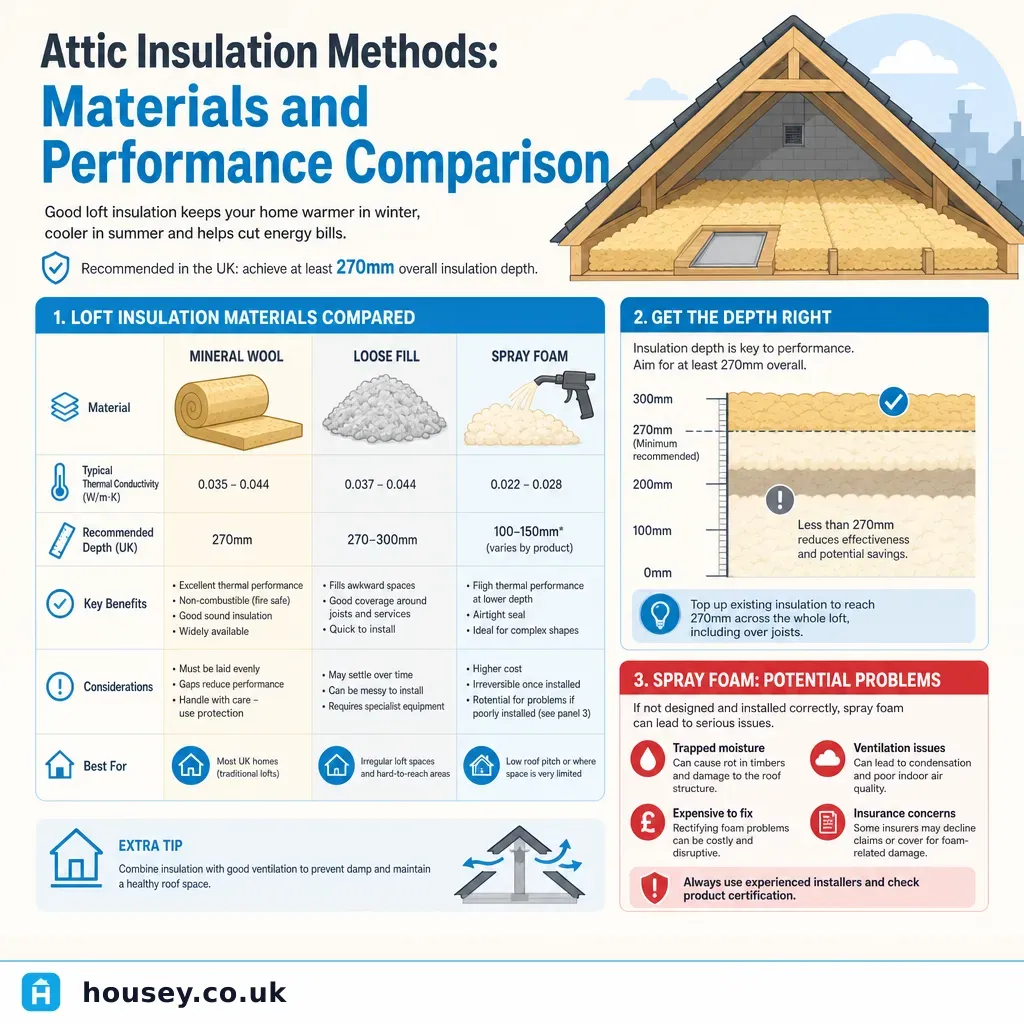
Attic Insulation Methods: Materials and Performance Comparison
UK loft insulation options include mineral wool rolls (most common and grant-funded), blown loose-fill for irregular lofts, and rigid PIR board for warm roof conversions.
 Energy & Retrofit
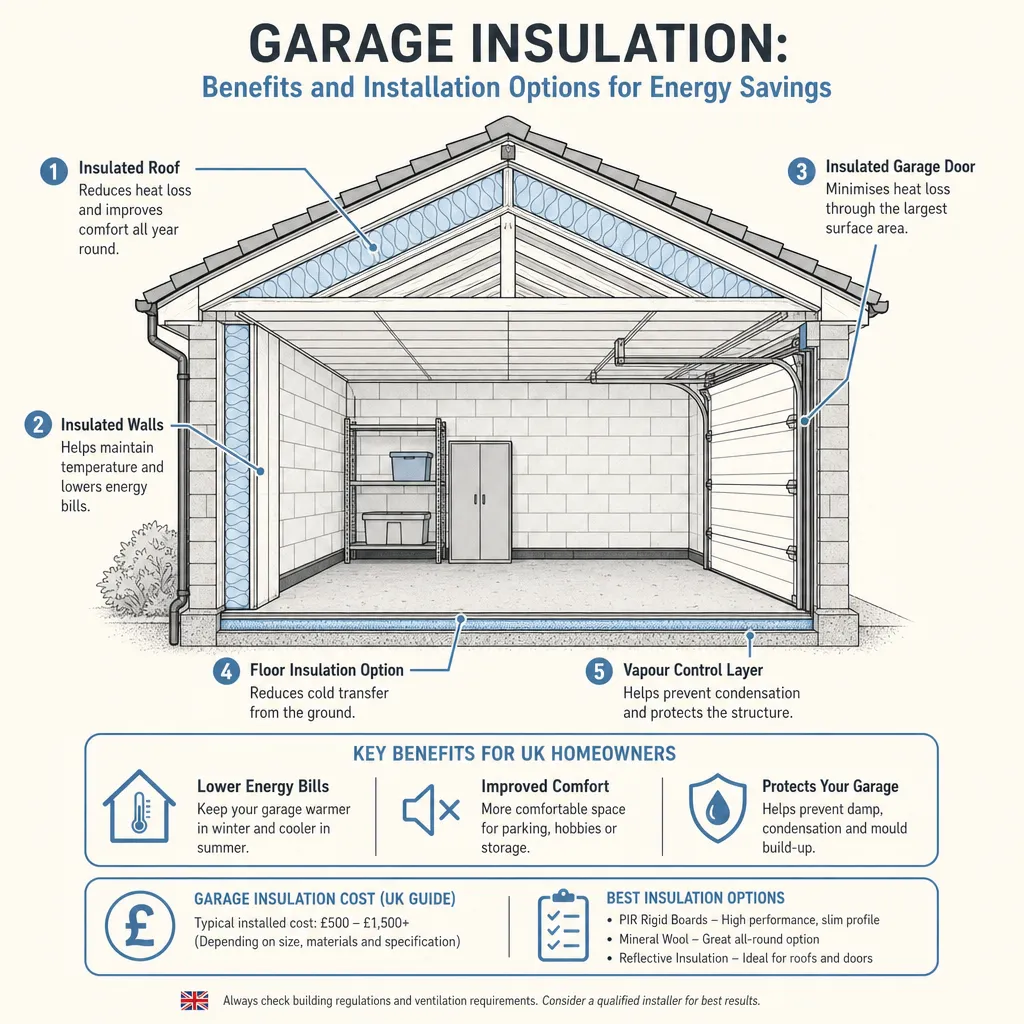
Garage Insulation: Benefits and Installation Options for Energy Savings
Insulating a garage reduces heat loss, lowers energy bills, and makes an attached garage more comfortable year-round.