Wall Tie Replacement Costs for Semi-Detached Properties
By Housey · Last reviewed 6th of May 2026
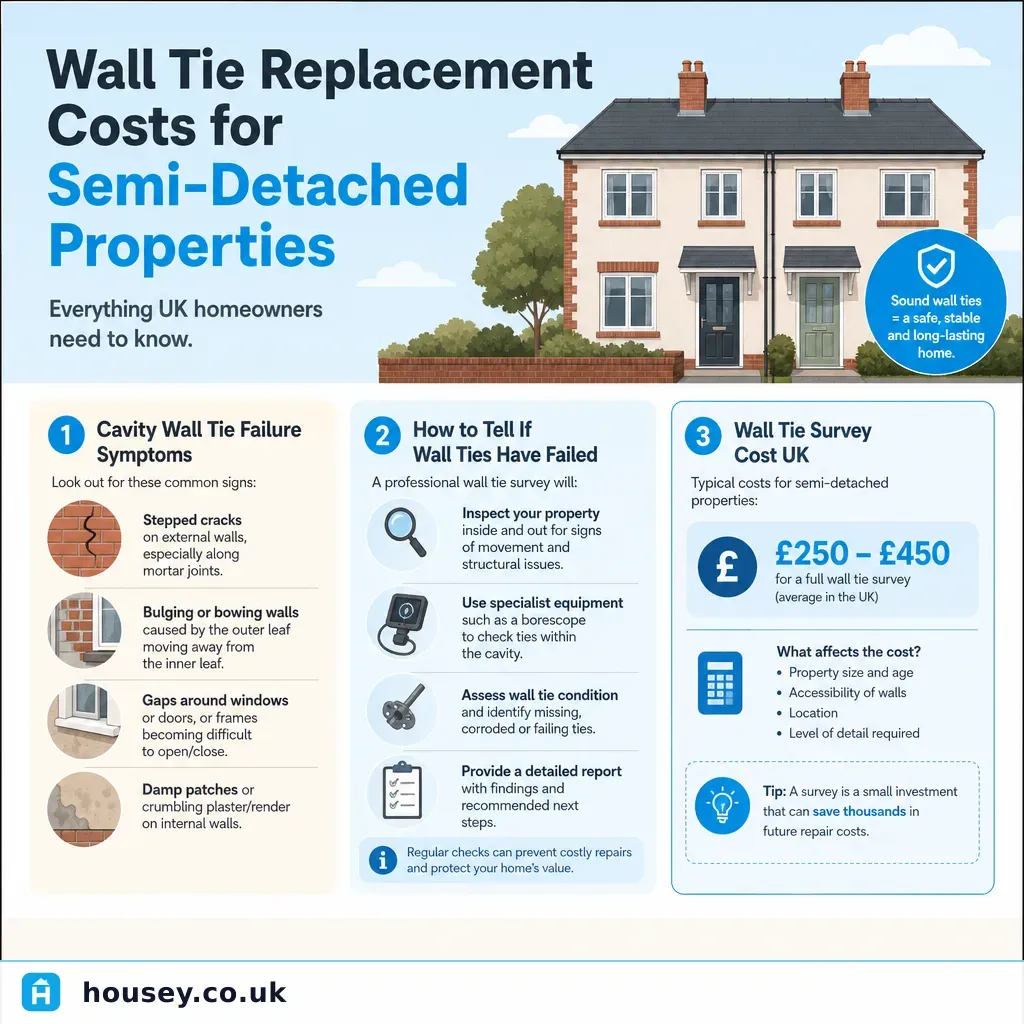
Wall Tie Replacement Costs for Semi-Detached Properties
Wall tie failure is a structural defect most commonly found in cavity-wall properties built between the 1920s and 1981, when many ties were manufactured from mild steel with insufficient galvanising. In a semi-detached house, the issue can affect front and rear elevations as well as the party wall shared with the neighbouring property, creating additional considerations around access, scope, and legal obligations that do not arise with detached homes. Identifying the extent of failure early — and understanding what replacement involves — helps homeowners plan and budget before the problem progresses.
Key points
- Wall ties in properties built before 1981 were often mild steel or inadequately coated galvanised steel; corrosion causes expansion that can fracture the outer leaf of brickwork.
- The classic visual indicator of corroded tie expansion is horizontal cracking in the outer brickwork at approximately 450mm intervals (every sixth or seventh course), often starting from a window or door opening.
- Building Regulations Approved Document A (Structure) requires that replacement ties comply with BS EN 845-1; stainless steel helical ties are the current industry standard and typically carry a 25-year guarantee.
- A borescope inspection — inserting a small camera through a drilled hole in the outer leaf — is the standard non-destructive diagnostic approach before any replacement specification is agreed.
- Under the Party Wall etc. Act 1996, remedial work on or near the party wall between semi-detached properties requires a Party Wall Notice to be served on the adjoining owner at least two months before work commences.
What are wall ties and why do they fail?
Cavity walls consist of two separate leaves of masonry — typically a brick outer leaf and a block inner leaf — with a gap (cavity) of 50–100mm between them. Wall ties are metal connectors, usually spaced at approximately 2.5 per square metre, that bridge this cavity to keep the two leaves acting together structurally.
In properties built before the 1980s, ties were commonly formed from mild steel into butterfly or fishtail patterns. Where these were inadequately coated or galvanised, moisture entering the cavity causes the steel to corrode. Corroding steel expands significantly, exerting lateral pressure on the outer brickwork and producing the regular horizontal cracking pattern associated with tie failure.
Properties most at risk include those built between approximately 1920 and 1981, particularly those in exposed or coastal locations, or where cavity insulation has deteriorated and moisture can contact the ties directly.
Recognising the signs of wall tie failure
The following are red flags that should prompt a professional inspection rather than a DIY assessment:
- Horizontal cracking in the outer leaf at regular intervals, particularly at every sixth or seventh course of brickwork
- Bulging or bowing of the outer leaf, especially on exposed or north-facing elevations
- Cracking around window and door reveals, where cavity ties are often more concentrated
- Water ingress in a cavity wall that was previously dry, with no obvious alternative source
- Cracks that widen or lengthen when observed over successive visits
- Damp patches or staining on the inner face of external walls, consistent with moisture tracking through the outer leaf
Not all horizontal cracking indicates wall tie failure; thermal movement, settlement, and mortar degradation can produce similar patterns. A professional assessment is needed to confirm the cause before any repair work is specified.
How wall tie replacement works
The standard repair process for corroded wall ties in a cavity-wall semi-detached property typically follows these stages:
- Survey and assessment: A structural engineer or specialist contractor conducts a borescope inspection, drilling small holes (typically 14mm) into the outer leaf to insert a camera. This identifies the number of failed ties and the condition of the cavity.
- Repair specification: A written specification is prepared, usually referencing BS EN 845-1 and the Agrément-certified tie system to be used.
- Scaffold erection: For a two-storey semi-detached, scaffold is usually required for safe access to upper elevations.
- Drilling and insertion: New stainless steel helical ties are drilled through the outer leaf and driven into the inner leaf at the required centres and positions.
- Stabilisation of original tie positions: The locations of original corroded ties may be resin-injected to stabilise any remaining fragments.
- Making good: Drill holes are repointed with matching mortar and any cracked or spalled brickwork is addressed.
- Check inspection: A final inspection before scaffold removal confirms all positions have been treated.
Indicative costs for wall tie replacement in a semi-detached property
The following figures are indicative UK costs, last reviewed 2026-05-06. Costs vary significantly by the number of failed ties, the extent of outer leaf damage, scaffold requirements, and regional labour rates.
Stage | What is involved | Indicative cost |
|---|---|---|
Borescope survey and written report | Diagnostic inspection of cavity; findings document | £200–450 |
Wall tie replacement (per tie) | Drilling, helical tie insertion, making good | £15–35 per tie |
Scaffolding (one elevation, two-storey) | Erection, hire period, and dismantling | £600–1,400 |
Full replacement, semi-detached (two elevations, 100–200 ties) | Typical complete job including scaffold | £2,500–7,000+ |
RICS Level 3 Building Survey (to diagnose defect) | Chartered surveyor assessment of whole property | £600–1,200 |
Indicative UK costs, last reviewed 2026-05-06. Obtain a minimum of three quotes from specialist contractors. Prices include materials and labour; confirm whether VAT is included in each quote received.
Replacement method comparison
Method | Best for | Not ideal for | Typical lifespan |
|---|---|---|---|
Stainless steel helical ties (drilled from outside) | Most cavity wall properties; standard repair | Cavities narrower than 50mm | 30+ years |
Resin-anchored ties | Narrow cavities; internal installation where external access is restricted | Cavities with heavy rubble or significant debris | 25+ years |
Outer leaf rebuilding | Severely bowing or deteriorated brickwork | Properties where appearance change is unacceptable; budget-constrained projects | Indefinite if well executed |
Party Wall Act considerations for semi-detached properties
The Party Wall etc. Act 1996 governs work on or adjacent to a party wall — which in most semi-detached properties is the wall shared with the neighbouring owner. If remedial work affects the party wall itself or falls within 3–6 metres of the neighbour's foundations (depending on work type and depth), you are required to serve formal notice on the adjoining owner.
Key points for semi-detached homeowners:
- Serve a Party Wall Notice at least two months before work begins if the party wall itself is to be worked on.
- If the adjoining owner dissents or fails to respond within 14 days, a Party Wall Award is required, typically prepared by a party wall surveyor.
- The cost of the Party Wall Award process is generally paid by the building owner carrying out the works, not the adjoining owner.
- If only the external front and rear elevations are affected and not the party wall structure itself, the Act may not apply — but this depends on proximity. Seek advice from a party wall surveyor if you are unsure before starting work.
Important limitations
This article provides general information only. Wall tie failure is a structural defect, and the appropriate specification for replacement work depends on the individual property, extent of failure, cavity width, original tie type, and local exposure conditions. The cost figures given are indicative and should not be used as a substitute for a site-specific assessment by a qualified structural engineer or specialist contractor.
Building Regulations compliance requirements vary depending on the scope of works and the property. Do not attempt to assess or undertake wall tie replacement without professional involvement. Working at height, drilling into cavity walls, and specifying structural repair work all require appropriate qualifications, competent-person accreditations, and suitable insurance.
What to ask a qualified professional
Before instructing a wall tie specialist or structural engineer, ask:
- What is your diagnostic method — borescope inspection, physical tie removal and testing, or thermographic survey?
- How will you determine the number and distribution of failed ties across the property?
- What tie system do you specify, and does it hold an Agrément Certificate or equivalent third-party approval?
- Does the specification comply with BS EN 845-1?
- What guarantee is offered on the replacement ties and the installation workmanship?
- Is the quote fixed-price, or is it subject to variation if more failed ties are found during the works?
- Do you have experience working on semi-detached properties where the party wall may be involved?
- Will the works require a Party Wall Award, and can you advise on that process?
- Are you CHAS, Constructionline, or TrustMark accredited?
- Does the quote include VAT, scaffold costs, and making good to the brickwork?
When to get professional help
Do not delay seeking professional advice if you notice:
- Horizontal cracking in the outer brickwork that has appeared or widened in the past 12 months
- Any visible bowing or outward movement of the outer leaf
- Cracks accompanied by water penetration into the interior of the property
- A flagging of suspected wall tie failure in a mortgage valuation, RICS survey report, or homebuyer report
For properties being bought or sold, a RICS Level 3 Building Survey will identify suspected wall tie failure and recommend further specialist investigation. If a survey has already flagged the concern, instruct a structural engineer or specialist contractor promptly rather than waiting until after exchange.
How Housey can help
If a survey has identified potential wall tie failure, or if you have noticed the warning signs on your semi-detached property, Housey can help you find qualified professionals to assess and specify the repair. Starting with a structural survey will confirm the extent of the problem and provide a clear basis for comparing contractor quotes and planning the works.
Frequently asked questions
How do I know if my semi-detached house has wall tie failure?
The most common visual sign is horizontal cracking in the outer brickwork at regular intervals — roughly every sixth or seventh course (approximately 450mm apart). This cracking is often more pronounced on exposed elevations or around window openings. Visual signs alone are not conclusive; a borescope inspection by a qualified professional is the reliable way to confirm whether corroded ties are the cause.
Does wall tie replacement need building regulations approval?
Wall tie replacement is structural repair work and should comply with Building Regulations Approved Document A (Structure). Many specialist contractors operate under a Competent Person Scheme or submit a building notice to local authority Building Control. Confirm the compliance route with your contractor before work begins; your local Building Control team can advise if you are unsure.
How long does wall tie replacement take for a semi-detached house?
For a standard two-storey semi-detached with two affected elevations, the on-site replacement work typically takes two to four days once scaffold is erected. Scaffold erection and dismantling adds time at each end. The borescope survey and written report may add one to two weeks before main work begins, depending on contractor availability.
Will my home insurer cover wall tie replacement?
Home insurance policies in the UK generally exclude gradual deterioration and pre-existing structural defects, which means wall tie corrosion is usually not covered. Some policies may contribute to resultant damage caused by a sudden event, but this is uncommon. Check your policy wording carefully and speak to your insurer before assuming any cover exists.
Can I sell a semi-detached house with known wall tie failure?
Yes, but the defect must be disclosed. Solicitors are required to disclose known wall tie failure to a buyer's solicitors via the property information form (TA6). Many buyers will negotiate a price reduction or request the work is completed before exchange. Obtaining a specialist report and contractor quotes before listing can help manage buyer expectations and speed up the transaction.
Sources and further reading
- Approved Document A: Structure — GOV.UK
- Party Wall etc. Act 1996 — legislation.gov.uk
- RICS Home Survey Standard — Royal Institution of Chartered Surveyors
- TrustMark: finding accredited contractors — TrustMark
Useful next reads
 Planning & Pre-Build
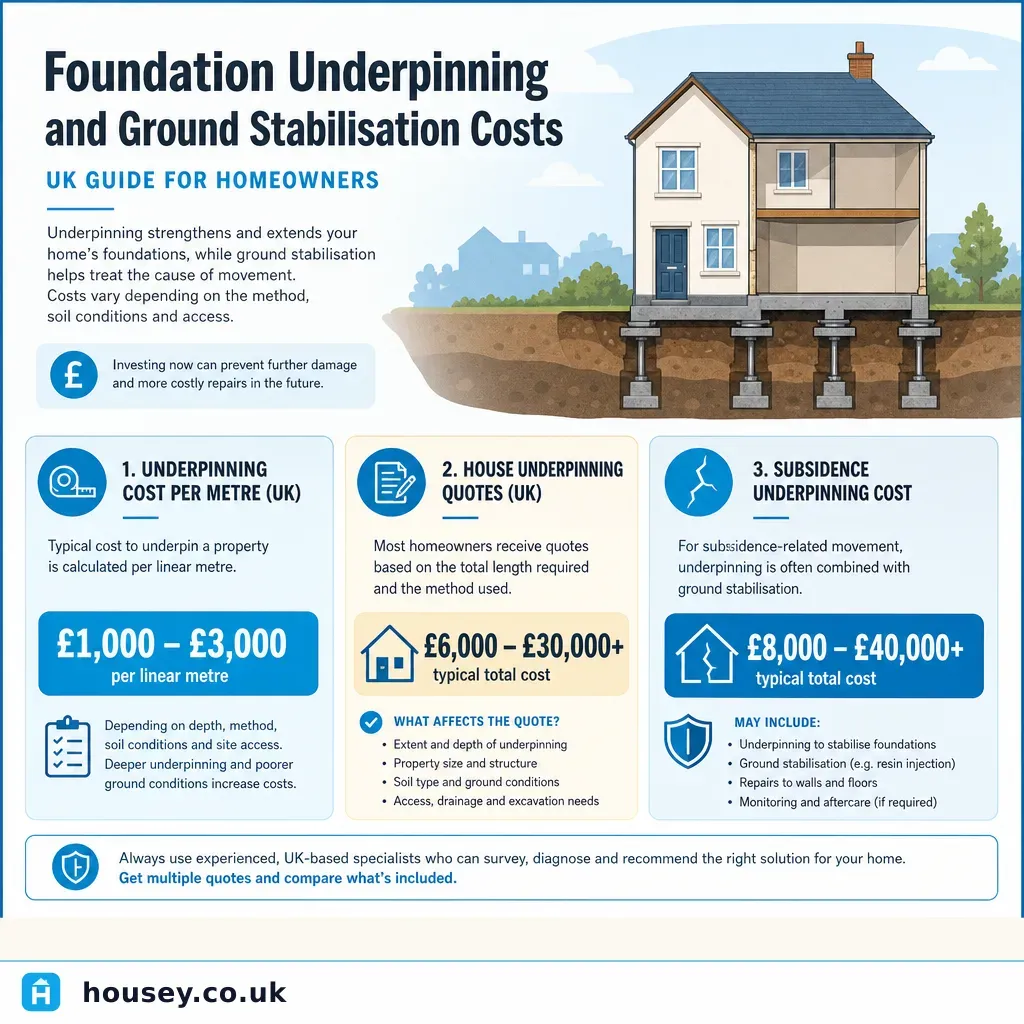
Foundation Underpinning and Ground Stabilisation Costs
Foundation underpinning in the UK typically costs £10,000–£50,000 or more for a whole property, with partial wall-section treatment running £5,000–£15,000.
 Planning & Pre-Build
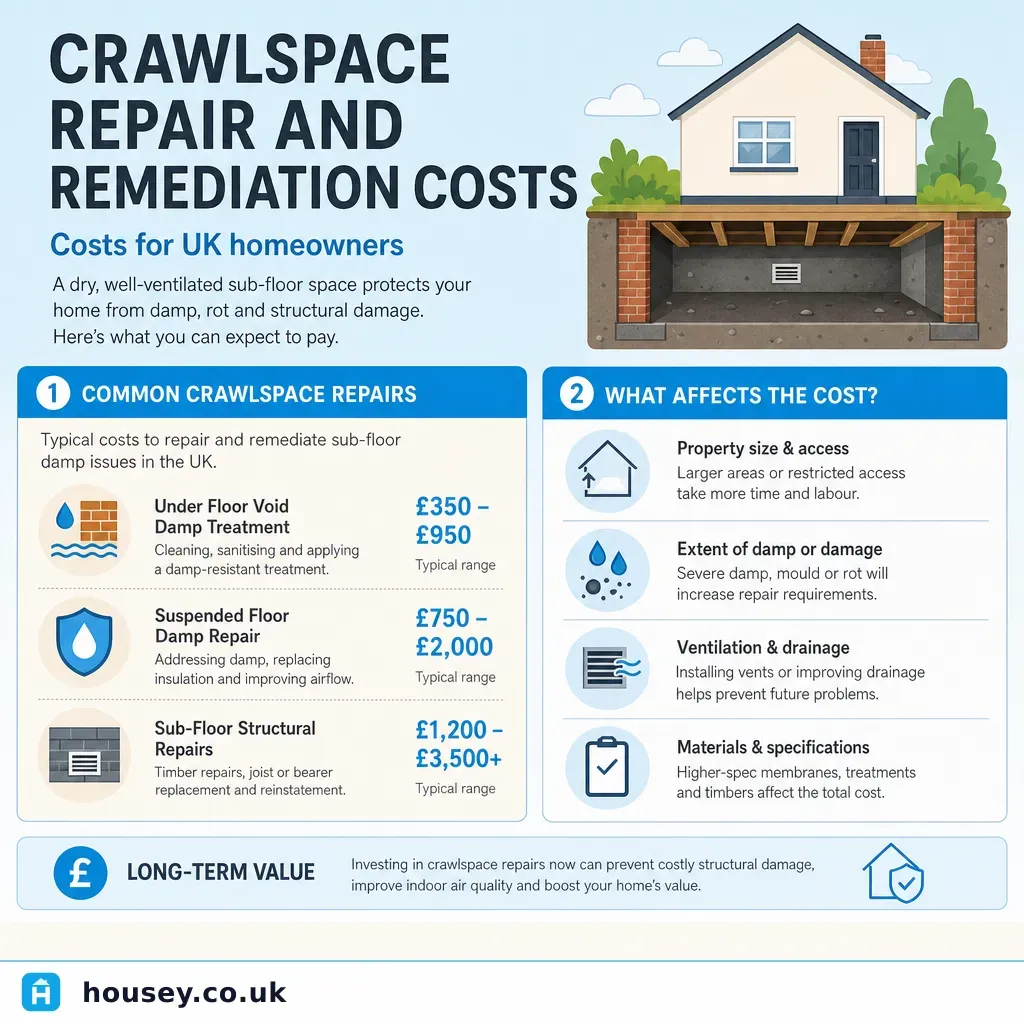
Crawlspace Repair and Remediation Costs
Crawlspace and sub-floor repair in the UK typically costs between £500 for minor ventilation work and £15,000 or more for extensive structural timber replacement or dry rot treatment.
 Planning & Pre-Build
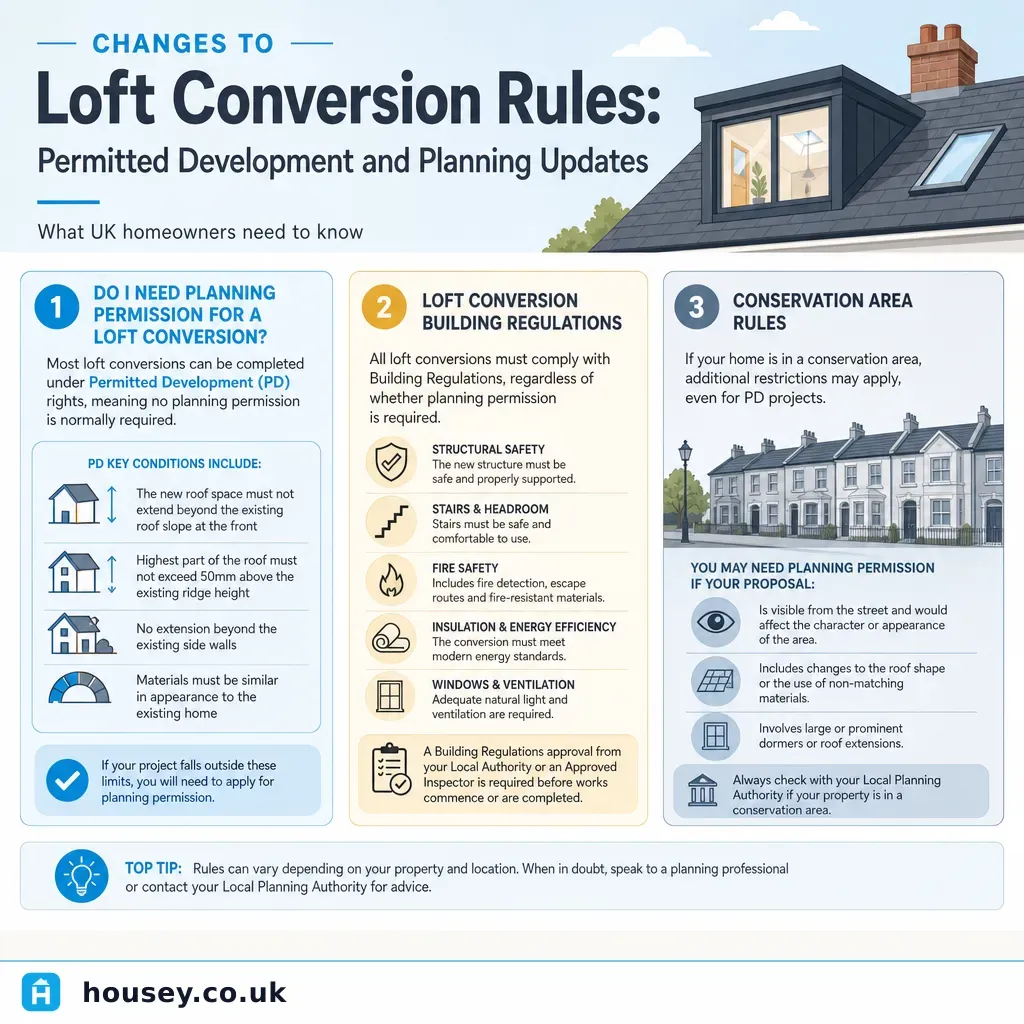
Changes to Loft Conversion Rules: Permitted Development and Planning Updates
In England, most loft conversions on standard houses qualify as Permitted Development under Class B of the GPDO 2015, allowing up to 40 cubic metres (terraced) or 50 cubic metres (detached or semi-detached) without a planning application — if conditions are met.
 Planning & Pre-Build
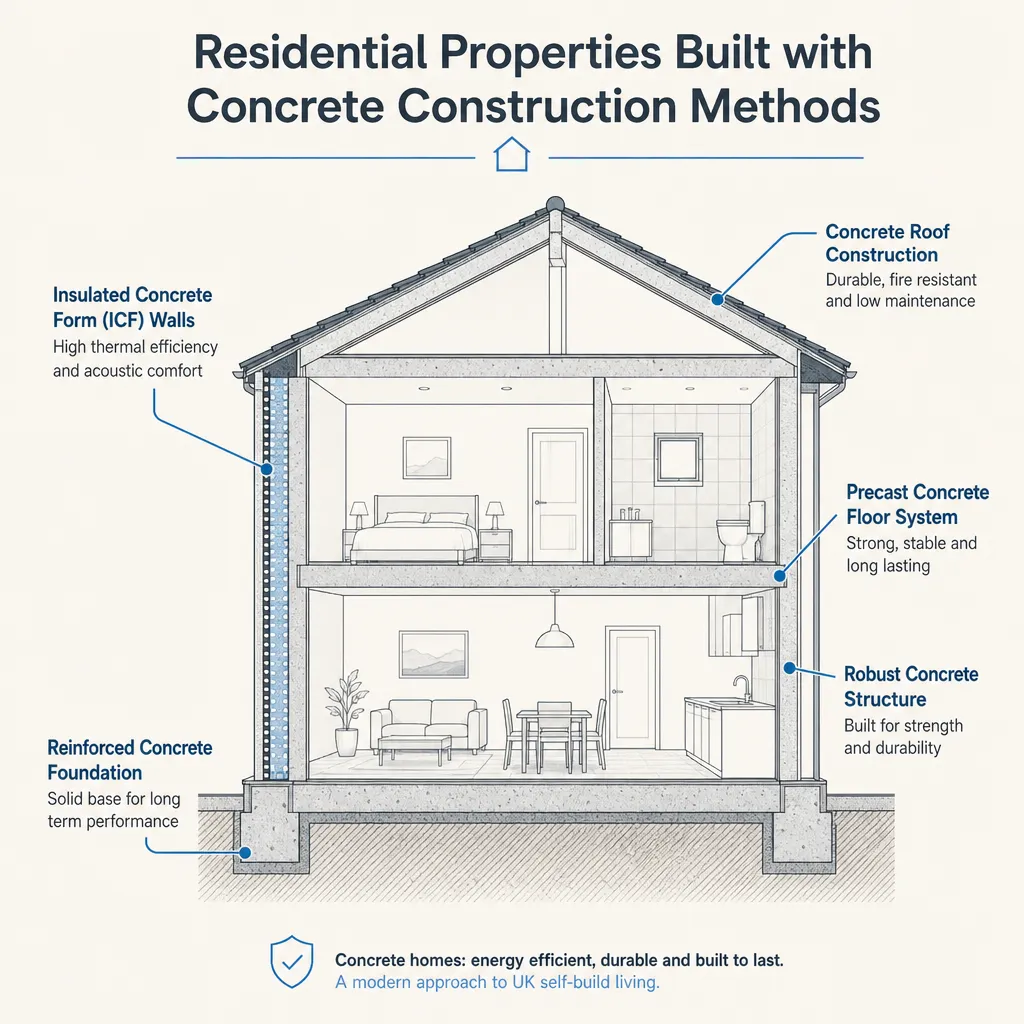
Residential Properties Built with Concrete Construction Methods
UK homes are built using several concrete methods: in-situ cast concrete, precast panel systems, insulating concrete formwork (ICF), and older non-traditional types such as Wimpey No-Fines and Laing Easiform.
 Planning & Pre-Build
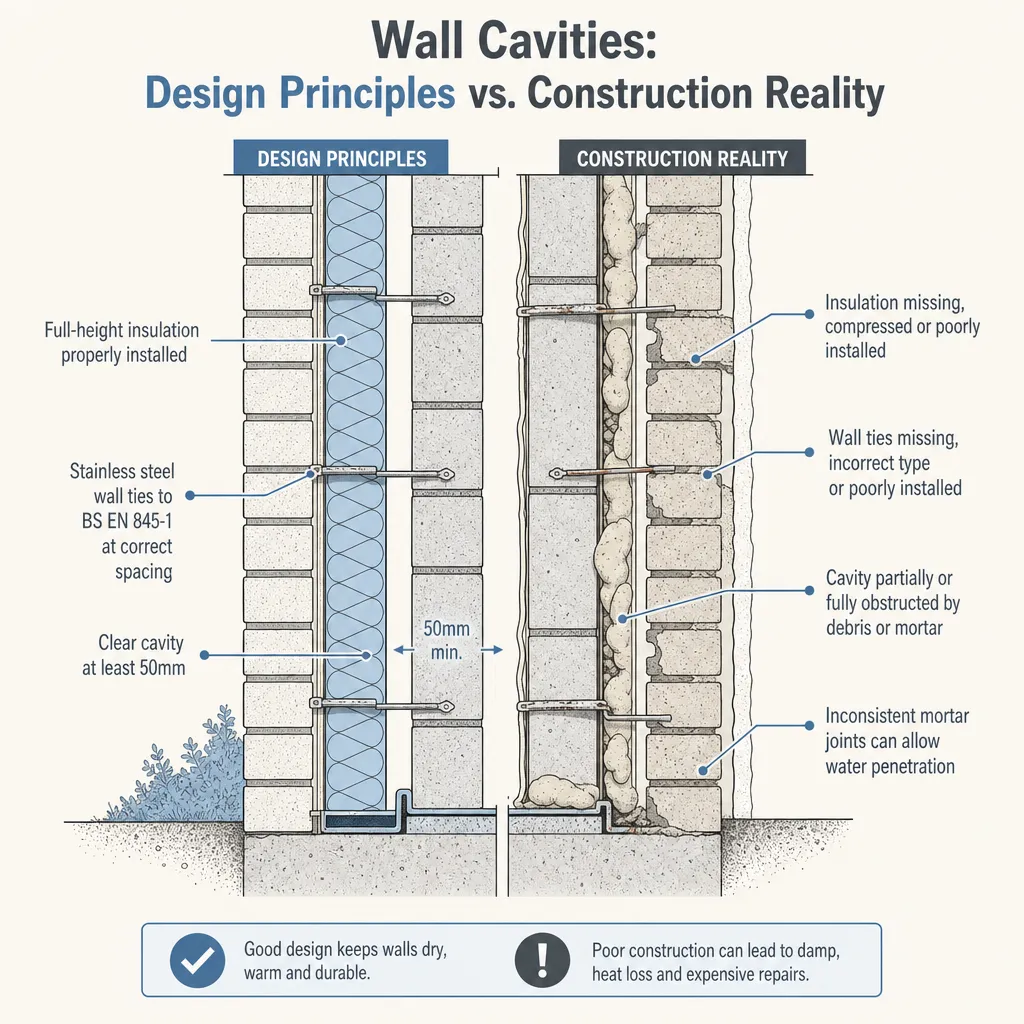
Wall Cavities: Design Principles vs. Construction Reality
A UK cavity wall is designed to resist weather, control heat loss, and structurally link two masonry leaves.