Wallpaper Drops per Roll: Pattern Matching and Coverage Calculation
By Housey · Last reviewed 4th of May 2026
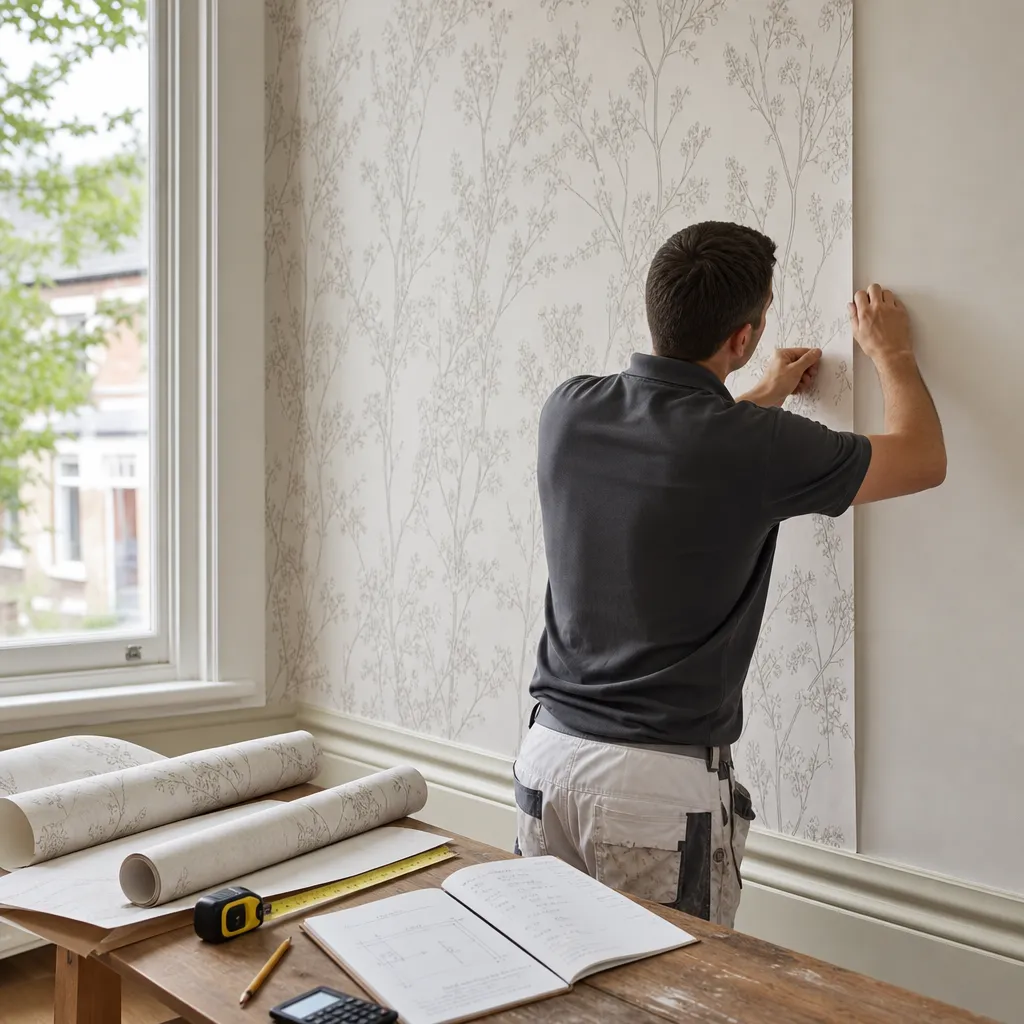
Wallpaper Drops per Roll: Pattern Matching and Coverage Calculation
Ordering wallpaper without a reliable calculation is one of the most common and costly decorating mistakes. Run short mid-project and a reorder from a different batch run may carry a subtly different dye lot — one that becomes obvious under natural light once hung alongside the original. The number of usable drops you can cut from a single roll is the central variable in any wallpaper project, and it changes significantly once a pattern repeat is involved.
Key points
- A standard UK wallpaper roll is 10 metres long and approximately 52 cm wide; some premium and specialist ranges use 68–70 cm wide rolls or longer 15 m rolls — always check the label rather than assuming.
- For a 2.4 m ceiling height (the UK new-build standard) with no pattern repeat, a standard 10 m roll typically yields 4 usable drops after trim allowance.
- A half-drop (offset) pattern can waste up to one full repeat per drop — a 64 cm repeat may reduce a 10 m roll to just 2–3 usable drops.
- Always add a minimum 10% overage for trimming waste; increase to 15–20% for large pattern repeats of 64 cm or more.
- Wallpaper from different batch numbers can show visible colour variation; order all rolls at once and verify every roll carries the same batch code before leaving the shop or accepting a delivery.
How to calculate drops per roll
The core formula is:
Drops per roll = Roll length ÷ Adjusted drop length
Where:
Adjusted drop length = Ceiling height + trim allowance + pattern repeat waste
The trim allowance is typically 50 mm at the top and 50 mm at the bottom of each drop (0.1 m total), allowing for a clean cut at cornice and skirting.
Step-by-step calculation
- Measure ceiling height in each section of the room — UK new-builds are usually 2.4 m; 1930s–1960s properties commonly 2.5–2.7 m; Victorian and Edwardian rooms often 2.8–3.2 m or more.
- Add 0.1 m trim allowance (50 mm top, 50 mm bottom).
- Add pattern repeat waste: for a straight-match, add one full repeat to the total roll calculation; for a half-drop match, add one full repeat per individual drop.
- Divide the roll length (usually 10 m) by the adjusted drop length to find usable drops per roll. Round down — do not count a partial drop.
- Calculate total drops needed: measure each wall length, divide by the roll width (usually 0.52 m), round up to the nearest whole number, and total across all walls.
- Divide total drops needed by drops per roll and apply your overage percentage to reach the final order quantity.
Worked UK property scenario: living room in a 1930s semi-detached
A typical front reception room in a 1930s semi-detached might have:
- Ceiling height: 2.6 m
- Usable wall perimeter (minus door and window openings): 13 m
- Wallpaper: 52 cm wide, 10 m roll, with a 32 cm half-drop pattern repeat
Adjusted drop length (half-drop): 2.6 m + 0.1 m trim + 0.32 m repeat = 3.02 m per drop
Drops per roll: 10 m ÷ 3.02 m = 3.31 → round down to 3 usable drops per roll
Total drops needed: 13 m ÷ 0.52 m = 25 drops
Rolls needed: 25 ÷ 3 = 8.33 → round up to 9 rolls
With 15% overage applied: 9 × 1.15 = 10.35 → order 11 rolls
For a straight-match version of the same wallpaper with a 32 cm repeat, the repeat waste is added once to the roll total rather than per drop, increasing the output slightly and potentially reducing the order by one roll. The worked calculation above demonstrates why pattern type — not just repeat size — matters.
Pattern match types compared
Understanding the match type of your chosen wallpaper is the single most important factor after confirming the roll dimensions.
Match type | How it works | Waste level | Best for |
|---|---|---|---|
Free match (no repeat) | Drops can start anywhere; no alignment needed | Very low (~5%) | Plain, textured, and random-effect wallpapers |
Straight match | Pattern aligns directly across the wall on every drop | Low–medium (up to 1 repeat per roll) | Geometric, tile-effect, and small regular motif papers |
Half-drop (offset) | Alternate drops start halfway through the repeat | Medium–high (up to 1 repeat per drop) | Trailing botanicals, large motifs, heritage stripe patterns |
Random match (natural weaves) | No formal repeat; slight natural variation is expected | Low | Grasscloth, linen, jute, and seagrass-effect papers |
The match type and repeat size are printed on the wallpaper label or listed in the product specification. Typical repeat sizes range from 0 cm (free match) to 90 cm or more for large feature wallpapers. If this information is absent, contact the supplier before ordering.
How roll width affects planning
Wider rolls cover more wall per drop and create fewer visible seams — useful around chimney breasts, bay windows, or rooms where joins would be prominent. The trade-off is that wider rolls are heavier and more difficult to hang solo.
Roll width | Common use | Key consideration |
|---|---|---|
52 cm (standard) | Most mass-market and mid-range wallpapers | Easiest to handle; standard width assumed by most calculators |
68–70 cm (wide) | Some designer and specialist ranges | Fewer joins per room; better for large rooms or tall ceilings |
90–106 cm (extra wide) | Luxury and mural wallpapers | Professional hanging is usually recommended |
Always confirm the roll width before calculating — a 68 cm roll meaningfully changes both the drops-per-roll figure and the total number of rolls required compared with the standard 52 cm assumption.
Checklist before ordering wallpaper
What not to assume
Do not assume every roll is 10 m × 52 cm. Some European manufacturers use 10.05 m or 15 m lengths, and specialist papers come in non-standard widths. The formula still works — substitute the actual roll dimensions and recalculate.
Do not assume door and window openings save whole rolls. A standard door opening saves roughly one drop; a large picture window may save two. Running short mid-job, and the risk of an unmatched batch on a reorder, usually outweighs any saving from aggressively reducing the order quantity.
Do not assume all colourways in a range share the same repeat. Within a single wallpaper collection, a plain colourway may be free-match while a patterned version has a 64 cm half-drop. Calculate each design separately.
Do not rely on batch matching after purchase. Dye-lot differences between batches can be subtle but become obvious on a finished wall under daylight. Buy all rolls together and verify batch numbers at the point of purchase or on delivery.
Do not reuse half-drop offcuts on a different wall. Offcuts can be reused to complete a run of drops on the same wall, but the cut points will not align correctly if an offcut is moved to a wall with a different starting point in the pattern.
When to get professional help
Most wallpaper quantity calculations are manageable with careful measuring, but a professional decorator is worth instructing when:
- The room has sloping ceilings, alcoves, or decorative coving that changes the usable drop length across different sections.
- A mural, panoramic print, or large-motif feature wall requires precise centring that must be planned before any paste is applied.
- You are working with extra-wide, embossed, or delicate wallpaper where a hanging error is expensive to correct.
- The walls require significant preparation — filling, cross-lining with lining paper, or skim plastering — before decorating begins.
A professional decorator will normally calculate quantities, check batch numbers, and manage ordering on your behalf as part of the service, reducing the risk of running short or accepting a mismatched delivery.
How Housey can help
Housey helps UK homeowners find and compare quotes from vetted local decorators for wallpapering and interior finishing projects. Describe your room and requirements once to receive responses from qualified professionals in your area.
Frequently asked questions
How many rolls of wallpaper do I need for a standard UK bedroom?
A typical UK double bedroom with 2.4 m ceilings and approximately 11 m of usable wall perimeter, using a standard 52 cm roll with no pattern repeat, requires around 6–7 rolls. Add one or two extra rolls if there is a pattern repeat. Always round up, check all rolls share the same batch number, and keep one unopened roll from the same batch for future patch repairs.
What is a half-drop pattern repeat in wallpaper?
In a half-drop pattern, alternate drops begin halfway through the motif — so the second strip starts at the 50% point of the full repeat. This creates a flowing, staggered effect across the wall but uses more material, because partial offcuts cannot be reused as easily as with a straight match. Expect to waste up to one full repeat per drop when estimating quantities.
Does lining paper affect my wallpaper roll calculation?
Lining paper is typically hung horizontally (cross-lining) and calculated separately. It is usually sold in rolls of around 56 m rather than 10 m, so the formula differs. As a rough guide, allow approximately one 56 m roll of lining paper for every two or three standard wallpaper rolls required. Always measure walls directly for lining paper rather than relying on a conversion ratio.
Can I use an online wallpaper calculator instead of working it out manually?
Yes — most reputable online calculators use the same formula: ceiling height plus trim allowance plus pattern repeat waste, divided into the roll length. Enter ceiling height, wall widths, pattern repeat size, and repeat type. Always cross-check the calculator's assumed roll length and width against the actual product label, as not all rolls conform to the standard 10 m × 52 cm dimensions.
How do I handle a chimney breast or alcove when calculating wallpaper?
Treat the chimney breast as a separate rectangle and calculate it independently. Centre the first drop on the breast so the pattern appears symmetrical; this may mean trimming edge drops significantly, so add 15–20% overage specifically for the breast. Alcoves are measured as flat wall areas — include all three surfaces (back wall and both returns) in your perimeter total.
Sources and further reading
- Working at Height: A Brief Guide — HSE
- Consumer Rights Act 2015 — legislation.gov.uk
- Buying goods: your rights — Citizens Advice
Useful next reads
 Improvement & Build
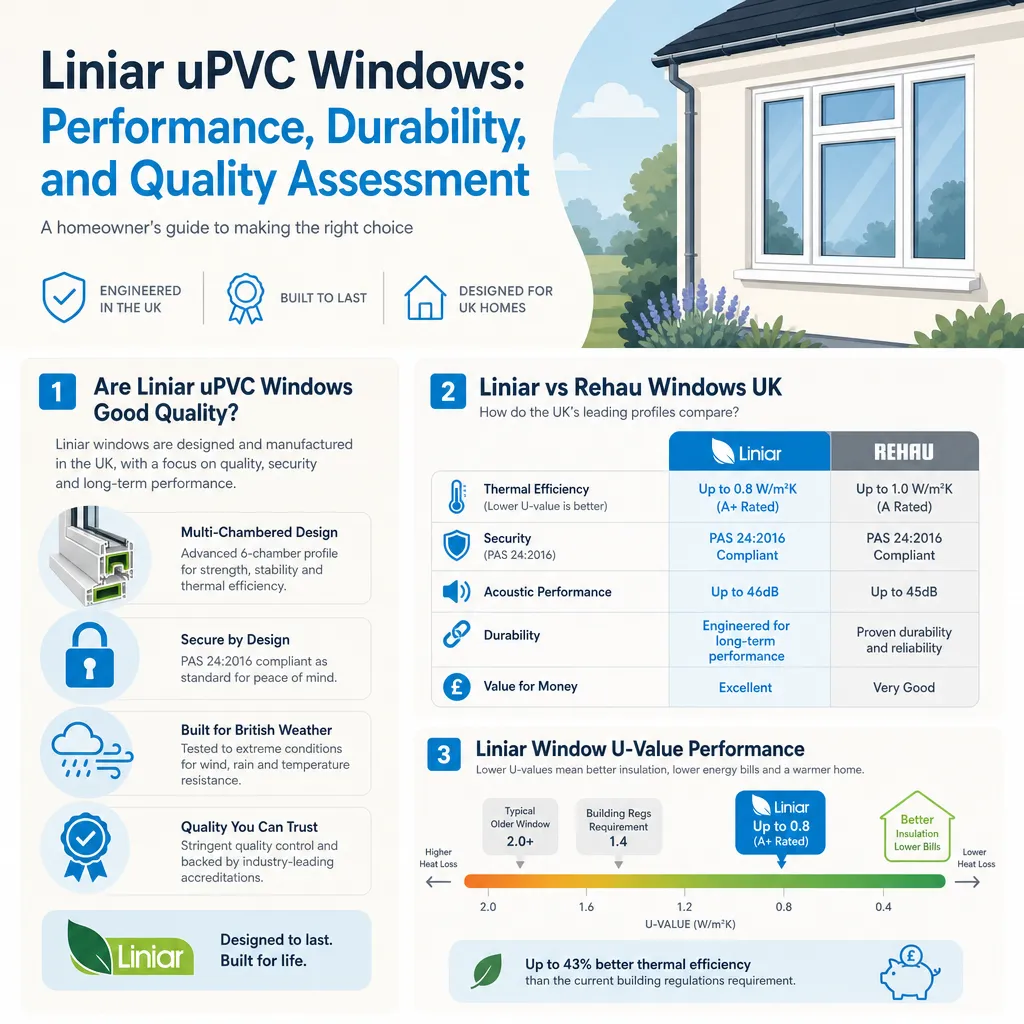
Liniar uPVC Windows: Performance, Durability, and Quality Assessment
Liniar uPVC window profiles are manufactured in the UK using multi-chambered, foamed frames.
 Improvement & Build
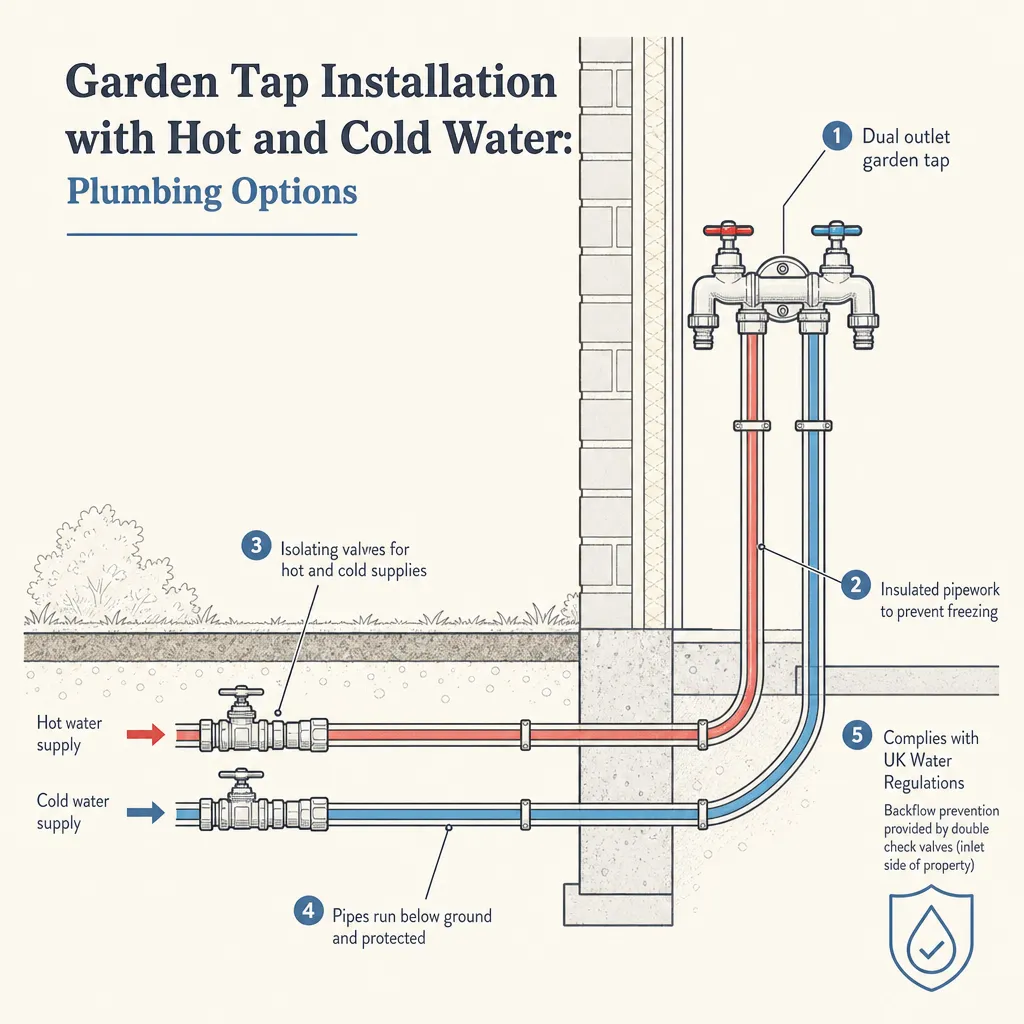
Garden Tap Installation with Hot and Cold Water: Plumbing Options
Adding a cold garden tap is a common DIY project, but routing hot water outdoors requires a plumber to connect to your domestic hot water system and comply with the Water Supply (Water Fittings) Regulations 1999.
 Improvement & Build
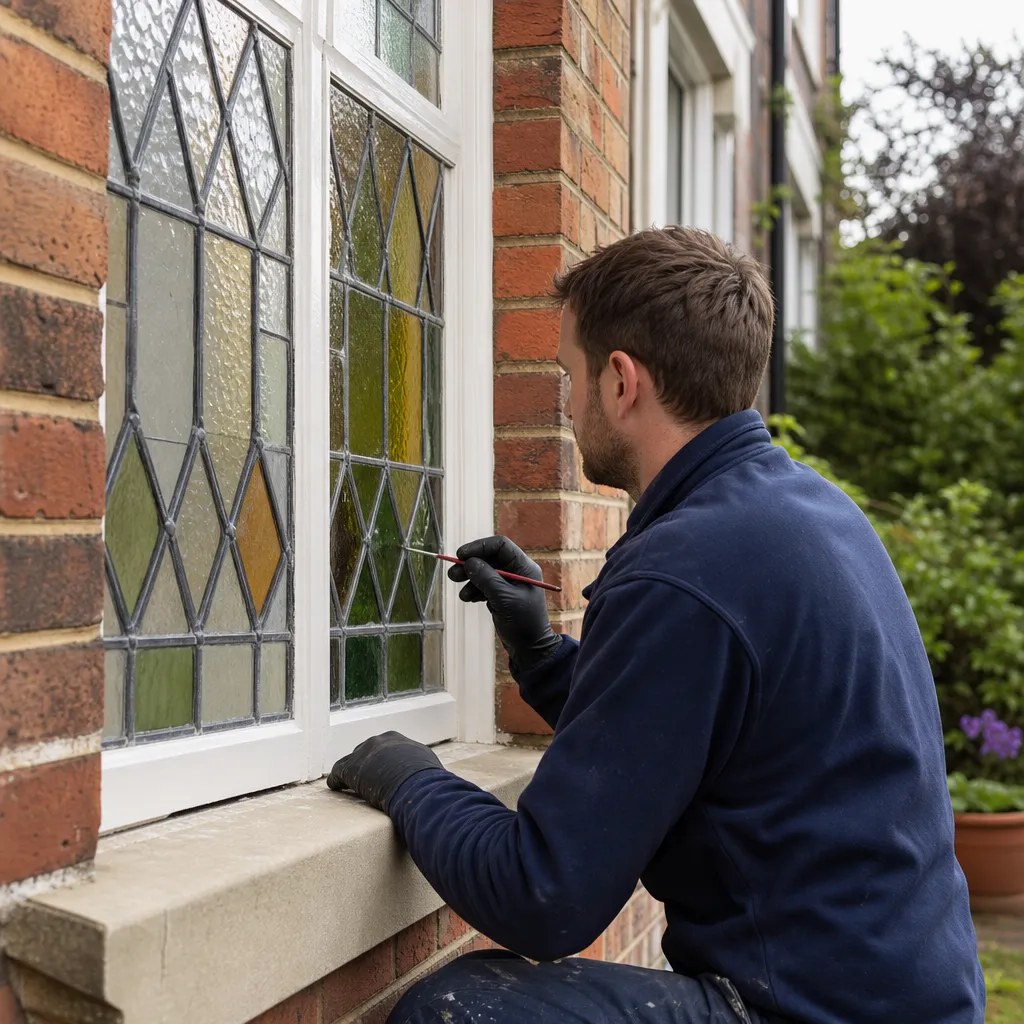
Sealing and Maintaining Historic Leaded Glass Windows: Preservation and Performance
Leaded glass windows are maintained using traditional linseed oil cement — not silicone or modern sealants, which prevent natural movement in the lead came.
 Improvement & Build
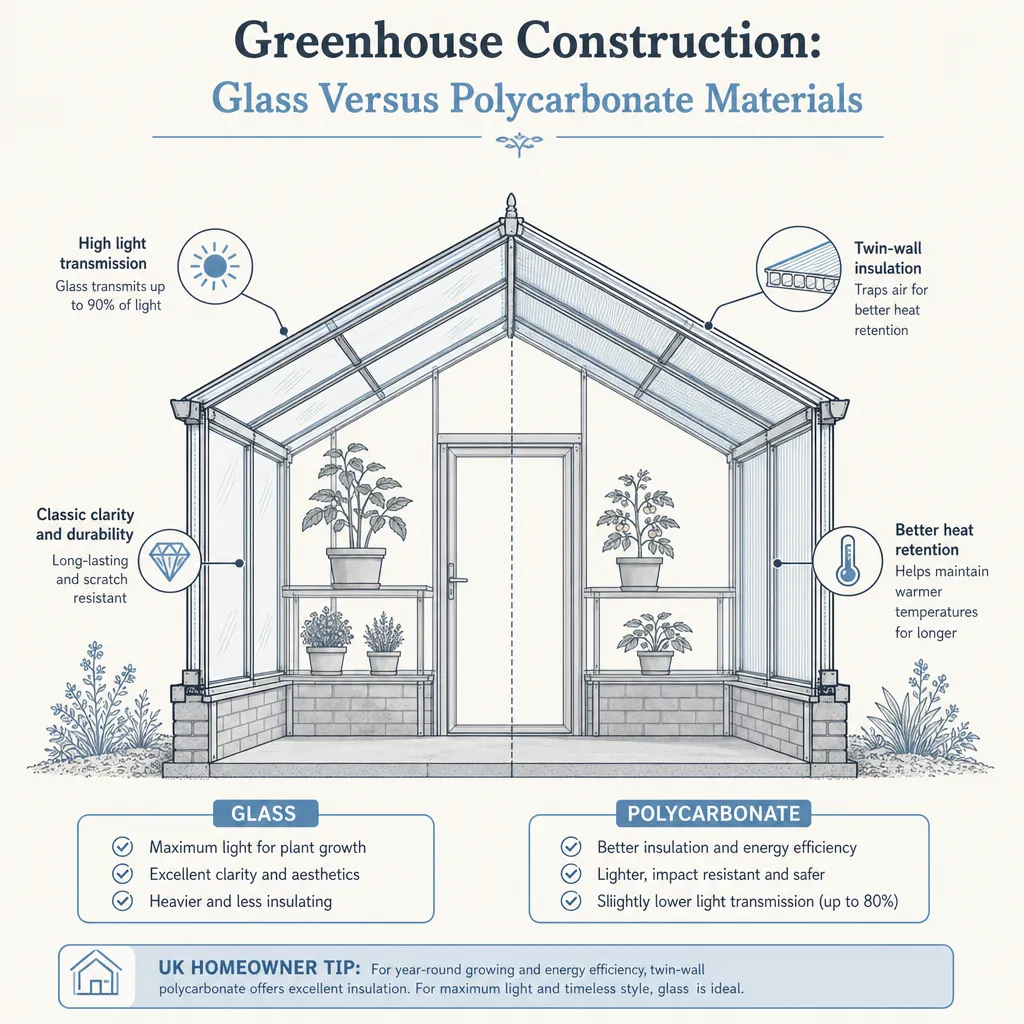
Greenhouse Construction: Glass Versus Polycarbonate Materials
Glass transmits around 90% of available light and lasts indefinitely if unbroken, but insulates poorly and shatters into sharp fragments.
 Improvement & Build
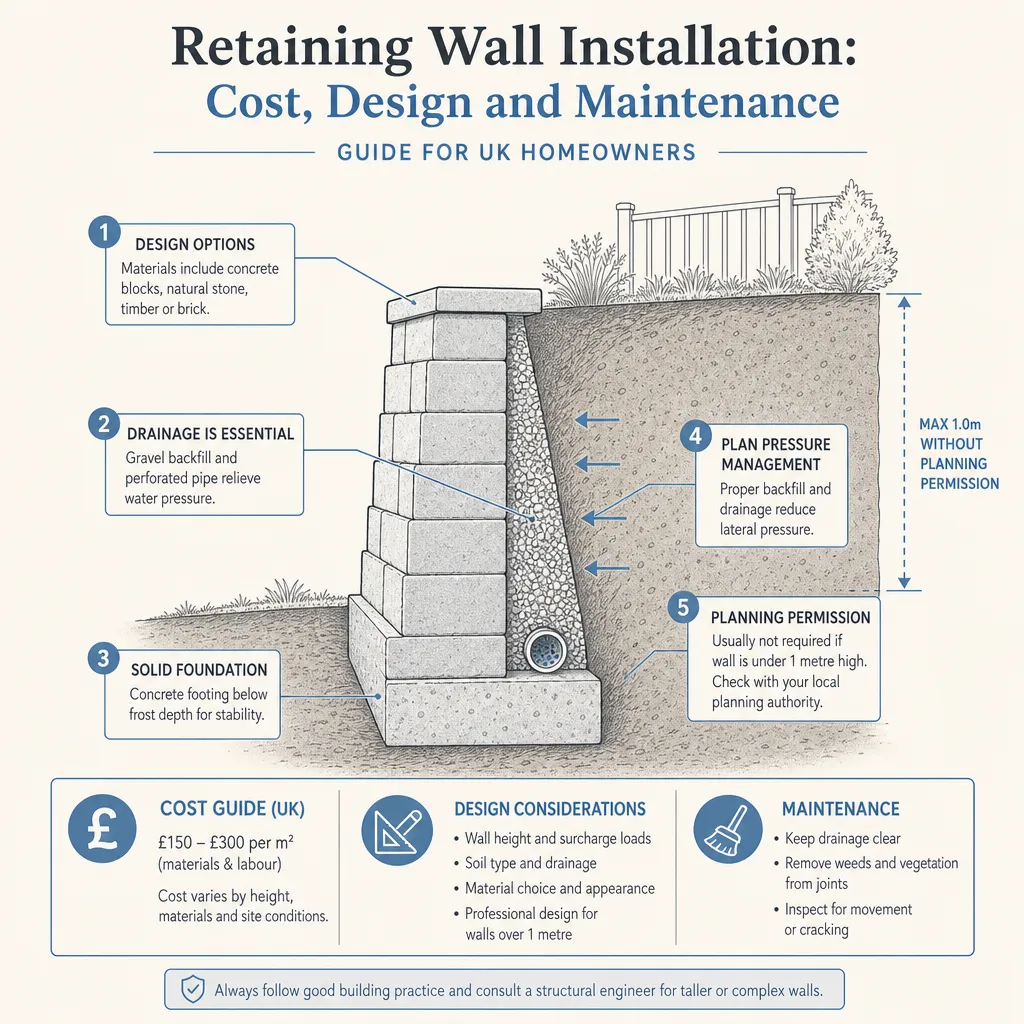
Retaining Wall Installation: Cost, Design and Maintenance
A retaining wall holds back soil on a sloped or banked site.