How Much Does a Wellness Garden Cost in the UK?
By Housey · Last reviewed 6th of May 2026
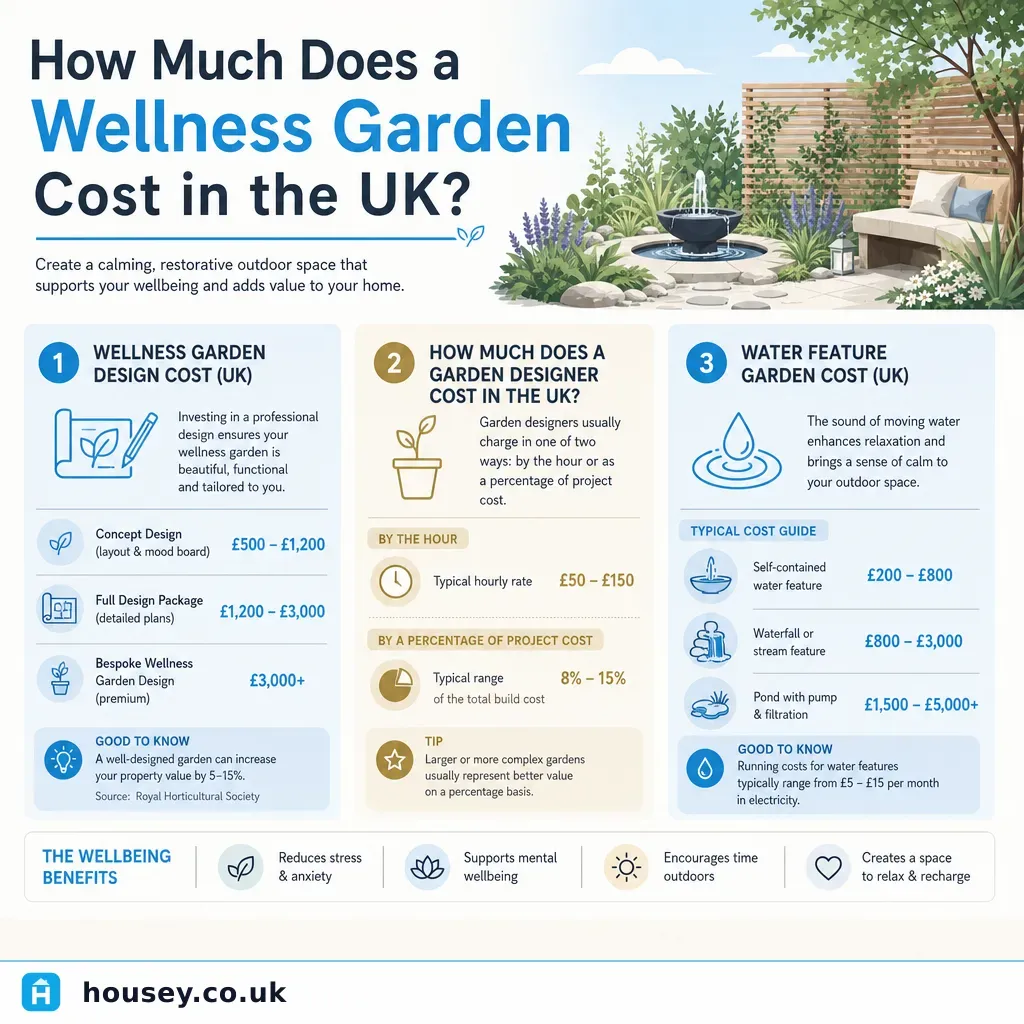
How Much Does a Wellness Garden Cost in the UK?
Wellness gardens have moved from boutique hotel courtyards into mainstream residential projects as homeowners look to create outdoor spaces that support relaxation, mental wellbeing, and time away from screens. Whether you are planning a modest courtyard with planting beds and a water feature, or a full redesign with a garden room, hot tub, and sensory planting, the investment can vary enormously. Understanding what drives cost before you commission a designer or brief a landscaper helps you set a realistic budget and get meaningful, comparable quotes.
Key points
- A full design-and-build wellness garden in the UK typically costs £10,000–£50,000+, with smaller schemes achievable from around £8,000.
- Garden designer fees range from approximately £1,500 for a concept-only brief to £5,000+ for a full design package including site survey, planting plan, and contractor coordination.
- Water features add £500–£8,000+ depending on whether you choose a self-contained urn, a formal rill, or a naturalistic pond with a recirculating pump.
- VAT at 20% applies to all garden construction and design work — always confirm whether quotes are inclusive or exclusive of VAT before comparing them.
- Hard surfaces over 5m² that are not permeable and could drain onto a road are subject to permitted development rules under Part 1 of Schedule 2 of the Town and Country Planning (General Permitted Development) (England) Order 2015.
What elements make up a wellness garden?
A wellness garden typically combines several distinct work packages, each with its own cost range. Understanding these packages helps you prioritise if you are working to a defined budget.
Element | What it involves | Indicative UK cost range |
|---|---|---|
Hard landscaping (paving, decking, paths) | Excavation, sub-base, laying natural stone or porcelain | £150–£400 per m² installed |
Raised planting beds | Brick, timber sleeper, Corten steel, or rendered construction | £300–£1,500 per bed |
Water feature | Self-contained unit, formal rill, or wildlife pond with pump | £500–£8,000+ |
Pergola or garden canopy | Timber or steel structure, sail shade, or glazed canopy | £3,000–£20,000+ |
Outdoor lighting | Low-voltage LED path lighting, uplighting, festoon | £1,000–£5,000 installed |
Sensory planting | Mature specimen plants, scented and textural species, turf or meadow | £1,500–£8,000+ |
Garden room or outdoor studio | Insulated timber or modular structure | £15,000–£50,000+ |
Hot tub or cold plunge installation | Ground preparation, electrical connection, decking surround | £3,000–£15,000 |
Indicative UK costs, last reviewed 2026-05-06. Costs vary by region, ground conditions, material specification, and contractor. Obtain a minimum of three itemised quotes.
How much does garden design cost separately?
Many homeowners commission a garden designer before appointing a landscaping contractor. This approach produces a consistent brief for competitive quotes and often reduces build costs by avoiding costly redesigns mid-project.
A garden designer's fee structure in the UK usually follows one of three models:
- Hourly rate: £50–£120 per hour depending on experience and location.
- Fixed fee for a design package: £1,500–£5,000 for a residential project including site survey, concept design, detailed planting plan, and materials specification.
- Design-and-build: The designer works directly with a build team; fees are typically absorbed into the overall project cost, though the margin varies by practice.
The Society of Garden Designers (SGD) maintains a member register and a code of professional conduct. Choosing an SGD-accredited designer provides a professional baseline for residential work and a route for dispute resolution if problems arise.
What drives wellness garden costs up or down?
Factors that increase cost:
- Ground conditions: Poor drainage, tree roots, sloping sites, or existing concrete bases all add excavation and preparation costs.
- Material specification: Natural granite or limestone costs considerably more than porcelain or reconstituted stone; Corten steel costs more than softwood sleepers.
- Mature planting: Specimen trees and large shrubs already at display size can each cost hundreds of pounds. Smaller plants grow into the design but take time.
- Running services: Electricity and water supply to a garden room, hot tub, or pump requires a qualified electrician and possibly a plumber, adding £500–£3,000 depending on distance and access.
- London and south-east location: Labour rates are typically 20–40% higher than the UK average.
Factors that reduce cost:
- Phasing work over two or three years — hardscaping first, planting later.
- Choosing porcelain over natural stone for paved areas.
- Commissioning a concept design only and briefing contractors yourself.
- Buying plants from a nursery and hiring a day-rate gardener to install them.
Decision guide: which approach suits your budget?
- Under £5,000: Focus on a single focal element — a raised bed scheme, a self-contained water feature, or new sensory planting. Commission a one-off design consultation (half-day, typically £200–£500) rather than a full design package.
- £5,000–£15,000: A professionally designed planting scheme with hard landscaping for a small garden (up to 40–50m²) is achievable. Prioritise durable materials and omit the more costly structures.
- £15,000–£40,000: A full redesign with paving, raised beds, a water feature, pergola, planting, and lighting for a medium garden. Realistic for most suburban gardens across most UK regions outside London.
- £40,000+: Larger gardens, outdoor studios, hot tubs, naturalistic ponds, or high-end material specifications. A full design-and-build contract with an experienced practice is worth considering at this level.
What to ask before accepting a quote
- Is VAT included in this figure?
- What are the payment stages and schedule?
- Who holds public liability insurance, and for what level of cover?
- What ground condition has been assumed, and how are unexpected findings priced?
- Which plants, materials, and features are included — and to what specification?
- How long is the programme, and what is the policy on weather and access delays?
- Will you provide a written contract or letter of engagement before work begins?
Red flags when hiring a garden designer or landscaper
- No written quote or contract — verbal agreements leave you with no recourse if the scope or quality is disputed.
- A request for a large upfront cash deposit (more than 25–30% before work begins is unusual for smaller projects).
- No evidence of public liability insurance when requested.
- A quote that excludes VAT without stating this clearly.
- No site visit before quoting — ground conditions and access are critical to pricing accuracy.
- Reluctance to provide references or photographs of completed projects.
When to get professional help
Most wellness garden projects benefit from professional design input even when the budget is modest. A one-off consultation with an experienced garden designer can prevent costly mistakes in drainage, planting selection, and layout.
Seek professional input specifically when:
- Your garden slopes, has poor drainage, or has significant trees nearby — an arborist survey may be needed before landscaping starts, particularly where tree roots or canopy coverage affect the build area.
- You plan a garden room or permanent structure — building regulations or permitted development rules apply depending on size, height, and proximity to boundaries.
- Your property is listed or in a conservation area — consult your local planning authority before any significant landscaping or hard surface work.
- Electrical or water supply connections are involved — always use a registered electrician (NICEIC or NAPIT) and a qualified plumber where applicable.
How Housey can help
If you are ready to get quotes for a wellness garden project, Housey can connect you with vetted garden designers and landscapers working in your area. Describe your project, share your approximate budget, and compare proposals from local professionals before committing to any contractor.
Frequently asked questions
Do I need planning permission for a wellness garden in the UK?
Most garden landscaping falls within permitted development rights and does not require planning permission. Hard surfaces over 5m² that could allow water to drain onto a road must be permeable or include drainage to comply with Part 1 of the General Permitted Development Order. New structures such as pergolas and garden rooms have their own permitted development rules. Properties in conservation areas may face additional restrictions — check with your local planning authority before work begins.
What is the cheapest way to create a wellness garden on a small budget?
Scented and sensory planting, a self-contained water feature, and comfortable seating create a meaningful wellness effect without major construction costs. A half-day design consultation (typically £200–£500) can help you prioritise your budget effectively and avoid expensive mistakes on planting selection or layout before any contractor is appointed.
How long does a wellness garden take to build?
A small project — under 50m² with paving, planting, and one feature — typically takes two to four weeks on site. Larger projects with structures, extensive hard landscaping, and service connections can take eight to sixteen weeks. Design, planning, and contractor scheduling typically add four to twelve weeks before construction starts.
Is VAT charged on garden landscaping work in the UK?
Yes. Garden landscaping and design services are subject to VAT at 20%. Some sole-trader contractors operate below the VAT registration threshold and do not charge VAT, but clarify this before comparing quotes. Never assume a lower-priced and higher-priced quote are comparable without confirming the VAT position on both.
Sources and further reading
- Town and Country Planning (General Permitted Development) (England) Order 2015 — Schedule 2, Part 1 — legislation.gov.uk
- Hard surfaces around your home — Planning Portal — Planning Portal
- Society of Garden Designers — Find a Garden Designer — Society of Garden Designers
- NICEIC — Find a registered electrician — NICEIC
Useful next reads
 Improvement & Build
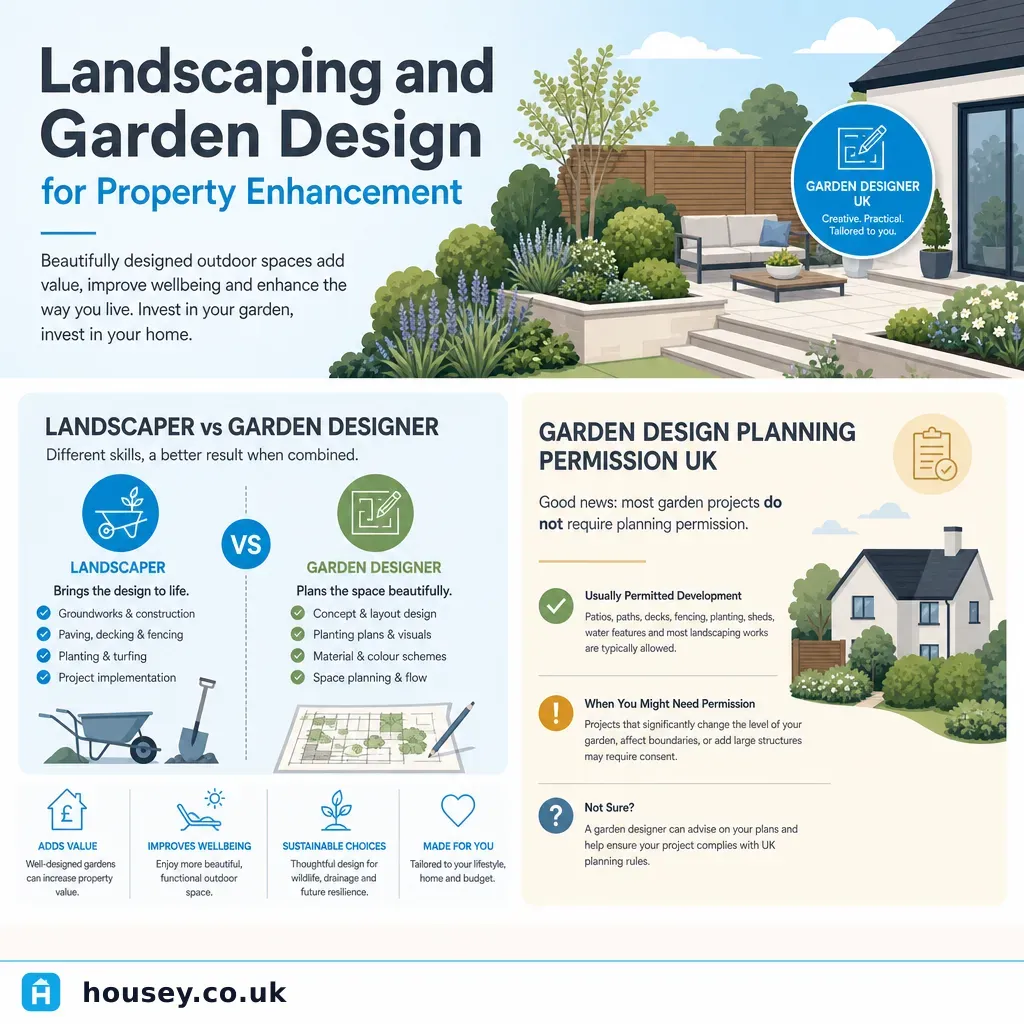
Landscaping and Garden Design for Property Enhancement
Landscaping and garden design involve planning and building outdoor spaces — from patios and raised beds to planting schemes and drainage.
 Improvement & Build
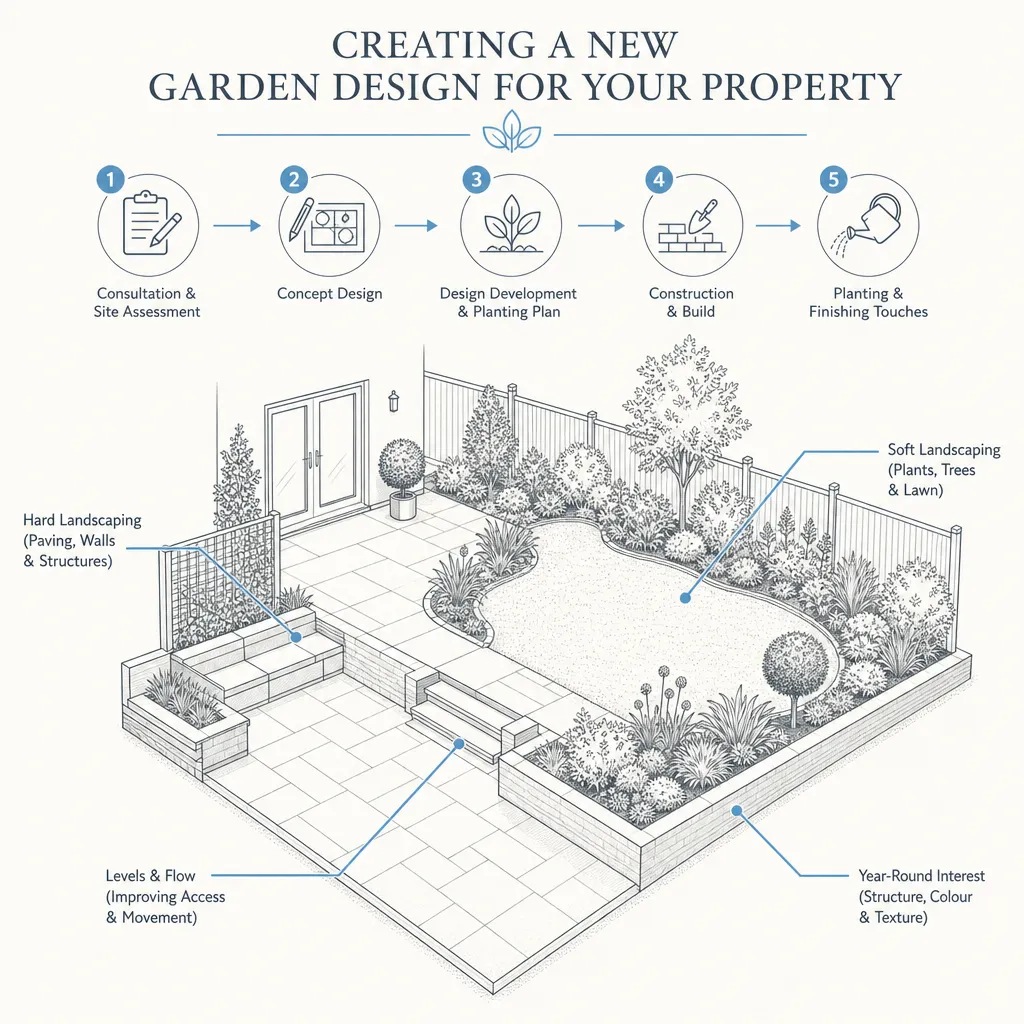
Creating a New Garden Design for Your Property
Creating a new garden design involves assessing your space, setting a realistic budget, deciding on hard and soft landscaping, and choosing a planting scheme suited to your soil and aspect.
 Improvement & Build
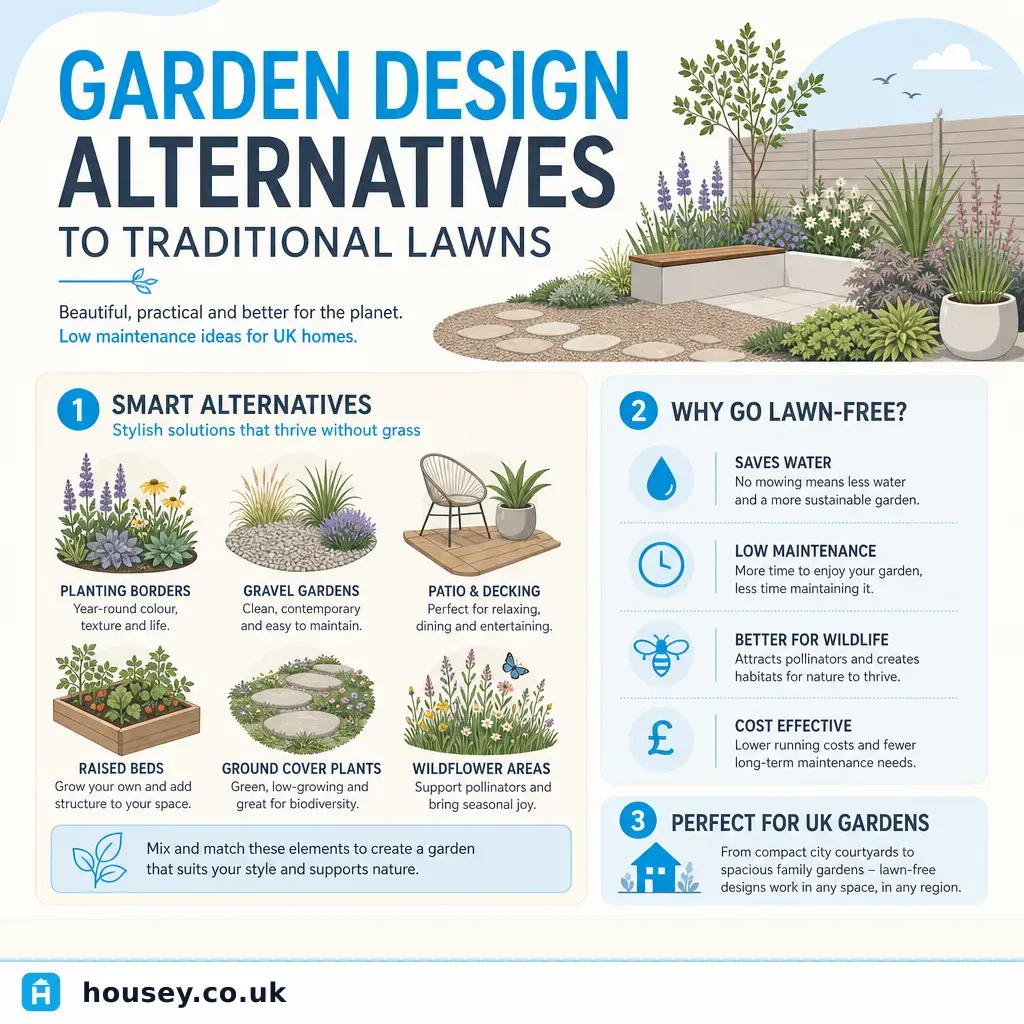
Garden Design Alternatives to Traditional Lawns
Popular alternatives to a traditional grass lawn in UK gardens include gravel, wildflower meadow planting, permeable paving, and ground-cover plants.
 Improvement & Build
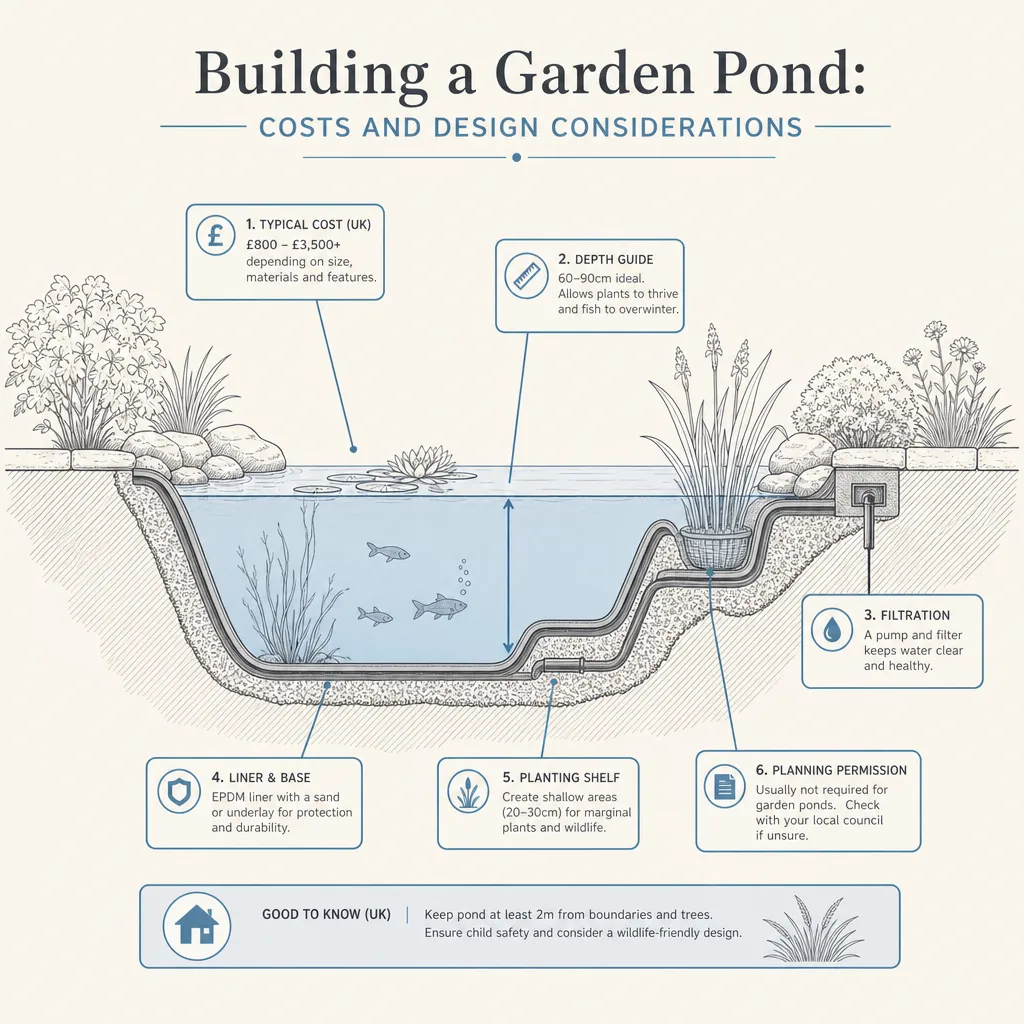
Building a Garden Pond: Costs and Design Considerations
A small garden pond costs from £500–£2,000 installed in the UK; a medium wildlife or ornamental pond typically ranges from £2,000–£7,000.
 Improvement & Build
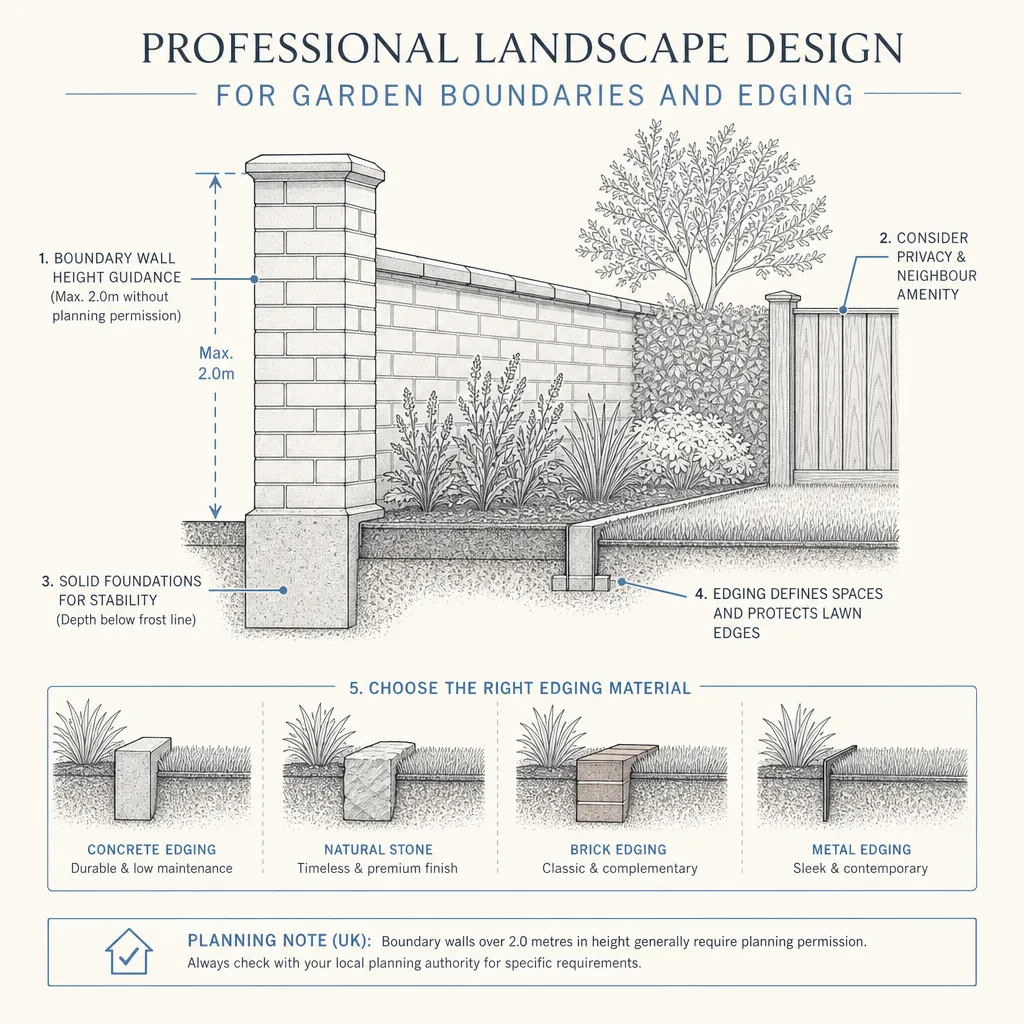
Professional Landscape Design for Garden Boundaries and Edging
Garden boundaries and edging define structure, manage drainage, and mark the legal interface between properties.