Wet room installation: what are the costs?
By Housey · Last reviewed 11th of May 2026
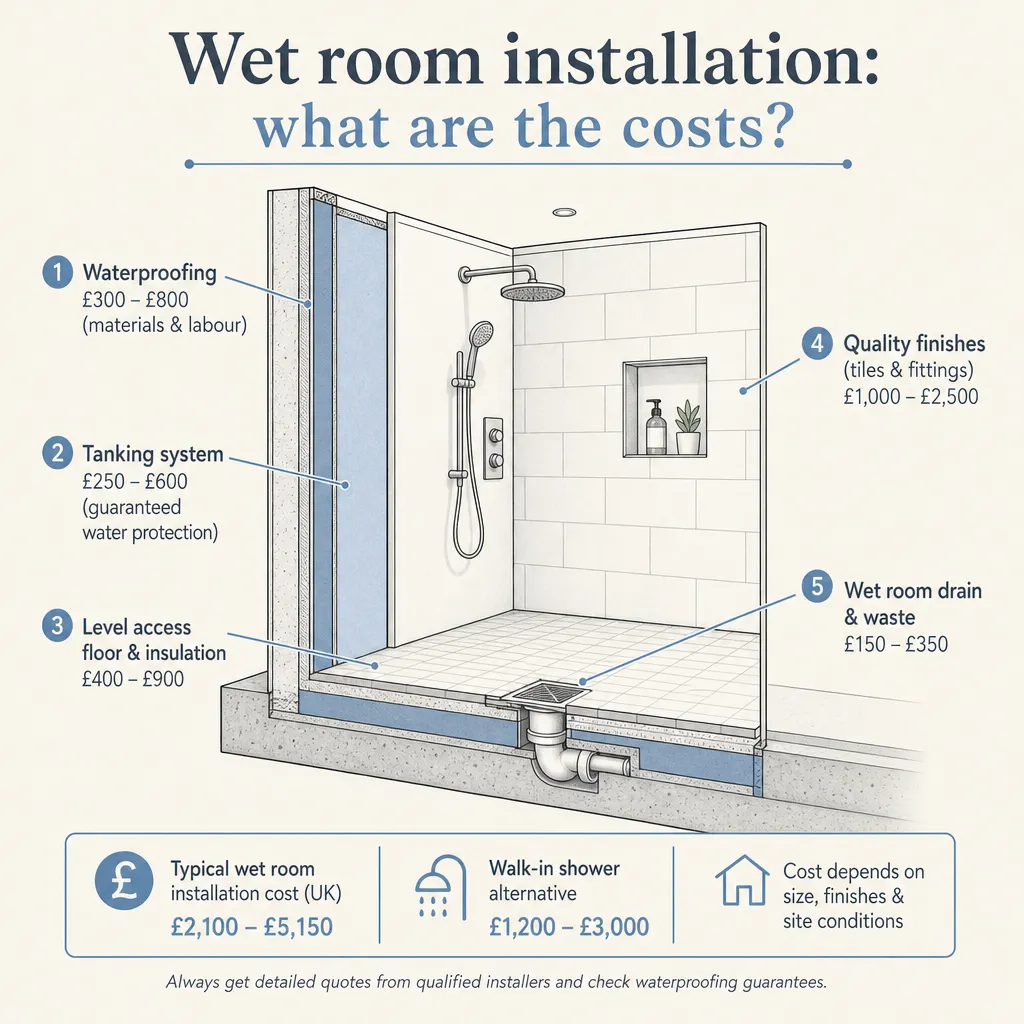
Wet room installation: what are the costs?
Wet rooms have become a popular bathroom upgrade in UK homes — sought after for their clean aesthetic, accessibility benefits, and practical appeal in compact spaces. Homeowners typically consider one when renovating an older bathroom, adapting a space for reduced mobility, or trying to maximise a small en-suite. Getting the budget right before committing matters: wet room installation involves specialist waterproofing, drainage engineering, and tiling work that differs significantly from a standard shower enclosure replacement.
Key points
- Wet room installation in the UK typically costs between £3,500 and £10,000+; a mid-range project in an average bathroom often falls between £5,000 and £7,500, including labour and tiling (indicative UK costs, last reviewed 2026-05-11).
- Tanking — the full waterproofing of walls and floor using a liquid-applied membrane — is the single most critical element; skimping on it is a leading cause of damp and structural damage.
- Upper-floor installations require structural assessment and often reinforcement of the timber floor to carry the weight of screed, tiles, and water loading.
- Non-slip floor tiles for wet rooms should carry a slip-resistance rating of R10 or R11; R9 is the minimum acceptable standard for wet areas.
- Wet rooms installed primarily for accessibility may qualify for a Disabled Facilities Grant (DFG) of up to £30,000 in England, administered by local councils under the Housing Grants, Construction and Regeneration Act 1996.
What drives the cost of a wet room?
Several factors determine how much a wet room installation will cost.
Room size and existing layout Larger rooms require more tanking material, more tiles, and more labour time. Converting an existing bathroom is cheaper than building a wet room from scratch because plumbing routes are already established. A small en-suite conversion is typically cheaper than converting a ground-floor room that requires new drainage runs.
Floor type and structural condition Ground-floor wet rooms on a solid concrete slab are the most straightforward. Timber-joisted upper floors need structural assessment and usually additional noggins, blocking, or a proprietary tanking system designed for timber substrates. This structural preparation can add £500–£2,000 to the project depending on what is found.
Waterproofing specification Tanking using a liquid-applied waterproof membrane — brands such as BAL, Mapei, and Laticrete are widely used — is the industry-standard approach. A competent installer applies at least two full coats to all walls and the floor, with reinforcing tape at every joint and corner. Skimping on tanking is the most common cause of wet room failure and subsequent water damage.
Tiles and finishes Porcelain and natural stone tiles cost more than standard ceramic. Non-slip R10 or R11 rated floor tiles typically cost more than standard wall tiles. Expect to pay £30–£100 per m² for mid-range porcelain; premium large-format stone can exceed £200 per m².
Drainage type A linear channel drain suits large-format tiles and gives a cleaner finished appearance. A central point drain is usually cheaper but requires tiles to be cut and laid with a fall from all four sides. Linear drain units typically cost £100–£400 each.
Glass screens and fixtures A frameless glass screen costs £400–£1,500 depending on dimensions. Thermostatic shower valves, handsets, and overhead heads vary from around £150 to over £600.
Wet room vs walk-in shower: a cost comparison
Feature | Wet room | Walk-in shower enclosure |
|---|---|---|
Full room waterproofing required | Yes | No — tray and enclosure only |
Typical installed cost | £3,500–£10,000+ | £1,500–£5,000 |
Floor structural assessment needed | Possibly, on upper floors | Rarely |
Level access (accessibility) | Yes | Depends on tray height |
Tiling complexity | High | Moderate |
Best for | Full renovation, accessibility, compact rooms | Budget-conscious upgrades, rental properties |
Indicative UK costs, last reviewed 2026-05-11. Quotes vary by region and specification.
Worked example: Victorian terrace, upper-floor bathroom
A homeowner is converting the first-floor bathroom of a 1900s Victorian terrace (2.2 m × 1.8 m) into a wet room with a linear drain, porcelain tiles, and a frameless glass screen.
The room sits directly above the lounge; the floor is timber-joisted. The contractor's assessment identifies the following scope:
- Strip out existing bathroom — £400–£600
- Structural assessment of joists and additional blocking — £300–£600
- Cement board substrate and two-coat tanking membrane — £600–£900
- R10-rated porcelain tiles including cutting, adhesive, and grout (approximately 26 m² of walls and floor) — £1,800–£3,000
- Linear channel drain and waste connection — £350–£600
- Frameless glass screen — £700–£1,200
- Thermostatic shower valve and head — £300–£700
- Plumbing, finishing, and making good — £500–£800
Estimated total: £4,950–£8,400 before VAT. VAT at 20% applies to most residential bathroom work. A reduced 5% rate may apply in certain circumstances for customers who are disabled or chronically sick — confirm eligibility with your installer.
Wet room installation checklist
Before agreeing to a quote, confirm the following with the contractor:
When to get professional help
Wet room installation is not a DIY project. Waterproofing, drainage fall, and tile adhesion must all be executed correctly — a failed tanked membrane on an upper floor can cause significant structural damage and persistent damp in the ceiling and walls below.
Red flags to watch for when comparing quotes:
- A contractor who does not mention tanking by product name or number of coats
- Quotes that do not specify a slip-resistance rating for floor tiles
- No structural consideration mentioned for upper-floor timber floors
- Unusually low quotes that omit preparatory work such as floor levelling, substrate installation, or strip-out
- Inability to provide public liability insurance documentation on request
For accessibility adaptations, contact your local council's occupational therapy service before committing to a specification — they can assess eligibility for a Disabled Facilities Grant and help shape the brief.
How Housey can help
Housey connects homeowners with vetted design-and-build firms who can manage a wet room conversion from structural assessment and waterproofing through to tiling, glazing, and plumbing. Submit a request to receive and compare quotes from local specialists.
Frequently asked questions
Do I need planning permission for a wet room?
In most cases, converting an existing bathroom into a wet room is permitted development and does not require a planning application. However, if the property is listed or in a conservation area, internal alterations may need listed building consent or conservation area consent. Some structural modifications may also require building regulations approval. Check with your local planning authority if you are uncertain about your property's status.
Can a wet room be installed on an upper floor?
Yes, but it requires careful preparation. Timber floors typically need assessment and often reinforcement with additional noggins or blocking to carry the weight of screed and tiles. A cement board substrate and two-coat tanking membrane must be applied correctly to prevent water passing through into the room below. A specialist installer should assess the floor before any work begins.
How long does a wet room installation take?
A standard bathroom-to-wet-room conversion typically takes five to ten working days depending on scope, structural preparation, tile adhesive and grout drying times, and the number of trades involved. Projects requiring significant floor reinforcement or complex tiling layouts may take two to three weeks from strip-out to completion.
Does a wet room add value to my home?
A well-installed wet room in good condition can add appeal to a property, particularly for buyers seeking accessibility or a contemporary bathroom finish. However, a poorly waterproofed or cramped wet room can deter buyers. Added value depends heavily on installation quality and the local property market.
Is there financial help available for a wet room for accessibility purposes?
Disabled Facilities Grants (DFGs) of up to £30,000 are available in England through local councils for adaptations including level-access showers and wet rooms for disabled or chronically ill residents. Applications are assessed by an occupational therapist. Scotland, Wales, and Northern Ireland each have separate grant schemes with different criteria and thresholds.
Sources and further reading
- Disabled Facilities Grant — GOV.UK
- Housing Grants, Construction and Regeneration Act 1996 — legislation.gov.uk
- Building Regulations Approved Document G: Sanitation, Hot Water Safety and Water Efficiency — GOV.UK
- Slip Resistance Guidance — The Tile Association
Useful next reads
 Improvement & Build
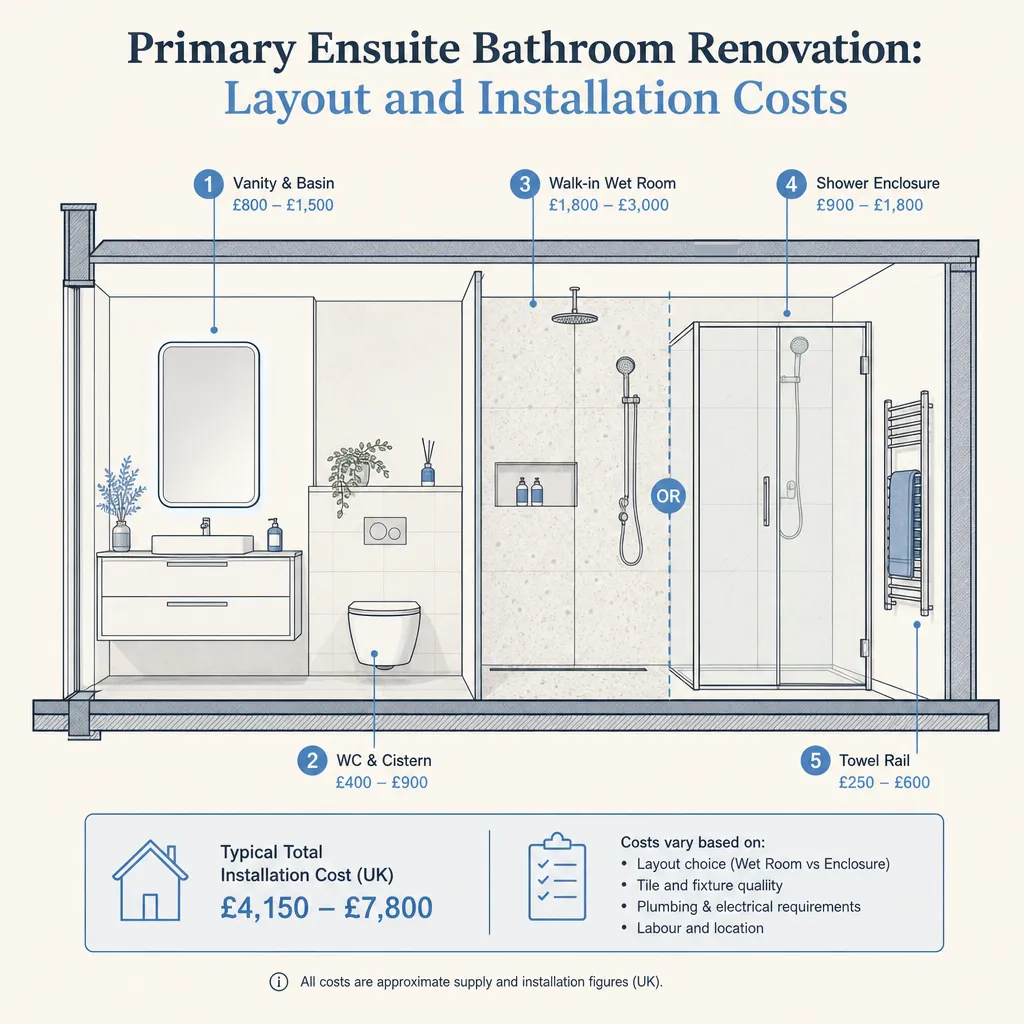
Primary Ensuite Bathroom Renovation: Layout and Installation Costs
A primary ensuite renovation in the UK typically costs between £3,000 and £12,000, depending on size, layout, and specification.
 Improvement & Build
Patio Door Types and Styles for Home Extensions
For most UK home extensions, sliding doors suit openings up to 3.
 Improvement & Build
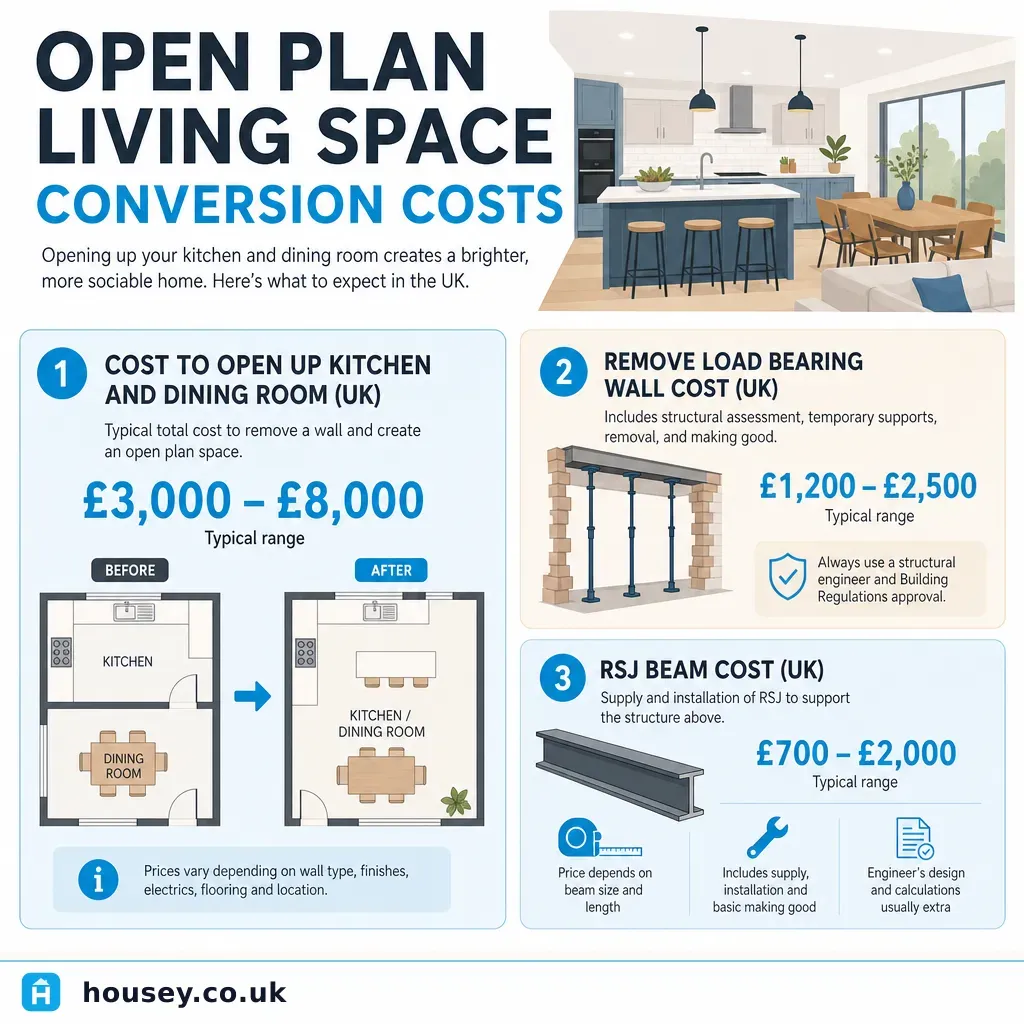
Open Plan Living Space Conversion Costs
Opening up a living space in the UK typically costs £3,000–£15,000+ depending on whether walls are load-bearing, the beam specification required, and the extent of remodelling.
 Improvement & Build
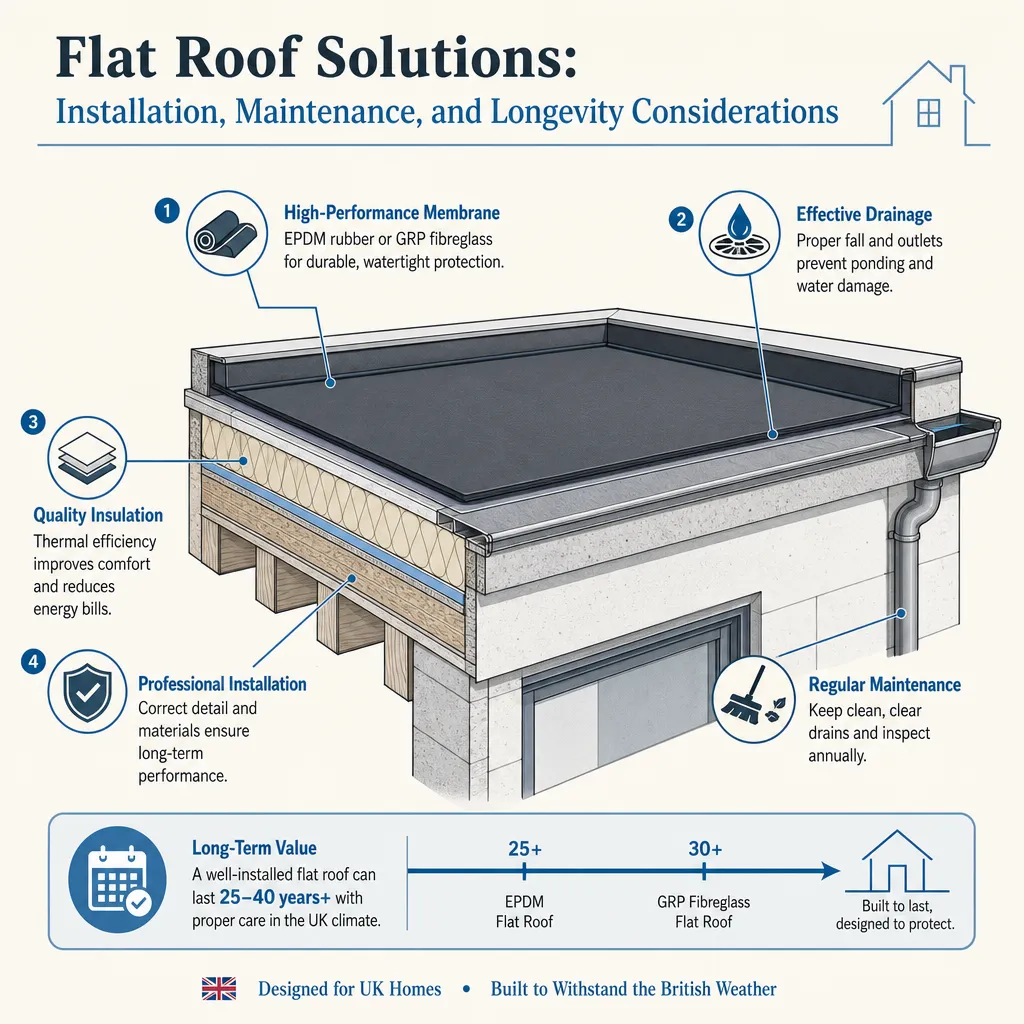
Flat Roof Solutions: Installation, Maintenance, and Longevity Considerations
Flat roofs use several waterproofing systems — EPDM rubber, GRP fibreglass, liquid-applied coatings, modified bitumen felt, lead, and zinc — each with different lifespans and installation requirements.
 Improvement & Build
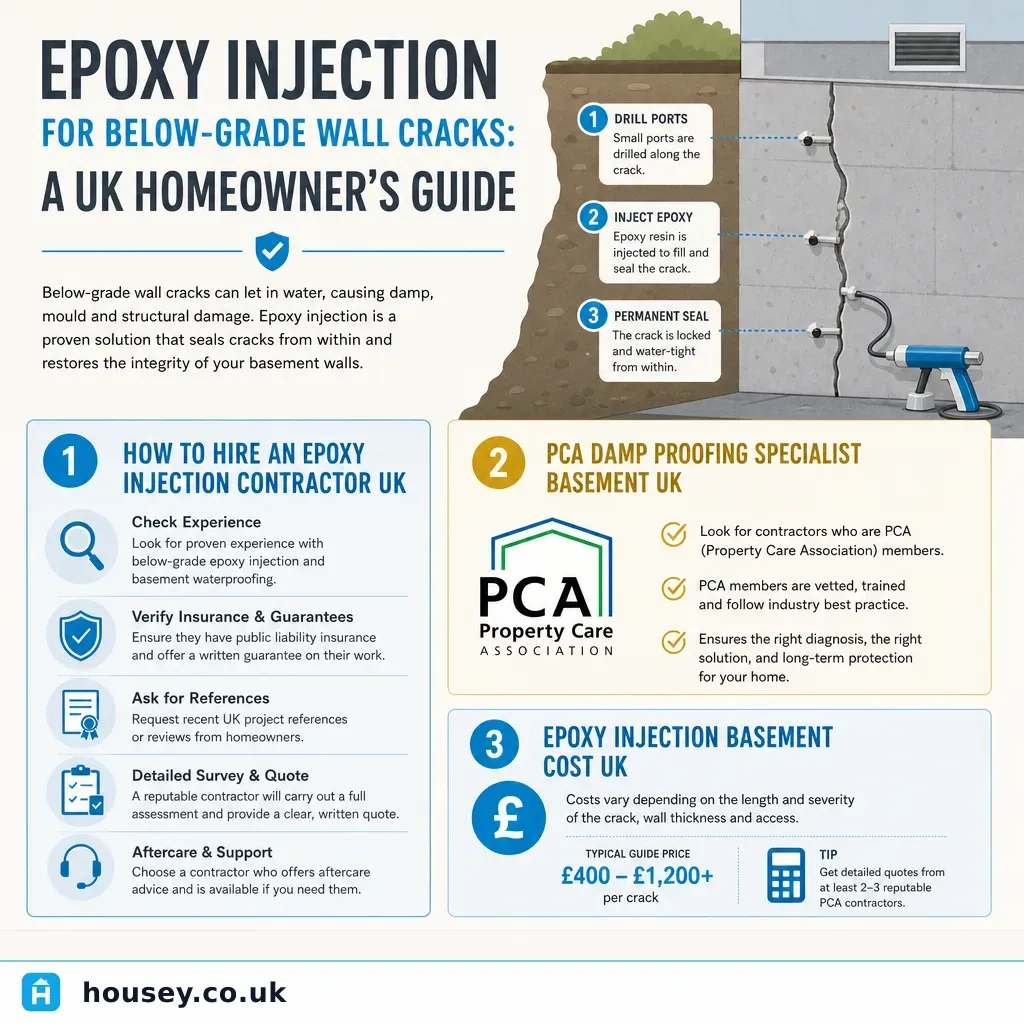
Epoxy Injection for Below-Grade Wall Cracks: A UK Homeowner's Guide
Epoxy injection seals stable, non-moving cracks in below-grade concrete walls but will not work on masonry, actively moving cracks, or as a standalone fix for habitable basement conversions.