What Does It Cost to Repair a Window Frame?
By Housey · Last reviewed 11th of May 2026
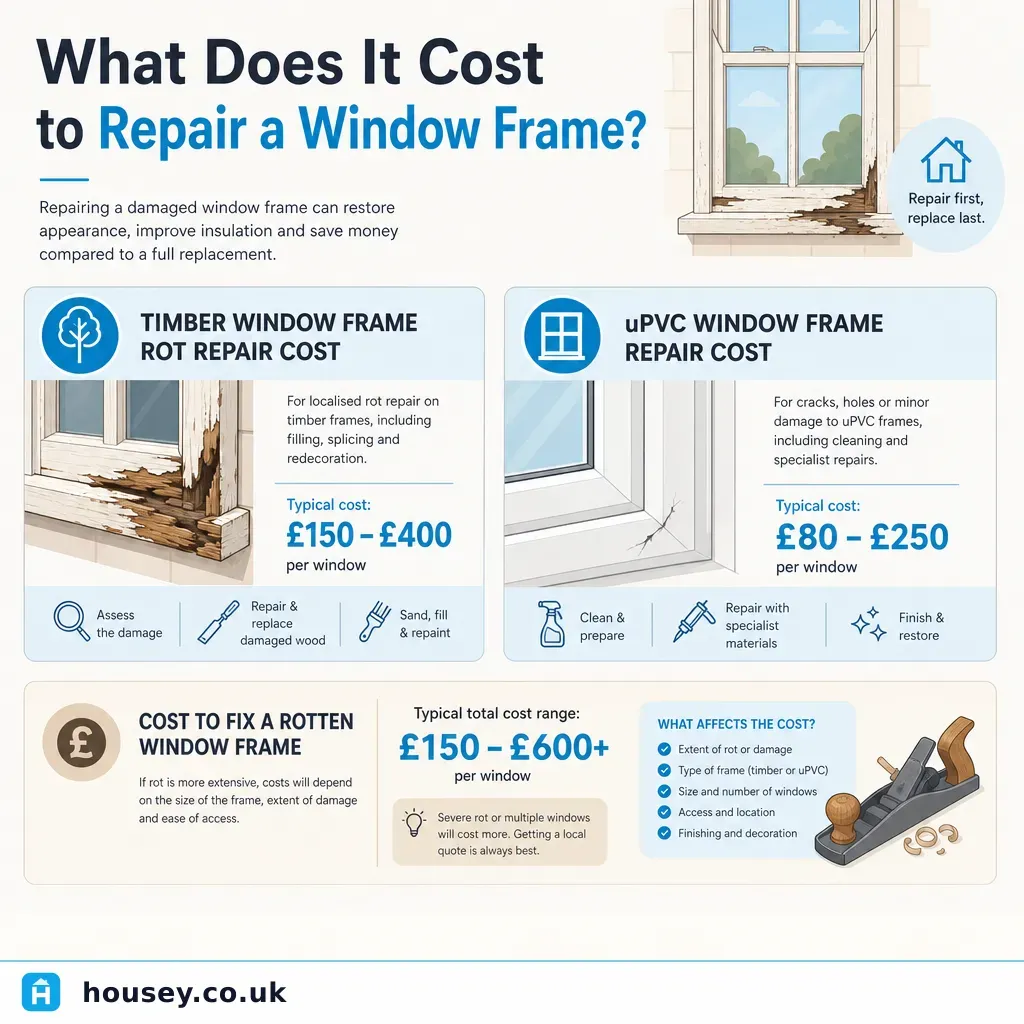
What Does It Cost to Repair a Window Frame?
Window frame problems tend to surface when homeowners notice draughts, sticking sashes, soft or spongy timber, or paint that keeps failing — issues that are particularly common in pre-1980 properties where original timber frames have been in service for decades. Knowing the likely repair cost before calling in a tradesperson helps you decide whether patch repair, a frame-section replacement, or a full window swap makes the most sense for your situation and budget.
Key points
- Timber frame rot is the most common repair need in UK homes built before 1980; a professional using epoxy wood hardener and filler can often restore a moderately affected frame for less than the cost of full window replacement.
- Minor to moderate timber frame repairs typically cost £150–£400 per window (labour and materials); severe rot affecting more than 50% of a frame section usually makes full replacement more economical.
- uPVC frame repairs — broken hinges, cracked sills, failed gaskets — typically cost £80–£250 per window for a joiner or specialist glazier.
- Frame repair (as distinct from full window replacement) does not normally require a FENSA certificate, as it is maintenance rather than installation of a new window unit.
- Draught-proofing existing frames by fitting new compression or pile seals typically costs £50–£150 per window when carried out professionally.
What types of window frame damage are most common?
Different frame materials fail in different ways. Identifying the type of damage helps narrow down the repair approach and likely cost.
Damage type | Frame material | Typical symptom | Usual repair approach |
|---|---|---|---|
Wet rot / fungal decay | Timber | Soft, spongy wood; paint bubbling; brown or black staining | Epoxy consolidant and filler, or cut-and-splice new timber section |
Dry rot | Timber | Crumbling, cube-cracked wood; musty smell; spore dust | Specialist treatment required; check surrounding structure |
Cracked sill | uPVC or timber | Water pooling; visible crack along the sill | Fill and seal (minor) or section replacement (severe) |
Failed hinges or stays | uPVC or timber | Window won't stay open; dropped or binding casement | Hinge replacement; typically straightforward and low-cost |
Broken or perished gasket | uPVC | Draughts; visible gap; condensation on the frame | Gasket replacement |
Warped or swollen frame | Timber | Sticking sash; won't close fully in damp weather | Planing and adjustment, or replacement if severe |
Failed draught strips | Timber or uPVC | Cold draughts around the frame perimeter | New compression or pile seal |
Timber frame repair costs
Timber frames in Victorian terraces, Edwardian semis, and pre-war properties are frequently affected by wet rot, particularly on exposed north-facing elevations or low-level sills where water collects and stands.
Indicative UK costs, last reviewed 2026-05-11. Obtain at least two or three quotes for your specific property.
Minor rot repair (epoxy consolidant and filler): £150–£350 per window. A joiner treats the decayed area with liquid hardener, fills with two-part epoxy, and redecorates. Suitable where rot is localised and the frame's structural integrity is sound.
Cut-and-splice repair (Dutchman repair): £250–£500 per window. A skilled joiner cuts out the decayed section and splices in a new matching timber section. Used where epoxy fill alone would not provide adequate strength.
Full frame replacement (retaining existing glass units): £300–£600 per frame. Sometimes the most practical route if multiple sections are affected, though the glass units may also need replacing if they have failed independently.
Dry rot treatment: dry rot in window frames should be assessed by a specialist. The fungus can spread into surrounding joinery, lintels, and structural timbers. Treatment involves antifungal application, removal of all affected material, and inspection of the adjacent structure — costs depend heavily on the extent of spread and should be quoted individually.
uPVC and aluminium frame repair costs
uPVC frames are generally lower maintenance than timber but can crack, fade, or suffer hardware failure over time.
Indicative UK costs, last reviewed 2026-05-11.
- Hinge replacement: £60–£150 per window (one hinge pair).
- Handle and lock replacement: £50–£120 per window.
- Gasket or weather seal replacement: £80–£180 per window.
- Cracked uPVC sill: £100–£250 to fill and seal; more if the sill section requires full replacement.
- Full uPVC frame replacement: usually more cost-effective to replace the whole window unit at £300–£700 supply and fit when frame damage is extensive.
Aluminium frame repairs can involve damaged corner joints, corroded ironmongery, or sealant failure. Specialist aluminium joiners are less widely available than uPVC or timber specialists; expect to pay a premium for skilled aluminium frame work.
Should I repair or replace my window frame?
- Repair if the frame is structurally sound, rot is localised (less than 30–40% of the section affected), you want to retain original character — particularly important in conservation areas or listed buildings — or the windows are relatively new.
- Replace if rot or damage affects more than 50% of the frame section, if the glass unit has also failed (misting or cracking), if the repair cost approaches 60–70% of a full replacement window, or if the frame material is difficult to source for repair.
- Consult a conservation officer or heritage carpenter if the property is listed or in a conservation area — planning authorities usually prefer repair to replacement for original timber windows.
- Ask a structural engineer if you suspect rot has spread into the lintel or surrounding masonry, particularly in older solid-wall properties where lintels may be timber.
Red flags: when frame damage may indicate a wider problem
The following signs suggest moisture or structural issues that extend beyond the window frame itself:
- Rot extends into the surrounding reveals or wall structure — this can indicate ongoing moisture ingress from outside the immediate frame area.
- The lintel above the window is cracked, displaced, or the masonry shows stepped cracking — seek a structural assessment before proceeding with frame repair.
- Dry rot smell or visible mycelium (woolly grey or white growth around the frame) — dry rot spreads and requires specialist treatment; it is not appropriate to attempt DIY remediation.
- Multiple frames rotting simultaneously — widespread rot across several windows suggests a systemic moisture source such as blocked gutters, failed render, missing flashings, or bridged cavity insulation. Resolving the source is essential before individual repairs will last.
- Original lead or sill flashing missing or displaced — water will continue to enter the frame zone until flashings are repaired first.
What to ask before accepting a quote
- Is the repair quoted as a fixed price or day rate, and what factors could change the final cost?
- What preparation and redecorating is included in the price?
- Will you use epoxy repair, a timber splice, or full frame replacement — and what is your reasoning?
- Have you checked the surrounding reveals, lintel, and sill for signs of moisture damage beyond the frame?
- What guarantee do you offer on the repair?
- Is VAT included?
- Do I need to arrange repainting separately, or is that included?
When to get professional help
Frame repair for rot or structural damage is a job for a qualified joiner or specialist timber-repair company. While minor hardware replacement can sometimes be a competent DIY task, structural frame repair, dry rot treatment, and any work at height should be handled by a professional.
Get professional advice promptly if:
- Rot has been spreading or windows have been draughty for more than one season without repair.
- You see cracking in the masonry around the window reveal — this warrants a surveyor or structural engineer's assessment.
- The property is listed: repair methods and materials may be prescribed by the local planning authority.
How Housey can help
Housey connects you with vetted window and door installers who can assess whether your frames need repair or replacement and provide transparent, itemised quotes. Compare up to four quotes and review installer credentials before committing.
Frequently asked questions
Do I need a FENSA certificate for a window frame repair?
No. FENSA certification applies to the installation of replacement windows as complete units. Repairing or maintaining an existing frame is a maintenance task and does not require a competent person scheme certificate. If you eventually replace the whole window unit, your installer will need to be FENSA or CERTASS registered.
How long does a timber frame repair last?
A well-executed epoxy or splice repair on a sound substrate can last 15–25 years, provided the underlying moisture source is resolved and the frame is kept decorated. If moisture ingress continues, any repair will fail prematurely regardless of the materials used.
Can I repair a rotten window frame myself?
Minor repairs using proprietary epoxy wood hardener and filler kits are achievable for a competent DIYer on ground-floor windows where access is safe. Structural repair, dry rot treatment, work at height, and any repair to a listed building should be carried out by a qualified professional.
Why are multiple windows rotting at the same time?
Simultaneous rot across several frames usually points to a systemic moisture source — most commonly blocked or leaking gutters, failed render, missing or damaged flashings, or cavity insulation that has bridged the wall. Resolving the root cause is essential; frame repairs will not last if moisture ingress continues.
Sources and further reading
Useful next reads
 Improvement & Build
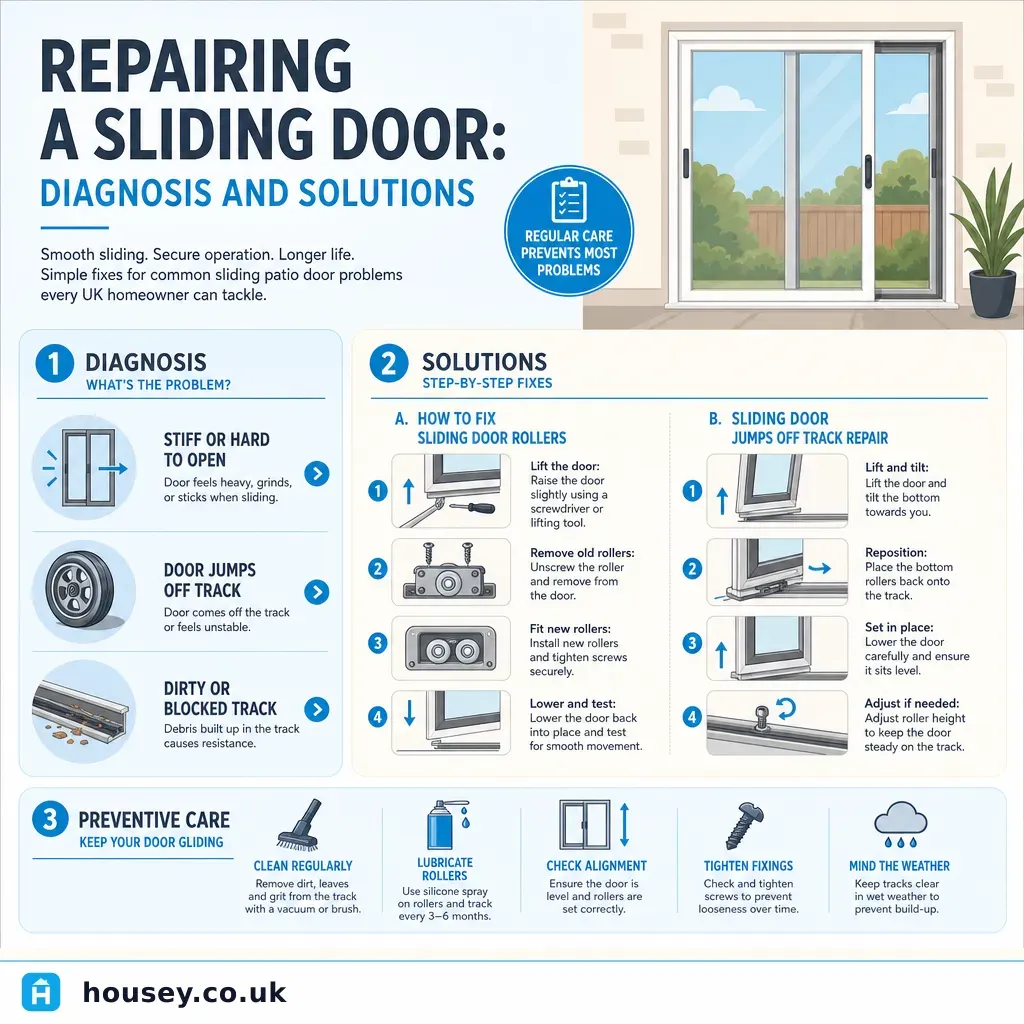
Repairing a Sliding Door: Diagnosis and Solutions
Most sliding door problems — stiffness, jumping off track, or draughts — are caused by dirty tracks, worn rollers, or misaligned guides.
 Improvement & Build
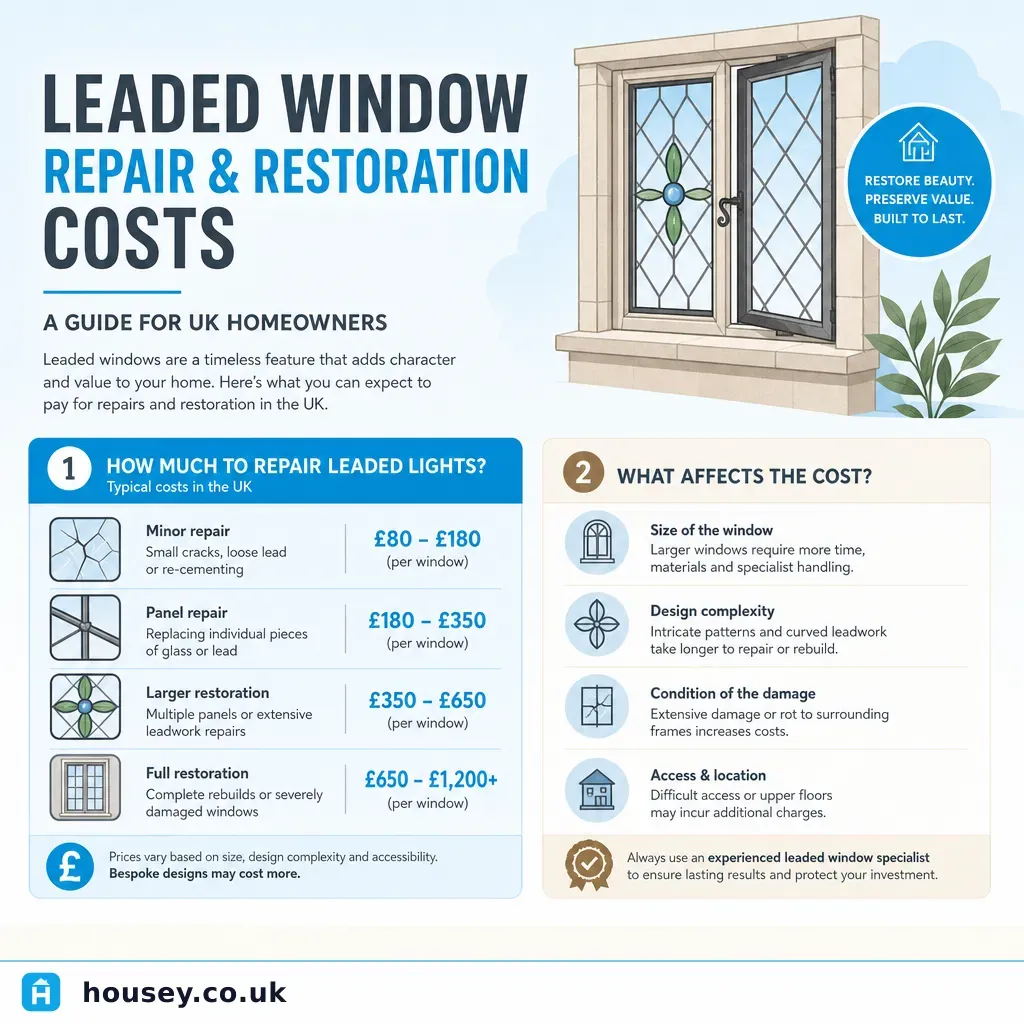
Leaded Window Repair and Restoration Costs
Leaded window repair in the UK typically costs £150–£600 for minor re-soldering or resealing, rising to £800–£2,500+ for full panel removal and restoration.
 Improvement & Build
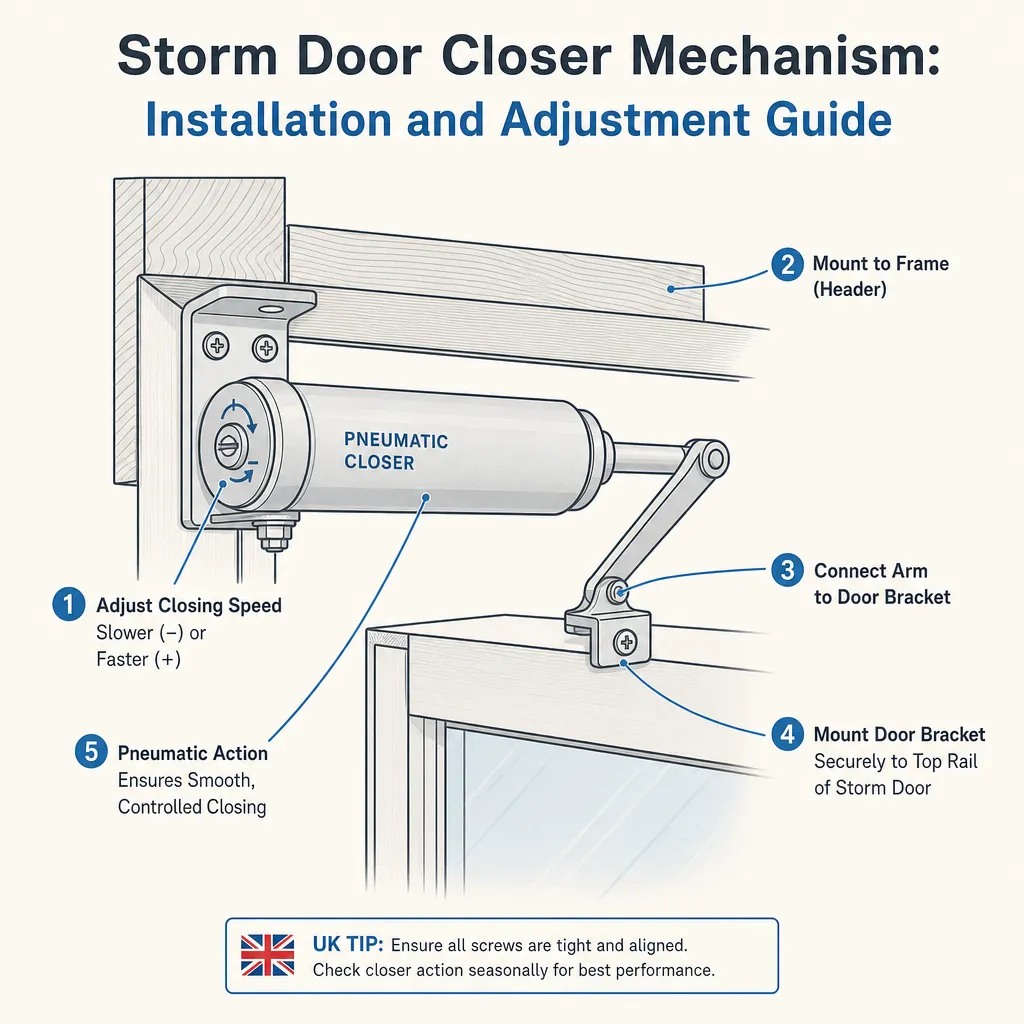
Storm Door Closer Mechanism: Installation and Adjustment Guide
Storm door closers are adjusted via a small screw at the end of the cylinder — clockwise slows the door, anticlockwise speeds it up.
 Improvement & Build
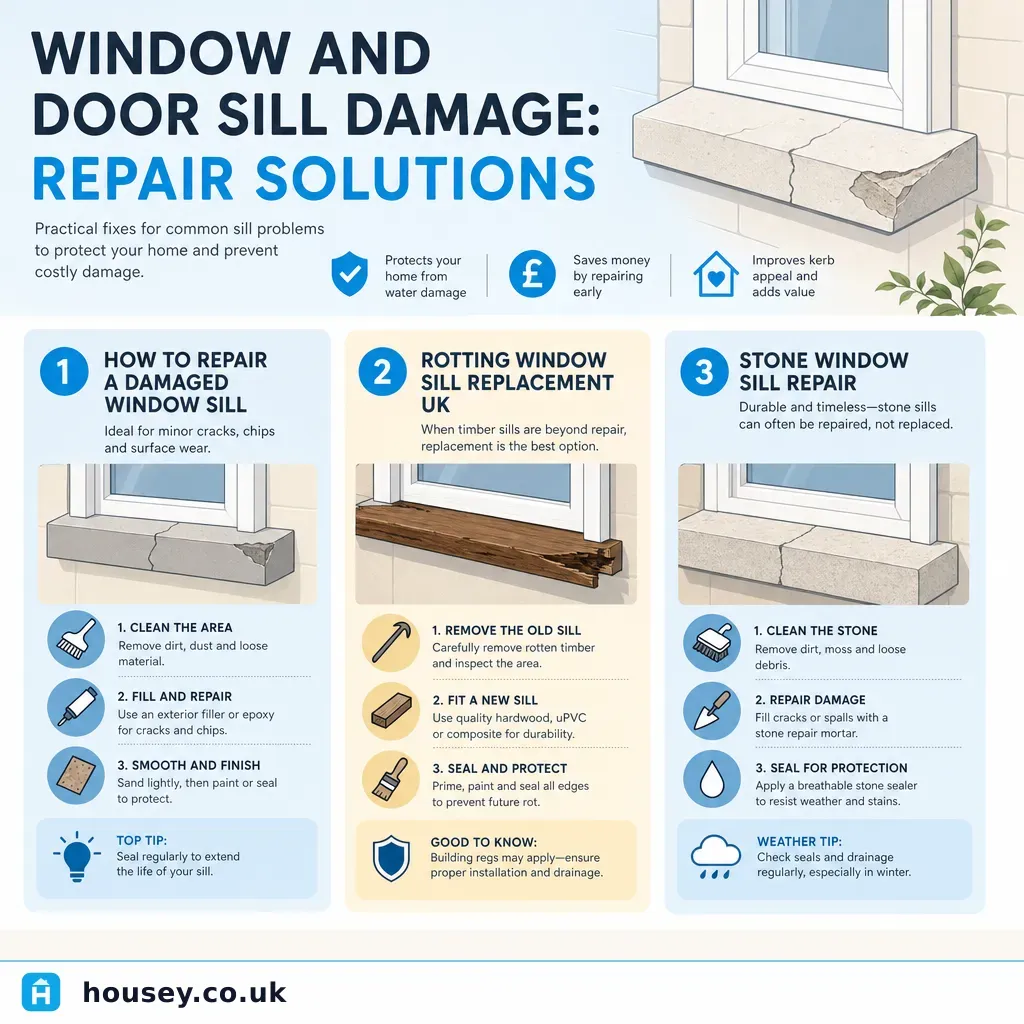
Window and Door Sill Damage: Repair Solutions
Window and door sill damage ranges from surface cracking and peeling paint to structural rot, spalling stone, or broken concrete.
 Improvement & Build
How to Find and Vet Professional Roofing Contractors
Professional roofing contractors should carry public liability insurance of at least £2m, provide a written workmanship guarantee, and hold accreditation from a recognised body such as the NFRC or the Competent Roofer scheme.