What Does Wood Floor Restoration Cost?
By Housey · Last reviewed 11th of May 2026
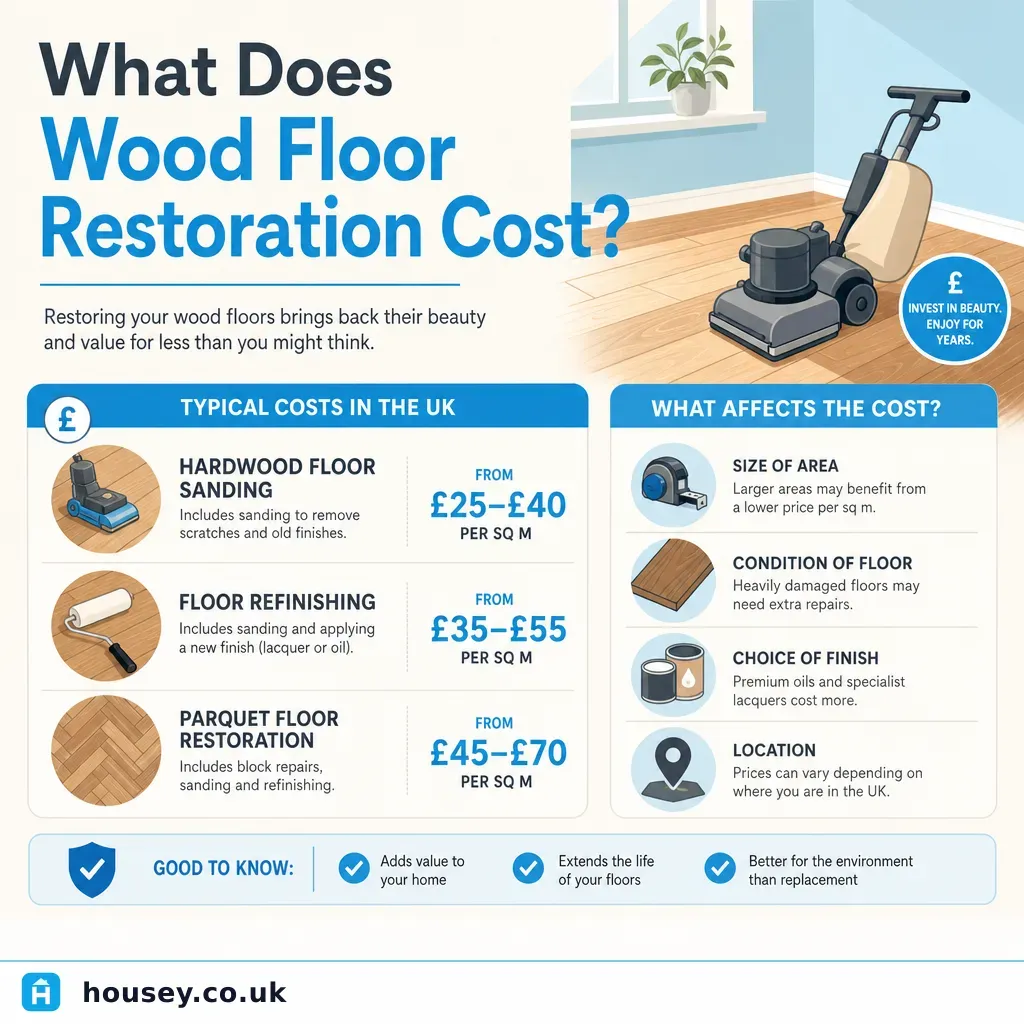
What Does Wood Floor Restoration Cost?
Timber floors are a prized feature in many UK homes — from original Victorian pine boards to 1930s parquet in suburban semis — but years of wear, pet damage, or heavy furniture leave them scratched, uneven, and dull. Knowing what restoration realistically costs before you invite quotes will help you plan your budget, compare contractors fairly, and avoid the most common pitfalls.
Key points
- Professional floor sanding and refinishing typically costs £15–£40 per m² in the UK, depending on floor type, condition, and finish chosen (Indicative UK costs, last reviewed 2026-05-11).
- Parquet and block floors — common in pre-1960s UK homes — are more labour-intensive than strip or plank floors and usually attract a higher rate per m².
- Most contractors apply a minimum visit charge of £200–£350 regardless of area, making small rooms disproportionately expensive.
- Board repairs, gap filling, and stair tread restoration are normally quoted separately from the main sanding scope.
- London and the South East typically attract rates 15–25% above the national average.
What does wood floor restoration involve?
Restoration is not a single fixed service — it covers a range of tasks depending on your floor's current condition:
- Light screen and recoat — buffing back the existing finish and applying one or two new coats; suited to floors with surface dullness and minor scratches only.
- Full sand and refinish — sanding the floor back to bare wood using industrial belt or drum sanders, then applying two to three coats of finish.
- Board repairs — replacing cracked, water-damaged, cupped, or missing boards before sanding begins.
- Gap filling — closing gaps between boards using flexible resin filler, matching timber slivers, or mixed-board compound.
- Parquet restoration — re-gluing loose blocks, levelling high points, filling, sanding, and finishing.
- Stair tread restoration — usually quoted separately at approximately £20–£50 per tread (Indicative UK costs, last reviewed 2026-05-11).
Understanding which of these applies to your floor will help you evaluate whether quotes are like-for-like.
How much does wood floor restoration cost?
The table below shows indicative cost ranges for common restoration scopes across the UK. Always obtain at least three quotes — prices vary significantly by contractor, location, and floor condition.
Scope | Indicative cost | Notes |
|---|---|---|
Strip/plank — full sand and lacquer | £18–£30 per m² | Most common domestic scope |
Strip/plank — oil or hardwax oil finish | £20–£35 per m² | More coats; easier future spot repairs |
Parquet/block — full restoration | £28–£45 per m² | Labour-intensive; pattern complexity adds cost |
Engineered hardwood — screen and recoat | £12–£22 per m² | Only possible if wear layer ≥3–4 mm |
Board replacement (per board) | £50–£150 per board | Timber matching and fitting included |
Gap filling (per room) | £80–£200 | Depends on gap count and method |
Stair tread restoration (per tread) | £20–£50 per tread | Often day-rate based |
Indicative UK costs, last reviewed 2026-05-11. Quotes vary by region, contractor, and floor condition.
What drives the cost of floor restoration?
Floor size and layout
Contractors price per m² but apply minimum charges. A large open-plan ground floor (e.g., 40–50 m²) is more cost-efficient than several small rooms, as machine set-up time is spread across a bigger area.
Floor condition
Nail heads, deep scratches, water staining, heavy paint, cupped boards, and extensive gaps all increase preparation time before sanding can begin. A floor needing significant remedial work may cost 20–30% more than a floor in good condition.
Timber species and floor age
Victorian-era softwood pine is relatively easy to sand. Solid oak, ash, and other hardwoods require more passes and sharper belts. Very old or very thin boards — common in pre-1900 houses — should be assessed by an experienced contractor before full sanding to avoid over-thinning.
Finish type
Lacquer dries faster, is more durable in heavy-traffic areas, and is cheaper to apply. Oil and hardwax oil finishes require more coats, additional drying time, and premium products, but allow for easier future maintenance and spot repairs. Water-based finishes are lower-odour but may cost slightly more.
Location
Rates in London and the South East are typically higher. Rural areas may also attract travel or minimum-charge premiums.
Homeowner checklist before getting quotes
Prepare this information before a contractor visits to get accurate, comparable quotes:
What to ask before accepting a quote
- What work is included — sanding, filling, finishing, furniture moving?
- How many coats of finish will be applied, and what product will be used?
- Will dust-extraction equipment be used throughout?
- How long must the floor cure before foot traffic and furniture can return?
- Is VAT included in the price?
- Does the contractor carry public liability insurance?
- Can they provide references or photos from comparable previous jobs?
Red flags to watch for
- A quote given without a site visit — floor restoration cannot be accurately priced from photos alone.
- No mention of the number of coats or finish product to be used.
- A price well below the market range — insufficient sanding or skipped preparation will be visible and reduce the floor's lifespan.
- Contractors unable to demonstrate experience with parquet or heritage floors if that is your floor type.
- No written, itemised quotation provided.
When to get professional help
Most floor restoration is carried out by specialist floor sanding contractors. Seek additional professional input if:
- The floor is springy, bouncy, or has localised dips — this may indicate subfloor or joist issues requiring a builder or structural engineer before any sanding begins.
- There is evidence of moisture or damp on a ground floor — investigate and treat the source before investing in a new finish.
- The property is listed or in a conservation area — check with your local planning authority before significantly altering original timber features.
- You suspect very old paint layers (pre-1960) — consider testing for lead paint before sanding, as airborne lead dust is a health hazard. Refer to HSE guidance on lead paint.
How Housey can help
Housey connects UK homeowners with vetted local tradespeople for floor restoration and broader home improvement projects. Describe your project to receive quotes from qualified professionals in your area.
Frequently asked questions
How long does wood floor restoration take?
A two-to-three bedroom house with solid timber floors typically takes two to four days, including drying time between coats. Parquet or heavily damaged floors may take longer. Most contractors recommend vacating rooms during the work and for 24–48 hours after the final coat, depending on the finish used.
Can engineered floors be sanded and restored?
Engineered floors can be sanded only if the wear layer is at least 3–4 mm thick. Thinner layers risk sanding through to the core material. A contractor should measure the wear layer and advise before quoting. Laminate flooring cannot be sanded and restored in this way.
Is it worth restoring rather than replacing a wood floor?
In most cases, yes. Restoration costs significantly less than replacement and preserves original timber — a selling point in Victorian, Edwardian, and interwar homes. Replacement makes more sense when boards are structurally compromised, very thin, or when sourcing matching replacement timber is not feasible.
Does wood floor restoration add value to my home?
Well-maintained timber floors are widely regarded as desirable in the UK property market, particularly in period homes. While no specific value uplift can be guaranteed, estate agents commonly identify good-condition original floors as a positive factor in buyer perception.
Sources and further reading
- Dust control in woodworking — Health and Safety Executive
- Getting work done on your home — Citizens Advice
- Floor insulation advice — Energy Saving Trust
Useful next reads
 Improvement & Build
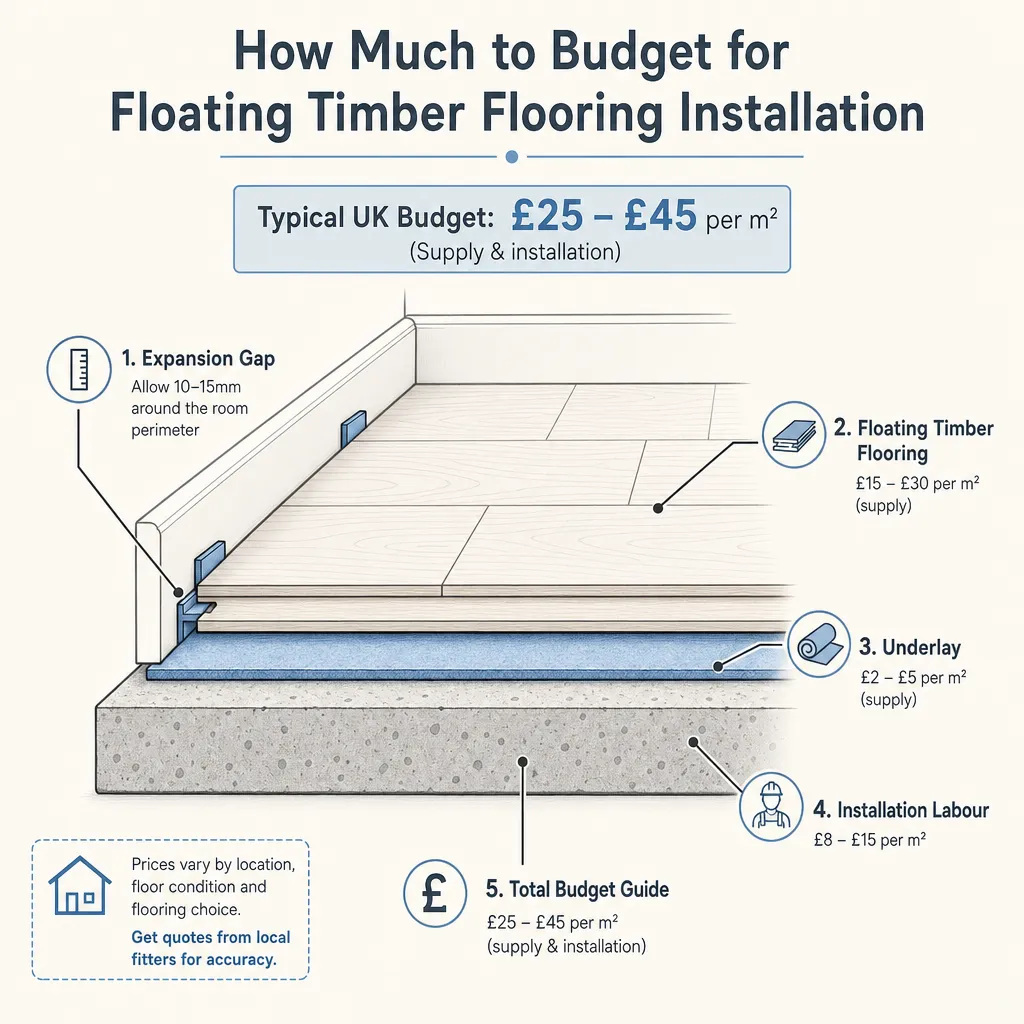
How Much to Budget for Floating Timber Flooring Installation
Floating timber flooring installation in the UK typically costs £8–£20 per m² for labour alone, with materials adding £8–£80+ per m² depending on whether you choose laminate, engineered oak, or solid wood.
 Improvement & Build
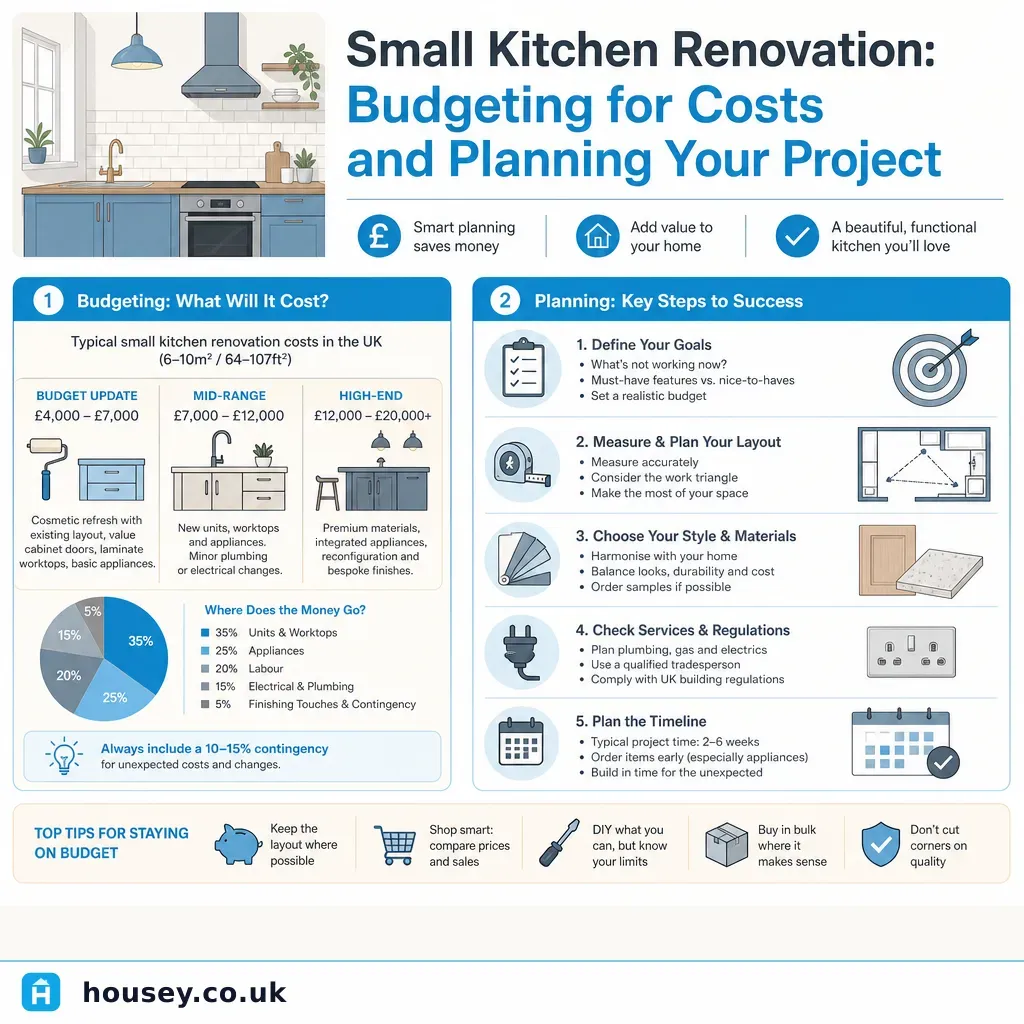
Small kitchen renovation: budgeting for costs and planning your project
A small kitchen renovation in the UK typically costs £5,000–£15,000 for a full refresh including new units, worktops, tiling, and appliances, though costs vary widely by specification, region, and whether structural changes or rewiring are involved.
 Improvement & Build
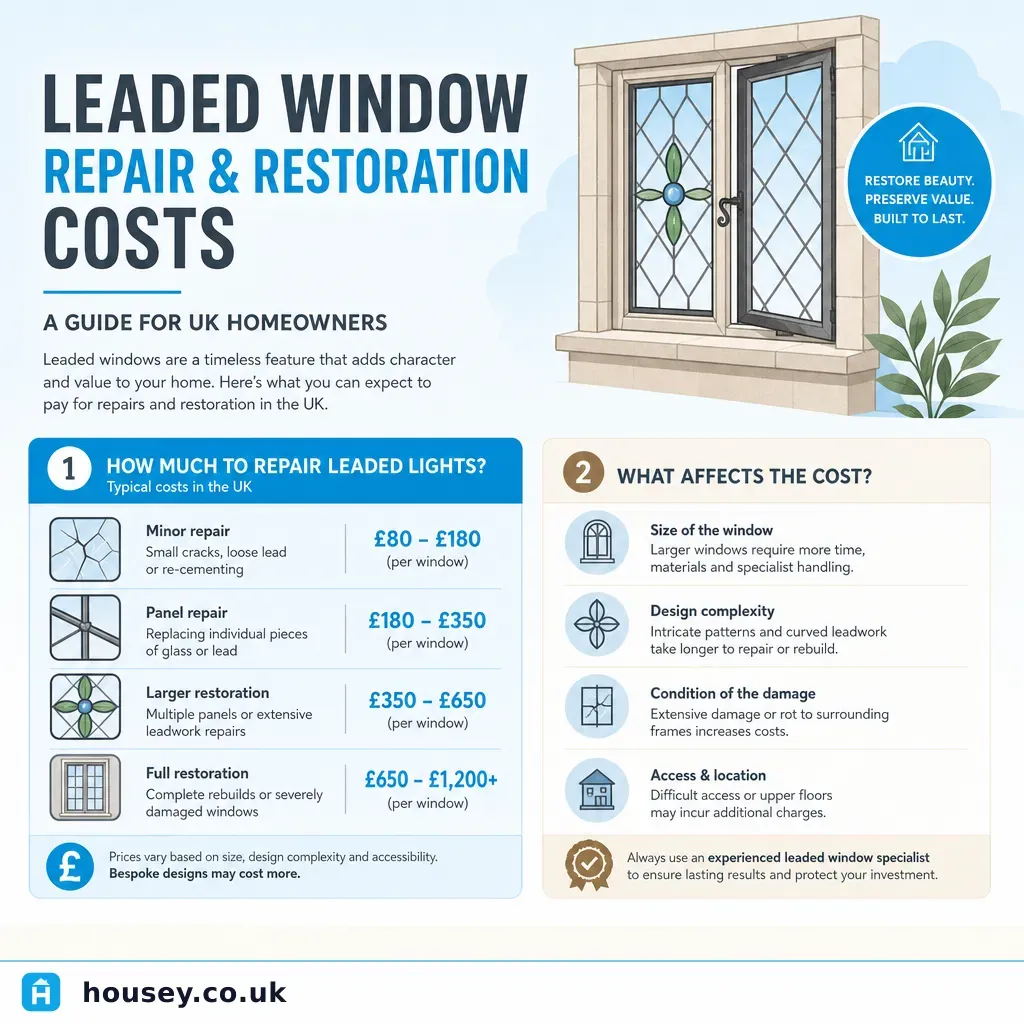
Leaded Window Repair and Restoration Costs
Leaded window repair in the UK typically costs £150–£600 for minor re-soldering or resealing, rising to £800–£2,500+ for full panel removal and restoration.
 Improvement & Build
Conservatories and Garden Extensions: Design and Building Guide
Most conservatories qualify as permitted development in England if they are single-storey, within 50% of original curtilage, and meet dimensional limits.
 Improvement & Build
Painting Interior Doors: Preparation and Technique
Painting interior doors well depends on preparation rather than paint choice.