What Is Roof Underlayment and Why It Matters
By Housey · Last reviewed 31st of May 2026
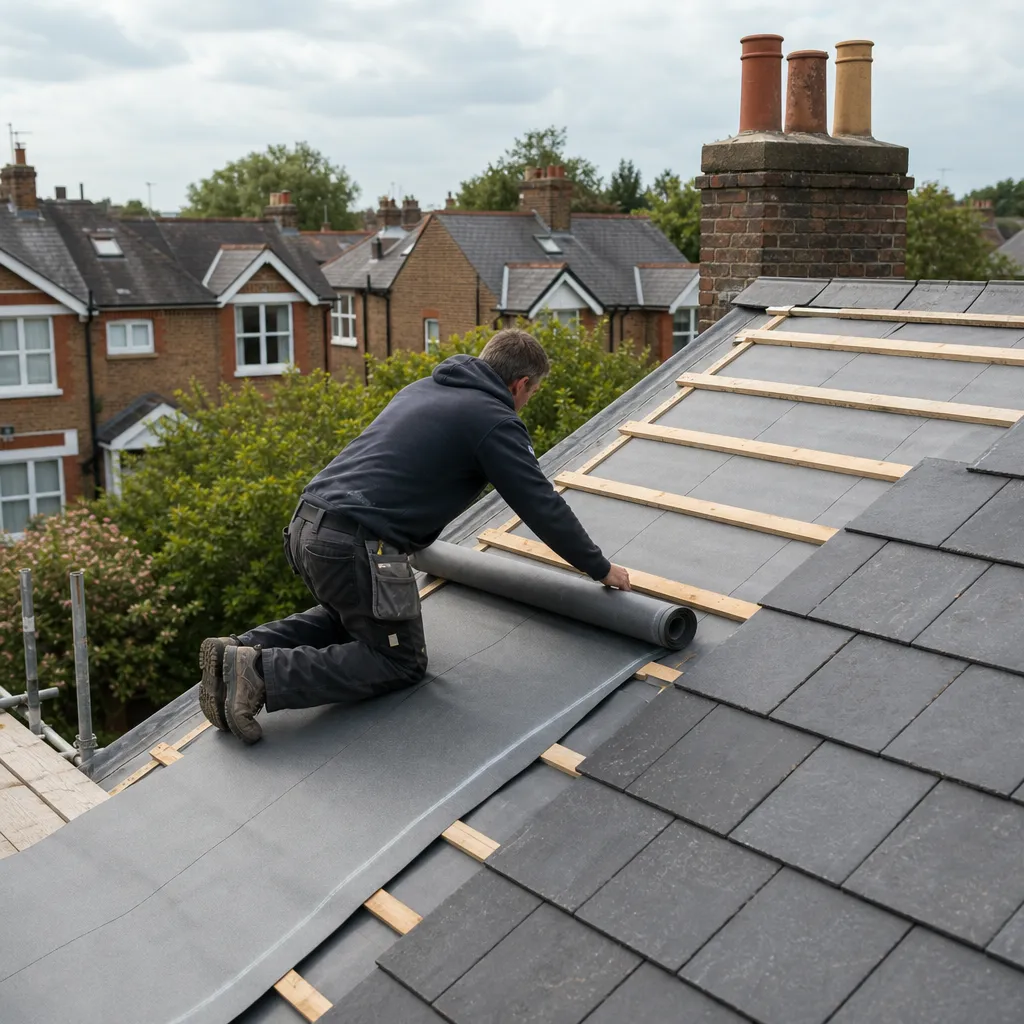
What Is Roof Underlayment and Why It Matters
When a roofing contractor strips an old roof or installs a new one, a crucial layer goes down before a single tile or slate is fixed in place. That layer — the underlayment — is the roof's second line of defence against the British weather, and choosing or specifying the wrong type can lead to costly moisture problems years down the line. Whether you are planning a full re-roof, replacing tiles after storm damage, or simply want to understand what sits beneath your existing covering, knowing what underlayment does and why it matters will help you ask the right questions and verify that work has been done correctly.
Key points
- BS 5534:2014+A2:2018 is the British Standard governing slating and tiling design and installation, and sets out requirements for underlayment specification and mechanical fixing.
- Two main categories exist: traditional low-resistance (LR) bitumen felt and modern vapour-permeable (breathable) membranes — each has distinct ventilation requirements under BS 5250.
- Building Regulations Approved Document C (resistance to moisture) requires that roofs are designed to protect the building fabric from weather-driven moisture.
- Breathable underlayments can often eliminate the need for a separately ventilated cold roof void, which may simplify certain roof designs and reduce the risk of ventilation blockage.
- Underlayment lifespan varies considerably: traditional bitumen felt may need replacing within 15–30 years, while quality breathable membranes are typically rated for 50 years or more.
What roof underlayment does
Roof underlayment sits between the structural roof deck (or rafter tops) and the outer covering of tiles, slates, or metal sheets. Its primary roles are:
- Secondary waterproofing. If wind-driven rain gets beneath tiles or slates — which it regularly does at verges, ridges, and valleys — the underlayment stops it reaching the roof structure or ceiling below.
- Wind uplift resistance. A properly fixed underlayment helps tiles and slates resist being lifted by gusts, working in conjunction with the correct mechanical fixing specified under BS 5534.
- Condensation management. Warm, moist air rising through a home can condense when it meets cold roof timbers. The type of underlayment chosen directly affects whether condensation is trapped or allowed to disperse safely.
- Temporary weather protection. During a re-roofing project, underlayment keeps the building weathertight while battens and tiles are being installed.
Without a sound underlayment, a roof covering alone cannot guarantee a dry, structurally protected roof space. NHBC technical standards (Chapter 7.1) include underlayment as a required element for new-build pitched roofs.
Types of roof underlayment compared
There are two broad families of underlayment used on UK residential roofs, with several variants within each:
Type | How it works | Ventilation requirement | Typical lifespan | Best for |
|---|---|---|---|---|
Traditional LR felt (Type 1F / 1B) | Non-breathable bitumen-based felt; moisture cannot pass through | Requires ventilated cold roof void — cross-ventilation at eaves and ridge per BS 5250 | 15–30 years | Re-roofs where existing cold roof ventilation is already in place |
Breathable (vapour-permeable) membrane | Microporous or spunbond structure; lets water vapour out, blocks liquid water | Can often be used in unventilated warm roof design, subject to full specification check | 40–60 years (rated) | New builds, re-roofs where ventilation improvement is desired, complex roof geometries |
High-performance reinforced membrane | Reinforced breathable membrane with increased wind and tear resistance | As breathable membrane above | 50+ years (rated) | Exposed or coastal locations; complex or large-span roofs |
Self-adhering membrane (peel-and-stick) | Adheres directly to deck; used at vulnerable junctions and valleys | N/A — used as a detail layer, not a full-area underlayment | Matched to primary membrane | Valley junctions, abutments, flat or low-pitch sections |
Note on ventilation: switching from a non-breathable to a breathable membrane on a re-roof requires careful assessment of the full roof build-up. A roofer should confirm the correct specification, referencing BS 5250 (Code of practice for the control of condensation in buildings) alongside BS 5534.
When underlayment needs to be replaced
Underlayment is not always visible from inside the roof space, but there are signs it may be failing or absent.
Red flags to look for:
- Daylight visible through the felt when inspecting the loft during daylight hours (holes or tears in the membrane).
- Sagging, brittle, or disintegrating felt — common in properties built before 1980 where original bitumen felt has aged beyond its service life.
- Persistent damp patches on ceilings or upper walls with no obvious plumbing cause.
- A roofer reporting "no underlay" or "nail-to-rafter" fixing during inspection, indicating underlayment is absent or improperly installed.
- Mould or timber staining on rafters without a clear ventilation explanation.
- After storm damage: missing tiles where fixing relied on bedding mortar alone, rather than the mechanical fixing required under BS 5534 uplift guidance.
If a RICS surveyor or specialist roofer flags underlayment defects in a survey report, it is usually worth addressing during the next roofing programme rather than deferring — water ingress into roof timbers can cause progressive structural deterioration.
What happens during underlayment installation
When a roofer installs or replaces underlayment, the process typically follows this sequence:
- Tiles, slates, or metal sheeting are removed to expose the existing underlayment and battens.
- Old underlayment is removed and disposed of responsibly. Note: pre-1980 roofing materials may contain asbestos — if in doubt, arrange an asbestos survey before any stripping work begins.
- Rafters and decking are inspected for rot, damage, or inadequate fixing.
- New underlayment is laid starting at the eaves, with laps and fixing in accordance with BS 5534 and the manufacturer's specification.
- Counter-battens (if required by the membrane specification) are fixed, followed by tiling battens.
- Tiles or slates are re-laid with correct mechanical fixing per BS 5534.
Good practice: ask the roofer which underlayment product they are installing, confirm it is appropriate for your roof pitch and exposure zone, and ask for confirmation that the specification aligns with BS 5534.
When to get professional help
Roof underlayment is not a DIY task. Working at height on a pitched roof carries serious risks, and incorrect specification or fixing can invalidate manufacturer warranties and fail building control inspection.
Call a professional roofer if:
- Your roof is more than 30 years old and has never been re-roofed.
- A survey or valuation report flags underlayment defects or missing underlay.
- You notice damp or staining in the roof space or on upper ceilings.
- Tiles have been displaced by wind and you want to confirm secondary weatherproofing remains intact.
- You are planning a loft conversion, where the roof build-up and condensation risk require careful specification under Approved Documents C and L.
How Housey can help
Housey connects you with vetted, local roofers who can inspect your existing roof covering, assess underlayment condition from the roof space, and advise on the correct specification for a re-roof or repair. Use Housey to compare quotes and check contractor credentials before any roofing work begins.
Frequently asked questions
Is roof underlayment required by UK Building Regulations?
Building Regulations Approved Document C requires roofs to resist moisture penetration. BS 5534, the British Standard for slating and tiling, specifies underlayment as a required component of a compliant pitched roof. For most re-roofing work, an appropriate underlayment is not optional — the exact requirement depends on the scope of work and whether building control notification applies.
Can I use a breathable membrane instead of traditional felt on my existing roof?
In many cases, yes — but the full roof build-up must be assessed. Breathable membranes have different lapping, fixing, and ventilation requirements to traditional felt. A competent roofer should confirm the switch is appropriate for your roof pitch, exposure zone, and tile type before proceeding, with reference to BS 5534 and BS 5250.
How long should roof underlayment last?
Traditional bitumen felt typically lasts 15–30 years, after which it can become brittle and crack. Modern breathable membranes are generally rated for 40–60 years or more by manufacturers. The outer tile or slate covering often outlasts the underlayment, so on a roof with original 1960s or 1970s felt, the underlayment may be nearing end of life even if tiles appear sound.
Do I need building control approval to replace underlayment?
A like-for-like re-roof on a dwelling does not normally require building control notification. However, if the work changes the roof's thermal performance under Approved Document L, or involves a significant proportion of the roof area, a local authority building control application or Competent Person Scheme notification may be needed. Check with your contractor or local authority first.
Sources and further reading
- BS 5534:2014+A2:2018 — Slating and tiling for pitched roofs and vertical cladding — British Standards Institution
- Approved Document C — Site preparation and resistance to contaminants and moisture — GOV.UK
- BS 5250 — Code of practice for the control of condensation in buildings — British Standards Institution
- NHBC Standards Chapter 7.1 — Pitched roofs — NHBC
- Roofing guidance and best practice — National Federation of Roofing Contractors
Useful next reads
 Improvement & Build
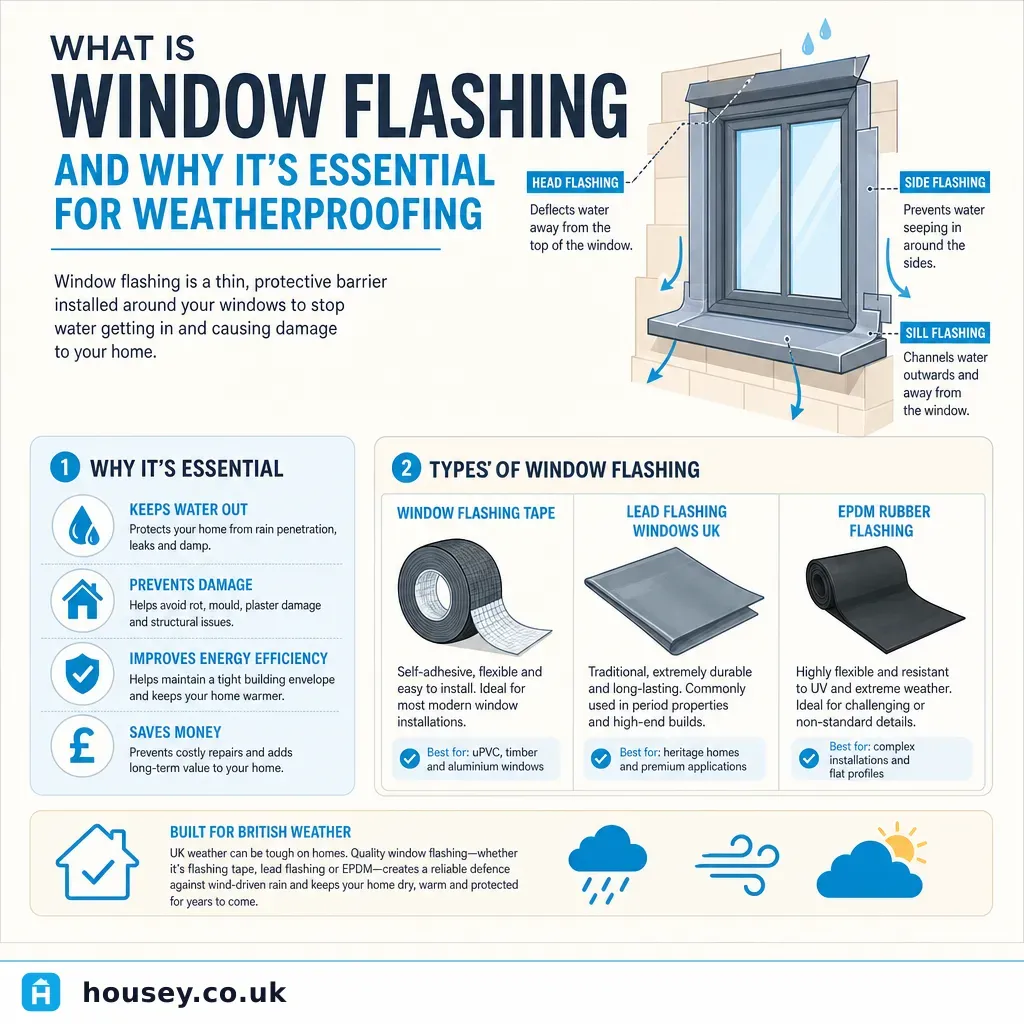
What is window flashing and why it's essential for weatherproofing
Window flashing is a water-resistant material installed at the head, sill, and jambs of a window opening to direct rainwater away from the frame-to-wall junction.
 Improvement & Build
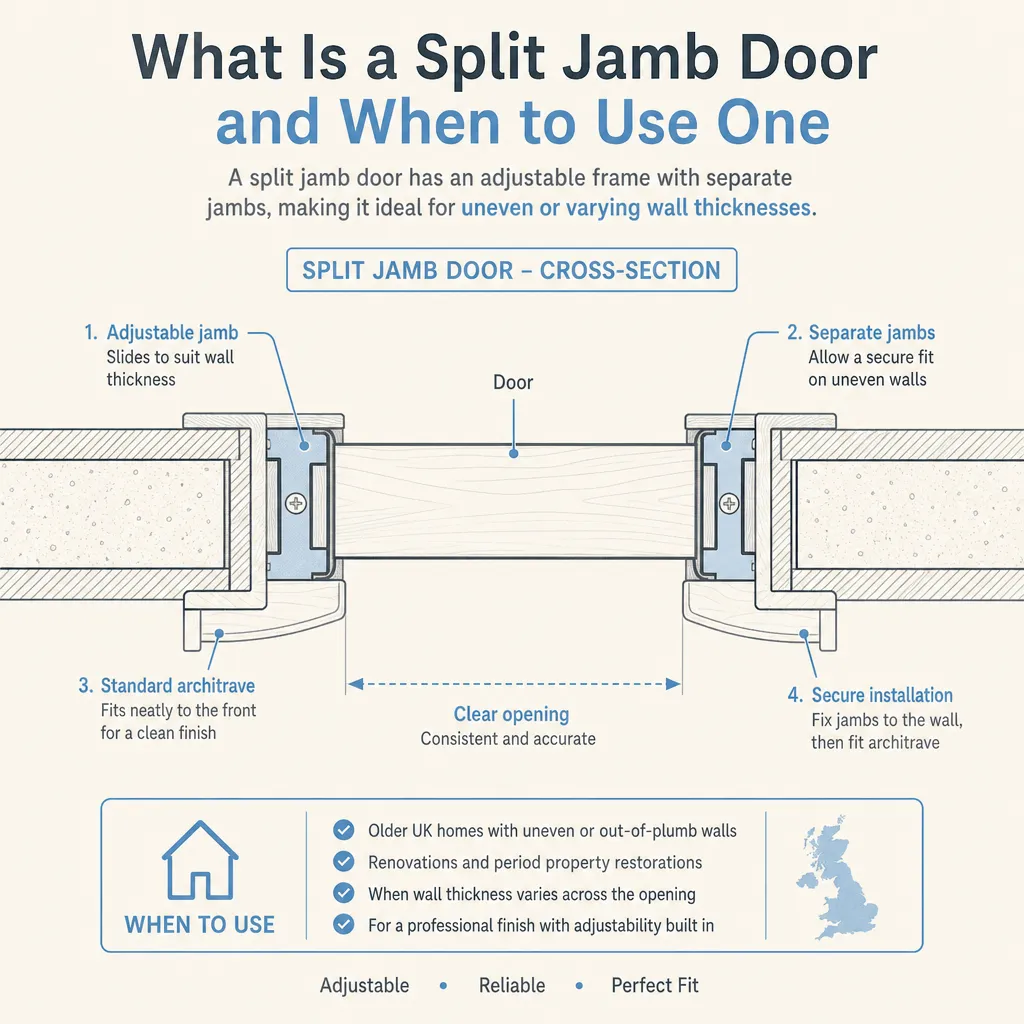
What Is a Split Jamb Door and When to Use One
A split jamb door is a pre-hung door unit where the frame arrives in two interlocking halves, each with integral architrave, that slot together from opposite sides of the wall.
 Improvement & Build
Concrete Sealing: Protecting and Maintaining Your Driveway
Sealing a concrete driveway protects against water ingress, freeze-thaw damage, oil stains, and surface wear.
 Improvement & Build
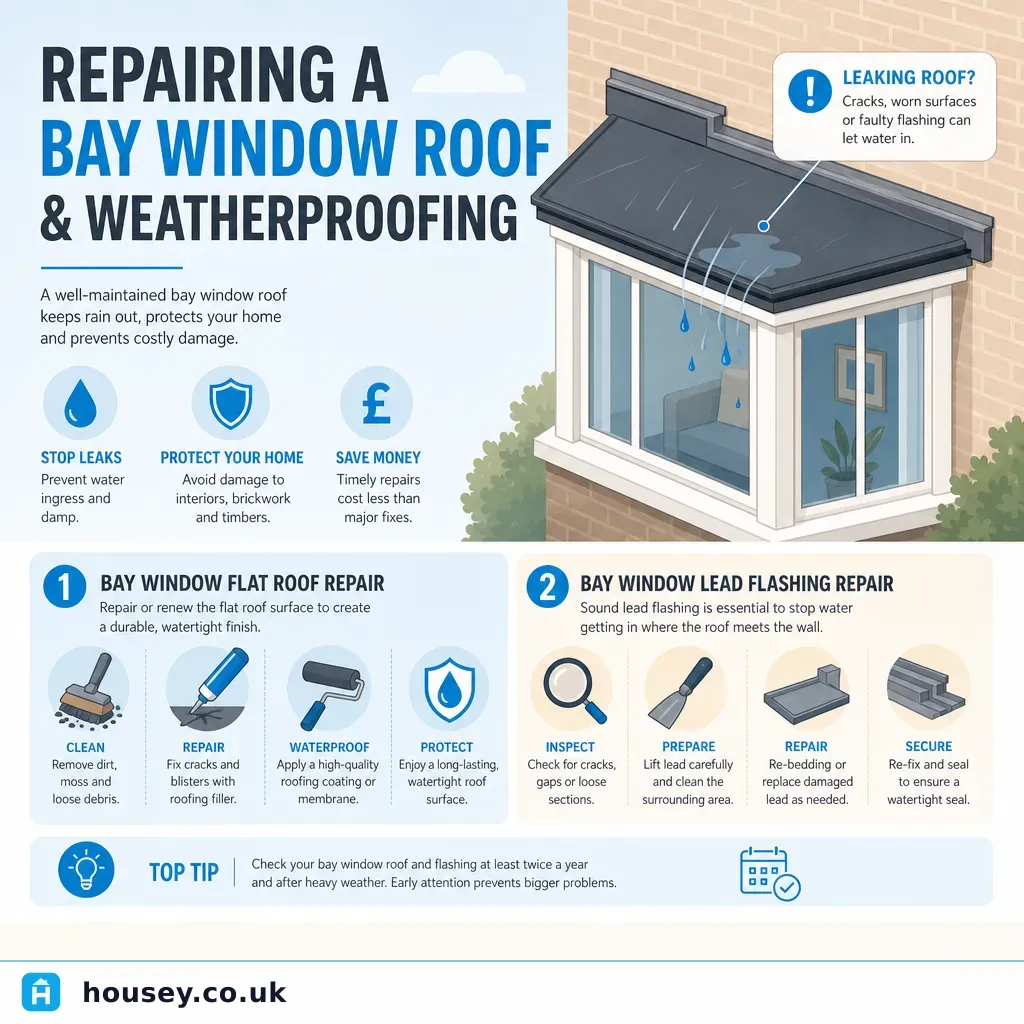
Repairing a Bay Window Roof and Weatherproofing
A bay window roof typically uses felt, lead, or EPDM rubber as its waterproof covering.
 Improvement & Build
Door Weatherproofing And Sealing: Window And Door Contractors
Door weatherproofing involves fitting draught seals, threshold strips, letterbox brushes, and door sweeps to stop cold air and rain entering around the frame and threshold.