What is the cost of installing window screens?
By Housey · Last reviewed 11th of May 2026
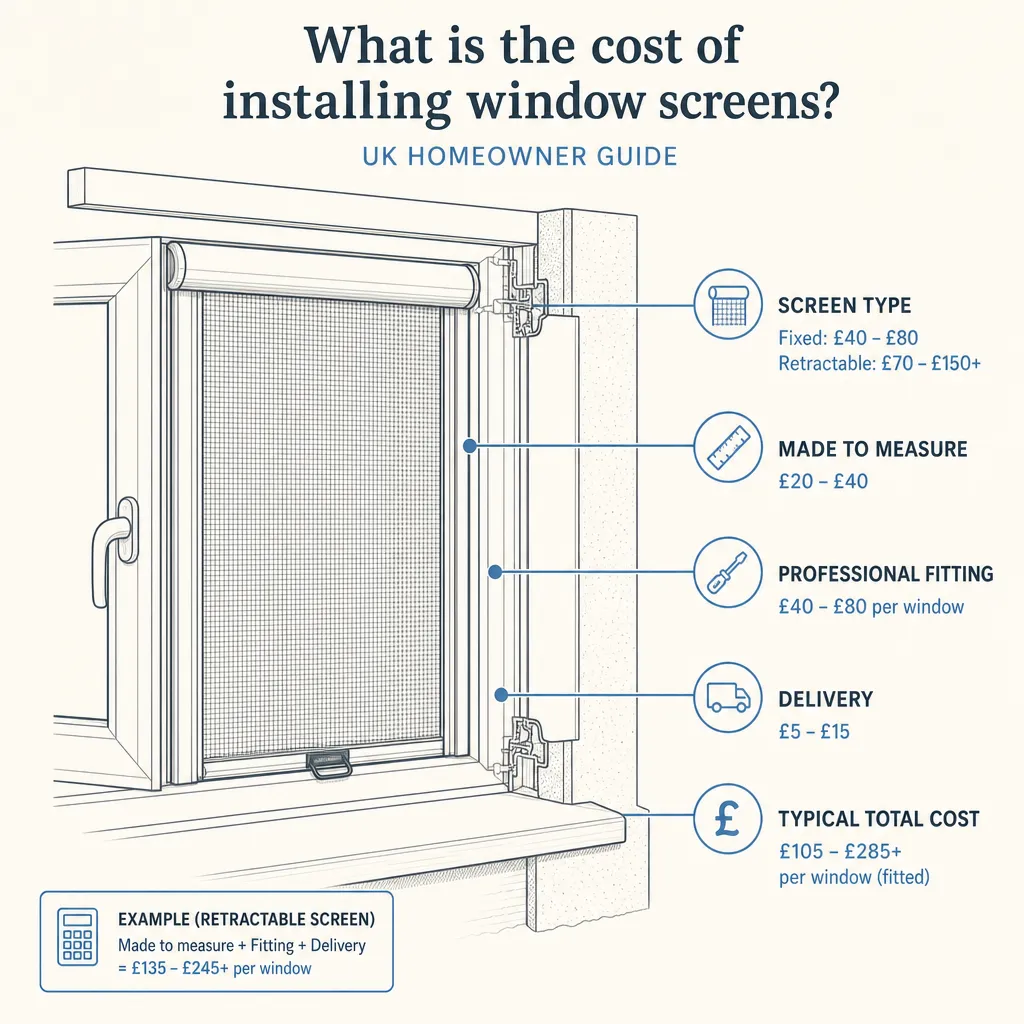
What is the cost of installing window screens?
Fly screens and window screens are increasingly sought after in UK homes, driven by warmer summers, urban pollution, and the desire to ventilate without admitting insects. Unlike much of continental Europe where fly screens are a standard fitting, the UK market remains varied, ranging from simple magnetic mesh panels to motorised retractable systems. Casement, sash, and tilt-and-turn frames all require different approaches, and the right product for a Victorian terrace differs markedly from what suits a new-build flat.
Key points
- Fixed magnetic or adhesive insect mesh panels cost approximately £15–£60 per window in materials and require no professional installation for most standard casement windows (Indicative UK costs, last reviewed 2026-05-11).
- Professionally supplied-and-fitted hinged or sliding fly screens typically cost £80–£250 per window, depending on window size and type.
- Retractable (roller) screens, which disappear into a cassette housing when not in use, typically cost £150–£400 per window professionally fitted.
- Fly screens are reversible fixtures and do not require building regulations approval or permitted development permission in most cases.
- Sash windows require purpose-designed internally mounted screens — standard casement fly screens will not fit a sliding sash.
Types of window screen and typical costs
The main screen types available in the UK suit different window styles and priorities:
Magnetic mesh panels
Self-adhesive or magnetic strips hold a mesh panel to the window frame. Inexpensive and genuinely DIY-friendly for standard-sized casement windows. Appearance is functional rather than refined, and panels can detach if the window is opened forcefully.
Hinged fly screens
A framed mesh screen hinged to one side of the window frame, opening outwards like a small door. More durable than magnetic panels; better suited to windows that are opened daily.
Sliding screens
A mesh panel that slides horizontally across the window opening on top-and-bottom tracking channels. Common on larger casement or horizontal sliding windows.
Retractable (roller) screens
The mesh rolls into a compact cassette housing when not needed, preserving sightlines and aesthetics. Suitable for most window styles, including tilt-and-turn and aluminium frames.
Pleated screens
A concertina-fold design that folds flat to one side. Often used on wider openings or bi-fold doors where a box cassette housing would be visually intrusive.
Cost comparison table
Indicative UK costs, last reviewed 2026-05-11. Obtain at least two quotes for professionally fitted screens.
Screen type | Supply only (per window) | Professionally fitted (per window) | Best suited to |
|---|---|---|---|
Magnetic or adhesive mesh panel | £15–£60 | DIY product | Small casements; low budget |
Hinged fly screen | £40–£120 | £100–£200 | Regularly opened casements |
Sliding screen | £60–£150 | £120–£250 | Larger windows; sliding frames |
Retractable (roller) screen | £80–£200 | £150–£400 | Most window styles; heritage aesthetics |
Pleated screen | £100–£250 | £180–£450 | Wide openings; bi-fold doors |
Factors that affect the installation cost
Window size
Screens are priced per opening. Larger windows need more material and more complex tracking channels, increasing both supply and labour costs.
Window type and opening style
Sash windows and tilt-and-turn frames require screens designed for their specific mechanism. Off-the-shelf screens may not fit without custom sizing.
Frame material
Fitting into aluminium or uPVC frames is generally straightforward. Painted timber frames may need surface preparation to avoid adhesive or fixing damage.
Number of windows
Many installers offer a reduced per-unit rate for three or more windows fitted in a single visit. If you need screens throughout the house, grouping the work together is usually more cost-effective.
Bespoke sizing
Non-standard window dimensions require made-to-measure manufacture, typically adding two to four weeks lead time and 20–50% to the cost compared with standard sizes.
Which screen type should you choose?
- Choose a magnetic or adhesive panel if you want an inexpensive, tool-free, removable solution for a standard casement window and appearance is not a priority.
- Choose a hinged fly screen if you open the window daily and want something more durable that will not detach when the window is used.
- Choose a sliding or retractable screen if you have a larger window, care about aesthetics, or need the screen to disappear completely when not in use.
- Choose a pleated screen if you are screening a wide opening, a bi-fold door, or a period property where box cassettes would look out of place.
- Ask a specialist if your windows are listed-building features, original sash windows in a conservation area, or non-standard dimensions — bespoke fitting is almost always needed in these cases.
- Check with your local planning authority if you are in a conservation area and plan to use fixings on historically significant frames, even though lightweight reversible screens generally do not require permission.
What to ask before accepting a quote
- Is the screen made to measure, or a standard size trimmed to fit?
- What mesh grade is used — standard insect mesh, pollen-filter mesh, or solar shading?
- Does the fixing method damage the existing window frame or affect its warranty?
- Can the screen be removed and refitted seasonally without specialist tools?
- Is the screen compatible with my specific window opening style?
- What is the warranty on parts and installation?
- Is VAT included in the quoted price?
When to get professional help
Magnetic panel screens are genuinely DIY-appropriate for most householders on standard casement windows. For anything requiring frame fixings, tracking channels, or made-to-measure cassettes, professional fitting avoids the risk of a poor seal that defeats the screen's purpose entirely. If your windows are in a listed building or conservation area, check with your local planning authority before attaching any fixture to the frame — most lightweight, reversible screens cause no planning issues, but ornate or historically significant frames in sensitive settings may need a less intrusive fixing approach.
How Housey can help
Housey connects you with experienced window and door installers who supply and fit window screens across a range of window types and frame materials. Use our service request form to describe your windows and receive competitive quotes from local professionals.
Frequently asked questions
Do window screens affect natural light or ventilation?
Standard insect mesh typically reduces airflow and light transmission by around 10–20% depending on mesh density. Finer pollen-filter mesh reduces airflow further. Most householders find this acceptable during summer months. If ventilation is critical — for example, in a kitchen — discuss mesh grade options with your supplier before ordering.
Can fly screens be fitted to sash windows?
Yes, but purpose-designed products are required. Sash window insect screens typically mount internally on a spring-loaded frame that rises with the lower sash. Standard casement fly screens will not fit a sliding sash window, so confirm the product is specifically designed for sash windows before purchasing.
Are window screens suitable for winter use in the UK?
Most fly screens are designed to be removed or retracted during winter. The mesh provides no insulation benefit and can trap moisture against the frame if left permanently fitted in cold, damp conditions. Retractable and hinged designs are easier to remove seasonally than fixed magnetic types.
Will fitting a fly screen affect my window's warranty?
If your window is under a manufacturer's warranty — common on windows fewer than 10 years old — check the terms before fitting any screen. Some manufacturers exclude damage caused by aftermarket accessories. Adhesive-type fixings carry the most risk; channel-mounted or magnetic fixings are generally less likely to raise a warranty concern.
Sources and further reading
- Ventilation and indoor air quality — Energy Saving Trust
- Planning permission — alterations to your home — GOV.UK
- Guidance on alterations to listed buildings — Historic England
- Consumer rights for goods and services — Citizens Advice
Useful next reads
 Improvement & Build
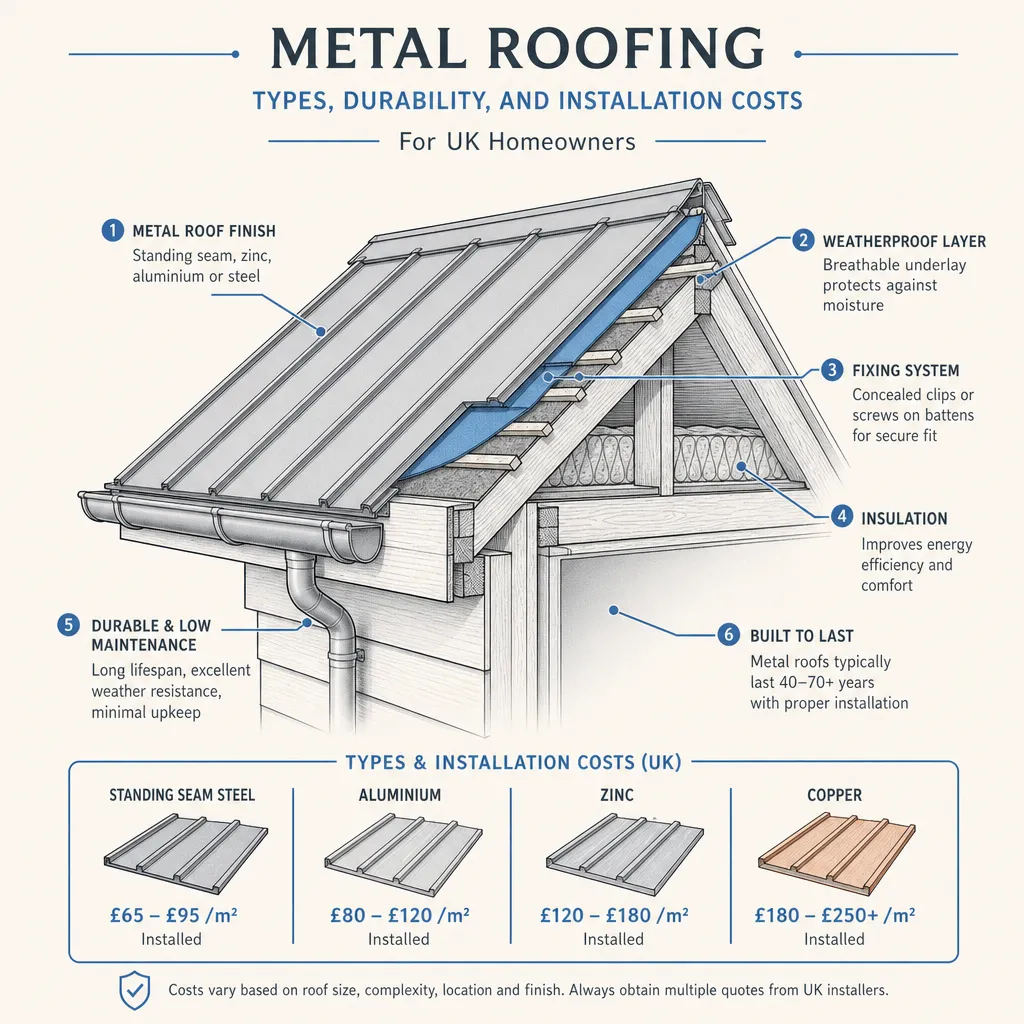
Metal Roofing: Types, Durability, and Installation Costs
Metal roofing in the UK includes standing seam, corrugated sheet, and metal tile systems in steel, aluminium, zinc, or copper.
 Improvement & Build
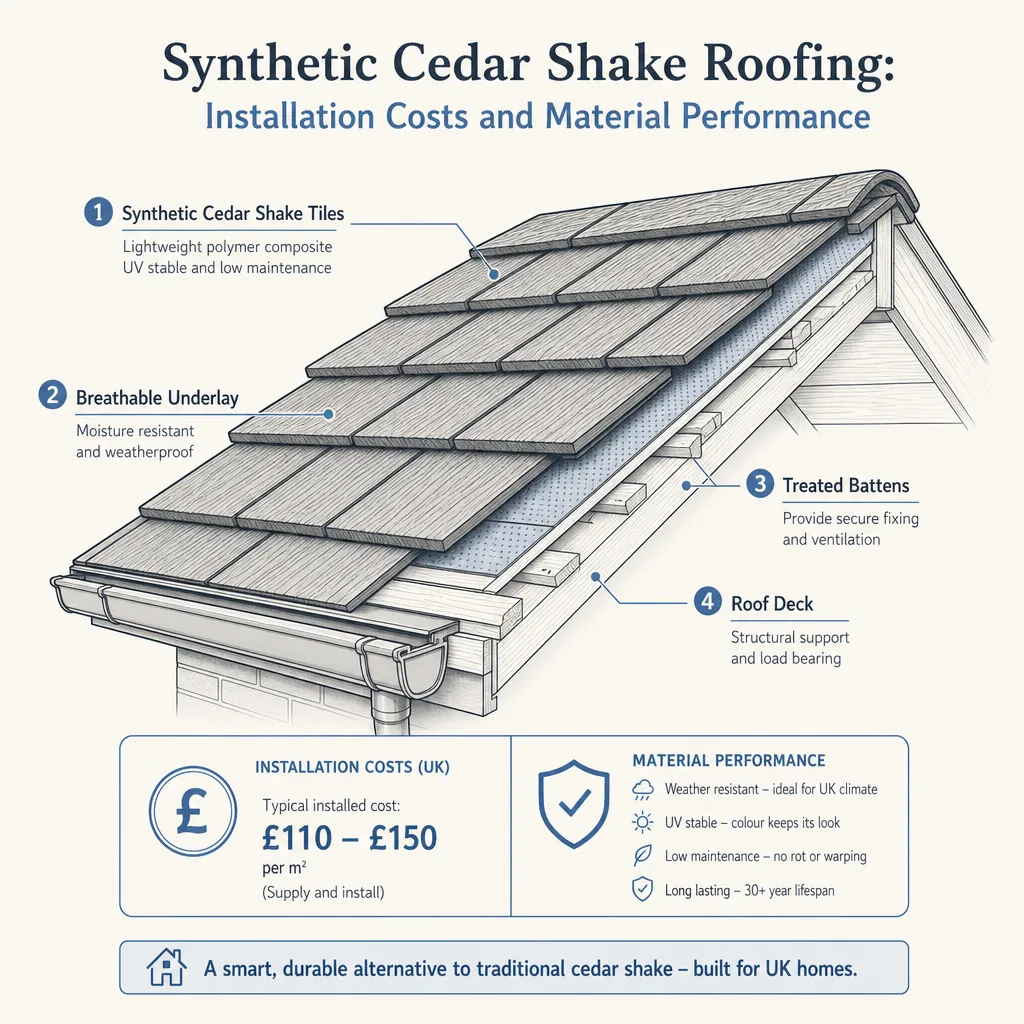
Synthetic Cedar Shake Roofing: Installation Costs and Material Performance
Synthetic cedar shake roofing uses polymer composite, rubber, or fibre-cement tiles to replicate the look of natural cedar wood shingles.
 Improvement & Build
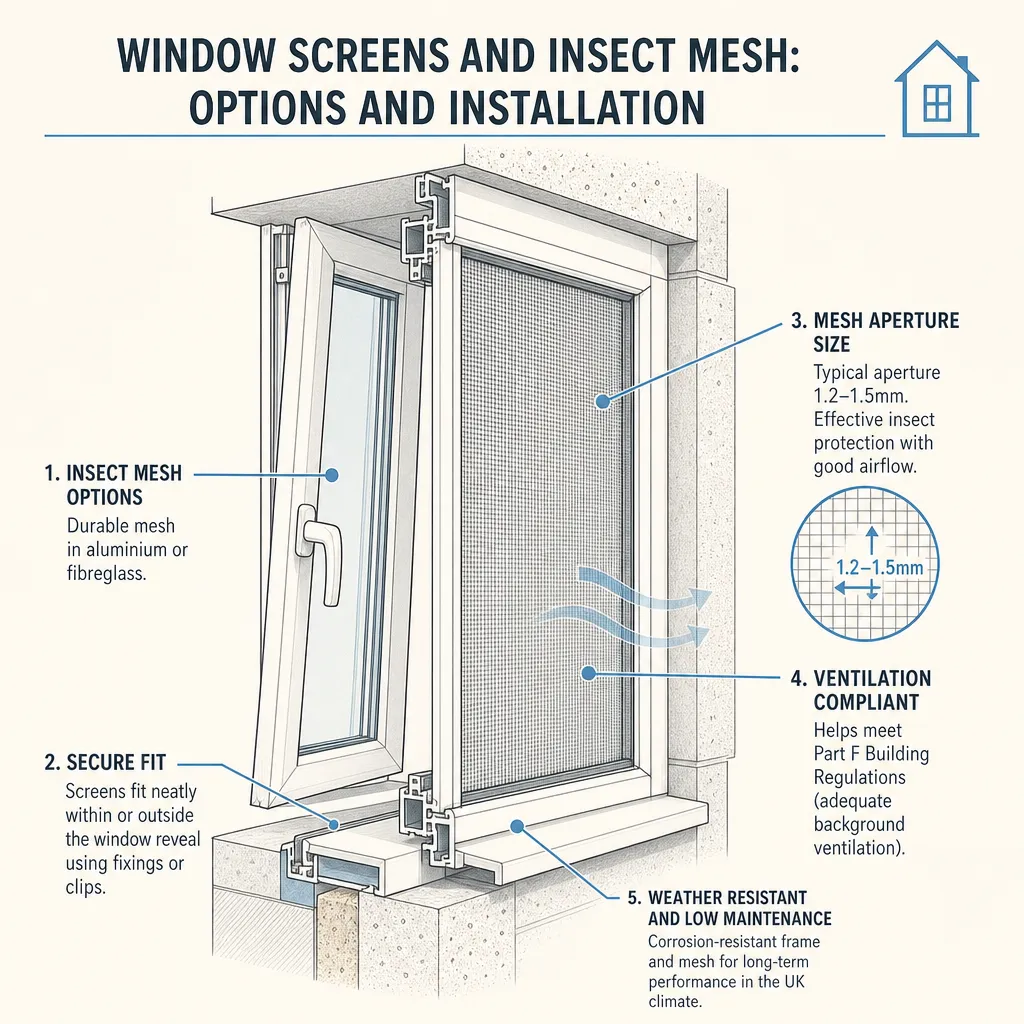
Window Screens and Insect Mesh: Options and Installation
UK window screens fall into four main types: fixed frame, roller retractable, pleated folding, and magnetic snap-fit.
 Improvement & Build
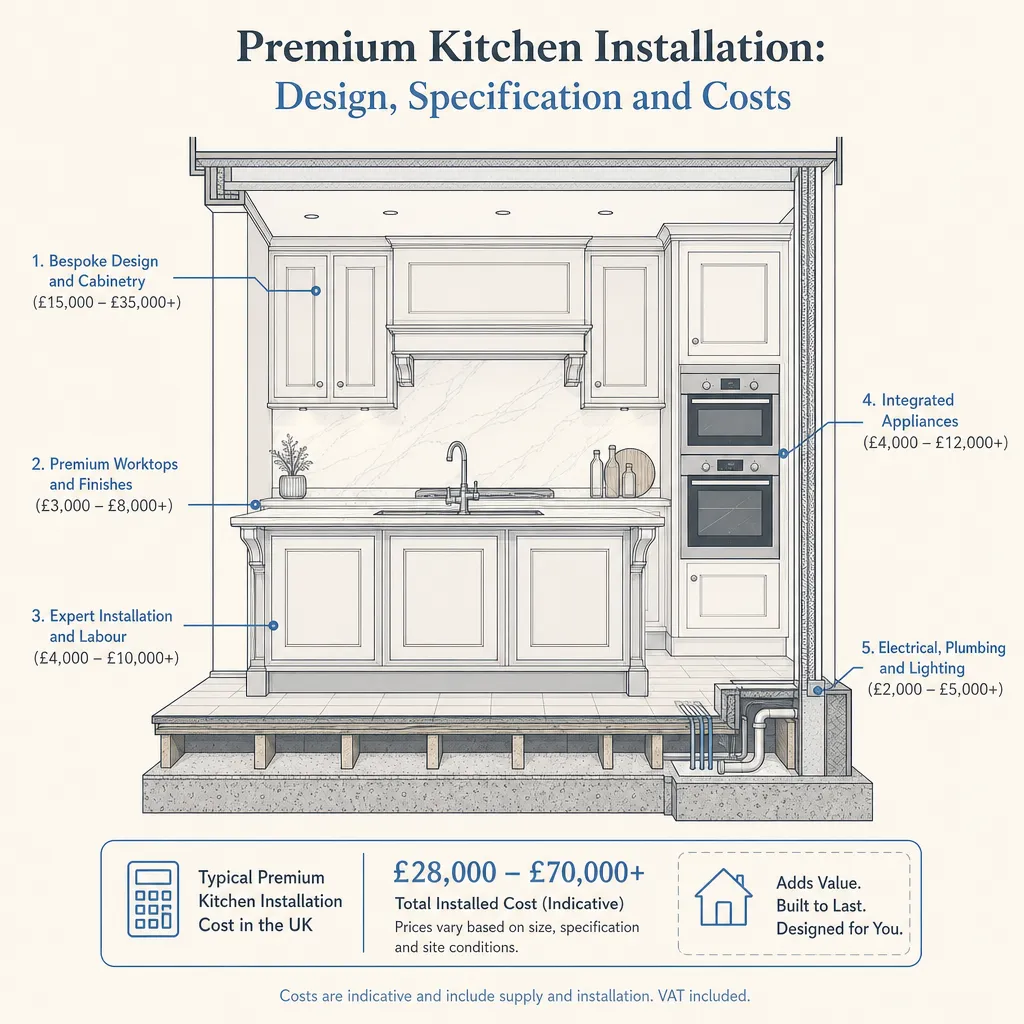
Premium Kitchen Installation: Design, Specification and Costs
A premium kitchen in the UK typically costs £20,000–£80,000 or more installed, depending on cabinetry specification, worktop material, appliance brands, and whether structural changes are needed.
 Improvement & Build
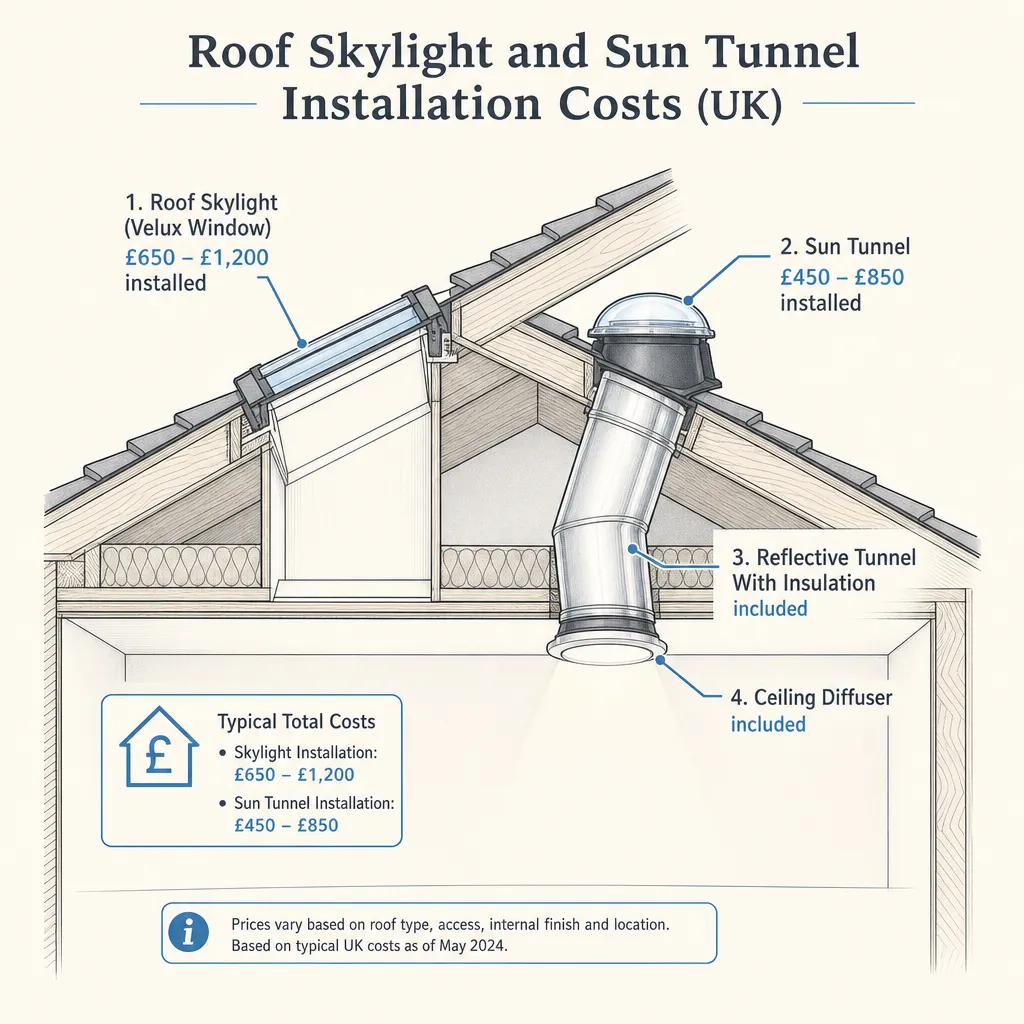
Roof Skylight and Sun Tunnel Installation Costs
A standard pitched-roof skylight costs £800–£3,000 installed in the UK, including flashings and basic making good.