What is window mulling in window installation
By Housey · Last reviewed 31st of May 2026
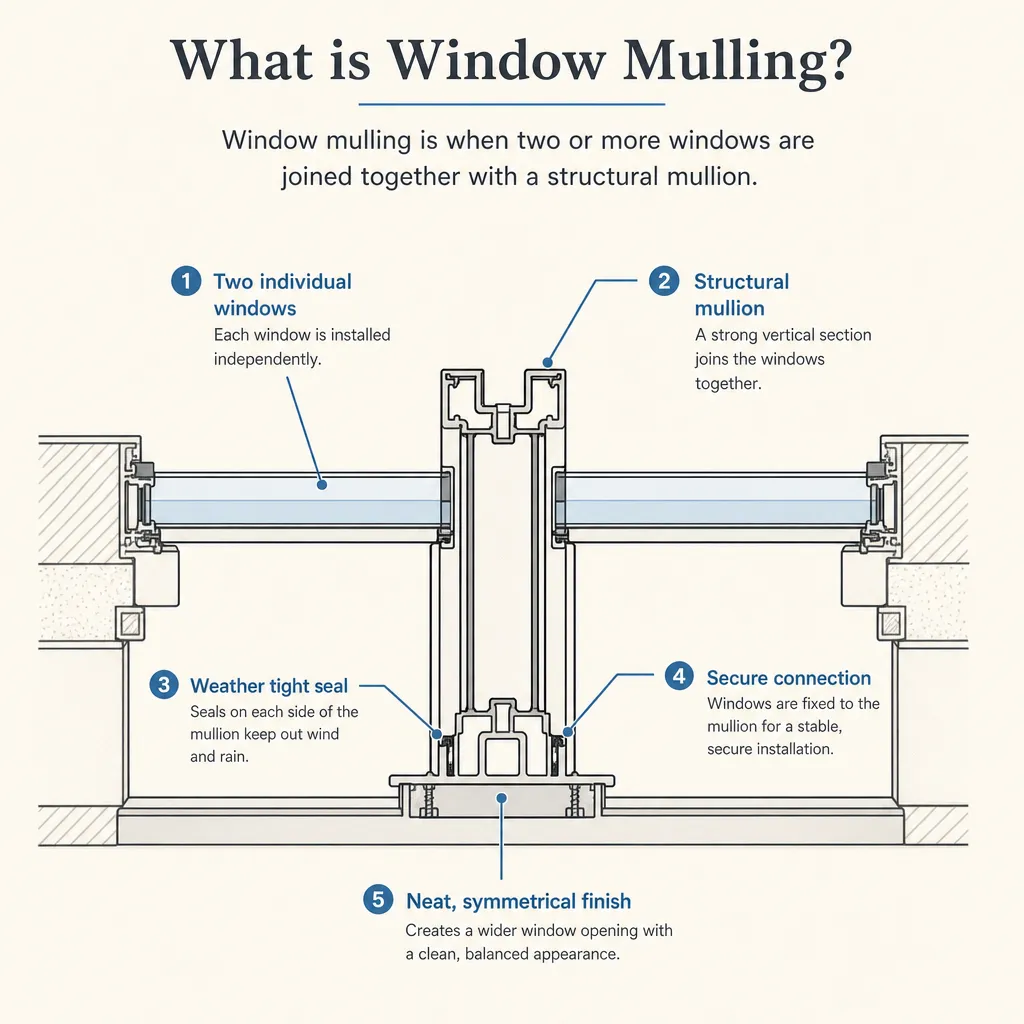
What is window mulling in window installation
Window mulling is a term used regularly by window installers but rarely explained in brochures or online quotes. It comes up most often when homeowners are replacing or specifying windows for wide openings — bay window arrangements, large living room spans, or entrance assemblies with flanking sidelights — and need to understand how multiple units can be combined practically and cost-effectively.
Key points
- Window mulling is the process of joining two or more individual window frames together using a mullion joining post or purpose-made mulling kit, so they appear and function as a single combined window assembly.
- The joining component — the mull post or mulling bar — is typically aluminium, uPVC, or timber depending on the frame system; it is fitted between the two frames, secured with screws, and sealed with a compatible gasket or sealant.
- Mulled windows are commonly used to fill openings wider than a single standard unit can span, and to create paired or grouped arrangements in bay windows, gables, and entrance lobbies.
- Building Regulations compliance (including U-value certification via FENSA or Certass) applies to each individual unit within a mulled assembly; the mulling detail itself does not generate a separate compliance requirement.
- The mull post is not a structural element — the lintel or arch spanning the full opening must be sized and checked for the total opening width, not for the widths of the individual units within it.
What is window mulling?
Mulling is the act of mechanically joining two or more separate window frames side by side — or occasionally stacked — using a joining mullion or mull post. Rather than ordering one very wide custom frame, mulling extends a standard product range by combining units. This can reduce cost, shorten lead times, and in some cases make structural management of the opening simpler.
The assembled result looks like a single wider window from both inside and outside, with the mullion acting as the visible dividing element. The overall appearance depends on the width and profile of the mull post chosen.
Mulling is distinct from:
- A mullion built into a single frame — where the dividing member is part of one piece of frame manufactured as a complete unit, rather than a bar used to join two separate frames.
- Separate windows installed independently — where each window is individually set into its own rough opening or structural bay, with a masonry pier or column between them.
The practical distinction matters: mulled windows share a visual and physical connection through the mull post and are treated as one assembly for weathertightness purposes; separately installed windows are each independently supported by the surrounding building fabric.
When is mulling used in UK homes?
Mulled window assemblies are common in the following residential situations:
- Wide single openings — where an opening is too wide for one standard frame but a bespoke single unit would carry a significant cost premium or longer lead time.
- Bay windows — mulling allows the head and cill of adjacent units to align exactly, creating a clean visual join rather than requiring a masonry pier between separate units.
- Paired casement or sash windows — mulling two identical casement windows creates a symmetrical appearance typical of 1930s and interwar housing without requiring a custom-width frame.
- Entrance arrangements — a front door flanked by narrow sidelight windows is often created by mulling the sidelight frames directly to the door frame.
- Dormer and gable windows — complex shaped openings may call for a combination of fixed and opening units mulled into one assembly to fill the available space neatly.
Mulling vs alternative approaches compared
Before specifying mulled windows, it is worth comparing the main approaches for filling a wide opening.
Approach | Best for | Not ideal for | Relative cost | Lead time |
|---|---|---|---|---|
Mulled standard units | Wide openings, bay windows, paired units, entrance assemblies | Situations where a very narrow visual join is preferred (mull post adds visible width) | Mid | Standard product lead time |
Bespoke single-width frame | Openings where minimal visible frame division is important | Very large spans (manufacturing and structural limits apply) | Higher | Longer (custom manufacture) |
Separate independently framed windows | Where a masonry pier or column naturally divides the opening | Aesthetic consistency where no wall section is wanted between units | Lower per unit | Standard |
Bifold or sliding door-window system | Maximum open width, large living-to-garden connections | Traditional or period property aesthetics; cost-sensitive projects | Higher | Variable |
Indicative guidance, last reviewed 2026-05-31. Costs and lead times vary by manufacturer, frame material, and project complexity.
What to ask your installer about mulling
Before accepting a quote for mulled windows, the following questions help ensure you understand the specification and what is included:
- Factory mulled or site mulled? Factory mulling (done at the manufacturer before delivery) is generally more precise and weathertight than site mulling. Ask which applies to your order.
- How wide is the finished mull post? A wider post may not suit the property's visual style, particularly in period homes or where a slimmer profile is wanted.
- Is the mull post thermally broken? A non-thermally broken metal mullion creates a cold bridge, reducing the effective thermal performance of the assembly and potentially affecting the EPC rating.
- How is the joint between units sealed? Ask whether a gasket, structural silicone, or mechanical connector is used — and whether this is covered by the product warranty.
- Continuous or split cill? A continuous cill across the full assembly looks cleaner; split cills can allow water ingress at the joint if not correctly detailed and sealed.
- U-value: individual units or the whole assembly? The mull post is not part of the glazed unit and can reduce overall thermal performance if not thermally broken. Ensure the quoted U-value reflects the complete assembly.
- What warranty applies to the mulled joint? Standard frame warranties may not cover the mull post separately — confirm the terms in writing before signing.
Structural and planning considerations
Mulled windows do not normally require planning permission in their own right, provided the installation falls within permitted development rights for the property. However, additional checks are needed in the following situations:
- If the opening is being enlarged as part of the installation, building control involvement may be required to verify that the lintel is adequate for the widened span.
- In listed buildings and conservation areas, any change to window size, arrangement, or appearance — including combining units with a visible mull post where none previously existed — may require listed building consent or prior agreement with the local planning authority.
- The mull post itself does not carry load from the structure above; the lintel must be specified and checked for the full opening width, not the individual unit widths within it.
When to get professional help
For most standard mulled window replacements in conventional housing, a FENSA-registered window installer is the appropriate professional. Consider additional input in these situations:
- If the opening is being enlarged or the lintel is of uncertain age, condition, or specification, consult a structural engineer or have the lintel independently assessed before ordering.
- If the property is listed or in a conservation area, contact the local planning authority before commissioning any work that changes the external appearance of the windows.
- For low-energy or Passivhaus builds, a low-energy designer or retrofit coordinator should specify the thermal performance of the mull post alongside the glazed units as part of the integrated design.
How Housey can help
If you are planning a window replacement involving mulled units, bay windows, or paired casements, Housey connects you with qualified window and door installers who can advise on mulling options, specify the right joining detail, and provide itemised quotes for your project.
Frequently asked questions
What is the difference between mulling and a mullion?
A mullion is any vertical or horizontal dividing member within a window — it can be built into a single manufactured frame or used as a joining bar between two separate frames. Mulling specifically refers to the process of joining two or more separate window units together using a mullion connector. The resulting joining post is usually called a mull post or mulling bar.
Does window mulling affect the structural integrity of the opening?
The mulling post joins the two window frames to each other but does not carry structural load from the building above. The lintel or arch spanning the full opening width must be designed for the total opening span. Before mulling into a wide opening, particularly an enlarged one, an installer should confirm lintel adequacy — or a structural engineer should be consulted if in doubt.
Can any window type be mulled together?
Most modern uPVC, aluminium, and timber window ranges offer mulling as a factory option, but units generally need to be from the same manufacturer or system for the mull post to fit correctly and maintain weathertightness. Mixing frame materials — for example, mulling a uPVC casement to a timber sash — is unusual and may create warranty and weatherproofing complications.
Do mulled windows need building control or FENSA certification?
Each individual window unit within a mulled assembly requires compliance with Building Regulations in the normal way. FENSA-registered installers self-certify compliance for each unit. The mulling itself does not generate a separate compliance requirement, but if the overall installation involves structural changes to the opening, building control involvement is required.
Sources and further reading
- Approved Document L: Conservation of fuel and power — HM Government
- Approved Document A: Structure — HM Government
- FENSA: competent person scheme for windows and doors — FENSA
- Glass and Glazing Federation: consumer guidance on window types — Glass and Glazing Federation
Useful next reads
 Improvement & Build
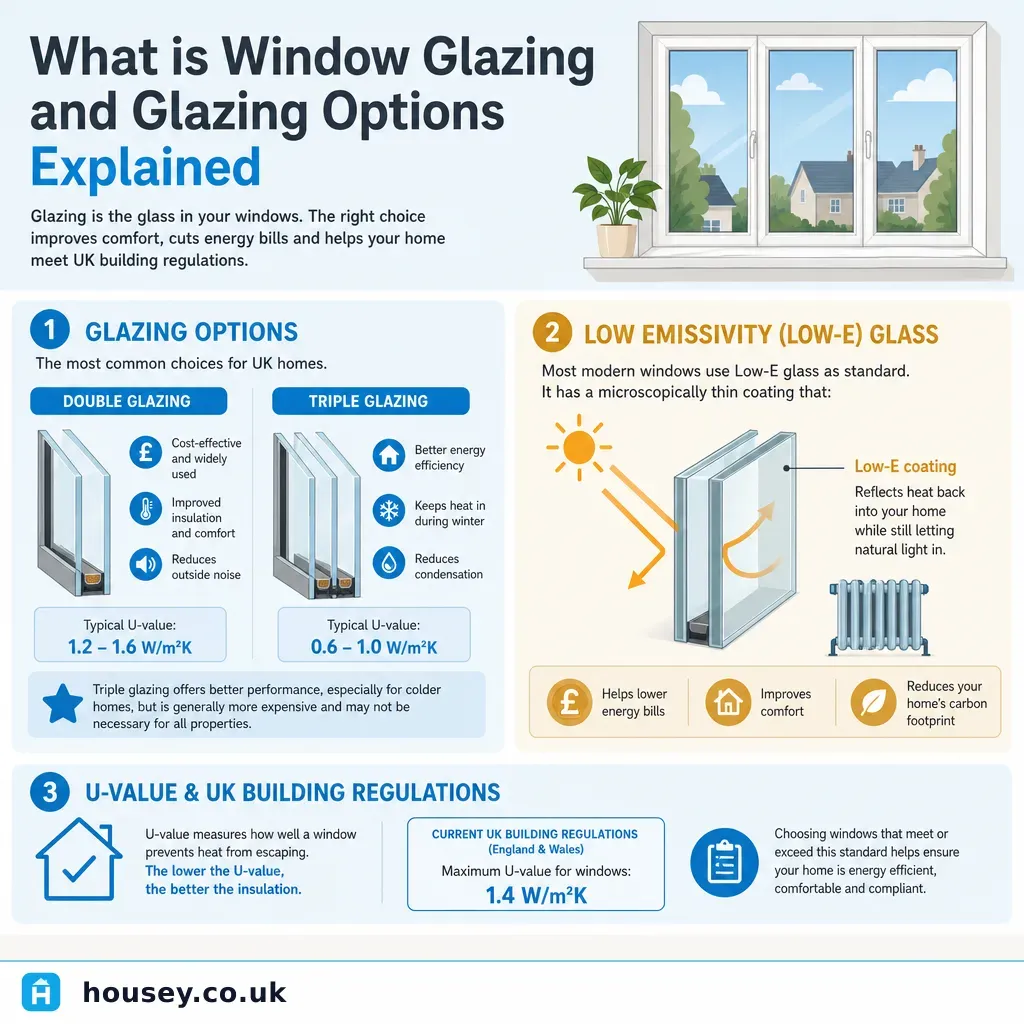
What is window glazing and glazing options explained
Window glazing refers to the sealed glass unit fitted within a window frame.
 Improvement & Build
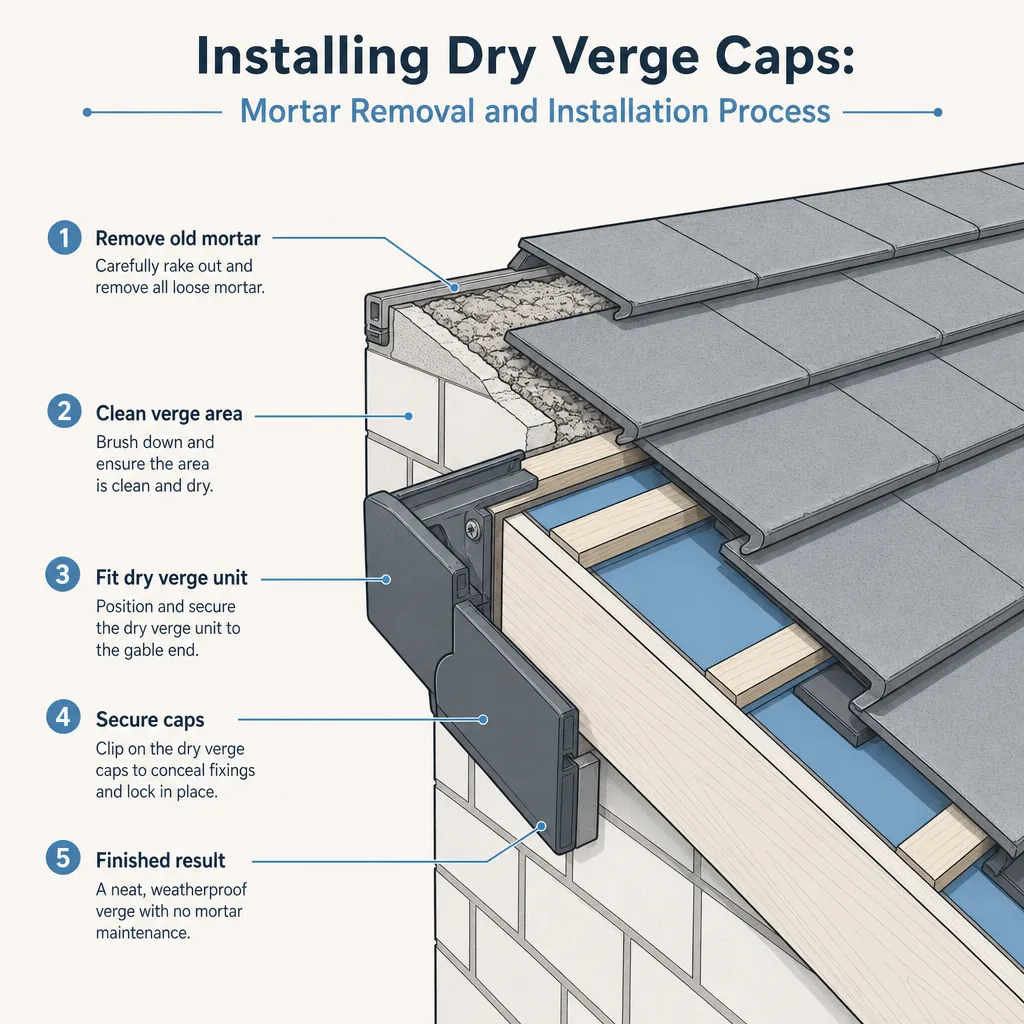
Installing Dry Verge Caps: Mortar Removal and Installation Process
Installing dry verge caps on a UK roof involves removing all existing mortar from the gable verge, inspecting and repairing the underlay, then clipping interlocking uPVC or aluminium caps from eaves to ridge.
 Improvement & Build
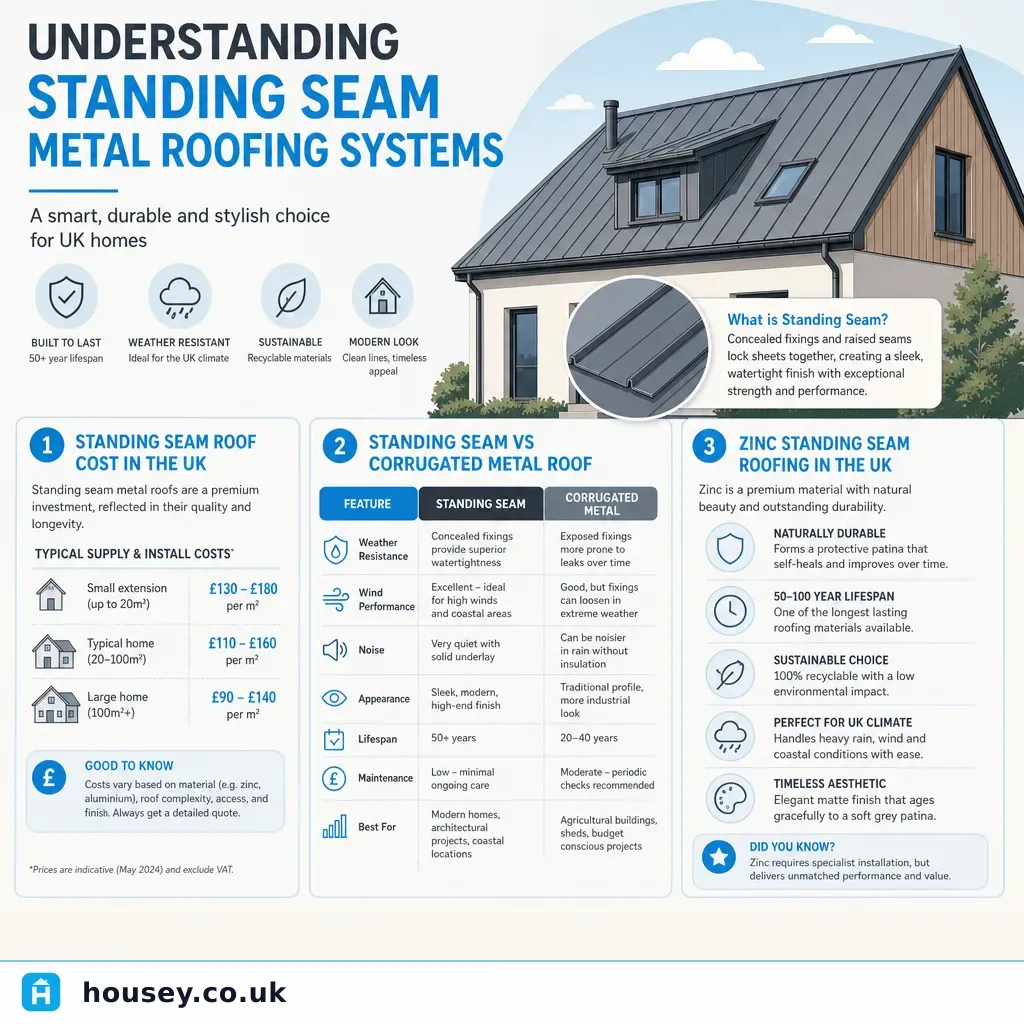
Understanding Standing Seam Metal Roofing Systems
A standing seam metal roof is built from long metal panels with raised, interlocked edges and all fixings concealed within the seams.
 Improvement & Build
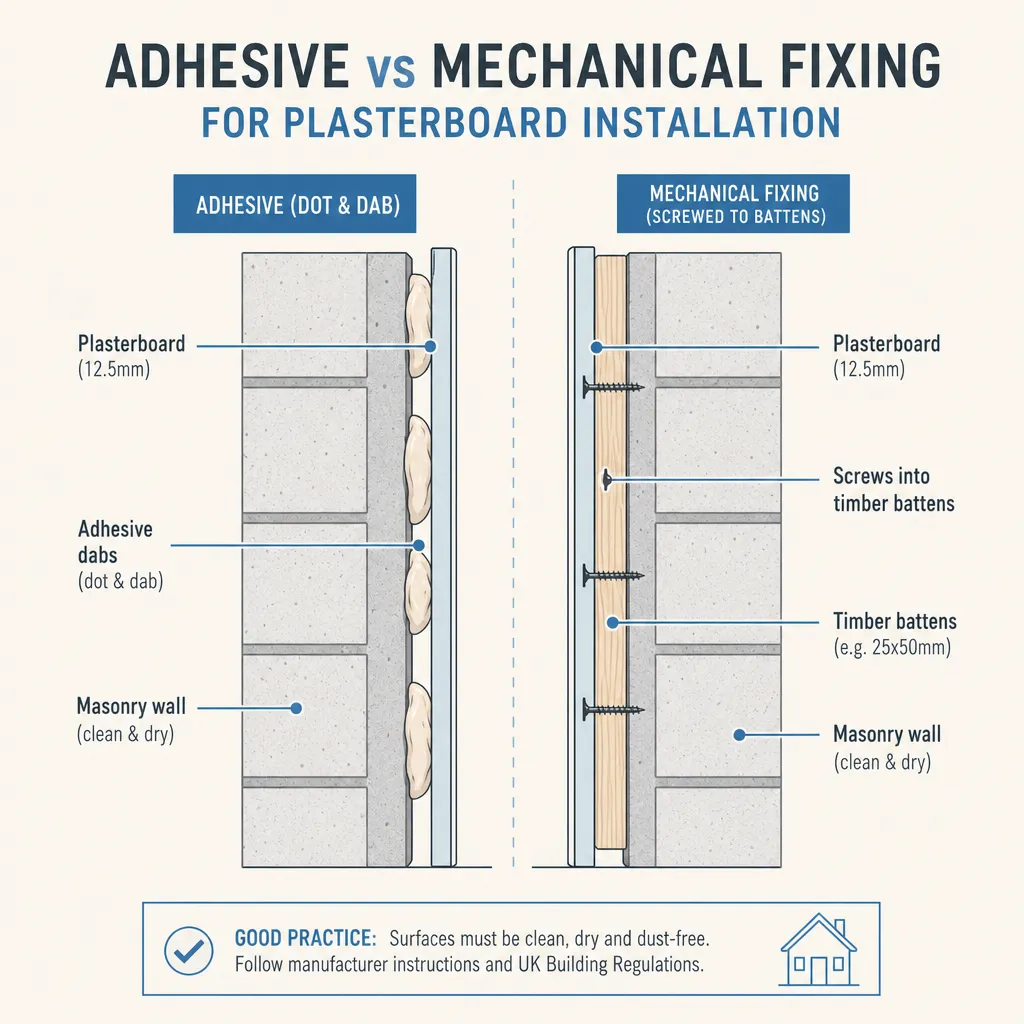
Adhesive vs Mechanical Fixing for Plasterboard Installation
Dot-and-dab adhesive is faster and suits most internal masonry walls, but creates a void behind the board that can affect fire resistance and acoustic performance.
 Improvement & Build
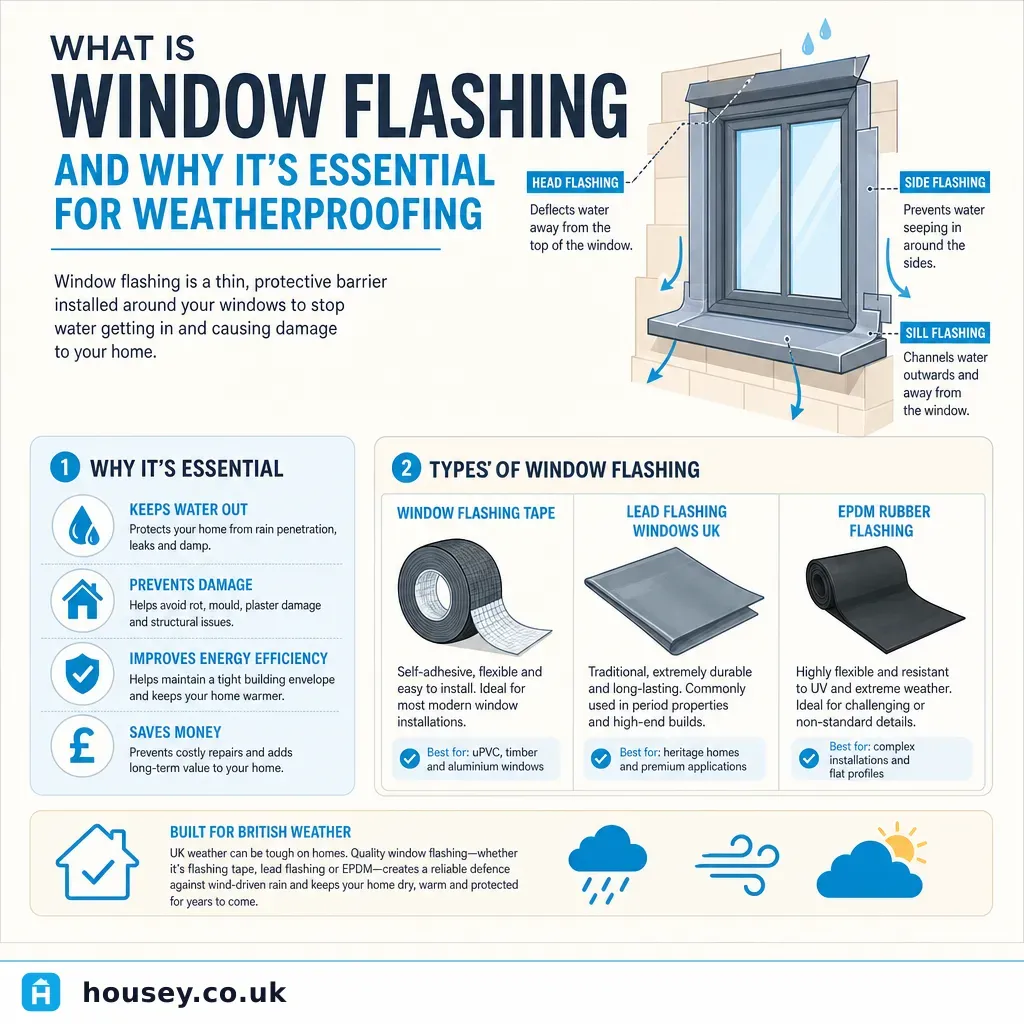
What is window flashing and why it's essential for weatherproofing
Window flashing is a water-resistant material installed at the head, sill, and jambs of a window opening to direct rainwater away from the frame-to-wall junction.