What to Budget for Rekeying Door Locks
By Housey · Last reviewed 6th of May 2026
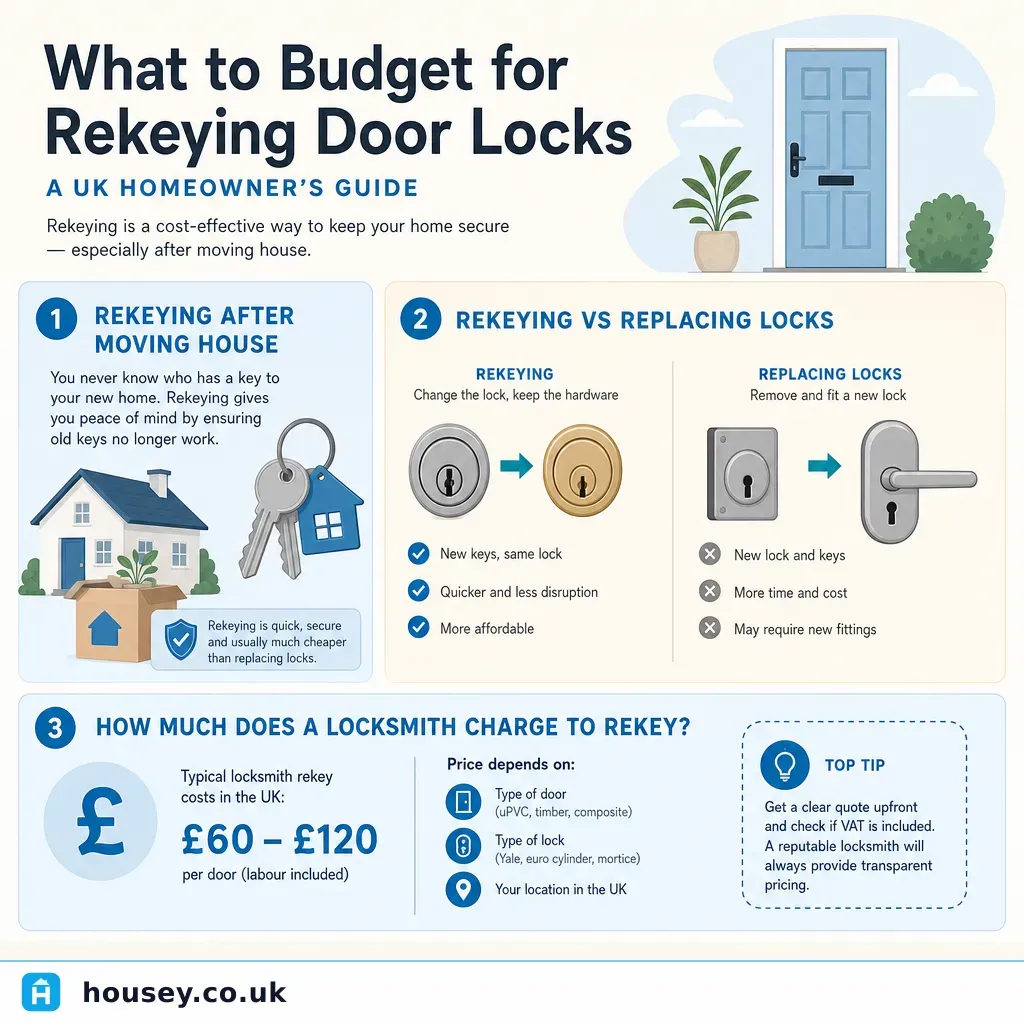
What to Budget for Rekeying Door Locks
Moving into a new home is one of the most common triggers for rekeying — previous owners, estate agents, and tradespeople may all hold copies of the existing keys. The same question arises after losing a set of keys, ending a tenancy, or following a relationship breakdown. Rekeying is usually cheaper than full lock replacement, but the actual cost depends on the lock type, the number of cylinders, your location, and whether the work is urgent.
Key points
- Rekeying changes the internal pin configuration of an existing cylinder so old keys no longer work — the lock body itself stays in place and does not need replacing.
- Most standard Euro cylinder locks, used in the majority of uPVC and composite doors fitted since the 1990s, can be rekeyed; some high-security or proprietary cylinders cannot.
- Master Locksmith Association (MLA) approved locksmiths are a recognised quality benchmark — verify credentials via the MLA directory at locksmiths.co.uk before instructing anyone.
- Callout fees and per-lock rekeying charges vary by region, time of day, and urgency — always obtain a written quote before work begins.
- Many home insurers recommend rekeying all external entry points after a change of occupancy; check your policy schedule for minimum security specifications such as BS3621 or TS007 3-star.
Rekeying versus replacing: which is more cost-effective?
Rekeying and replacing a lock are not the same thing, and choosing the wrong option can cost you more than necessary.
| Rekeying | Lock replacement |
|---|---|---|
What changes | Internal pins only; same cylinder and lock body | Entire cylinder or full lockset |
Best for | Security reset after key loss or change of occupancy | Worn, damaged, or below-standard lock |
Typical UK cost (per lock) | £20–£50 per cylinder (plus callout fee) | £60–£200+ depending on lock grade |
Existing handles and furniture | Retained | Usually retained for cylinder-only swaps |
Main limitation | Not possible on all lock types | Higher upfront cost |
Indicative UK costs, last reviewed 2026-05-06. Costs vary by region, lock type, and provider.
In most straightforward cases — a uPVC front door with a standard Euro cylinder — rekeying is the most economical route. If the lock is old, worn, or a low-security five-pin cylinder, a locksmith may recommend upgrading to a higher-grade cylinder at the same time, such as a TS007 3-star rated option.
How UK locksmith pricing is typically structured
Locksmiths in the UK generally charge in two parts:
- Callout fee — covers travel and the initial visit, typically £50–£100 during normal working hours. Evening, weekend, and emergency rates are often significantly higher, sometimes double.
- Per-lock charge — rekeying a single Euro cylinder usually adds £20–£50 on top of the callout fee.
For a typical semi-detached home with a front door, back door, and garage side door (three cylinders), expect to pay roughly £100–£200 all-in during normal hours from a reputable MLA-approved locksmith.
Indicative UK costs, last reviewed 2026-05-06. Obtain at least two written quotes; prices vary significantly by region and provider.
Factors that push costs up
- Out-of-hours or emergency callouts: rates can double for evenings, weekends, or bank holidays.
- Number of cylinders: each additional lock adds to the total bill.
- Unusual lock types: non-standard or high-security cylinders such as Mul-T-Lock, Abloy, or Medeco may require specialist tools or proprietary parts.
- London and the south-east: labour rates are generally higher than the national average.
- Older properties: Victorian and Edwardian homes often have traditional five-lever mortice locks to British Standard BS3621, which require a different rekeying process and may take longer.
Which locks can be rekeyed?
Not every lock type can be rekeyed in the same way — or at all.
- Euro cylinder locks (most uPVC and composite doors): routinely rekeyed; the most common scenario for UK homeowners.
- British Standard five-lever mortice locks (common in older homes): can often be rekeyed, but requires a skilled locksmith and may cost more.
- Yale-type nightlatches: the cylinder can usually be replaced or rekeyed.
- Smart locks: depends on the manufacturer — some allow key-code resets digitally; others require a physical cylinder change.
- High-security proprietary systems: some Mul-T-Lock, Abloy, or Medeco cylinders require an authorised dealer.
A reputable locksmith will assess the lock before quoting. Be cautious of any tradesperson who insists on full replacement without clearly explaining why rekeying is not feasible.
Should you rekey or replace?
- Rekey if the lock is in good working order, you simply want to render old keys inactive, and the existing lock meets your insurer's minimum security requirement.
- Replace the cylinder if the lock is worn, has been forced or damaged, or falls below the security standard on your policy schedule (typically BS3621 or TS007 3-star).
- Replace the full lockset if the handle mechanism, backplate, or lock body is also damaged or corroded.
- Call a locksmith urgently if you suspect the lock has been tampered with or a key has been stolen and you cannot securely lock the property.
- Check with your insurer if you are unsure whether your existing lock meets the policy requirement before authorising any work.
What to ask a locksmith before rekeying
- Are you MLA-approved, or a member of another recognised trade body?
- Can you provide a written quote covering callout and per-lock charges before starting work?
- Is VAT included in the quote?
- Can you confirm whether my existing lock can be rekeyed, or whether replacement is necessary — and why?
- What security grade will the lock be after rekeying — does it meet BS3621 or TS007 3-star?
- Will you provide a receipt and confirm how many keys will be supplied?
- What is the callout rate if work takes longer than expected?
When to get professional help
Rekeying is inherently professional work and should always be carried out by a qualified locksmith rather than attempted as a DIY project. Incorrect rekeying can leave a lock vulnerable or inoperable. Call a professional if:
- You have just moved into a property and cannot account for all outstanding key copies.
- A key has been lost or stolen.
- A tenant has vacated and not returned all keys.
- You have experienced or suspect a break-in attempt, even if the lock appears undamaged.
- Your lock feels stiff, jams, or shows visible signs of wear — rekeying a compromised cylinder is not a substitute for replacement.
Use the MLA directory at locksmiths.co.uk or the Which? Trusted Traders scheme to find vetted locksmiths in your area.
How Housey can help
Housey connects UK homeowners with vetted local tradespeople across a range of property services. If you need quotes for lock rekeying, security upgrades, or related home improvement work, Housey can help you compare qualified providers in your area.
Frequently asked questions
How long does rekeying a lock take?
A single Euro cylinder typically takes 20–40 minutes for an experienced locksmith. Rekeying three or four entry points on a standard home can usually be completed in under two hours. Timing may increase if the locksmith discovers the lock needs replacing rather than rekeying, or if access is difficult.
Does rekeying affect my home insurance?
In most cases, no — provided the rekeyed lock still meets your insurer's minimum security specification. Many policies require BS3621 five-lever mortice locks or TS007 3-star Euro cylinders. Check your policy schedule before instructing a locksmith, and confirm with your insurer if you are unsure whether the rekeyed lock remains compliant.
Can I rekey a lock myself?
Rekeying requires specialist pin kits and training. Consumer rekeying kits exist for some cylinder types, but the risk of incorrect reassembly — leaving the lock insecure or inoperable — makes professional installation strongly advisable for any external entry door. A mistake on a front door lock could leave your home unsecured.
Is rekeying cheaper than buying a new lock?
Usually, yes. Rekeying a standard Euro cylinder typically adds £20–£50 per lock on top of the callout fee, whereas a quality replacement cylinder can cost £30–£80 for the part alone plus fitting. The saving is most significant when rekeying several locks in a single visit. Indicative UK costs, last reviewed 2026-05-06.
Should I rekey locks when moving into a rented property?
Tenants should check their tenancy agreement before altering any locks — most agreements require landlord consent, and you would typically need to provide the landlord with a copy of any new keys. Your landlord is responsible for ensuring the property is secure between tenancies. Speak to your landlord directly if you have concerns about key security.
Sources and further reading
- Master Locksmith Association — find an approved locksmith — Master Locksmith Association
- TS007 Kitemark: 3-star cylinder security standard — BSI Group
- BS3621: British Standard for thief-resistant lock assemblies — BSI Group
- Which? home security guidance — Which?
- GOV.UK: Renting out your property — GOV.UK
Useful next reads
 General property advice
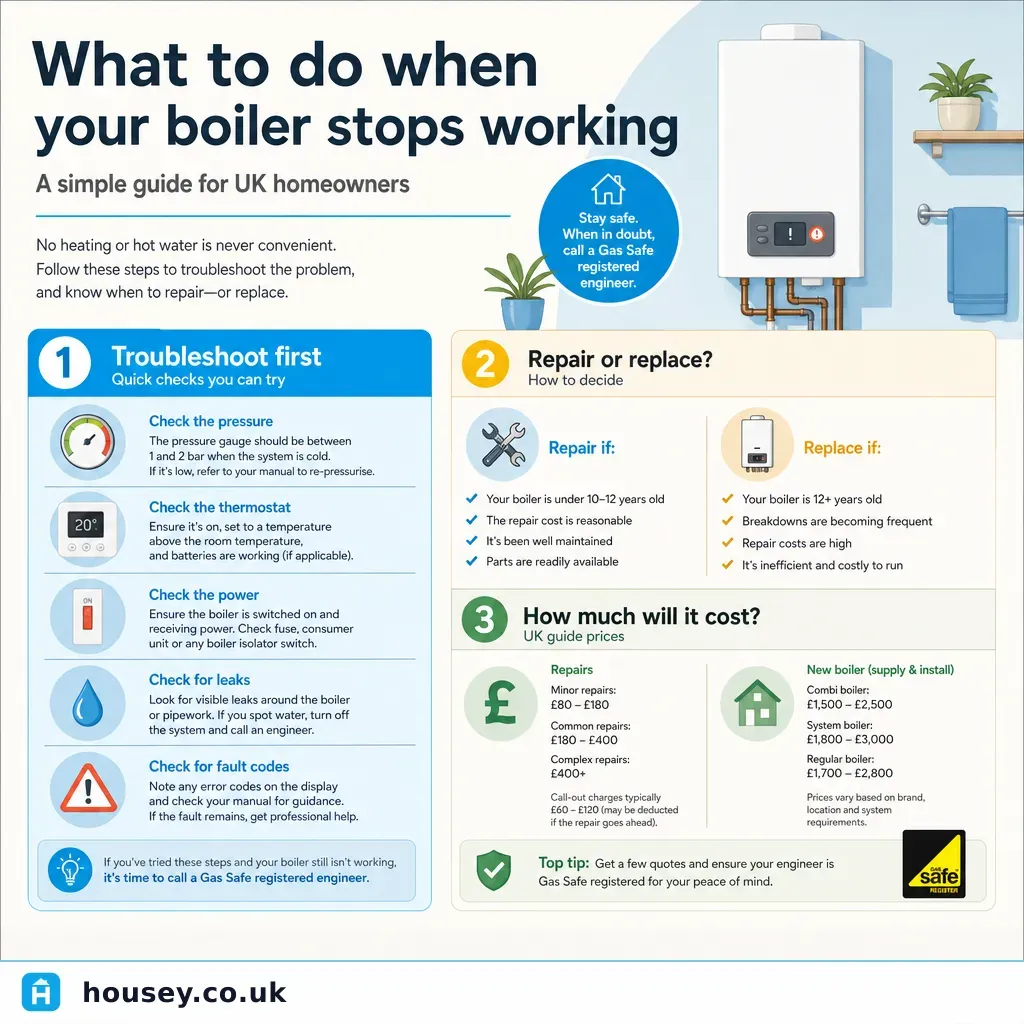
What to do when your boiler stops working
When your boiler stops working, check the pressure gauge (should read 1–1.
 General property advice
Property Market Trends: Activity Growth and Price Movements
UK property market activity is measured through completed sale registrations (HM Land Registry), lender mortgage data, and transaction volumes from HMRC.
 General property advice
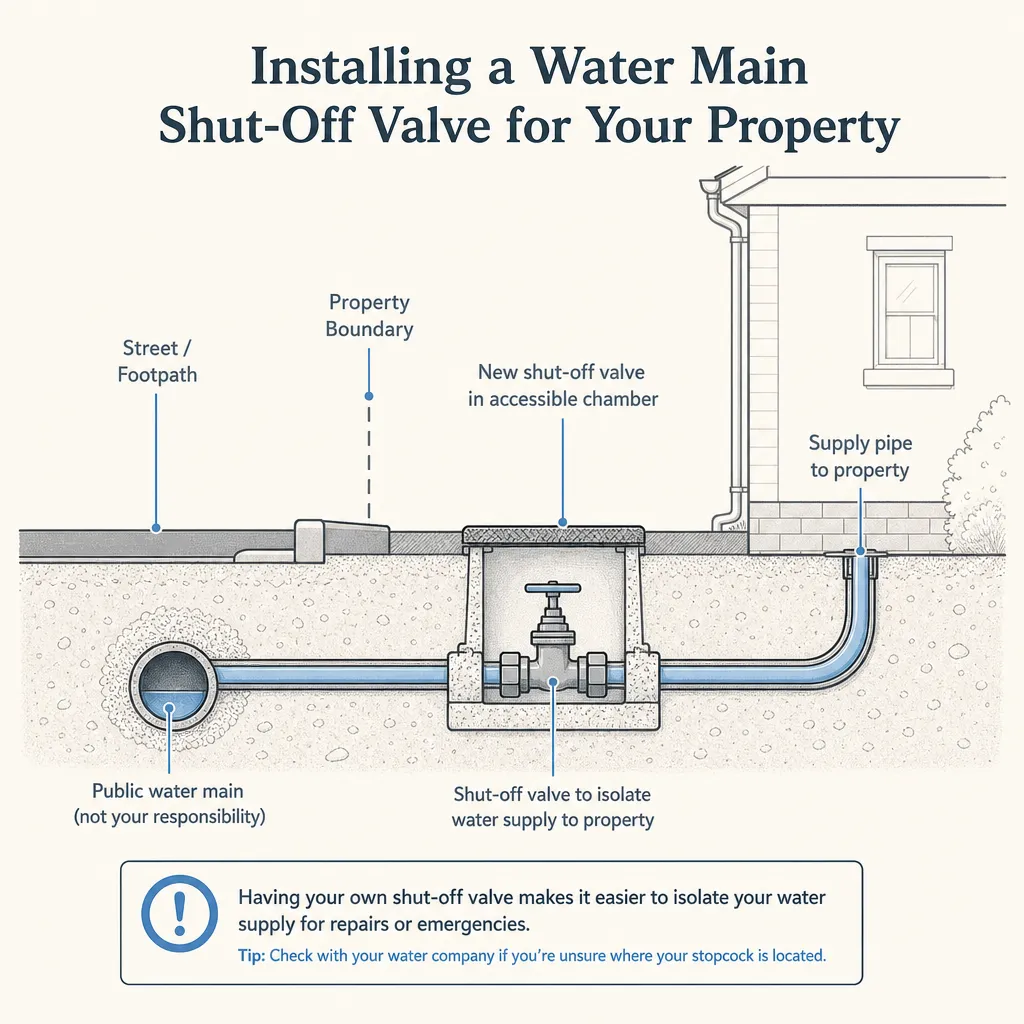
Installing a water main shut-off valve for your property
A water main shut-off valve — commonly called a stopcock — controls all water entering your home from the mains.
 General property advice
Monthly House Price Index: August Market Report and Analysis
The UK House Price Index is published monthly using completed Land Registry transaction data, meaning August figures typically reflect sales agreed months earlier.
 General property advice
Scottish Property Market: Activity and Regional Trends
Scotland's property market operates under distinct legal rules: sellers must provide a Home Report before marketing, transactions become legally binding at conclusion of missives rather than exchange of contracts, and Land and Buildings Transaction Tax replaces Stamp Duty.