What to do when your boiler is making unusual noises
By Housey · Last reviewed 11th of May 2026
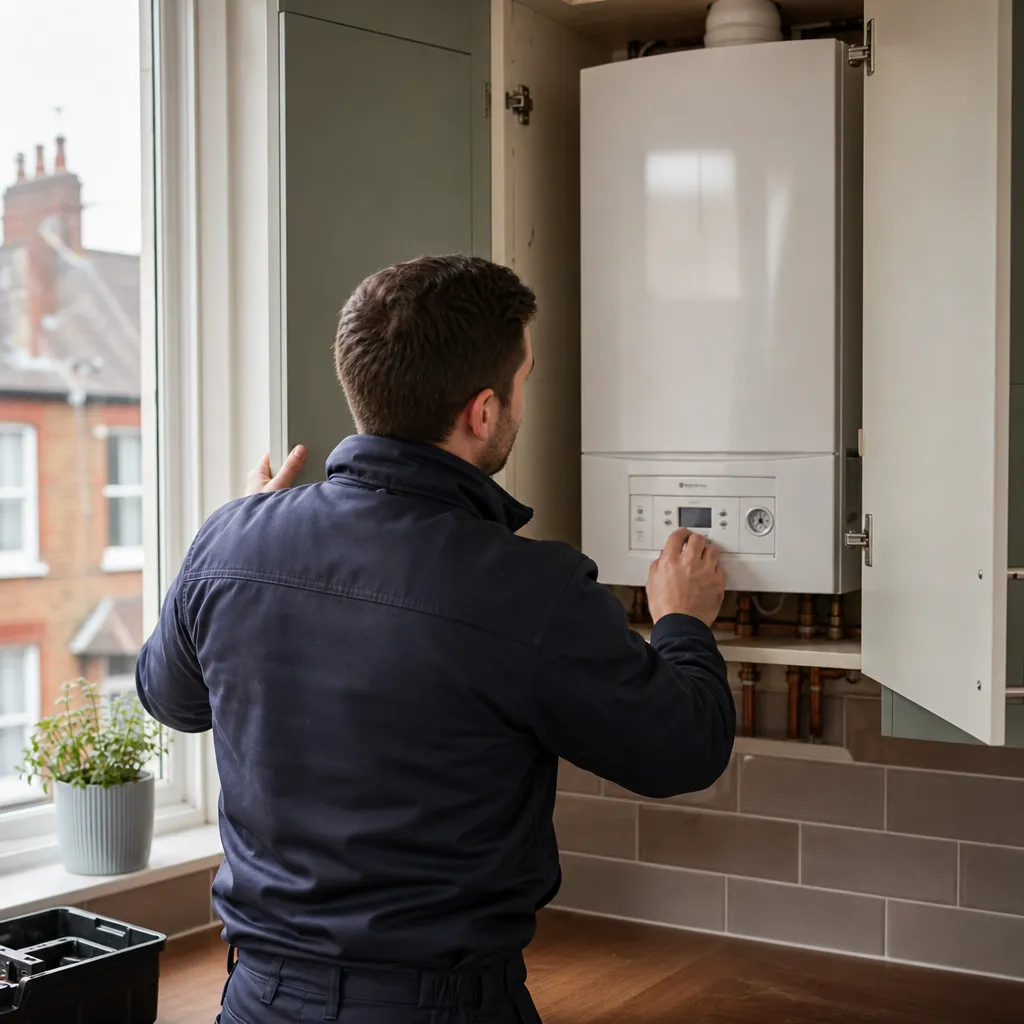
What to do when your boiler is making unusual noises
Unusual noises from a boiler are one of the most common reasons UK homeowners contact a heating engineer — and while many causes are relatively benign, some are early warning signs of a component failure that will become more expensive to ignore. Because gas boilers involve pressurised hot water, combustion, and gas pathways, knowing which noise points to a routine maintenance issue and which demands urgent action is genuinely important for both safety and running costs.
Key points
- Kettling — a rumbling or banging from the heat exchanger — is caused by limescale and is particularly common in southern and central England, where water hardness is high.
- Persistent clicking beyond the normal ignition sequence indicates a faulty ignition electrode or PCB fault — not a homeowner repair under any circumstances.
- Gurgling sounds usually indicate trapped air or low system pressure and can often be addressed by bleeding radiators and checking the boiler pressure, but only if your boiler model permits homeowner top-up.
- A single loud bang on startup is known as delayed ignition — switch the boiler off immediately and do not restart it before a Gas Safe engineer has inspected it.
- Annual boiler servicing by a Gas Safe registered engineer — required by most manufacturers to maintain warranty — is the most effective way to catch deteriorating components before they fail noisily.
What each noise usually means
The table below maps the most common boiler noises to their likely causes, urgency level, and appropriate action.
Noise | Common causes | Urgency | Recommended action |
|---|---|---|---|
Kettling (rumbling / banging) | Limescale on heat exchanger, restricted flow, sludge | Medium — worsens over time | Gas Safe engineer: inhibitor, power flush, or heat exchanger assessment |
Gurgling | Air in system, low pressure, frozen condensate pipe | Low–medium | Bleed radiators; check pressure; call engineer if it persists |
Whistling | Kettling, partial blockage, pump flow restriction | Medium | Gas Safe engineer |
Persistent clicking | Faulty ignition electrode, PCB fault, gas valve issue | Medium | Log the pattern and contact a Gas Safe engineer |
Loud bang on startup | Delayed ignition (gas accumulation before ignition) | High — do not restart | Switch off; call a Gas Safe engineer before use |
Humming | Pump vibration, loose internal components | Low–medium | Note and raise at next service; call engineer if worsening |
Clanking | Loose or failing pump, broken component | Medium–high | Gas Safe engineer |
Kettling: the most common cause of boiler noise in the UK
Kettling takes its name from the sound a limescale-coated kettle element makes. In a boiler, limescale forms on the internal surfaces of the heat exchanger — most commonly in hard-water areas (much of southern, central, and eastern England). As scale accumulates, water flow becomes restricted and a thin layer of water superheats momentarily, creating the characteristic rumbling or thumping sound.
Kettling is not immediately dangerous, but it measurably reduces boiler efficiency, raises fuel bills, and accelerates wear on the heat exchanger — the most expensive component to replace. Solutions range from adding a central heating inhibitor and magnetic filter to a full power flush. On badly affected older boilers, heat exchanger replacement may be recommended. Your engineer can assess severity and advise on the most cost-effective course of action.
Gurgling and air in the system
Gurgling from radiators or pipework usually indicates trapped air. Air enters through minor leaks, through the auto air vent, or when the system is topped up. The standard first step is to bleed affected radiators using a radiator bleed key.
Before bleeding, check the boiler pressure gauge. Most combi boilers operate between 1 and 1.5 bar at rest. If the gauge reads below 1 bar, top up via the filling loop before or after bleeding — consult your boiler's manual, as the process varies by model. If you are not confident doing this, contact your heating engineer rather than risk over-pressurising the system.
Persistent gurgling that returns quickly after bleeding may indicate a leak somewhere in the circuit — water that escapes needs to be replaced, and air enters as it does. A Gas Safe engineer can identify the source.
A gurgling noise specifically from the boiler base or the condensate pipe during cold weather often means the condensate pipe has frozen. This pipe drains acidic condensate to an external drain and is prone to freezing in exposed locations. Carefully pouring warm (not boiling) water over the pipe usually resolves this.
Delayed ignition: the bang that needs urgent attention
A single loud bang at the moment the boiler fires is known as delayed ignition. It occurs when gas accumulates briefly in the combustion chamber before igniting — producing a larger-than-normal burst of combustion. This is a safety concern that requires professional diagnosis. Switch the boiler off at the programmer and do not attempt to restart it. Call a Gas Safe registered engineer before putting the boiler back into use.
Persistent clicking
A brief click as the boiler starts is normal — this is the ignition spark. Persistent clicking that continues well beyond the ignition sequence, or clicking that occurs when the boiler is not in a startup phase, suggests a fault with the ignition electrode, the PCB, or the gas valve. Log the pattern — when does it happen, how long does it last, and does a fault code appear? Describe this precisely to your Gas Safe engineer.
System sludge and magnetic filters
Many UK heating systems — particularly those in properties that have not had central heating maintenance for several years — accumulate black iron oxide sludge (magnetite) in pipework and at the base of radiators. This sludge can restrict flow, overload the pump (producing humming or vibrating), and cause wear on the heat exchanger. A magnetic filter fitted on the return pipework close to the boiler captures circulating sludge particles before they enter the boiler.
If a boiler that has recently been serviced or just had its system restored starts making new noises shortly afterwards, sludge disturbed from older pipework may be the cause. Discuss a power flush or chemical flush with your engineer.
What to ask your heating engineer
- Can you confirm the source of the noise and whether it presents a safety concern right now?
- Is this caused by scale, sludge, or a mechanical fault — and how advanced is it?
- Do I need a power flush, inhibitor top-up, or a magnetic filter installation?
- Will this noise affect the boiler's efficiency or shorten its working life?
- Are there any fault codes stored in the boiler's memory I should be aware of?
- At what point would you recommend replacing this boiler rather than continuing to repair it?
Important limitations
This article provides general information to help UK homeowners understand common causes of boiler noise and communicate more effectively with qualified engineers. It is not a substitute for professional diagnosis. Boiler designs and internal components vary significantly between makes and models, and a noise that is benign in one installation may indicate a serious fault in another. If you are in any doubt about whether your boiler is safe to operate, switch it off and contact a Gas Safe registered engineer before restarting it.
When this becomes urgent
- A single loud bang on boiler startup — switch off immediately and call a Gas Safe engineer before restarting
- A hissing noise accompanied by any smell of gas — leave the building and call 0800 111 999
- Any noise that coincides with a boiler lockout or fault code on the display
- Noises that appear suddenly or worsen significantly without an obvious cause
- Any burning smell from the boiler casing
- A continuous hissing or dripping sound combined with the pressure gauge reading above 3 bar
When to get professional help
Annual boiler servicing by a Gas Safe registered engineer is the single most effective preventive measure — it allows engineers to detect deteriorating components before they cause a breakdown or safety issue. For any noise that has appeared suddenly, is getting worse, or is accompanied by a fault code, performance loss, or safety concern, do not delay in contacting a Gas Safe engineer. Verify registration at gassaferegister.co.uk before any work begins.
How Housey can help
Housey connects homeowners with Gas Safe registered heating engineers and boiler specialists across the UK. Whether you need an urgent fault diagnosis, a boiler service, or honest advice on whether your boiler is approaching end of life, Housey makes it easy to compare quotes from qualified local professionals.
Frequently asked questions
Is a noisy boiler dangerous?
Most boiler noises are caused by scale, air, or sludge rather than a safety fault. However, a loud bang on startup (delayed ignition), a hissing noise combined with a gas smell, or a sudden new noise accompanied by a fault code or lockout should be treated as potentially serious. If you are unsure, switch the boiler off and contact a Gas Safe registered engineer before restarting.
How much does it cost to fix a kettling boiler?
Indicative UK costs, last reviewed 2026-05-11. Adding a central heating inhibitor and power flush typically costs £300–£600 depending on system size. Fitting a magnetic filter costs around £80–£150 installed. Heat exchanger replacement, if needed, typically starts at £300–£600+ and may make replacement of an older boiler more economical. Costs vary by region and engineer.
Can I bleed my radiators myself?
Yes — bleeding radiators is a routine homeowner task. Turn the heating off and allow it to cool. Use a radiator bleed key to open the valve at the top corner of each radiator until water appears, then close it. Check the boiler pressure afterwards and top up via the filling loop if it has dropped below 1 bar, following your specific boiler manual.
How often should a boiler be serviced?
Most manufacturers require annual servicing to maintain the warranty, and Gas Safe Register recommends a service every 12 months. An annual service covers a visual inspection, combustion analysis, flue test, and check of major components. Landlords are also legally required to provide annual gas safety checks (CP12 certificates) under the Gas Safety (Installation and Use) Regulations 1998.
Sources and further reading
- Gas Safe Register: Boiler Servicing and Maintenance — Gas Safe Register
- HSE: Gas Safety in the Home — Health and Safety Executive
- Gas Safety (Installation and Use) Regulations 1998 — legislation.gov.uk
- Boilers and Heating Systems — Energy Saving Trust
- Gas Safety in the Home — Citizens Advice
Useful next reads
 General property advice
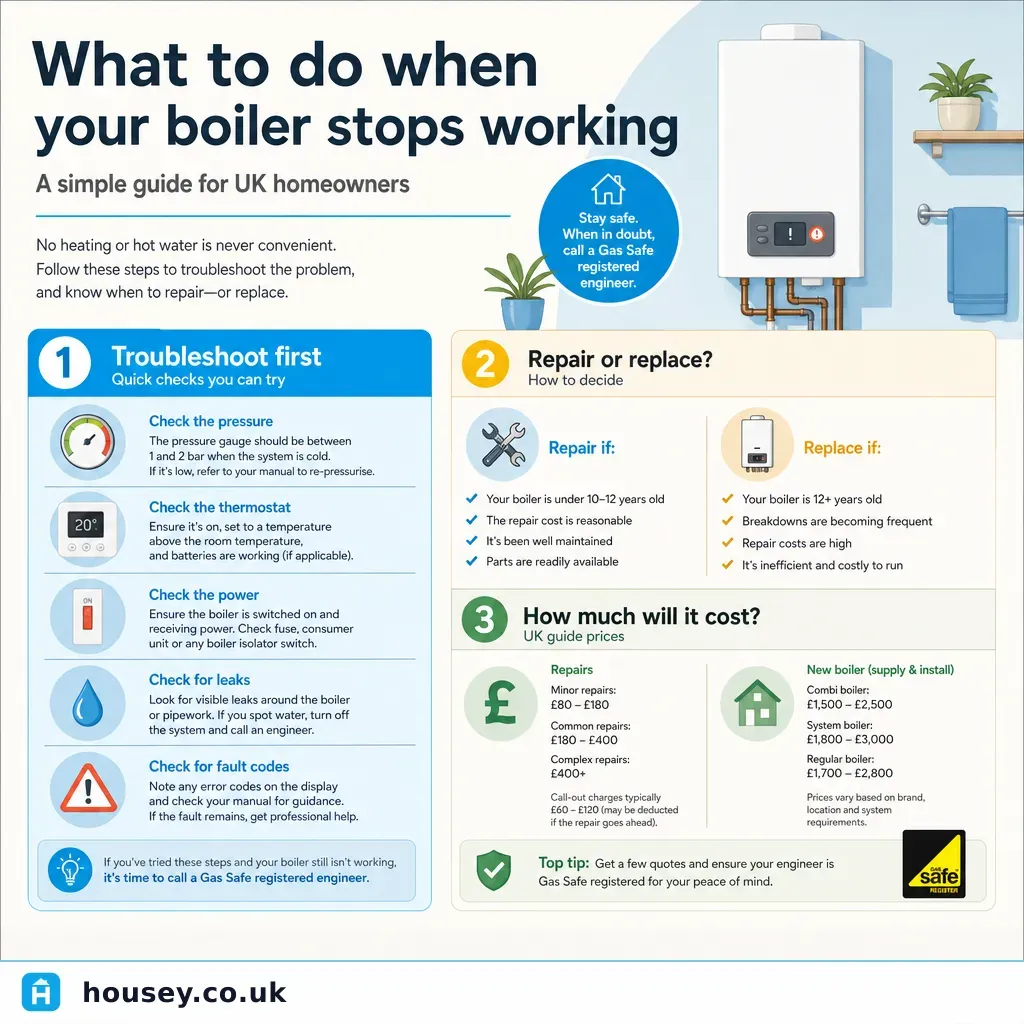
What to do when your boiler stops working
When your boiler stops working, check the pressure gauge (should read 1–1.
 General property advice
Common problems with Baxi boilers and how to fix them
Most Baxi boiler faults show a numeric error code on the front panel.
 General property advice
Common Boiler Faults: Identification and Remedies
The most common boiler faults in UK homes are pressure loss, no heating or hot water, unusual noises such as kettling or banging, a frozen condensate pipe, and repeated lockouts.
 General property advice
Property Market Trends: Activity Growth and Price Movements
UK property market activity is measured through completed sale registrations (HM Land Registry), lender mortgage data, and transaction volumes from HMRC.
 General property advice
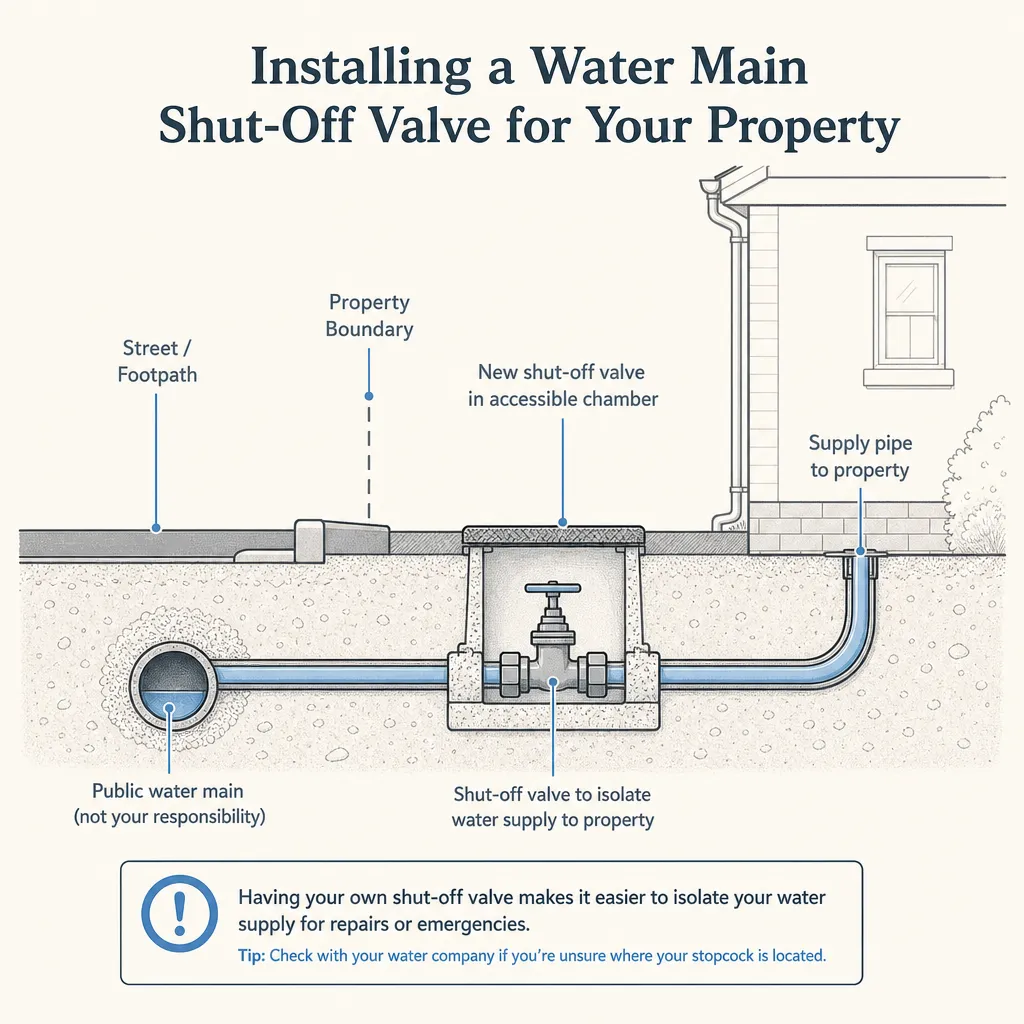
Installing a water main shut-off valve for your property
A water main shut-off valve — commonly called a stopcock — controls all water entering your home from the mains.