What Types of Pipes Are Used for Gas Lines in the UK?
By Housey · Last reviewed 31st of May 2026
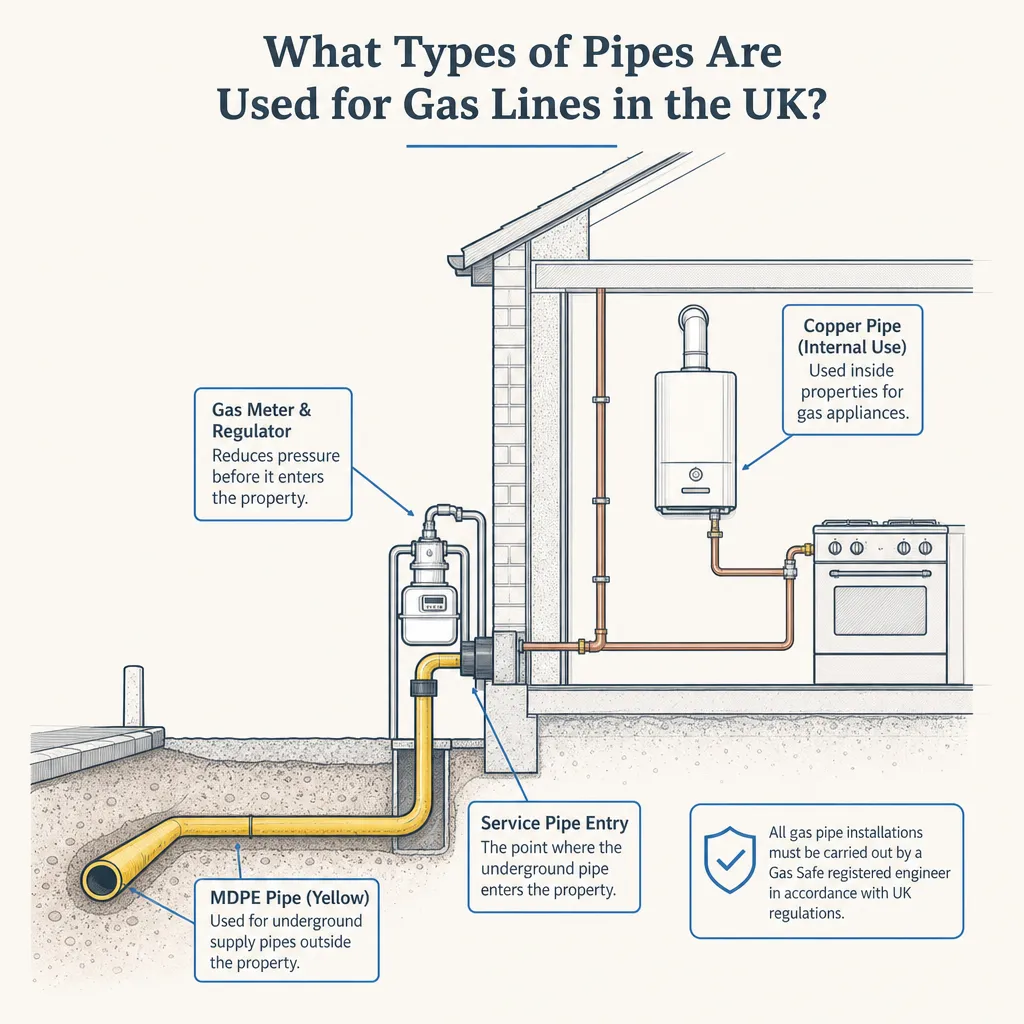
What Types of Pipes Are Used for Gas Lines in the UK?
Understanding which pipe materials are used for domestic gas supply is relevant whenever you are extending a gas installation, commissioning a new boiler, undertaking a major renovation, or trying to make sense of what a Gas Safe engineer means when discussing your existing pipework. Gas pipework in the UK is tightly regulated — material choice is governed by British Standards and Gas Safe requirements, and all installation work must only be carried out by a Gas Safe registered engineer. This guide explains the approved materials, where each is used, and what homeowners should know when inspecting or upgrading their gas system.
Key points
- Copper tube to BS EN 1057 is the standard approved material for internal gas supply pipework in UK domestic properties.
- Yellow medium-density polyethylene (MDPE) pipe to BS EN 1555 is the mandatory material for underground gas supply pipes running from the gas main to the meter; yellow colour coding is a legal requirement.
- Corrugated stainless steel tubing (CSST), sold under trade names such as Gastite and TracPipe, is approved for certain UK domestic installations but requires specific bonding, earthing, and manufacturer-trained installation.
- Steel pipe to BS 1387 or BS EN 10255 is found in older domestic properties and remains common in commercial and industrial gas installations.
- All gas pipework within a building must comply with BS 6891:2005+A3:2018 (Installation of low-pressure gas pipework in domestic premises) and be installed by a currently registered Gas Safe engineer.
Why pipe material matters for gas installations
Gas pipework carries a combustible fuel under pressure and must resist corrosion, maintain joint integrity over decades, and withstand the physical environment it passes through — whether buried underground, concealed in a cavity wall, or routed through a kitchen. Using the wrong material, an incompatible jointing method, or an unsuitable pipe diameter is a safety risk. Under the Gas Safety (Installation and Use) Regulations 1998, it is illegal for anyone other than a Gas Safe registered engineer to carry out gas work on domestic premises.
If you discover pipework that appears damaged, incorrectly jointed, made from an unidentifiable material, or leaking, do not use any gas appliances on that circuit. Call a Gas Safe registered engineer — or, if you smell gas, leave the property immediately and call the National Gas Emergency Service on 0800 111 999.
The main pipe materials used for UK domestic gas lines
Material | Where used | British Standard | Joining method | Key characteristics |
|---|---|---|---|---|
Copper (half-hard) | Internal pipework — meter to appliances | BS EN 1057 | Compression fittings or capillary solder | Most common; corrosion-resistant; well understood by all Gas Safe engineers |
Yellow MDPE | Underground — gas main to meter | BS EN 1555 | Electrofusion or butt fusion welding only | Must be yellow; resists ground movement and soil corrosion; not for above-ground use |
CSST (corrugated stainless steel) | Internal — complex routes in modern builds | Manufacturer-specific; bonding per BS 7671 | Crimped or push-fit proprietary fittings | Flexible; useful in roof spaces and through joists; requires bonding and specialist training |
Steel (black or galvanised) | Older domestic; commercial; meter connections | BS 1387 / BS EN 10255 | Threaded joints or welding | Durable but needs anti-corrosion treatment underground; common in pre-1970s homes |
Indicative guide based on Gas Safe Register and BS 6891 guidance. Verify current standards with a Gas Safe engineer at time of installation.
Copper pipework: the UK standard for internal gas
Half-hard copper tube to BS EN 1057 has been the standard material for internal domestic gas pipework in the UK for generations, and every Gas Safe registered engineer is trained and experienced in working with it. It runs from the meter position throughout the property to each gas appliance.
Copper gas pipework must be:
- Adequately supported and clipped at recommended intervals — typically every 1.2 metres for horizontal runs, more frequently on vertical or exposed sections.
- Jointed with approved compression fittings or capillary solder fittings using a lead-free solder alloy. Lead solder is not permitted in gas installations.
- Sleeved where it passes through walls and routed away from electrical cables where practicable.
- Properly bonded to the main earthing system under current IET Wiring Regulations (BS 7671).
Microbore copper (8 mm or 10 mm) may be used for short flexible final connections to some appliances but must not be used for main supply runs under BS 6891 guidance.
Yellow MDPE pipe: underground gas supply
The bright yellow pipe visible during streetworks or in open excavations is medium-density polyethylene (MDPE) to BS EN 1555. Colour coding underground is a legal safety requirement: yellow for gas, blue for water, black for electricity. Using the wrong colour creates a potentially fatal hazard for anyone subsequently digging in the area.
Key requirements for MDPE gas pipe:
- Must be installed at a minimum depth of 375 mm in private ground, or 750 mm under roads and footpaths, in accordance with Gas Safety (Installation and Use) Regulations 1998 and gas transporter network standards.
- Joints must be made by electrofusion welding or butt fusion welding only — mechanical push-fit fittings are not approved for underground polyethylene gas pipe.
- Must terminate in a steel transition fitting (a PE-to-steel joint) at or just inside the building; MDPE must not be exposed above ground in domestic installations.
- Must not be used for above-ground pipework — transition to copper or other approved material is required at the point the pipe enters the building.
The supply pipe from the gas main to your emergency control valve (ECV) is typically owned and maintained by the gas transporter. The section from the ECV into the property is the homeowner's responsibility.
CSST: a flexible alternative in modern installations
Corrugated stainless steel tubing (CSST) — available as Gastite, TracPipe, and similar products — is a flexible, corrugated pipe that is permitted for use in UK domestic gas installations under specific conditions. It is particularly useful in complex loft spaces, when routing through floor joists, and in retrofit situations where rigid copper is difficult to install without significant disruption.
Critical CSST safety requirements:
- CSST must be properly bonded and earthed in accordance with BS 7671. Inadequately bonded CSST has been associated with lightning-related damage in international case studies, and Gas Safe guidance places particular emphasis on bonding compliance for CSST systems.
- CSST must only be installed using the manufacturer's approved proprietary fittings — mixing fittings from different systems is not permitted.
- Not all Gas Safe engineers hold manufacturer-specific CSST training. Confirm that your engineer is trained in the specific system before instructing them.
Important limitations
This article provides general information about gas pipe materials used in UK domestic installations based on publicly available Gas Safe and BS 6891 guidance as of May 2026. Gas regulations, British Standards, and approved installation practices can change. This guide does not constitute professional advice and must not be used as a substitute for assessment by a Gas Safe registered engineer. Never attempt to work on gas pipework yourself — this is illegal under the Gas Safety (Installation and Use) Regulations 1998 for anyone who is not Gas Safe registered.
What to ask a qualified professional
Before instructing a Gas Safe engineer to install, extend, or inspect gas pipework, ask:
- Can I see your Gas Safe registration card, and are you registered for the type of work required (e.g., natural gas pipework, cooker connections, boiler installation)?
- What pipe material do you propose, and why is it appropriate for this specific installation and location?
- If you are using CSST, do you hold the manufacturer-specific training certification, and will bonding be correctly installed and tested to BS 7671?
- Which British Standard and Gas Safe guidance does your proposed installation comply with?
- Will you provide a Gas Installation Certificate or Landlord Gas Safety Record on completion?
- If underground pipework is involved, have you confirmed who is responsible for each section — the gas transporter or the homeowner?
- Are there any existing pipework issues — incorrect materials, inadequate bonding, improper jointing, or corrosion — that need rectification before the new works proceed?
When this becomes urgent
Call a Gas Safe registered engineer immediately — or the National Gas Emergency Service on 0800 111 999 — if:
- You smell gas anywhere in or near the property. Leave the building, do not operate any switches or open flames, and call the emergency number from outside.
- A Gas Safe engineer has marked your installation as "Immediately Dangerous" or "At Risk" on an inspection report — do not use any appliances on the affected circuit until the issue is resolved.
- You discover pipework that appears corroded, poorly jointed, or made from unidentified plastic above ground inside the building — flexible plastic is not approved for main gas supply pipework in UK homes.
- You are undertaking renovation work and uncover buried pipework in an unexpected location — do not cut or drill until a Gas Safe engineer has traced the route and isolated the supply.
- Your existing steel pipework shows visible corrosion, joint deterioration, or signs of past repair using unsuitable materials.
How Housey can help
Gas safety is non-negotiable. Housey connects UK homeowners with Gas Safe registered professionals who can inspect, install, and certify domestic gas pipework. Whether you need a gas safety certificate for a rental property or professional advice on a new gas installation, our vetted engineers carry current Gas Safe registration and can carry out compliant, certified work.
Frequently asked questions
Can plastic pipe be used for gas supply inside a UK home?
Flexible plastic appliance connectors are approved for short final connections to certain gas appliances, such as a bayonet-fit connection for a gas cooker. However, plastic pipe is not approved as main supply pipework inside a UK domestic property. Internal gas supply pipework should be copper tube to BS EN 1057 or, where specifically approved and properly bonded, corrugated stainless steel tubing (CSST) installed by a trained Gas Safe registered engineer.
What is the yellow underground gas pipe made of?
The yellow underground gas supply pipe is medium-density polyethylene (MDPE) to BS EN 1555. Yellow is a mandatory colour code for gas — it must not be confused with yellow electrical ducting, which is also used underground. MDPE gas pipe joints must be made by electrofusion or butt fusion welding; push-fit mechanical fittings are not approved for underground polyethylene gas pipe. It must be installed at a minimum depth of 375 mm in private ground.
How do I know whether my gas pipework is safe?
A Gas Safe registered engineer can inspect your pipework and appliances during a gas safety check, assessing materials, jointing, support, bonding, and leak-tightness. If your home has older steel pipework or has not been inspected recently, arranging a check is advisable. Landlords are legally required to obtain an annual Landlord Gas Safety Record under the Gas Safety (Installation and Use) Regulations 1998 and must keep records for at least two years.
Who is responsible for the underground gas pipe leading to my property?
The gas service pipe from the main up to your emergency control valve (ECV) — usually at the property boundary — is maintained by your gas transporter, such as Cadent, SGN, or Northern Gas Networks. The pipework from the ECV into your home is your responsibility as the homeowner. If you suspect a fault with the supply pipe, contact your gas transporter directly or call the National Gas Emergency Service on 0800 111 999.
Sources and further reading
- Gas Safe Register: About Gas Safe and finding a registered engineer — Gas Safe Register
- HSE: Gas safety in the home — Health and Safety Executive
- Gas Safety (Installation and Use) Regulations 1998 — legislation.gov.uk
- BSI: BS 6891 — Installation of low-pressure gas pipework in domestic premises — British Standards Institution
- National Gas Emergency Service: Report a gas emergency — Cadent Gas
Useful next reads
 Energy & Retrofit
Bathroom Heating Solutions and Comfort Options
UK bathrooms can be heated using electric towel rails, wet radiators on the central heating circuit, electric or wet underfloor heating, or infrared panels.
 Energy & Retrofit
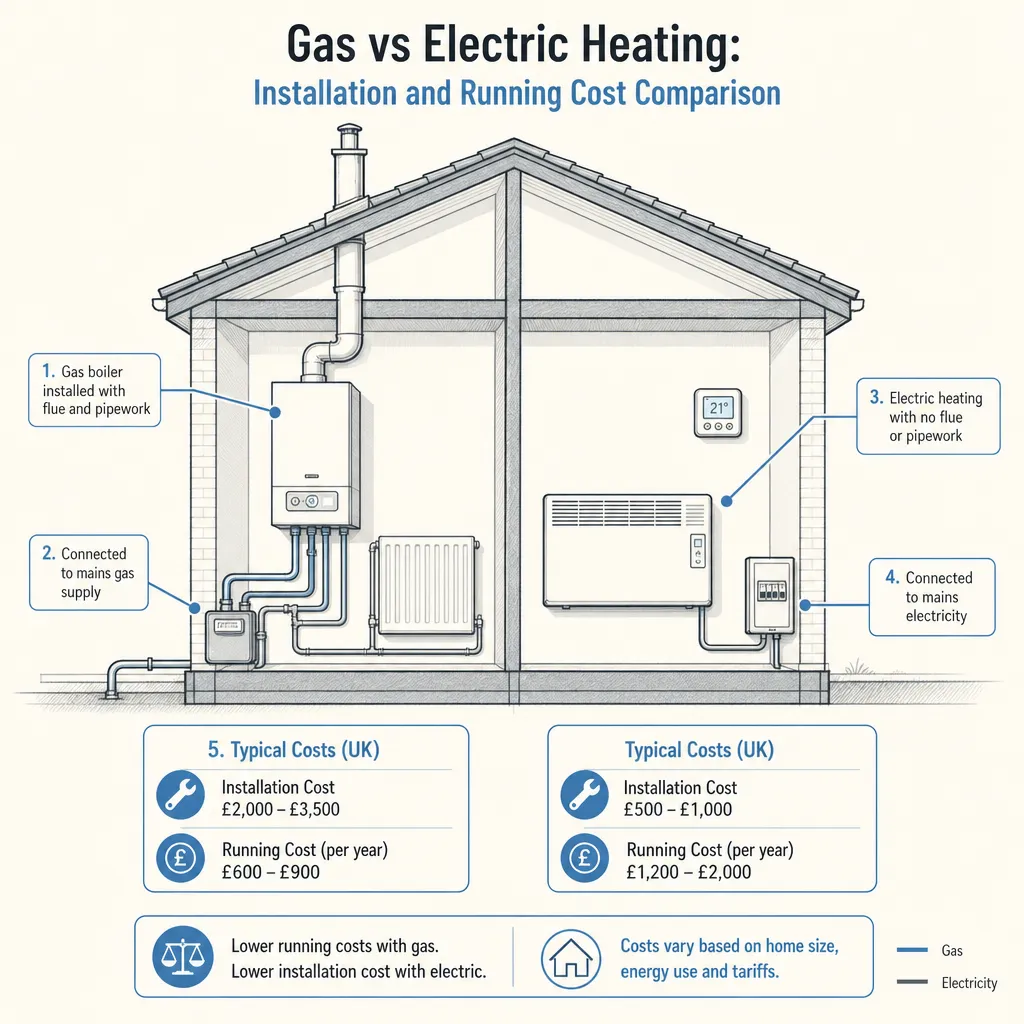
Gas vs Electric Heating: Installation and Running Cost Comparison
Gas central heating usually has lower running costs per kWh than direct electric heating in the UK, though heat pumps can change that equation.
 Energy & Retrofit
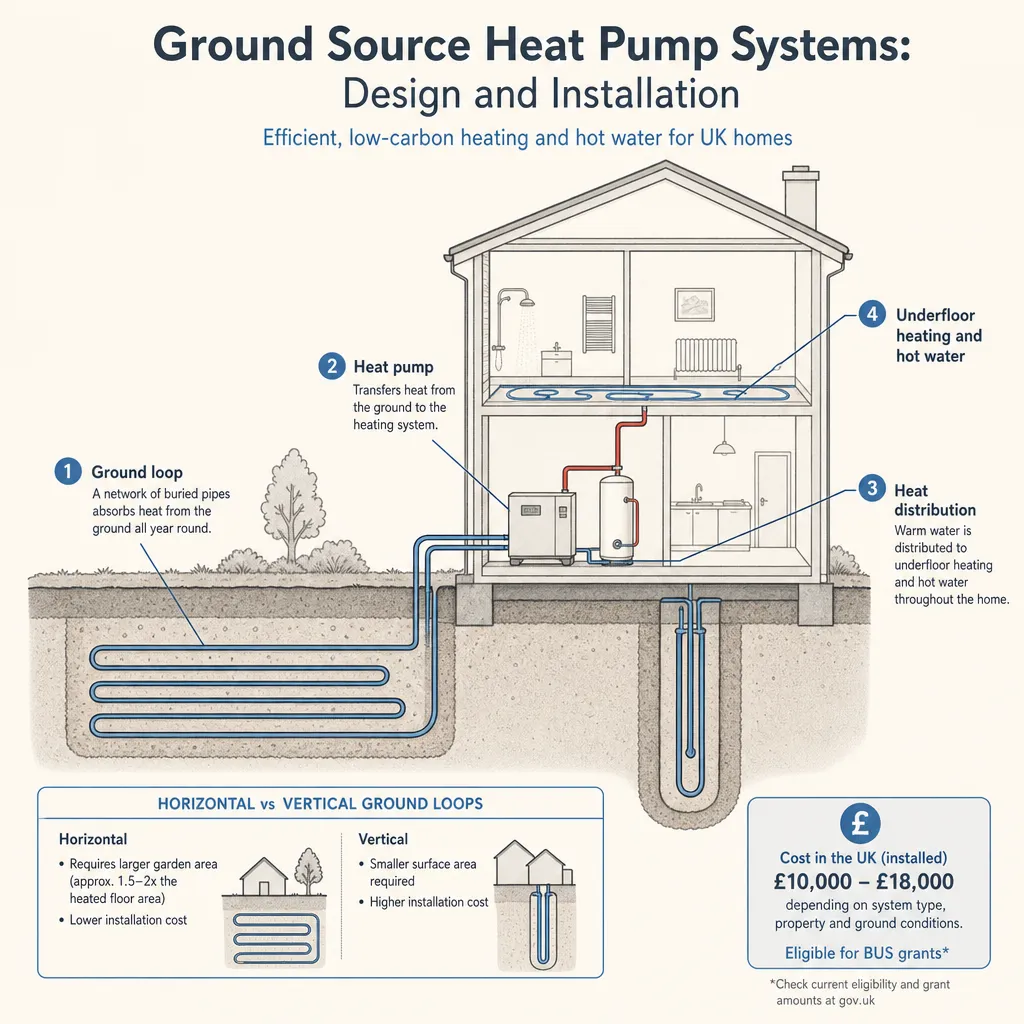
Ground Source Heat Pump Systems: Design and Installation
Ground source heat pumps extract heat from the earth through buried loops or boreholes, then upgrade it for space heating and hot water.
 Energy & Retrofit
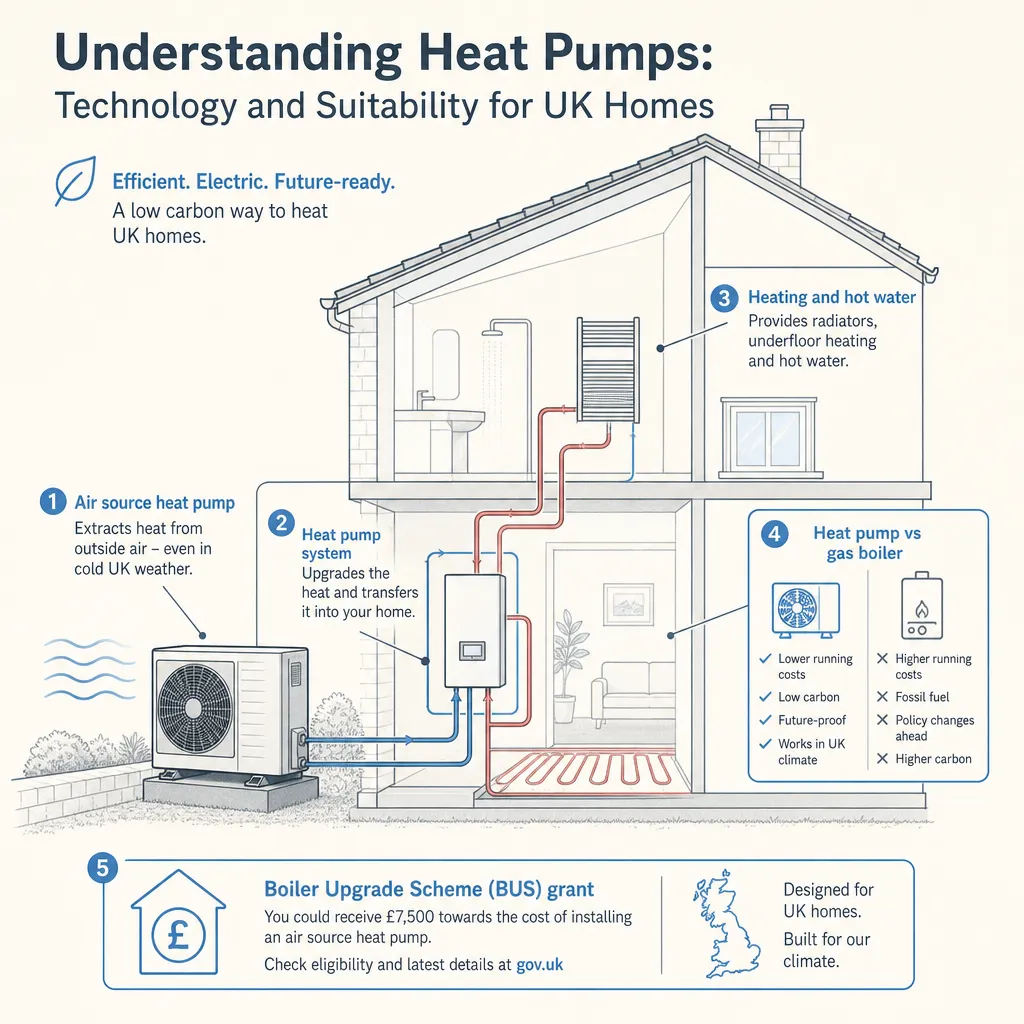
Understanding Heat Pumps: Technology and Suitability for UK Homes
Heat pumps extract heat from the air or ground and transfer it indoors, typically achieving efficiencies of 250–400% compared to a conventional boiler's near 100%.
 Energy & Retrofit
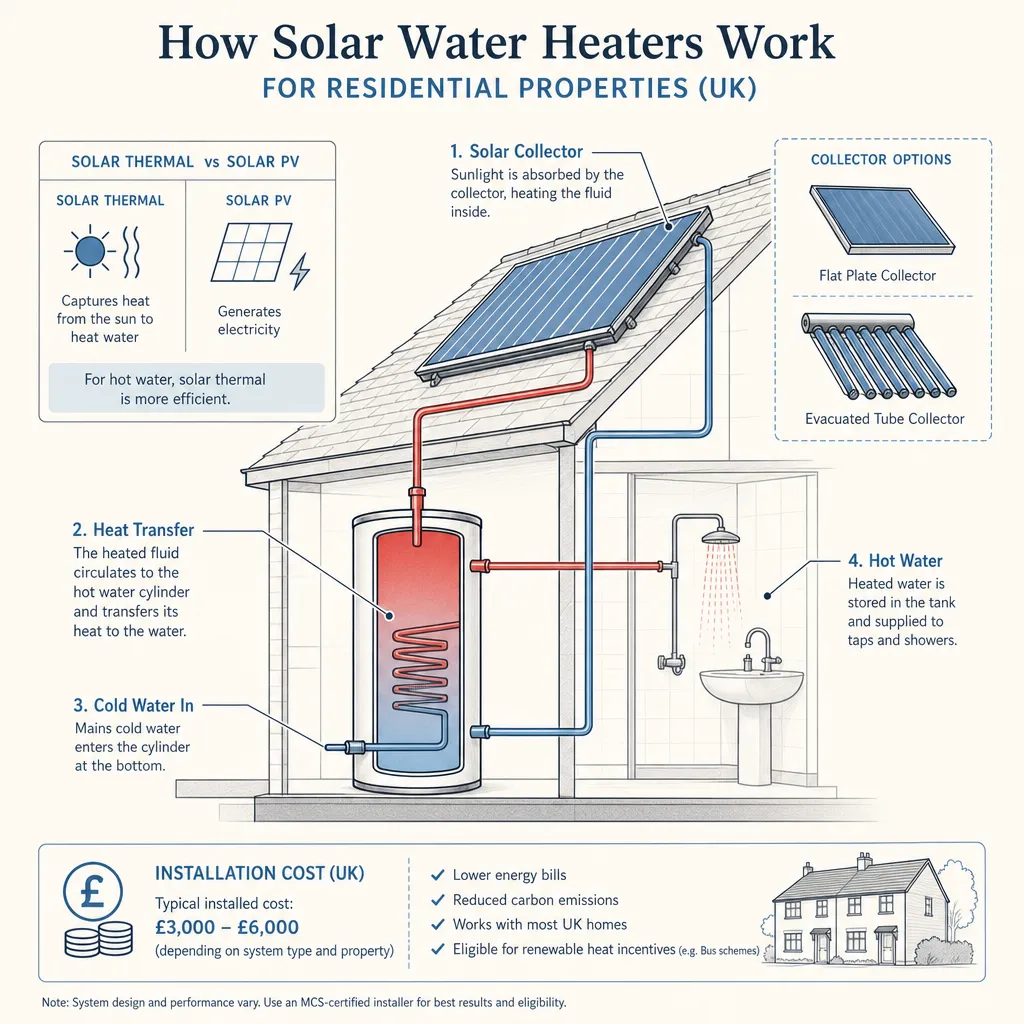
How Solar Water Heaters Work for Residential Properties
Solar water heaters use roof-mounted collectors to capture heat from sunlight and transfer it to a hot water cylinder via a fluid circuit.