When a contractor isn't delivering: what to do
By Housey · Last reviewed 19th of May 2026

When a contractor isn't delivering: what to do
Most home renovation and build projects run broadly to plan, but when a contractor falls behind schedule, produces substandard work, or stops communicating altogether, the situation can escalate quickly — both financially and emotionally. The challenge is that most homeowners encounter this only once, which means navigating unfamiliar legal territory under pressure. Knowing the right steps, in the right order, significantly increases the chance of a satisfactory resolution without resorting to litigation.
Key points
- Under the Consumer Rights Act 2015, services must be carried out with reasonable care and skill; if they are not, you may be entitled to request repeat performance or a price reduction.
- Small claims court in England and Wales handles money disputes up to £10,000; court fees start from £35 and rise with the value of the claim.
- Trade associations including the Federation of Master Builders (FMB), NICEIC, Gas Safe Register, and RICS operate independent complaint schemes that are typically faster and cheaper than court for qualifying members.
- Withholding payment already contractually due without proper legal grounds can itself constitute a breach of contract — always take advice before doing so.
- A defects liability period of six to twelve months is standard in most UK residential construction contracts, during which the contractor is expected to remedy defects at no extra charge.
Red flags: when a project is heading off track
Not every delay or difficulty signals a serious problem. These patterns, however, warrant immediate attention:
- Unexplained absences: the contractor disappears for days without contact or explanation
- Requests for large upfront payments beyond a reasonable deposit — typically 10–25% for a standard residential build
- Verbal-only variations: changes to scope or cost agreed by word of mouth only, with nothing confirmed in writing
- Unannounced subcontractors: unfamiliar faces carrying out structural, gas, electrical, or other regulated work without prior notice
- Reluctance to provide invoices or receipts, particularly for materials claimed as extras
- Pressure to pay cash in full before a stage is inspected and signed off
- Work progressing without building control sign-off at stages that require it
What to do first: the practical steps
1. Document everything
Before taking any formal action, build your evidence file:
- Photograph the current state of the work and date each image
- Save all text messages and emails; screenshot conversations and store them separately
- Keep a written log of each site visit, conversation, or missed appointment
- Note any verbal agreements or changes and record roughly when each occurred
2. Raise the issue in writing
Contact the contractor in writing — email is preferable to text as it is easier to reference later. In your message:
- State clearly and specifically what the problem is, referencing the agreed specification or original contract
- Avoid vague or emotive language; courts and adjudicators favour parties who raised issues in a measured way
- Set a reasonable deadline for a response or remediation — 14 days is commonly used for non-urgent issues; shorter if work is at a critical stage
- Keep a copy of everything you send
3. Check your contract
Review what was actually agreed in writing:
- Is there a written contract, formal quote, or drawn specification?
- What does it say about payment milestones, completion dates, and defects remediation?
- Did you agree to a retention — a percentage of the final payment withheld until defects are rectified?
- Does the contract specify a disputes or adjudication process?
If there is no written contract, the Consumer Rights Act 2015 still implies terms: the service must be carried out with reasonable care and skill, within a reasonable time, and at the agreed price (or a reasonable price if none was fixed).
Worked UK property scenario
Scenario (illustrative): A homeowner in Bristol contracted a local builder to extend a 1960s semi-detached house. The build was quoted at £48,000 over 16 weeks. By week 14, the structural frame was complete but window installation, first-fix electrics, and plastering had not started. Site visits had become irregular and invoices requested in week 10 had not been supplied. The homeowner sent a written notice setting a 14-day deadline for a programme update and outstanding invoices. When no response was received, they appointed a CIOB-chartered project manager to assess progress and draft a formal letter of notice. The matter was resolved — including a negotiated reduction for late completion — before reaching adjudication.
This scenario illustrates why retaining control of the payment schedule and seeking independent professional advice early can save significant time and money.
Your rights under the Consumer Rights Act 2015
For contracts with a business, the Consumer Rights Act 2015 applies. Key provisions relevant to building and renovation work:
Your right | What it means in practice |
|---|---|
Reasonable care and skill | Work must meet the standard a competent tradesperson would produce |
Reasonable time | If no completion date was set, work must be done within a reasonable period |
Agreed price | If a price was fixed, the contractor cannot unilaterally increase it |
Repeat performance | If work falls short, you can request the contractor redo it at no additional cost |
Price reduction | If repeat performance is impossible or not completed in reasonable time, you may be entitled to a reduction |
Source: Consumer Rights Act 2015, legislation.gov.uk.
When to withhold payment — and when not to
Withholding payment is a significant step and carries legal risk if done improperly:
- Do not withhold payment already contractually due without legal grounds — seek advice from Citizens Advice or a solicitor first
- Do use retention clauses if your contract includes them — they exist precisely for defects and incomplete work
- Do state clearly in writing if you are exercising a right to a price reduction under the Consumer Rights Act 2015
- Do not release the final payment for a stage of work you have not inspected and are not satisfied with
Escalation routes
Route | Best for | Typical timescale | Approximate cost |
|---|---|---|---|
Direct negotiation | Ongoing relationship; contractor willing to engage | Days to weeks | Nil |
Trade association complaints scheme | Contractor is a member (FMB, NICEIC, Gas Safe, RICS) | Weeks | Often free to the consumer |
Alternative Dispute Resolution (ADR) | Both parties consent; faster than court | 4–12 weeks | Lower than litigation |
Small claims court (England and Wales) | Claims up to £10,000; contractor unwilling to settle | Months | Court fee from £35 |
County court (larger claims) | Claims above the small claims threshold | Months to years | Higher; legal advice strongly recommended |
What to ask a qualified professional before escalating
If you are considering formal action, these questions will help you get clear legal or professional advice:
- What does my contract — or the terms implied by the Consumer Rights Act 2015 — actually entitle me to?
- Is the standard of work demonstrably below what a competent tradesperson would produce?
- What evidence should I be gathering before further work is carried out or concealed?
- Should I appoint an independent surveyor or project manager to assess the works?
- What are the specific risks of withholding payment in my situation?
When to get professional help
Seek independent advice from Citizens Advice, a solicitor, a RICS surveyor, or a CIOB-chartered project manager if:
- The value of the dispute exceeds a few thousand pounds
- The contractor is threatening legal action against you
- Structural, building control, or regulated work (gas, electrical) appears not to have been signed off correctly
- You have concerns about the quality of completed work that may be concealed by further construction
- The contractor has abandoned the site or stopped responding altogether
How Housey can help
Housey connects homeowners with vetted project managers who can provide an independent site assessment and practical programme advice when a build goes off track. If you are at an earlier stage and planning an extension or structural works, connecting with vetted extension builders with independently verified reviews reduces the risk of problems arising at all.
Frequently asked questions
Can I sack a contractor mid-project?
Yes, but your right to terminate — and whether you owe further payment for work already completed — depends on your contract. If there is no written contract, the Consumer Rights Act 2015 and general contract law apply. Seek advice from Citizens Advice or a solicitor before issuing formal notice of termination, particularly on higher-value projects where the financial consequences of getting this wrong are significant.
What is a snagging list and when should I use one?
A snagging list is a written record of defects and incomplete items prepared before the final payment is released. Walk through the completed works carefully, note each issue, and photograph it. Present the list to the contractor in writing before making the final payment. This list can form the basis of a defects-period claim if items are not addressed within an agreed timeframe.
Does the contractor have to put right defects after completion?
Under the Consumer Rights Act 2015, if a service was not carried out with reasonable care and skill, the consumer can request repeat performance at no additional cost. Many contracts also specify a defects liability period — typically six to twelve months — during which the contractor is expected to remedy defects that emerge. Check your specific contract for the terms that apply.
What if the contractor has gone out of business?
If the company has been wound up, direct recovery from the contractor is difficult. Check whether you paid by credit card — Section 75 of the Consumer Credit Act 1974 may cover payments over £100 where the supplier is in breach. Also check whether the contractor carried public liability or professional indemnity insurance that remains valid, and whether any deposit protection scheme was in place.
Sources and further reading
- Consumer Rights Act 2015 — legislation.gov.uk
- Problems with building work, tradespeople and engineers — Citizens Advice
- Make a court claim for money — GOV.UK
- RICS Dispute Resolution Service — RICS
- Consumer protection for homeowners — Federation of Master Builders
Useful next reads
 Improvement & Build
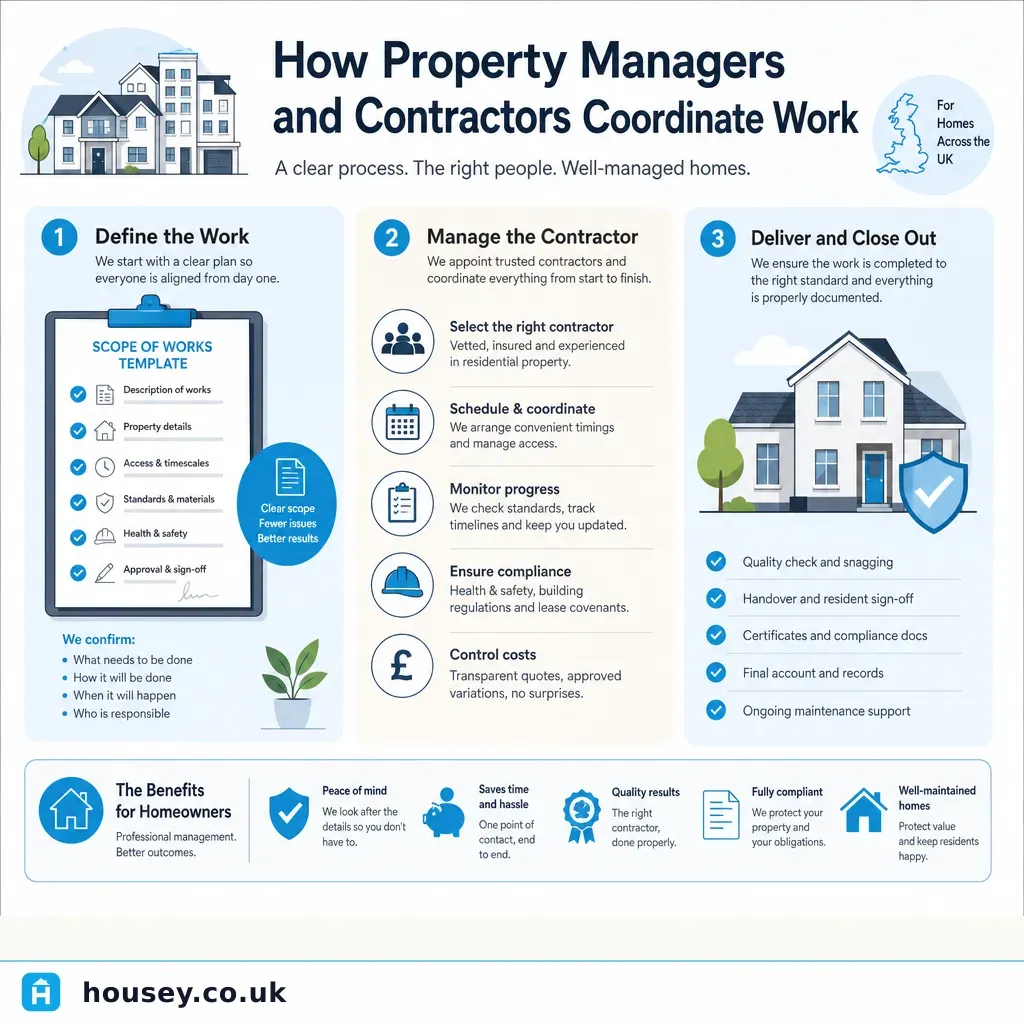
How Property Managers and Contractors Coordinate Work
Property managers coordinate contractors by scoping work clearly, selecting vetted and insured tradespeople, managing schedules and site access, checking progress against the brief, and handling sign-off and payment.
 Improvement & Build
How to Find and Hire a Loft Conversion Company
To hire a loft conversion company, get at least three quotes from TrustMark-registered or FMB-member firms.
 Improvement & Build
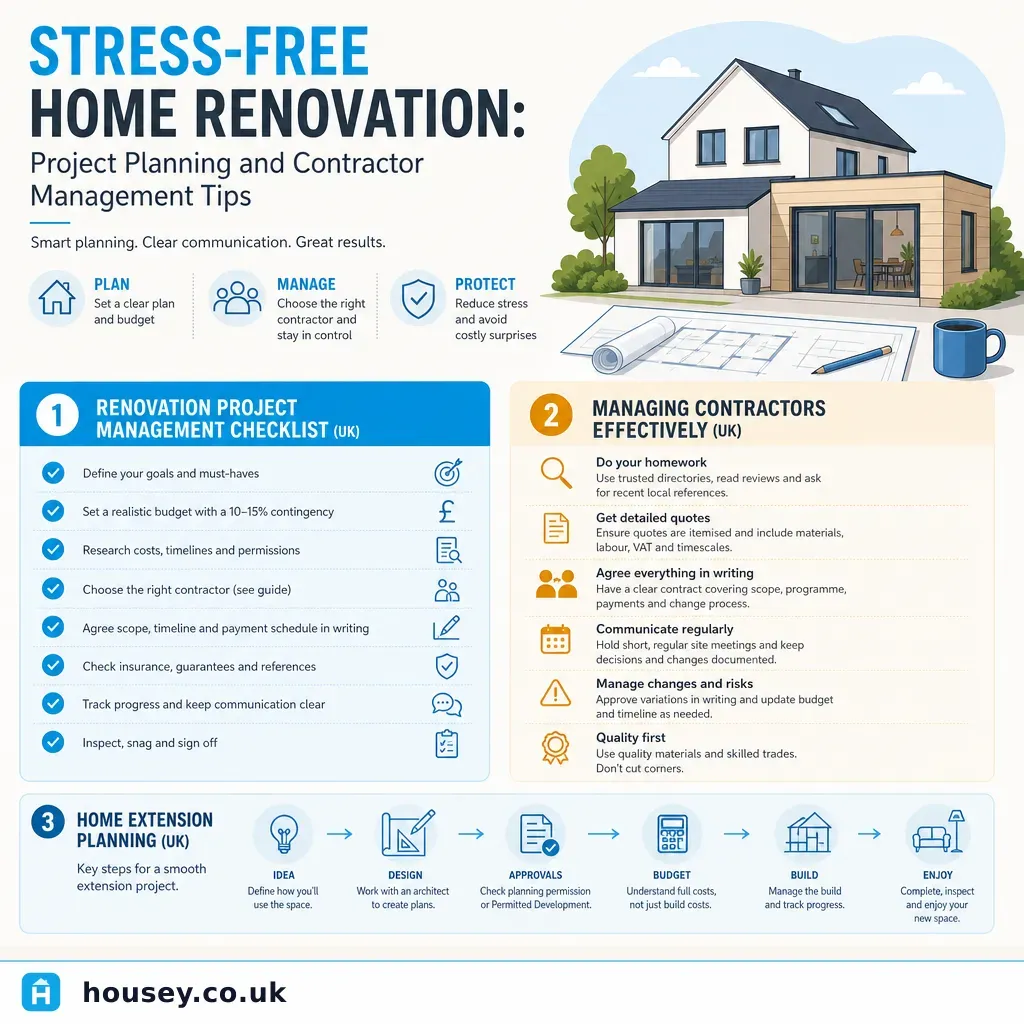
Stress-Free Home Renovation: Project Planning and Contractor Management Tips
The home renovations that stay on budget and on time share one characteristic: clear upfront planning.
 Improvement & Build
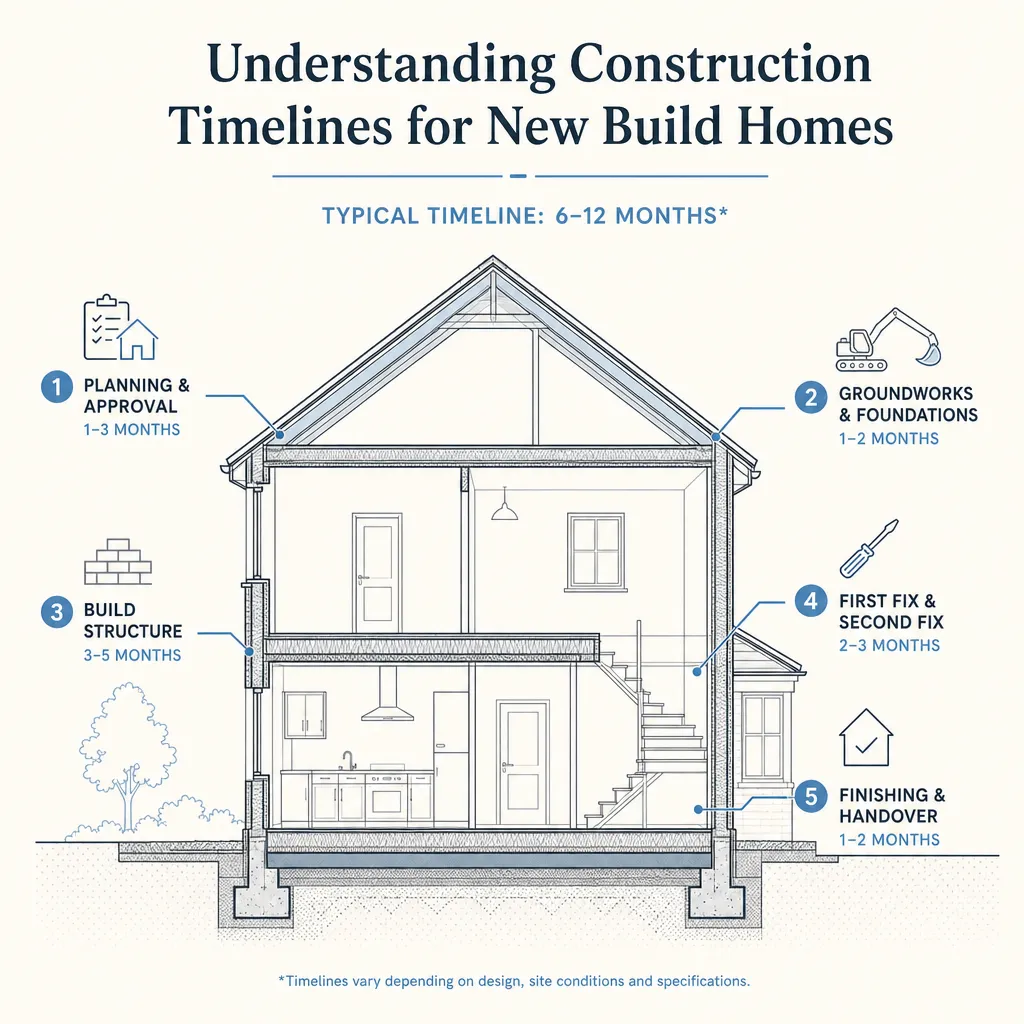
Understanding Construction Timelines for New Build Homes
Building a new home in the UK typically takes 12–24 months from planning approval to practical completion, though smaller projects can complete in 6–12 months.
 Improvement & Build
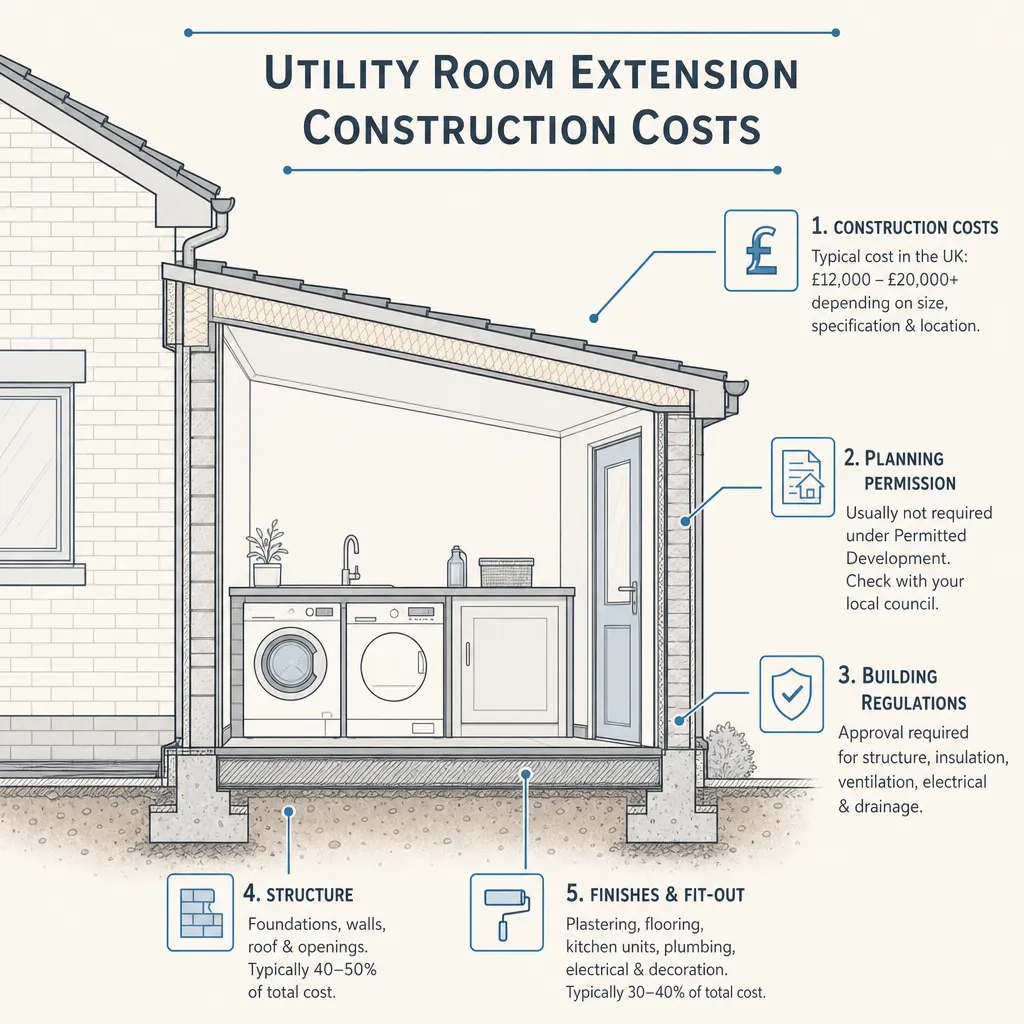
Utility Room Extension Construction Costs
A utility room extension in the UK typically costs £15,000–£40,000, depending on size, specification, and region.