When and Why You Should Replace Your Garage Door
By Housey · Last reviewed 19th of May 2026
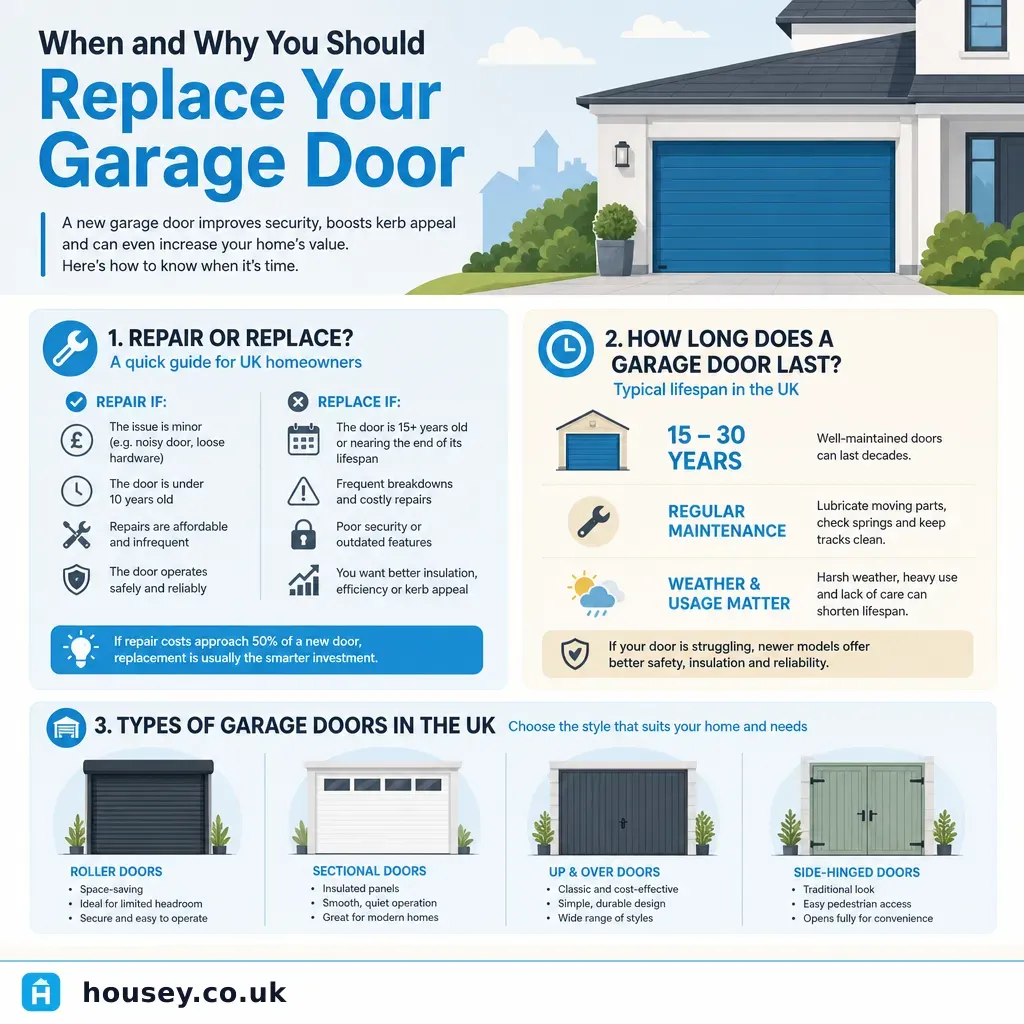
When and Why You Should Replace Your Garage Door
Garage doors tend to be overlooked until something goes wrong — a spring fails, a panel buckles, or the motor stops responding on a cold winter morning. For homeowners with an integral or attached garage, the door also affects heat loss, home security, and kerb appeal. Knowing whether repair or full replacement is the better decision can save both time and money.
Key points
- Garage doors typically have a serviceable life of 15–30 years, depending on material (steel, timber, GRP, or aluminium) and how regularly they are maintained.
- Electric garage doors placed on the UK market must carry UKCA marking and comply with BS EN 13241, which sets safety requirements including anti-crush and auto-reverse functions; CE marking is currently still accepted under transitional arrangements.
- Sectional, roller, and side-hinged doors each suit different opening widths and ceiling clearances — measure the opening before specifying a replacement.
- Insulated sectional doors with a filled sandwich panel can achieve U-values as low as 1.0–1.5 W/m²K, meaningfully reducing heat loss through an attached or integral garage.
- Most like-for-like garage door replacements fall under permitted development rights and do not need planning permission, though conservation area and listed building restrictions apply.
Should you repair or replace?
The repair-versus-replace decision turns on three factors: the age of the door, the nature of the fault, and the cost comparison.
Repair is usually sufficient when:
- A single spring, cable, roller, or hinge has failed on an otherwise sound door.
- The opener or motor has stopped working but the door panels and frame are structurally intact.
- There is minor surface corrosion that has not penetrated through the steel panels.
- A timber door needs re-painting or re-sealing but the frame and panels are sound.
Replacement is usually the better choice when:
- The door is more than 20 years old and has had repeated faults.
- Panels are visibly bowing, cracked, or corroded through.
- The spring mechanism has failed more than once in five years.
- Safety features do not meet modern BS EN 13241 standards — particularly auto-reverse and anti-crush on electric doors.
- You want to improve insulation, security, or appearance as part of a wider project.
Fault | Repair likely | Replace likely |
|---|---|---|
Single broken spring on a newer door | ✓ |
|
Motor failure, panels intact | ✓ |
|
Rust through steel panel |
| ✓ |
Bowing or warped timber panels |
| ✓ |
Door over 20 years old with repeated faults |
| ✓ |
No auto-reverse on electric door |
| ✓ |
Minor surface corrosion only | ✓ |
|
Which type of garage door suits your property?
The four main types of domestic garage door in the UK have different space requirements and performance characteristics.
Up-and-over (canopy or retractable): The most common type in UK homes built before 2000. Simple mechanism and lower upfront cost, but limited insulation and security compared with newer alternatives. Canopy doors project in front of the opening when operating, which can be a constraint on shallow driveways.
Sectional: Opens vertically on tracks and then runs overhead. No projection into the driveway. Good insulation potential — filled panels can achieve low U-values. Increasingly the default choice for new installations.
Roller: Coils into a compact box above the opening, maximising internal ceiling height and driveway clearance. Foam-filled slats offer reasonable insulation. Suited to garages with limited headroom.
Side-hinged: A traditional pair of outward-opening doors. Works well where the garage is used as a workshop or requires frequent pedestrian access. Timber side-hinged doors are common on period and rural properties.
When specifying a replacement, measure the opening width and height, the available headroom above the opening (critical for sectional and roller doors), and the garage depth for up-and-over retractable track layouts.
Safety standards for electric garage doors
Electric garage doors are machinery and are covered by the UK Supply of Machinery (Safety) Regulations 2008 (as retained in UK law) and harmonised standard BS EN 13241. Key requirements include:
- Auto-reverse and anti-crush: The door must stop and reverse if it meets resistance during closing. This is safety-critical; older electric doors installed before around 2001 may not comply.
- Obstruction sensors: Photo-electric beam sensors must detect objects in the path of a closing door.
- Manual release: A manual release allowing hand operation during a power failure is required.
- UKCA marking: New doors placed on the Great Britain market must bear UKCA marking; CE marking is currently accepted under transitional arrangements.
If your existing electric door lacks auto-reverse or obstruction detection — particularly where children or pets are present — replacement or professional retrofitting should be considered promptly.
Red flags that mean replace, not repair
- The torsion spring has snapped and the door is more than 15 years old; spring replacement on an ageing door may not outlast the door itself by many years.
- The door frame or timber sub-frame is rotten and the surrounding structure is compromised.
- The bottom seal is perished and the door is warped — together these allow significant heat loss and water ingress that repair alone cannot fully address.
- There is no auto-reverse on an electric door and no straightforward way to retrofit one within current safety standards.
- The door has been forced in a break-in attempt and the locking mechanism or frame has been structurally damaged.
Planning permission and permitted development
In most cases, replacing a like-for-like garage door on a domestic property in England does not require planning permission under permitted development rights. Check with your local planning authority (LPA) if:
- The property is in a conservation area — Article 4 Directions may restrict external changes to the façade.
- The garage is a listed building or within the curtilage of a listed building.
- You plan to widen the opening significantly, for example to accommodate two cars.
The permitted development regimes in Scotland, Wales, and Northern Ireland have their own provisions; always check with the relevant authority before starting work.
When to get professional help
Most garage door replacements are carried out by specialist garage door companies. Seek professional assessment if:
- The structural lintel or brickwork above the opening shows signs of cracking or movement — this may need a builder or structural engineer to assess before a new door is fitted.
- An automated door requires new electrical installation — this must be notified to building control or self-certified by a Competent Person Scheme member under Part P of the Building Regulations.
- The replacement is part of a larger project, such as a garage conversion or extension, where the opening, insulation, and building control requirements interact.
If the project combines garage door replacement with a conversion or extension, early advice from experienced extension builders or design-and-build firms will help ensure the structural opening, building control, and finish requirements are handled together.
How Housey can help
If your garage door project is part of a broader build — a garage conversion, an extension, or a full re-design of the front elevation — Housey can connect you with experienced extension builders and design-and-build firms who can advise on structural considerations, planning requirements, and the overall design outcome.
Frequently asked questions
Do I need planning permission to replace a garage door in the UK?
In most cases in England, replacing an existing garage door on a dwelling house falls under permitted development rights and does not require planning permission, provided the use of the garage is not changing. Exceptions apply if the property is listed, in a conservation area, or if the replacement significantly enlarges the opening. Always verify with your local planning authority before starting work.
How much does a new garage door cost in the UK?
Indicative UK costs, last reviewed 2026-05-19. A new up-and-over replacement (supply and fit) typically ranges from around £500 to £1,200 for a standard single opening. Sectional and roller doors with electric automation generally range from £1,000 to £3,000 or more, depending on size, material, insulation, and installation complexity. Timber and bespoke GRP doors command a premium. Always obtain at least three quotes.
What are the safety requirements for electric garage doors in the UK?
Electric garage doors must comply with BS EN 13241 and the UK Supply of Machinery (Safety) Regulations 2008. Key requirements include auto-reverse and anti-crush functions, obstruction detection sensors, and a manual release for power failures. New electrical installation must be carried out by a competent person under Part P of the Building Regulations, either notified to building control or self-certified through a Competent Person Scheme.
How long does a garage door typically last?
With routine maintenance — annual lubrication of springs, rollers, and tracks, and periodic re-painting of timber doors — most garage doors last between 15 and 30 years. Electric door operators typically require replacement after 10 to 15 years. Material choice, climate exposure, and frequency of use all affect longevity.
Sources and further reading
Useful next reads
 Improvement & Build
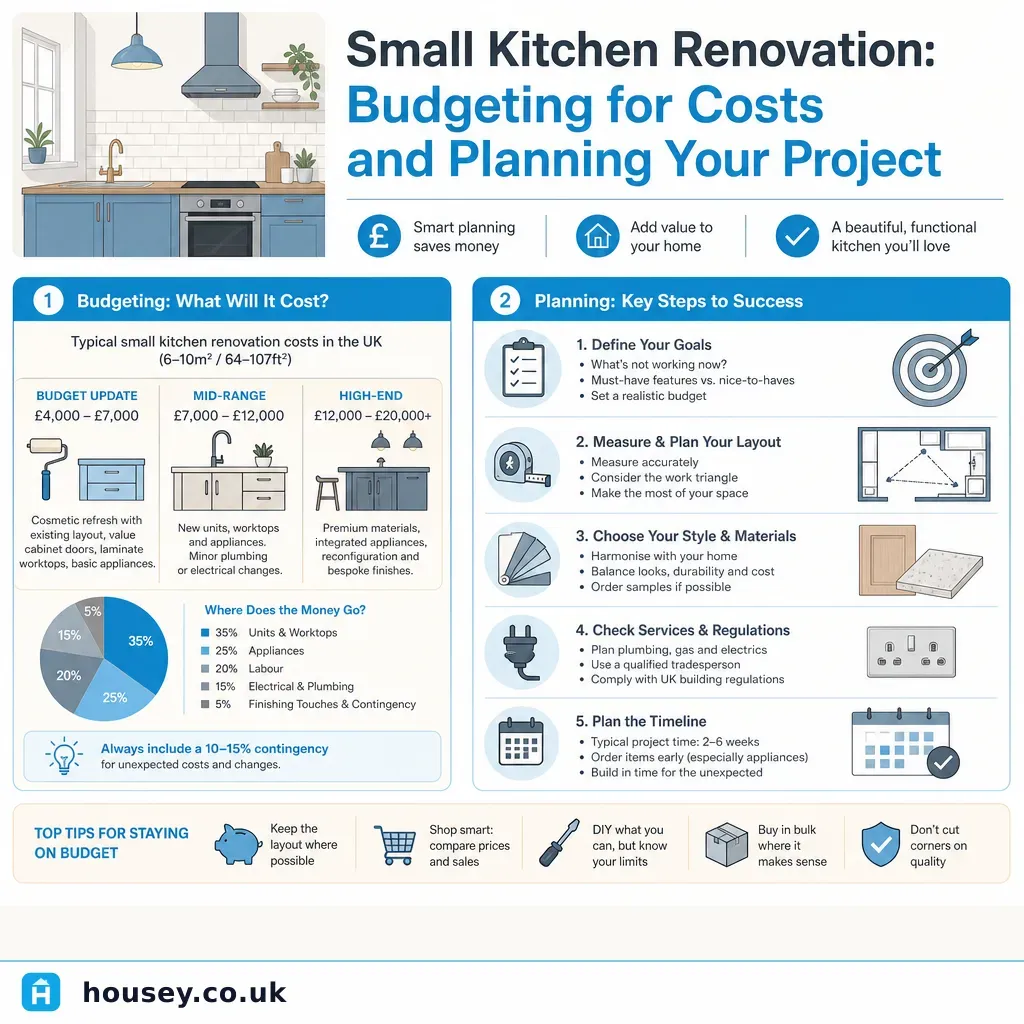
Small kitchen renovation: budgeting for costs and planning your project
A small kitchen renovation in the UK typically costs £5,000–£15,000 for a full refresh including new units, worktops, tiling, and appliances, though costs vary widely by specification, region, and whether structural changes or rewiring are involved.
 Improvement & Build
Conservatories and Garden Extensions: Design and Building Guide
Most conservatories qualify as permitted development in England if they are single-storey, within 50% of original curtilage, and meet dimensional limits.
 Improvement & Build
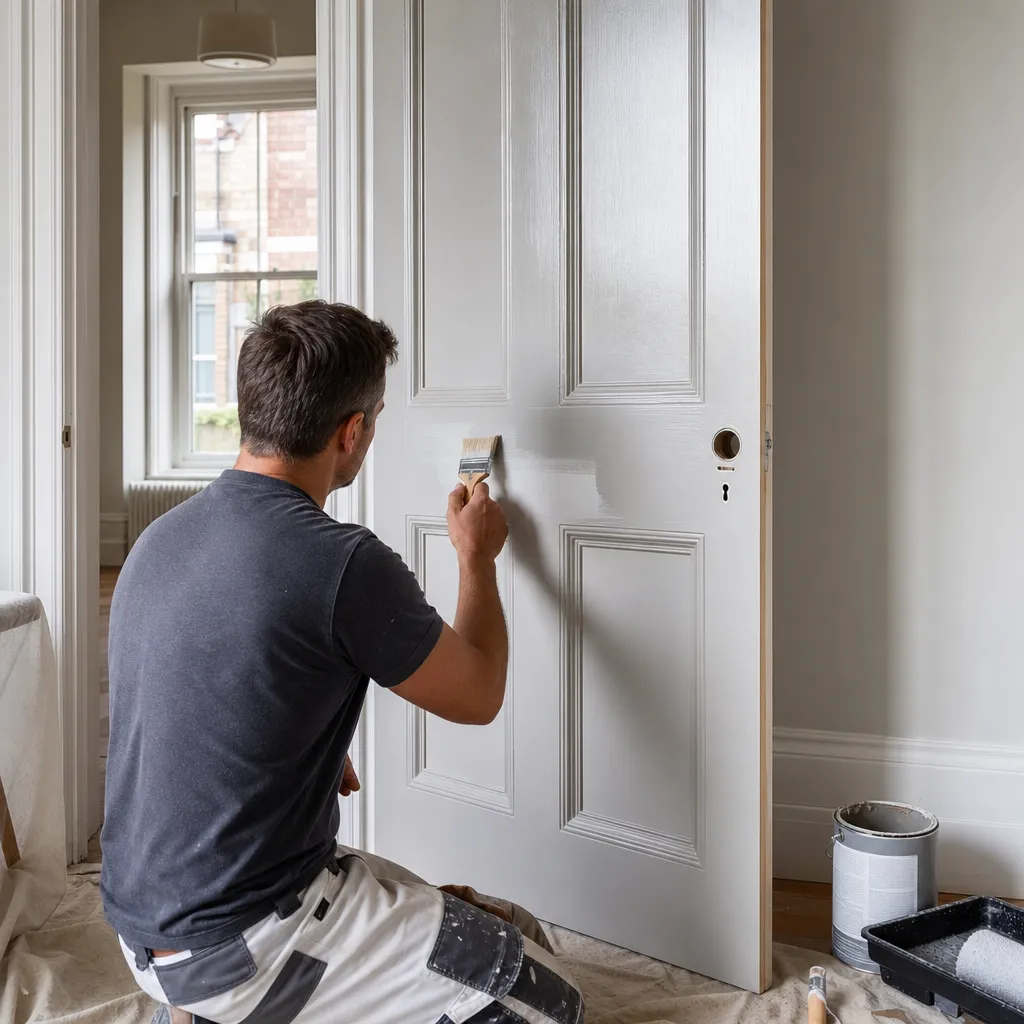
Painting Interior Doors: Preparation and Technique
Painting interior doors well depends on preparation rather than paint choice.
 Improvement & Build
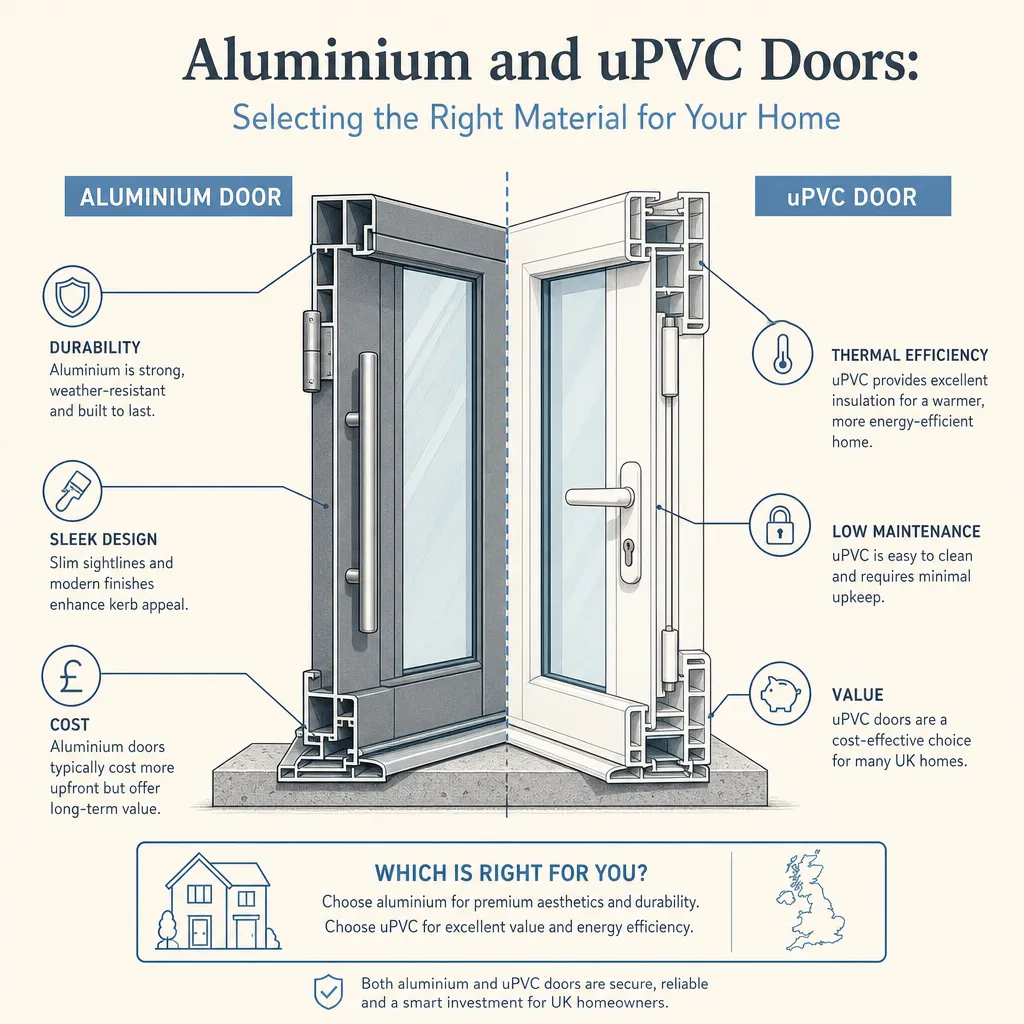
Aluminium and uPVC Doors: Selecting the Right Material for Your Home
uPVC doors are lower-cost and low-maintenance, making them a practical choice for most UK homes.
 Improvement & Build
Maximising Value Through Strategic Home Improvement Projects
In the UK, loft conversions and kitchen extensions tend to deliver the strongest return on investment, with loft conversions potentially adding around 20% to property value according to Nationwide data.