When to Part Ways With a Contractor: Red Flags and Next Steps
By Housey · Last reviewed 7th of May 2026

When to Part Ways With a Contractor: Red Flags and Next Steps
Most homeowners only consider dismissing a contractor once a project is already going wrong — money has been spent, materials are on site, and the pressure to push through can feel overwhelming. In England and Wales, the legal framework for ending a building contract gives homeowners real protections, but only if you act carefully and document everything. Whether you are mid-way through an extension, a loft conversion, or a roof repair, understanding when and how to end the relationship is as important as the work itself.
Key points
- Most standard JCT Minor Works or FMB contracts include a termination clause triggered by prolonged abandonment, insolvency, or persistent breach — read yours before acting.
- You are entitled to withhold payment only for work not yet carried out or work that is demonstrably defective and documented in writing.
- Issue a formal written notice giving the contractor a defined remedy period — usually 7–14 days — before termination, as verbal warnings rarely carry legal weight.
- Small Claims Court handles disputes up to £10,000 in England and Wales; above that, the county court or adjudication under the Housing Grants, Construction and Regeneration Act 1996 applies.
- Building Regulations completion certificates follow the project, not the contractor — a replacement contractor can continue notifiable work but must notify the building control body of the change in principal contractor.
Red flags that suggest it is time to act
Not every problem on a building project warrants dismissal. A contractor running two weeks late due to a material supply delay is a very different situation from one who has stopped returning calls and left scaffolding up for three months. The following are genuine warning signs that the relationship may be beyond repair.
Abandonment and persistent no-shows
If the contractor has been absent from site for more than five consecutive working days without explanation, has stopped responding to calls and emails, or has sent an unsanctioned sub-contractor without your agreement, you may be dealing with effective abandonment. Document every failed contact attempt with timestamps and the method used — email read receipts, voicemail logs, or delivery confirmations.
Defective or non-compliant work
Poor workmanship is the most common source of contractor disputes in residential building projects. Specific warning signs include:
- Brickwork with cracked or inconsistent mortar joints that do not match the surrounding structure
- Flat roofing laid without adequate falls, causing visible ponding water after rainfall
- Electrical or plumbing installations that fail a formal test or inspection
- Structural elements that do not match the approved building regulations drawings
Photograph defects from multiple angles with a known reference object in frame. If defects relate to building regulations compliance, contact your building control officer — they have authority to require remediation independently of any contractual dispute between you and the contractor.
Financial warning signs
Be alert if a contractor asks for large upfront payments beyond a reasonable deposit (10–25% is typical for most residential projects), requests cash with no invoice or receipt, cannot account for materials claimed as purchased, or presents invoices that do not align with agreed payment stages. The Federation of Master Builders recommends stage payments tied to measurable milestones rather than time-based tranches.
Persistent communication failure
A contractor who does not respond to reasonable requests for a programme update, refuses to provide invoices promptly, or repeatedly misses pre-arranged site meetings is creating a pattern of conduct that will matter if the dispute escalates. Keep a written log of every unanswered communication, noting the date, method, and your message.
Assessing the situation: a decision guide
Before taking action, identify which position you are in:
- Work has paused but the contractor is still communicating → Issue a written request for a revised programme with a specific completion deadline. Allow 7 days for a response before further action.
- Work is ongoing but quality is consistently poor → Document defects in writing and issue a formal defects notice. Allow a remedy period of 7–14 days depending on the severity of the defect.
- The contractor has abandoned site with no communication → Issue a written notice of default immediately. If there is no response within 14 days, most standard contracts allow you to engage a replacement contractor.
- The contractor has become insolvent or dissolved their company → Seek legal advice promptly. You may need to claim against any bond, insurance policy, or — in some circumstances — a director personally. Check the company's current status on Companies House.
- You have lost confidence but there is no specific breach → This is harder to act on without a contract clause. Consider mediation or formal adjudication before terminating unilaterally, as premature termination without grounds can expose you to a counterclaim.
How to formally end the relationship
Follow these steps to protect your legal position:
- Review your contract. Identify the termination clause and any notice requirements. JCT Minor Works contracts require written notice citing the specific breach and giving a defined remedy period.
- Issue a written notice of default. Send by recorded delivery and email simultaneously. State the specific breach — not a general complaint — the remedy required, and the deadline. Keep the tone factual.
- Allow the remedy period. If the contractor remedies the breach within the stated period, the notice lapses. If they do not, you may proceed to termination.
- Issue a formal termination notice. Again send by recorded delivery and email. State that the contract is terminated as of the date of the notice. Do not permit further site access without written agreement.
- Secure the site. Change any access codes or padlocks. Prepare a dated, photographed inventory of all materials and plant left on site.
- Commission an independent condition report. Before engaging a replacement, ask an independent surveyor or project manager to document the current state of the work. This is essential evidence for any financial claim against the outgoing contractor.
What to do about money owed and defective work
Withholding payment
You may retain payment for work not yet completed and for the reasonable estimated cost of remedying documented defects. You should not withhold payment for completed work that you have accepted unless a specific, documented defect exists. Blanket non-payment without clear justification is likely to weaken your position in any subsequent legal proceedings.
Recovering costs
- Up to £10,000 — Small Claims Court in England and Wales. Court fees range from £35 to £455 depending on claim value. Most residential contractor disputes are straightforward enough to pursue without legal representation.
- £10,001–£100,000 — County court fast-track. Legal representation is advisable at this level.
- Construction contracts meeting the statutory criteria — Adjudication under the Housing Grants, Construction and Regeneration Act 1996 provides a binding decision within 28 days and is available regardless of the dispute value.
Citizens Advice provides free guidance on the Small Claims process and current court fees.
What to ask before instructing a replacement contractor
Before accepting any quote for remediation or completion work, ask the prospective contractor:
- Can you provide references from at least two comparable completed projects in the last 12 months?
- Are you registered with the FMB, NFRC, or another recognised trade body, and is that registration current and verifiable?
- Will you provide a written programme with payment stages tied to specific measurable milestones?
- What employers' liability and public liability insurance do you hold, and can I see the certificates?
- Who will be physically on site each day — directly employed workers or sub-contractors?
- Have you taken over a project mid-way from another contractor before, and how did you handle the transition?
- Will you notify the building control officer of the change in principal contractor before starting work?
When to get professional help
A solicitor or construction law specialist should be involved if the disputed amount exceeds £10,000, if the outgoing contractor is threatening legal action against you, or if the work involves structural elements, building regulations compliance, or fire safety. If materials or a bond may be at stake following contractor insolvency, take legal advice before removing anything from site or making any payment.
For defects that may affect structural safety or building regulations compliance, a RICS-accredited surveyor or structural engineer should inspect the work before any replacement contractor begins.
How Housey can help
If you need to find a replacement contractor after a project breaks down, Housey helps you request quotes from vetted UK professionals with verifiable credentials. Compare approaches and profiles from extension builders, roofers, and loft conversion companies working in your area.
Frequently asked questions
Can I dismiss a contractor without a written contract?
Yes, but it is harder. Without a written contract you are dealing with an implied agreement and the terms are far less clear. Document every communication with timestamps, keep records of all payments and receipts, and photograph the work at regular intervals. For disputed amounts over £1,000, seek advice from a solicitor or Citizens Advice before taking formal steps.
What happens to materials the contractor left on site?
Materials you have paid for — verifiable by invoice — generally belong to you. Materials supplied by the contractor but not yet fixed into the building may remain their property. Prepare a written inventory on the day of termination, photographed and witnessed if possible. Do not dispose of any materials before ownership is established, as this can complicate any legal claim.
Can a replacement contractor obtain a building regulations completion certificate?
Yes. A new contractor can continue notifiable building work under an existing building control application, but they must notify the building control body of the change. The officer assesses all work as part of the final inspection. Keep all documentation from the original application, including any interim inspection approvals or action notes from the building control officer.
How long does a small claims case take in England and Wales?
Most straightforward small claims are heard within 4–6 months of filing, though this varies by court and case complexity. You can submit a claim online via GOV.UK Money Claim Online for amounts up to £100,000. For sums under £10,000, you do not need a solicitor, though Citizens Advice can help you prepare your evidence and documentation.
What if the contractor is a sole trader who has disappeared?
Send recorded delivery correspondence to their last known business address and check any trade body registration. Citizens Advice can advise on tracing and enforcement options. If the amount is significant, a solicitor specialising in construction disputes is worth consulting. Keep all invoices, bank transfer records, and communications — these are essential evidence if you pursue a court claim.
Sources and further reading
- Contracts and disputes guidance — Federation of Master Builders
- Make a court claim for money — HM Courts & Tribunals Service
- Housing Grants, Construction and Regeneration Act 1996 — legislation.gov.uk
- Taking a case to court — Citizens Advice
- JCT Minor Works Building Contract — Joint Contracts Tribunal
Useful next reads
 Improvement & Build
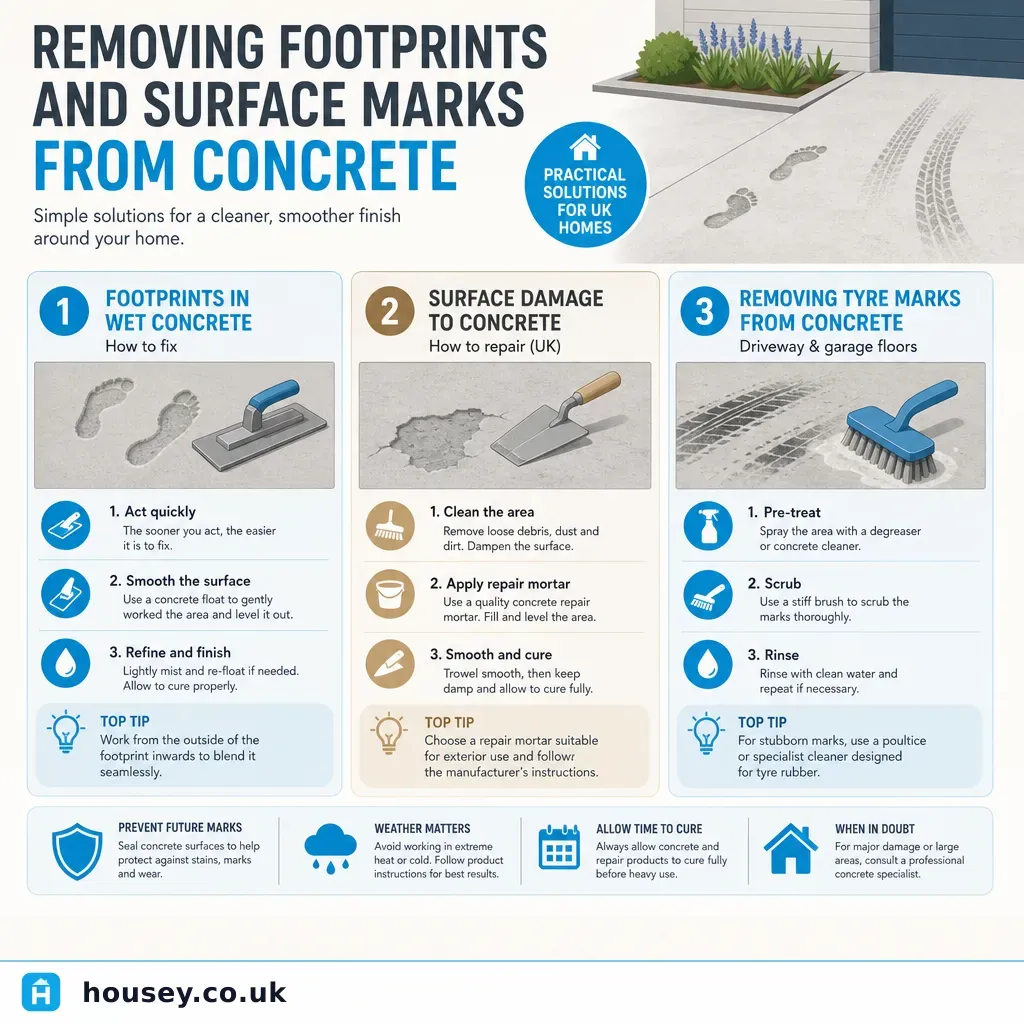
Removing Footprints and Surface Marks from Concrete
Footprints and marks in fresh concrete under 4–6 hours old can often be re-floated or trowelled smooth by a skilled finisher before initial set occurs.
 Improvement & Build
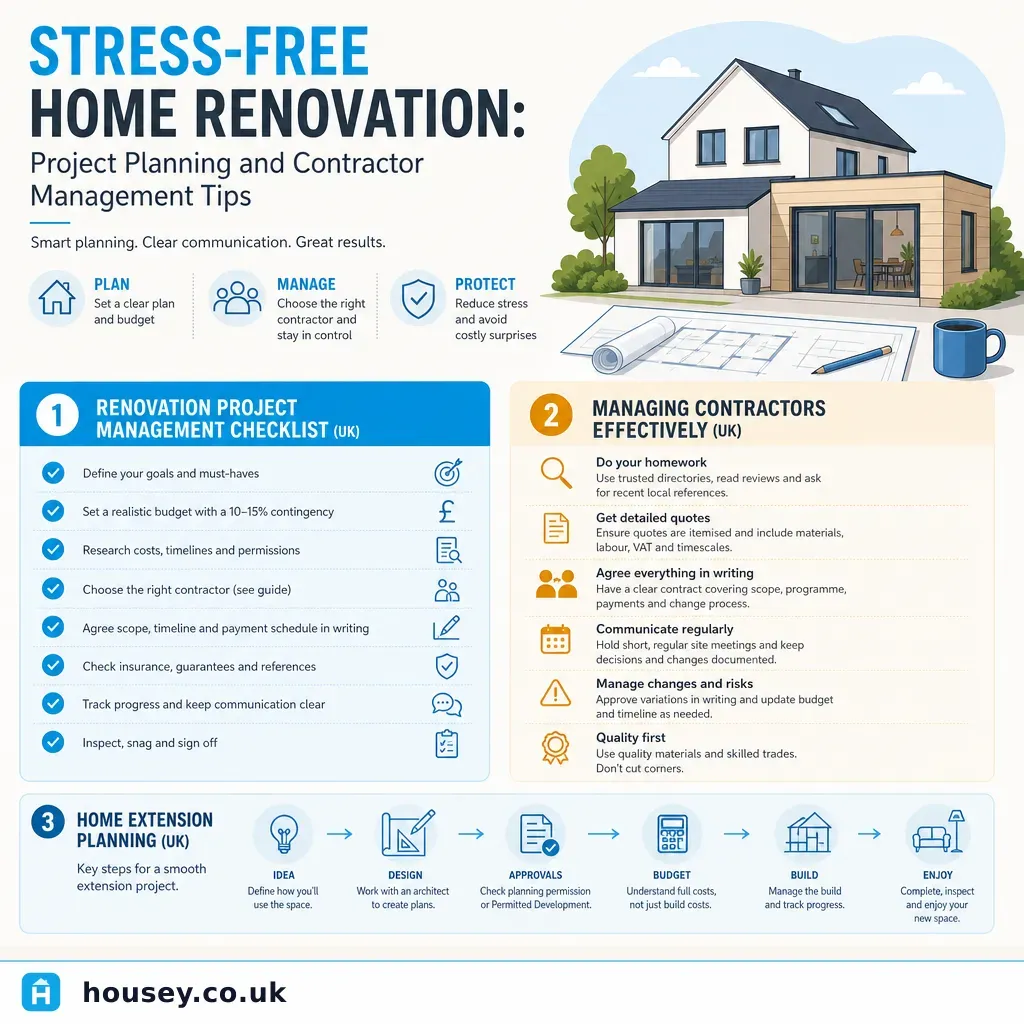
Stress-Free Home Renovation: Project Planning and Contractor Management Tips
The home renovations that stay on budget and on time share one characteristic: clear upfront planning.
 Improvement & Build
Window installation checklist for homeowners
Before installation, confirm your installer is registered with FENSA or CERTASS and can self-certify Building Regulations compliance.
 Improvement & Build
When a contractor isn't delivering: what to do
If a contractor is not delivering, start by documenting the issue in writing and setting a reasonable deadline for a response.
 Improvement & Build
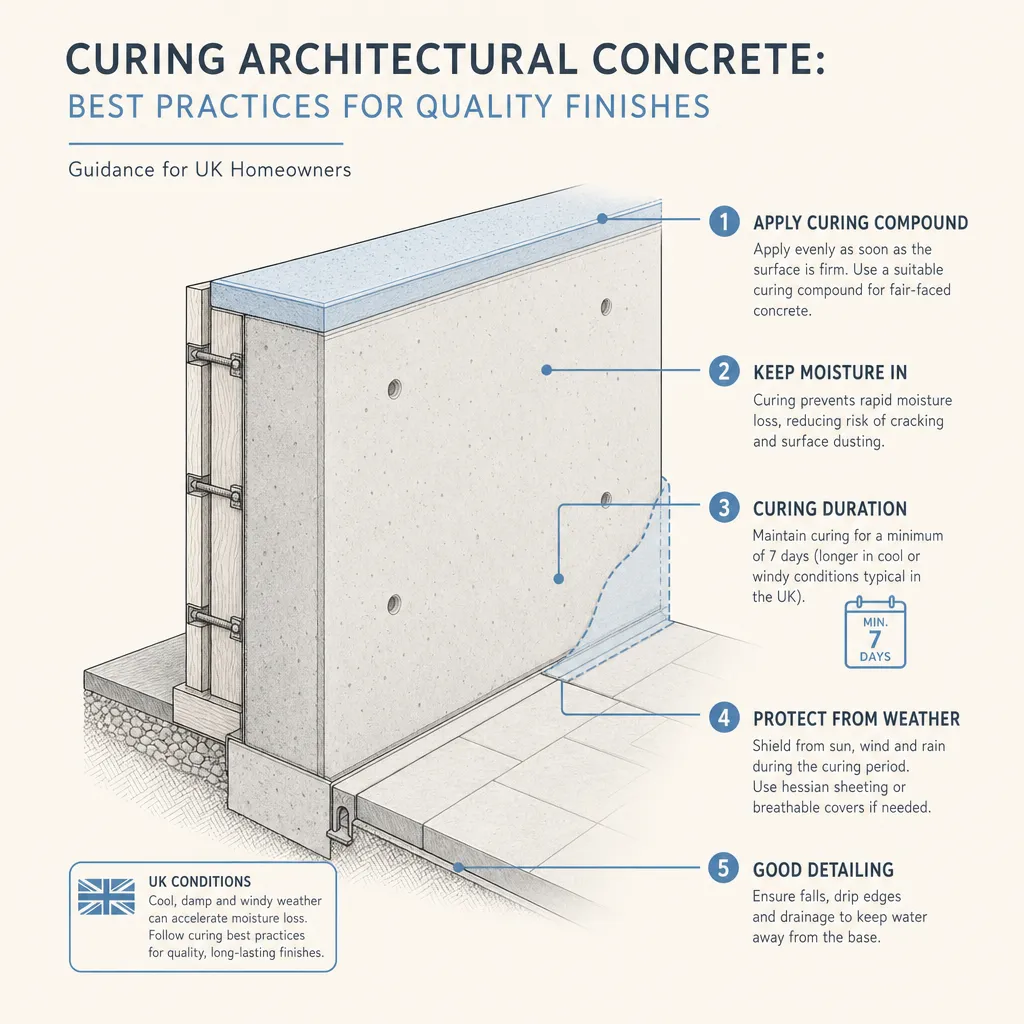
Curing Architectural Concrete: Best Practices for Quality Finishes
Architectural concrete curing requires maintaining moisture and temperature for a minimum of seven days after casting.