Which Household Appliances Consume the Most Energy?
By Housey · Last reviewed 30th of May 2026
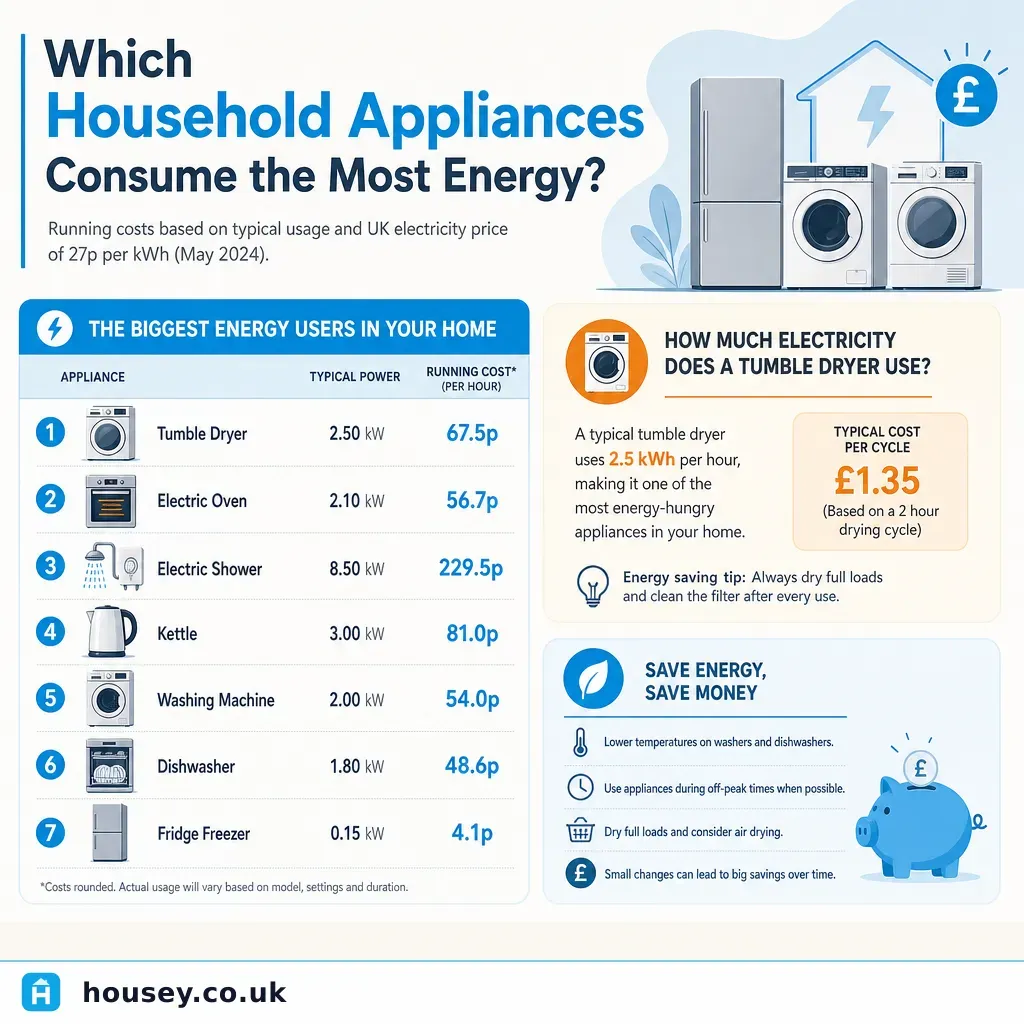
Which Household Appliances Consume the Most Energy?
Every UK home contains dozens of electrical devices, but energy bills are rarely driven equally by all of them. Understanding which appliances draw the most power — and how usage patterns multiply that draw into significant annual costs — is the first step to identifying where changes will make a genuine difference to what you pay.
Key points
- A tumble dryer typically uses 4–5 kWh per full cycle, costing approximately £1.00–£1.20 per use at an indicative rate of 24p/kWh.
- A fridge-freezer runs continuously and typically consumes 300–500 kWh per year; models manufactured before 2012 can use considerably more.
- Electric showers draw 7–10.5 kW instantaneously — among the highest power draws of any appliance in a typical UK home.
- Washing at 30°C rather than 60°C uses roughly 60% less energy for the same load; modern biological detergents are formulated to work effectively at lower temperatures.
- Appliances left on standby can account for 9–16% of a household's electricity bill, equivalent to £35–£55 per year for many households, according to the Energy Saving Trust.
How power ratings translate to running costs
An appliance's running cost depends on its wattage and how frequently and how long it is used. The basic calculation is:
kWh used = Watts ÷ 1,000 × hours used
At an indicative unit rate of 24p/kWh (Ofgem price cap, spring 2026 — always verify the current rate), a 2,500 W tumble dryer running for two hours costs approximately 120p.
Indicative UK running costs, last reviewed 2026-05-30. Electricity unit rates change with each Ofgem quarterly price cap revision. Actual consumption varies by model, age, and usage habits.
Appliance | Typical wattage | Estimated annual use | Approx. annual cost at 24p/kWh |
|---|---|---|---|
Tumble dryer | 2,000–2,500 W | 150 cycles × 2 hrs | £144–£180 |
Fridge-freezer | 100–200 W average | Continuous | £72–£140 |
Dishwasher | 1,200–1,800 W | 300 cycles × 1.5 hrs | £130–£194 |
Electric oven | 2,000–2,500 W | ~300 hrs/year | £144–£180 |
Washing machine | 1,800–2,200 W | 200 cycles × 45 min active | £27–£40 |
Electric shower (9 kW) | 9,000 W | 365 × 8 min | ~£105 |
Kettle | 2,000–3,000 W | 4 uses/day × 3 min | £35–£53 |
Large OLED TV (65 in) | 100–200 W | 4 hrs/day | £35–£70 |
Broadband router | 8–12 W | 24 hrs/day | £17–£25 |
The hidden cost of standby power
Many UK households leave televisions, games consoles, set-top boxes, and smart home devices in standby or idle mode continuously. The Energy Saving Trust estimates this costs the average household £35–£55 per year.
The highest standby offenders in most homes are:
- Cable and satellite receivers (Sky, Virgin): 8–17 W in standby
- Games consoles in instant-on mode: 70–150 W
- Washing machines and dishwashers with digital displays: 2–5 W continuously
- Phone and laptop chargers left plugged in: 0.25–2 W each
Practical step: Smart plugs with scheduling (available from around £10–£15 each) can cut standby power to entertainment systems overnight while keeping security systems and routers active. This typically costs nothing to run but requires a small upfront purchase.
Wet appliances: where habits matter as much as the appliance
Washing machines, dishwashers, and tumble dryers collectively represent a large share of household electricity consumption. The choice of programme and load size can reduce energy use considerably:
- Temperature: A 30°C wash uses roughly 60% less energy than a 60°C wash for the same load weight.
- Load size: A half-empty washing machine uses nearly as much energy as a full one. Waiting for a full load reduces cost per kilogram of laundry washed.
- Eco modes on dishwashers: Eco programmes typically use less electricity and water despite taking longer; they are generally the most cost-effective option for lightly soiled loads.
- Tumble dryer spin speed: A higher spin speed (1,400 rpm vs 1,000 rpm) extracts more water before drying, reducing drying time and total energy use.
Heating hot water: a major but often overlooked driver
In homes relying on an electric immersion heater, hot water can be one of the largest contributors to the electricity bill. A 3 kW immersion heater used for two hours per day would cost approximately £1.44 per day — around £525 per year — at 24p/kWh.
Options to reduce immersion heater costs include:
- Using an off-peak Economy 7 or Economy 10 electricity tariff to heat water overnight at a lower unit rate
- Installing a solar PV diverter if you have solar panels, which redirects surplus generation to heat water rather than exporting it at a lower export rate
Which appliances are worth upgrading?
- Replace if over ten years old: Tumble dryers and fridge-freezers have improved most significantly. An A-rated replacement fridge-freezer may use 50–60% less than a pre-2011 model, saving £50–£85 per year.
- Address standby first: Zero-cost or very low-cost behavioural changes often yield a better return than replacing a relatively modern appliance.
- Consider a heat pump tumble dryer: These use roughly 50–60% less energy per cycle than conventional vented or condenser dryers. The upfront premium typically pays back within three to five years for moderate use.
- Do not rush to replace appliances under seven years old: For most households, the embodied energy and purchase cost of a replacement outweighs the marginal running cost saving within a reasonable payback period.
Red flags that your appliance energy use may be unusually high
Check the following if your electricity bill has increased unexpectedly without a change in usage patterns:
- Fridge-freezer running almost continuously: If the compressor rarely switches off, the door seals may have failed or the condenser coils may need cleaning. A failing unit can double its normal energy consumption.
- High base load on smart meter overnight: If your in-home display shows more than 0.4–0.5 kW when no appliances are deliberately running, something is drawing unexpected power — commonly a faulty immersion heater thermostat, a tumble dryer left on a timer, or a central heating pump running when it should not be.
- Tumble dryer taking longer than usual to dry a load: A blocked lint filter or exhaust vent forces the motor and heating element to work harder and for longer than normal.
- Dishwasher programme cycling repeatedly without completing: A failing heating element may cause the machine to run indefinitely, dramatically increasing energy and water use.
When to get professional help
Most appliance energy issues can be addressed through behavioural change or appliance replacement. However, seek professional input if:
- Your smart meter shows a persistent high base load that remains after turning off all known appliances — this may indicate a wiring fault requiring inspection by an NICEIC or NAPIT-registered electrician.
- You suspect your immersion heater thermostat is faulty — an incorrectly set or stuck thermostat can cause the element to run continuously, increasing both cost and risk.
- You are planning a major kitchen or utility room refit — a qualified designer or energy assessor can advise on appliance layout, extract ventilation, and efficiency optimisation before work begins.
How Housey can help
Housey connects homeowners with qualified energy professionals who can assess your home's overall energy performance and identify the highest-impact improvements. Browse the Housey services directory to find accredited energy assessors and retrofit advisers in your area.
Frequently asked questions
Which single appliance uses the most electricity in a typical UK home?
In terms of continuous annual consumption, fridge-freezers rank highly because they run around the clock, typically using 300–500 kWh per year. In terms of instantaneous power draw, electric showers (7–10.5 kW) and immersion heaters (3 kW) are the highest-rated appliances in most homes. Tumble dryers are among the most expensive per use. The answer depends on your household's specific usage patterns.
How much does it cost to run a tumble dryer in the UK?
A standard 2,000–2,500 W tumble dryer running for approximately two hours per cycle costs around £0.96–£1.20 at an indicative rate of 24p/kWh (last reviewed May 2026). Running it three times per week amounts to roughly £150–£187 per year. A heat pump tumble dryer uses 50–60% less energy for equivalent drying, cutting annual costs to approximately £60–£75 for the same usage frequency.
Do old appliances really cost significantly more to run?
In many cases, yes. A fridge-freezer from the early 2010s may use 400–600 kWh per year; a modern A-rated replacement often uses 100–200 kWh — a saving of £72–£96 per year at current indicative rates. Over a ten-year replacement cycle, the running cost savings can comfortably offset the purchase price of a new, efficient appliance, particularly for units that run continuously.
What is the quickest way to reduce electricity bills without buying new appliances?
The Energy Saving Trust suggests that washing at 30°C, running dishwashers and washing machines on full loads, turning off standby devices at the socket, and boiling only the water you need in the kettle can collectively save a typical household £50–£100 per year at current electricity rates — all at negligible or zero upfront cost.
Sources and further reading
- Energy saving tips at home — Energy Saving Trust
- Energy price cap: what it means for you — Ofgem
- Energy consumption in the UK — Department for Energy Security and Net Zero
- Check energy labels — GOV.UK
Useful next reads
 Energy & Retrofit
HVAC System Upgrades: Cost Savings for Older Properties
Upgrading heating and ventilation systems in an older UK home can significantly reduce energy bills, but the best approach depends on the property's insulation, construction, and heat demand.
 Energy & Retrofit
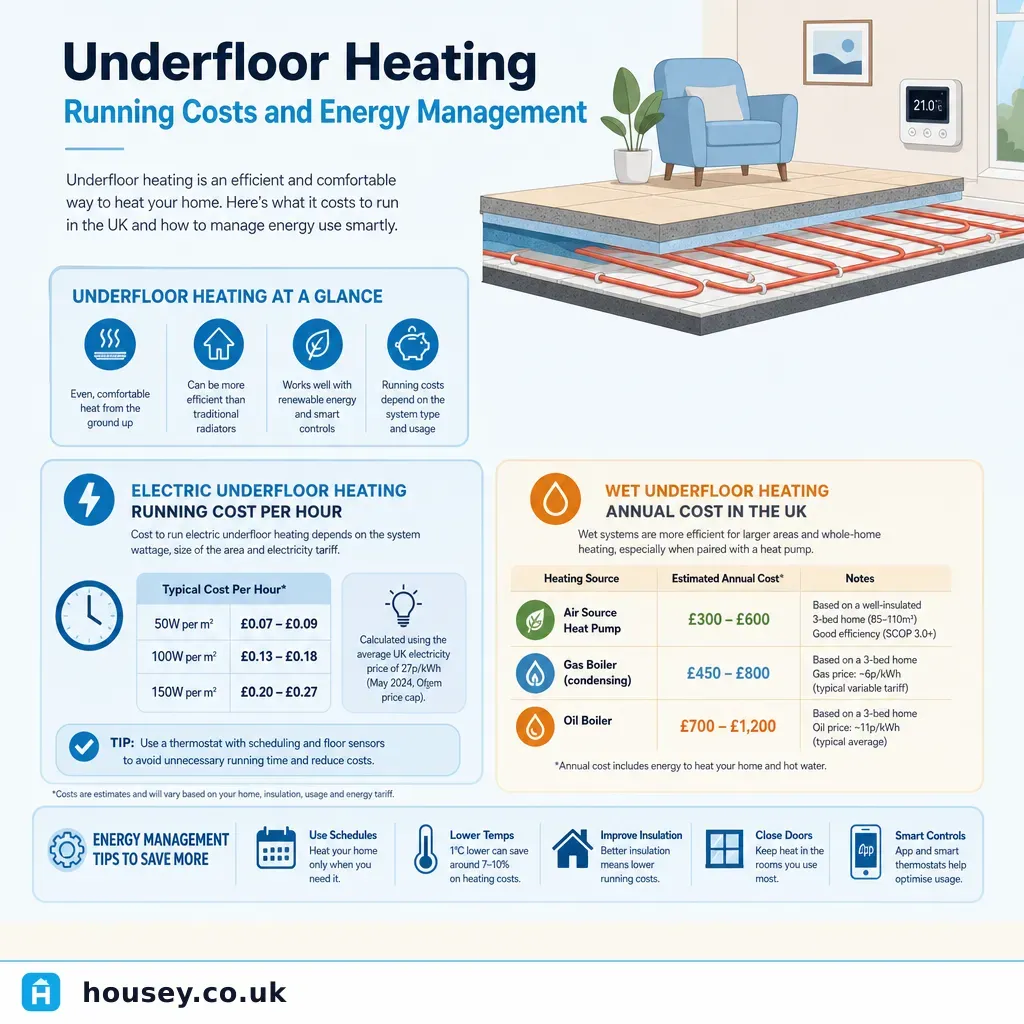
Underfloor Heating Running Costs and Energy Management
Underfloor heating running costs depend on system type, heat source, insulation, and controls.
 Energy & Retrofit
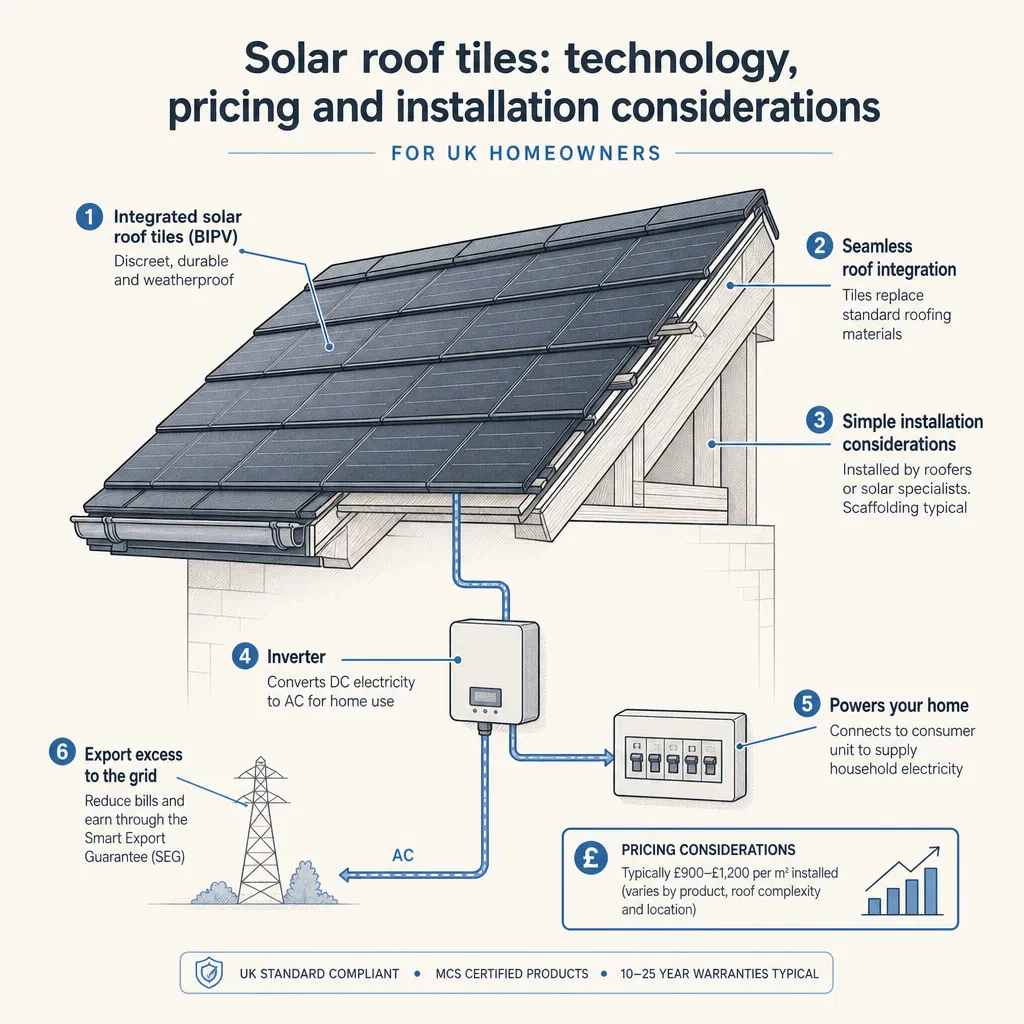
Solar roof tiles: technology, pricing and installation considerations
Solar roof tiles (BIPV tiles) replace your conventional roof covering while generating electricity.
 Energy & Retrofit
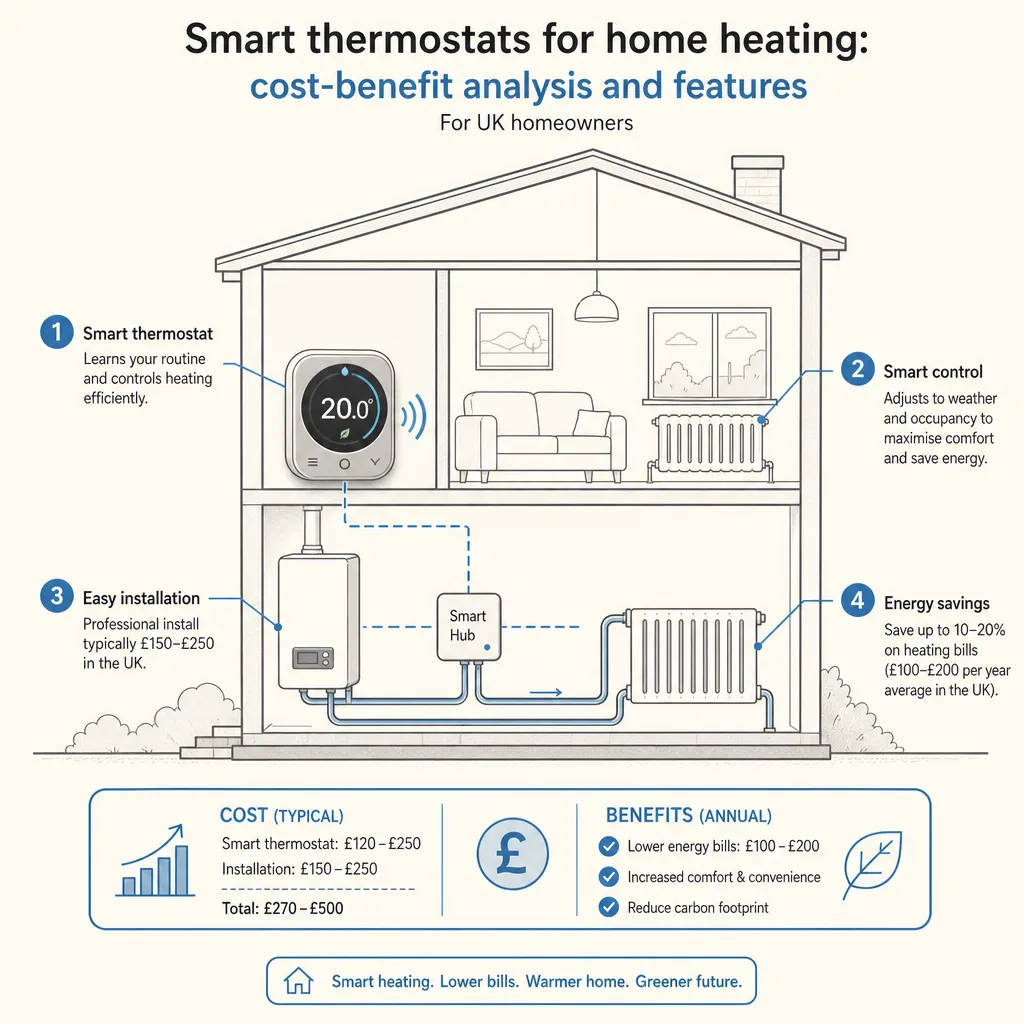
Smart thermostats for home heating: cost-benefit analysis and features
A smart thermostat typically costs £150–£350 installed and can reduce heating bills by 15–25% annually, according to the Energy Saving Trust.
 Energy & Retrofit
Are solar panels worth the investment for your property?
Solar panels can be a worthwhile investment for many UK homeowners, with typical payback periods of 10–15 years and ongoing income from the Smart Export Guarantee.