Whitetopping your residential driveway: options, costs and considerations
By Housey · Last reviewed 11th of May 2026
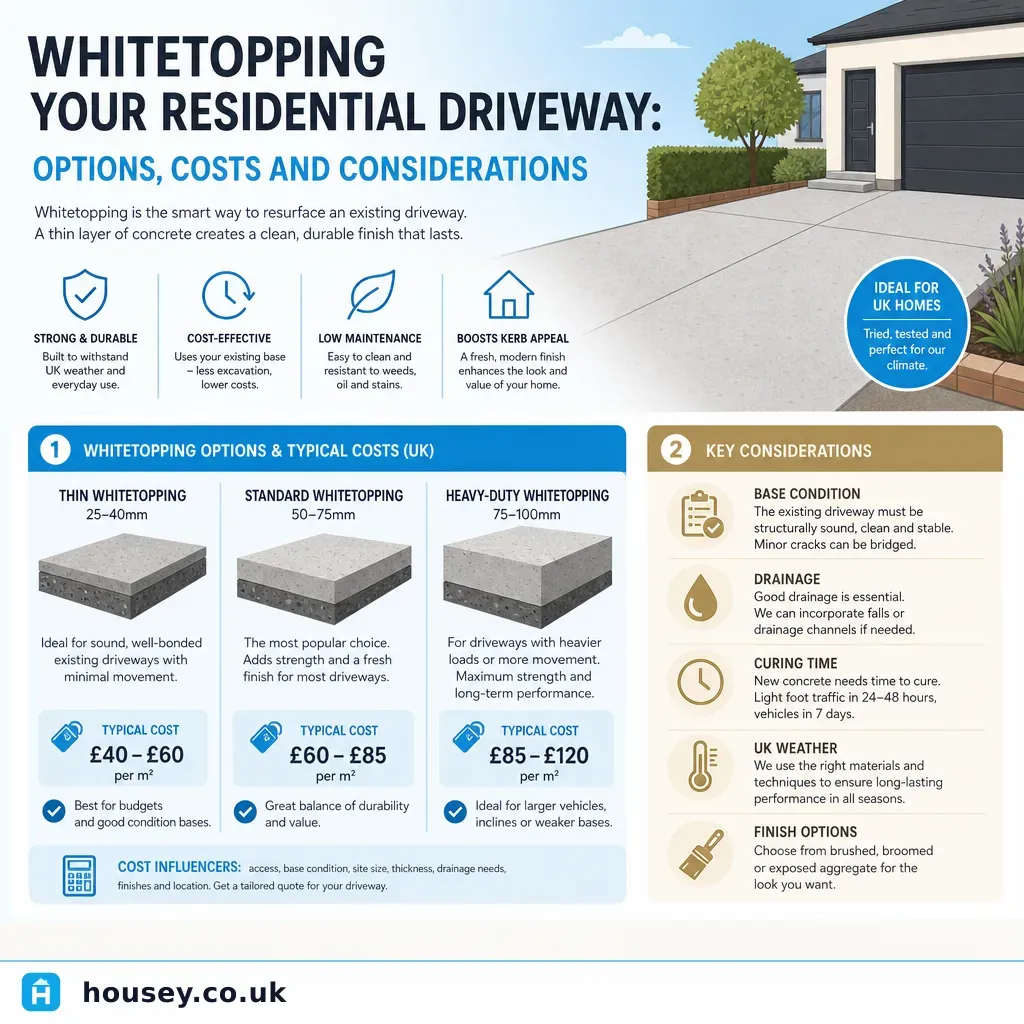
Whitetopping your residential driveway: options, costs and considerations
Homeowners looking to improve a tired driveway have more options than simply excavating and starting from scratch. Whitetopping — overlaying an existing tarmac surface with a new concrete layer — has moved from highway engineering into residential use and can offer a durable, cost-effective route to a fresh driveway without full excavation. The decision usually arises when existing tarmac has become patchy, faded, or potholed, but the sub-base beneath remains structurally sound.
Key points
- Thin whitetopping for residential use typically involves a 75–100 mm Portland cement concrete (PCC) overlay bonded directly to an existing tarmac surface.
- Under the Town and Country Planning (General Permitted Development) (England) Order 2008, any new driveway covering more than 5 m² must use permeable materials or drain to a lawn, border, or soakaway — concrete can comply if these drainage requirements are met.
- The existing tarmac substrate must be structurally sound, free from standing water, and not cracked to failure before a concrete overlay is viable.
- Concrete driveways require a 48–72 hour curing period before vehicle use; full structural strength is typically reached after 28 days.
- Control joints are typically spaced at 1.5–2 × the slab thickness; for a 100 mm overlay, this means joints at approximately 1.5–2 m intervals to manage shrinkage cracking.
What is whitetopping?
Whitetopping is the application of a Portland cement concrete overlay over an existing asphalt (tarmac) surface. In highway engineering it is an established rehabilitation technique. For residential driveways, thin whitetopping (75–125 mm bonded overlay) is the most practical approach.
The concrete bonds to the asphalt beneath, redistributing load and creating a harder, more UV-stable surface. Compared to a full new concrete driveway, it reduces excavation costs, spoil disposal, and sub-base preparation time — provided the existing surface is suitable.
Is your existing driveway suitable?
Not every tarmac driveway is a good candidate. A driveway installer should assess the existing surface before any work begins.
Existing condition | Suitability for whitetopping | Recommended action |
|---|---|---|
Sound tarmac, surface cracking only | Good | Clean, prime, and overlay |
Alligator or fatigue cracking throughout | Poor — indicates sub-base failure | Investigate sub-base; full remove-and-replace likely needed |
Standing water after rain | Poor — drainage issue must be resolved first | Improve drainage or redesign layout before overlay |
Tarmac layer under 50 mm on a marginal base | Marginal — may need reinforcement or increased overlay depth | Contractor structural assessment advised |
Existing concrete driveway | Sometimes suitable for ultra-thin resurfacing | Specialist bonding agent and careful surface preparation required |
Permitted development and planning rules
Under the Town and Country Planning (General Permitted Development) (England) Order 2008, laying a new driveway or hardstanding of more than 5 m² in front of a dwelling using non-permeable materials, without adequate drainage, requires planning permission. This applies whether you are installing a new surface or resurfacing an existing one.
Concrete can comply if:
- It is laid as a permeable or open-textured surface that allows water through, or
- Surface water drains to a lawn, border, or soakaway rather than to the public highway or adopted drains.
If your property is in a conservation area, is listed, or has permitted development rights removed by an Article 4 direction, contact your local planning authority before any work starts. In Wales, Scotland, and Northern Ireland, separate planning frameworks apply — check with the relevant authority.
Whitetopping compared to other driveway options
Option | Indicative cost per m² (excl. VAT) | Typical durability | Disruption | Best for |
|---|---|---|---|---|
Thin whitetopping (75–100 mm concrete over tarmac) | £80–£140 | 20–30 years | Low — no full excavation | Sound existing tarmac, homeowners wanting long-term durability |
Full concrete replacement | £100–£160 | 30–40 years | High — excavation and disposal | Failed sub-base or new layout required |
Tarmac resurfacing (overlay) | £40–£80 | 10–15 years | Low | Budget option on a sound existing base |
Block paving on new base | £80–£150 | 20–30 years | High | Drainage compliance, decorative finish, flexible individual repair |
Resin-bound surface on existing tarmac | £60–£120 | 15–25 years | Low | Permeable finish, decorative appearance |
Indicative UK costs, last reviewed 2026-05-11. Prices vary by region, site access, driveway size, sub-base condition, and contractor. Obtain at least three itemised quotes before committing.
Homeowner checklist before getting quotes
Use this list to prepare before speaking to driveway installers:
Quote comparison template
When requesting quotes from driveway installers, ask each contractor to confirm:
- Scope: Is the quote for overlay only, or does it include sub-base assessment and remediation if required?
- Concrete specification: What mix strength class, overlay depth in mm, and joint spacing are proposed?
- Surface preparation: How will the existing tarmac be cleaned and primed before the overlay is applied?
- Drainage: How will surface water be managed to comply with permitted development requirements?
- Joints: Where will control joints be cut, and how will they be sealed?
- Curing: What curing method and minimum wait time before vehicle use is specified?
- Edging: Are perimeter edge restraints (haunching) included in the price?
- Waste removal: Is disposal of any spoil or arisings included?
- Guarantee: What guarantee covers materials and workmanship, and for how long?
- VAT: Is VAT included in the quoted price?
When to get professional help
Whitetopping is not a suitable DIY project — laying concrete correctly requires the right mix specification, adequate compaction, careful timing, jointing, and curing discipline. Errors in any step can result in surface cracking, delamination, or premature failure. If a site assessment reveals significant sub-base problems, a structural assessment by a qualified civil or structural engineer may be worth commissioning before proceeding with any overlay works.
How Housey can help
Housey connects homeowners with vetted driveway installers who can assess your existing surface, advise on suitability for whitetopping, and provide itemised quotes. Compare offers from local specialists before committing to any driveway project.
Frequently asked questions
Does a whitetopped driveway need planning permission?
Not automatically, but UK permitted development rules on surface drainage apply. If the finished driveway covers more than 5 m² and does not drain to a permeable surface or soakaway, planning permission is required under the Town and Country Planning (GPDO) 2008. A qualified driveway installer should advise on drainage compliance; if in doubt, contact your local planning authority before work begins.
How long does a whitetopped driveway last compared to new tarmac?
A well-laid thin whitetopping overlay on a sound substrate typically lasts 20–30 years, compared with around 10–15 years for a standard tarmac resurfacing. A full new concrete driveway can last 30–40 years or more. Longevity in all cases depends heavily on sub-base condition, drainage, vehicle loading, and quality of installation.
Can whitetopping be applied over a badly cracked driveway?
Not usually without remediation first. Reflective cracking — where existing cracks telegraph through the new overlay — is a known failure mode. Significant cracks should be repaired or stabilised before overlaying. Where cracking reflects sub-base failure, a full excavation and rebuild is likely to give a better long-term outcome than an overlay.
Does whitetopping require edging restraints?
Yes, in almost all residential applications. Concrete shrinks as it cures and requires restraint at the perimeter to prevent movement and edge cracking. Steel or concrete edging haunched into position at the perimeter is standard practice. Confirm that edge restraints are included in any quote you receive before work begins.
Sources and further reading
- Town and Country Planning (General Permitted Development) (England) Order 2008 — legislation.gov.uk
- Planning Portal: do I need permission for a driveway? — Planning Portal
- GOV.UK: permitted development rights for householders — technical guidance — GOV.UK
- The Concrete Society: technical guidance on concrete overlays — The Concrete Society
- CIRIA: sustainable drainage systems guidance — CIRIA
Useful next reads
 Improvement & Build
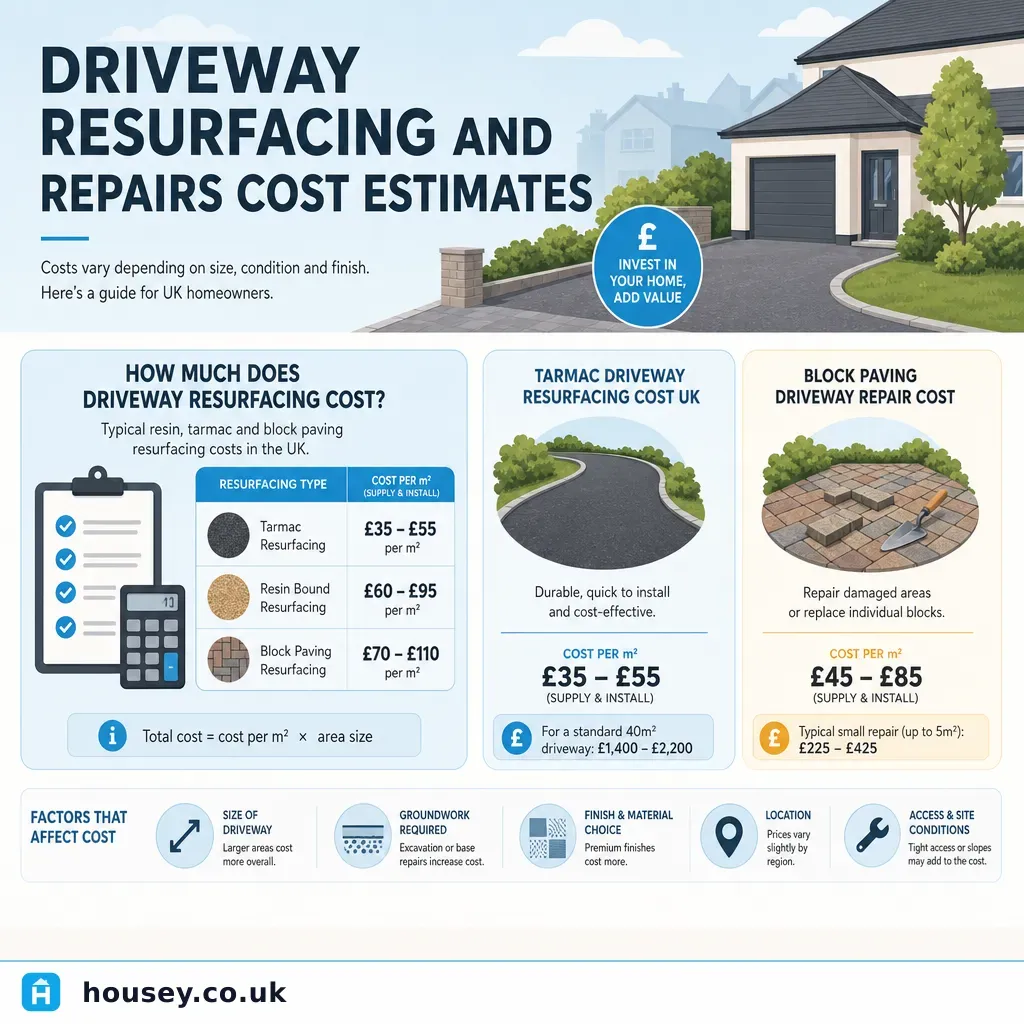
Driveway Resurfacing and Repairs Cost Estimates
Driveway resurfacing in the UK typically costs £1,200–£2,500 for a standard 40m² tarmac surface.
 Improvement & Build
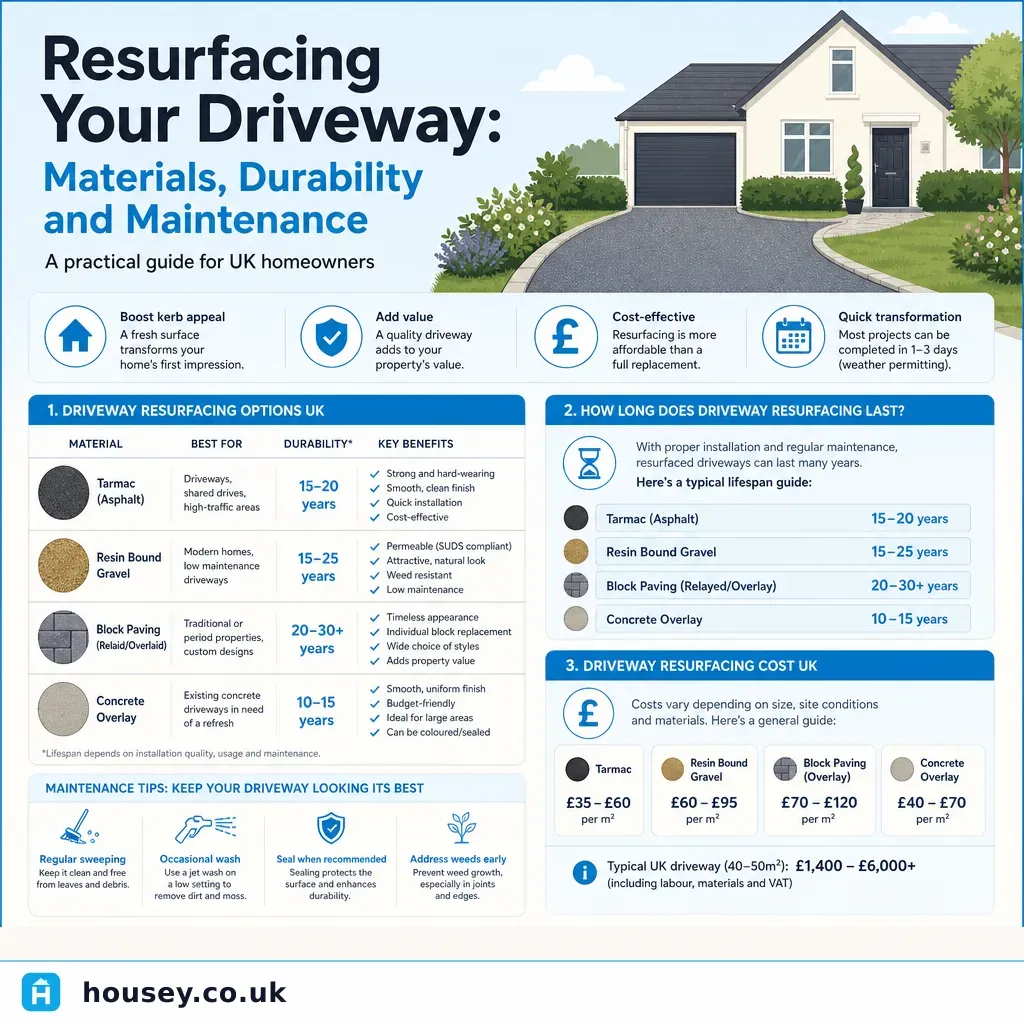
Resurfacing Your Driveway: Materials, Durability and Maintenance
Driveway resurfacing involves overlaying or replacing the existing surface with tarmac, block paving, resin-bound aggregate, gravel, or concrete.
 Improvement & Build
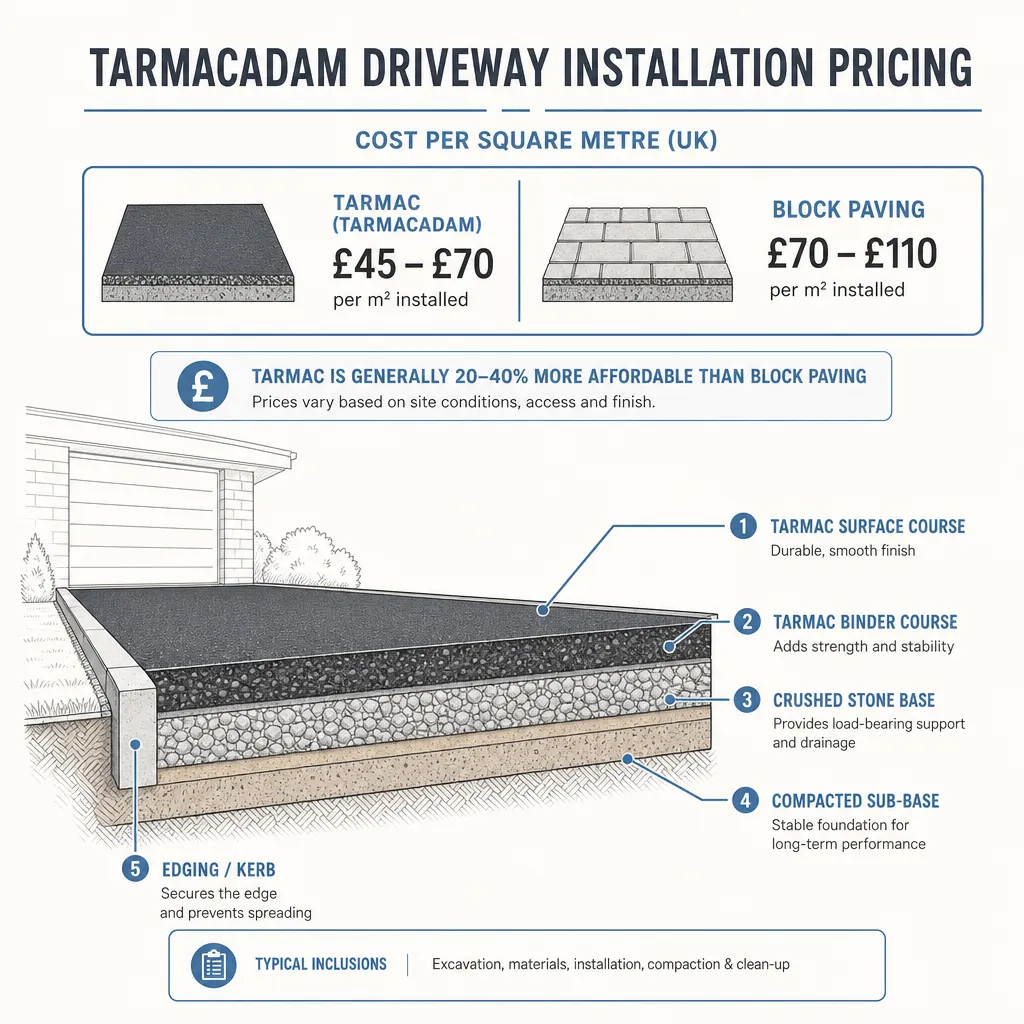
Tarmacadam Driveway Installation Pricing
A tarmacadam driveway in the UK typically costs £50 to £100 or more per square metre for supply and lay, with a typical medium driveway costing £2,500 to £5,500.
 Improvement & Build
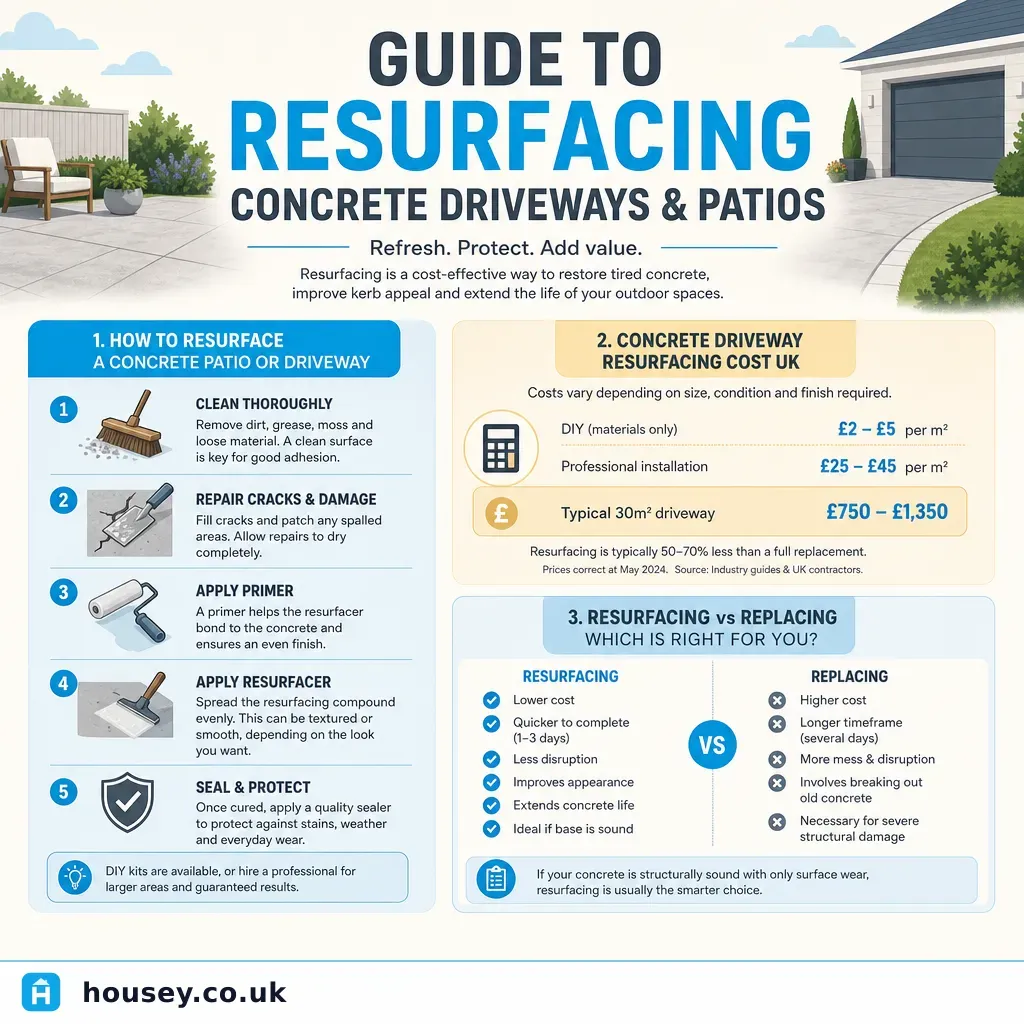
Guide to resurfacing concrete driveways and patios
Concrete driveways and patios can be resurfaced rather than replaced if the existing slab is structurally sound.
 Improvement & Build
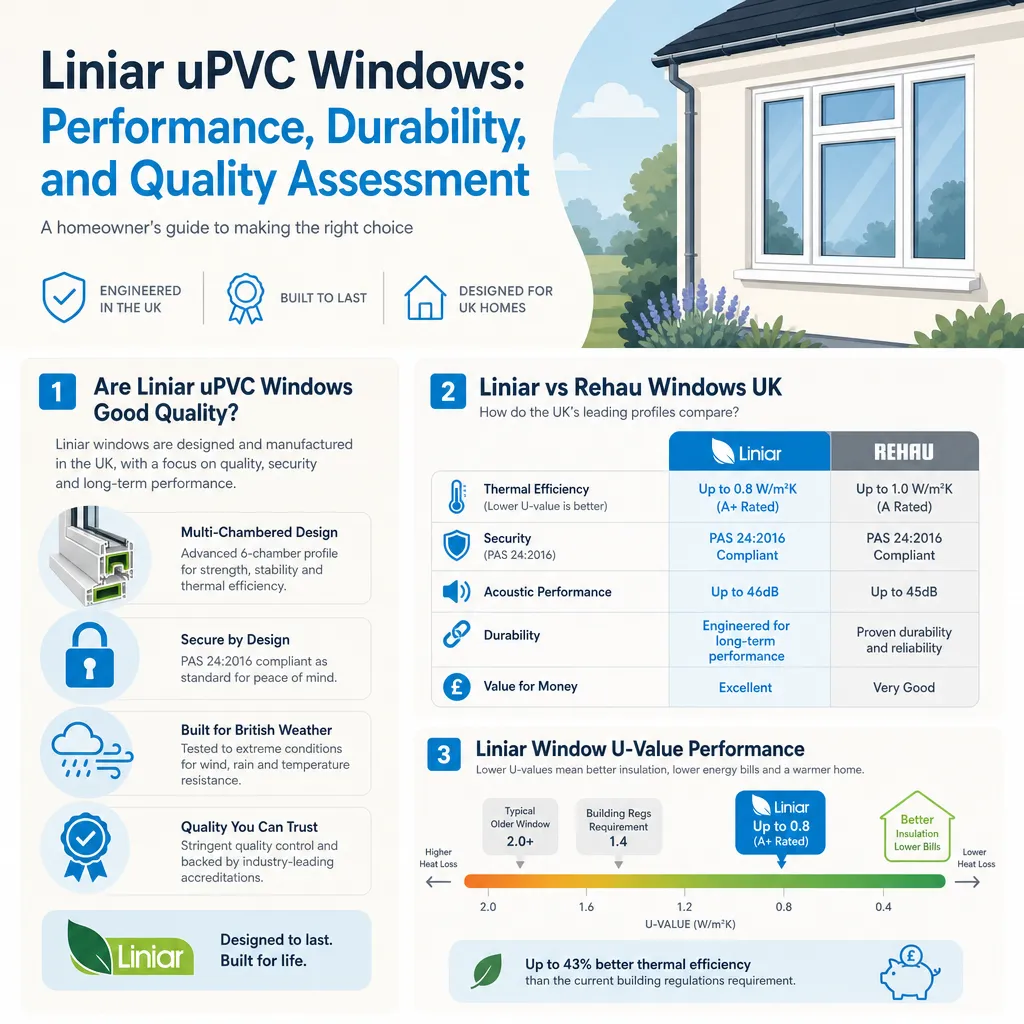
Liniar uPVC Windows: Performance, Durability, and Quality Assessment
Liniar uPVC window profiles are manufactured in the UK using multi-chambered, foamed frames.