Whole-Home Retrofit: Energy Efficiency Upgrade Strategy
By Housey · Last reviewed 12th of May 2026
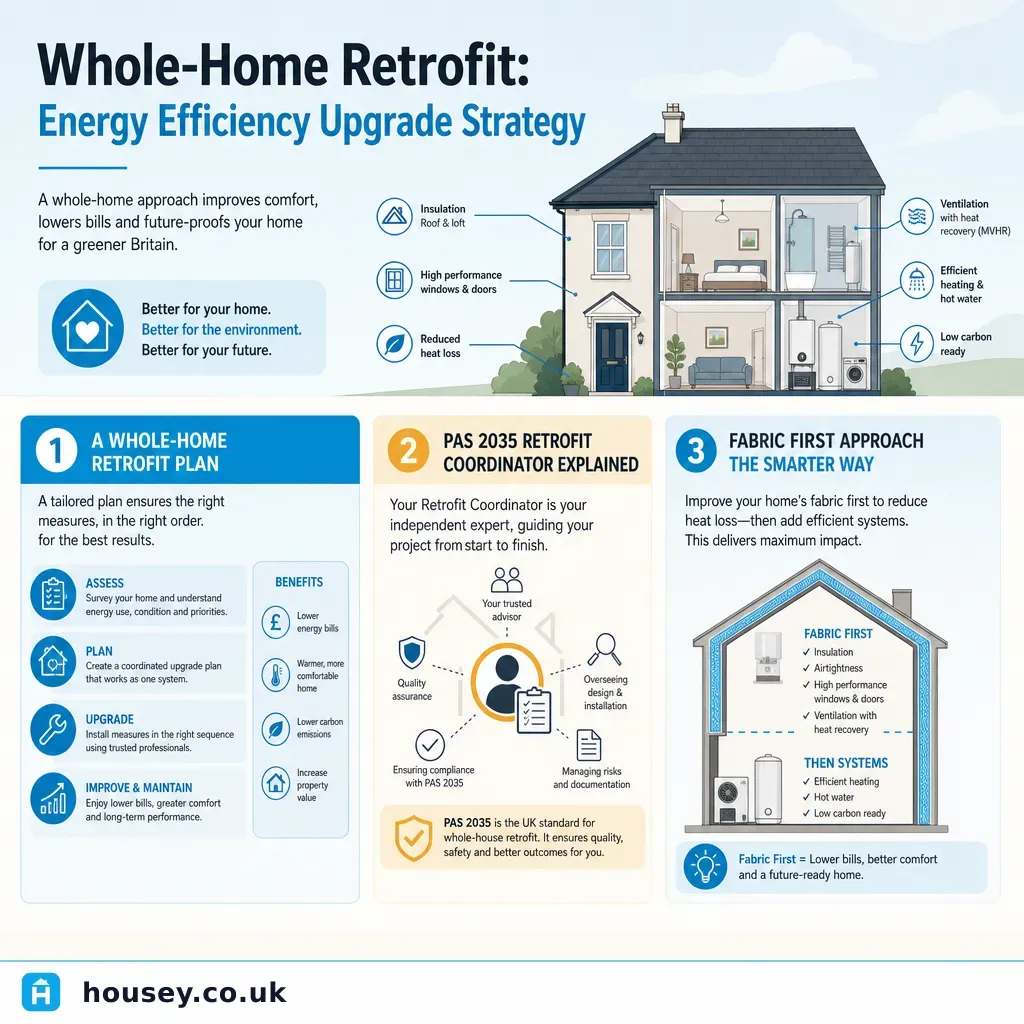
Whole-Home Retrofit: Energy Efficiency Upgrade Strategy
Retrofitting an existing UK home to modern energy-efficiency standards is significantly more complex than replacing a boiler or adding loft insulation in isolation. Insulation, ventilation, airtightness, and heating interact as a system — and getting the sequence wrong can create condensation, structural damp, and poor air quality while leaving grant funding unclaimed. For most properties, a successful whole-home retrofit starts with an assessment and a formal improvement plan, not a builder and a price quote.
Important limitations
This article provides general information about whole-home retrofit in England. Technical standards, funding eligibility, and scheme rules change; always verify current requirements with a TrustMark-registered Retrofit Coordinator or Assessor. PAS 2035 requirements apply to all publicly funded retrofit work. Building regulations and, in some cases, planning permission may also apply. This article does not constitute technical, financial, structural, or building regulations advice.
Key points
- PAS 2035:2023 (Retrofitting dwellings for improved energy efficiency) is the UK standard for whole-house retrofit; all work funded through ECO4 and the Great British Insulation Scheme (GBIS) must follow it.
- A TrustMark-registered Retrofit Coordinator holding a minimum Level 5 qualification must produce a Medium-Term Improvement Plan (MTIP) before any PAS 2035 project begins.
- The fabric-first principle requires addressing the building envelope — wall insulation, loft insulation, floor insulation, draughts, and glazing — before upgrading or replacing the heating system.
- Installing an air source heat pump in an inadequately insulated home typically delivers poor performance; a heat loss calculation to BS EN 12831 must be completed by an MCS-certified installer before sizing.
- ECO4 (administered by Ofgem) and the Warm Homes Plan are the primary government-funded routes as of May 2026; eligibility is based on household income, benefit receipt, and current EPC rating.
What is a whole-home retrofit?
A whole-home retrofit — sometimes called a whole-house retrofit — is a coordinated programme of energy-efficiency improvements applied to an existing property, guided by a formal assessment and sequenced improvement plan. It differs from a single measure such as adding loft insulation or replacing a boiler in that each measure is designed to work with the others, and the building is treated as an integrated system.
In England, the technical framework is PAS 2035:2023. For properties receiving public funding through any government scheme, compliance is mandatory. For privately funded work, PAS 2035 is not legally required but is recommended as best practice by CIBSE, the Energy Saving Trust, and RICS.
The fabric-first sequence
PAS 2035 and the Energy Saving Trust recommend the following general sequencing:
- Reduce heat loss through the fabric — cavity wall insulation, solid wall insulation (internal or external), loft insulation, underfloor insulation, upgraded windows and doors.
- Improve airtightness — draught-proofing of gaps, loft hatches, letterboxes, service penetrations, and junctions.
- Upgrade ventilation — airtightness improvements must be matched with controlled mechanical ventilation (typically Mechanical Ventilation with Heat Recovery — MVHR — or decentralised mechanical extract ventilation — dMEV) to prevent condensation and maintain air quality.
- Upgrade the heating system — once fabric improvements have reduced the building's heat demand, upgrade to an air source or ground source heat pump, high-efficiency boiler, or heat network connection.
- Add renewable generation — solar photovoltaic (PV) panels, solar thermal, or battery storage, sized to match the reduced post-retrofit demand.
This sequence matters because the performance of each step depends on what came before. A heat pump sized for a well-insulated home will be over-specified and inefficient in a poorly insulated one.
The assessment and planning process under PAS 2035
PAS 2035 defines specific roles for whole-home retrofit:
- Retrofit Assessor — carries out an in-home assessment of fabric, heating, ventilation, moisture risk, and services; produces the Retrofit Assessment document.
- Retrofit Coordinator — a TrustMark-registered professional (minimum Level 5 qualification) who reviews the assessment, produces the Medium-Term Improvement Plan (MTIP), oversees the works, and signs off on completion. For publicly funded projects this role is mandatory.
- Retrofit Installer — a TrustMark-registered installer who carries out individual measures under the Coordinator's oversight.
For ECO4 and GBIS-funded projects, the Coordinating role is typically managed by the energy company or managing agent delivering the scheme. For privately funded projects, homeowners can appoint an independent Retrofit Coordinator directly.
Comparison: ad hoc single measures vs. PAS 2035 coordinated retrofit
Approach | Best for | Moisture risk | Funding eligibility | Lifecycle cost |
|---|---|---|---|---|
Ad hoc single measures | Very limited budget; straightforward post-1980 property; no moisture or condensation history | Higher — no formal risk assessment or sequencing | Not eligible for ECO4 or GBIS | Often higher — rework needed if measures conflict |
PAS 2035 coordinated retrofit | Most properties; especially pre-1919, solid-wall, or any home with damp or condensation history | Lower — moisture risk formally assessed and managed | Required for all publicly funded schemes | Lower over time — measures designed to work together |
Funded scheme (ECO4 or GBIS) | Income-qualified households; homes with EPC rating D or below | Managed under mandatory PAS 2035 compliance | Subject to scheme eligibility and approved measure list | Potentially zero upfront cost for qualifying measures |
Government funding routes (as of May 2026)
ECO4 (Energy Company Obligation, Phase 4)
ECO4 obliges larger energy suppliers to fund energy-efficiency improvements in low-income and fuel-poor households. Eligible measures include wall insulation, loft insulation, heat pumps, solar panels, and heating controls. The scheme is means-tested and generally requires a current EPC rating of D, E, F, or G. Successor arrangements are expected under the Warm Homes Plan; check Ofgem's ECO page for current status.
Warm Homes Plan
The UK Government's Warm Homes Plan is the overarching policy framework for household energy-efficiency support from 2025 onwards. Delivery routes include the Warm Homes: Local Grant (WHLG), administered by local authorities, and the Warm Homes: Social Housing Fund. Check GOV.UK for current eligibility and regional delivery arrangements.
Great British Insulation Scheme (GBIS)
GBIS targets single-measure insulation improvements for homes in council tax bands A–D, with some broader eligibility. Unlike ECO4, it covers a wider income range but focuses on insulation measures rather than full whole-home retrofit.
Boiler Upgrade Scheme (BUS)
BUS provides grants toward replacing fossil fuel heating systems with heat pumps. Indicative grant amounts as of 2024–25: £7,500 for air source heat pumps, £7,500 for ground source heat pumps. Check GOV.UK for current figures, as amounts are subject to change. Installation must be by an MCS-certified installer.
All indicative figures reviewed 2026-05-12. Grant amounts and eligibility criteria are subject to government review — always verify on GOV.UK before applying.
Homeowner checklist: preparing for a whole-home retrofit assessment
Before your Retrofit Assessor visits, gather the following:
Red flags: when to pause and seek advice
Stop and seek professional input before proceeding if:
- There is visible mould, recurring condensation on walls or windows, or a persistent musty smell — adding insulation without addressing the underlying cause can make moisture problems significantly worse.
- The property has solid walls (pre-1920 construction) with an unknown or complex internal build-up — moisture modelling is needed before applying internal or external wall insulation.
- The property is in a conservation area or is listed — external wall insulation and some window replacements may require planning permission or listed building consent.
- A contractor proposes installing a heat pump without first carrying out a heat loss calculation to BS EN 12831 — an incorrectly sized heat pump will underperform and may increase bills.
- An installer is not TrustMark-registered for the measure being installed — non-registered work may not be eligible for scheme funding and may not carry the required warranties or guarantees.
- A funded-scheme contractor proposes starting physical works without producing a PAS 2035 Retrofit Assessment — this is a compliance breach and should be queried with the scheme administrator.
When this becomes urgent
Seek immediate professional input if: you notice new or worsening damp, mould, or condensation within weeks of insulation being installed — this may indicate inadequate ventilation or a moisture route that was not identified before works began. If you have already received ECO4 or GBIS-funded measures and have concerns about workmanship, contact your energy supplier's scheme administrator and, if unresolved, the TrustMark dispute resolution service.
What to ask a qualified professional
When appointing a Retrofit Coordinator or Assessor, ask:
- Are you TrustMark-registered, and what is your PAS 2035 Level 5 qualification?
- Will you produce a full Retrofit Assessment and a Medium-Term Improvement Plan before any works begin?
- How do you assess moisture risk in solid-wall or older properties, and what hygrothermal modelling tools do you use?
- Which measures are eligible for current government funding for my property and household situation?
- What ventilation strategy does the plan include, and how will airtightness improvements be managed to avoid condensation risk?
- If a heat pump is proposed, who will carry out the heat loss calculation to BS EN 12831, and is the installer MCS-certified?
- What happens if unforeseen defects or access issues arise during the works?
- Are all proposed installers TrustMark-registered for their respective measure types?
When to get professional help
A Retrofit Coordinator is strongly recommended — and for publicly funded schemes, mandatory — for any whole-home programme. Seek professional advice before starting works if:
- You are considering any form of wall insulation on a property built before 1919.
- You have had damp, mould, or condensation issues at any point in the property's history.
- You plan to combine insulation with a heat pump installation.
- The property is of unusual construction — timber frame, solid stone, cob, or converted agricultural building.
- You are considering applying for any government-funded scheme, as eligibility and measure selection must be professionally assessed.
How Housey can help
Housey connects homeowners with qualified professionals for energy-efficiency projects across the UK. Our retrofit assessments service links you with TrustMark-registered assessors who can evaluate your home and recommend a correctly sequenced improvement plan. For independent guidance on the right measures and funding routes, our energy-efficiency consultants can help you plan with confidence. Once a plan is in place, our network of approved insulation installers can carry out the fabric works to the required standard.
Frequently asked questions
Do I need a Retrofit Coordinator if I am not using government funding?
PAS 2035 is mandatory for publicly funded retrofit work. For privately funded whole-home retrofit it is not legally required, but appointing a TrustMark-registered Retrofit Coordinator is strongly recommended by CIBSE, the Energy Saving Trust, and RICS to manage moisture risk and ensure measures are correctly sequenced and specified.
How long does a whole-home retrofit take?
The assessment and planning phase — Retrofit Assessment plus Medium-Term Improvement Plan — typically takes 4–8 weeks. Physical works depend on scope; a typical programme of insulation, ventilation, and heating upgrades for a three-bedroom semi might take 3–6 months when works are phased. MTIPs can span several years for staged programmes.
What is the difference between a Retrofit Assessment and an EPC?
An EPC (Energy Performance Certificate) is a standardised compliance document produced by a Domestic Energy Assessor for transactions and rental purposes. A Retrofit Assessment under PAS 2035 is a detailed technical document covering fabric, moisture risk, ventilation, heating, and occupancy — used to plan works, not to satisfy a legal transaction requirement.
Can I install a heat pump without insulating first?
Technically yes, but a heat pump in a poorly insulated home typically underperforms and may not reduce bills. MCS-certified installers must carry out a heat loss calculation to BS EN 12831 to size the system correctly. If the fabric has high heat loss, the calculation may show that insulation is needed first for the heat pump to operate efficiently.
Sources and further reading
- PAS 2035:2023 Retrofitting dwellings for improved energy efficiency — BSI Group
- Energy Company Obligation (ECO4) — Ofgem
- Boiler Upgrade Scheme — GOV.UK
- Warm Homes Plan — GOV.UK
- Find a TrustMark registered business — TrustMark
- Home insulation guidance — Energy Saving Trust
Useful next reads
 Energy & Retrofit
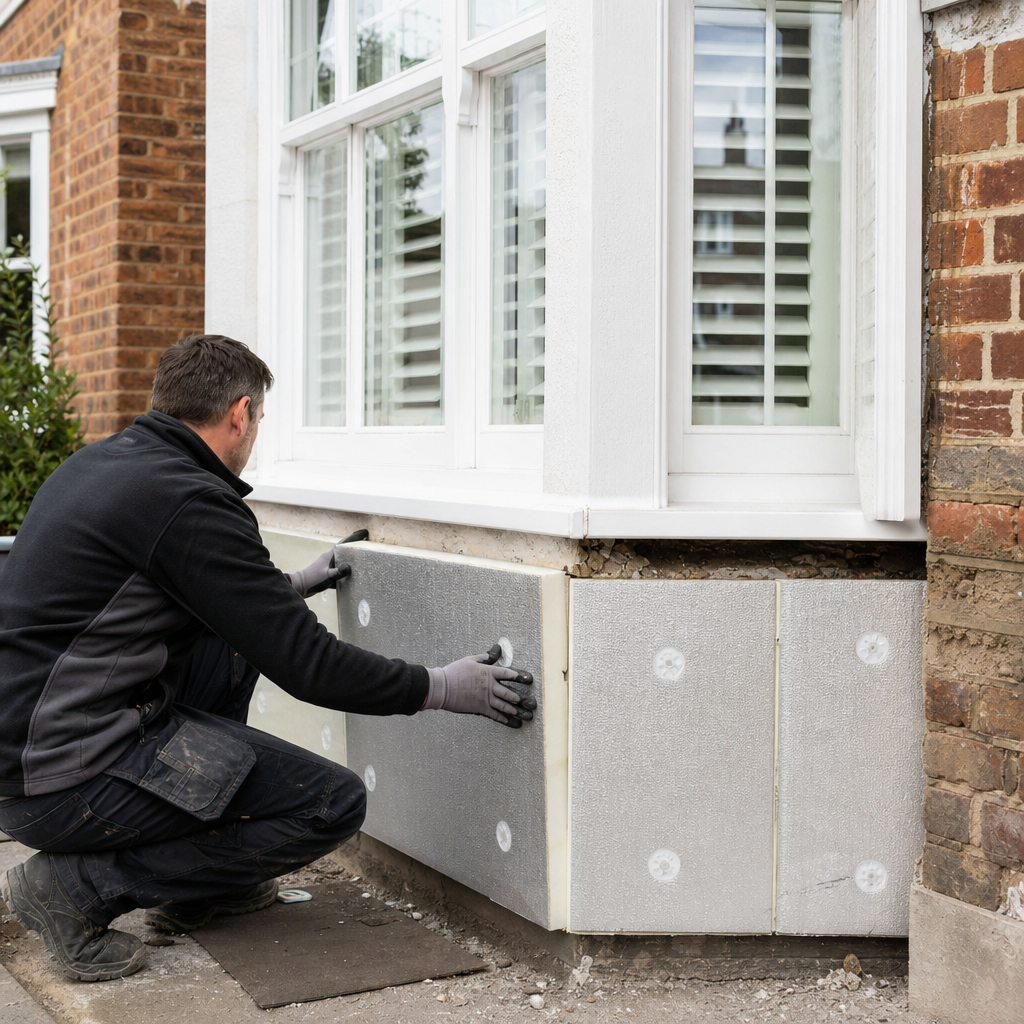
Insulating Solid Masonry Walls Under Bay Windows: Technical Guidance
Insulating solid masonry walls under bay windows requires specialist detailing at angled wall faces, window reveals, and the bay floor and ceiling junctions.
 Energy & Retrofit
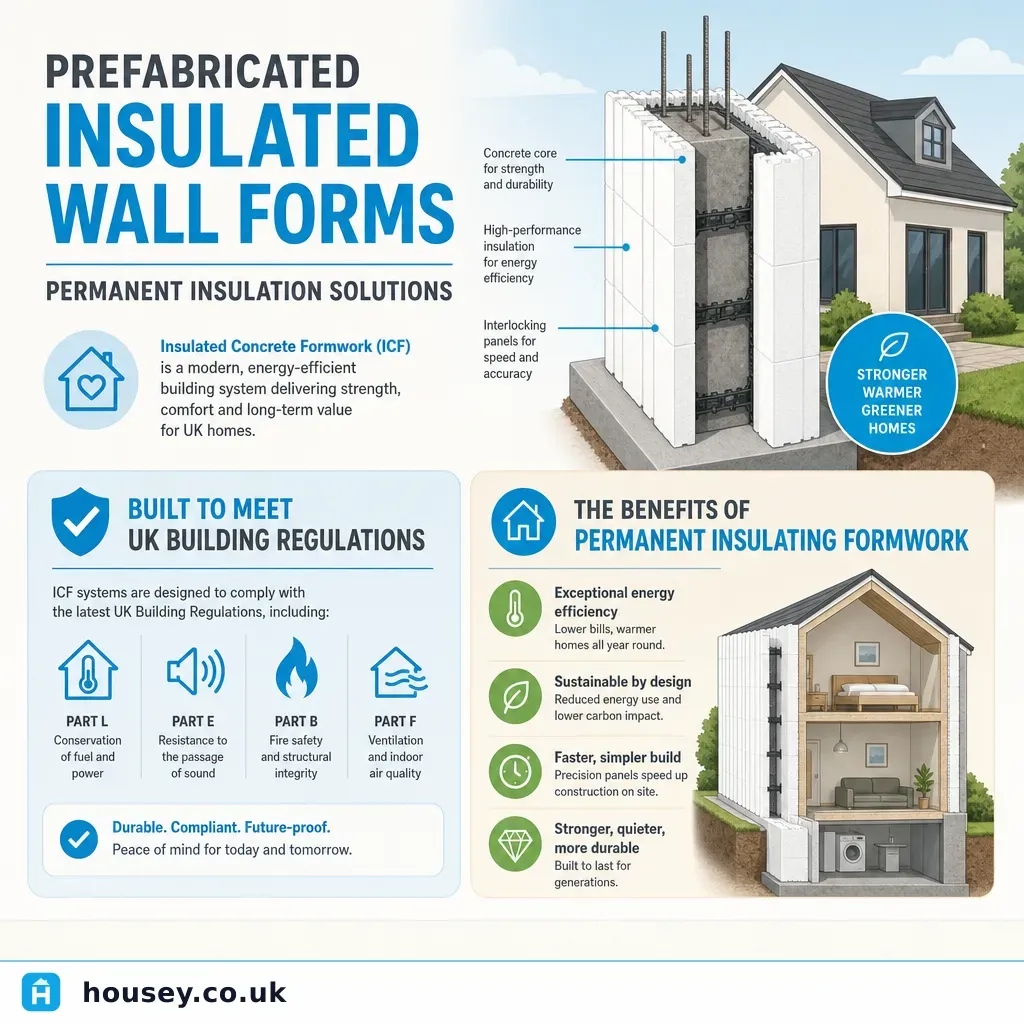
Prefabricated Insulated Wall Forms: Permanent Insulation Solutions
Prefabricated insulated wall forms — including ICF and SIPs systems — deliver high thermal performance by combining permanent insulation with structural concrete or timber in a single wall assembly.
 Energy & Retrofit
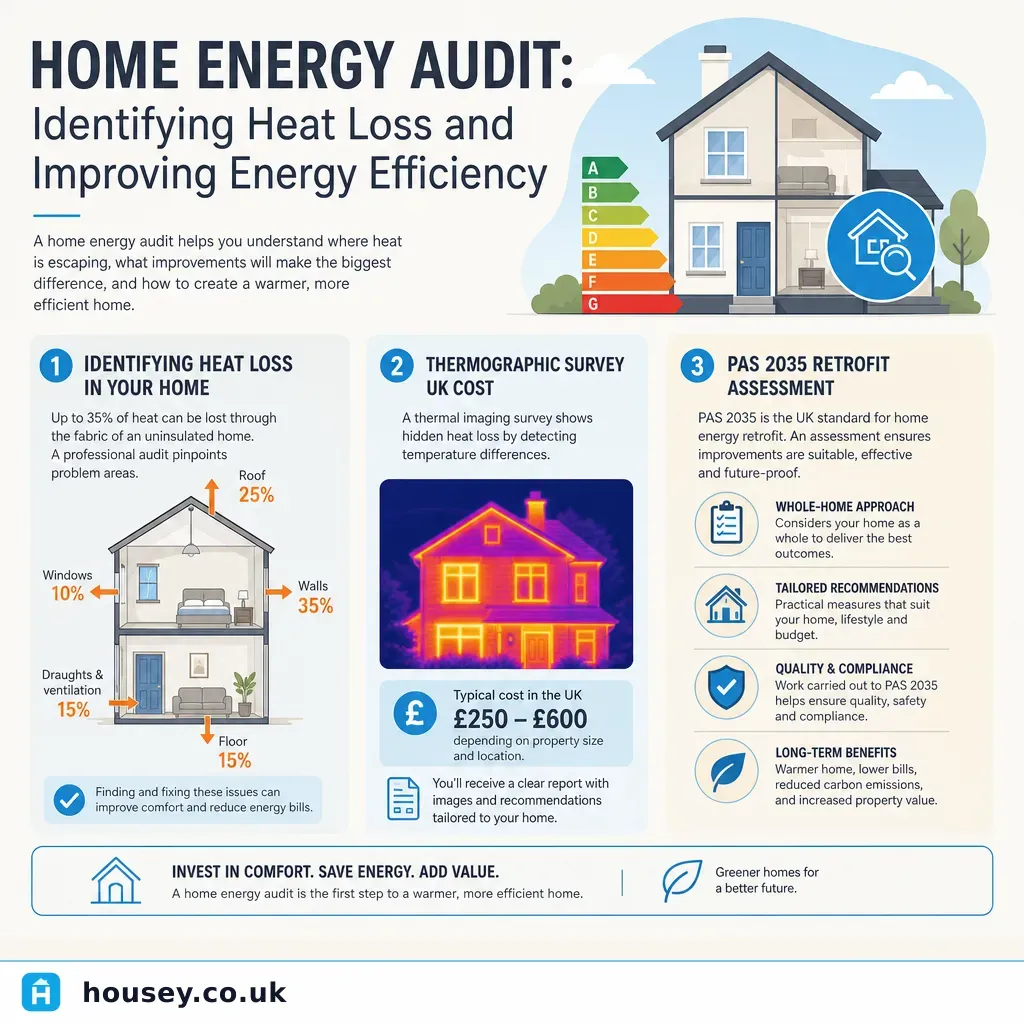
Home Energy Audit: Identifying Heat Loss and Improving Energy Efficiency
A home energy audit is a structured assessment of where your property loses heat and how efficiently it uses energy.
 Energy & Retrofit
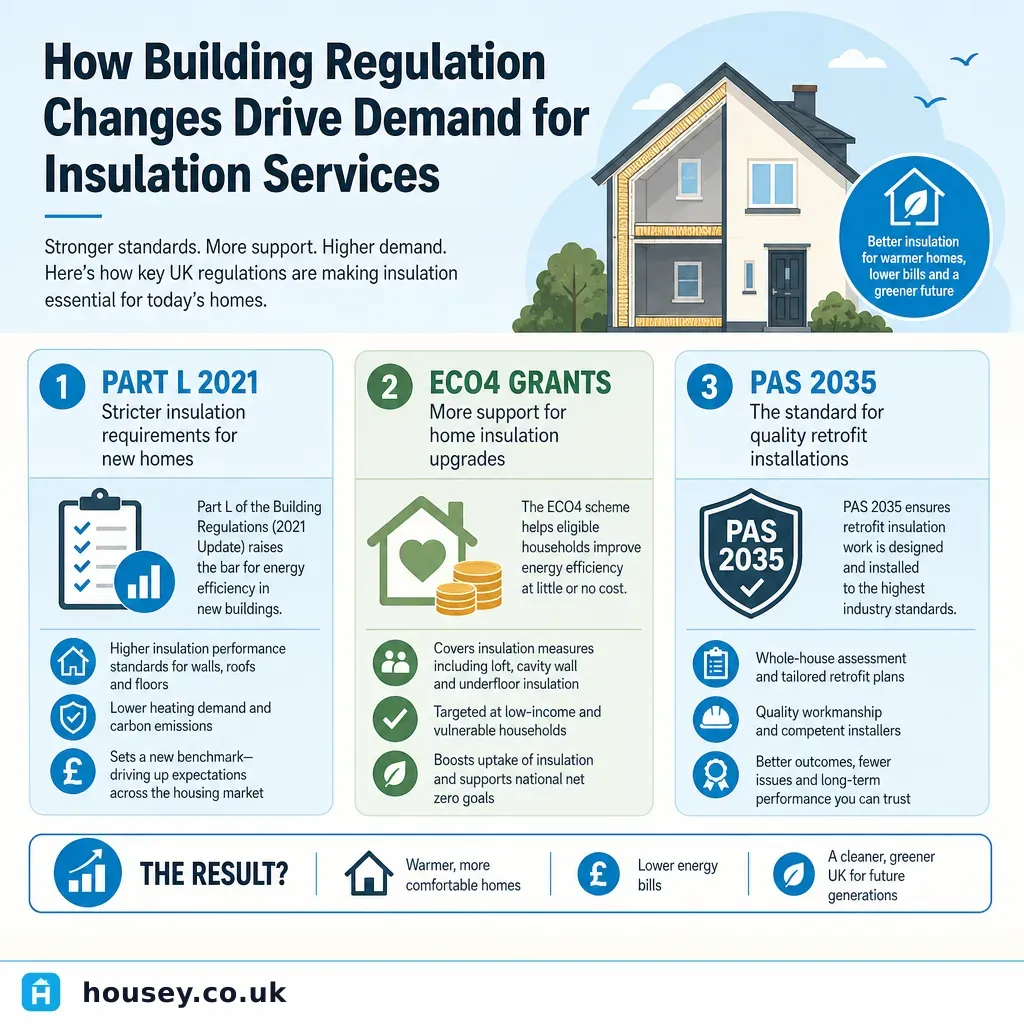
How Building Regulation Changes Drive Demand for Insulation Services
Building regulation changes — including 2021 updates to Approved Document L, ECO4 funding obligations, and proposed MEES tightening — are creating sustained demand for insulation services across the UK.
 Energy & Retrofit
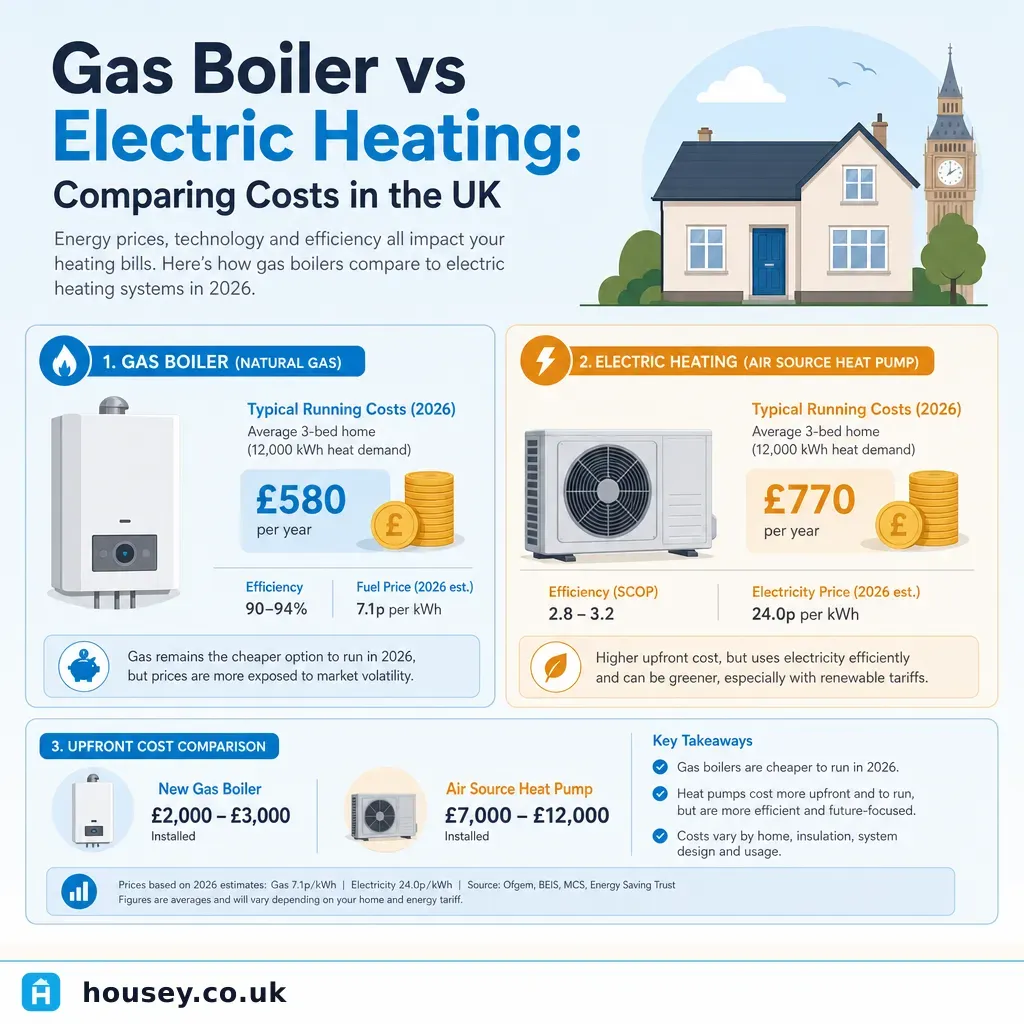
Gas Boiler vs Electric Heating: Comparing Costs in the UK
Gas boilers currently cost around 6.