Whole House Water Filtration Systems: Installation and Costs
By Housey · Last reviewed 30th of May 2026
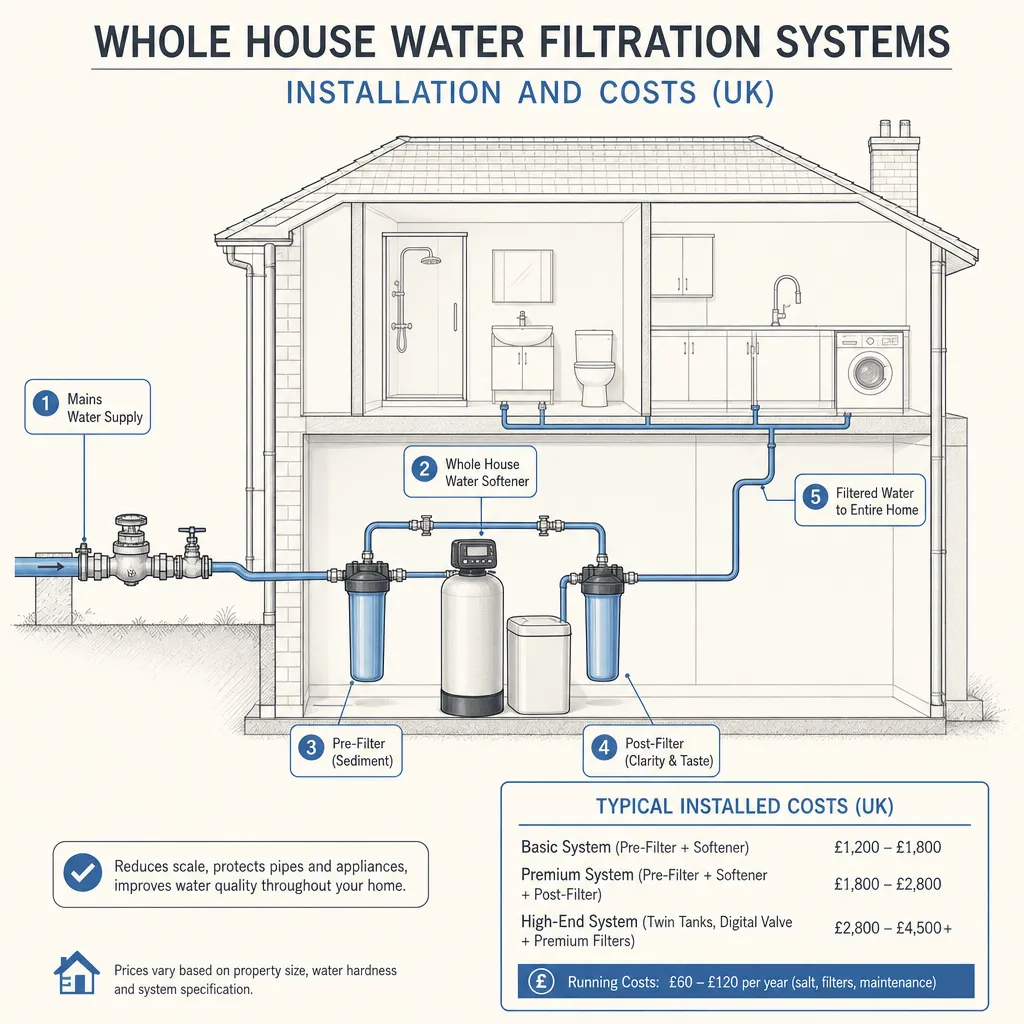
Whole House Water Filtration Systems: Installation and Costs
Water quality concerns vary considerably depending on where you live in the UK. Homes across London, the South East, and parts of the East Midlands sit on chalk geology that produces very hard water, leading to limescale build-up in appliances and pipework. Properties with older plumbing — particularly pre-1970 homes with surviving lead communication pipes — may have concerns about pipe material. Rural properties on private borehole or spring supplies face different challenges again. A whole-house water filtration system addresses these issues at the point of entry to the property rather than at individual outlets, but the right specification depends entirely on your actual water quality and what you are trying to achieve.
Key points
- UK mains drinking water must meet the standards of the Water Supply (Water Quality) Regulations 2016 (and their equivalents in Wales, Scotland, and Northern Ireland); water companies and the Drinking Water Inspectorate routinely test supplies — filtration is an optional upgrade for most mains-connected homes, not a safety necessity.
- All plumbing work that connects to the mains supply — including fitting a whole-house filter — is subject to the Water Supply (Water Fittings) Regulations 1999 and must be carried out by a competent plumber or notified to your water supplier if done by a non-approved contractor.
- WRAS approval (Water Regulations Advisory Scheme) is the recognised UK mark confirming that a filter housing or component is compliant with water fittings regulations; always check for WRAS approval when specifying any filter unit or cartridge housing.
- Water softeners that discharge brine (saline waste) into the public sewer may require consent from your sewerage undertaker in water-scarce areas — check before installation.
- Properties on private water supplies (boreholes, springs, surface water) are regulated separately under the Private Water Supplies Regulations 2016 and require a formal risk assessment; filtration alone may be insufficient without additional treatment.
Types of whole-house water filtration system
Sediment filters
A sediment filter is usually the first stage in any whole-house system. It removes particles — sand, silt, rust flakes — from the incoming supply using a pleated or wound cartridge, typically rated between 5 and 50 microns. Sediment filters protect appliances and finer downstream filter stages but do not address hardness, taste, or bacteria.
Activated carbon filters
Carbon block or granular activated carbon (GAC) filters remove chlorine, chloramines, and some organic compounds that affect taste and odour. They are the most commonly fitted whole-house filter for mains-connected properties where the main concern is the slight taste of treated water rather than hardness or microbial risk.
Water softeners
A water softener uses an ion-exchange resin to replace calcium and magnesium ions (which cause hardness and limescale) with sodium ions. Softeners are highly effective at protecting appliances, heating systems, and bathroom fittings in hard water areas, but they raise the sodium content of the treated water. For this reason, most softener installations include a hard-water bypass tap at the kitchen sink, fed direct from the rising main before the softener, for drinking and cooking.
UV sterilisers
Ultraviolet sterilisation exposes water to UV light at a wavelength that disrupts bacterial and viral DNA, rendering microorganisms unable to reproduce. UV units are rarely necessary on regulated mains supplies but are appropriate for private supplies where microbiological contamination is a concern. They do not address hardness, sediment, or taste.
Reverse osmosis (point of use)
Reverse osmosis is almost always installed under the kitchen sink as a point-of-use unit — it is not practical as a whole-house solution because of its low flow rate and the volume of waste water produced. If you want highly purified water at one outlet, a point-of-use RO unit is the appropriate choice.
Comparing whole-house filtration options
System | What it removes | Best for | Not ideal for | Maintenance frequency |
|---|---|---|---|---|
Sediment filter | Particles, rust, silt | Older pipework; pre-filter for other stages | Hardness, chlorine, bacteria | Cartridge every 3–6 months |
Activated carbon filter | Chlorine, taste, odour, some VOCs | Improving taste on mains supply | Hardness, bacteria, heavy metals | Cartridge every 6–12 months |
Water softener (ion exchange) | Calcium and magnesium (hardness) | Hard water areas above 200mg/l | Bacteria, sediment; raises sodium content | Salt top-up monthly; resin service every 5–10 years |
UV steriliser | Bacteria and viruses | Private water supplies; post-flood events | Hardness, sediment, taste | UV lamp replacement annually |
Combination system (sediment + carbon + softener) | Multiple contaminants | Comprehensive treatment for hard, chlorinated mains water | Higher upfront and running costs | Multiple cartridges; varies by stage |
Do you actually need a whole-house filter?
- Choose a water softener if you are in a hard water area (above 200mg/l calcium carbonate) and limescale on appliances, heating pipework, and bathroom surfaces is your main concern. Check your water hardness level using your supplier's postcode checker before purchasing.
- Choose an activated carbon filter if your water is soft or moderately hard but has a noticeable chlorine taste or odour — common in densely supplied urban areas.
- Choose a combination system (sediment + carbon + softener) if you have hard water and also want improved taste and extended appliance life.
- Choose a UV steriliser if you are on a private water supply with confirmed or suspected microbiological issues — but arrange a full private supply risk assessment with your local authority first.
- Ask a water treatment specialist if a water test shows elevated levels of iron, manganese, nitrates, or lead — these require targeted treatment that standard filters may not address.
- Check with your sewerage undertaker before installing a softener if you are unsure whether brine discharge is permitted in your area.
- Contact your water supplier if your concern is lead pipe — many suppliers offer grants or subsidised replacement of internal lead pipework, which is more effective than filtration.
Installation: what the process involves
A whole-house filter is typically installed on the incoming mains supply, immediately after the main stop tap. The process involves:
- Isolating the mains supply at the stop tap
- Cutting into the incoming pipework (typically 15mm or 22mm copper or plastic)
- Installing a bypass valve to allow the filter to be serviced without cutting off supply to the whole property
- Fitting the filter housing or housings and loading cartridges, with isolation valves on each side
- Testing all joints for leaks before restoring supply
- Flushing the system as directed by the manufacturer before the filter is considered commissioned
The work should be carried out by a qualified plumber. Under the Water Supply (Water Fittings) Regulations 1999, work on the mains supply is notifiable to the water supplier unless the installer is an approved contractor under Regulation 5. Ask your plumber before work starts which route applies — this affects whether you receive formal notification documentation.
Whole-house water filtration costs
Indicative UK costs, last reviewed 2026-05-30. Costs vary by system type, property size, pipework access, and contractor rates — obtain at least three quotes.
System | Equipment cost range | Typical installation cost | Indicative annual running cost |
|---|---|---|---|
Single sediment filter | £30–£120 | £100–£250 | £20–£60 (cartridges) |
Activated carbon filter | £80–£300 | £150–£300 | £40–£100 (cartridges) |
Twin-stage (sediment + carbon) | £150–£500 | £200–£400 | £60–£150 |
Water softener (salt-based) | £400–£1,500 | £200–£500 | £60–£180 (salt + periodic service) |
Full combination system | £800–£3,000 | £300–£700 | £150–£400 |
Private supply treatment systems are more complex and require individual assessment; costs are higher and vary considerably by contaminant type and flow requirements.
Before you buy: homeowner checklist
- Get a water quality report — your water supplier publishes area test results; for a private supply, commission an independent test through a UKAS-accredited laboratory before specifying any treatment.
- Check your water hardness — use your supplier's postcode checker to confirm whether hardness in your area justifies a softener.
- Confirm WRAS approval — check that any filter housing and components that contact drinking water carry WRAS approval or an equivalent recognised mark.
- Confirm notification requirements — ask your plumber whether the installation is notifiable to your water supplier under the Water Fittings Regulations before work starts.
- Brine discharge — if installing a softener, confirm with your sewerage undertaker that brine discharge to the public sewer is permitted in your area.
- Bypass valve — ensure the specification includes a bypass so the system can be serviced or replaced without cutting off supply to the whole property.
- Maintenance schedule — confirm cartridge replacement intervals, salt top-up requirements, and any recommended annual service visits; factor these into your total running cost.
- Lead pipe check — if your property was built before 1970, ask your water supplier whether any lead communication or internal pipe remains and whether a replacement grant is available.
When to get professional help
A qualified plumber should carry out any work that involves cutting into the mains incoming supply. Beyond installation:
- If a water test reveals elevated nitrates, lead, iron, manganese, or microbiological contamination, seek advice from a water treatment specialist before selecting any filter product.
- Properties on private water supplies should contact the Environmental Health team at their local authority, who administer the Private Water Supplies Regulations 2016 and can arrange risk assessments.
- If you have lead supply pipes, replacing the pipework is almost always more effective than relying on filtration — speak to your water supplier about whether a subsidised replacement scheme applies.
How Housey can help
Housey connects you with vetted drainage contractors experienced in mains pipework and supply modifications, who can carry out the plumbing work involved in whole-house filter installation — including notifiable work under the Water Fittings Regulations. Describe your project to compare quotes from qualified local specialists.
Frequently asked questions
Is UK tap water safe to drink without a filter?
In the vast majority of cases, yes. Mains drinking water must meet the standards of the Water Supply (Water Quality) Regulations 2016 and is routinely tested by water companies and verified by the Drinking Water Inspectorate. A whole-house filter is an optional upgrade, typically chosen to address hardness, taste, or odour rather than a safety deficiency. If you have specific concerns, contact your water supplier.
Will a water softener make my drinking water unhealthy?
A properly installed water softener raises the sodium content of the softened water slightly, which is not a concern for most healthy adults. However, softened water is not recommended for infant formula, for people on sodium-restricted diets, or for watering salt-sensitive plants. This is why softener installations typically include a separate hard-water bypass tap at the kitchen sink for drinking and cooking.
Do I need to tell my water supplier I am installing a whole-house filter?
Possibly. Under the Water Supply (Water Fittings) Regulations 1999, work on the mains supply is notifiable to the water supplier unless carried out by a contractor already approved under Regulation 5. Ask your plumber before work starts — failure to notify when required can result in the water supplier requiring re-inspection or remedial work at your cost.
How often do whole-house filter cartridges need replacing?
This depends on the system type and your local water quality. Sediment filter cartridges typically need replacing every 3–6 months; activated carbon cartridges every 6–12 months. The manufacturer's guidance and any drop in flow rate are the key indicators. Factor ongoing cartridge costs into your total running-cost comparison when choosing between systems.
Sources and further reading
- Water Supply (Water Quality) Regulations 2016 — legislation.gov.uk
- Water Supply (Water Fittings) Regulations 1999 — legislation.gov.uk
- Drinking Water Inspectorate — water quality in England — Drinking Water Inspectorate
- WRAS: Water Regulations Advisory Scheme — WRAS
- Private water supplies: guidance for local authorities — GOV.UK
Useful next reads
 Improvement & Build
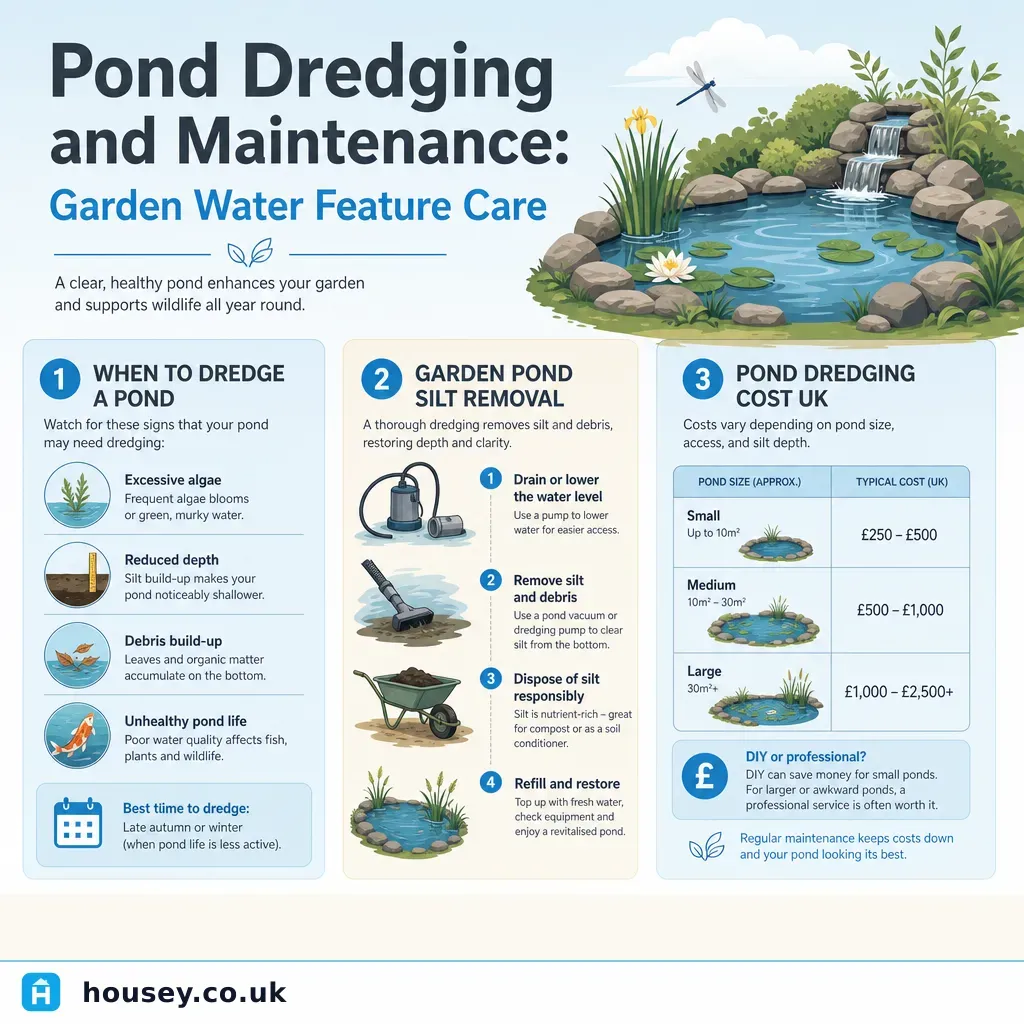
Pond Dredging and Maintenance: Garden Water Feature Care
Pond dredging involves removing accumulated silt, sediment, and decaying vegetation to restore water depth and quality.
 Improvement & Build
Pond Maintenance and Management: Seasonal Care and Upkeep
Garden pond maintenance follows a seasonal cycle: spring equipment checks and vegetation management, summer water quality monitoring, autumn leaf removal and netting, and winter ice management.
 Improvement & Build
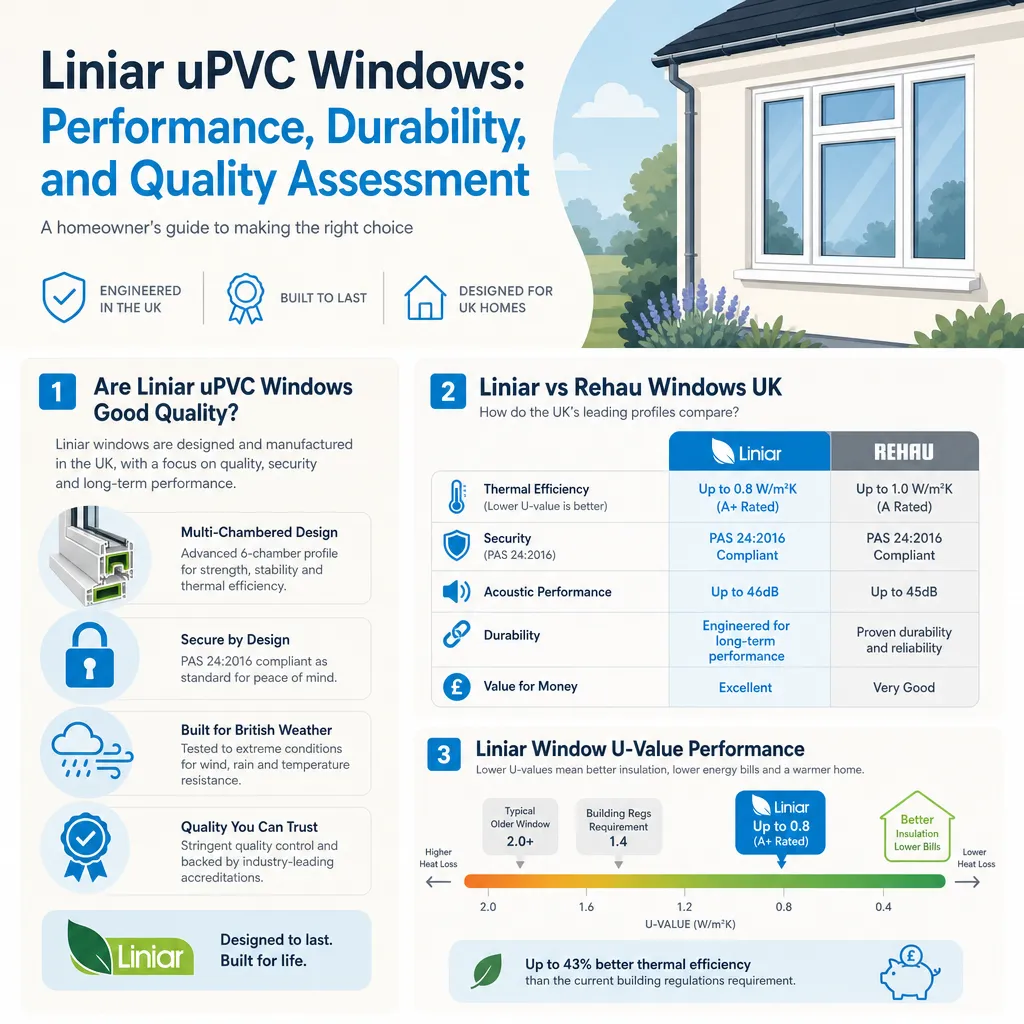
Liniar uPVC Windows: Performance, Durability, and Quality Assessment
Liniar uPVC window profiles are manufactured in the UK using multi-chambered, foamed frames.
 Improvement & Build
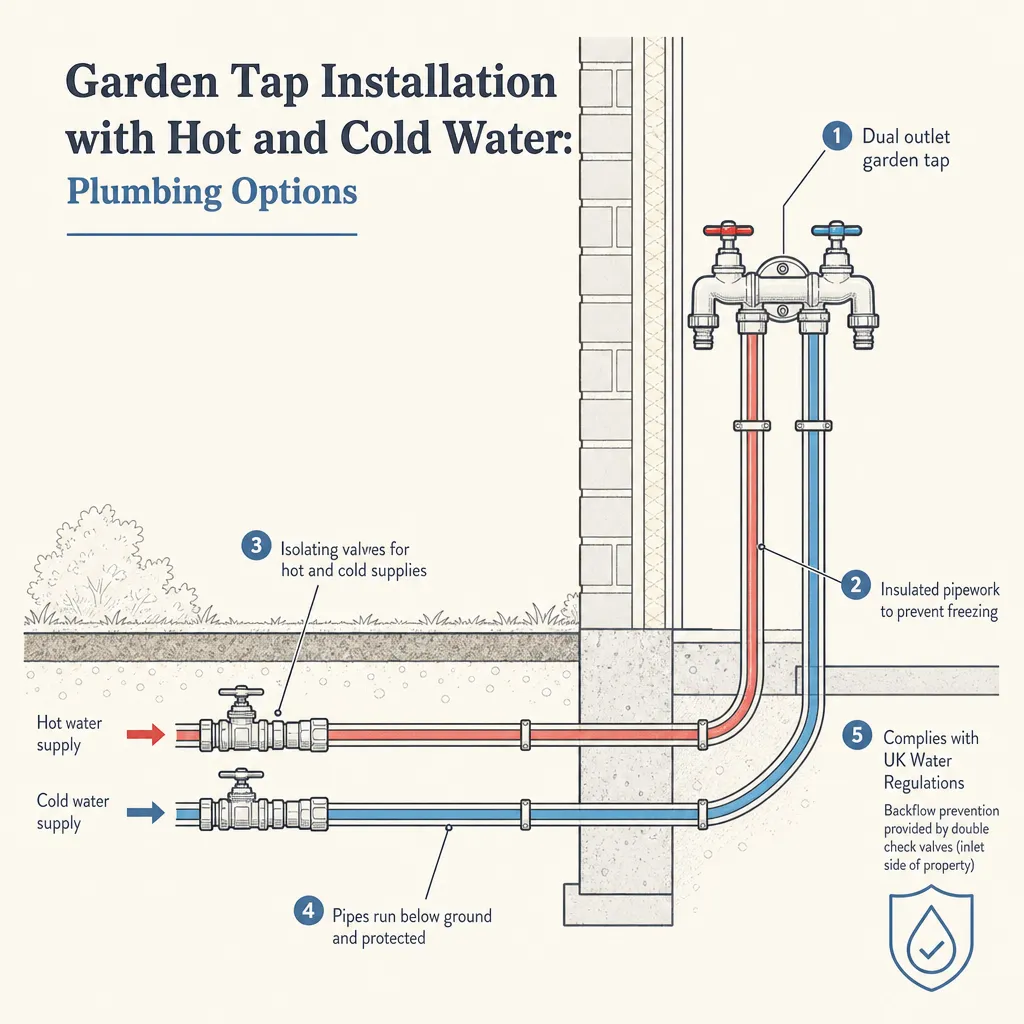
Garden Tap Installation with Hot and Cold Water: Plumbing Options
Adding a cold garden tap is a common DIY project, but routing hot water outdoors requires a plumber to connect to your domestic hot water system and comply with the Water Supply (Water Fittings) Regulations 1999.
 Improvement & Build
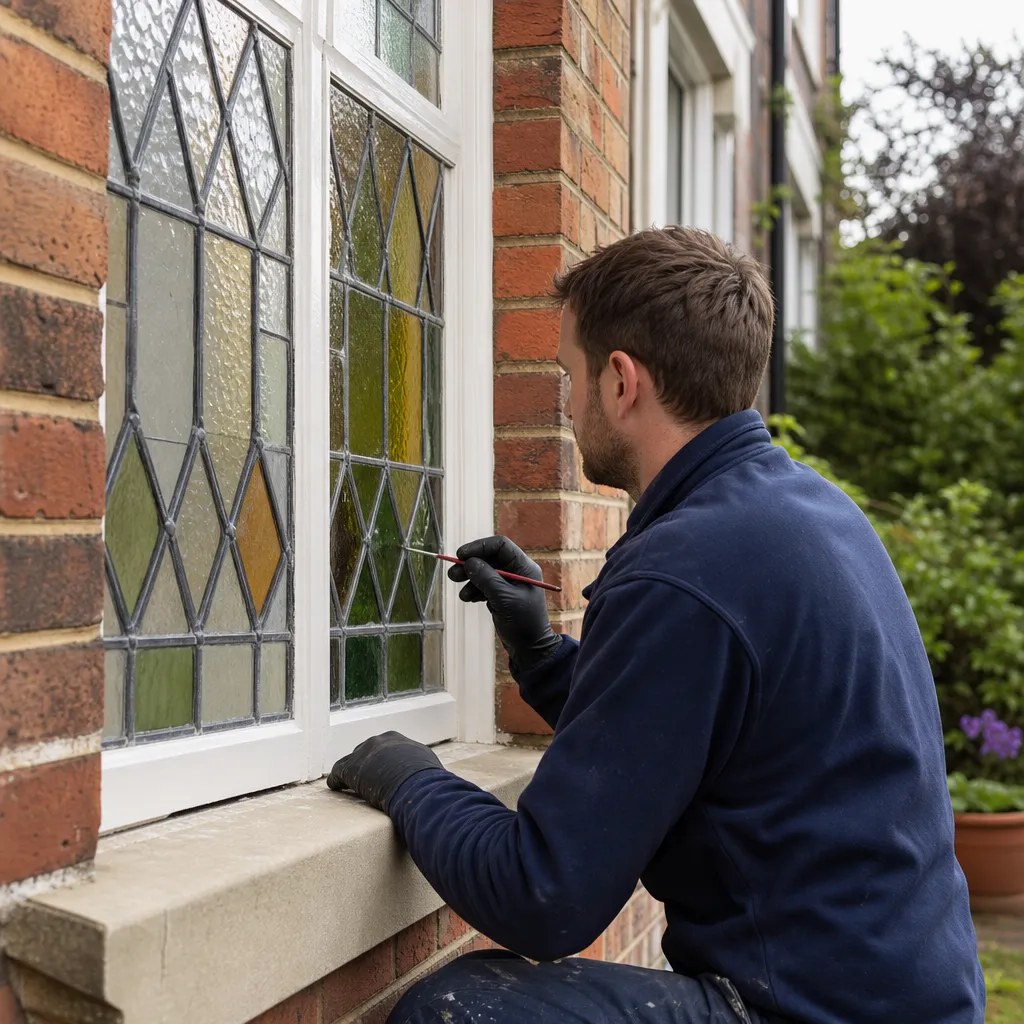
Sealing and Maintaining Historic Leaded Glass Windows: Preservation and Performance
Leaded glass windows are maintained using traditional linseed oil cement — not silicone or modern sealants, which prevent natural movement in the lead came.