Window and French Door Replacement: Investment and Considerations
By Housey · Last reviewed 10th of May 2026
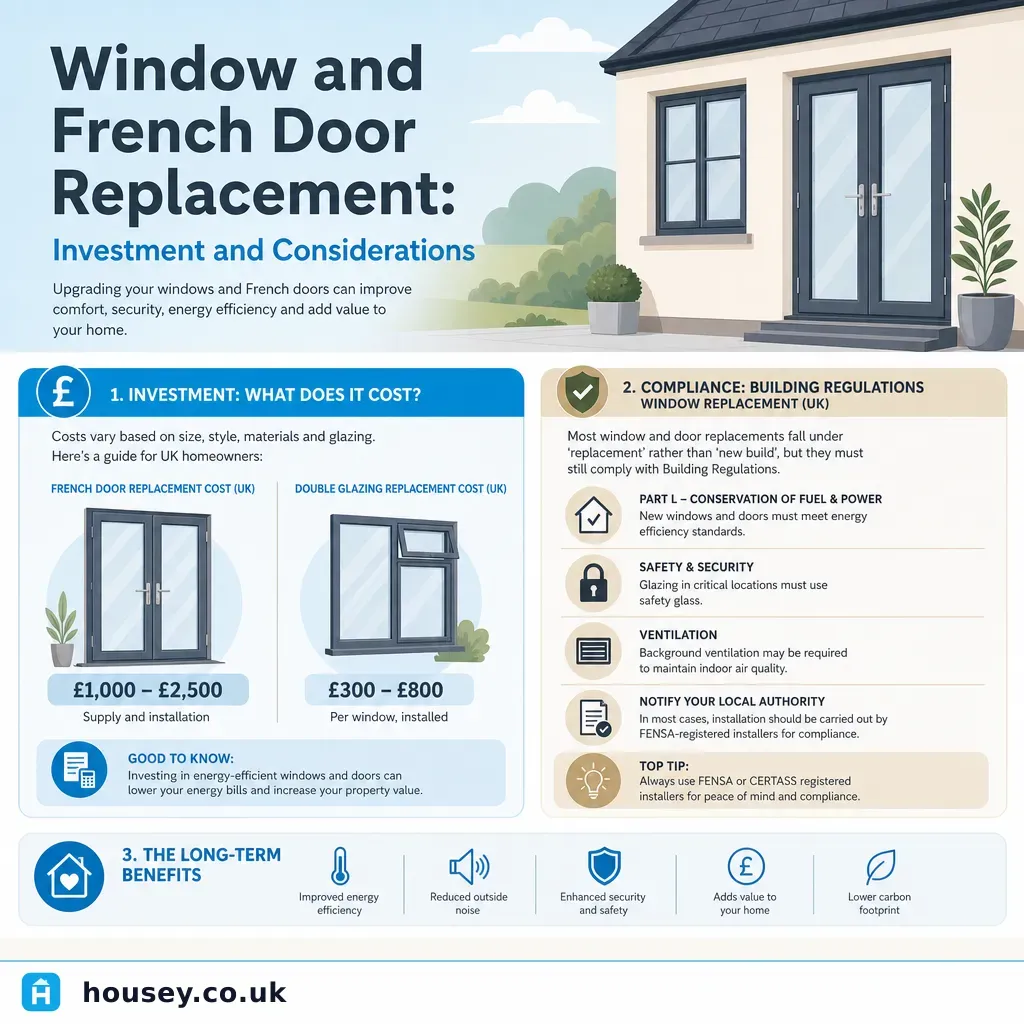
Window and French Door Replacement: Investment and Considerations
Replacing windows or fitting new French doors touches several regulatory frameworks at once — Building Regulations thermal performance requirements, permitted development rules, and installer certification obligations — all before the first pane of glass is removed. Whether you are upgrading draughty sashes in a 1930s semi, replacing failed sealed units in a 1990s estate house, or opening up a Victorian terrace rear wall with French doors onto the garden, understanding the cost drivers and compliance requirements upfront will help you compare quotes accurately and avoid surprises at completion.
Key points
- Replacement windows and doors in England must meet a minimum whole-window U-value of 1.4 W/m²K under Building Regulations Part L (Conservation of Fuel and Power), current as of 2026.
- Work must be either notified to local authority building control or carried out by a FENSA or CERTASS registered installer, who self-certifies compliance on your behalf.
- In conservation areas and on listed buildings, permitted development rights for window and door replacement are withdrawn — planning permission or listed building consent is typically required before any work begins.
- The FENSA or CERTASS certificate issued on completion is a required document when you sell the property; always request it and keep it safe.
- uPVC, timber, and aluminium frames each have different maintenance demands, acoustic performance, and thermal profiles; whole-window U-values can vary significantly even with identical glazing units fitted in different frame materials.
What drives the cost?
Window and French door replacement costs vary substantially by material, opening size, glazing specification, floor level, and access. Indicative UK costs, last reviewed 2026-05-10.
Type | Indicative installed cost (per unit) | Notes |
|---|---|---|
uPVC casement window (double-glazed) | £400–£900 | Most common domestic choice; wide colour range available |
Timber casement window (double-glazed, softwood) | £600–£1,400 | Higher maintenance; may be required in conservation areas |
Aluminium casement window (slim section, double-glazed) | £700–£1,600 | Narrow sightlines; well suited to contemporary extensions |
uPVC French doors (double-glazed) | £1,200–£2,200 | Standard widths; multi-point locking is now standard |
Timber French doors (hardwood, double-glazed) | £2,000–£4,000 | Higher cost; more appropriate for period and heritage properties |
Aluminium French doors (double-glazed) | £2,000–£3,500 | Minimal frame depth; popular for rear extension openings |
Triple glazing upgrade (any material, per window) | Add approx. 25–40% to above | Greater thermal performance; heavier — check lintel capacity first |
Costs above exclude scaffolding. Upper-floor window replacements requiring scaffold typically add £500–£2,000 depending on access complexity and duration.
Which material is right for your property?
- Choose uPVC if budget is the primary consideration, the property is post-1950 in conventional construction, and there are no conservation area or listed building restrictions in place.
- Choose timber if the property is a period home, sits within a conservation area, or where the local planning authority specifies timber-style windows; softwood frames require repainting roughly every 5–8 years, hardwood less frequently.
- Choose aluminium if you want slim sightlines for a contemporary rear extension, large-format French doors, or bifold opening — and where budget allows the premium over uPVC.
- Ask an architectural technologist if the opening is non-standard, the property is listed, you need confirmation that the lintel above can carry an enlarged or new opening, or if drawings are required for building control or a planning application.
- Check your local planning authority before ordering if the property is in a conservation area — approved frame materials and profile depths can be specified conditions even for like-for-like replacement.
Building regulations and certification
All replacement windows and doors in England must comply with Building Regulations Part L. The minimum performance standard is a whole-window U-value of 1.4 W/m²K. Any new or enlarged opening must also satisfy Part A (Structure) — the lintel above must be adequate for the revised load.
Compliance can be achieved in two ways:
- Competent Person Scheme (self-certification): Use a FENSA or CERTASS registered window and door installer. They submit compliance documentation to the local authority on your behalf, issue an insurance-backed guarantee certificate, and you receive no separate building control visit.
- Building notice or full plans to local authority building control: Required if the installer is not registered under a Competent Person Scheme, or if the work involves structural changes such as enlarging the opening or removing a section of wall.
What you should receive on completion:
- FENSA or CERTASS compliance certificate (retain this for any future property sale)
- Sealed glazing unit manufacturer warranty (typically 10 years against misting)
- Any planning consent or listed building consent documentation if applicable
Conservation areas and listed buildings
Contact your local planning authority (LPA) before ordering if your property is listed or in a conservation area. Even like-for-like replacement may require consent.
Listed buildings: Listed building consent is required for any alteration that affects the character of a listed building — including window and door replacement regardless of material or visual similarity to the original. Permitted development rights do not apply.
Conservation areas: An Article 4 Direction — common in conservation areas across England — removes permitted development rights for window replacement. Your LPA's planning portal or pre-application advice service can confirm whether one applies to your property before you spend money on surveys or manufacturer quotes.
Homeowner checklist before replacing windows or French doors
What to ask before accepting a quote
- What whole-window U-value does this product achieve, and is it Building Regulations Part L compliant?
- Are you FENSA or CERTASS registered, and will you self-certify this installation?
- Is scaffolding included in the price, and if not, how will upper-floor windows be accessed?
- What is the lead time for manufacture and the expected installation date?
- What happens if the existing opening reveals structural issues on the day?
- Does the quote include making good internal reveals and external pointing around the new frame?
- What glazing unit warranty is provided, and who handles a warranty claim if units mist up?
- Is VAT included in the total figure?
When to get professional help
For straightforward like-for-like replacement on a standard post-war property, a FENSA or CERTASS registered window and door installer covers both the practical and regulatory requirements. Additionally, instruct an architectural technologist or structural engineer when:
- The opening is to be enlarged or a new opening created — lintel design and Building Regulations Part A apply.
- The property is listed or in a conservation area — design drawings and a heritage statement may be required by the LPA.
- You are specifying large structural glazing or floor-to-ceiling panes — specialist structural calculations may be required.
- There are signs of cracking or settlement around an existing frame — addressing the underlying cause before fitting new windows is essential.
How Housey can help
Housey connects you with vetted window and door installers and architectural technologists across the UK. Submit your job details to receive up to four competitive quotes from providers whose certifications, coverage areas, and qualifications have been checked before they contact you.
Frequently asked questions
Do I need planning permission to replace my windows?
In most cases, no — replacing windows like-for-like falls under permitted development in England. However, planning permission or listed building consent may be required if the property is listed, if an Article 4 Direction removes permitted development rights in a conservation area, or if you are making material alterations to the facade. Always check with your local planning authority if in doubt.
How long do replacement windows last?
uPVC frames typically last 20–35 years; sealed glazing units carry a manufacturer warranty of around 10 years against misting. Timber and aluminium frames can last significantly longer with proper maintenance. The FENSA or CERTASS insurance-backed guarantee covers the installation for 10 years from the date of completion.
Can I replace just one window rather than all of them at once?
Yes. You can replace windows individually — there is no regulatory requirement to replace all windows at the same time. However, mixing frame materials or profile depths can affect the visual appearance of the property, which may be a material consideration in conservation areas or where a planning condition applies.
What is the difference between FENSA and CERTASS?
Both are government-authorised Competent Person Schemes for window and door installation in England and Wales. FENSA is the older and larger scheme; CERTASS is an alternative. Either scheme allows registered installers to self-certify compliance with Building Regulations Part L, removing the need for a separate building control application and providing an insurance-backed guarantee.
Sources and further reading
- Building Regulations Approved Document L: Conservation of Fuel and Power — GOV.UK
- FENSA — Fenestration Self-Assessment Scheme — FENSA
- CERTASS — Competent Person Scheme for Fenestration — CERTASS
- Permitted development rights for householders: technical guidance — GOV.UK
- Historic England: Windows in historic buildings — Historic England
Useful next reads
 Improvement & Build
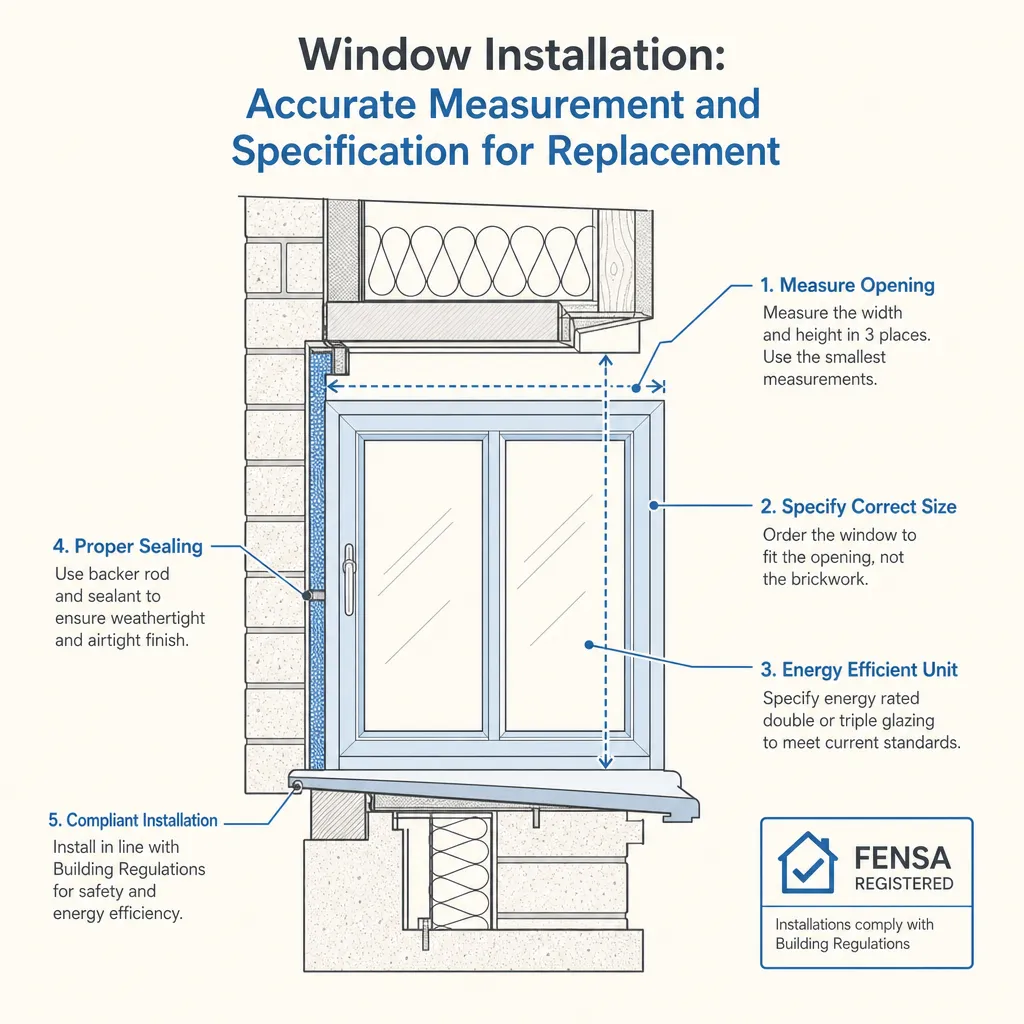
Window Installation: Accurate Measurement and Specification for Replacement
Accurate window measurement for replacement means recording the width and height of the existing frame opening in at least three places, noting the smallest dimension, and providing a full specification to your installer — including frame material, glazing type, opening style, and trickle ventilators.
 Improvement & Build
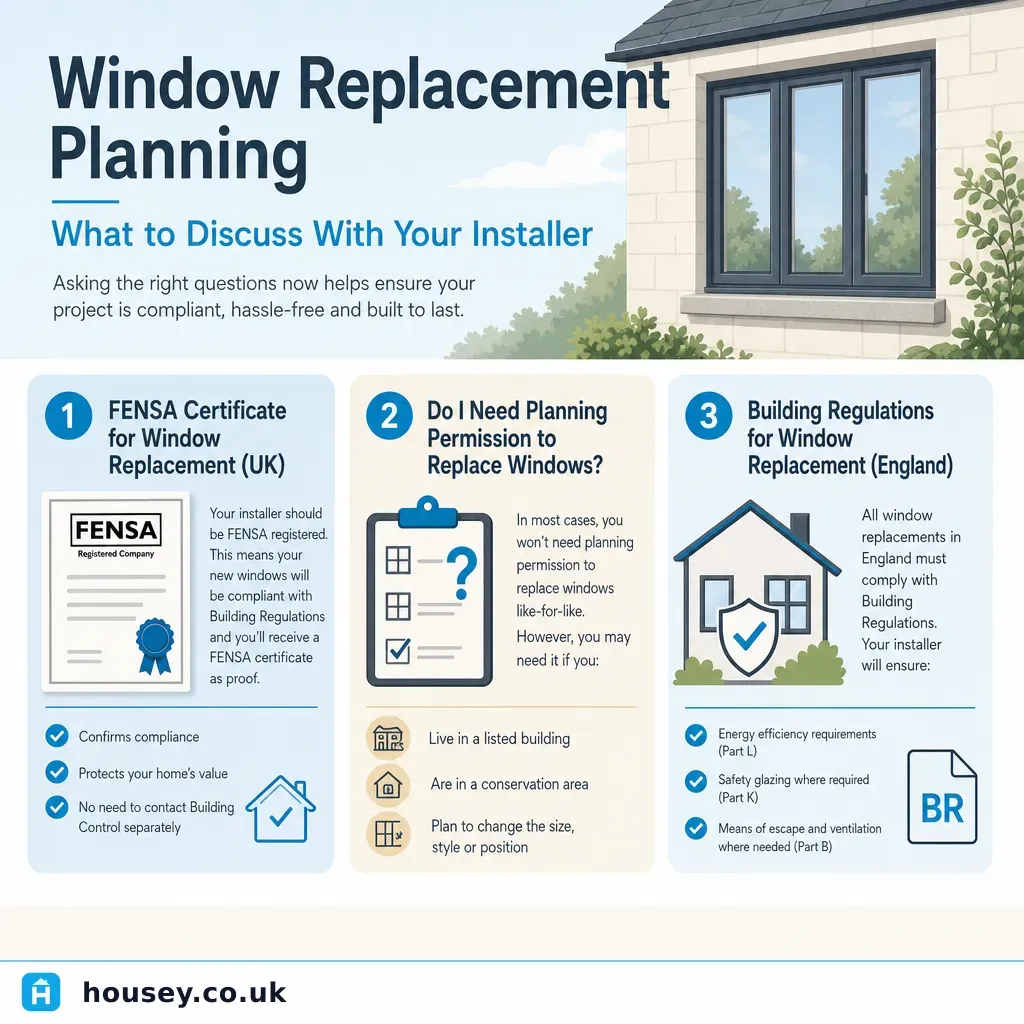
Window Replacement Planning: What to Discuss With Your Installer
Most window replacements in England fall under permitted development rights and do not require planning permission, but they must comply with Building Regulations Part L and Part K.
 Improvement & Build
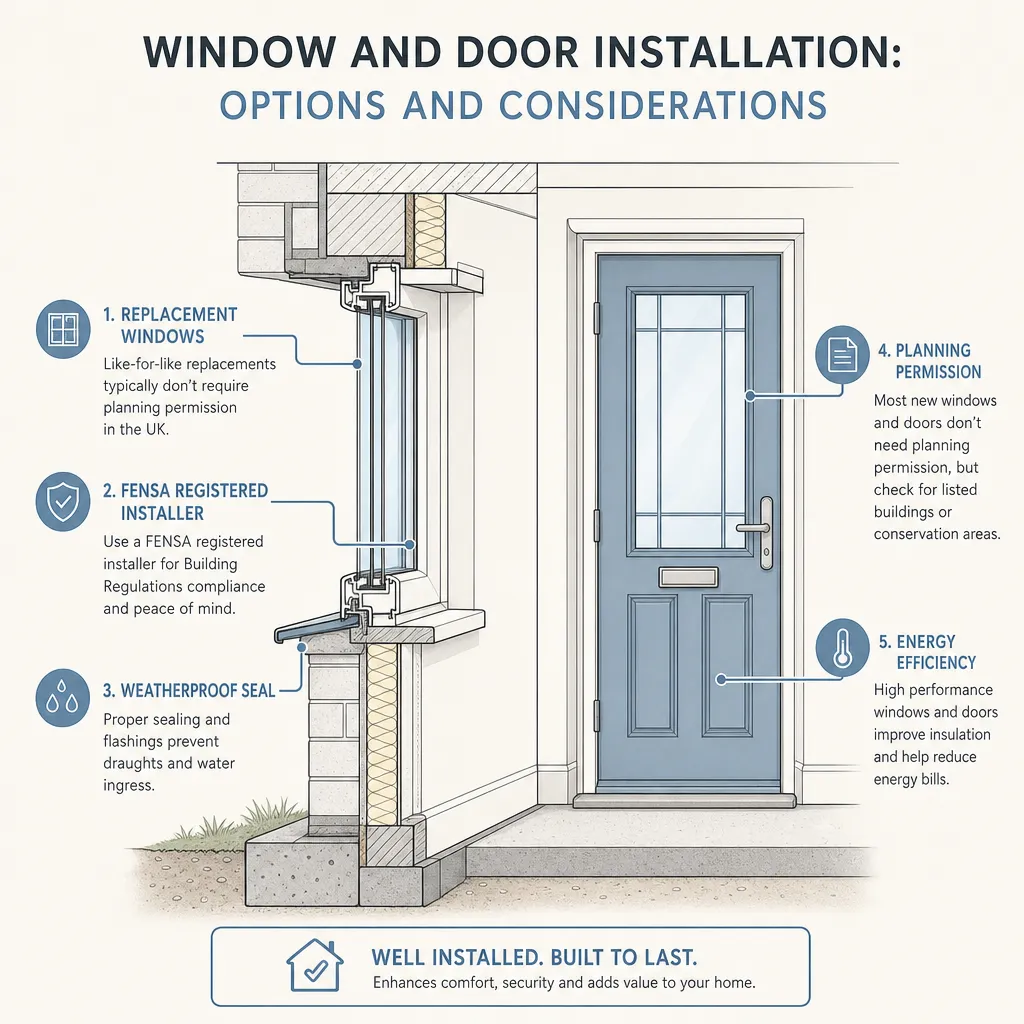
Window and Door Installation: Options and Considerations
Replacing windows and external doors in the UK requires compliance with Building Regulations Part L (thermal performance) and Part K (safety glazing).
 Improvement & Build
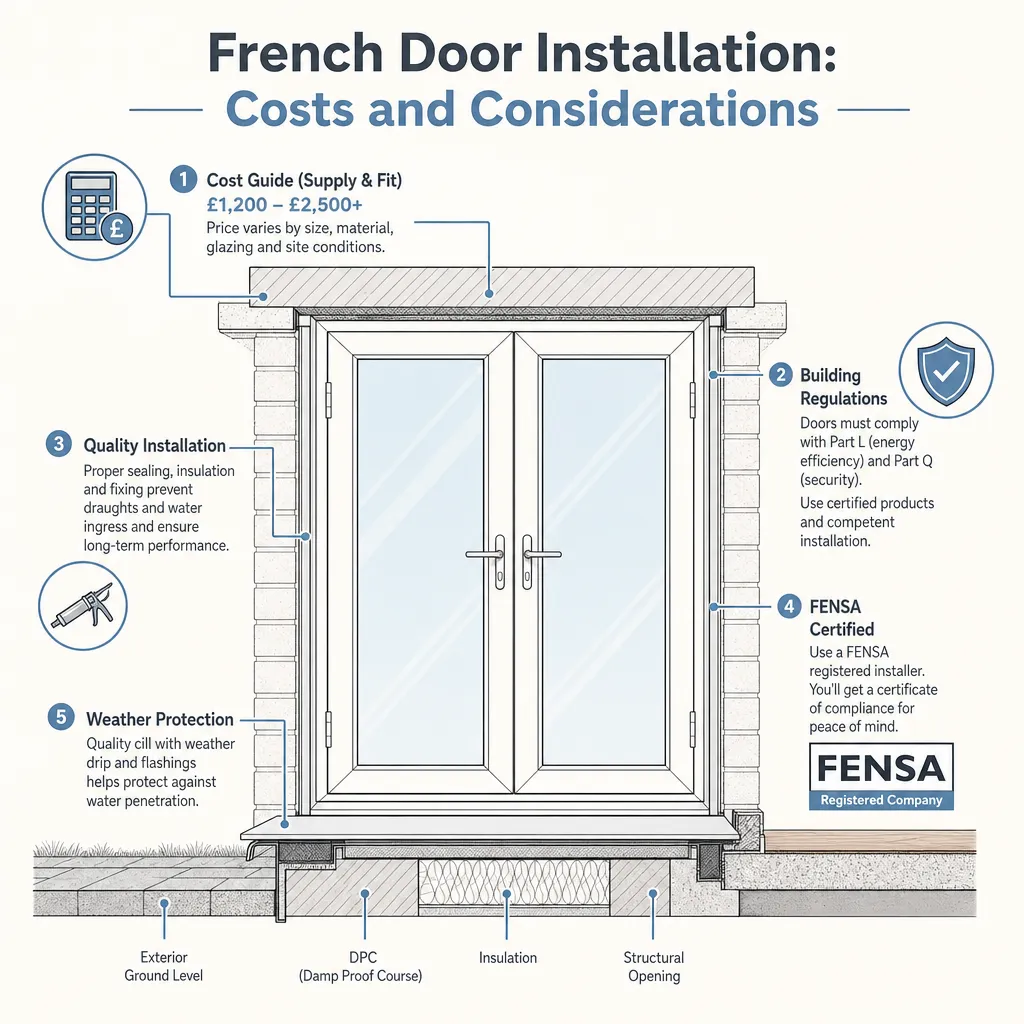
French Door Installation: Costs and Considerations
External French door installation typically costs £1,500–£4,000 in the UK, including supply and fitting, depending on material, glazing specification, and whether structural alterations are needed.
 Improvement & Build
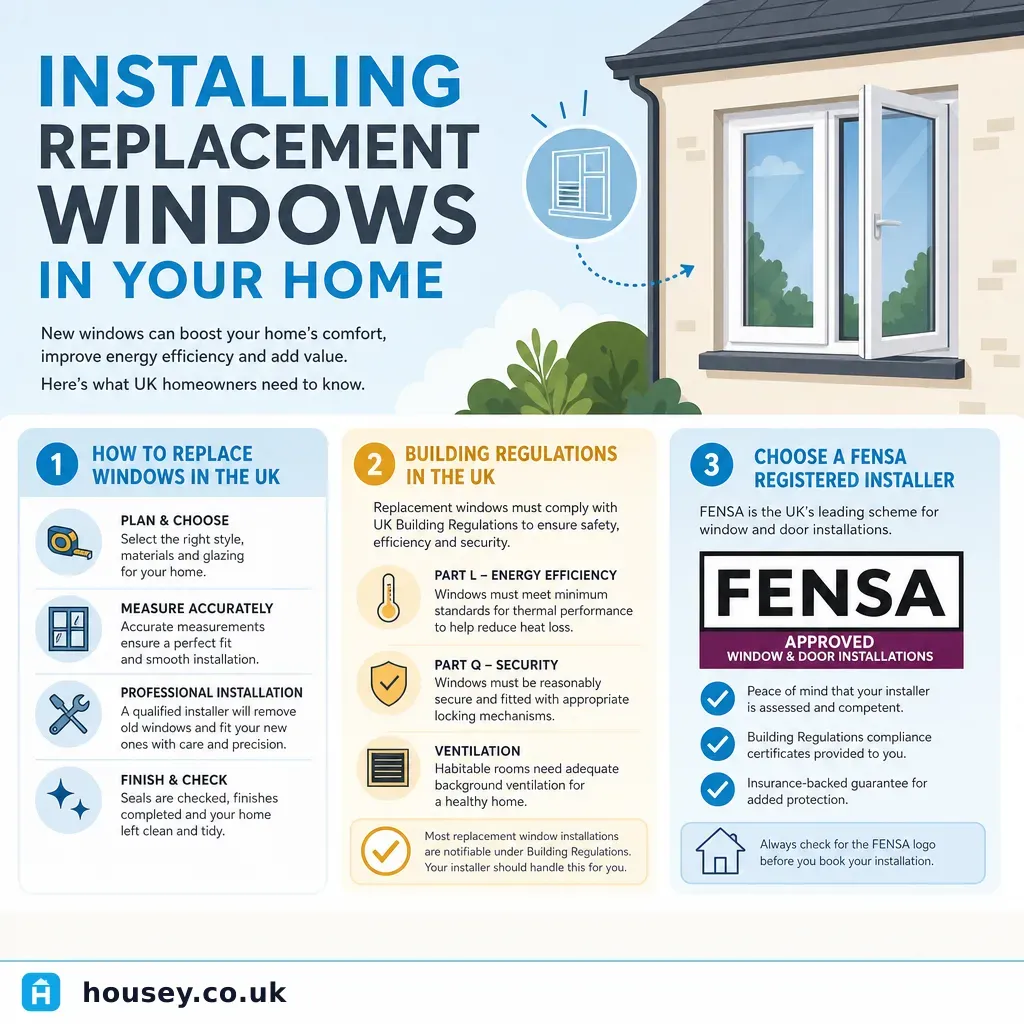
Installing Replacement Windows in Your Home
Replacing windows in the UK requires compliance with Building Regulations Part L — a minimum centre-pane U-value of 1.