Window Muntins and Mullions: Design Function and Aesthetic Purpose
By Housey · Last reviewed 12th of May 2026
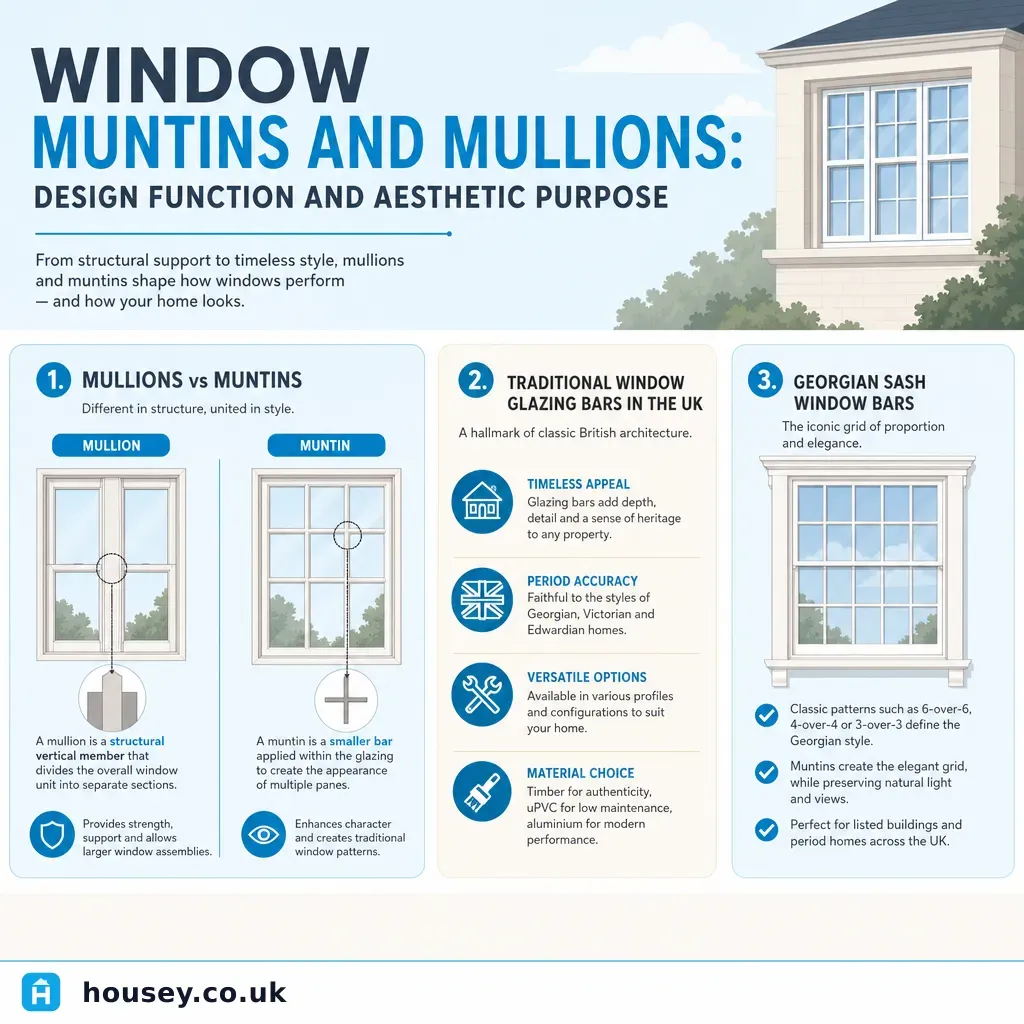
Window Muntins and Mullions: Design Function and Aesthetic Purpose
When specifying replacement windows or restoring original glazing in a period property, the terms muntin and mullion arise regularly — yet they are often confused or used interchangeably by suppliers and homeowners alike. The distinction matters both aesthetically and practically, particularly where a property is listed, sits within a conservation area, or is subject to planning conditions specifying window detailing. Getting the terminology right, and understanding what each element does, helps you make informed decisions about window specification, heritage compliance, and the long-term character of your home.
Key points
- A mullion is a vertical structural or semi-structural member that separates distinct window units within a larger opening; a muntin (or glazing bar) is a lighter bar subdividing a single pane into smaller lights.
- FENSA registration allows replacement window installers to self-certify compliance with Building Regulations Part L (energy performance) — if your installer is not FENSA-registered, a separate building regulations application is needed.
- In conservation areas, local planning authorities often specify glazing bar profiles, spacings, and materials as conditions on replacement window consents.
- Simulated divided lights (SDL) — bars applied to the glass surface or sandwiched between double-glazed panes — are not the same as true divided-light construction and may not satisfy heritage planning conditions.
- The Planning (Listed Buildings and Conservation Areas) Act 1990 requires listed building consent for any alteration affecting a listed building's character, including window changes.
Mullions vs muntins: the difference explained
The two terms describe distinct architectural elements, though confusion between them is common in everyday use:
Feature | Mullion | Muntin / Glazing bar |
|---|---|---|
Function | Divides two separate window units within a structural opening | Subdivides a single pane into smaller lights |
Structural role | Often carries load or provides frame rigidity | Primarily aesthetic; holds individual glass panes |
Typical width | Wider — may be 60–150 mm in masonry construction | Narrower — 20–40 mm in traditional UK sashes |
Common materials | Stone, timber, uPVC, aluminium | Timber, lead came, uPVC, aluminium |
UK examples | Stone mullions in Cotswold cottages; wide timber members in Edwardian bay windows | Glazing bars in Georgian sash windows; astragals in Victorian casements |
Heritage sensitivity | High in listed and conservation area properties | High — profiles and spacings often set by planning condition |
In everyday trade conversation, mullion is sometimes used loosely to mean any glazing bar. For heritage properties or planning discussions, use precise terminology and confirm requirements with your local planning authority or conservation officer.
Why glazing bar profiles matter in period properties
Georgian sash windows typically feature slender glazing bars — often 20–25 mm wide — creating distinctive 6-over-6 or 8-over-8 light patterns. These proportions arose from the technology of the time: small panes were cheaper and more reliably manufactured than large sheets of glass. The resulting rhythm of bars and shadow-lines is integral to the character of Georgian and Regency streetscapes.
When period windows are replaced with modern double-glazed units, replicating the original bar profile is important for visual continuity and may be a legal requirement. Planning conditions in conservation areas frequently specify:
- Overall frame sightlines and dimensions.
- Glazing bar width and profile — ovolo, lamb's tongue, or pencil-round are common UK period profiles.
- Bar arrangement, including the number and spacing of lights.
- Material — often timber or painted aluminium; uPVC is rarely acceptable in sensitive heritage settings.
Simulated divided lights (SDL) are bars attached to the outer face of the glass or sandwiched between double-glazed panes. They give the appearance of divided lights without the complexity of true divided-light construction. SDL may satisfy some planning conditions but not all — seek written confirmation from the conservation officer before ordering.
Worked UK property scenario: conservation area window replacement in Bristol
A homeowner in a Bristol conservation area wishes to replace original Victorian timber sash windows — a 12-over-12 light pattern with 22 mm ovolo glazing bars — with double-glazed equivalents. The local planning authority's conservation area character appraisal specifies that replacement windows must replicate original sightlines and bar profiles.
Options compared:
Option | Planning acceptability | Energy performance | Approximate relative cost |
|---|---|---|---|
Slim double-glazed timber sashes, true divided lights | Highest — most faithful to original | Good with low-e glass | Highest |
Slim double-glazed timber sashes, SDL bars between panes | Often acceptable — confirm with conservation officer | Good | Moderate–high |
uPVC sashes with applied SDL | Generally unacceptable in conservation areas | Good | Lowest |
Secondary glazing behind original sashes | No alteration to original — no consent issue | Improved but less than replacement | Moderate |
The homeowner should contact the conservation officer before ordering, confirm the wording of any planning condition, and consider a pre-application enquiry if the condition is ambiguous.
What not to assume
- Do not assume glazing bars are purely decorative. In pre-1900 windows, glazing bars often hold multiple small panes of original crown or cylinder glass. Replacing them carelessly can destroy irreplaceable historic fabric.
- Do not assume SDL bars will satisfy any heritage planning condition. Some conditions specify true divided lights; SDL is not equivalent and could lead to enforcement action.
- Do not assume a FENSA-registered installer will navigate heritage requirements. FENSA covers building regulations compliance, not planning compliance. Both may apply to your project simultaneously.
- Do not assume mullions are non-structural. In older masonry buildings, stone or timber mullions may carry the lintel above the window opening and should not be altered without structural assessment.
- Do not assume the same rules apply across the UK. Listed building and conservation area designations are assessed locally; planning authority interpretations of window policy vary between councils.
When to get professional help
Seek specialist advice before replacing windows if:
- The property is listed (Grade I, II*, or II) — listed building consent is required for any alteration.
- The property is in a designated conservation area and original windows are being replaced.
- A planning condition specifically refers to window materials, sightlines, or glazing bar profiles.
- Windows contain original crown glass, leaded lights, or stained glass.
- A mullion appears structural and you are considering removal or alteration.
How Housey can help
Housey connects you with experienced window and door installers who work across a range of property types and can advise on glazing bar options, heritage compliance, and FENSA certification. If your project involves a listed building or conservation area, ask specifically about the installer's heritage window experience before instructing.
Frequently asked questions
What is the difference between a muntin and a mullion?
A mullion is a larger vertical dividing element separating two distinct window units within a structural opening — common in stone or timber frames in older UK buildings. A muntin, or glazing bar, is the narrower bar subdividing a single pane into smaller lights within a sash or casement. Mullions often carry some structural load; muntins are primarily aesthetic but retain individual glass panes in place.
Do I need planning permission to change the glazing bars in my windows?
In most standard properties, changing glazing bars does not require planning permission. However, if your property is listed or in a conservation area, any change affecting its appearance may need consent. Conditions attached to previous planning consents may also specify glazing bar profiles and materials. Check with your local planning authority before ordering replacement windows.
What does FENSA registration mean for window installations?
FENSA (Fenestration Self-Assessment Scheme) allows registered window installers to self-certify that replacement installations comply with Building Regulations Part L (energy efficiency) and Part K (safety glazing). A FENSA certificate is issued after installation and should be retained with your property documents. If your installer is not FENSA-registered, a separate building regulations application to your local authority is needed.
Are simulated divided lights acceptable for heritage properties?
It depends on the local authority and the precise wording of any planning condition. Some conservation officers accept high-quality SDL bars between double-glazed panes where the profile closely replicates the original; others require true divided-light construction. Always obtain written confirmation from the conservation officer or local planning authority before ordering.
Sources and further reading
- Planning Practice Guidance: design — GOV.UK / MHCLG
- Windows in historic buildings — technical advice — Historic England
- FENSA: replacement windows and building regulations — FENSA
- Approved Document L — Conservation of fuel and power — GOV.UK
- Planning (Listed Buildings and Conservation Areas) Act 1990 — legislation.gov.uk
Useful next reads
 Improvement & Build
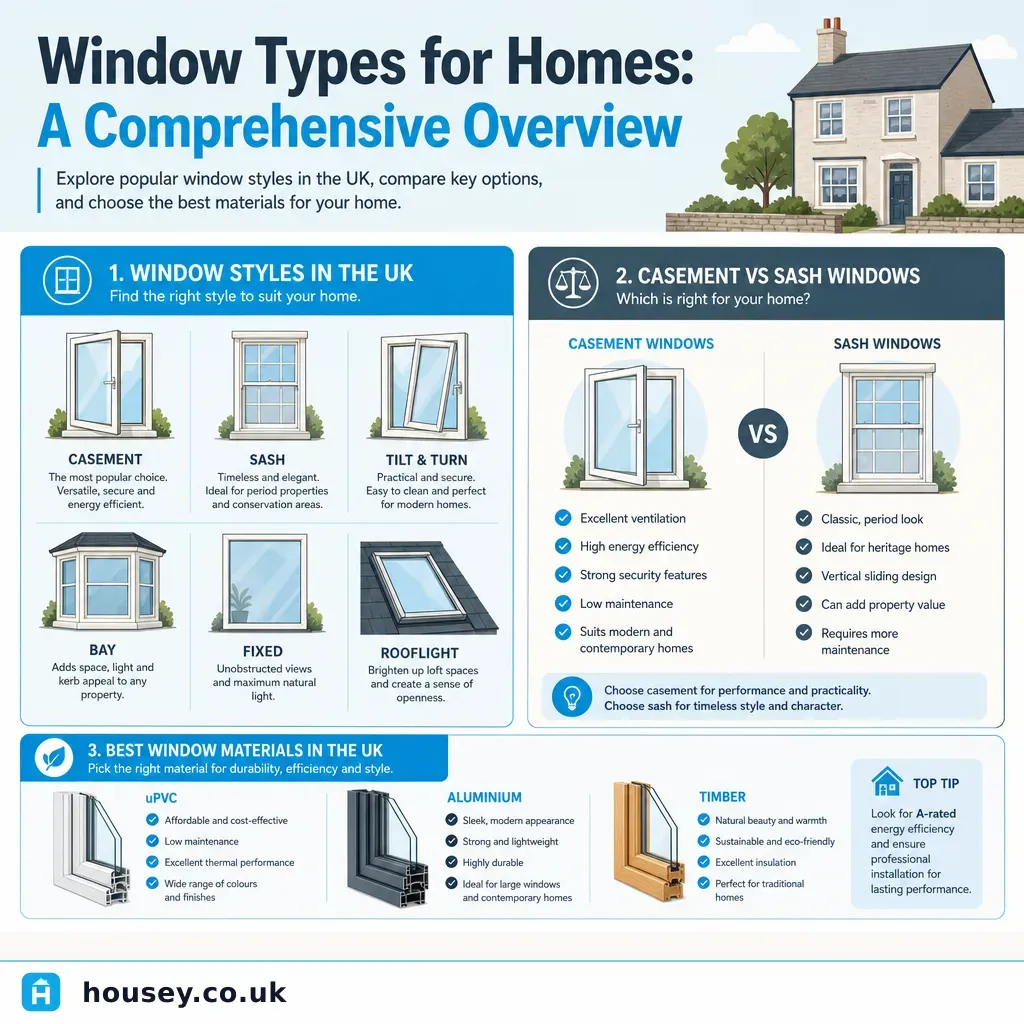
Window Types for Homes: A Comprehensive Overview
UK homes use several main window styles: casement (outward-swinging), sash (vertically sliding), tilt-and-turn, fixed light, and bay or bow.
 Improvement & Build
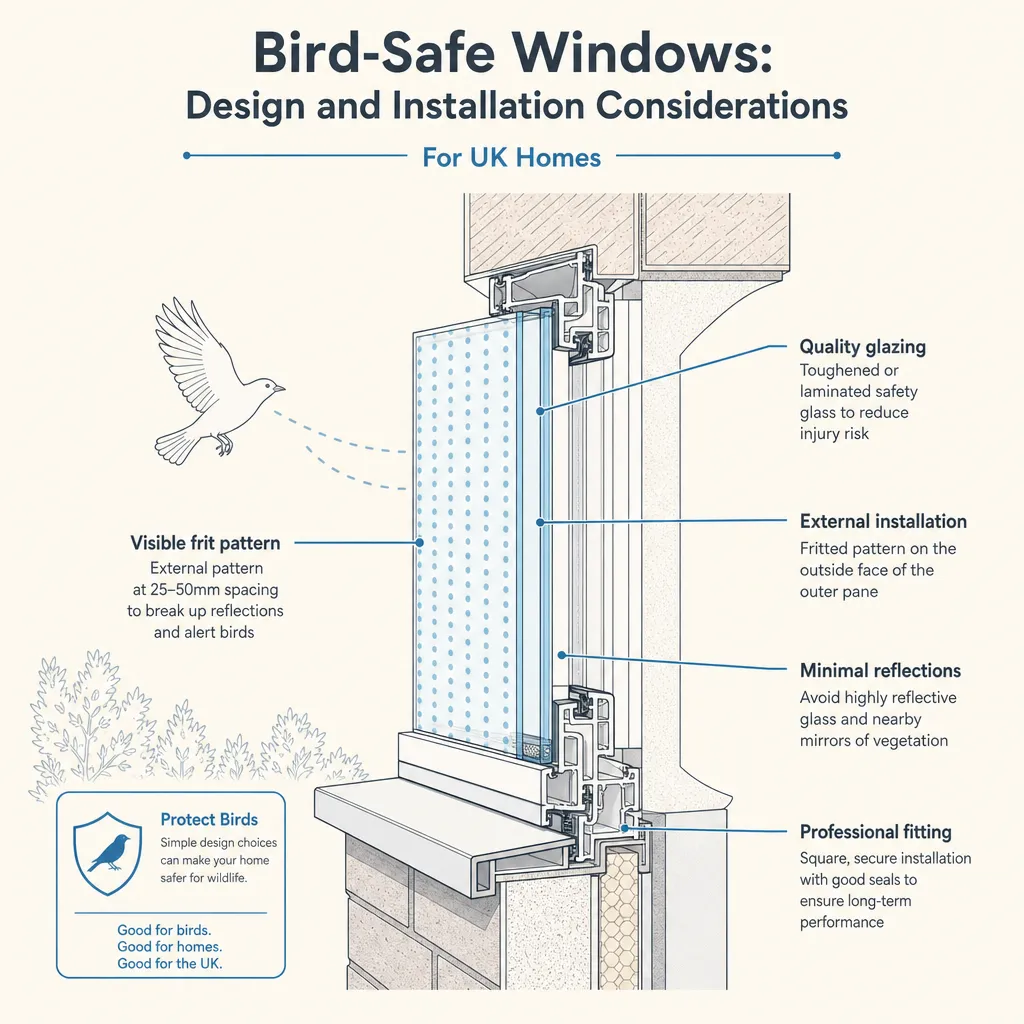
Bird-Safe Windows: Design and Installation Considerations
Bird-safe windows use patterns, coatings, or films on the exterior glazing surface to make glass visible to birds in flight.
 Improvement & Build
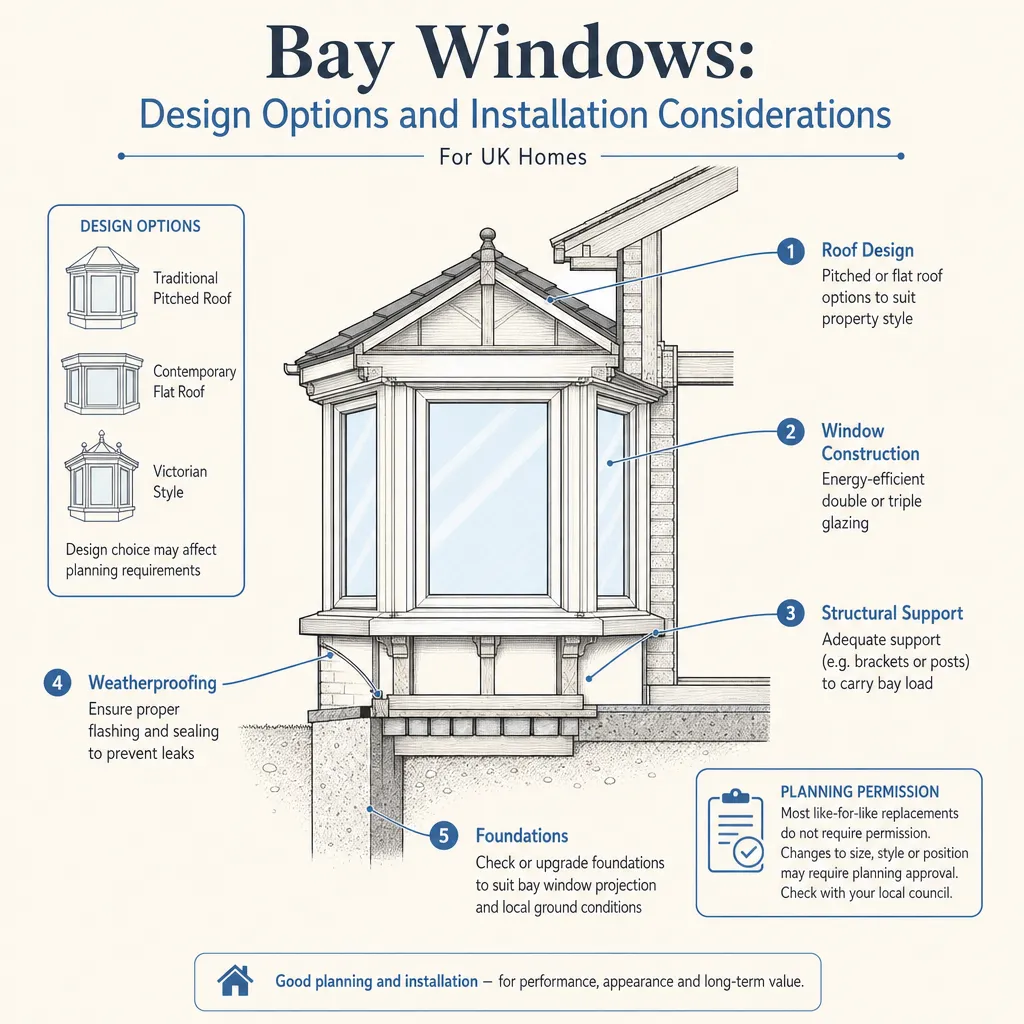
Bay Windows: Design Options and Installation Considerations
Bay windows project beyond the main wall of a house, increasing floor area and natural light.
 Improvement & Build
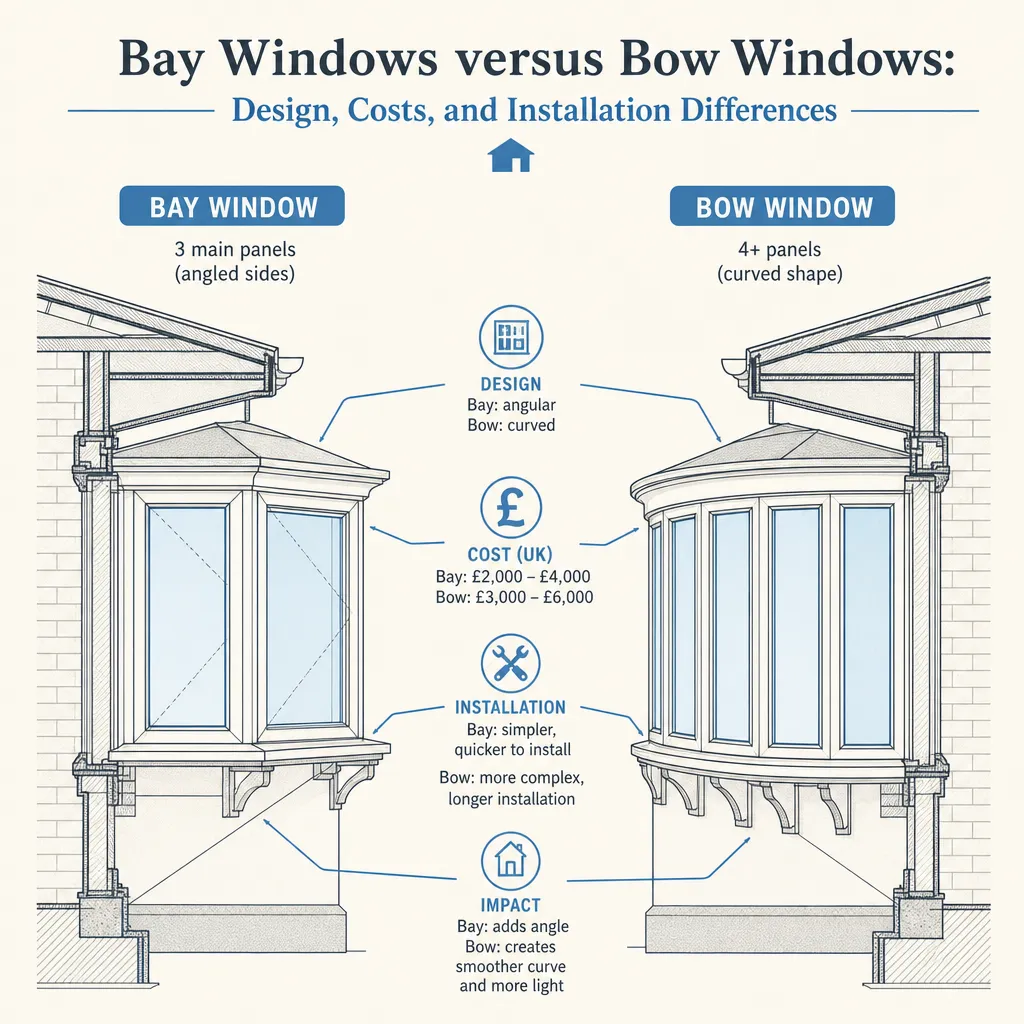
Bay Windows versus Bow Windows: Design, Costs, and Installation Differences
Bay windows project outward at angles — usually three panels at 90° or 135° — creating more floor space inside.
 Improvement & Build
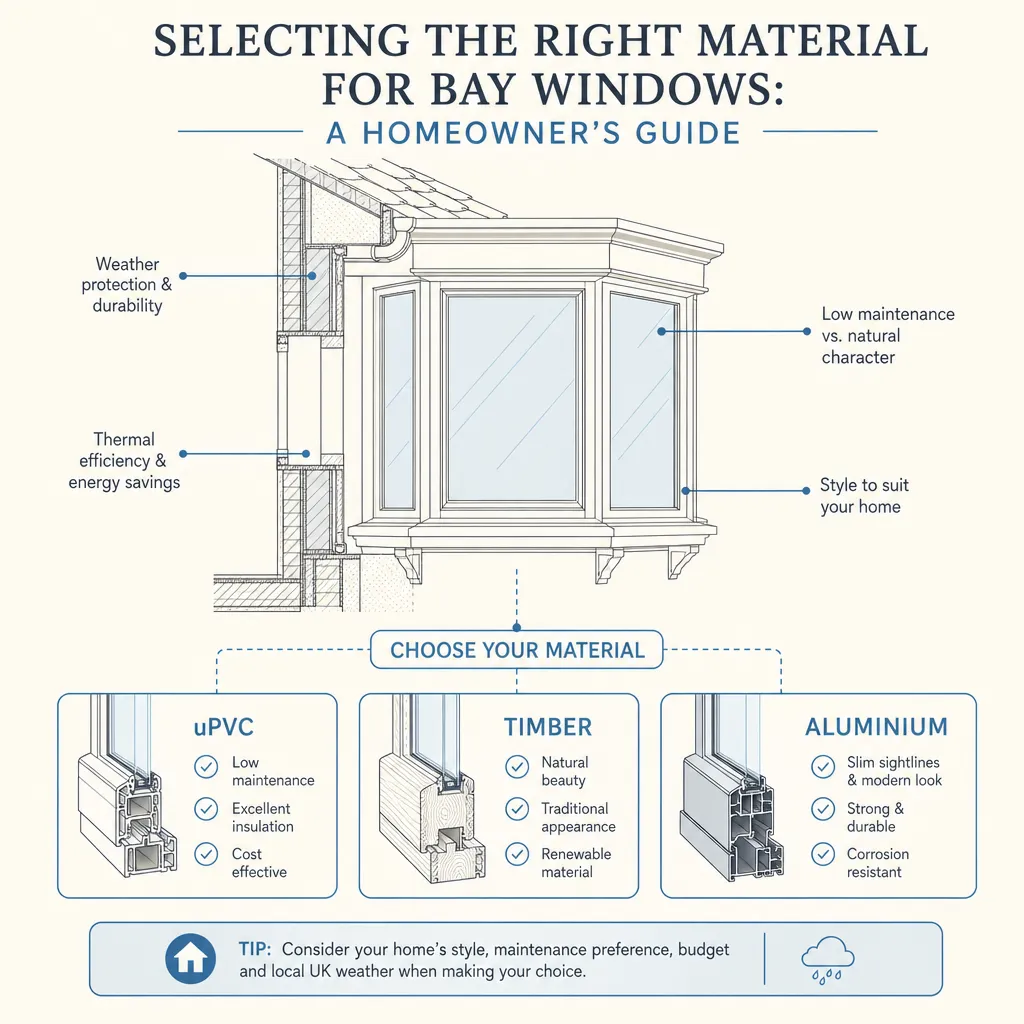
Selecting the right material for bay windows: a homeowner's guide
The main bay window materials in the UK are uPVC, timber, and aluminium.