Window Pricing Guide by Size and Type
By Housey · Last reviewed 19th of May 2026
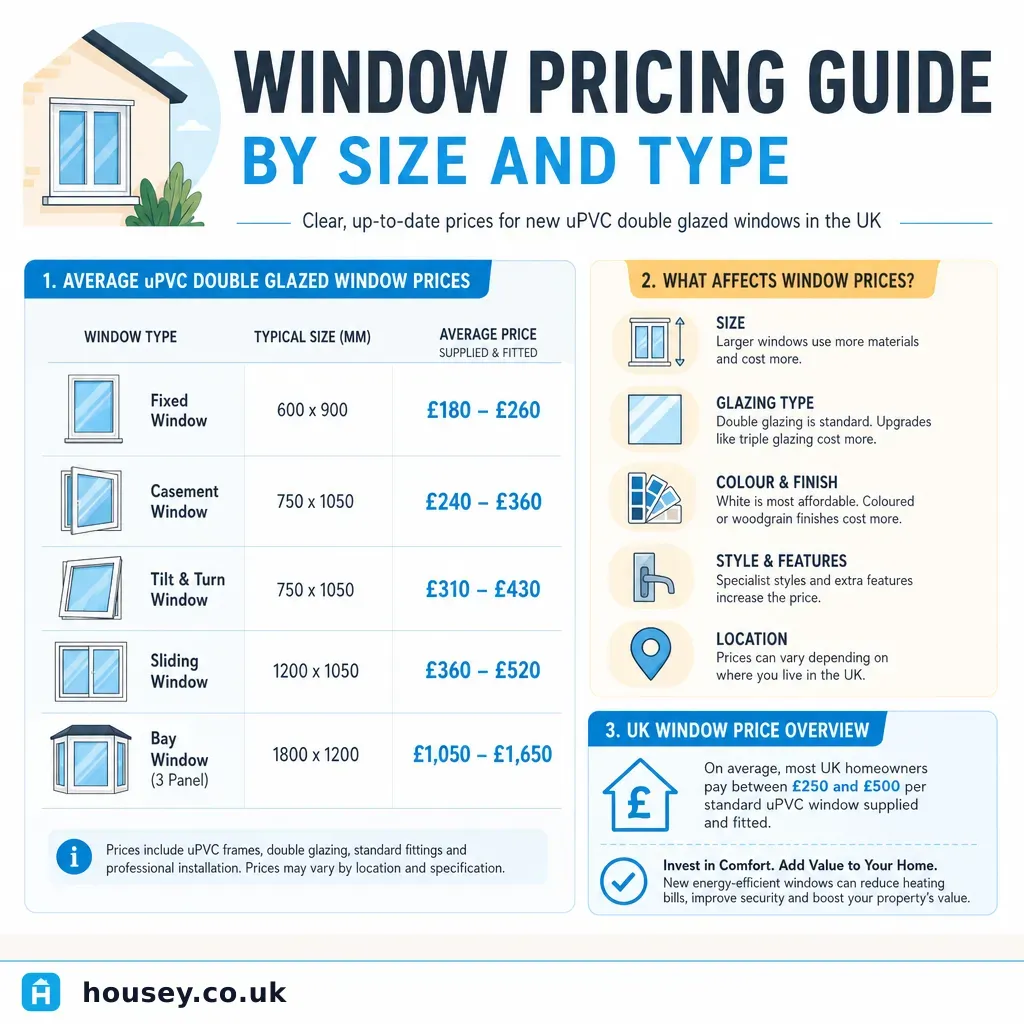
Window Pricing Guide by Size and Type
Replacing windows is one of the more significant home-improvement investments a UK homeowner can make — whether you are upgrading a 1930s semi to double glazing for the first time, or replacing failed units in a 2000s new-build. Prices vary considerably depending on frame material, glass specification, window style, and the number of units being installed, so understanding the cost structure before you approach installers can help you budget accurately and compare quotes on a like-for-like basis.
Key points
- FENSA or CERTASS registration is required for any installer replacing windows in England and Wales; without it, you must apply separately for building control approval under Building Regulations Part L.
- Standard uPVC casement windows (600 mm × 900 mm) typically cost £300–£600 supplied and fitted; larger or more complex styles increase this substantially.
- Timber sash windows — common in Victorian and Edwardian properties — typically range from £800 to £2,000+ per unit, depending on size, joinery specification, and whether draught-proofing is included.
- Triple glazing adds 20–40% to unit cost over double glazing; it may not be cost-effective in most UK climates unless you are pursuing Passivhaus or ultra-low-energy targets.
- Bay and bow window configurations often cost 2–3× more than an equivalent flat window due to the structural lintel, separate opening panes, and increased fitting time.
How window prices are structured
Window pricing in the UK covers three elements: the frame and glass unit (supply), installation labour, and any associated works such as making good plaster, fitting internal cills, and disposing of old frames. Most installer quotes bundle supply and fit together, but some trade suppliers quote supply-only prices — useful if you are comparing quotes, but make sure you are comparing the same scope.
VAT at the standard rate applies to window installation in most cases. Certain energy-saving materials may attract a reduced rate when installed in residential dwellings — check the current GOV.UK guidance on VAT for energy-saving materials to confirm whether your specification qualifies.
Indicative costs by window type
The table below shows typical installed costs per window unit for common UK window styles.
Indicative UK costs, last reviewed 2026-05-19. Quotes vary by region, property type, access difficulty, and installer. Always obtain at least three written quotes.
Window type | Typical size | Indicative installed cost (per unit) | Frame materials | Notes |
|---|---|---|---|---|
uPVC casement | 600×900 mm to 1200×1200 mm | £300–£700 | uPVC | Most common replacement; low maintenance |
uPVC tilt-and-turn | 600×900 mm to 1200×1200 mm | £400–£800 | uPVC | Easy to clean from inside; popular in flats |
Timber casement | 600×900 mm to 1200×1200 mm | £600–£1,400 | Softwood, hardwood | Often required in conservation areas |
Timber sash (vertical sliding) | 500×900 mm to 900×1800 mm | £800–£2,000+ | Softwood, hardwood | Period properties; draught-proofing often included |
Aluminium casement | 600×900 mm to 1500×1500 mm | £700–£1,500 | Aluminium | Slim sightlines; popular in contemporary builds |
Bay window (3-panel) | 2400×1200 mm overall | £2,000–£5,000+ | uPVC, timber, aluminium | Structural lintel work often needed |
Roof window | 550×780 mm to 940×1600 mm | £600–£1,800 | uPVC, timber, aluminium | Requires building regulations notification |
Sources: Glass and Glazing Federation consumer guidance; indicative trade installer pricing. Figures vary by region and specification.
How size affects price
Window manufacturers typically price by area (m²), with larger panes attracting a higher per-unit cost. As a rule of thumb:
- Small windows (up to 0.5 m²): lower unit cost, but labour is proportionally higher.
- Standard windows (0.5–1.5 m²): the most competitively priced bracket; most off-the-shelf sizes fall here.
- Large or statement windows (over 1.5 m²): structurally heavier, requiring larger frames and often additional structural support; costs rise steeply.
- Non-standard or bespoke sizes: typically add 15–40% over a standard equivalent.
Frame material comparison
The frame material affects upfront cost, ongoing maintenance, thermal performance, and planning acceptability — particularly in conservation areas or for listed buildings.
Frame material | Typical lifespan | Maintenance | U-value achievable | Planning notes |
|---|---|---|---|---|
uPVC | 20–35 years | Very low | 0.8–1.4 W/m²K | May not be acceptable in conservation areas |
Timber (painted) | 30–60+ years | Regular painting required | 1.2–1.6 W/m²K | Usually preferred or required in conservation areas |
Aluminium (thermally broken) | 30–45 years | Low | 1.0–1.6 W/m²K | Increasingly accepted in contemporary builds |
Timber-aluminium composite | 30–50 years | Low externally | 0.8–1.2 W/m²K | Good option for period properties needing low maintenance |
U-values are indicative and depend on glass specification and frame design. Building Regulations Part L sets minimum standards for replacement windows in England.
Glazing specification and its effect on price
Double glazing is standard across virtually all new window units in the UK. The glazing specification significantly affects both thermal performance and price:
- Standard double glazing (4-16-4 mm): typically included in base quotes.
- Warm-edge spacer bars: reduce condensation risk at edges; may add £20–£50 per unit.
- Argon-filled cavities: improve U-value; often included in better-specified quotes.
- Low-E glass: standard in most modern units — verify it is included in your quote.
- Triple glazing: adds approximately 20–40% to unit cost; most beneficial in very well-insulated properties targeting very low heat loss.
Worked example: replacing windows in a 1930s semi-detached
A typical three-bedroom 1930s semi-detached in the East Midlands has eight windows: six standard casements, one larger living-room picture window, and one bathroom obscure-glass unit.
Replacing all units with uPVC double glazing, FENSA-certified, including fitting:
- 6 × standard casements at £450 average = £2,700
- 1 × large picture window = £900
- 1 × obscure-glass bathroom unit = £400
- Estimated total: approximately £4,000–£5,000
The same property with timber casements (required in a conservation area) could range from £7,500 to £12,000+. These figures are illustrative — always get site-specific quotes.
Indicative UK costs, last reviewed 2026-05-19.
What to ask before accepting a quote
- Is the price supply-and-fit inclusive of VAT?
- Is the installer FENSA or CERTASS registered, and will they handle the building regulations notification?
- What glazing specification is included — U-value, low-E coating, argon fill, spacer bar type?
- Are internal cills, external sills, beading, and making-good of plasterwork included?
- What is the lead time and how is waste disposal handled?
- What guarantee is provided on frames and sealed units?
- What happens if the opening size varies once the old frame is removed?
When to get professional help
Window replacement is a regulated activity under Building Regulations Part L. The following situations require additional professional input beyond a standard window installer:
- Listed buildings: any window replacement requires listed building consent; consult your local planning authority and a conservation specialist before specifying materials or instructing an installer.
- Conservation areas: permitted development rights for window replacement may be restricted — check with your local planning authority before ordering.
- Structural concerns: if lintels above openings show cracks, deflection, or visible deterioration, a structural engineer should inspect before installation proceeds.
- Bay windows: the structural lintel and return walls need assessment if the bay is load-bearing; seek a structural engineer's input before instructing.
- Roof windows: require building regulations notification and may need guarding if there is a fall risk.
How Housey can help
Housey connects you with vetted window and door installers who can provide written, itemised quotes for supply and fit. Compare up to four quotes side by side to evaluate specifications, guarantees, and price — not just the headline figure.
Frequently asked questions
Do I need planning permission to replace my windows?
In most cases, replacing windows in England is permitted development and does not require planning permission, provided the new windows are of a similar appearance. However, if your property is in a conservation area, an Article 4 Direction may remove this right. Listed buildings always require listed building consent. Check with your local planning authority if you are unsure.
How long does window replacement take?
A single window replacement typically takes one to three hours for a straightforward unit. A full house re-window of eight to twelve units is usually completed within one to two days by an experienced installation team, assuming no significant complications such as structural lintel issues or non-standard opening sizes.
Is FENSA registration mandatory for window installers?
FENSA registration is not mandatory for the individual installer, but the installation must comply with Building Regulations Part L. A FENSA or CERTASS registered company self-certifies compliance, avoiding a separate building control application and fee. If you use a non-registered installer, you must notify building control yourself and may incur an inspection fee.
Can I replace only the glass unit and not the frame?
Yes — if the frame is structurally sound, double-glazed unit replacement is possible and significantly cheaper than full replacement, often £80–£200 per standard-size unit. This is only appropriate where the frame is not warped, rotten, or thermally poor. Check whether the existing unit contains toughened or fire-rated glass, as the replacement must match the original specification.
Sources and further reading
- FENSA consumer guidance — FENSA
- Building Regulations Approved Document L — GOV.UK
- Glass and Glazing Federation consumer advice — Glass and Glazing Federation
- Windows and glazing energy advice — Energy Saving Trust
- Planning Portal: windows guidance — Planning Portal
Useful next reads
 Improvement & Build
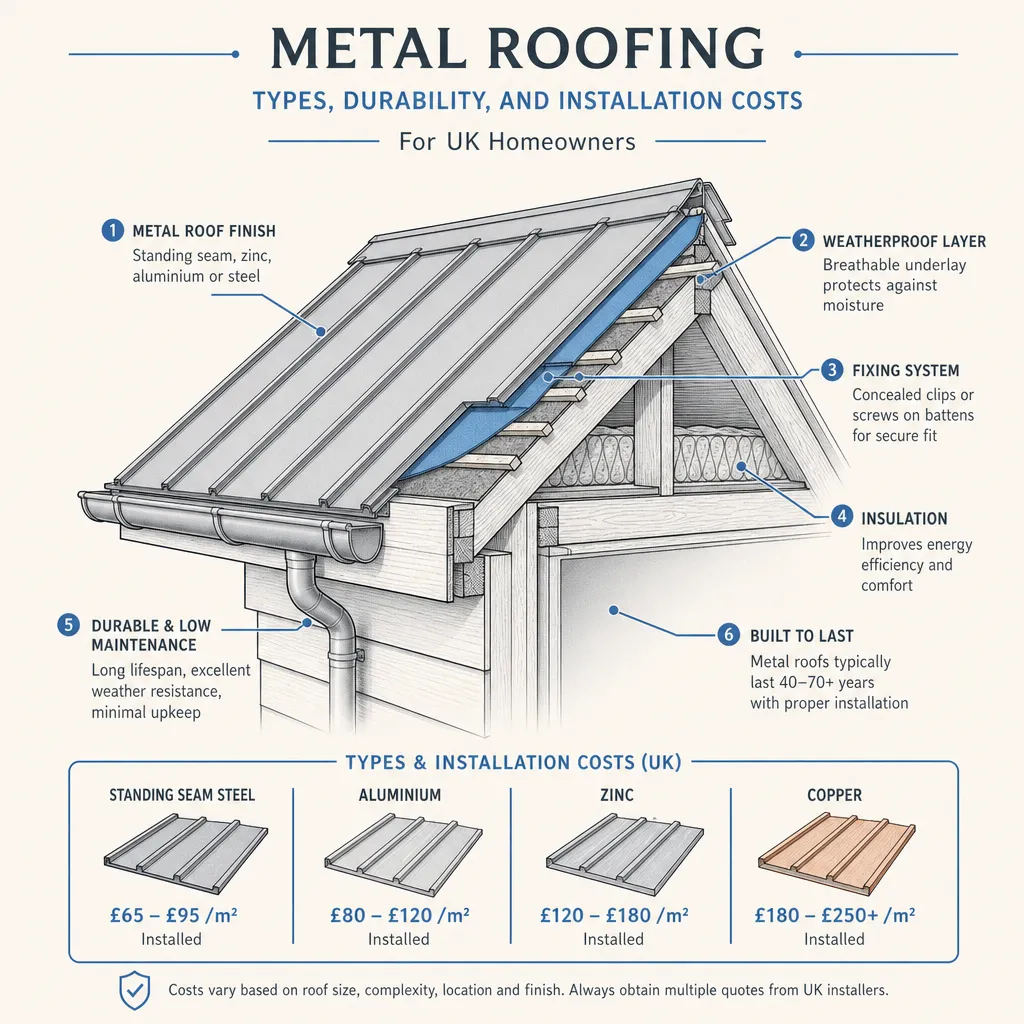
Metal Roofing: Types, Durability, and Installation Costs
Metal roofing in the UK includes standing seam, corrugated sheet, and metal tile systems in steel, aluminium, zinc, or copper.
 Improvement & Build
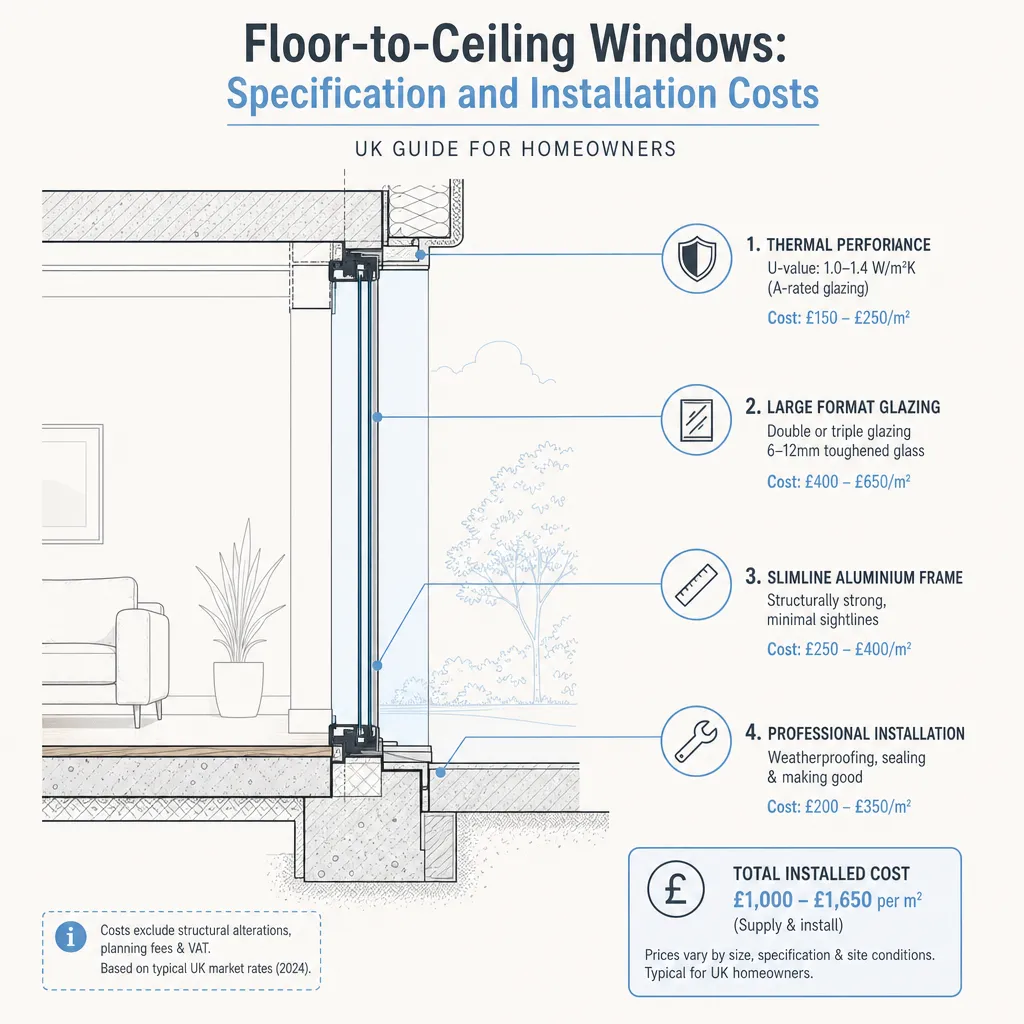
Floor-to-Ceiling Windows: Specification and Installation Costs
Floor-to-ceiling windows in the UK typically cost £1,800–£6,500 per unit installed, depending on glazing type, frame material, and whether structural alterations are needed.
 Improvement & Build
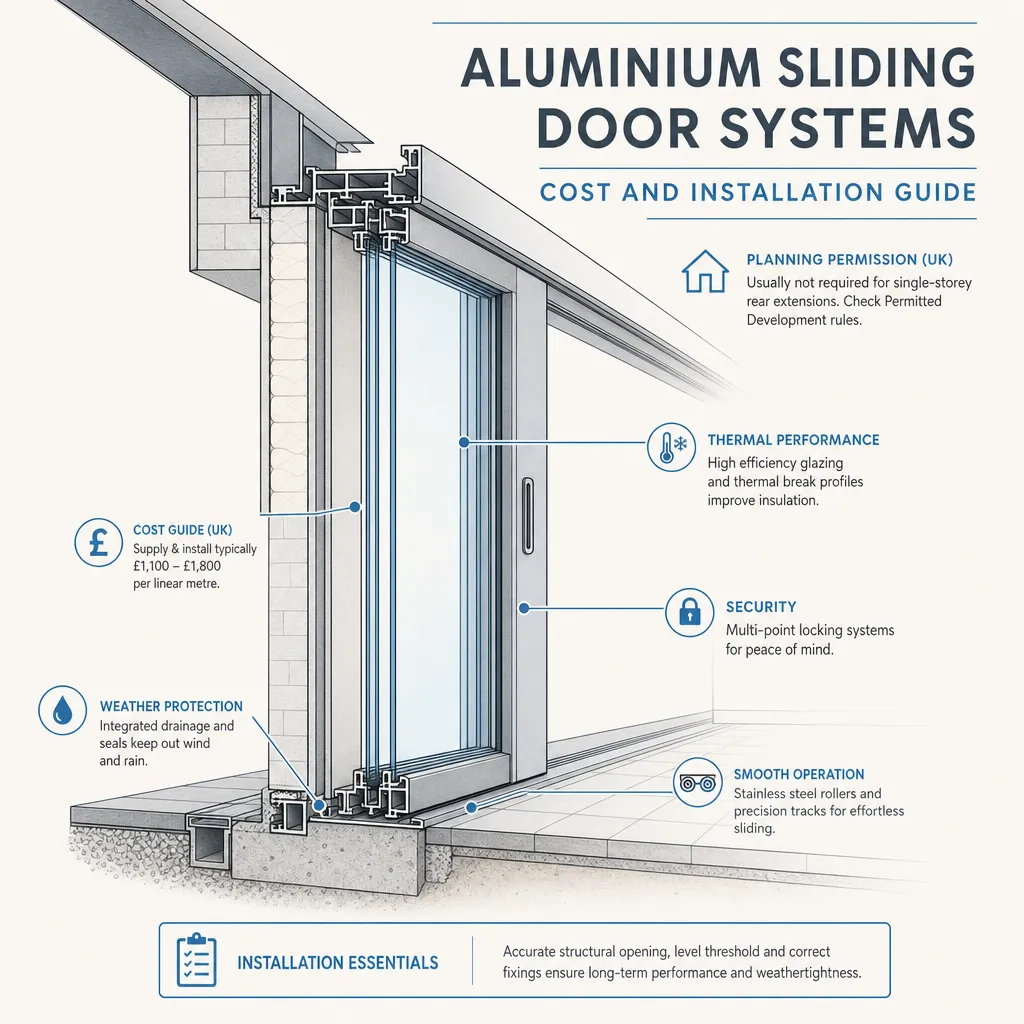
Aluminium Sliding Door Systems: Cost and Installation Guide
Aluminium sliding doors typically cost £2,500–£7,000 supply and fitted for a standard opening.
 Improvement & Build
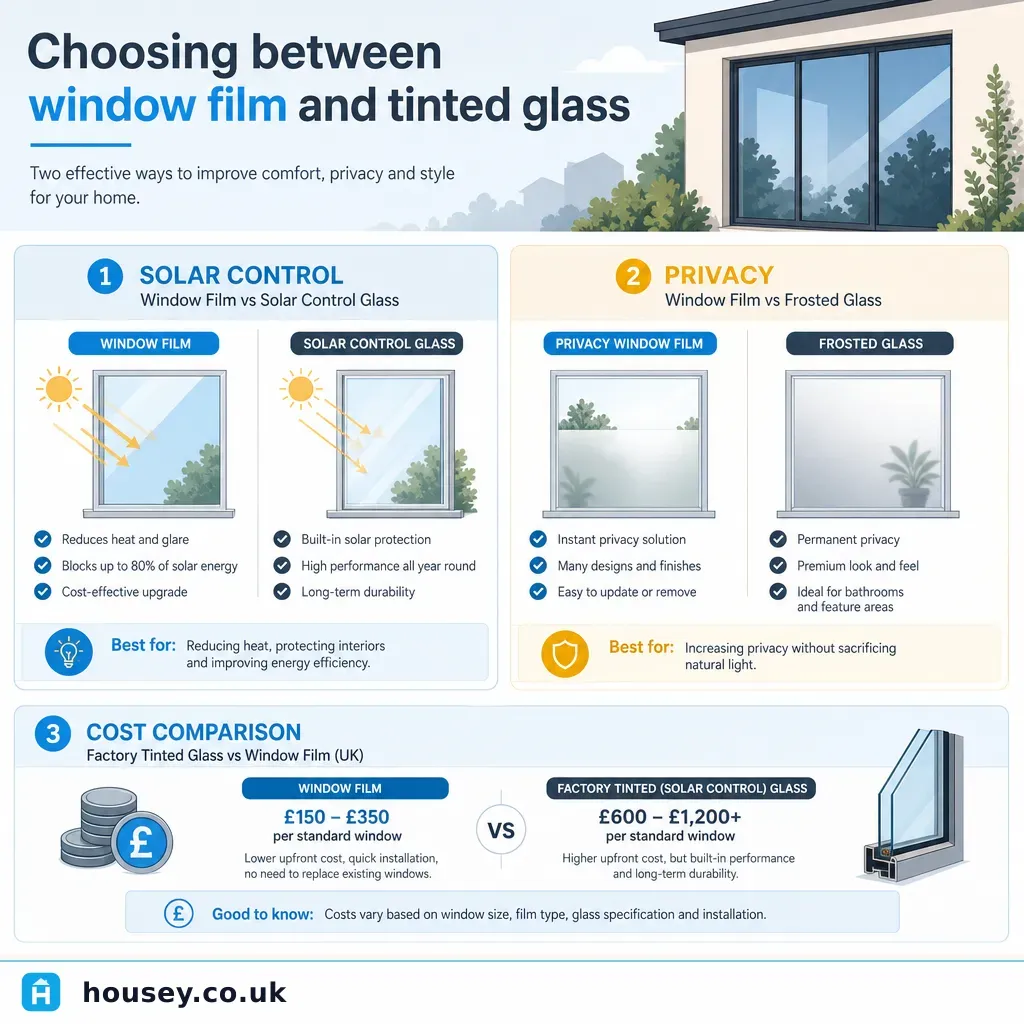
Choosing between window film and tinted glass
Window film is a retrofittable adhesive layer applied to existing glass — cheaper and reversible; factory-tinted or solar-control glass is manufactured with the tint integral to the pane, offering better durability and consistent performance.
 Improvement & Build
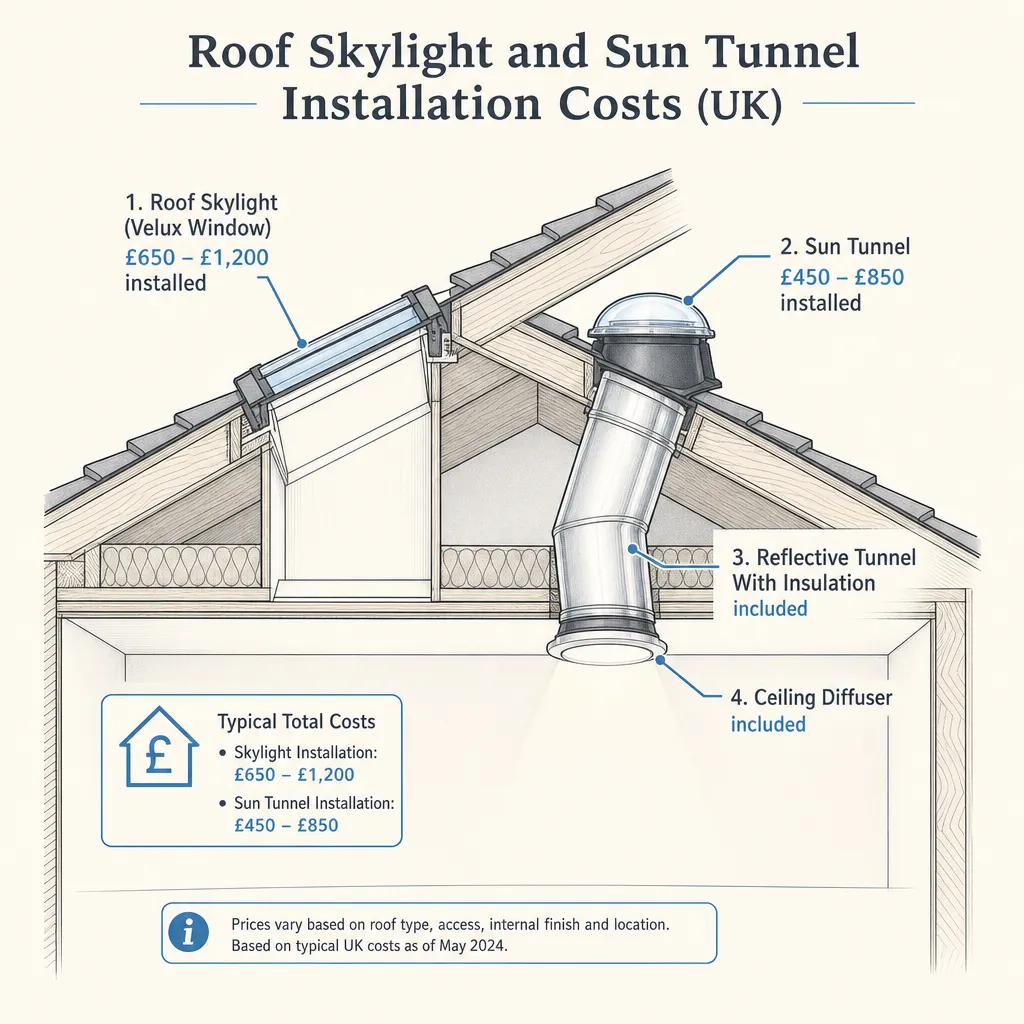
Roof Skylight and Sun Tunnel Installation Costs
A standard pitched-roof skylight costs £800–£3,000 installed in the UK, including flashings and basic making good.