Window Replacement: Costs and Installation Guide
By Housey · Last reviewed 10th of May 2026
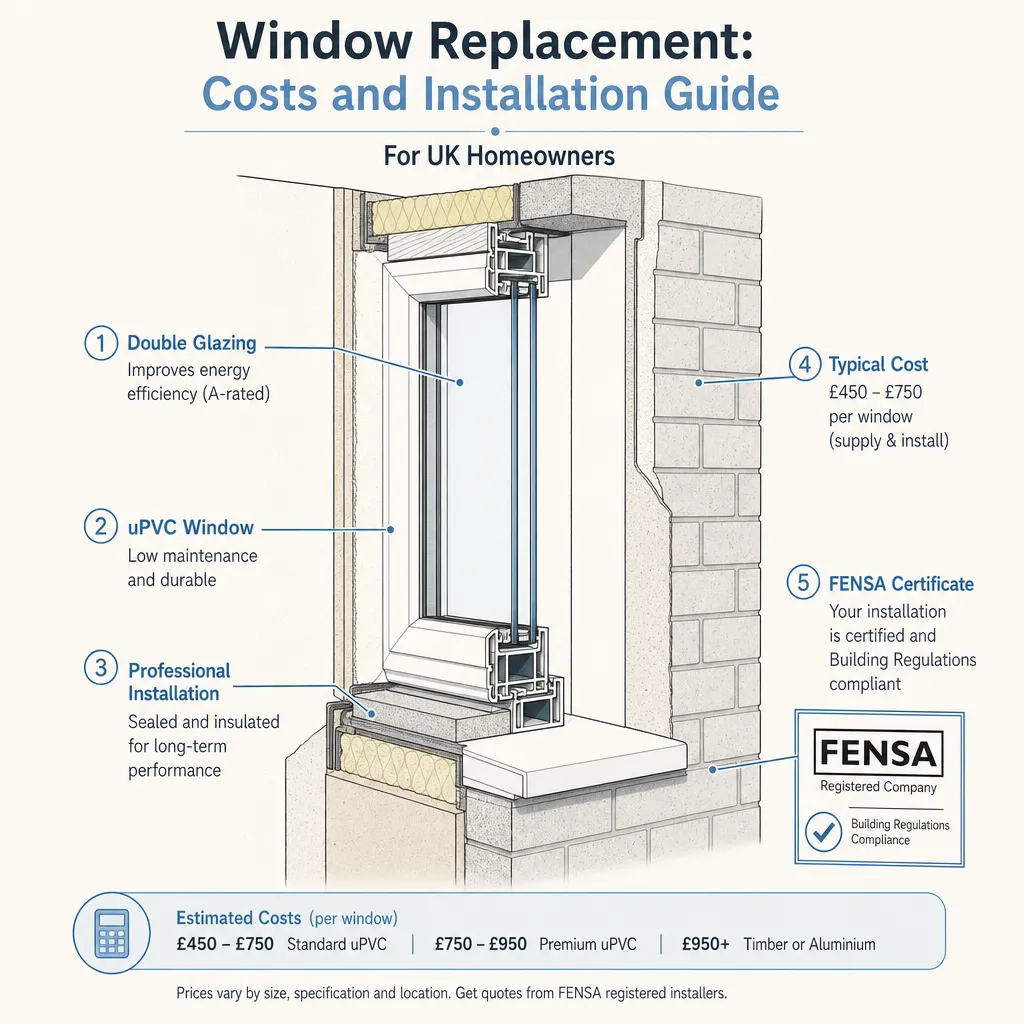
Window Replacement: Costs and Installation Guide
Window replacement decisions typically arise when draughts, condensation between panes, or visible deterioration make existing units unworkable — or when an energy-efficiency upgrade is on the agenda. Whether you own a 1930s semi, a Victorian terrace, or a 1990s estate house, the process involves regulatory compliance as well as product choices that will affect your home for 20 years or more.
Key points
- Replacement windows in England and Wales must comply with Part L of the Building Regulations; installers registered with FENSA or CERTASS self-certify compliance so you do not need a separate building control application.
- The minimum whole-window U-value under Part L (2022) is 1.4 W/m²K — lower values indicate better thermal performance; most modern double-glazed units achieve 1.2–1.6 W/m²K.
- Properties in conservation areas, Article 4 Direction areas, or that are listed buildings may require planning permission before any window replacement — check with your local planning authority first.
- A FENSA certificate is issued within 30 days of installation and is required by conveyancers when you sell; missing certificates can delay or block a sale.
- Indicative installed costs range from £400–£900 per standard uPVC casement window to £1,500–£3,000 for timber sash replacements (Indicative UK costs, last reviewed 2026-05-10).
What triggers a window replacement?
Several factors make replacement the more practical choice over repair:
- Failed double-glazing seal: Condensation between panes means the inert gas fill has escaped. The sealed unit — if not the whole frame — needs replacement.
- Single glazing: Pre-1980s properties may retain single-glazed timber frames. Replacing with double glazing typically cuts heat loss through windows by around 50%, according to the Energy Saving Trust.
- Rotten or warped frames: Timber frames with extensive rot, or uPVC frames warped beyond draught-seal repair, usually warrant full replacement rather than patch remediation.
- Persistent draughts: Worn draught strips can sometimes be replaced independently, but draughts that continue after strip replacement often point to frame distortion that makes full replacement more cost-effective.
Window frame material comparison
Material | Typical lifespan | Thermal performance | Maintenance | Best for | Not ideal for |
|---|---|---|---|---|---|
uPVC | 20–35 years | Good | Very low | Most property types | Listed/conservation area properties |
Aluminium | 30–45 years | Good (thermally broken frames) | Low | Contemporary and large-glazed buildings | Budget-conscious projects |
Timber | 30–60+ years | Good (slim sightlines achievable) | Higher | Period properties, conservation areas | Low-maintenance seekers |
Composite (timber-aluminium) | 30–50 years | Excellent | Low–medium | Period properties wanting low maintenance | Tight budgets |
Which frame option should you choose?
- Choose standard uPVC double glazing if your property has no planning restrictions, you want low maintenance, and budget is a priority.
- Choose timber or composite frames if your home is in a conservation area, is a period property, or local planning guidance requires timber-look profiles.
- Choose aluminium if you want slimmer sightlines for a contemporary design or large glazed areas such as bifold doors.
- Ask a FENSA-registered installer if you are unsure which frame type meets local requirements before committing to any product.
- Contact your local planning authority if your property is listed or in a conservation area — do this before ordering anything.
Regulatory requirements: FENSA, Part L, and planning
Building Regulations Part L requires all replacement glazing to meet minimum thermal standards. Most homeowners use an installer registered with FENSA or CERTASS, who self-certifies compliance and notifies building control on your behalf. If your installer is not registered, you must apply for building regulations approval through your local authority before work begins.
Planning permission is not usually needed for like-for-like window replacements in most houses in England under permitted development rights. Key exceptions:
- Listed buildings: Any alteration affecting character may require Listed Building Consent. Double-glazed replacement is frequently refused in higher-graded listed buildings; secondary glazing is often the approved alternative.
- Conservation areas: Permitted development rights for window replacement may be restricted by an Article 4 Direction. Replacing traditional timber sashes with uPVC is often refused.
- Flats and maisonettes: Permitted development rights do not apply; planning permission may be needed and the freeholder's consent may also be required under the lease.
The Planning Portal provides a useful starting point for checking your property's status.
What does window replacement cost?
Window type | Indicative installed cost per window |
|---|---|
Standard uPVC casement (~600×900 mm) | £400–£700 |
Larger uPVC casement (~1,200×1,200 mm) | £600–£900 |
uPVC tilt-and-turn | £500–£950 |
Timber casement | £800–£1,800 |
Timber sash (traditional box sash) | £1,500–£3,000 |
Aluminium casement | £700–£1,400 |
Indicative UK costs, last reviewed 2026-05-10. Prices include supply and installation. VAT at 20% usually applies to replacement windows in owner-occupied homes. Confirm VAT position with your installer.
Whole-house replacement in a typical 3-bedroom semi (around 10 windows) can range from £5,000 for basic uPVC to over £20,000 for bespoke timber or aluminium.
What to ask before accepting a quote
- What is included — supply, installation, removal and disposal of old windows, and making good the reveals?
- Is the installer FENSA- or CERTASS-registered, and will they issue the compliance certificate?
- What glazing specification is quoted — whole-window U-value, gas fill (argon or krypton), and glass U-value?
- Are sills, lintels, and reveals included, or quoted separately?
- What is the lead time from order to installation?
- Is VAT included, and what rate applies?
- What warranty covers the frame, the sealed unit, and the installation workmanship?
- What happens if lintel defects or structural issues are uncovered when old windows are removed?
When to get professional help
Most window replacements are straightforward, but seek specialist advice if:
- Your property is listed or in a conservation area — contact a conservation architect or the local planning authority's conservation officer before ordering.
- A surveyor has identified lintels above windows as potentially defective — have a structural engineer assess before new frames are installed.
- You are replacing windows in a leasehold flat — check your lease for obligations and whether freeholder consent is required.
- The installer recommends non-standard work to sub-sills or lintels — get a second opinion before agreeing to additional costs.
How Housey can help
Housey connects you with vetted window and door installers who are FENSA- or CERTASS-registered and work across uPVC, timber, and aluminium products. Submit your job details once and receive up to four competitive quotes to compare.
Frequently asked questions
Do I need planning permission to replace my windows?
In most cases, no — replacement windows fall within permitted development rights for houses in England. However, listed buildings always require Listed Building Consent, and conservation area properties may need permission if an Article 4 Direction removes permitted development rights. Flats and maisonettes do not benefit from permitted development rights. Always check with your local planning authority if in doubt.
What is a FENSA certificate and why does it matter?
A FENSA certificate confirms your replacement windows comply with Building Regulations Part L (energy efficiency) and Part N (safety glazing). It is issued by FENSA-registered installers and required by solicitors and conveyancers when you sell. Missing certificates can delay a sale and may require a retrospective indemnity insurance policy to be put in place.
How long do replacement windows typically last?
Well-maintained uPVC frames typically last 20–35 years; timber frames can exceed 40 years with regular painting; aluminium frames often last 30–45 years. The sealed glazing unit usually lasts 15–25 years before seal failure becomes likely. Actual lifespan depends on installation quality, weather exposure, and maintenance frequency.
Can I replace windows in a listed building?
Yes, but Listed Building Consent is almost always required in addition to any planning permission. Replacement glazing must respect the character of the building; secondary glazing is often more acceptable than full double-glazing replacement in higher-graded listed buildings. A conservation architect or your local planning authority's conservation officer can advise on acceptable specifications before you commit to a product.
Sources and further reading
- Approved Document L: Conservation of fuel and power — GOV.UK
- FENSA: the Fenestration Self-Assessment Scheme — FENSA
- Common projects: Windows — Planning Portal
- Double glazing — Energy Saving Trust
Useful next reads
 Improvement & Build
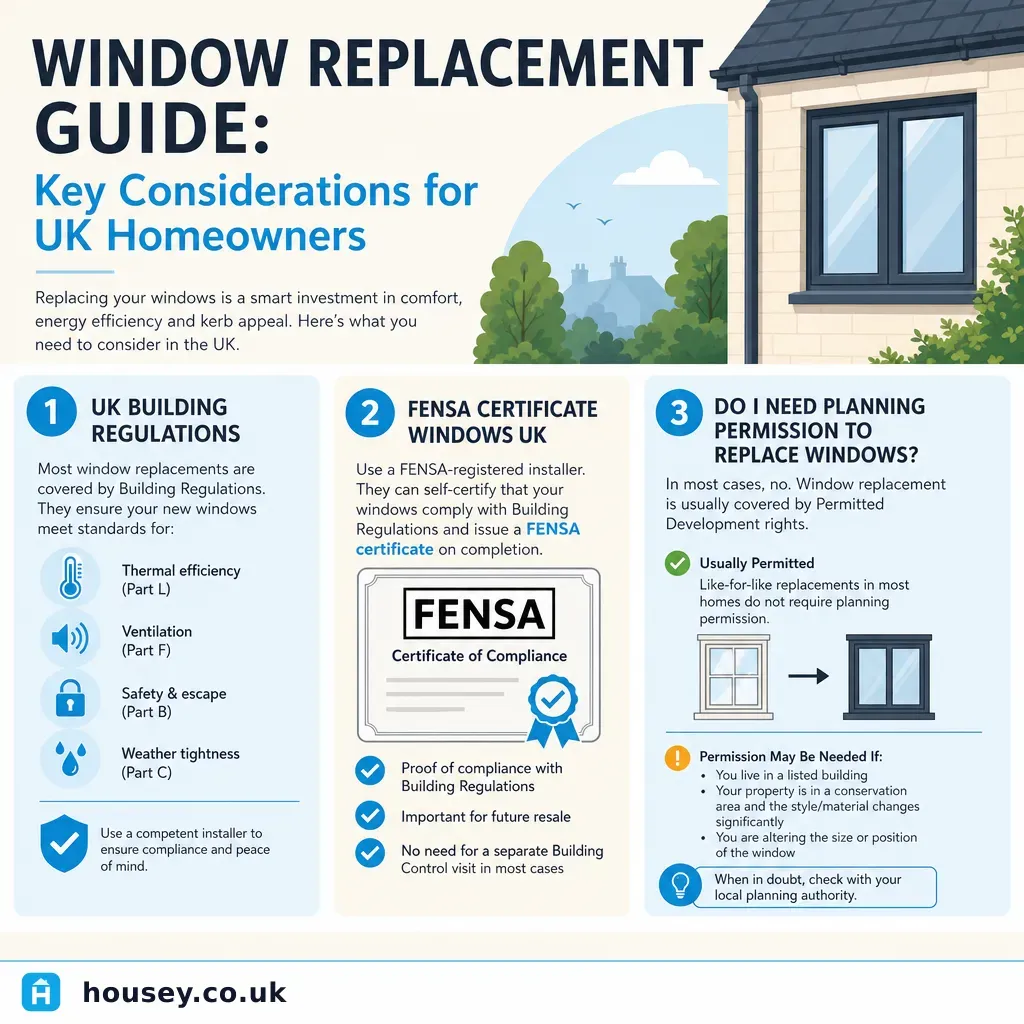
Window Replacement Guide: Key Considerations for UK Homeowners
Replacing windows in England and Wales requires compliance with Building Regulations Part L, with a minimum whole-window U-value of 1.
 Improvement & Build
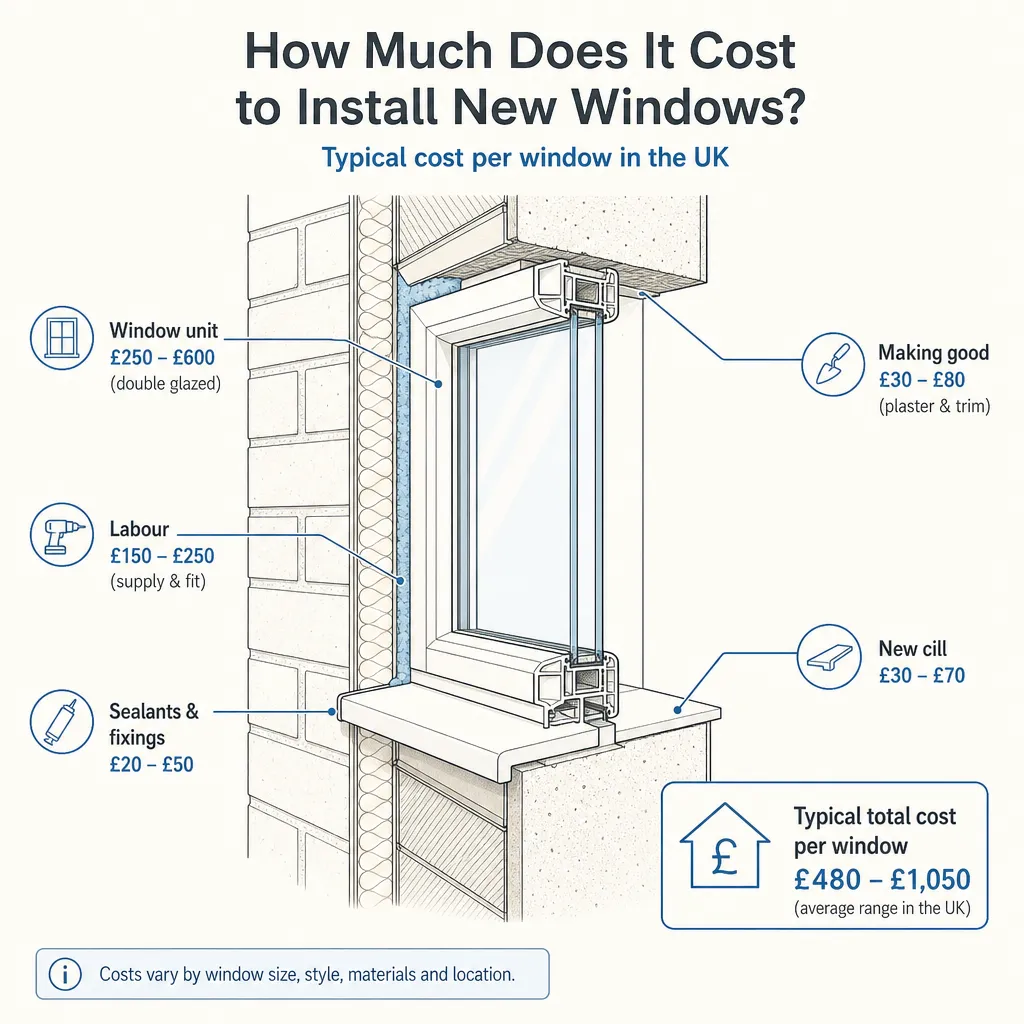
How Much Does It Cost to Install New Windows?
New window installation in the UK typically costs £300–£700 per uPVC double-glazed window (supply and fit), rising to £800–£2,500 for timber or sash windows.
 Improvement & Build
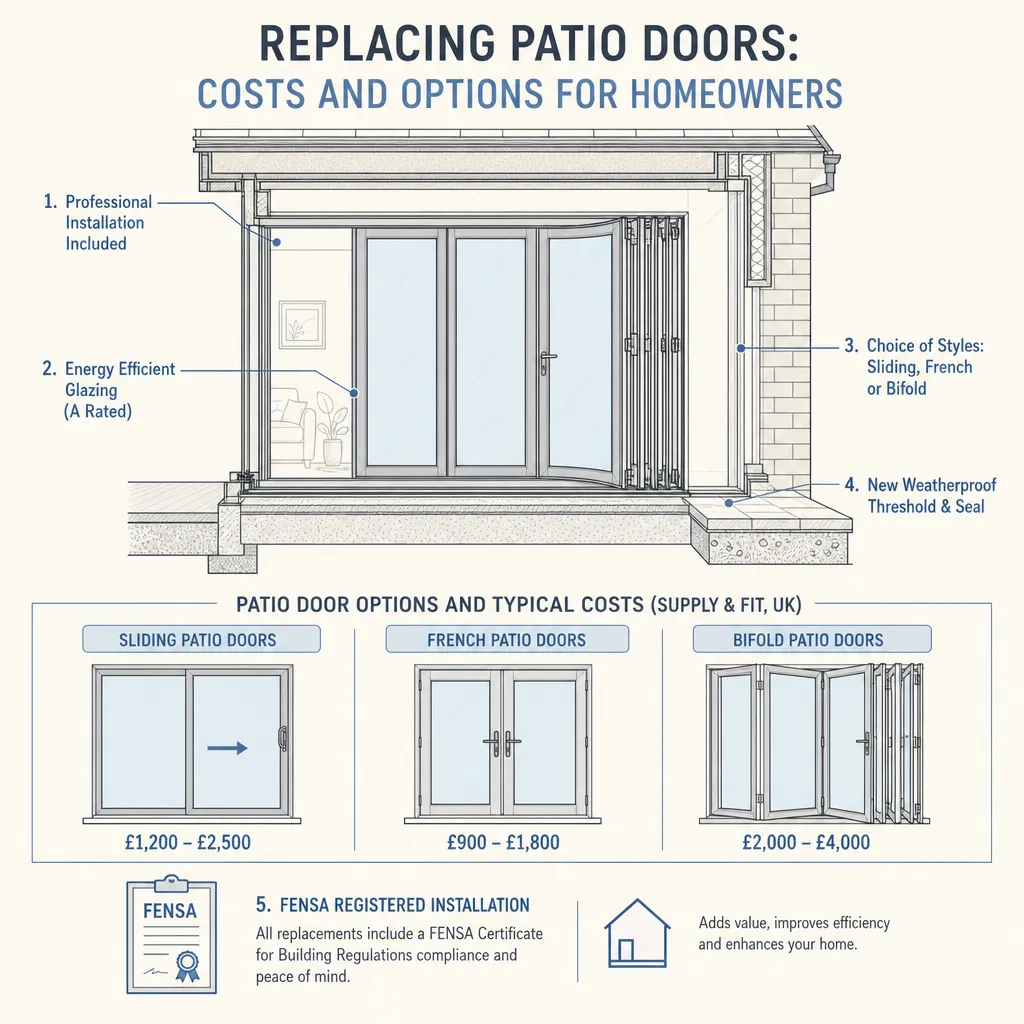
Replacing Patio Doors: Costs and Options for Homeowners
Replacing patio doors in the UK costs roughly £1,200–£2,500 for uPVC sliding or French doors, rising to £4,000–£9,000+ for aluminium bifold doors, including supply and installation.
 Improvement & Build
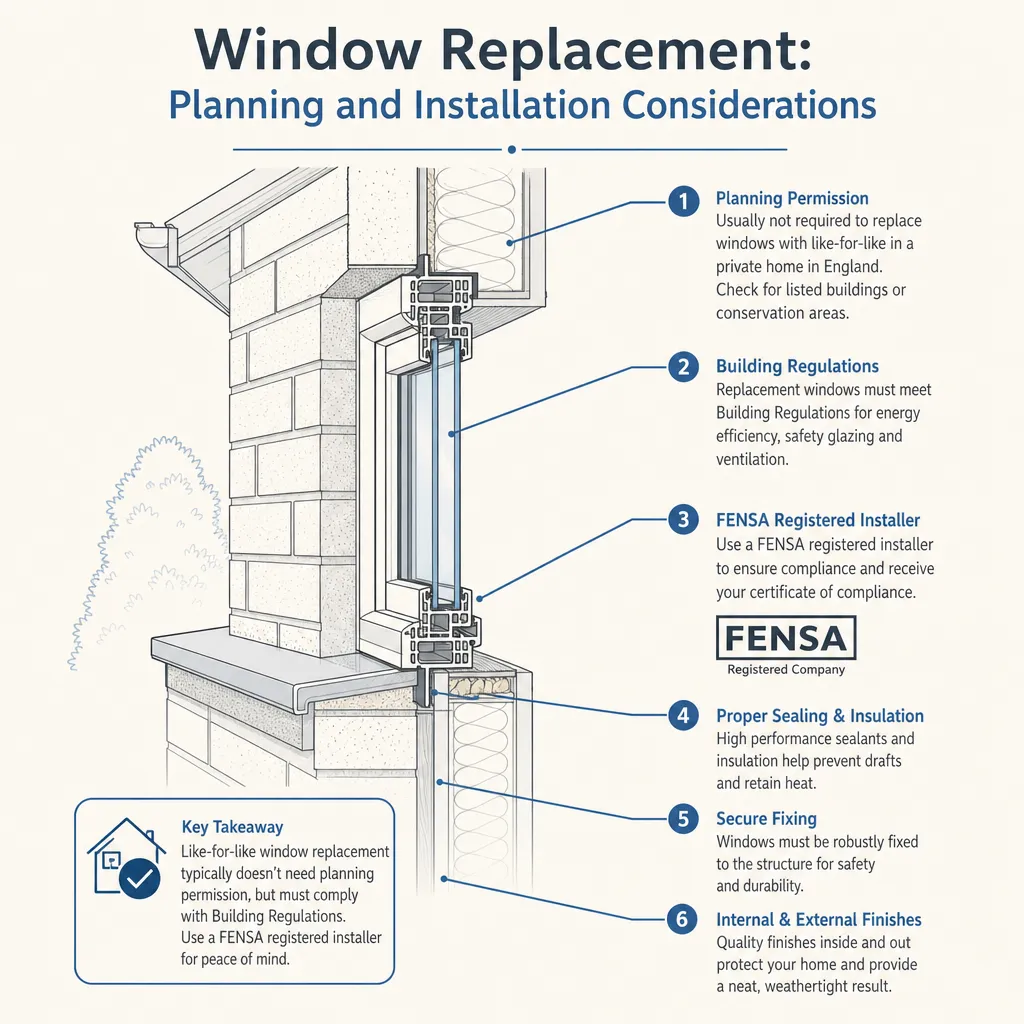
Window Replacement: Planning and Installation Considerations
Most window replacements in England fall under permitted development and do not need planning permission, though listed buildings, flats, and conservation areas are exceptions.
 Improvement & Build
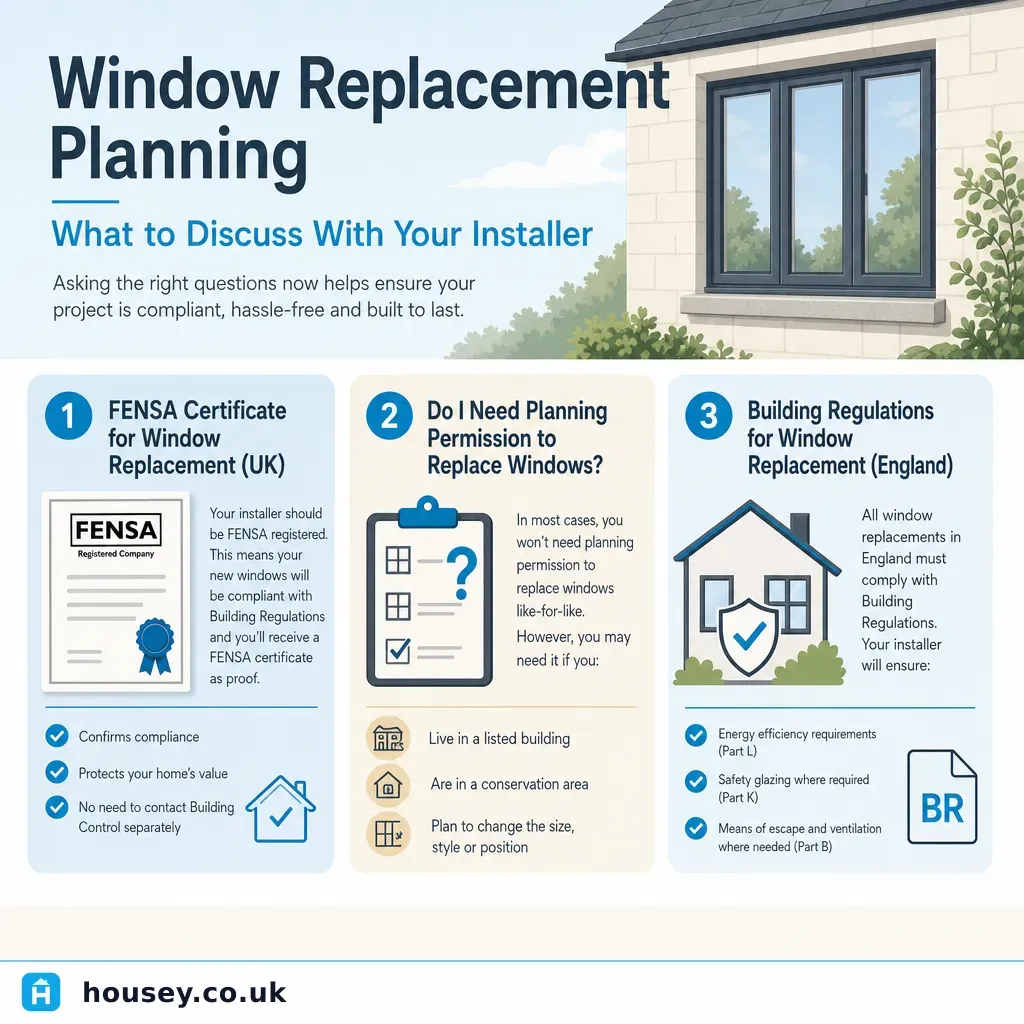
Window Replacement Planning: What to Discuss With Your Installer
Most window replacements in England fall under permitted development rights and do not require planning permission, but they must comply with Building Regulations Part L and Part K.