Window Replacement: When and How to Upgrade Your Windows
By Housey · Last reviewed 12th of May 2026
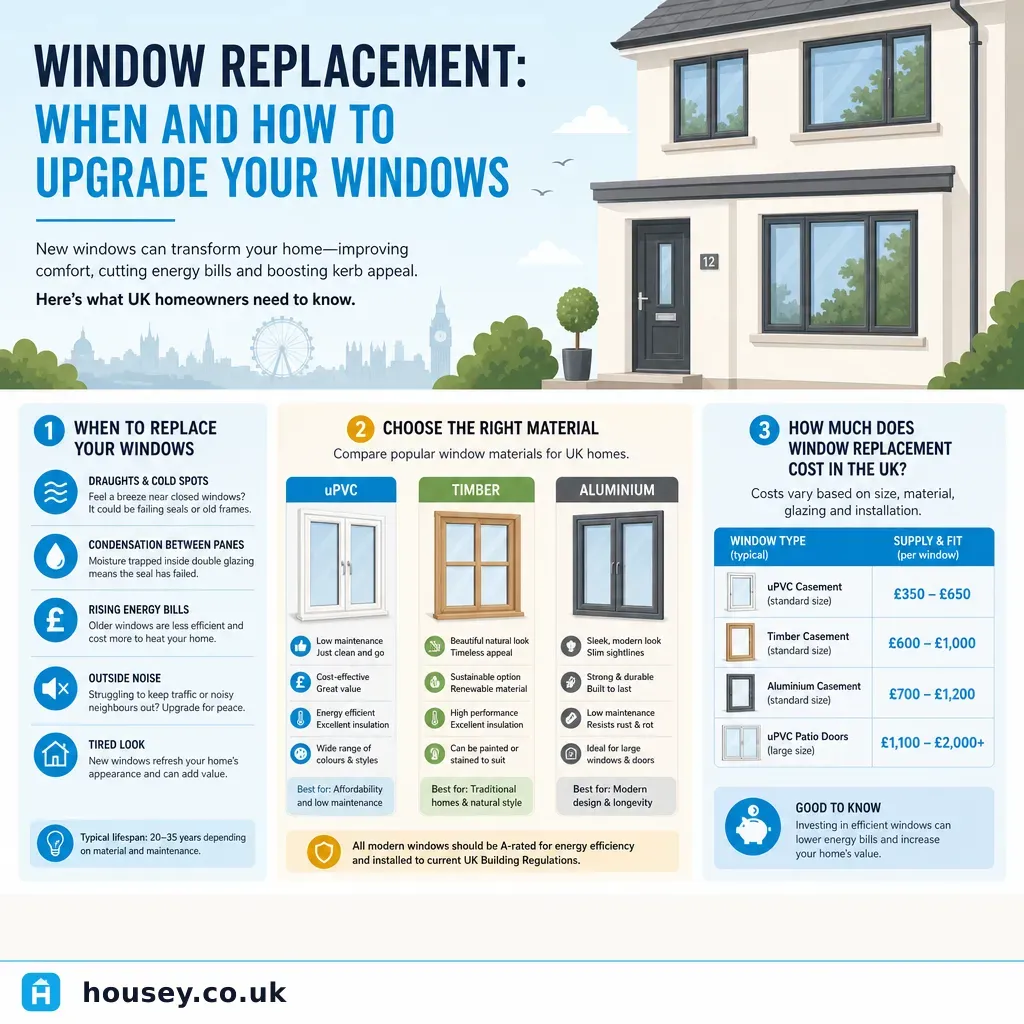
Window Replacement: When and How to Upgrade Your Windows
Replacing windows is one of the more impactful home improvement projects a UK homeowner can undertake, affecting energy efficiency, security, noise levels, and property value. The decision involves more than choosing a frame colour — Building Regulations compliance, planning constraints on heritage properties, and the choice of installer all carry real consequences. Getting the timing, specification, and compliance right from the outset avoids delays at sale and ensures the installation performs as intended for the next two to three decades.
Key points
- All replacement window units in England and Wales must comply with Building Regulations Approved Document L; the standard route to compliance is using a FENSA- or CERTASS-registered installer, who self-certifies and issues a compliance certificate within 30 days of completion.
- Current Part L requires replacement windows to achieve a minimum whole-window U-value of 1.4 W/m²K; standard double-glazed uPVC units with argon filling typically meet or exceed this threshold.
- Properties in conservation areas require prior approval or a planning application before replacing windows with units that would alter the character of the area; permitted development rights are restricted compared with most residential properties.
- Listed buildings require listed building consent for any window replacement; FENSA/CERTASS self-certification does not replace this requirement, and unauthorised replacement is a criminal offence under the Planning (Listed Buildings and Conservation Areas) Act 1990.
- Indicative supply-and-fit costs for a standard uPVC casement window range from £300–£800; timber and aluminium windows typically cost £600–£2,000+ per window. (Indicative UK costs, last reviewed 2026-05-12; quotes vary by size, specification, and region.)
When to replace rather than repair your windows
The decision to replace should follow a genuine assessment of whether repair is feasible and cost-effective. In many cases — particularly for timber-framed windows — skilled repair extends service life considerably and may be more appropriate than replacement, especially in conservation areas.
Repair is usually the better option when:
- The frame is structurally sound but the perimeter sealant, weatherstripping, or putty has failed.
- A single sealed unit (double-glazed pane) has failed and is fogged, but the frame is in good condition.
- Timber rot is limited and can be treated and filled by a specialist joiner.
- The property is listed or in a conservation area — repair is almost always preferred by conservation officers.
Replacement is usually warranted when:
- The frame is structurally compromised: significant rot, warping, cracking, or sections missing.
- The window no longer closes, locks, or seals correctly and repair would not be economical.
- You are upgrading from single glazing to double or triple glazing for energy efficiency.
- The frame has reached or exceeded its typical service life (uPVC: 20–35 years; aluminium: 30–45 years).
- Recurrent water ingress has persisted despite previous repairs.
Choosing the right window frame material
Frame material affects appearance, maintenance requirements, thermal performance, planning acceptability, and cost. The table below compares the three main options for UK homeowners.
Material | Best for | Not ideal for | Typical lifespan | Maintenance level | Indicative installed cost per window |
|---|---|---|---|---|---|
uPVC | Modern and post-1970s homes; low-maintenance preference; tighter budgets | Listed buildings; conservation areas (may conflict with historic character) | 20–35 years | Very low | £300–£800 |
Timber | Period and heritage properties; conservation areas and listed buildings | Low-maintenance preference; consistently damp environments | Indefinite with upkeep | Medium to high | £600–£1,500+ |
Aluminium | Contemporary homes; large openings; slim sightlines | Budget-constrained projects | 30–45 years | Low | £600–£1,200+ |
Composite (timber/aluminium) | Period aesthetics with low ongoing maintenance; larger budgets | Very tight budgets | 30–40+ years | Low to medium | £800–£2,000+ |
Indicative UK costs, last reviewed 2026-05-12. Costs vary by window size, opening type, glazing specification, and floor level.
Planning permission and listed buildings
Standard residential replacements
For the majority of UK homes, replacing windows with units of similar appearance and material is permitted development — no planning application is required. However, several important exceptions apply.
Conservation areas
In a conservation area, replacing windows with units that would materially alter the appearance of the property may require prior approval or a full planning application. The threshold for what constitutes a material change varies by local planning authority (LPA). Timber-to-uPVC changes are frequently refused in conservation areas due to the visible difference in framing depth and finish. Check with your LPA before proceeding — pre-application advice is usually available free of charge.
Listed buildings
Any window replacement on a listed building requires listed building consent, regardless of how minor the change appears. This applies even to straightforward like-for-like replacement and is a separate process from planning permission. FENSA and CERTASS self-certification do not cover listed building consent. Seek advice from a heritage architect or conservation officer before committing to any specification.
Unauthorised alteration of a listed building — including replacing original windows without consent — is a criminal offence under the Planning (Listed Buildings and Conservation Areas) Act 1990.
Article 4 directions
Some residential areas, particularly around older estates and character housing, are subject to Article 4 directions that remove standard permitted development rights. Check your LPA's Article 4 register if you are unsure whether your area is affected.
FENSA, CERTASS, and Building Regulations compliance
When a FENSA- or CERTASS-registered company installs replacement windows in England and Wales, they self-certify that the work complies with Building Regulations, notify the local authority, and issue you a compliance certificate within 30 days of completion.
Why this certificate matters: it is required evidence of Building Regulations compliance when you sell your property. A missing certificate can trigger delays in conveyancing, requirements for indemnity insurance, or a retrospective building control inspection — all of which add cost and complication to a sale.
If you use an unregistered installer, you or they must notify local authority building control before work begins and pay the appropriate inspection fee. A building control officer then inspects and certifies the work on completion.
Homeowner checklist for window replacement
Use this before instructing any installer:
What to ask before accepting a quote
- What frame material, glazing type (double or triple), and gas fill is specified?
- What is the whole-window U-value, and what BFRC energy rating will the units carry?
- Is the company FENSA- or CERTASS-registered, and will they provide the compliance certificate?
- Who carries out the installation — direct employees or subcontractors?
- What happens to the price or programme if structural issues are found at the reveals or lintel?
- How will the site be protected during installation and how will waste be disposed of?
When to get professional help
A FENSA- or CERTASS-registered installer handles standard Building Regulations compliance for most replacement window jobs. You should also involve:
- A heritage architect or conservation officer for listed buildings or sensitive conservation area cases.
- A structural engineer if removing or enlarging openings involves structural elements or a potentially defective lintel above.
- A solicitor or conveyancer if you are purchasing a property where existing replacement windows lack FENSA or CERTASS documentation — they can advise on indemnity insurance.
How Housey can help
Housey connects UK homeowners with vetted window and door installers who can advise on materials, energy performance, and planning requirements, and who carry out installations to Building Regulations standard. Use Housey to get up to four itemised quotes from FENSA-registered installers in your area and compare them on a like-for-like basis before committing.
Frequently asked questions
Do I need planning permission to replace windows?
For most UK homes, replacing windows with units of similar appearance is permitted development and does not require a planning application. Exceptions apply for listed buildings (listed building consent is always required), conservation areas (check with your LPA first), and properties subject to Article 4 directions. Confirm with your local planning authority before placing an order.
What is a FENSA certificate and why does it matter?
A FENSA certificate confirms that your replacement windows were installed to Building Regulations standard by an accredited competent person. It is issued after completion and is required evidence of compliance when you sell your property. Without it, your conveyancer may require indemnity insurance or retrospective building control sign-off, both of which can delay and complicate a sale.
How much does window replacement cost in the UK?
Indicative supply-and-fit costs range from £300–£800 per standard uPVC casement window. Timber and aluminium windows typically cost £600–£2,000+ per window depending on size and specification. Whole-house replacement projects may attract a discount from suppliers. Always obtain at least three written, itemised quotes. (Indicative UK costs, last reviewed 2026-05-12.)
What is the most energy-efficient window frame material?
Frame material has less impact on thermal performance than glazing specification. Triple glazing and argon-filled sealed units improve performance regardless of frame material. For overall energy efficiency, look for windows rated A or A+ on the British Fenestration Rating Council (BFRC) scale, and ask installers to specify the whole-window U-value rather than just the centre-pane figure.
How long do replacement windows last?
uPVC frames typically last 20–35 years before discolouring, warping, or hardware failure. Well-maintained timber frames can last indefinitely with regular painting and prompt repair of any rot. Aluminium frames generally last 30–45 years. Double- or triple-glazed sealed units usually need replacing after 20–25 years when the hermetic seal fails and persistent fogging appears between the panes.
Sources and further reading
- Building Regulations: Approved Document L (Conservation of Fuel and Power) — GOV.UK
- FENSA: Glazing competent person scheme — FENSA
- British Fenestration Rating Council: window energy ratings — BFRC
- Permitted development rights for householders: technical guidance — GOV.UK Planning Portal
- Windows and doors energy efficiency guidance — Energy Saving Trust
- Planning (Listed Buildings and Conservation Areas) Act 1990 — legislation.gov.uk
Useful next reads
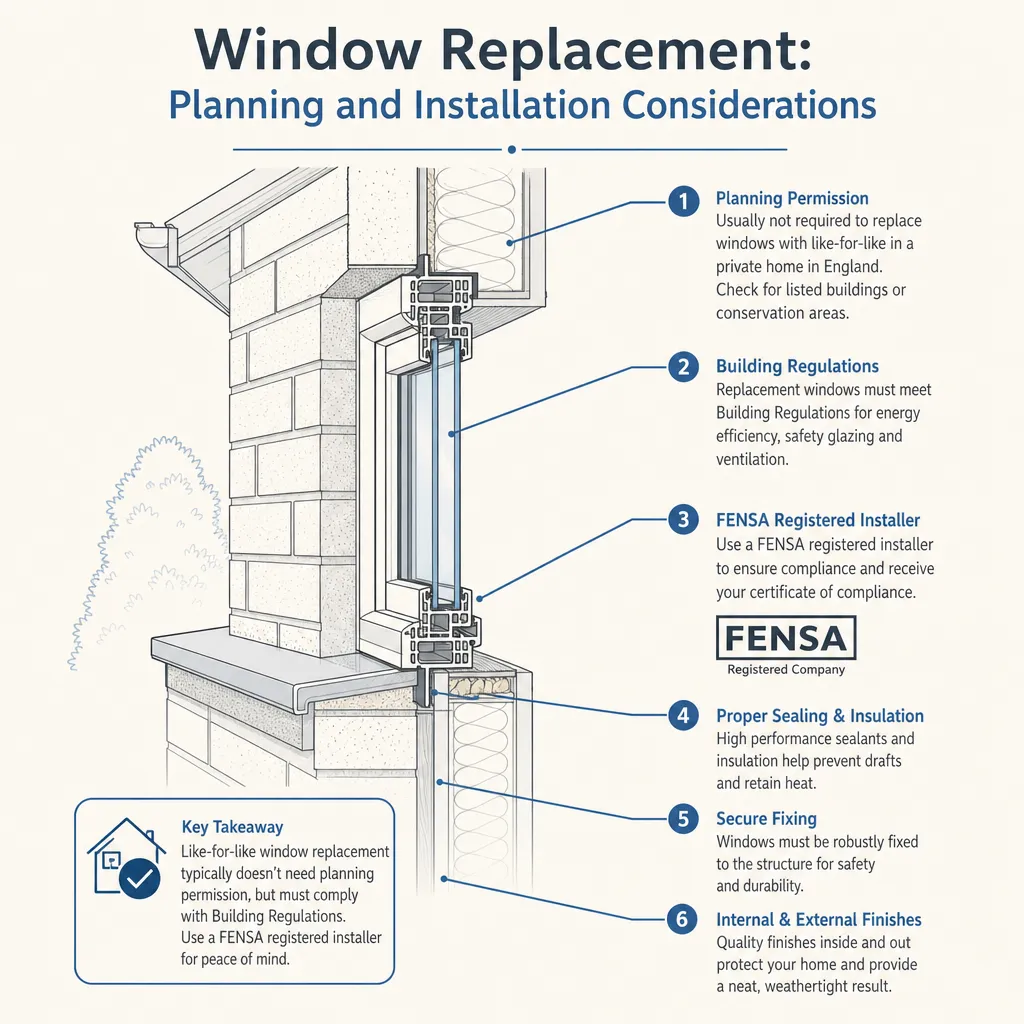 Improvement & Build
Window Replacement: Planning and Installation Considerations
Most window replacements in England fall under permitted development and do not need planning permission, though listed buildings, flats, and conservation areas are exceptions.
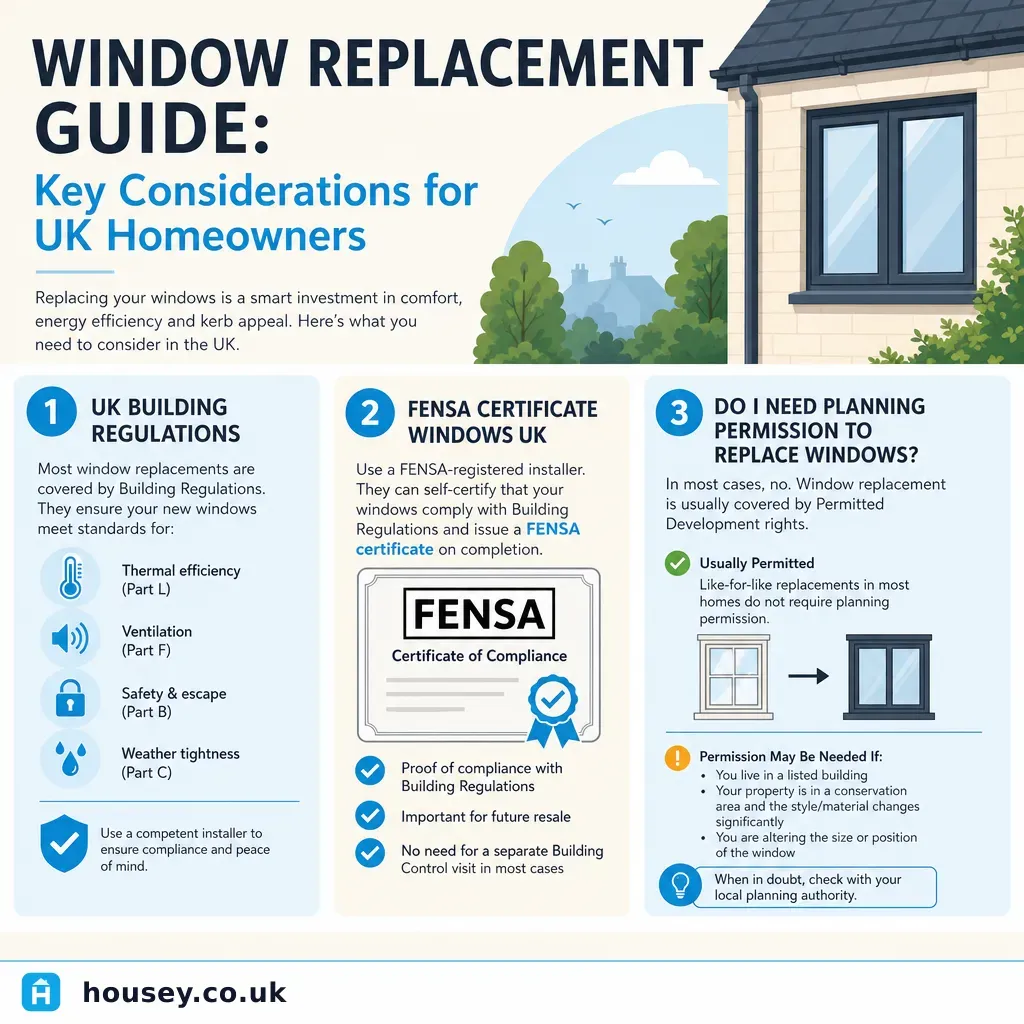 Improvement & Build
Window Replacement Guide: Key Considerations for UK Homeowners
Replacing windows in England and Wales requires compliance with Building Regulations Part L, with a minimum whole-window U-value of 1.
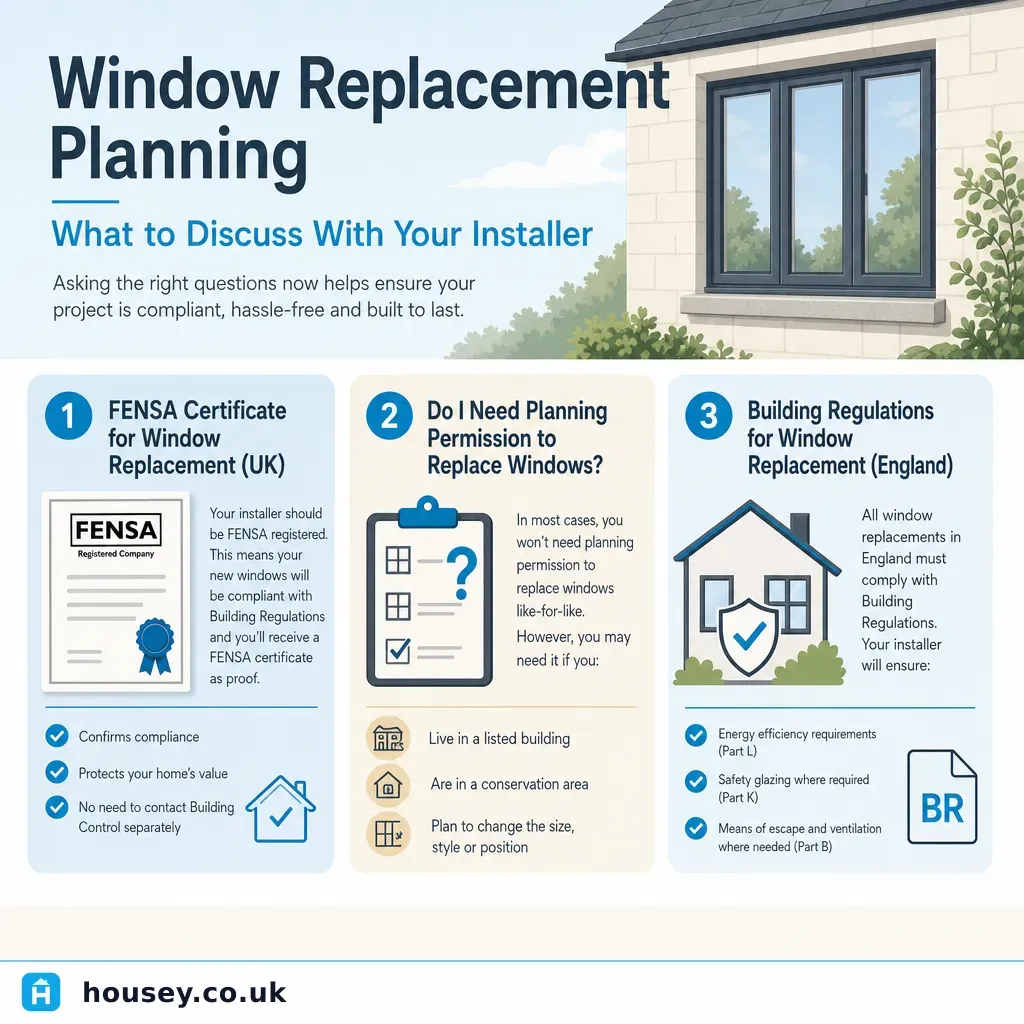 Improvement & Build
Window Replacement Planning: What to Discuss With Your Installer
Most window replacements in England fall under permitted development rights and do not require planning permission, but they must comply with Building Regulations Part L and Part K.
 Improvement & Build
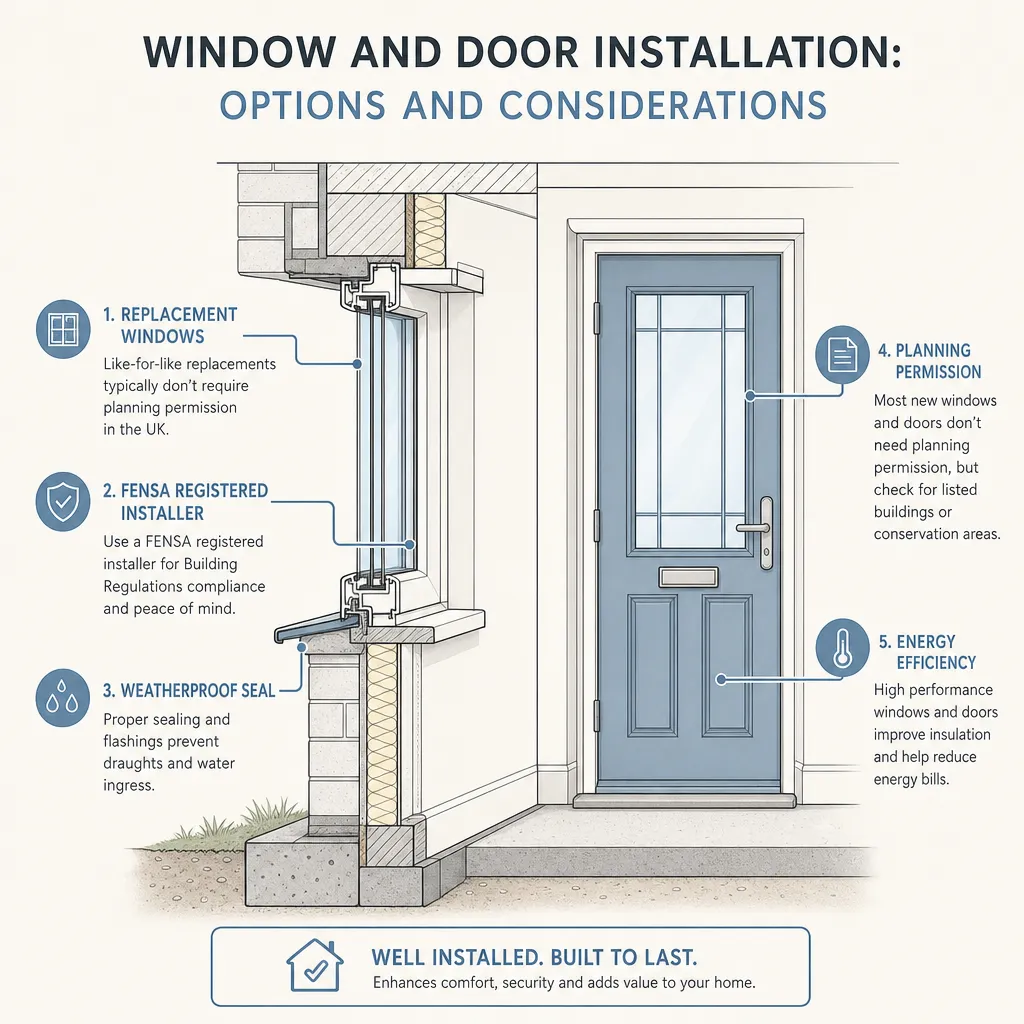
Window and Door Installation: Options and Considerations
Replacing windows and external doors in the UK requires compliance with Building Regulations Part L (thermal performance) and Part K (safety glazing).
 Improvement & Build
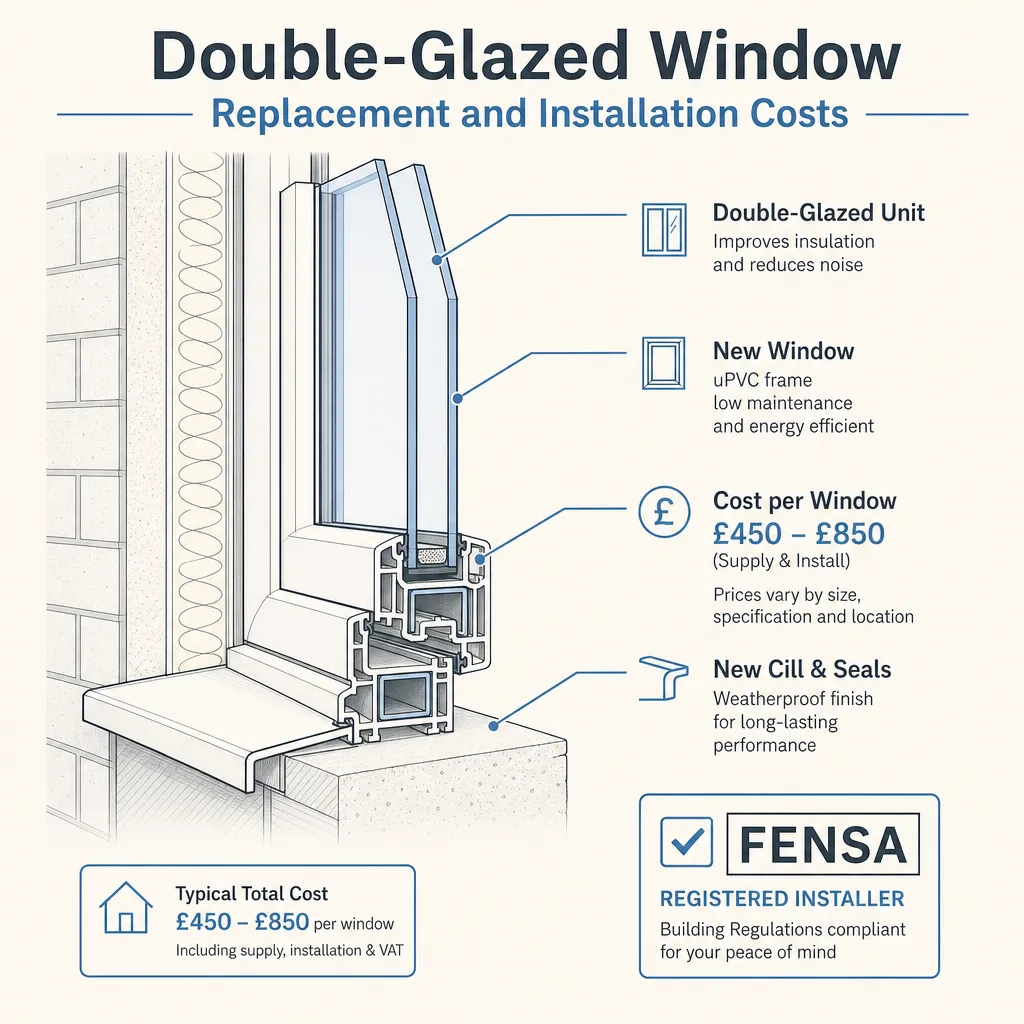
Double-Glazed Window Replacement and Installation Costs
Replacing double-glazed windows in a typical UK home costs roughly £300–£600 per uPVC casement window installed, rising to £500–£1,200 for timber and £400–£800 for aluminium.