Window Tinting and Glazing Options for Residential Properties
By Housey · Last reviewed 1st of June 2026

Window Tinting and Glazing Options for Residential Properties
When a home runs hot in summer, loses heat through dated glass, or offers little visual privacy from the street, glazing is often the first place to look. The decision between applied window film and full unit replacement arises during renovations, energy upgrades, and listed-building works across the UK — and the right answer depends on building age, planning status, and how far you want to push performance.
Key points
- Replacement glazing in England must meet a minimum whole-window U-value of 1.4 W/m²K under Approved Document L of the Building Regulations (2021 edition).
- New or replacement windows installed by a non-competent-person must be signed off by building control; alternatively, use a FENSA- or CERTASS-registered installer who self-certifies.
- Windows in listed buildings or conservation areas may require Listed Building Consent or prior consultation with the local planning authority before any replacement or tinting work.
- Solar-control window films can reduce solar heat gain by 40–80% depending on film specification and glazing type — without replacing the unit.
- Low-emissivity (low-E) double-glazed units with argon fill typically achieve centre-pane U-values of around 1.1–1.4 W/m²K; triple glazing can reach 0.6–0.8 W/m²K.
What are your glazing and tinting options?
UK homeowners have four main routes when addressing solar gain, privacy, or heat loss through windows.
Applied window film
Polyester or ceramic films are retrofitted to existing glass using adhesive. They range from solar-control (reducing visible light transmission and infrared heat) to privacy films (frosted, reflective, or decorative). Films are non-structural and do not require building control notification, though some planning authorities may consider highly reflective films on listed buildings or in conservation areas to require consent.
Secondary glazing
A separate inner pane fitted to the existing window reveal. Secondary glazing can dramatically reduce heat loss and noise — achieving Rw values of 45 dB or more when specified correctly — and is a common solution for listed buildings where original windows must be retained. The units are reversible, which further suits heritage contexts.
Double and triple glazing replacement units
Full replacement with factory-glazed insulated glass units (IGUs) meets the highest thermal performance levels. Under Part L (2021), the whole-window U-value must be 1.4 W/m²K or better for replacement windows in existing dwellings in England. Work in Wales is governed by Technical Standard Part L equivalent provisions; Scotland by Section 6 of the Building Standards.
Specialist coating upgrades
Some glaziers can retrofit low-E or solar-control coatings to existing double-glazed units by removing and resealing the IGU. This is less common but may be viable where frames are in good condition and full replacement is not warranted.
Comparing glazing and film options
Option | Best for | Not ideal for | Typical performance | Planning note |
|---|---|---|---|---|
Solar-control window film | Existing single or double glazing; rented properties | Achieving Part L compliance on replacement | Reduces solar heat gain 40–80%; minimal thermal improvement | Usually no consent needed; check listed/conservation restrictions |
Privacy or frosted film | Ground-floor rooms, bathrooms, glazed doors | High solar gain reduction | Visual privacy only; no thermal benefit | Usually no consent needed |
Secondary glazing | Listed buildings; noise reduction; draughty original timber frames | Maximum thermal performance as a standalone measure | Combined U-value approx. 1.0 W/m²K; Rw 45 dB or more | Often acceptable in listed buildings; check with LPA |
Double glazing (standard IGU) | Most replacement projects in post-war homes | Heritage buildings where original character must be retained | Whole-window U-value 1.4 W/m²K or better (Part L compliant) | FENSA or CERTASS self-cert, or building control sign-off required |
Triple glazing | High-performance or Passivhaus retrofits; north-facing elevations | Properties with overheating risk if ventilation is not designed accordingly | Centre-pane U-value 0.6–0.8 W/m²K | FENSA or CERTASS self-cert, or building control sign-off required |
Which option should you choose?
- Choose solar-control or low-E window film if your frames are in good condition, you want a cost-effective improvement to glare or heat gain, or you are in a rented property and cannot alter the structure.
- Choose secondary glazing if your windows are original timber sashes in a listed building or conservation area and replacement would require Listed Building Consent you are unlikely to obtain.
- Choose replacement double glazing if your existing units are failed (condensation between panes), single-glazed, or in frames that are rotting or beyond repair — and the property is not listed.
- Choose triple glazing if you are targeting EnerPHit or Passivhaus retrofit standards and your ventilation strategy is designed to prevent overheating.
- Consult your local planning authority (LPA) if the property is listed, in a conservation area, or if you are unsure whether the proposed change requires consent.
- Ask a specialist glazier or retrofit coordinator if you want to combine solar control, acoustic performance, and thermal compliance in one specification.
Window film: what to know before buying
Applied films are typically categorised by their visible light transmission (VLT) and solar heat gain coefficient (SHGC). A lower SHGC means less solar heat passing through. Common residential specifications:
- Solar-control film: VLT 20–70%, SHGC 0.25–0.50. Useful on south- and west-facing elevations prone to overheating in summer.
- Low-emissivity film: A thin metallic or ceramic coating reduces infrared heat loss in winter. Less effective than factory-fitted low-E coatings but can improve the thermal performance of an existing unit.
- Privacy or frosted film: Opaque or translucent; does not meaningfully affect thermal performance.
- Safety film: Holds broken glass in place, typically meeting BS EN 12600 impact-resistance requirements when applied correctly.
Films are generally applied to the inner face of the glass. Check compatibility with your existing glazing type — some low-E coated IGUs can delaminate if aftermarket film is applied incorrectly. Follow the film manufacturer's guidance and, if in doubt, ask a glazing specialist to assess suitability before installation.
Planning and building regulations considerations
Permitted development and building control
Replacing like-for-like windows is normally permitted development under Schedule 2, Part 1 of the Town and Country Planning (General Permitted Development) Order 2015 (as amended). However:
- Properties in Article 4 Direction areas, conservation areas with removed permitted development rights, or new-build estates with planning conditions may require a full planning application.
- Listed buildings: Any alteration affecting the character of a listed building — including window replacement — requires Listed Building Consent from the LPA. Secondary glazing is often a more acceptable route in these cases.
Window replacement by an unregistered installer must have a building control completion certificate. Using a FENSA- or CERTASS-registered company means they self-certify compliance and notify the local authority; you receive a FENSA certificate, which matters at the point of sale.
Scotland and Wales
In Scotland, replacement windows fall under the Building Standards system (Section 6 — Energy). Contact your local authority building standards department. In Wales, similar Part L equivalents apply; check with Cadw if the building is listed.
When to get professional help
Most window film applications are straightforward, but seek professional input when:
- The property is listed or in a conservation area and you are unsure whether work requires consent.
- You are specifying a whole-house glazing upgrade and want to assess overheating risk under Part O of the Building Regulations (England).
- Window frames show signs of rot, distortion, or failed DPC at sills — a glazier should inspect before specifying new units.
- You want to achieve compliance with Part L as part of a building-control-notified renovation.
- You are combining a glazing upgrade with other energy retrofit measures and want a coordinated specification.
How Housey can help
Housey connects you with vetted window and door installers who can advise on glazing specifications, confirm Part L compliance, and handle FENSA self-certification. If you are assessing your home's overall thermal performance, our insulation assessments service can help you understand where a glazing upgrade fits within a broader energy retrofit strategy.
Frequently asked questions
Does window tinting film require planning permission?
In most cases, no. Applied window film is generally treated as a minor alteration that does not require planning permission. However, if your home is listed or in a conservation area, a highly reflective or visually prominent film may need prior consent from your local planning authority. Always check before applying film to a listed building.
What is the difference between solar-control film and privacy film?
Solar-control film is designed to reduce the amount of infrared and visible solar radiation passing through the glass, lowering interior temperatures and glare. Privacy film — usually frosted or reflective — restricts visibility from outside but provides minimal thermal benefit. Some products combine both features but tend to be less effective at each function than a dedicated product.
Do I need a FENSA certificate when replacing windows?
You do not need a FENSA certificate specifically, but you do need evidence that the work complies with Building Regulations Part L. The simplest route is to use a FENSA- or CERTASS-registered installer who self-certifies compliance and notifies the local authority. If you use an unregistered contractor, a building control completion certificate serves the same purpose. Both documents matter at the point of sale.
Can I apply window film to a rented property?
This depends on your tenancy agreement. Most applied films are removable and reversible, which may make them more acceptable to landlords, but you should seek written permission before installation. Some landlords decline on grounds of appearance or concern about glass damage on removal.
Sources and further reading
- Approved Document L: Conservation of fuel and power — GOV.UK (HM Government)
- FENSA: Competent Person Scheme for replacement windows and doors — FENSA Ltd
- Energy efficiency and historic glazing — Historic England
- Windows and doors energy advice — Energy Saving Trust
- Glass and Glazing Federation technical guidance — Glass and Glazing Federation
Useful next reads
 Improvement & Build
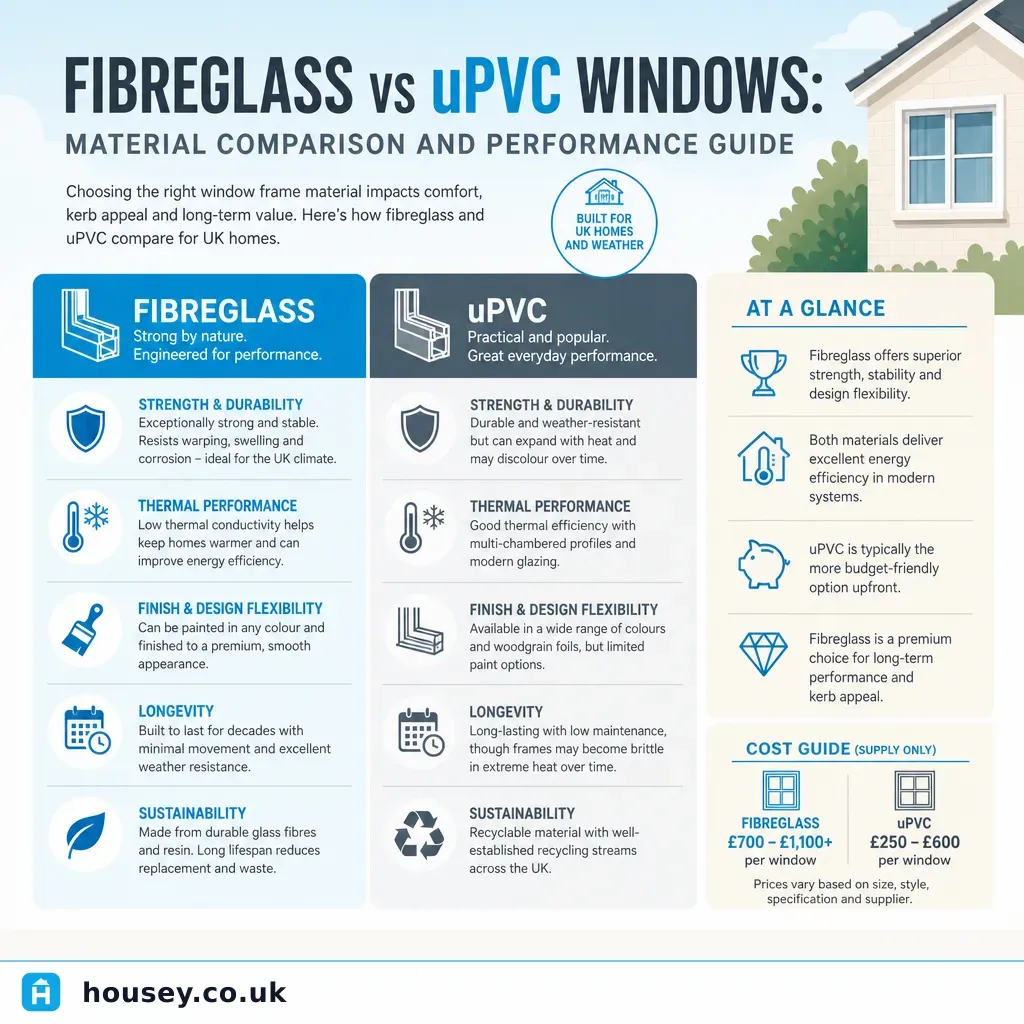
Fibreglass vs uPVC Windows: Material Comparison and Performance Guide
In the UK, vinyl windows are sold as uPVC — the dominant frame material for replacement windows.
 Improvement & Build
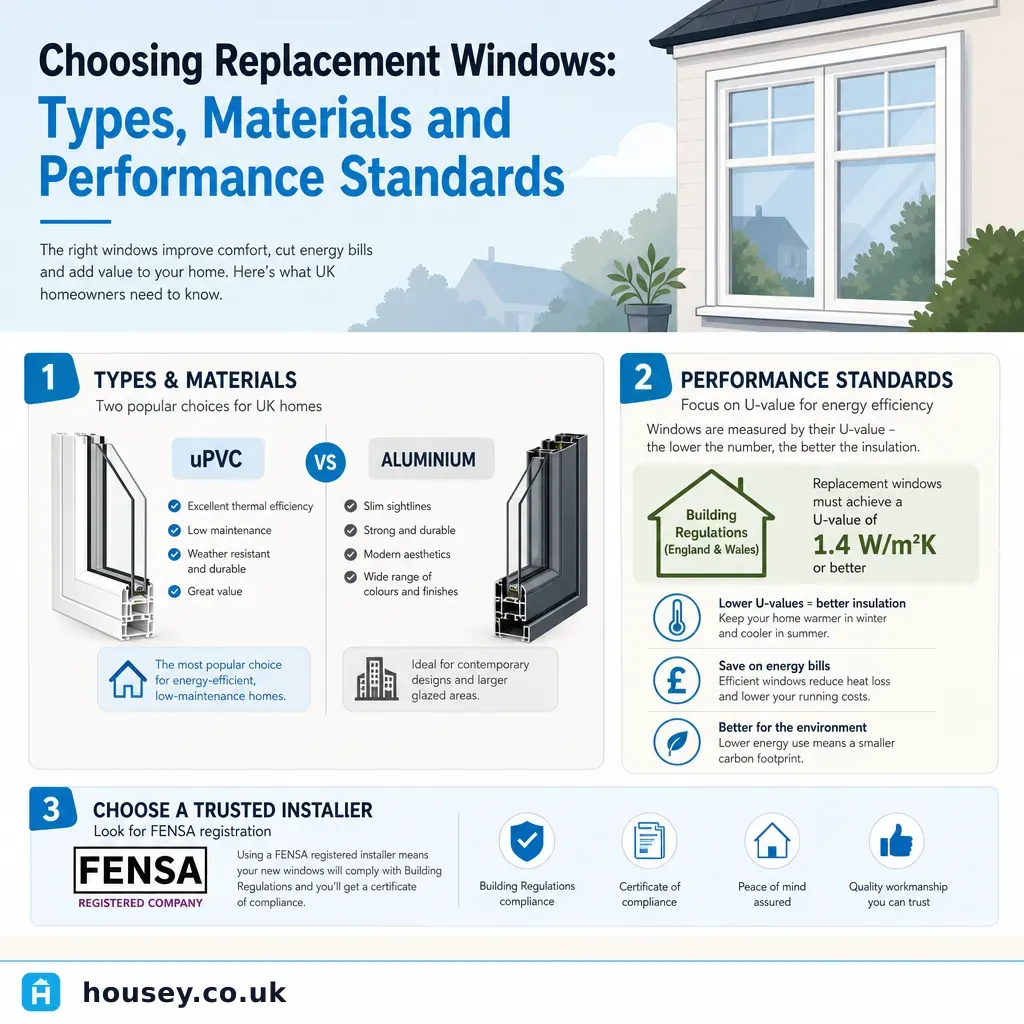
Choosing Replacement Windows: Types, Materials and Performance Standards
Replacement windows in the UK must meet a whole-window U-value of 1.
 Improvement & Build
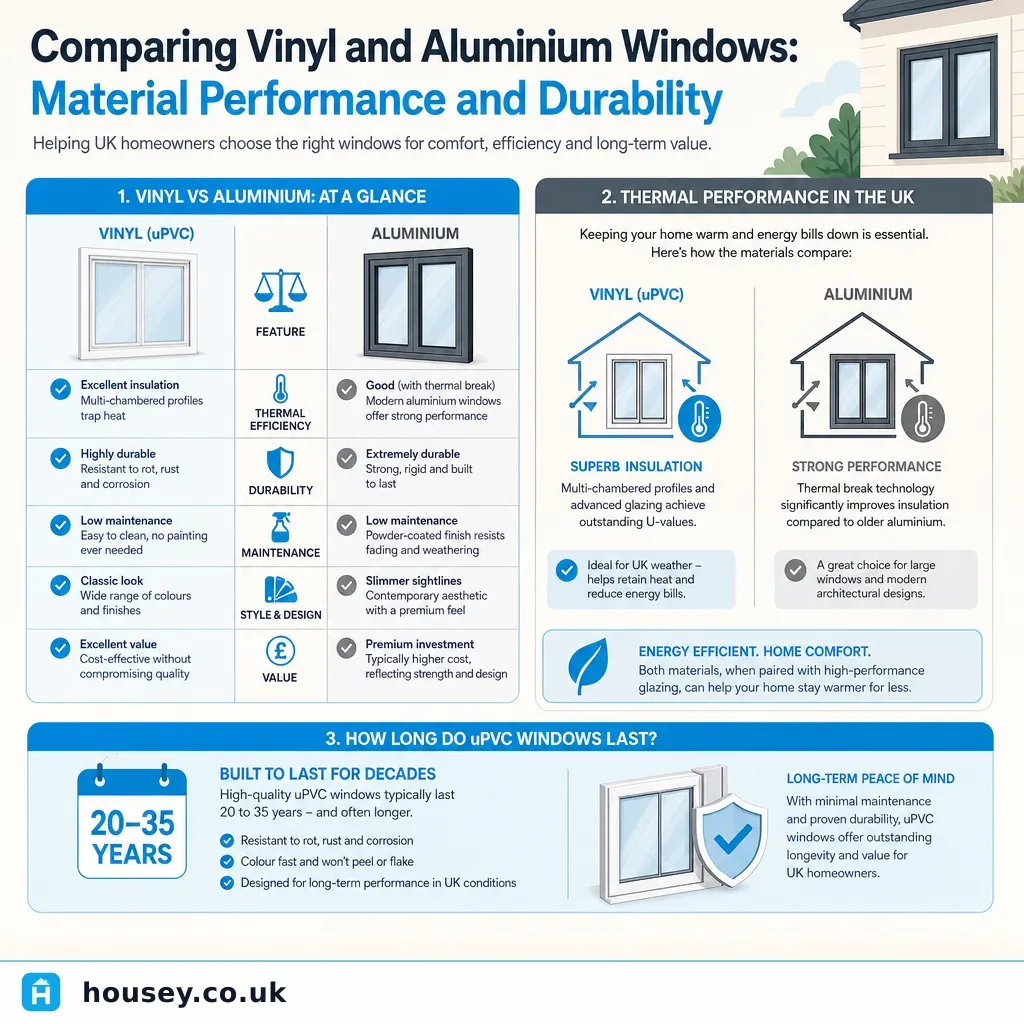
Comparing Vinyl and Aluminium Windows: Material Performance and Durability
uPVC (vinyl) and aluminium windows both meet UK Building Regulations Part L when properly specified.
 Improvement & Build
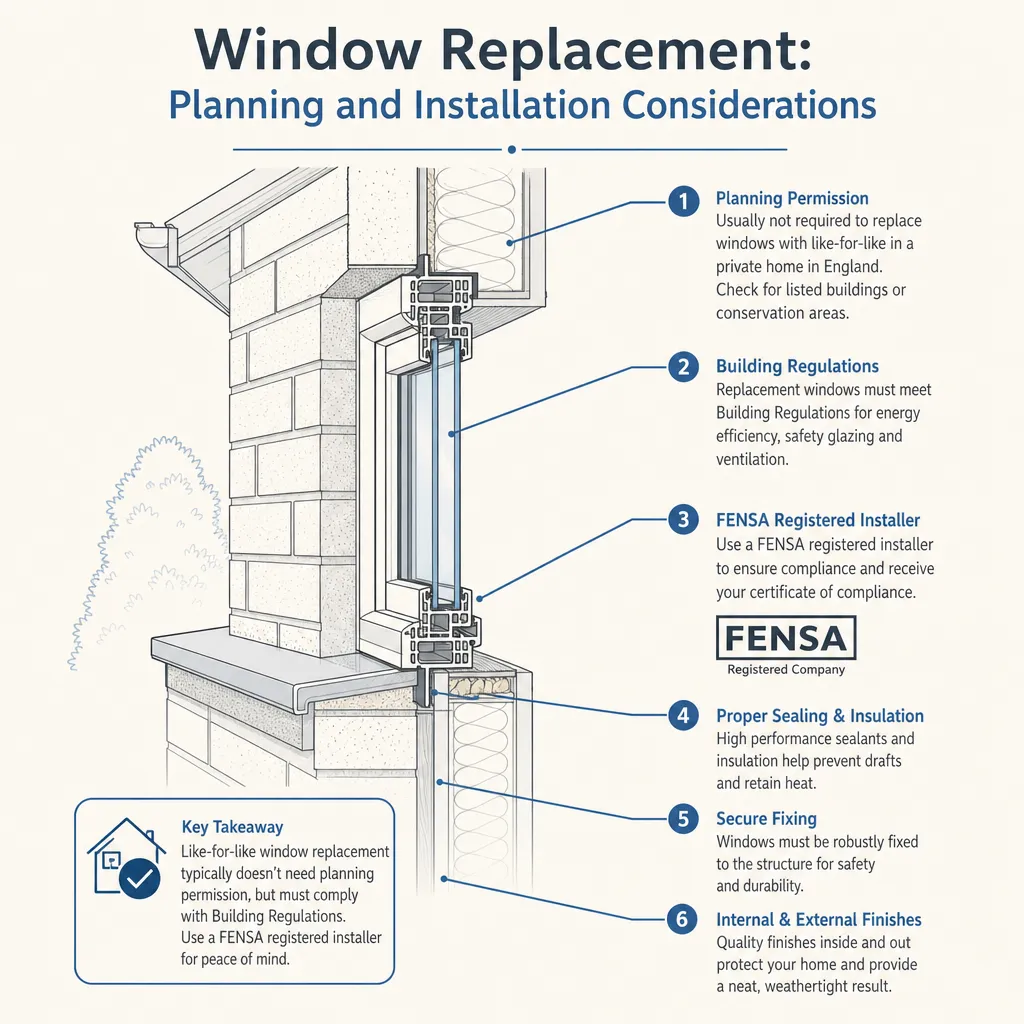
Window Replacement: Planning and Installation Considerations
Most window replacements in England fall under permitted development and do not need planning permission, though listed buildings, flats, and conservation areas are exceptions.
 Improvement & Build
Window Replacement Guide: Key Considerations for UK Homeowners
Replacing windows in England and Wales requires compliance with Building Regulations Part L, with a minimum whole-window U-value of 1.