Window Tinting and Privacy Film Installation
By Housey · Last reviewed 11th of May 2026
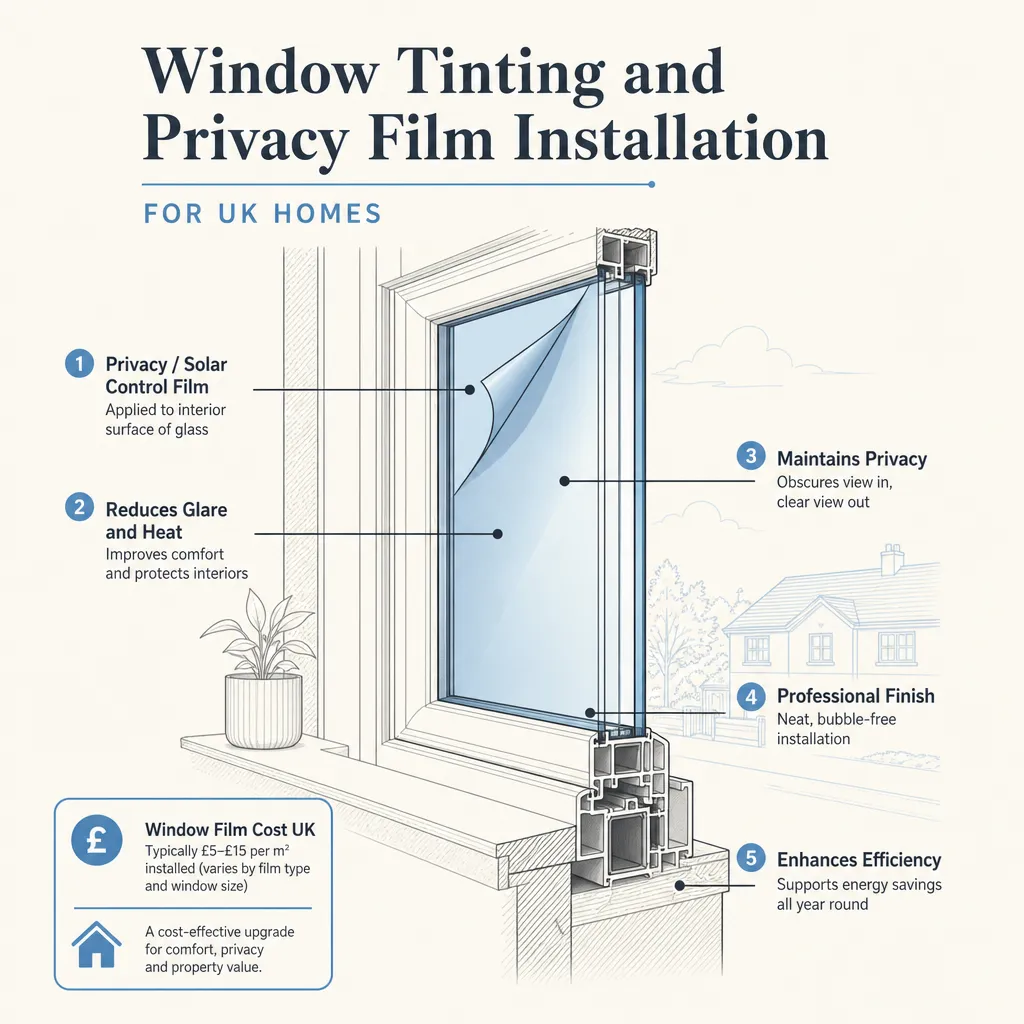
Window Tinting and Privacy Film Installation
Window film is one of the few home improvements you can apply to existing glazing without replacing the glass — making it a popular choice for homeowners looking to manage heat, glare, or overlooking from neighbours. Whether you are dealing with a south-facing conservatory that becomes unbearable in summer, a ground-floor living room overlooked by a busy pavement, or simply want to protect carpets and upholstery from UV fading, the type of film and quality of fitting make a significant difference to the result.
Key points
- Solar control films can reject up to 80% of solar heat gain through glass, depending on film specification and glazing type.
- UV-blocking window films can filter up to 99% of ultraviolet radiation, protecting furnishings, floors, and artwork from fading.
- Most professionally fitted residential window films carry a manufacturer lifespan of 10–20 years on clean, smooth glass.
- Conservation area or listed building status may restrict visible changes to glazing — check with your local planning authority before fitting tinted or heavily reflective film.
- Applying certain films to sealed double-glazed units can cause thermal stress and void the glass warranty; always confirm compatibility before purchase.
Film types and what they do
Choosing the right window film starts with identifying the problem you want to solve. Most films fall into five categories:
Film type | Best for | Not ideal for | Key benefit | Watch out for |
|---|---|---|---|---|
Solar control (tinted or reflective) | South- and west-facing rooms, conservatories | North-facing rooms with little sun | Reduces heat and glare | Can darken the interior; check sealed-unit compatibility |
Privacy/one-way | Ground-floor rooms overlooked by neighbours | Night-time privacy (effect reverses in low light) | Daytime privacy while preserving the outward view | Ineffective once interior is brighter than outside |
Frosted/decorative | Bathrooms, glazed doors, internal partitions | Where an outward view is important | Permanent privacy; available in many patterns | Reduces natural light levels |
UV-blocking (clear) | Rooms with valuable furnishings or artwork | Those also wanting solar heat reduction | Near-invisible; preserves light levels | Offers no solar heat reduction |
Security/safety film | Any glazing where safety is a concern | Listed buildings without appropriate consent | Holds glass together if broken | May require planning consent on listed buildings |
How professional installation works
A professional window film installer will typically:
- Assess the glass — check for existing damage, factory coatings, or sealed-unit specifications that could affect film suitability.
- Clean the glass thoroughly — even microscopic dust particles trapped under the film cause bubbles.
- Cut the film to size — usually with a small gap around the frame edge to prevent edge lifting.
- Apply using a slip solution — allows repositioning before the adhesive bonds fully.
- Squeegee out air and water — a consistent, streak-free finish requires technique and proper tools.
- Allow for a curing period — typically around 30 days in the UK climate; small water pockets visible during curing usually disappear as the film bonds to the glass.
Professional installation produces fewer bubbles, better edge adhesion, and a longer-lasting result than DIY fitting on large or hard-to-reach panes.
What does window film installation cost in the UK?
Indicative UK costs, last reviewed 2026-05-11.
Costs vary depending on film specification, number of panes, access difficulty, and location:
- Basic privacy or frosted film (DIY kit): £5–£20 per square metre for film only.
- Professional supply and fit (standard solar or privacy film): £25–£60 per square metre.
- High-specification solar control or security film (professionally fitted): £60–£120 per square metre.
- Conservatory full treatment: Indicative £500–£2,000+ depending on size and film grade.
Always request an itemised quote separating film cost, surface preparation, and fitting labour. Confirm whether VAT is included.
Planning and listed building considerations
Standard window film on a domestic property usually falls within permitted development and does not require planning permission. However, there are important exceptions:
- Listed buildings: Any change to the appearance of a listed building — including adding visible tint or reflective film — may require listed building consent from your local planning authority.
- Conservation areas: Permitted development rights are often restricted. Heavily reflective or coloured film on windows visible from the street may require consent.
- Leasehold properties: Your lease may prohibit alterations to windows visible from outside. Check your lease terms before proceeding.
Decision guide: which installation route suits you?
- Choose professional fitting if panes are large (over 1.2 m in either dimension), double-glazed, hard to access, or in a conservatory.
- DIY may be suitable for small bathroom or utility room panes with basic frosted film, where a perfect finish is less critical.
- Always consult a professional if the glazing is unusual — wired glass, laminated units, heritage glass — or if the property is listed or in a conservation area.
- Check manufacturer guidance before applying any film to sealed double-glazed units; improper application can cause thermal stress cracking and void the glass warranty.
Homeowner checklist before installation
What to ask before accepting a quote
- Which film brand and specification are you quoting, and what is the manufacturer's stated lifespan?
- Is this film suitable for sealed double-glazed units, and will fitting it affect my glass warranty?
- What surface preparation is included — and what happens if the glass needs cleaning or minor remediation before filming?
- Is the quoted price for supply and fit, and does it include VAT?
- What installation warranty do you offer, separate from the film manufacturer's warranty?
- What does the film look like at night from inside — does the privacy effect reverse in low-light conditions?
When to get professional help
Always use a professional installer for:
- Panes above ground-floor level where working at height is involved.
- Any sealed double-glazed unit, laminated pane, or glass with a factory-applied coating.
- Listed buildings or conservation area properties where planning consent may be required.
- Security film, which must be correctly fitted to deliver its intended impact-resistance performance.
If you are unsure about your glass type or whether your property has restrictions, a professional assessment before purchasing film will save the cost of buying unsuitable product.
How Housey can help
Housey connects you with experienced window and door installers who can advise on film type, supply, and professional fitting for your specific glazing. Compare quotes from vetted local specialists to find the right finish for your home.
Frequently asked questions
Does window film work on double-glazed windows?
Some films are specifically manufactured for double-glazed sealed units, but not all. Standard films applied to the inner pane of a sealed unit can cause heat build-up, leading to thermal stress fractures and potentially voiding the glass warranty. Always confirm compatibility with the film manufacturer or your installer before proceeding.
How long does window film last?
Quality window film professionally fitted on clean glass typically lasts 10–20 years. Budget DIY film may begin to bubble, peel, or discolour within a few years, particularly on south-facing or conservatory glazing where UV and heat exposure are consistently high.
Will one-way privacy film work at night?
One-way privacy film exploits the difference in light levels between inside and outside. During daylight, the brighter exterior means passers-by cannot see in clearly. At night, with interior lights on, the effect reverses — people outside can see in more easily. For consistent night-time privacy, frosted or blackout film is more effective.
Does window film reduce heat in winter?
Solar control films primarily address summer heat gain and have only a modest insulating effect in winter. Some low-emissivity window films claim improved thermal retention, but the benefit is limited compared with full glazing replacement. They are not a substitute for double or triple glazing.
Sources and further reading
- Permitted Development Rights for Householders — Planning Portal
- National Heritage List for England — Historic England
- Windows and Doors — Energy Saving Advice — Energy Saving Trust
- British Window Film Association — BWFA
Useful next reads
 Improvement & Build
Window Tinting and Solar Control Films for Residential Properties
Solar control window films reject 40–80% of total solar energy and block 99% of UV radiation, reducing overheating and fading without replacing glazing.
 Improvement & Build
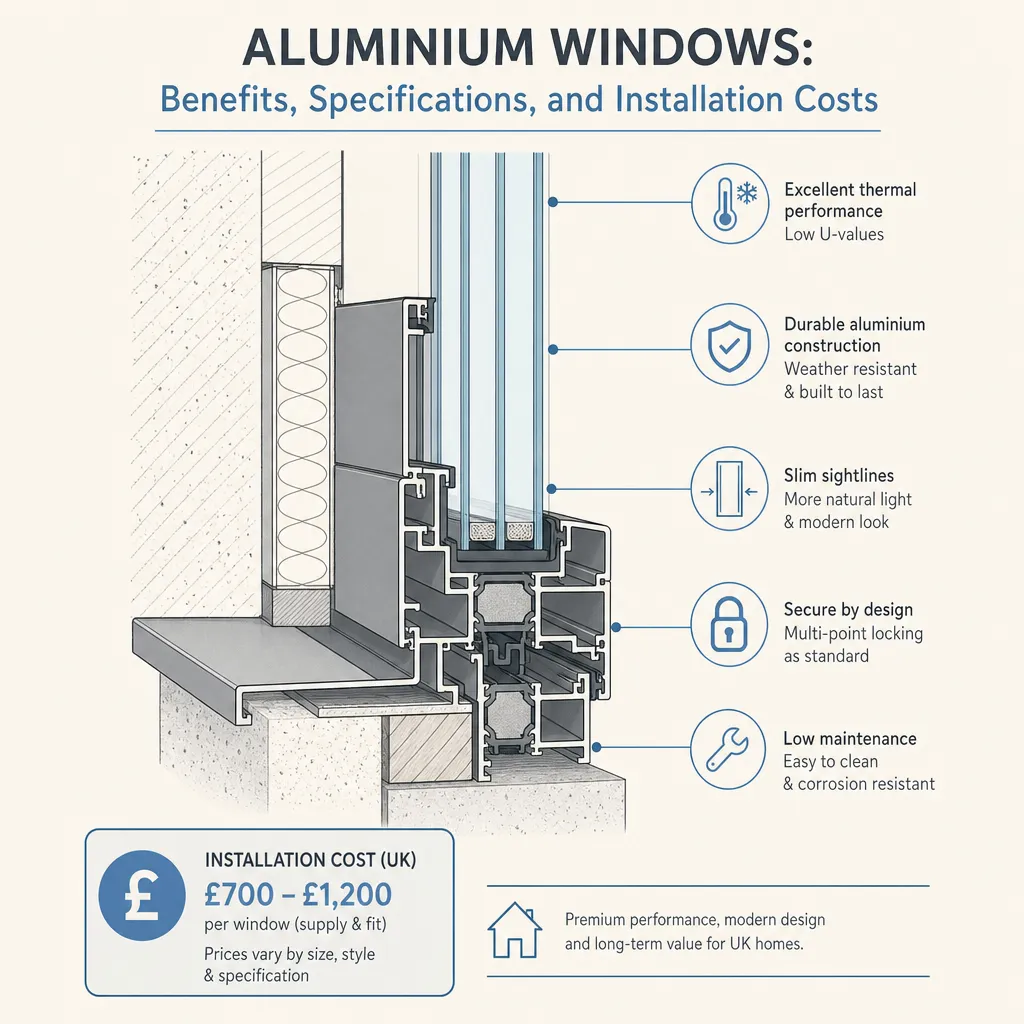
Aluminium Windows: Benefits, Specifications, and Installation Costs
Aluminium windows typically cost £600–£1,800 per window installed in the UK, depending on size and specification.
 Improvement & Build
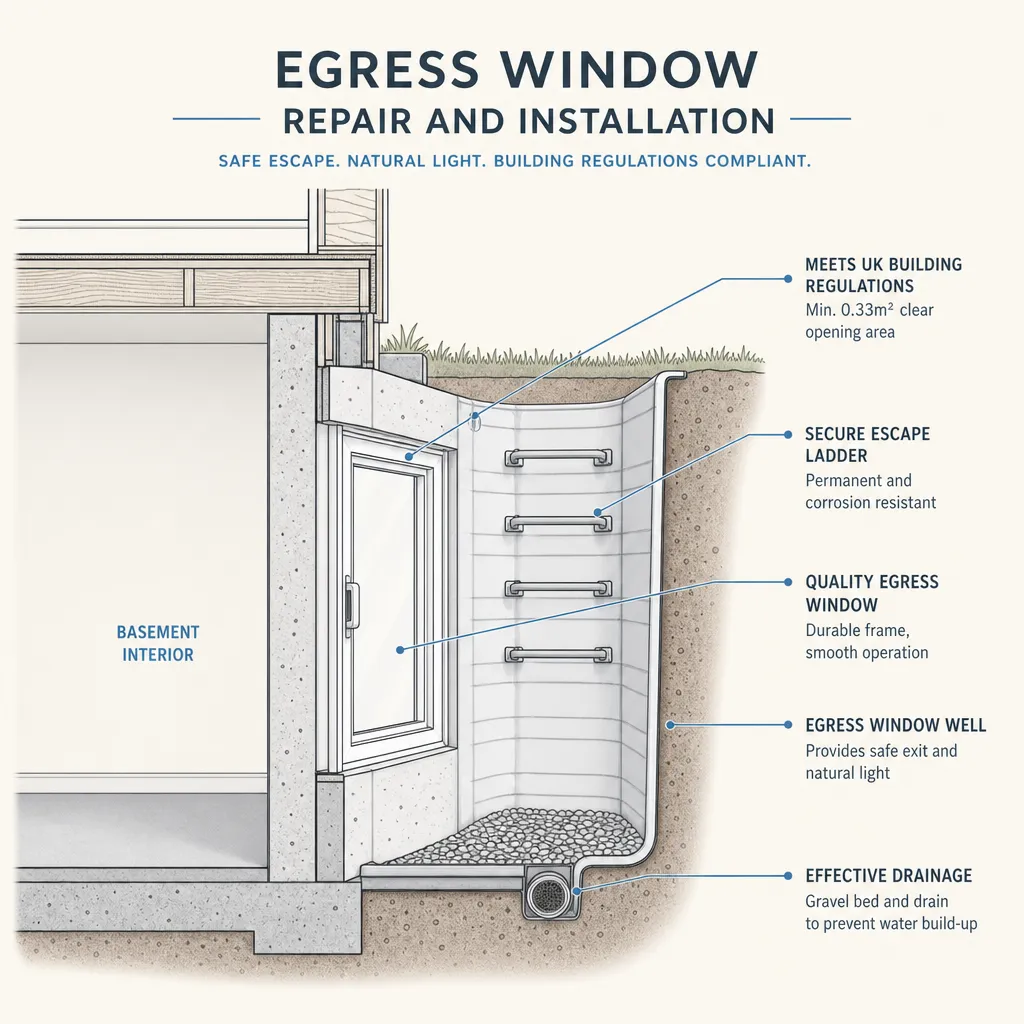
Egress Window Repair and Installation
An egress window is a window large enough to serve as an emergency escape route from a habitable room.
 Improvement & Build
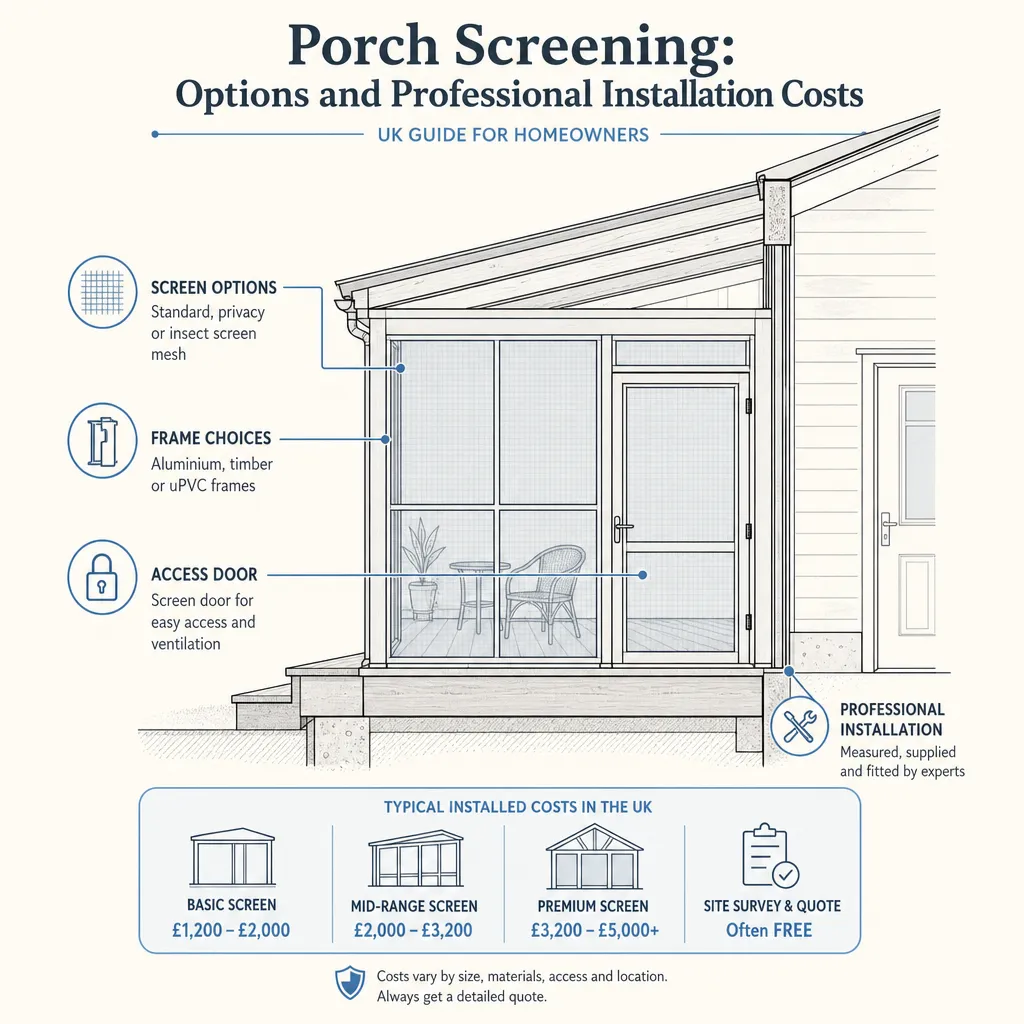
Porch Screening: Options and Professional Installation Costs
Porch screening ranges from simple insect mesh on a timber frame to bespoke aluminium-framed glazed enclosures.
 Improvement & Build
Building an Outdoor Kitchen: Design, Materials, and Investment
Building an outdoor kitchen in the UK costs roughly £3,000–£25,000 depending on size and materials.