Winter Garden Care: Professional Landscaping and Design Strategies
By Housey · Last reviewed 18th of May 2026
Winter Garden Care: Professional Landscaping and Design Strategies
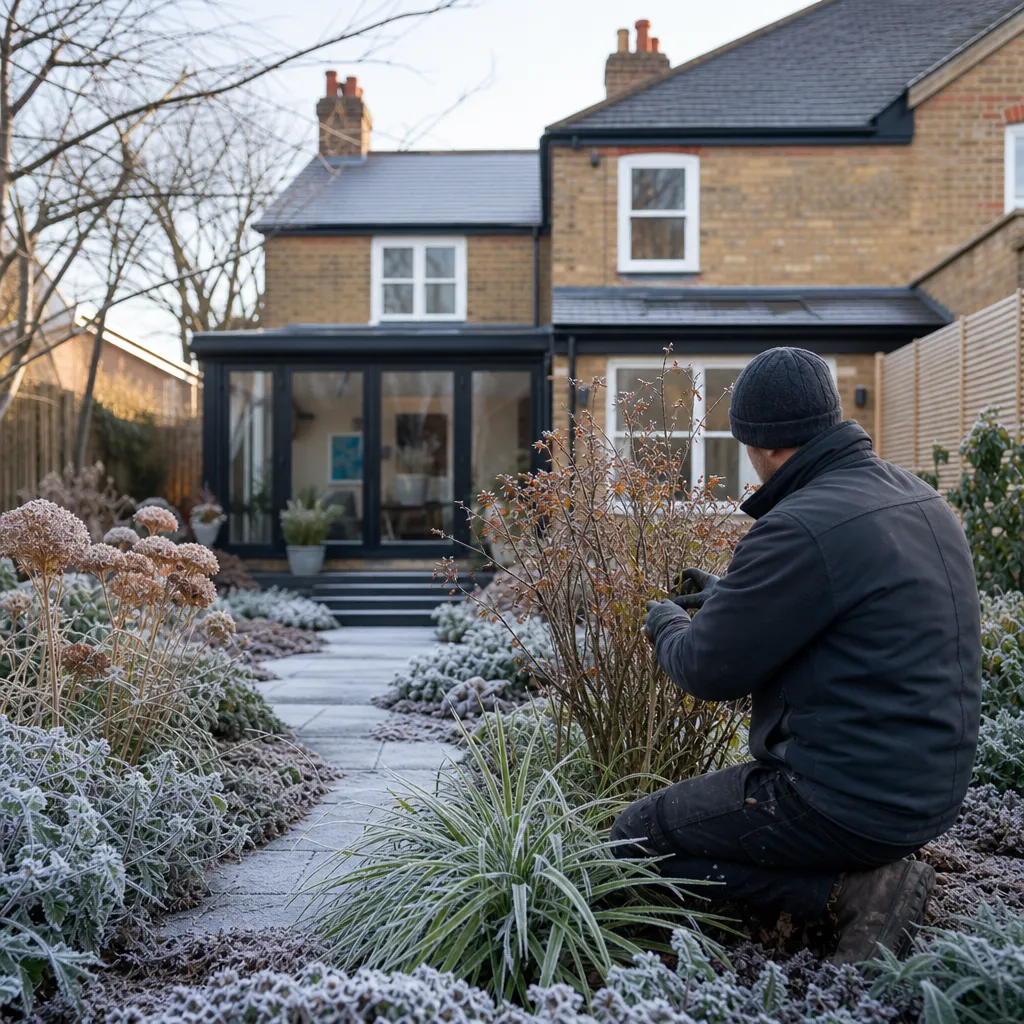
British winters can be demanding on established gardens — prolonged cold, waterlogged soil, frost heave, and low light test even well-maintained planting and hard landscaping. Homeowners who invest in winter garden care typically find less remediation work to address in spring and are better placed to start major projects when ground conditions improve. Whether you manage your own garden or engage a professional, understanding what needs attention now avoids costly problems later.
Key points
- Hard frosts below −5°C can crack terracotta pots, damage exposed water features, and heave newly laid patios if the sub-base preparation was inadequate.
- Waterlogged clay soils compact under foot traffic and machinery in winter; avoiding heavy use on saturated ground prevents structural soil damage that can take a full growing season to recover.
- Winter is the correct season to prune most deciduous trees and large shrubs, including roses — dormant-season pruning reduces disease risk and allows you to assess the plant's structure clearly.
- The Wildlife and Countryside Act 1981 restricts cutting hedges and trees during the main bird nesting season (broadly March to August); most winter works avoid this restriction for common species.
- Projects such as patios, driveways, retaining walls, and outbuildings above certain dimensions may need planning permission or building regulations approval — check before commissioning works.
What winter garden maintenance involves
Winter maintenance divides into four broad categories: plant care, hard landscaping checks, soil management, and preparation for spring works. A professional landscaper or garden designer will assess all four during an initial visit, though many homeowners manage plant care themselves and only engage contractors for structural or design work.
Plant care in winter:
- Lift and store tender perennials — dahlias, cannas, salvias — once the first frost blackens the foliage.
- Mulch beds with 5–10 cm of well-rotted compost or bark chippings after the first hard frost to insulate roots and suppress early weeds.
- Prune deciduous trees and shrubs during dormancy, typically November to February in most UK regions.
- Check staking and ties on newly planted trees; winter winds cause more movement damage than is often visible above ground.
Hard landscaping checks:
- Inspect pointing on retaining walls and raised beds — water in joints expands on freezing and can dislodge masonry over successive winters.
- Clear drainage channels, gulley pots, and permeable paving joints before the wettest months to avoid standing water.
- Check that decking boards are not lifting; secure any loose sections before frost cycling worsens the movement.
Soil and lawn management:
- Avoid working on lawns when the ground is frozen or saturated.
- Aerate lawns with a garden fork or hollow-tine aerator in late autumn to improve drainage before the heaviest rains.
- Apply a winter lawn feed only where growth is clearly poor — high-nitrogen feeds should wait for spring.
DIY winter maintenance vs engaging a professional
Task | DIY feasibility | When to use a professional |
|---|---|---|
Pruning small shrubs and roses below 2 m | High — straightforward with correct tools | Always for trees with a Tree Preservation Order or in a conservation area |
Tree work above 2 m | Low — significant working-at-height risk; specialist equipment needed | Use a qualified arborist (Arboricultural Association member) |
Retaining wall repairs | Moderate for minor repointing | Structural movement, leaning, or cracking warrants a professional assessment |
Lawn aeration | High — simple manual task | Large or severely compacted lawns benefit from a landscaper with hollow-tine machinery |
New patio or hard landscaping installation | Not advisable in winter frost | Plan and tender in winter; install in dry, frost-free conditions (typically March–October) |
Drainage improvements | Low — requires excavation and knowledge of levels | Always use a professional for new drainage runs; check if building regulations apply |
Decision tree: should you hire a professional this winter?
- Hire a landscaper if you need structural hard landscaping repairs — retaining walls, damaged drainage, significant paving movement — or want a comprehensive seasonal maintenance programme.
- Hire a garden designer if you want to redesign borders, alter the garden layout, or plan significant planting changes ready for spring implementation.
- Hire a qualified arborist if any tree work is needed above 2 m, or if a tree has a Tree Preservation Order, is in a conservation area, or shows signs of structural failure.
- DIY is reasonable for mulching, light pruning below 2 m on healthy plants, lawn aeration on unfrozen ground, and general seasonal tidying.
- Check with your local planning authority before removing or reducing hedges near boundaries of listed buildings or in designated areas — permitted development assumptions do not always apply.
What to ask before hiring a landscaper or garden designer
- Are you a member of a professional body — the Association of Professional Landscapers, the Society of Garden Designers, or the Arboricultural Association for tree work?
- What does the winter maintenance visit cover — is pruning, soil care, and hard landscaping inspection all included, or priced separately?
- Is VAT included in the quote, and what are the day rates for any additional works identified on site?
- What happens if drainage or structural issues are found that require additional works beyond the original scope?
- Will you provide a written schedule of recommended works and a timeline for spring preparation?
- Are you insured for public liability and employers' liability?
Planning ahead: commissioning garden works in winter
Winter is a productive season to plan major garden projects even when installation must wait for better conditions. Garden designers can survey the space and develop concept proposals, planning applications for larger structures can be submitted, and hard landscaping contractors often have better availability to quote and discuss requirements than during the busy spring and summer period.
Projects that may require planning permission include outbuildings over 4 m in height (or over 2.5 m if within 2 m of a boundary), raised decking over 30 cm above ground level in some circumstances, and any structure affecting a listed building or property in a conservation area. Always check GOV.UK guidance on permitted development and consult your local planning authority if in doubt.
When to get professional help
Contact a professional rather than attempting DIY if:
- A tree shows signs of structural failure — significant crown dieback, a pronounced lean, fungal growth at the base, or recent storm damage.
- A retaining wall or raised bed is visibly leaning, cracking, or shows water staining through the mortar.
- Drainage problems are recurring despite clearing channels — the issue may lie with the fall, the soakaway, or the connection to a wider drainage system.
- You are planning any hard landscaping or outbuildings and are uncertain whether planning permission or building regulations approval is required.
How Housey can help
Housey connects homeowners with experienced landscapers and garden designers who can assess your garden in winter and recommend the right programme of works — from a seasonal maintenance visit to a full redesign or ground preparation for a major spring project.
Frequently asked questions
Can I have a patio or paving installed in winter in the UK?
Most hard landscaping contractors prefer frost-free conditions, usually between March and October. Mortar and adhesive bedding systems require temperatures above approximately 3°C to cure correctly. Winter is, however, an ideal time to finalise designs, agree quotes, and book a contractor for early spring, when lead times can fill quickly.
Do I need planning permission to remove a hedge in winter?
In many cases no, but there are exceptions. Hedges on boundaries of listed buildings or in conservation areas may need consent, as may hedges subject to a planning condition. Trees within a hedge may carry a Tree Preservation Order. Check with your local planning authority before starting work if you are in any doubt.
When should I prune roses in the UK?
Most bush and shrub roses are pruned in late winter — typically January to March in most UK regions — once the risk of the hardest frosts has passed but before new growth begins. Climbing roses are generally pruned in autumn. For specific varieties, check guidance from the Royal Horticultural Society.
What is the bird nesting season restriction in the UK?
The Wildlife and Countryside Act 1981 makes it an offence to intentionally damage or destroy the nest of any wild bird while in use or being built. While there is no fixed statutory date, Natural England advises caution between March and August. Cutting hedges and trees in winter is generally safer, though individual circumstances should always be checked.
Sources and further reading
- Wildlife and Countryside Act 1981 — legislation.gov.uk
- Permitted development rights for householders: technical guidance — GOV.UK
- Pruning and training — Royal Horticultural Society
- Find a qualified arborist — Arboricultural Association
Useful next reads
 Improvement & Build
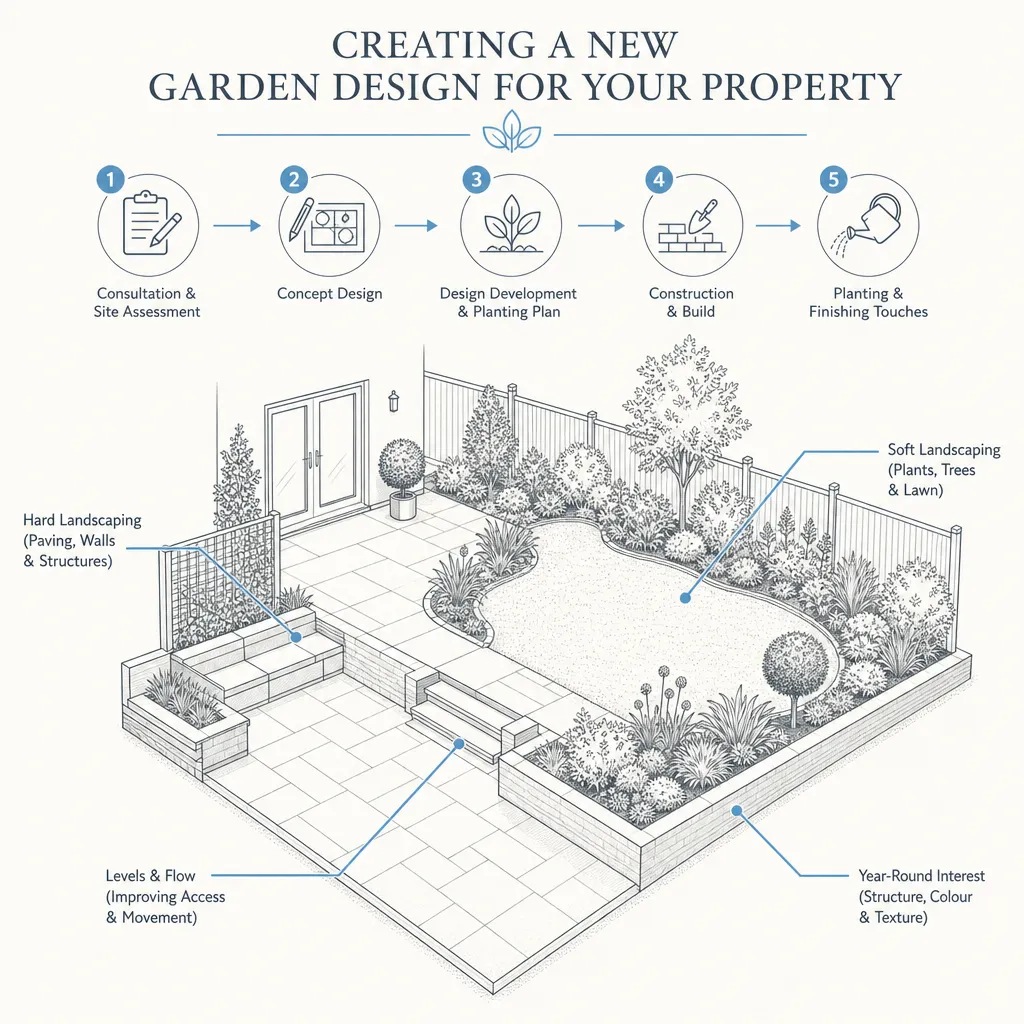
Creating a New Garden Design for Your Property
Creating a new garden design involves assessing your space, setting a realistic budget, deciding on hard and soft landscaping, and choosing a planting scheme suited to your soil and aspect.
 Improvement & Build
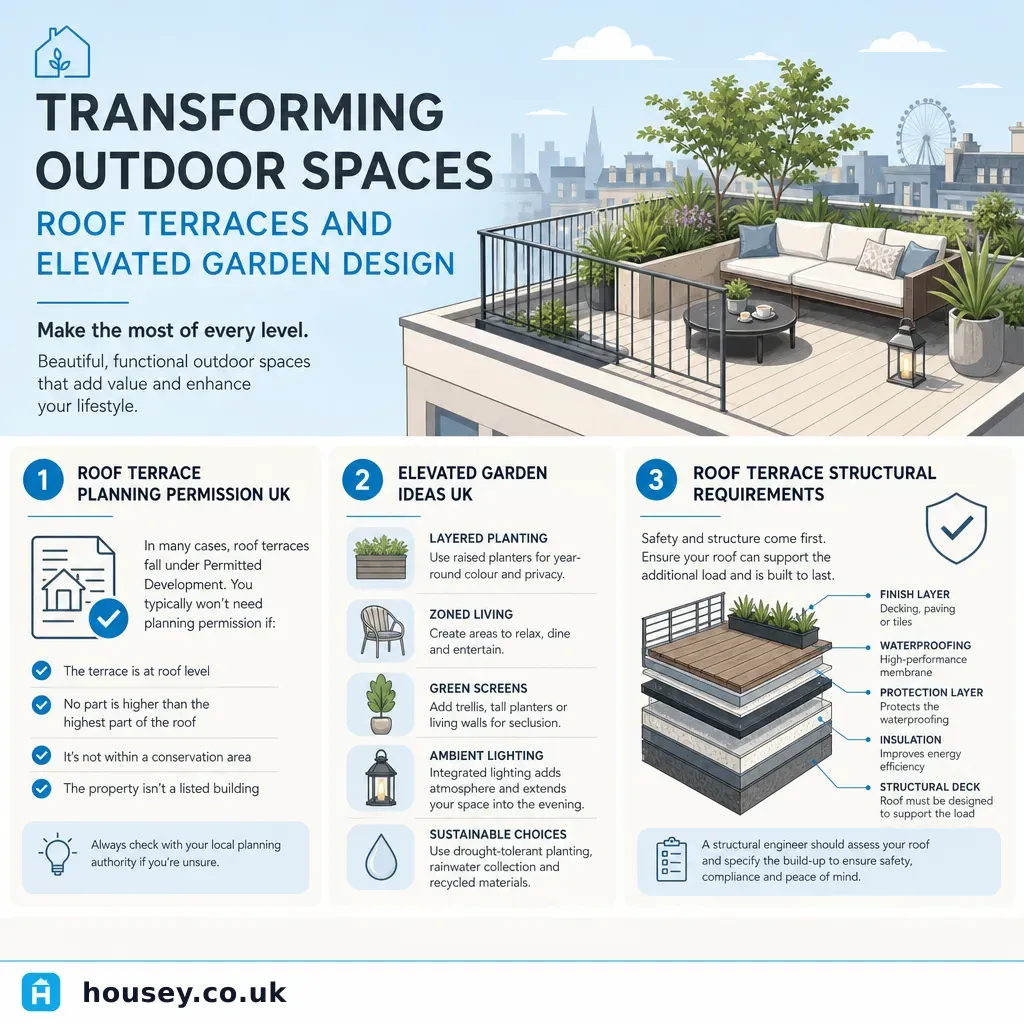
Transforming Outdoor Spaces: Roof Terraces and Elevated Garden Design
Roof terraces in the UK almost always need planning permission and a structural engineer's load capacity assessment before design work begins.
 Improvement & Build
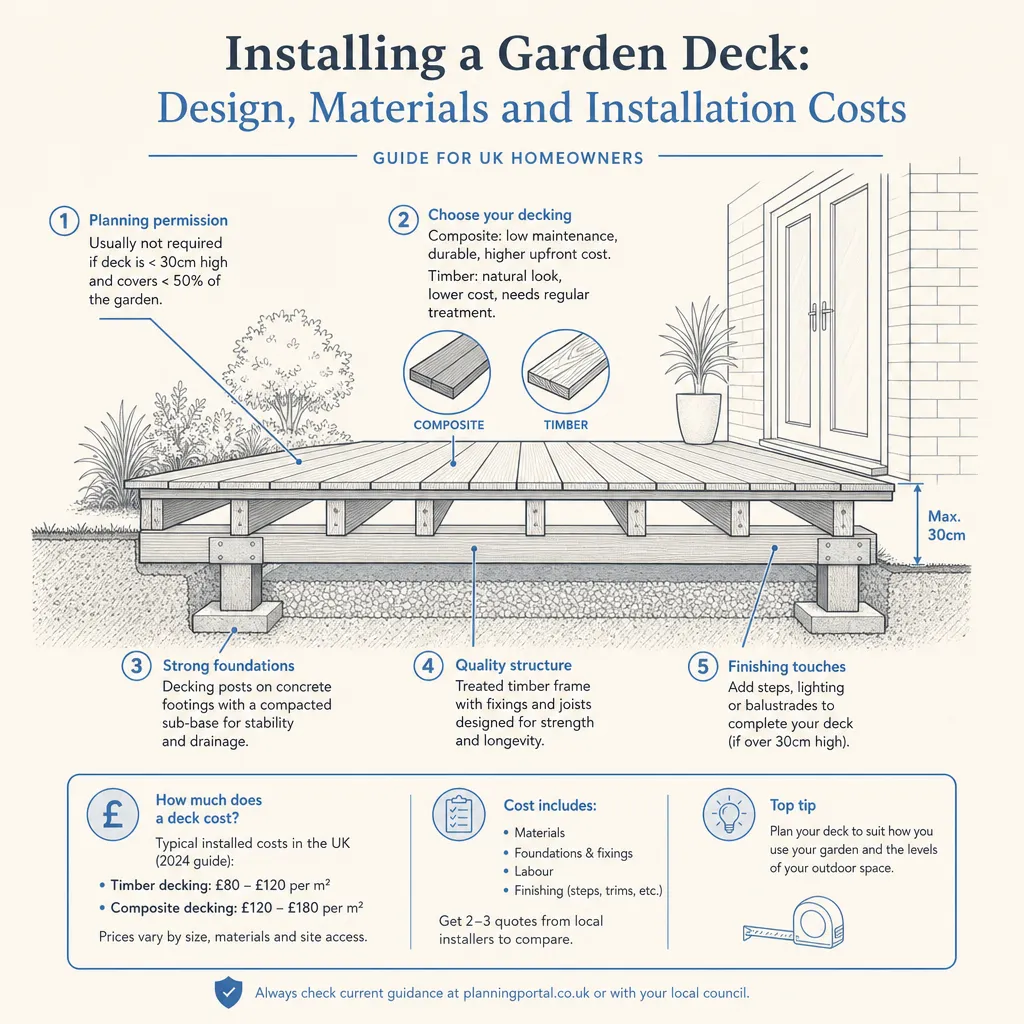
Installing a Garden Deck: Design, Materials and Installation Costs
Garden decking costs £80–250 per m² installed in the UK depending on material — softwood is cheapest, composite the most durable.
 Improvement & Build
Enhancing Your Home's Exterior with Professional Outdoor Lighting Design
Professional outdoor lighting design improves kerb appeal, extends garden use after dark, and deters intruders.
 Improvement & Build
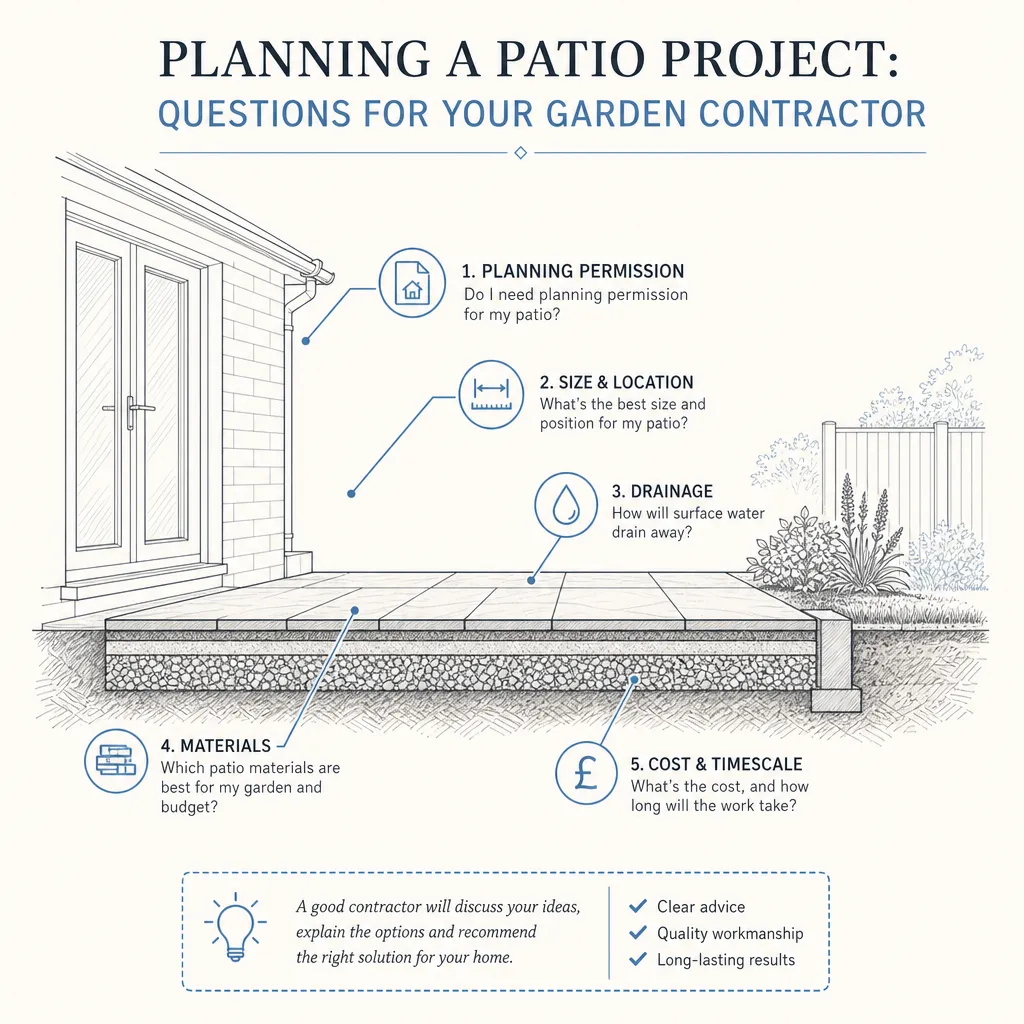
Planning a Patio Project: Questions for Your Garden Contractor
When planning a patio, ask your contractor about sub-base depth, bedding method, drainage gradient (typically 1:60 away from the house), and the frost-resistance rating of the paving.