Winter home safety: preparation tips for UK properties
By Housey · Last reviewed 19th of May 2026
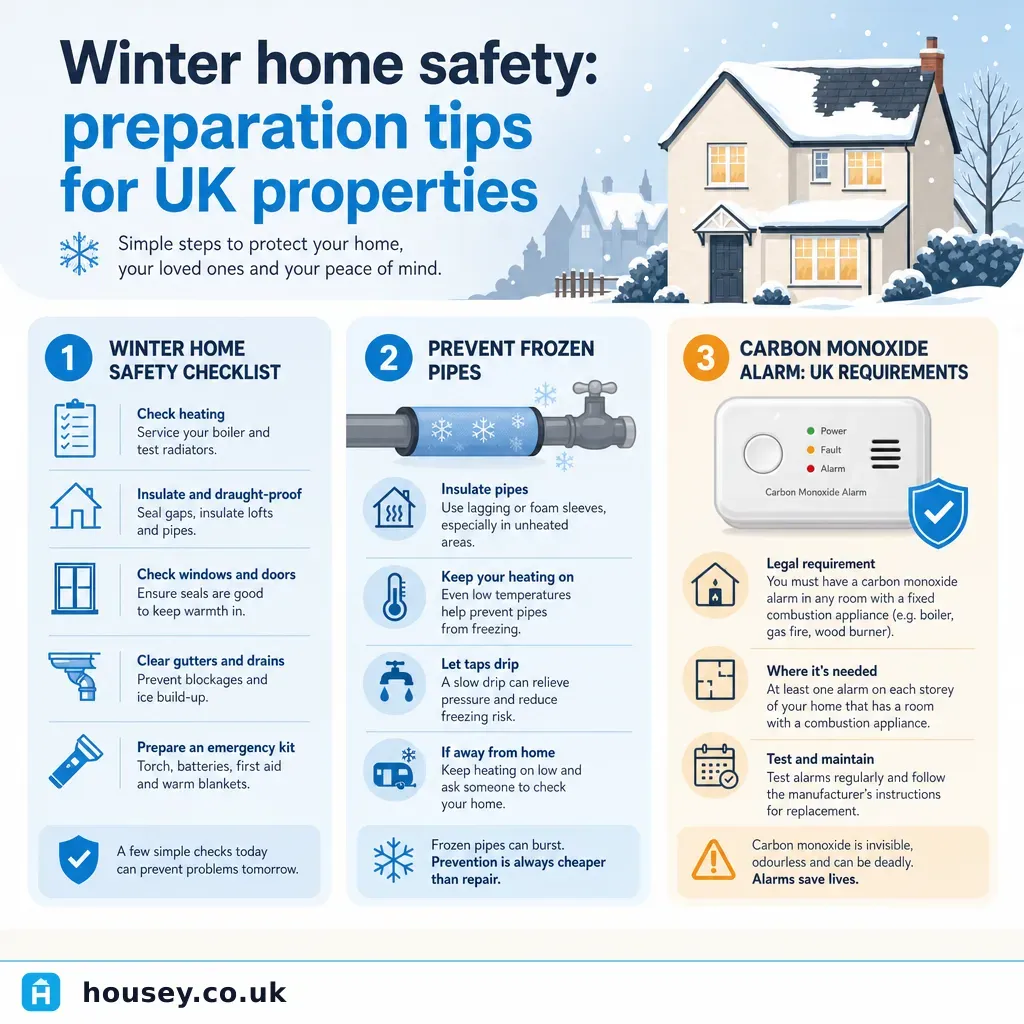
Winter home safety: preparation tips for UK properties
Winter in the UK brings a combination of cold snaps, high winds, and damp conditions that put real pressure on older housing stock. Whether you're in a 1930s semi, a Victorian terrace, or a modern flat, hazards including frozen pipes, carbon monoxide from poorly maintained boilers, and fire risks from extra heating sources all increase significantly between October and March. Acting before the first frost — rather than after the first problem — is the difference between a manageable maintenance task and an emergency call-out.
Key points
- Gas Safe-registered engineers must carry out all gas boiler servicing; an annual service is strongly recommended before winter and is a legal requirement for rented properties under the Gas Safety (Installation and Use) Regulations 1998.
- Carbon monoxide (CO) alarms are required in any room with a fixed combustion appliance (excluding gas cookers) under the Smoke and Carbon Monoxide Alarm (England) Regulations 2022 for rental properties; owner-occupiers are strongly advised to fit them.
- Pipes in unheated spaces — lofts, garages, and outside walls — are most at risk of freezing; the Water Regulations Advisory Scheme (WRAS) recommends insulating any pipe exposed to temperatures below 0°C.
- The stop tap (mains water shut-off valve) location should be known to every household member before winter; shutting it promptly during a burst-pipe emergency can prevent significant water damage.
- Chimney sweeping before the burning season begins is required by most home insurance policies covering chimney or flue damage.
Boiler and heating system safety
The most urgent winter safety task for most UK homes is ensuring the boiler and central heating system are in safe working order. A Gas Safe-registered engineer should service your boiler annually — ideally in late summer or early autumn before demand peaks. Servicing checks burner operation, heat exchanger condition, flue integrity, and gas pressure, all of which can degrade invisibly between winters.
Carbon monoxide is odourless and colourless. A CO alarm on each floor — and in any room with a boiler, gas fire, or solid fuel appliance — is required by law for rental properties in England under the Smoke and Carbon Monoxide Alarm (England) Regulations 2022, and is strongly advisable for all occupied homes. Alarms should comply with BS EN 50291 and be replaced per the manufacturer's schedule, usually every 7–10 years.
If your boiler loses pressure frequently, produces a yellow or orange flame instead of blue, or emits a sulphur-like odour, stop using it and contact a Gas Safe-registered engineer immediately.
Pipe protection and frozen water systems
Frozen and burst pipes are one of the most common and costly UK winter emergencies. The risk is highest in:
- Loft spaces where cold air circulates freely
- External walls and unheated outbuildings
- Pipes running through uninsulated garages
- Properties left unoccupied for extended periods
Foam lagging (pipe insulation) is inexpensive and straightforward to fit around accessible pipes. Always leave the main stop tap accessible and test it turns off fully before winter. For properties with external taps or irrigation systems, drain and isolate those fittings before the first hard frost.
If you're leaving a property unoccupied, keep the heating on a low background setting (around 12–15°C) rather than turning it off entirely. Many home insurance policies require a minimum temperature to be maintained during winter absence — check your policy schedule carefully.
Open fires, wood-burners, and solid fuel appliances
Solid fuel appliances — wood-burners, open fireplaces, and multi-fuel stoves — carry real risks if not properly maintained. Creosote and soot build-up in chimneys and flues can ignite, causing chimney fires that spread rapidly into roof timbers. The National Association of Chimney Sweeps recommends:
- Open fires used regularly: sweep twice during the burning season and once in summer.
- Wood-burners or closed stoves: at least once a year, or more frequently with heavy use.
- Smokeless fuel appliances: at least once a year.
- Bituminous coal appliances: twice a year.
Check that the fireguard is appropriately rated and that combustibles — including rugs, furniture, and seasonal decorations — are kept clear of the fireplace as required under Approved Document J.
Electrical safety during winter
Winter increases electrical load: plug-in heaters, electric blankets, and seasonal lighting all draw more power. Overloaded sockets and damaged extension leads are a significant cause of house fires in winter.
- Never daisy-chain extension leads.
- Check electric blankets for frayed cables, scorch marks, or damaged controllers — replace rather than repair.
- Test smoke alarms monthly and replace batteries annually.
- If your consumer unit is over 25 years old or still has rewirable fuses rather than MCBs, ask an NICEIC or NAPIT-registered electrician to assess it.
An Electrical Installation Condition Report (EICR) is required every five years for rented properties and is advisable for owner-occupied homes more than 25 years old.
Red flags: when to act immediately
- Smell of gas: leave the building, avoid all switches and naked flames, call the National Gas Emergency Service on 0800 111 999.
- CO alarm sounding, or symptoms including headache, dizziness, or nausea: leave immediately and call 999.
- Flickering lights, repeatedly tripping MCBs, or burning smells from sockets or appliances.
- Visible water staining from a burst or frozen pipe inside the ceiling or roof timbers.
- A widening crack in a chimney breast or chimney stack.
Important limitations
This article provides general information only. Gas, electrical, and structural hazards vary significantly by property age, construction type, and local conditions. Only a Gas Safe-registered engineer should service or repair gas appliances; only a qualified electrician registered with NICEIC or NAPIT should work on consumer units or fixed wiring. This guide does not replace a professional risk assessment or constitute legal advice.
What to ask a qualified professional
- Are you Gas Safe registered, and what is your registration number? Verify at the Gas Safe Register website.
- What does the boiler service include, and will you issue a written service record?
- Will you test for CO leaks and check the full flue route during the service?
- For electrical work: are you NICEIC or NAPIT registered, and will you issue an Electrical Installation Certificate or EICR on completion?
- For chimney sweeping: are you a member of NACS or the Guild of Master Chimney Sweeps, and will you provide a certificate of sweep?
- Is the work covered by your public liability insurance?
When to get professional help
Gas and electrical work must always involve a qualified, registered professional — this is a legal requirement, not merely a recommendation. Seek professional advice if:
- Your boiler is more than 10 years old and has not been serviced recently.
- You have a solid fuel stove or open fire not swept in over a year.
- A smoke or CO alarm keeps sounding without an obvious cause.
- You notice burning smells, scorch marks, or frequently tripping MCBs.
- Loft or garage pipes are uninsulated and temperatures in your region regularly fall below freezing.
How Housey can help
Housey connects UK homeowners with Gas Safe-registered engineers for annual gas safety certificates and with qualified assessors for professional fire risk assessments. Request quotes from verified local professionals before the winter season starts.
Frequently asked questions
Is a gas boiler service legally required for owner-occupiers in the UK?
For owner-occupied homes, an annual boiler service is not a legal requirement, but Gas Safe Register strongly recommends it and most boiler warranties require it. For landlords, a gas safety check by a Gas Safe-registered engineer is required every 12 months under the Gas Safety (Installation and Use) Regulations 1998, and tenants must receive a copy within 28 days of each check.
What temperature should I set my heating to prevent frozen pipes?
The Water Regulations Advisory Scheme recommends maintaining a background temperature of at least 12–15°C in unoccupied properties during cold weather. For occupied homes, keeping rooms above 7°C and keeping the loft hatch closed can significantly reduce the risk of pipes freezing in vulnerable runs through lofts and garages.
How do I find my stop tap?
Most stop taps are under the kitchen sink, near the front door, or in a utility cupboard. Older terraced properties may also have an external stop tap beneath a small cover on the pavement, operated with a long-handled key. Turn it fully clockwise to close, then test by opening a cold tap to confirm the water supply has stopped.
Are carbon monoxide alarms required by law in UK homes?
Since 1 October 2022, the Smoke and Carbon Monoxide Alarm (England) Regulations 2022 require CO alarms in any room with a fixed combustion appliance (excluding gas cookers) in rented properties in England. Owner-occupiers face no equivalent legal duty at present, but HSE and Gas Safe Register strongly advise fitting CO alarms throughout the home.
Sources and further reading
- Gas Safety (Installation and Use) Regulations 1998 — legislation.gov.uk
- Smoke and Carbon Monoxide Alarm (England) Regulations 2022 — legislation.gov.uk
- Gas Safe Register: boiler servicing guidance — Gas Safe Register
- Approved Document J: combustion appliances and fuel storage systems — GOV.UK
- NICEIC: electrical safety for homeowners — NICEIC
- National Association of Chimney Sweeps — NACS
Useful next reads
 Improvement & Build
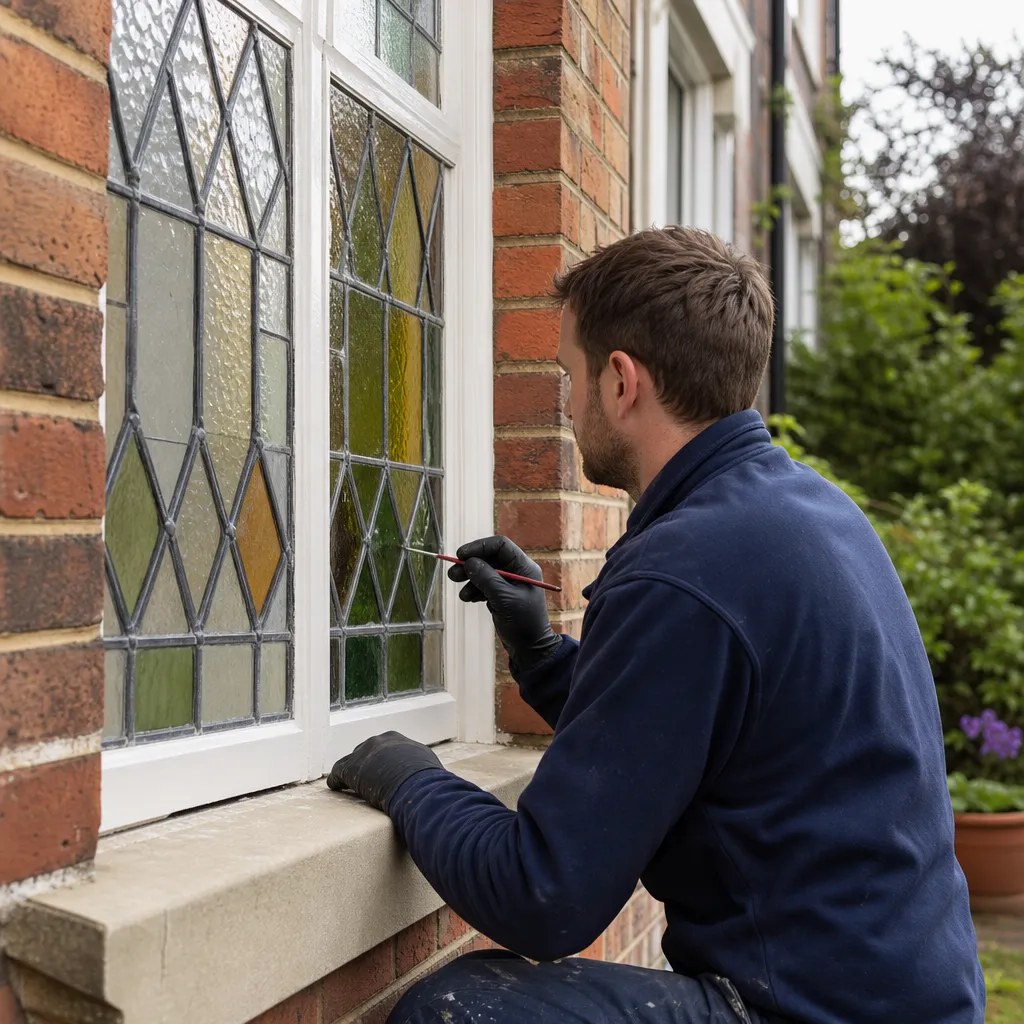
Sealing and Maintaining Historic Leaded Glass Windows: Preservation and Performance
Leaded glass windows are maintained using traditional linseed oil cement — not silicone or modern sealants, which prevent natural movement in the lead came.
 Improvement & Build
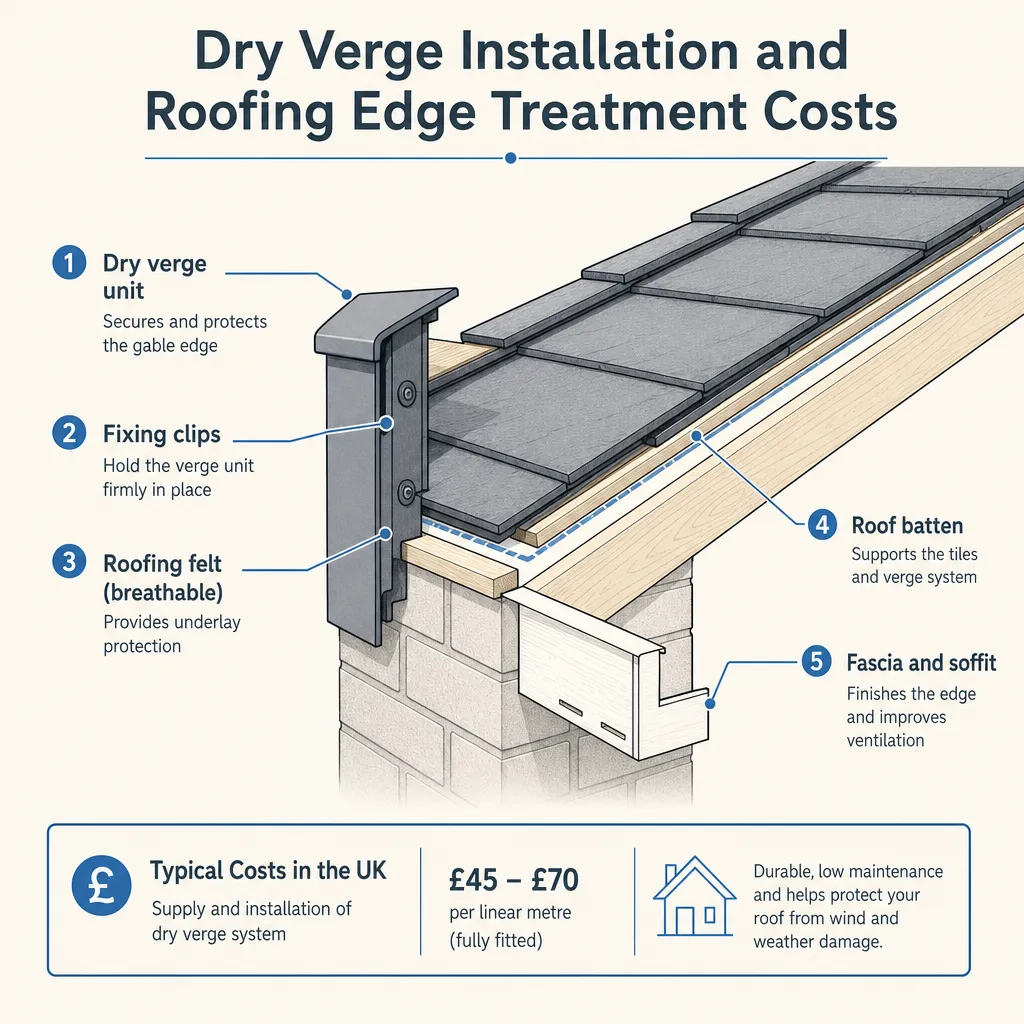
Dry Verge Installation and Roofing Edge Treatment Costs
A dry verge system replaces mortar bedding along the gable edge of a pitched roof with interlocking uPVC or aluminium units.
 Improvement & Build
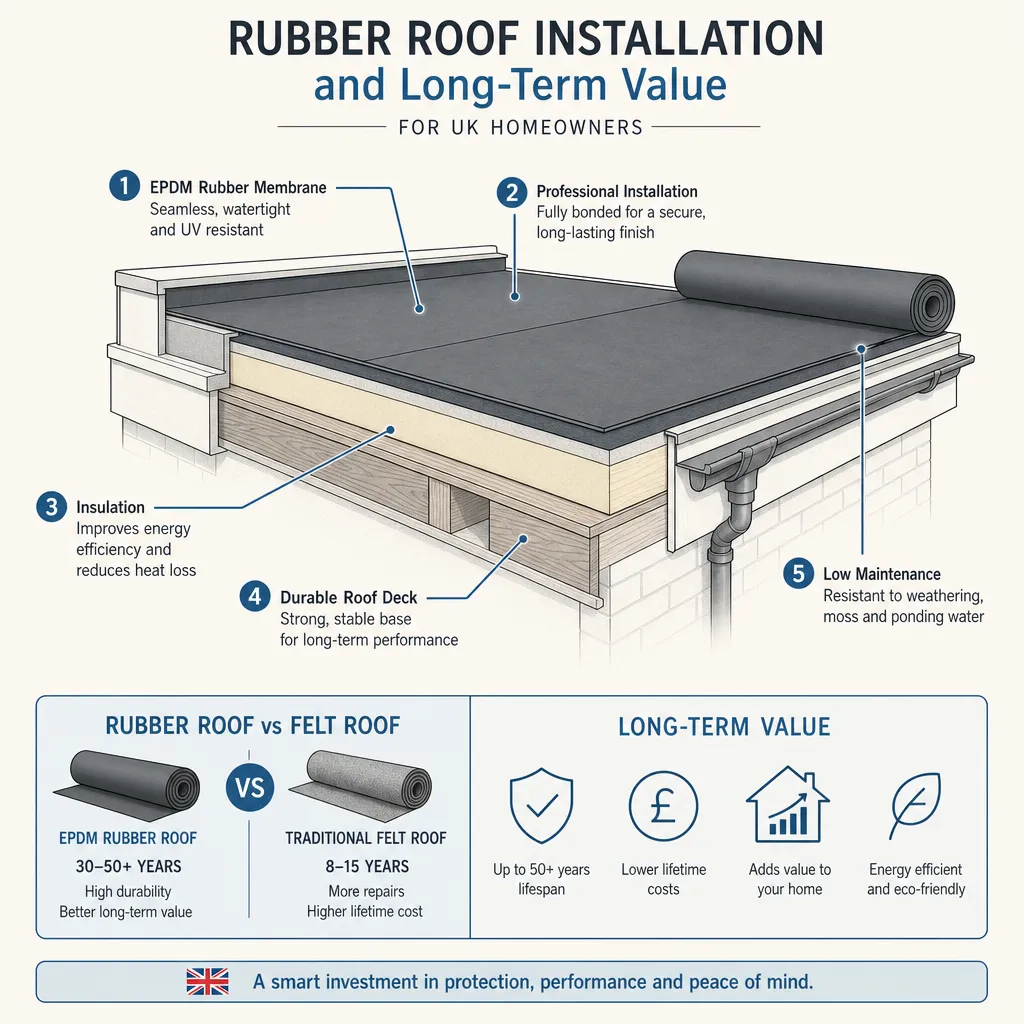
Rubber Roof Installation and Long-Term Value
EPDM rubber roofing is a synthetic membrane for flat and low-pitch roofs that typically lasts 30–50 years with minimal maintenance.
 Improvement & Build
Window installation checklist for homeowners
Before installation, confirm your installer is registered with FENSA or CERTASS and can self-certify Building Regulations compliance.
 Improvement & Build
Winterizing Plumbing in Holiday Homes and Vacation Properties
Holiday homes left unheated face serious burst-pipe risk in UK winters.