Comparing wood burning stoves with gas heating options
By Housey · Last reviewed 11th of May 2026

Comparing wood burning stoves with gas heating options
Rising energy costs and growing interest in lower-carbon living have led many UK homeowners to weigh up a wood burning stove alongside — or instead of — gas central heating. The comparison is not straightforward: the two systems serve different purposes, carry different regulatory obligations, and suit different property types and lifestyles. Whether you are renovating a Victorian terrace, looking to cut your gas bill, or considering the long-term direction of UK heating policy, understanding the practical differences helps you make a well-informed decision.
Key points
- Wood burning stoves sold new in the UK from 2022 must meet Ecodesign 2022 standards, limiting particulate matter and nitrogen oxide emissions — older pre-Ecodesign stoves cannot legally be sold new.
- In Smoke Control Areas — covering most UK cities and many towns — only DEFRA-approved (Smoke Exempt) stoves burning approved fuels may be used; check the DEFRA exemptions database before purchasing a stove.
- A new wood burning stove typically costs £1,500–£4,000 installed, including HETAS installation, flue liner, and hearth; a gas boiler replacement typically costs £2,000–£4,500. Indicative UK costs, last reviewed 2026-05-11.
- Wood burning stoves heat one room effectively in most homes — they do not replace gas central heating for whole-house warmth unless connected to a back boiler or thermal store.
- The Boiler Upgrade Scheme (BUS) offers a £7,500 grant for air source heat pumps and does not fund gas boiler replacements, reflecting the long-term policy direction away from fossil fuel heating in UK homes.
Wood burning stoves vs gas central heating: the main differences
| Wood burning stove | Gas central heating |
|---|---|---|
Heating coverage | One room (whole house only if back boiler or thermal store fitted) | Whole house via radiators and hot water |
Fuel | Logs (Ready to Burn certified) or DEFRA-approved smokeless fuel | Mains gas or LPG |
Typical installed cost | £1,500–£4,000 | £2,000–£4,500 (boiler replacement) |
Installation requirement | HETAS registered installer; Building Regulations notification | Gas Safe registered engineer; Part L compliance |
Regulatory constraint | Ecodesign compliance; Smoke Control Area check | No new gas boilers in new-build homes from 2025 (England, subject to legislation) |
Carbon emissions | Low (biomass considered renewable if sustainably sourced) | Approximately 204g CO₂/kWh for mains gas |
Maintenance | Annual chimney sweep; stove inspection recommended | Annual service by Gas Safe registered engineer |
Typical lifespan | 15–25 years with good care | 10–15 years for a modern condensing boiler |
Indicative UK costs, last reviewed 2026-05-11.
How do running costs compare?
Running costs are difficult to compare directly because wood burning stoves and gas central heating usually serve different functions — a stove supplements rather than replaces the boiler in most homes.
Gas central heating running costs depend on the gas unit rate, boiler efficiency, and property insulation. At a typical domestic rate of approximately 7p/kWh (subject to the Ofgem price cap — check current rates before budgeting), heating a three-bedroom semi-detached house might cost £600–£1,200 per year for space heating and hot water combined.
Wood burning stove running costs depend primarily on the cost and quality of fuel. Ready to Burn certified kiln-dried logs typically retail at £100–£200 per cubic metre (indicative, last reviewed 2026-05-11 — prices vary significantly by region and supplier). A stove used regularly on winter evenings might burn 3–5 cubic metres per season, costing £300–£800 per year. This provides warmth in one room only and is additional to, not instead of, gas heating costs for the rest of the house.
Wood fuel can offer a lower cost per kWh of heat delivered, particularly for households able to source good-quality local timber, but the comparison is complicated by the stove's limited coverage area.
Worked example: 1930s semi-detached in the East Midlands
Situation: A homeowner currently spending approximately £900 per year on gas for heating and hot water is considering a 5kW wood burning stove for the sitting room to reduce how often the boiler runs on winter evenings.
Analysis: At an indicative installed cost of around £2,500 — covering an Ecodesign-compliant stove, flue liner, HETAS installation, and hearth — and assuming annual savings of approximately £150–£200 by running the boiler less on evenings when the stove is lit, the simple payback period would be roughly 13–17 years. The stove also provides a backup heat source if the boiler fails and adds character to the room. As the property is not in a Smoke Control Area, any Ecodesign-compliant stove can be used without the additional constraint of DEFRA approval.
This is a simplified illustration only. Actual savings depend on stove usage, fuel cost, insulation levels, and boiler efficiency. Always obtain quotes from qualified installers before committing.
Which heating option suits your home?
- Retain or upgrade gas central heating if your priority is whole-house warmth, your existing boiler is under 10 years old and well maintained, or you live in a Smoke Control Area and prefer not to use a DEFRA-approved stove.
- Add a wood burning stove if you want supplementary warmth in a living room or kitchen, you have an existing chimney or a viable flue route, and you can source affordable certified fuel. Confirm the property is outside a Smoke Control Area or choose a DEFRA-approved model.
- Consider a heat pump if you are in an off-gas-grid property, planning major insulation improvements, or seeking to use the Boiler Upgrade Scheme grant. A heat pump combined with good fabric insulation may offer better long-term value than either gas or wood as the primary heating system.
- Ask a HETAS registered installer to assess flue condition, hearth dimensions, and air supply before committing to a stove purchase.
- Ask a Gas Safe registered engineer if your boiler is ageing, underperforming, or approaching the end of its expected service life.
- Check with your local planning authority if the property is listed or in a conservation area — flue terminals and external works may require consent.
Regulatory requirements you need to know
Wood burning stoves
Installation must be carried out by a HETAS registered installer — or by another competent person followed by a building control inspection — and notified under Building Regulations Approved Document J (combustion appliances). The room must have adequate air supply and a suitable hearth meeting the dimensional requirements set out in Approved Document J.
In a Smoke Control Area, only DEFRA-approved stoves burning DEFRA-approved fuels or Ready to Burn certified dry wood may be used. Using a non-exempt appliance or unapproved fuel is an offence under the Clean Air Act 1993. Flues and chimneys should be swept at least once a year by a qualified chimney sweep.
Gas central heating
Any new gas boiler installation, replacement, or modification must be carried out by a Gas Safe registered engineer — homeowners can verify any engineer's registration at gassaferegister.co.uk. New boilers must comply with Building Regulations Part L (conservation of fuel and power) and ErP regulations; A-rated condensing boilers are now the standard for domestic installations. Annual boiler servicing by a Gas Safe registered engineer is strongly recommended to maintain efficiency, warranty validity, and safety.
Important limitations
This article provides general information on wood burning stoves and gas central heating and should not be taken as specific advice for your property. Gas safety regulations, Smoke Control Area boundaries, building regulations requirements, and government grant schemes change over time. All gas work must be carried out by a Gas Safe registered engineer. Stove installation should be carried out by a HETAS registered installer. Always obtain professional advice specific to your property before committing to any installation.
When this becomes urgent
Seek qualified help immediately if:
- You suspect a gas leak or carbon monoxide from a boiler or gas appliance — call the National Gas Emergency Service on 0800 111 999 and do not use light switches or open flames.
- Your existing chimney or flue is unlined, cracked, or of unknown condition — a stove must never be connected to an uninspected flue.
- Your wood burning stove produces smoke or fumes inside the room during use — stop using it and arrange a professional inspection of the appliance and flue before relighting.
What to ask a qualified professional
Before installing a wood burning stove, ask your HETAS installer:
- Is the proposed flue route compliant with Approved Document J, and does the chimney require lining?
- Is this property in a Smoke Control Area, and if so, which stoves and fuels are permitted?
- What kW output is appropriate for this room size?
- Will you notify building control on completion and provide a HETAS installation certificate?
Before replacing or upgrading a gas boiler, ask your Gas Safe engineer:
- What boiler output (kW) is appropriate for my home, and how have you calculated that?
- What efficiency rating does the proposed boiler achieve, and what are the estimated annual running costs?
- Is the flue route and condensate drain compliant with Part L and manufacturer requirements?
- Will the installation be registered with Gas Safe and notified to building control?
When to get professional help
Gas work of any kind must be carried out by a Gas Safe registered engineer — never attempt to install, modify, or repair a gas appliance yourself. Wood burning stove installation should be carried out by a HETAS registered installer to ensure compliance with Building Regulations and your home insurance terms. If you are considering moving away from gas altogether, a whole-house energy assessment from a qualified retrofit coordinator (under PAS 2035) can help you identify the most cost-effective and appropriate route for your property.
How Housey can help
Housey connects homeowners with qualified heating specialists and retrofit professionals across the UK. Whether you are looking for a HETAS-registered stove installer, a Gas Safe engineer to service or replace a boiler, or a retrofit assessor to explore your options, the Housey marketplace helps you find and compare local professionals.
Frequently asked questions
Is a wood burning stove cheaper to run than gas central heating?
On a cost-per-kWh basis, well-dried local wood can be cheaper than mains gas in some parts of the UK. However, a stove heats one room while gas central heating heats the whole house, so the comparison is misleading for most households. Most owners use a stove as supplementary living room heating alongside gas, meaning both fuel costs apply.
Do I need planning permission for a wood burning stove?
In most cases, installing a wood burning stove is permitted development — no planning permission is needed. However, the installation must comply with Building Regulations Approved Document J and be carried out by a HETAS registered installer or notified to building control. If the property is listed or in a conservation area, listed building consent or prior approval may be required before work begins.
What is an Ecodesign-ready stove?
An Ecodesign-ready stove meets the Ecodesign 2022 regulations, with limits on particulate matter, organic gaseous compounds, carbon monoxide, and nitrogen oxides. All new wood burning stoves sold in the UK since 2022 must comply. They burn significantly more cleanly than older designs, though achieving certified emissions performance still requires dry, well-seasoned fuel with a moisture content below 20%.
Can I install a wood burning stove in a smoke control area?
Yes, but only if the stove is DEFRA-approved (listed on the DEFRA Smoke Exemptions database) and you burn an approved fuel — either DEFRA-approved smokeless fuel or Ready to Burn certified wood with moisture content below 20%. Using a non-exempt stove or unapproved fuel in a Smoke Control Area is a criminal offence under the Clean Air Act 1993.
Sources and further reading
- Approved Document J: combustion appliances and fuel storage systems — GOV.UK
- HETAS registered installers and approved products — HETAS
- Smoke control area rules and DEFRA exemptions — GOV.UK
- Check a Gas Safe registered engineer — Gas Safe Register
- Boiler Upgrade Scheme — GOV.UK
Useful next reads
 Energy & Retrofit
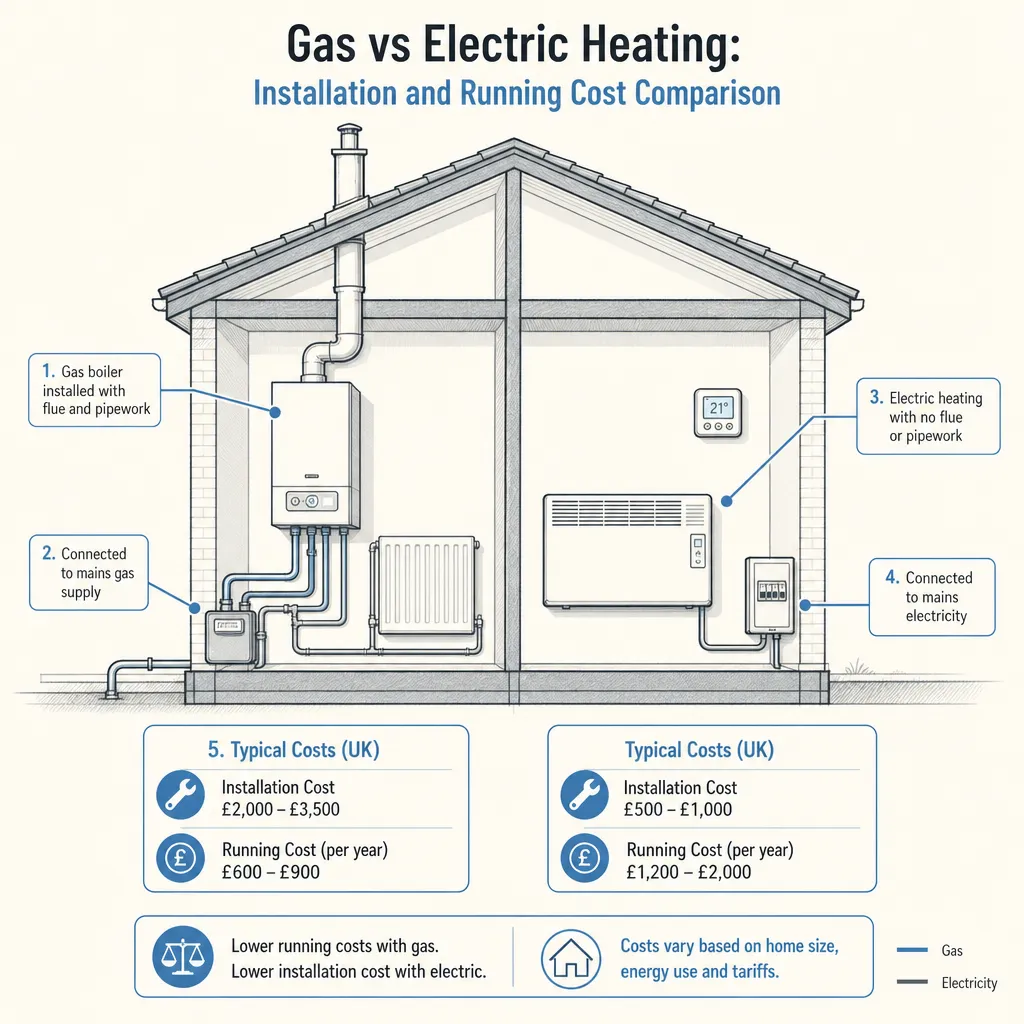
Gas vs Electric Heating: Installation and Running Cost Comparison
Gas central heating usually has lower running costs per kWh than direct electric heating in the UK, though heat pumps can change that equation.
 Energy & Retrofit
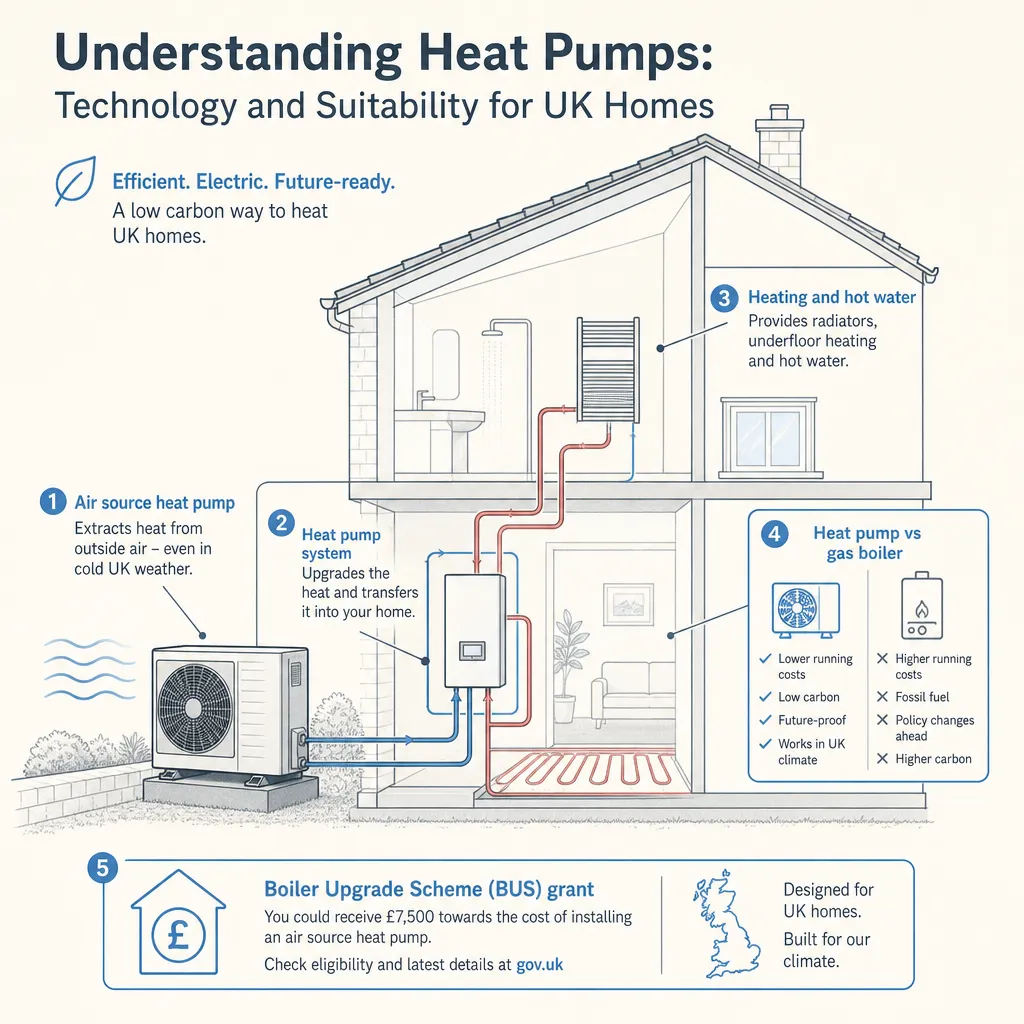
Understanding Heat Pumps: Technology and Suitability for UK Homes
Heat pumps extract heat from the air or ground and transfer it indoors, typically achieving efficiencies of 250–400% compared to a conventional boiler's near 100%.
 Energy & Retrofit
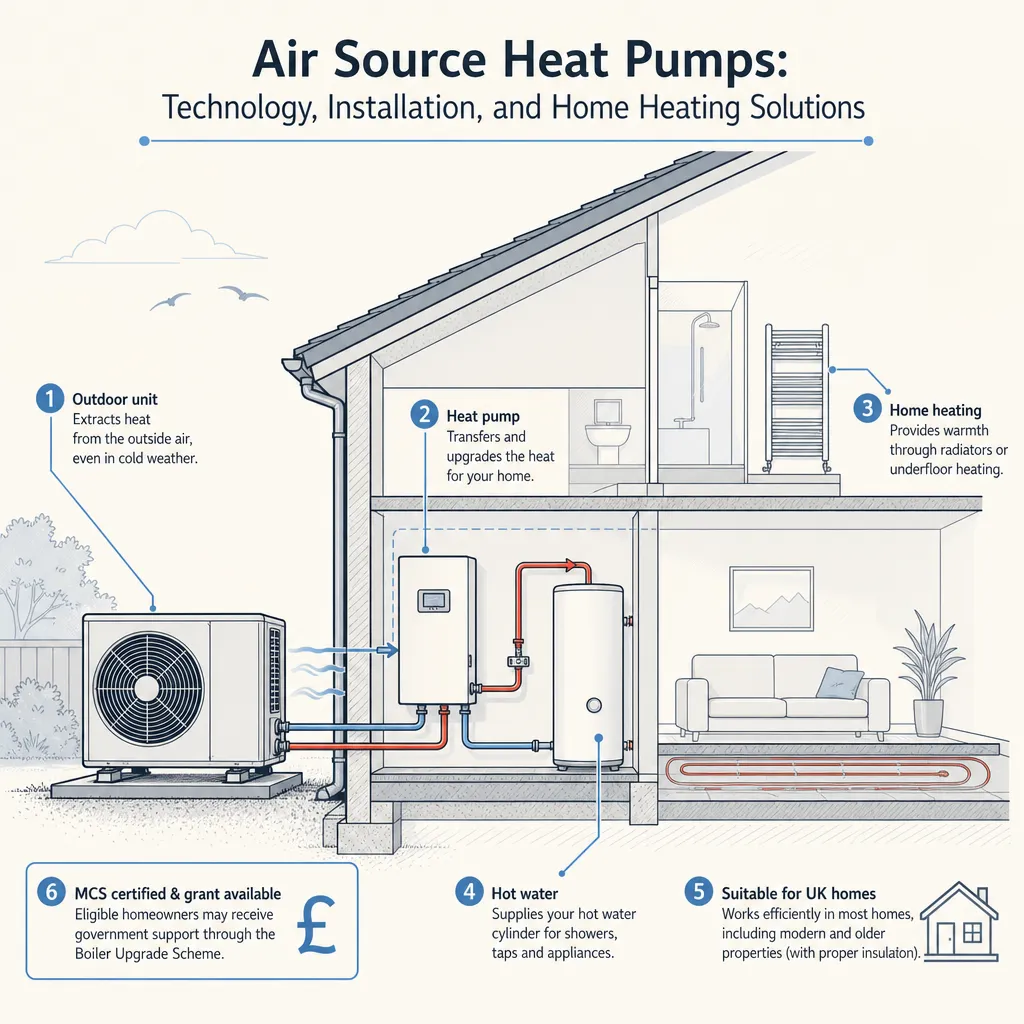
Air Source Heat Pumps: Technology, Installation, and Home Heating Solutions
An air source heat pump extracts heat from outdoor air and transfers it indoors via a refrigerant cycle, typically delivering 2.
 Energy & Retrofit
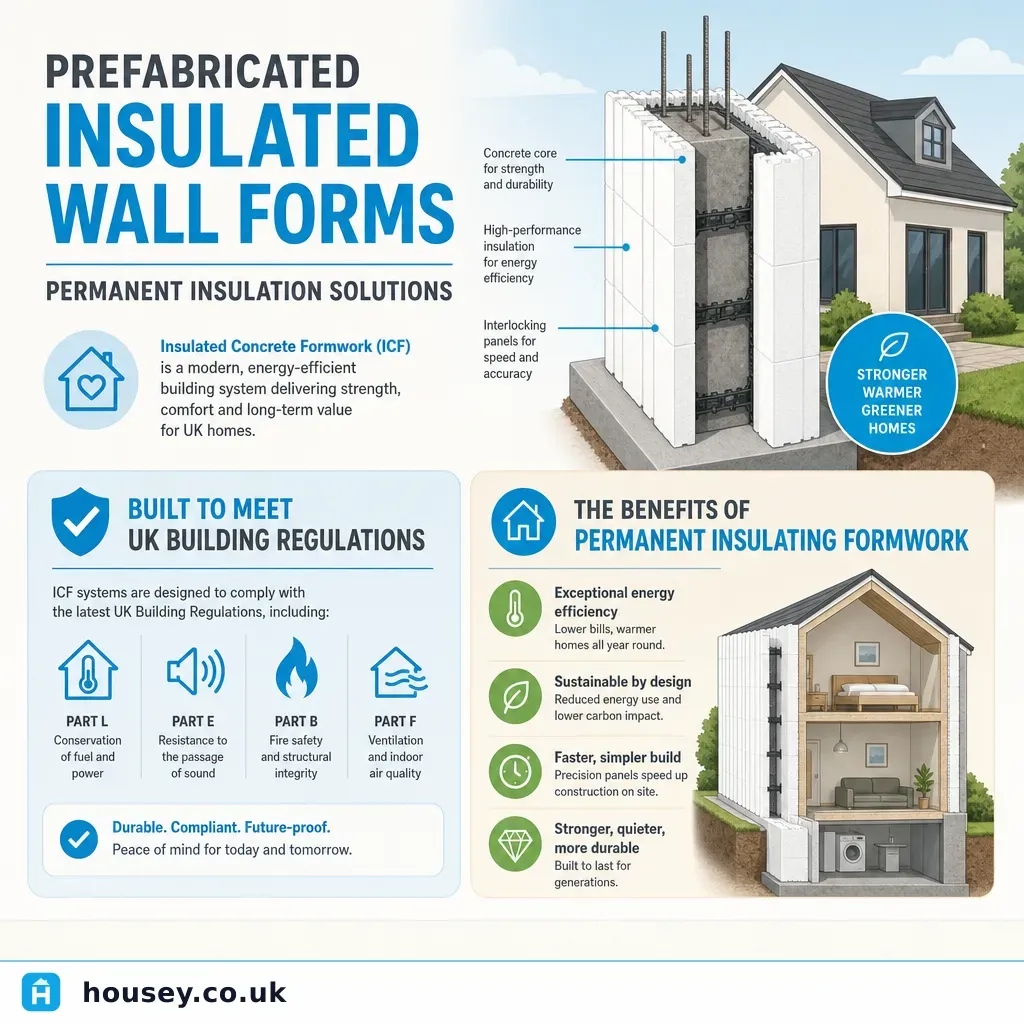
Prefabricated Insulated Wall Forms: Permanent Insulation Solutions
Prefabricated insulated wall forms — including ICF and SIPs systems — deliver high thermal performance by combining permanent insulation with structural concrete or timber in a single wall assembly.
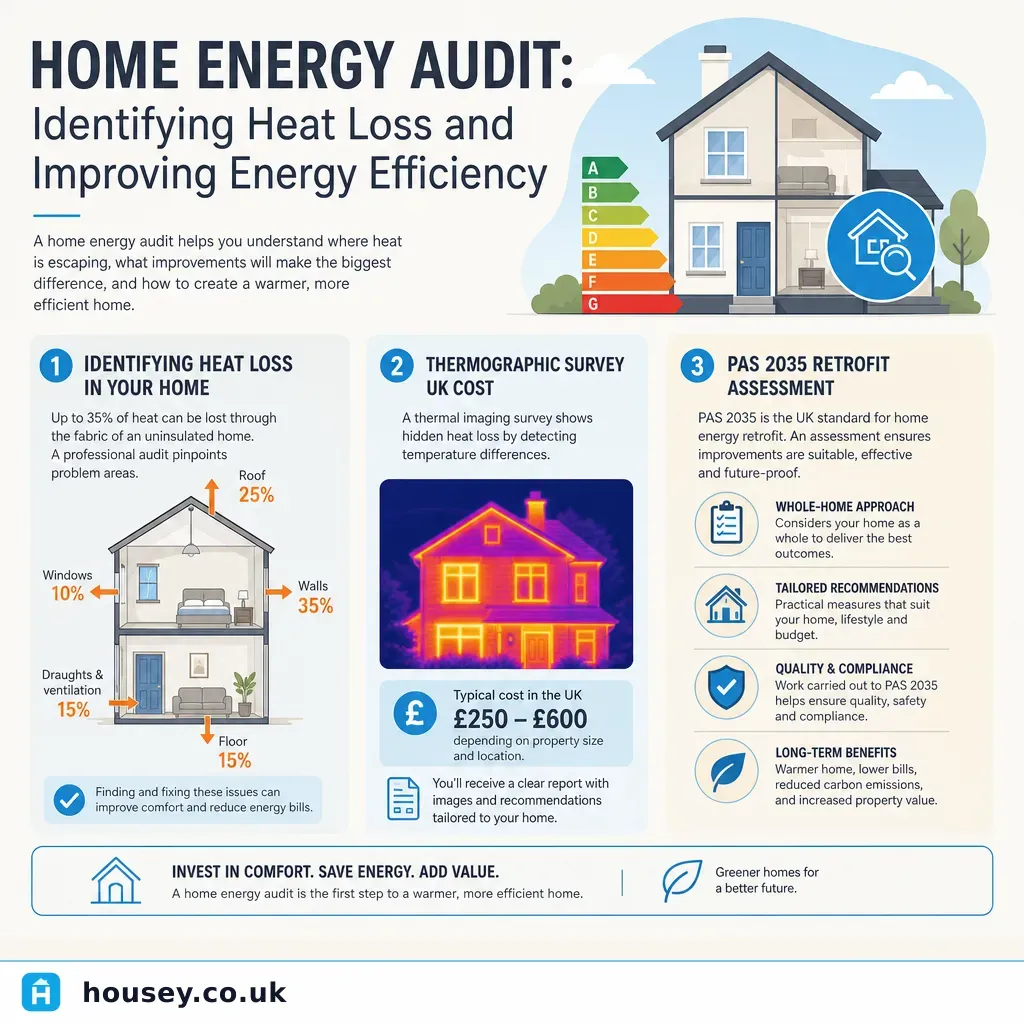 Energy & Retrofit
Home Energy Audit: Identifying Heat Loss and Improving Energy Efficiency
A home energy audit is a structured assessment of where your property loses heat and how efficiently it uses energy.