Selecting a Wood-Burning or Gas Fire Pit for Your Garden
By Housey · Last reviewed 1st of June 2026
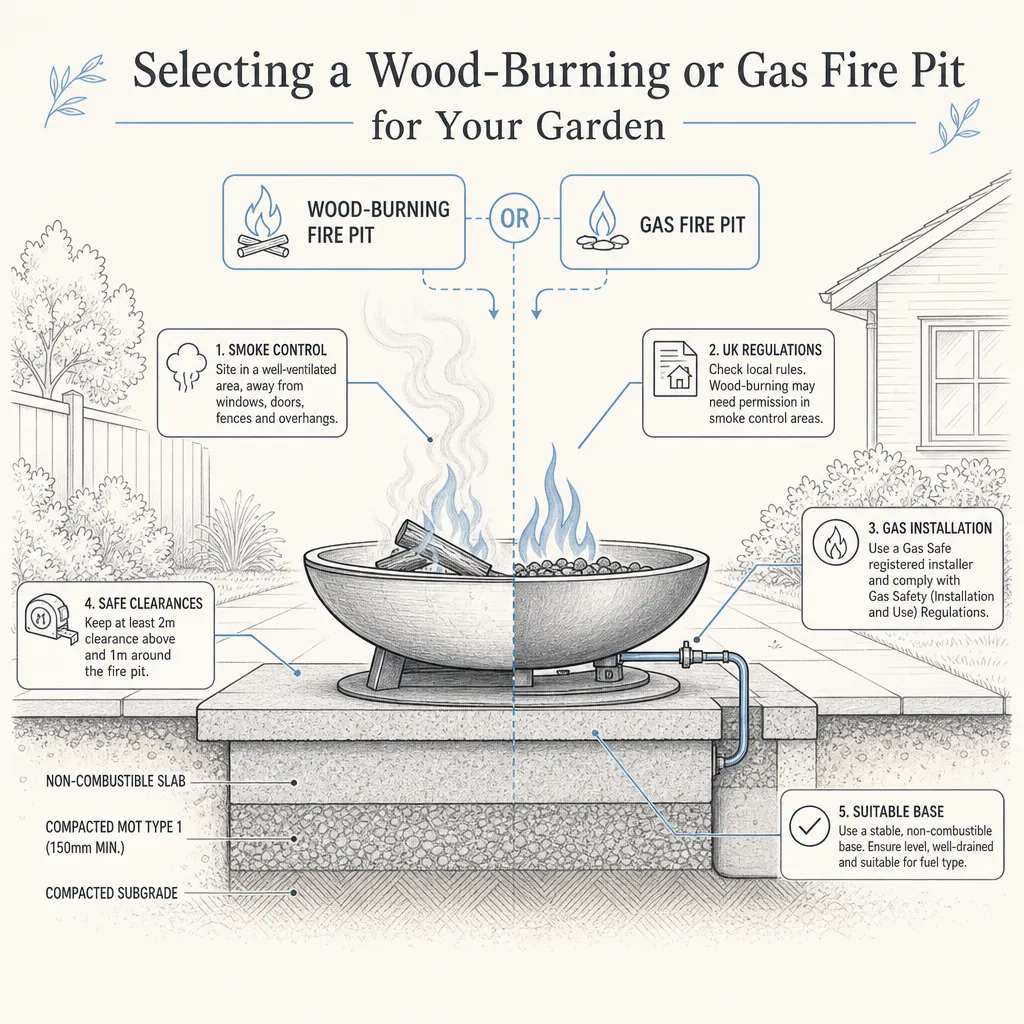
Selecting a Wood-Burning or Gas Fire Pit for Your Garden
A garden fire pit can transform outdoor living, extend the entertaining season into autumn and early winter, and become a focal point in a well-designed garden. In the UK, though, the choice between wood-burning and gas models involves more than aesthetics — smoke control zone laws, Gas Safe registration requirements, and safe siting rules all affect which type you can use, where you can site it, and what professional installation is required.
Key points
- Gas fire pits and gas garden fire features must be installed by a Gas Safe registered engineer; no DIY gas work is permitted under the Gas Safety (Installation and Use) Regulations 1998.
- In smoke control areas designated under the Clean Air Act 1993, burning wood or other unauthorised fuels in an open garden fire pit is an offence — most portable fire pits are not Defra-exempt appliances.
- Permanent built fire pit structures may require Building Regulations notification or permitted development consideration, particularly if they incorporate a chimney, enclosed firebox, or significant masonry.
- Minimum recommended safe siting distances for wood-burning fire pits are typically 3 metres from structures, timber fencing, overhanging trees, and other combustible materials.
- Logs and wood fuel sold as Ready to Burn must contain no more than 20% moisture content under the Defra-endorsed Woodsure certification scheme.
Smoke control areas and the Clean Air Act
Before choosing a wood-burning fire pit, check whether your property falls within a smoke control area. Local authorities designate these zones under the Clean Air Act 1993, and they cover large parts of urban England, Wales, and Scotland — including most major towns and cities. In a smoke control area, it is an offence to emit smoke from any open fire unless you are burning an authorised fuel or using a Defra-exempt appliance.
Most portable garden fire pits and chimeneas burning wood are not Defra-exempt appliances. Using one in a smoke control area with wood fuel may constitute an offence under the Act, even in a private garden. Enforcement varies between local authorities, but the legal risk is real.
Check your postcode at smokecontrol.defra.gov.uk. If you are in a smoke control area, a gas fire pit is generally the more straightforward legal option. Outside smoke control areas, occasional wood burning in a private garden is generally permitted, subject to not causing a nuisance to neighbours.
Wood-burning vs gas fire pit: comparison table
Feature | Wood-burning fire pit | Gas fire pit |
|---|---|---|
Smoke control areas | Not suitable in most cases | Generally compliant |
Aesthetic | Traditional open fire, crackling sound | Cleaner burn, more controlled |
Heat output | Variable; depends on wood species and moisture | Consistent; adjustable via valve |
Fuel cost | Approx. £60–£120 per bulk bag of hardwood logs (indicative) | Mains or bottled gas; variable tariff |
Installation | Free-standing: DIY placement; permanent: contractor | Gas Safe engineer required for all connections |
Maintenance | Ash removal; periodic cleaning | Annual service recommended |
Portability | Most free-standing models are portable | Fixed gas point limits flexibility |
Regulatory risk | Smoke control zone restrictions | Gas connection compliance requirements |
Indicative UK costs, last reviewed 2026-06-01.
Gas fire pit installation: what is involved
A gas garden fire pit supplied by mains gas or LPG requires a qualified Gas Safe registered engineer for all connection and commissioning work. The typical process involves:
- Choosing a fuel source — mains natural gas is convenient if an existing supply already reaches the garden. LPG (bottled or bulk tank) suits properties without mains gas or where running a pipe outside is impractical.
- Routing the supply pipe — the engineer installs the gas supply underground where needed, using approved materials and required burial depths.
- Fitting the burner and controls — the burner unit, ignition, and manual or electronic controls are installed to manufacturer and Gas Safe requirements.
- Commissioning and testing — a gas tightness test is carried out, combustion performance is checked, and a commissioning certificate is issued.
- Annual inspection — burners, seals, and connections should be inspected annually by a Gas Safe registered engineer.
Never attempt to connect or modify a gas fire pit yourself. Unregistered gas work is illegal and can cause carbon monoxide poisoning, fire, or explosion.
Which fire pit should you choose? A decision guide
- Choose a gas fire pit if you are in a smoke control area, want low-maintenance and controllable heat output, and are prepared to use a Gas Safe registered engineer for installation and annual servicing.
- Choose a wood-burning fire pit if you are outside a smoke control area, value the look and sound of a real wood fire, have access to sustainably sourced dry hardwood, and want a portable feature you can store when not in use.
- Consider a built-in fire feature — a permanent masonry fireplace, sunken fire pit, or fire table — if you want a focal point integrated into a landscaped garden scheme. A garden designer or landscaper can incorporate fire features into paving, seating, and planting plans.
- Check your local authority before proceeding if you are unsure about smoke control area status, or if your property is listed or in a conservation area where external structures may need consent.
Safe siting: key distances and surface guidance
Whether gas or wood-burning, siting matters for safety and your insurance position:
- 3 metres minimum from timber fencing, sheds, decking, overhanging trees, dry hedging, and any combustible garden structure.
- Level, non-combustible surface — paving slabs, gravel, or a concrete base are preferable to timber decking directly beneath a fire pit.
- Clear of overhead lines — never site a fire pit beneath electricity or telephone cables.
- Wind direction awareness — position to avoid smoke and embers being directed toward your home, neighbours, or dry vegetation.
- Water or sand nearby — keep a bucket of water or dry sand accessible whenever a wood fire is lit.
Important limitations
This article provides general guidance only. Local smoke control zone boundaries, planning policies, and Gas Safe requirements vary by property and location. Gas installation requirements are legally specified and cannot be circumvented. If you are uncertain whether your property is in a smoke control area, whether a permanent structure needs consent, or how to safely incorporate a gas supply into a garden, consult your local authority or a Gas Safe registered engineer before proceeding.
When to get professional help
Seek qualified professional advice before proceeding if:
- You want to install any gas fire feature — all gas connection and commissioning work requires a Gas Safe registered engineer
- You are in or near a smoke control area and uncertain of the legal position for wood burning
- You want a built-in or permanent fire pit as part of a landscaping project
- Your property is listed or in a conservation area where external structures may need consent
- You are siting a fire pit near a shared boundary, listed wall, or a structure on a neighbouring property
What to ask a qualified professional
When consulting a Gas Safe engineer for gas fire pit installation, or a garden designer for a built-in fire feature:
- Is my property in a smoke control area, and if so, which fuel types are permitted for garden use?
- Does the planned installation require Building Regulations notification or a permitted development application?
- What fuel supply do you recommend — mains gas or LPG? What are the relative costs and installation requirements for my property?
- What commissioning certificate and warranty will I receive on completion?
- What annual maintenance will the fire pit require, and what does a typical service call cost?
- What are the minimum safe siting distances specified by the manufacturer and relevant guidance?
- For a built-in fire pit, what fire-rated construction materials are required around the firebox and surround?
How Housey can help
If you are planning a garden with a fire pit as a central design feature, Housey can connect you with experienced garden designers and landscapers who can advise on siting, materials, and integration with paving, planting, and seating — and co-ordinate specialist trades for gas installation where needed.
Frequently asked questions
Do I need planning permission for a garden fire pit?
A portable or free-standing fire pit does not usually require planning permission. A permanent built structure — particularly one with a flue, enclosed firebox, or significant masonry — may fall within permitted development limits or require a planning application. Check with your local planning authority, especially in conservation areas or on listed properties.
Can I use any wood in a fire pit outside a smoke control area?
Outside smoke control areas you can burn wood, but it should be seasoned hardwood with moisture content of 20% or less — look for the Woodsure Ready to Burn certification. Avoid treated, painted, or composite wood, MDF, and chipboard, which produce toxic smoke and harmful particulates. Softwoods burn faster and produce more creosote than hardwoods.
Is a gas fire pit safer than a wood-burning one?
Both carry risks if poorly sited or maintained. Gas fire pits present carbon monoxide and explosion risks if the supply is not professionally installed and maintained by a Gas Safe registered engineer. Wood-burning fire pits present ember and ignition risks if sited too close to combustible materials. Both require appropriate installation, siting, and ongoing maintenance.
Can I install a gas or wood-burning fire pit on timber decking?
This is not recommended without specialist fire-rated hearth construction. Timber decking is combustible and a fire at deck level creates a significant risk. If you want to incorporate a fire feature into a decked area, consult a garden designer or structural contractor about appropriate fire-rated hearth and surround specifications before proceeding.
Sources and further reading
- Smoke control area checker — Defra
- Gas Safe Register — Gas Safe Register
- Clean Air Act 1993 — legislation.gov.uk
- Woodsure Ready to Burn — Woodsure
- HETAS — HETAS
Useful next reads
 Improvement & Build
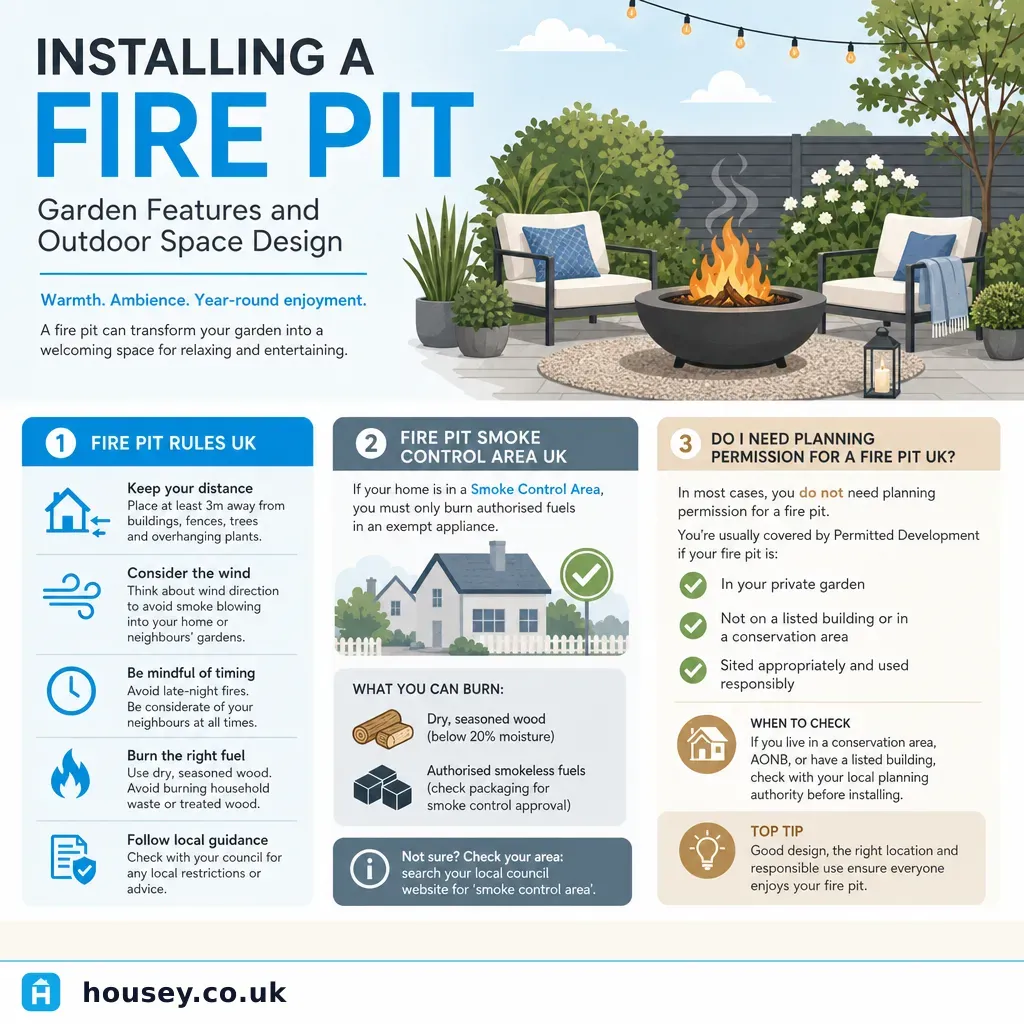
Installing a Fire Pit: Garden Features and Outdoor Space Design
Installing a garden fire pit in the UK is generally permitted, but Smoke Control Area rules prohibit open wood-burning in most towns and cities.
 Improvement & Build
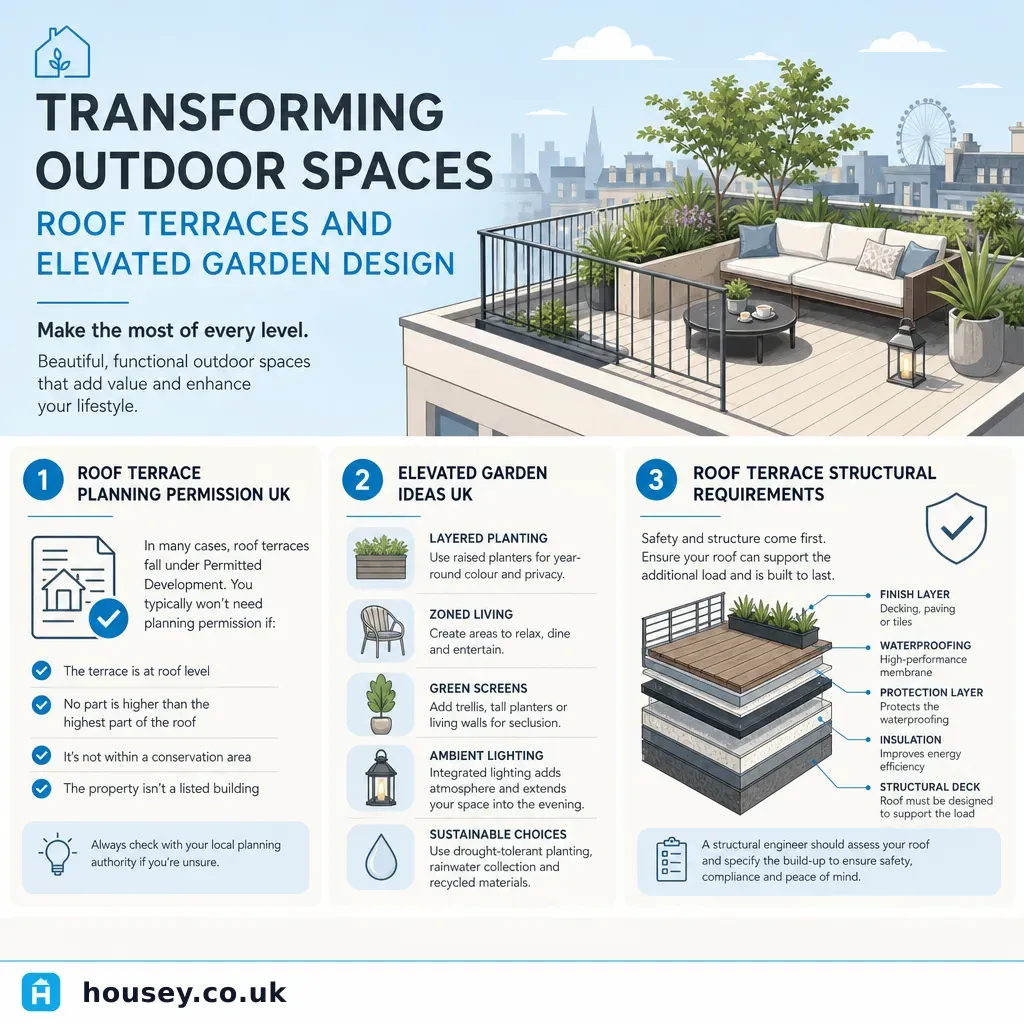
Transforming Outdoor Spaces: Roof Terraces and Elevated Garden Design
Roof terraces in the UK almost always need planning permission and a structural engineer's load capacity assessment before design work begins.
 Improvement & Build
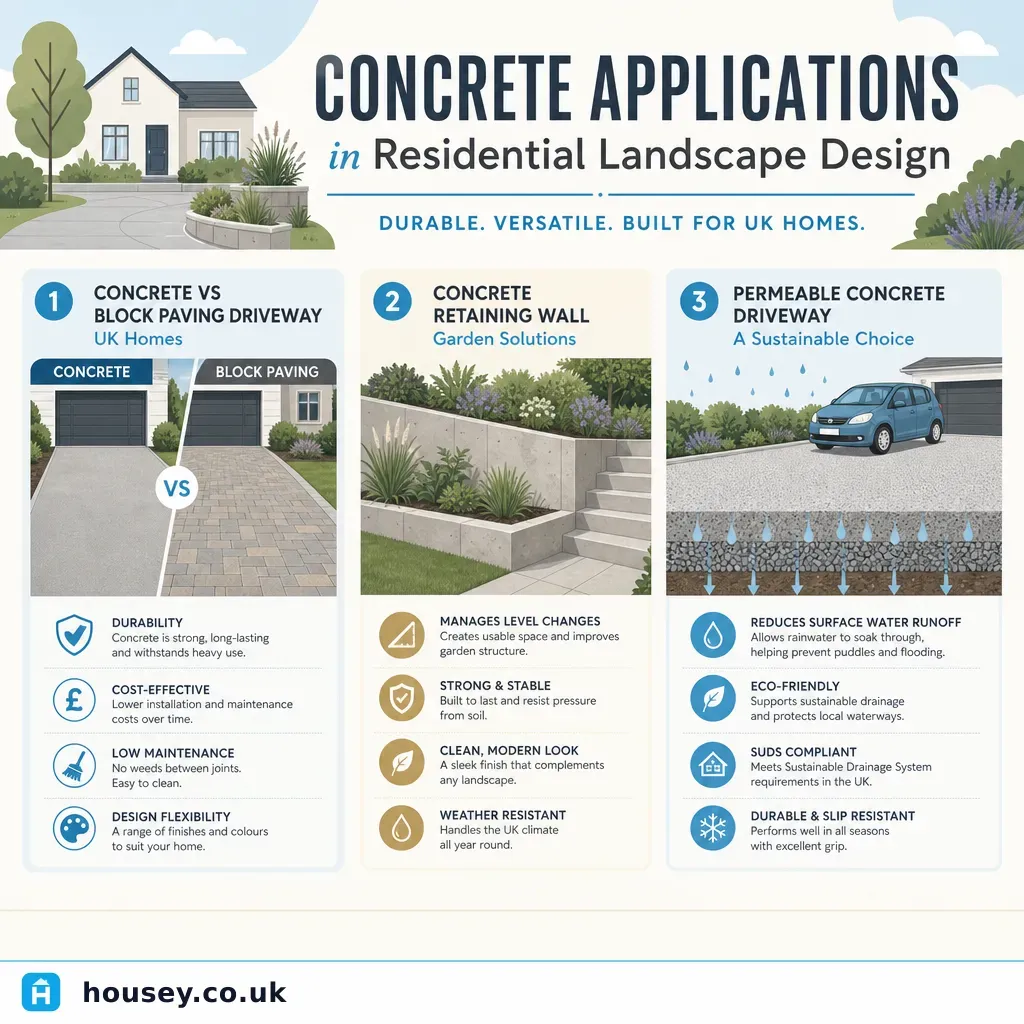
Concrete Applications in Residential Landscape Design
Concrete serves multiple roles in residential landscape design: as a surface material for driveways, patios, and paths; as a structural element in retaining walls and foundations; and as prefabricated components including slabs, edging, and copings.
 Improvement & Build
Benefits of Hiring Established Landscaping Services in Coastal Areas
Established landscaping contractors in coastal areas understand salt spray exposure, prevailing wind patterns, and local planning restrictions that inland firms often overlook.
 Improvement & Build
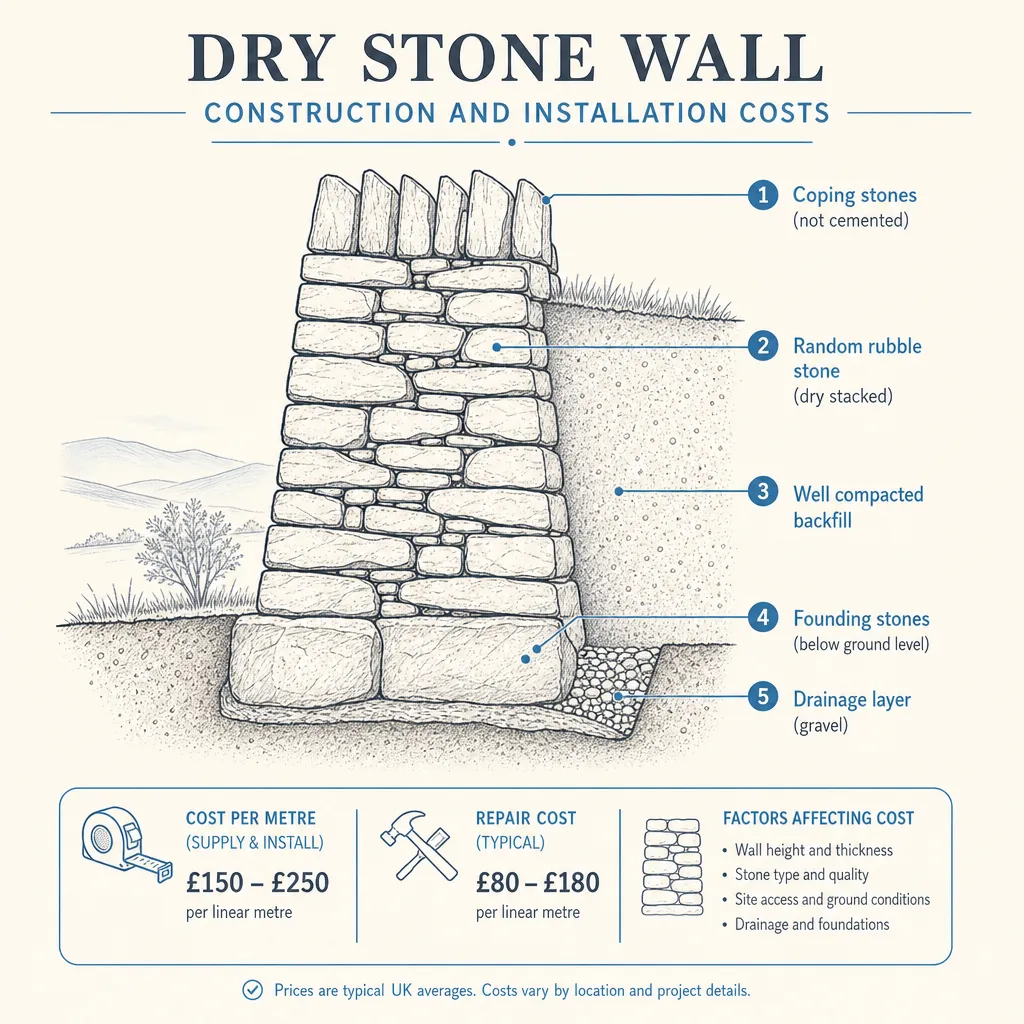
Dry Stone Wall Construction and Installation Costs
Dry stone wall construction in the UK typically costs £150–£350 or more per linear metre for new build, with repairs usually less expensive.