Wood as a High-Tech Building Material in Modern Architecture
By Housey · Last reviewed 30th of May 2026
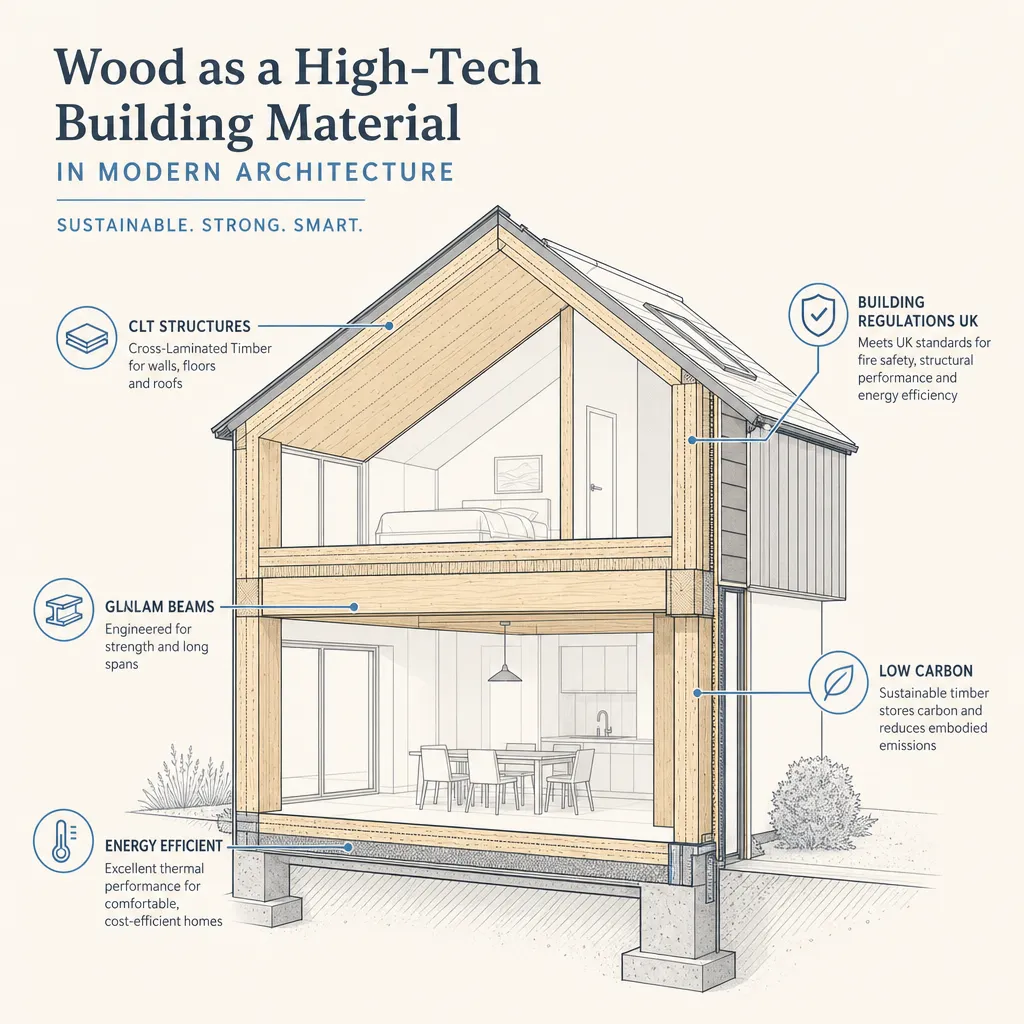
Wood as a High-Tech Building Material in Modern Architecture
Engineered timber is no longer a niche or alternative choice in UK construction — it is increasingly the specified material for schools, housing, commercial buildings, and residential extensions where architects want to combine structural performance, sustainability credentials, and design flexibility. For homeowners embarking on a new build, extension, or significant renovation, understanding what modern wood products can and cannot do helps you ask sharper questions of your design team and make better decisions at the planning stage.
Key points
- Cross-laminated timber (CLT) panels achieve structural performance comparable to reinforced concrete slabs and walls, with a significantly lower embodied carbon footprint than in-situ concrete or structural steel.
- Glued laminated timber (glulam) allows clear spans of 20 metres or more, making it suitable for open-plan ground floors and large roof structures in both residential and commercial projects.
- Under Approved Document B (Fire Safety), timber-frame buildings above 11 metres in England require fire engineering assessment; amendments introduced in December 2022 affect external wall system specification.
- The UK Timber Frame Association (UKTFA) and NHBC publish technical standards for timber frame construction that inform building control sign-off on domestic projects.
- FSC (Forest Stewardship Council) and PEFC certification confirm that structural timber comes from sustainably managed sources and is increasingly required by planning conditions and lenders' environmental policies.
What makes modern timber a high-tech material?
The perception of timber as a simple or low-tech material does not reflect how engineered wood products are manufactured or how they perform structurally. Several products now used routinely in UK architecture involve precision lamination, computer-controlled cutting, and structural engineering calculations that would be unrecognisable to a traditional joiner.
Cross-laminated timber (CLT) is made by bonding layers of timber at right angles under high pressure. The alternating grain directions give CLT two-directional structural behaviour similar to a reinforced concrete flat slab — it can span in both directions, carry floor and roof loads, and form shear walls resisting wind forces. CLT panels are CNC-machined off-site to exact dimensions with openings pre-cut, significantly reducing on-site programme time and associated wet trades.
Glued laminated timber (glulam) bonds individual lamellas along their length to produce beams, columns, and arches of virtually any size and geometry. Glulam can be manufactured straight, curved, or tapered, and achieves structural efficiency that makes long clear spans achievable in homes with open-plan ground floors, cathedral ceilings, or exposed ridge beams as a design feature.
Laminated veneer lumber (LVL) uses thin wood veneers bonded in parallel grain orientation, producing a dimensionally stable material with consistent structural properties used for beams, headers, rim boards, and portal frames where standard sawn timber would be inadequate.
Comparison: engineered timber vs traditional construction materials
Material | Structural capability | Approximate embodied carbon | Fire performance | Vapour management |
|---|---|---|---|---|
CLT | Two-way slab and shear wall | Low — carbon stored in timber | Chars predictably; fire engineering required above 11 m | Requires breathable or designed membrane system |
Glulam | Long-span beams and columns | Low | Chars predictably; section depth must be fire-engineered | Typically exposed; moisture content managed pre-installation |
Masonry (brick/block) | Load-bearing wall, limited self-span | Medium to high | Excellent inherent fire resistance | High vapour resistance; condensation risk at junctions |
In-situ concrete | Slab, wall, column in any direction | High | Excellent | Low vapour permeability |
Steel frame | Column-and-beam, very long spans | High | Requires passive fire protection coating | Condensation risk at thermal bridges |
Which option suits your project?
- Choose CLT or timber frame if you want fast on-site erection, lower embodied carbon, and your architect has demonstrable experience specifying timber construction — this is now the majority of UK timber frame projects.
- Choose glulam if your design requires long clear spans or exposed structural beams as a visible architectural feature — glulam is the typical choice for open-ridge roofs, vaulted ceilings, and large open-plan ground floors.
- Choose masonry or concrete if your site has high moisture exposure, ground conditions that complicate timber detailing at the base, or if the building control officer requires evidence your contractor has adequate timber construction experience.
- Ask a structural engineer to confirm that any engineered timber product proposed has been designed against BS EN 1995 (Eurocode 5 — Design of Timber Structures).
- Check with your local planning authority if the building is in a conservation area, is listed, or if external material choices have been conditioned — permitted development rights may not apply and the material selection may be constrained.
- Ask a fire engineer if the proposed building is three or more storeys in height — a fire strategy document will be required as part of the building control submission.
Fire regulations and engineered timber post-2022
The most significant regulatory change affecting timber buildings in England is the amendment to Approved Document B introduced in December 2022, following the Grenfell Tower fire and the subsequent independent review. Buildings above 11 metres now require external wall systems to be assessed under BS 8414 or to achieve a minimum B(CA) reaction-to-fire classification.
For most domestic projects — detached houses, two-storey extensions, and garden studios — these height thresholds do not apply and timber construction is straightforwardly permissible under existing rules. For residential buildings of three or more storeys, the fire engineer and architect must demonstrate compliance through the building control route. This does not mean timber is prohibited at height — it means the fire strategy must be designed and documented by qualified professionals with specific competence in the area.
Always confirm the fire strategy with your architect at design stage. Do not assume that a product suitable for a two-storey house automatically meets the requirements of a taller building without engineering review.
Sustainability and procurement credentials
When your architect or structural engineer specifies structural timber, the following credentials are worth confirming:
- FSC or PEFC certification: Confirms chain of custody from sustainably managed forest to site. Increasingly required by planning authorities in their biodiversity and materials conditions.
- Environmental Product Declaration (EPD): A third-party verified lifecycle assessment of a specific product. Major CLT and glulam manufacturers publish EPDs — ask your architect to request them.
- UKCA or CE marking: Required for structural timber products placed on the UK market. Confirms conformity with BS EN 14080 (glulam) or BS EN 16351 (CLT).
- BBA Certificate: British Board of Agrément certification provides additional performance evidence for novel or less-established timber products and systems.
When to get professional help
Engineered timber construction requires professionals familiar with the material's specific detailing requirements — particularly at junctions, penetrations, and at the base of the structure where moisture risk is greatest. Seek input from a qualified architect or structural engineer if:
- Your project involves a building of three or more storeys.
- The design includes large open spans, cantilevers, or complex curved geometry.
- The site is in a high-exposure wind zone, a flood-risk area, or has challenging ground conditions.
- The building is listed or in a conservation area.
- You are unsure whether the proposed contractor has prior experience with CLT or glulam projects.
Red flags to watch for:
- A contractor proposing timber frame without providing structural engineer's drawings or a method statement.
- No discussion of moisture content on delivery, protection during the open phase, or how the structure will be weathered in.
- No fire strategy document for buildings of more than two storeys.
How Housey can help
Housey can connect you with experienced architecture professionals who work regularly with engineered timber and can guide your project through design development, planning, and building control from specification to sign-off.
Frequently asked questions
Is a timber-frame home harder to insure or mortgage in the UK?
Most mainstream UK lenders and insurers are comfortable with modern timber frame construction that meets NHBC or equivalent standards. Some older proprietary systems from the 1960s and 1970s — such as Airey or Cornish Unit types — are non-standard construction and can affect mortgage availability. Always check with your lender's valuer if buying a timber-frame home rather than commissioning a new build.
How long does engineered timber last in a UK climate?
When properly designed, detailed, and maintained, modern CLT and glulam structures are expected to achieve service lives exceeding 60 years — equivalent to masonry construction. The critical factor is moisture management: timber that remains dry performs indefinitely, while timber that cycles through wetting and drying without adequate ventilation will decay. Good architectural detailing and designed maintenance access are essential.
Does a timber-frame extension need planning permission?
Permitted development rules in England generally allow single-storey rear extensions up to certain dimensions regardless of construction material — the material type does not itself trigger a planning permission requirement. However, listed buildings, conservation areas, and properties where permitted development rights have been removed by condition are subject to more restrictive rules. Check with your local planning authority before starting work.
What is Eurocode 5 and why does it matter for a timber building?
BS EN 1995 (Eurocode 5) is the UK structural design standard for timber. Your structural engineer uses it to calculate whether proposed members — beams, columns, floor panels — can safely carry the required loads. Calculations are submitted to building control. You do not need to understand the standard yourself, but it is worth confirming your engineer has designed specifically to Eurocode 5 rather than older empirical rules.
Sources and further reading
- Approved Document B: Fire Safety — GOV.UK
- Approved Document A: Structure — GOV.UK
- UK Timber Frame Association — technical guidance — UKTFA
- Timber Development UK — engineered timber resources — Timber Development UK
- NHBC Standards: timber frame construction — NHBC
Useful next reads
 Planning & Pre-Build
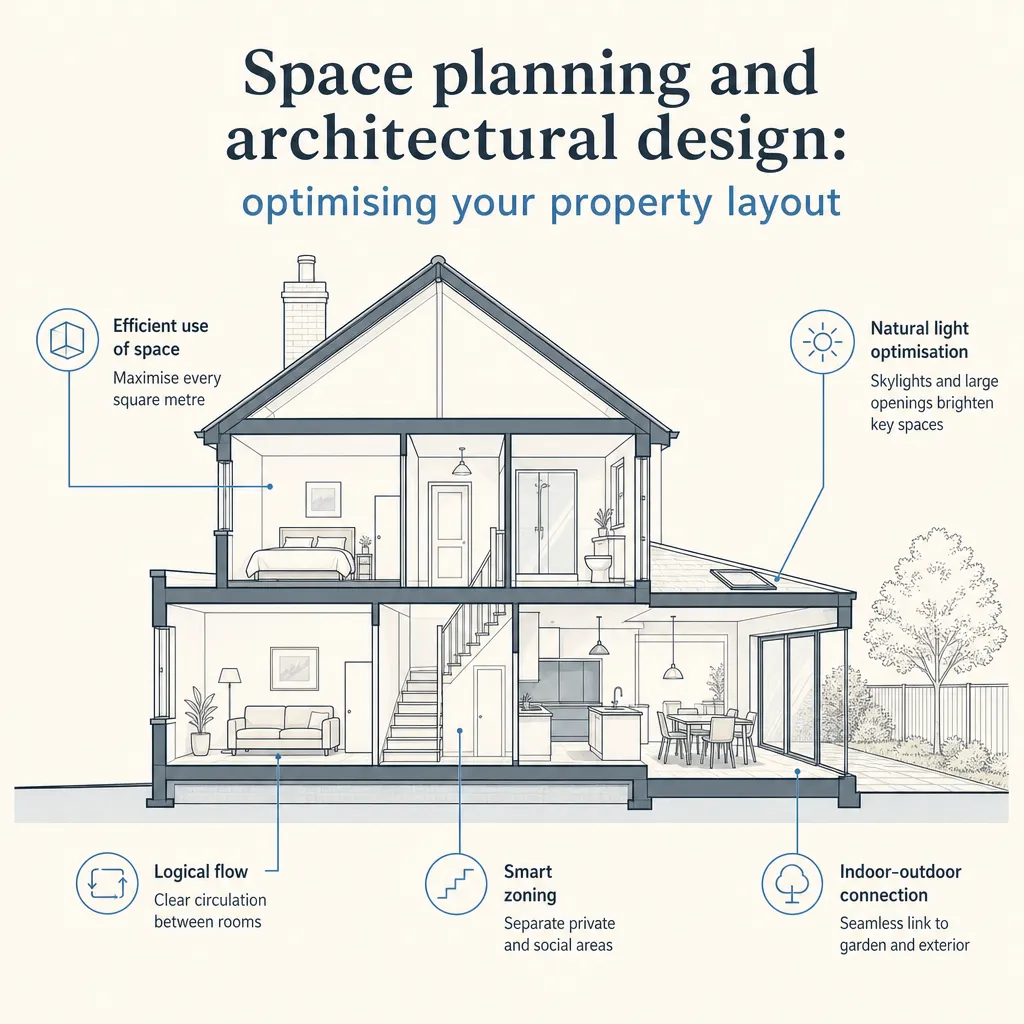
Space planning and architectural design: optimising your property layout
Space planning defines how rooms, circulation routes, and services are arranged within a property to make the best use of available area.
 Planning & Pre-Build
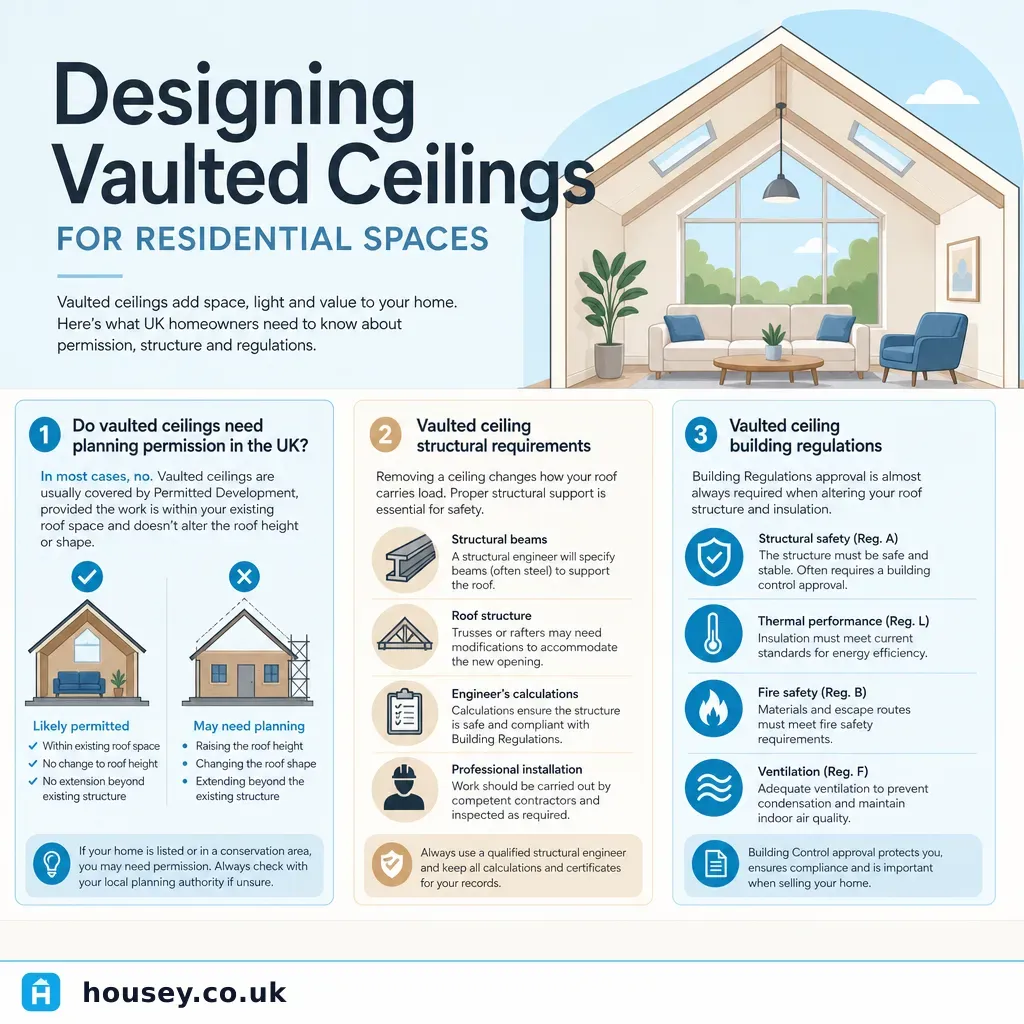
Designing vaulted ceilings for residential spaces
Creating a vaulted ceiling in an existing home involves restructuring the roof timbers that form the structural triangle, which always requires a structural engineer's calculations and Building Regulations approval under Approved Document A.
 Planning & Pre-Build
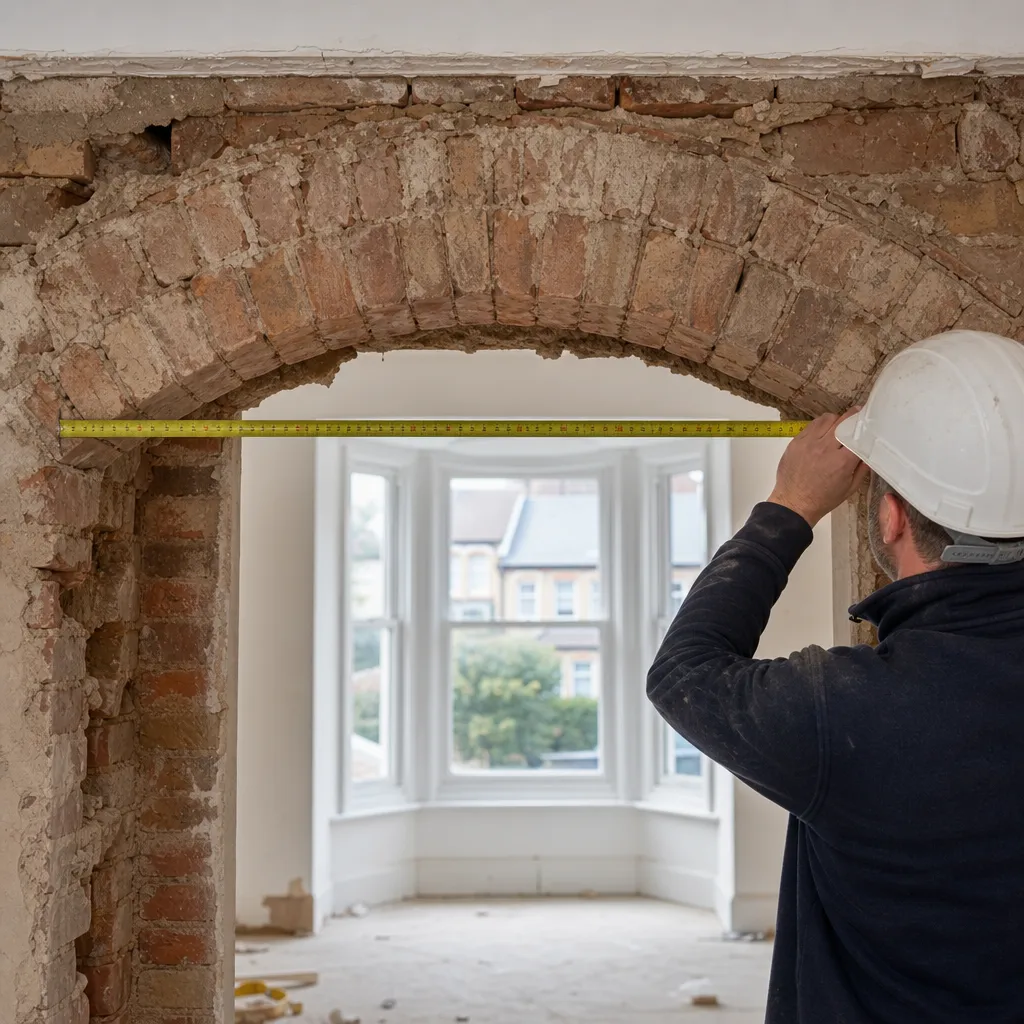
Structural Arching in Walls: Load Distribution and Design
Structural arching occurs when masonry redistributes compressive loads in a triangular or parabolic path around an opening, reducing the load on the lintel below.
 Planning & Pre-Build
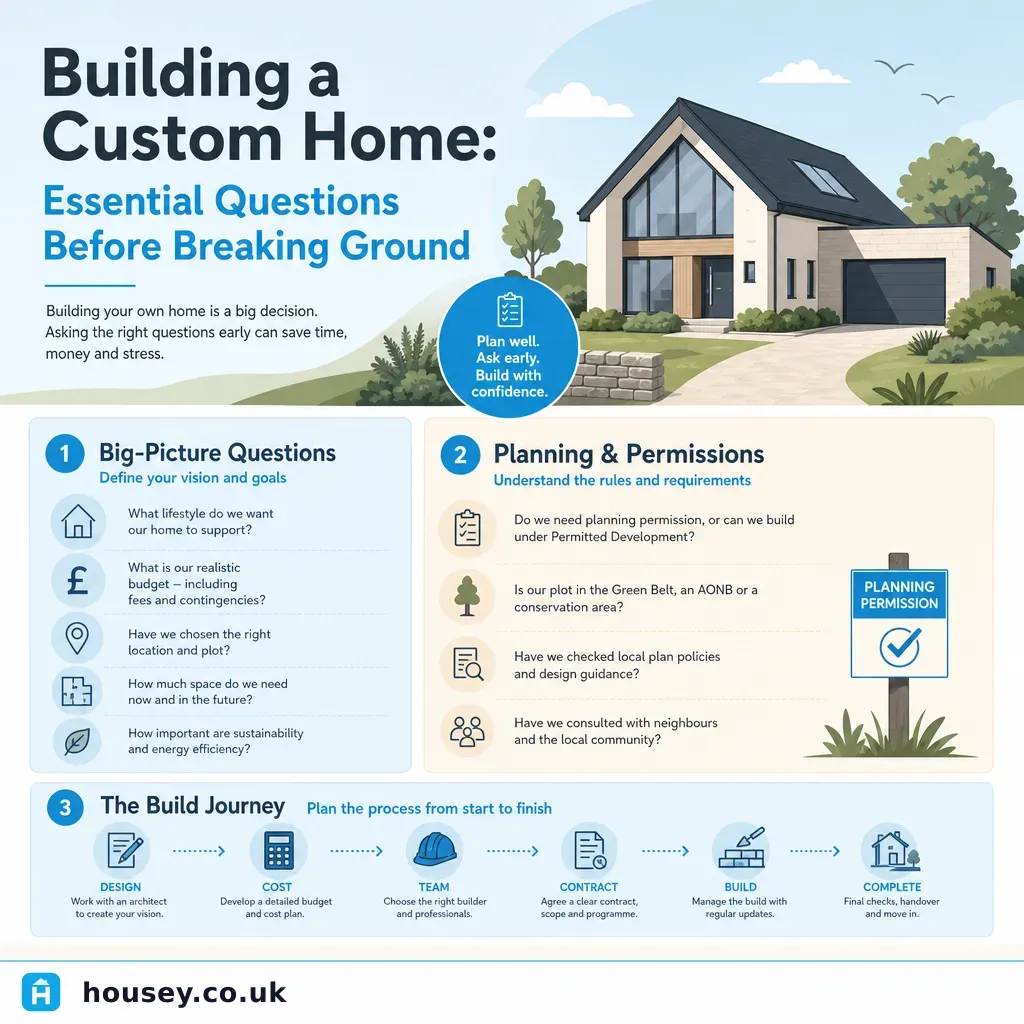
Building a Custom Home: Essential Questions Before Breaking Ground
Building a custom home in the UK requires planning permission, separate Building Regulations approval, and a professional team typically including an architect or architectural technologist, structural engineer, and building control body.
 Planning & Pre-Build
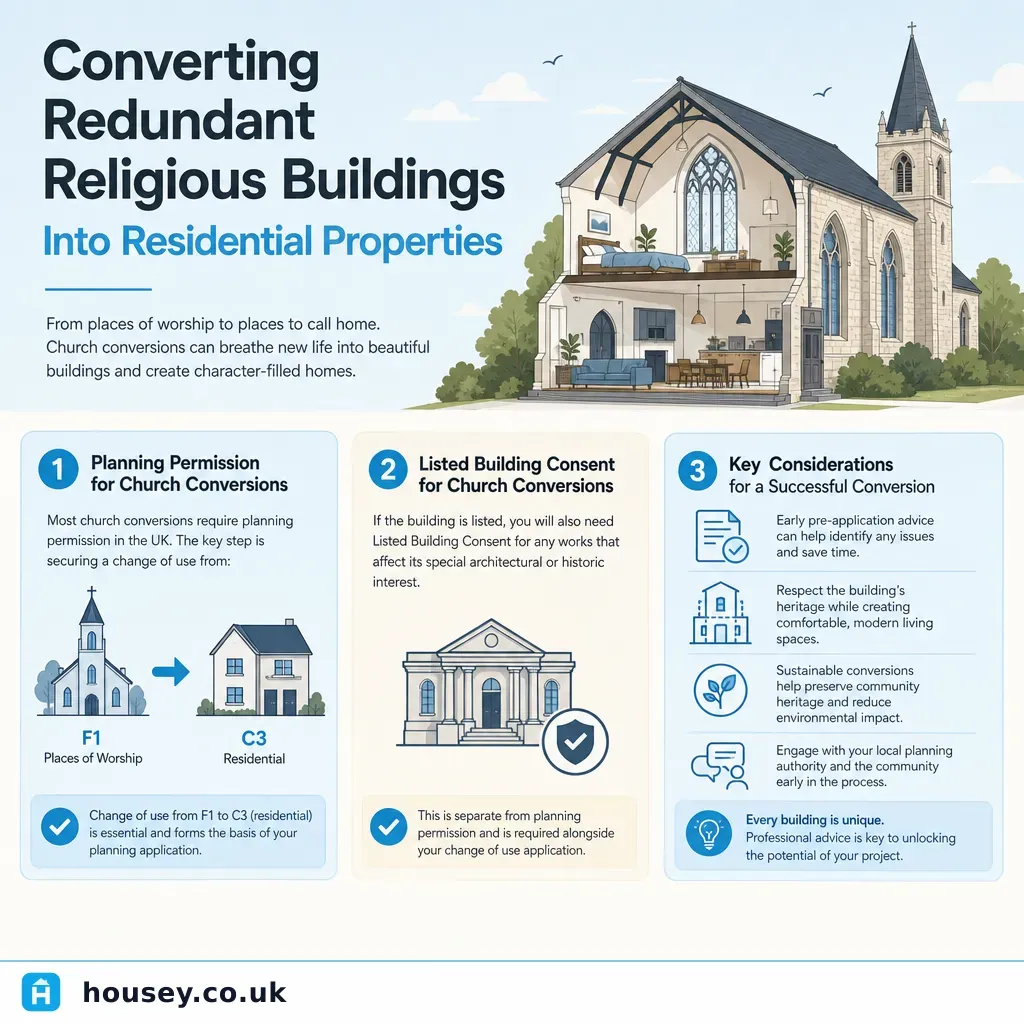
Converting Redundant Religious Buildings Into Residential Properties
Converting a redundant religious building to residential use in the UK requires planning permission for change of use from Use Class F.