Yard Levelling and Grading: Costs and Site Preparation
By Housey · Last reviewed 30th of May 2026
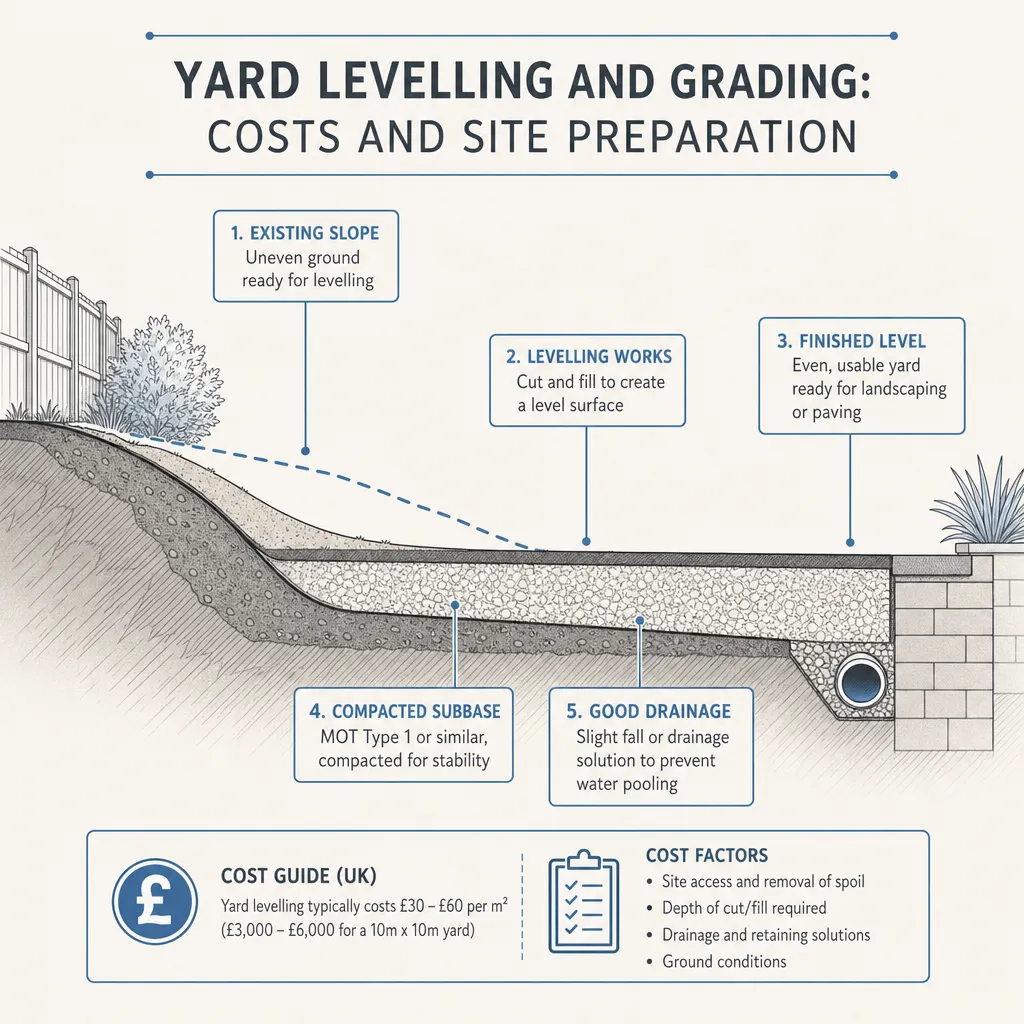
Yard Levelling and Grading: Costs and Site Preparation
An uneven garden — whether caused by soil settlement, tree removal, drainage works, or simply undulating natural ground — can restrict how the space is used and create drainage problems that affect the house itself. UK homeowners typically come to this question after buying a property with poorly shaped ground, planning a new patio, lawn, or outbuilding, or following groundworks that have left a disturbed surface. Getting the levels right before landscaping or construction begins prevents costly remedial work later.
Key points
- Garden levelling in the UK typically costs £500–£3,000 for a standard domestic garden, with larger or more complex projects reaching significantly more (indicative UK costs, last reviewed 2026-05-30).
- Ground that slopes toward the house requires careful attention: poor grading directs surface water toward foundations, creating damp and potential structural problems over time.
- Planning permission is not normally required for levelling a private garden, but retaining walls over 1 metre high adjacent to a highway require consent under the Town and Country Planning (General Permitted Development) Order 2015.
- Topsoil and subsoil must be handled separately during levelling — stripping and stockpiling topsoil correctly preserves the growing medium for lawns and planting.
- If trees have recently been removed, ongoing root decomposition can cause settlement; specialist advice may be needed before levelling proceeds.
What affects garden levelling costs?
Several factors drive the final cost of a levelling project. The table below sets out the main cost drivers and how they push price up or down.
Cost driver | Lower-cost scenario | Higher-cost scenario |
|---|---|---|
Garden size | Small, up to 50m² | Large, 200m² or more |
Degree of slope | Gentle gradient, less than 15cm variation | Steep or more than 50cm variation across the plot |
Soil type | Light, free-draining soil | Heavy clay, rocky ground, or contaminated fill |
Soil disposal | Cut-and-fill achievable on-site | Surplus soil requires skips and off-site disposal |
Drainage requirement | Minor grading adjustment only | French drains, soakaways, or channel drainage needed |
Access | Good vehicle and machinery access to garden | Restricted access; mini-digger or hand-dig only |
Retaining structures | None needed | Timber sleepers, brick walls, or gabion baskets required |
For a typical semi-detached house garden of 80–150m² with moderate slope and reasonable machinery access, expect quotes of £1,000–£2,500 for levelling and topsoil reinstatement, excluding any hard landscaping. Indicative UK costs, last reviewed 2026-05-30.
What does the levelling process involve?
A typical domestic garden levelling project follows this sequence:
- Site assessment: The groundworker or landscaper checks existing levels with a dumpy level or laser level and agrees finished levels and drainage direction with the homeowner.
- Mark out levels: Datum pegs or string lines are set to guide excavation and fill across the site.
- Strip topsoil: The top 150–300mm of topsoil is stripped and stockpiled separately to preserve its structure and fertility.
- Cut and fill subsoil: Subsoil is cut from high points and moved to low points to achieve the target level. Where there is a net surplus, soil must be removed from site by skip or lorry.
- Compact and consolidate: Subsoil is compacted in layers to prevent future settlement.
- Re-spread topsoil: The retained topsoil is spread back over the levelled surface, typically to 150mm depth.
- Drainage check: The finished gradient is confirmed to direct surface water away from the house and all outbuildings.
- Finish surface: Seed, turf, or prepare the surface for hard landscaping as agreed.
Does garden levelling need planning permission?
In most cases, levelling a private domestic garden is permitted development and does not require planning permission. However, there are exceptions worth checking before work begins:
- Retaining walls over 1 metre high adjacent to a highway require planning permission under the Town and Country Planning (General Permitted Development) Order 2015.
- Retaining walls over 2 metres high in most other locations require planning permission or building control approval.
- Listed buildings or curtilage: Works within the curtilage of a listed building may require listed building consent even for ground-level changes.
- Conservation areas: Material changes to the character of a conservation area garden can require planning consent.
- Tree preservation orders (TPOs): If trees are present or their root protection zones will be disturbed by levelling, check with your local planning authority before any excavation.
If in doubt, contact your local planning authority before work starts — most offer pre-application advice.
Worked example: 1930s semi-detached in Greater Manchester
A homeowner purchases a 1930s semi-detached property with a rear garden that slopes approximately 40cm toward the house over 10 metres, causing surface water to pond against the rear wall during heavy rain.
A groundworker levels the rear garden (approximately 90m²) and installs a French drain:
- Cut and fill subsoil (approximately 30m³ moved): £800
- French drain installation (18m run, perforated pipe and gravel): £900
- Topsoil reinstatement and levelling rake: £400
- Skip hire (three loads of surplus soil removed): £450
- Total: approximately £2,550 before VAT
The homeowner separately commissions a landscaper to turf the levelled area at £18 per m², adding approximately £1,620 for 90m².
This is a simplified illustration. Actual costs depend on ground conditions, access, and specification. Always obtain at least three quotes from contractors with clear scope statements.
Homeowner checklist: before commissioning garden levelling
When to get professional help
Seek specialist advice if:
- The garden slopes toward the house — poor drainage can cause subsidence, rising damp, or structural issues that are far more costly to fix than the levelling itself.
- You suspect contaminated ground, particularly in urban areas or on sites with a previous industrial or commercial use.
- Tree roots are present or a tree has recently been removed — subsidence and heave risk may require a structural or arboricultural assessment before levelling.
- The project involves retaining walls over 1 metre in height — structural design by a qualified engineer may be required.
- Building control sign-off is needed for any retaining structures adjacent to a highway.
How Housey can help
Housey connects homeowners with vetted groundworkers and landscapers who can assess your garden levels, advise on drainage, and complete the levelling work to a consistent standard. Compare quotes from local professionals and choose based on verified reviews and credentials.
Frequently asked questions
How long does garden levelling take?
For a typical domestic garden of 80–150m², allow one to three days for levelling and drainage groundworks, plus additional time for turf, planting, or hard landscaping. Larger or more complex projects involving heavy clay, significant cut-and-fill, or retaining wall construction may take three to five days or more. Access for machinery and soil disposal arrangements can also affect the programme.
Can I level my garden myself?
Minor levelling — raising low spots with topsoil or raking after turf removal — is manageable as a DIY task for a small, gently uneven garden. For significant regrading, drainage installation, or any work near the house or requiring retaining structures, a professional groundworker or landscaper should be used. Incorrect grading can cause drainage problems that are expensive to put right.
What is the difference between levelling and grading?
Both terms are used in UK practice, often interchangeably. Levelling usually means creating a flat or near-flat surface across the garden. Grading refers to shaping the ground to achieve a specific gradient — typically a gentle slope away from a building to direct surface water. Most domestic garden levelling projects involve an element of grading to ensure proper drainage away from the house.
How much topsoil will I need after levelling?
After subsoil levelling, reinstating topsoil to at least 150mm depth is essential for lawns and planting. If stripped topsoil is insufficient to cover the levelled area, bought-in screened topsoil typically costs £25–£50 per tonne delivered (indicative, 2026), with a typical domestic garden requiring 5–20 tonnes depending on area and depth required.
Sources and further reading
- Permitted development rights for householders (GOV.UK) — When planning permission is needed for garden structures and works
- LSBUD — Safe digging, check before you dig — UK service to check for underground utilities before any excavation
- RHS — Soil: preparation and improvement — Guidance on topsoil management and garden preparation
Useful next reads
 Improvement & Build
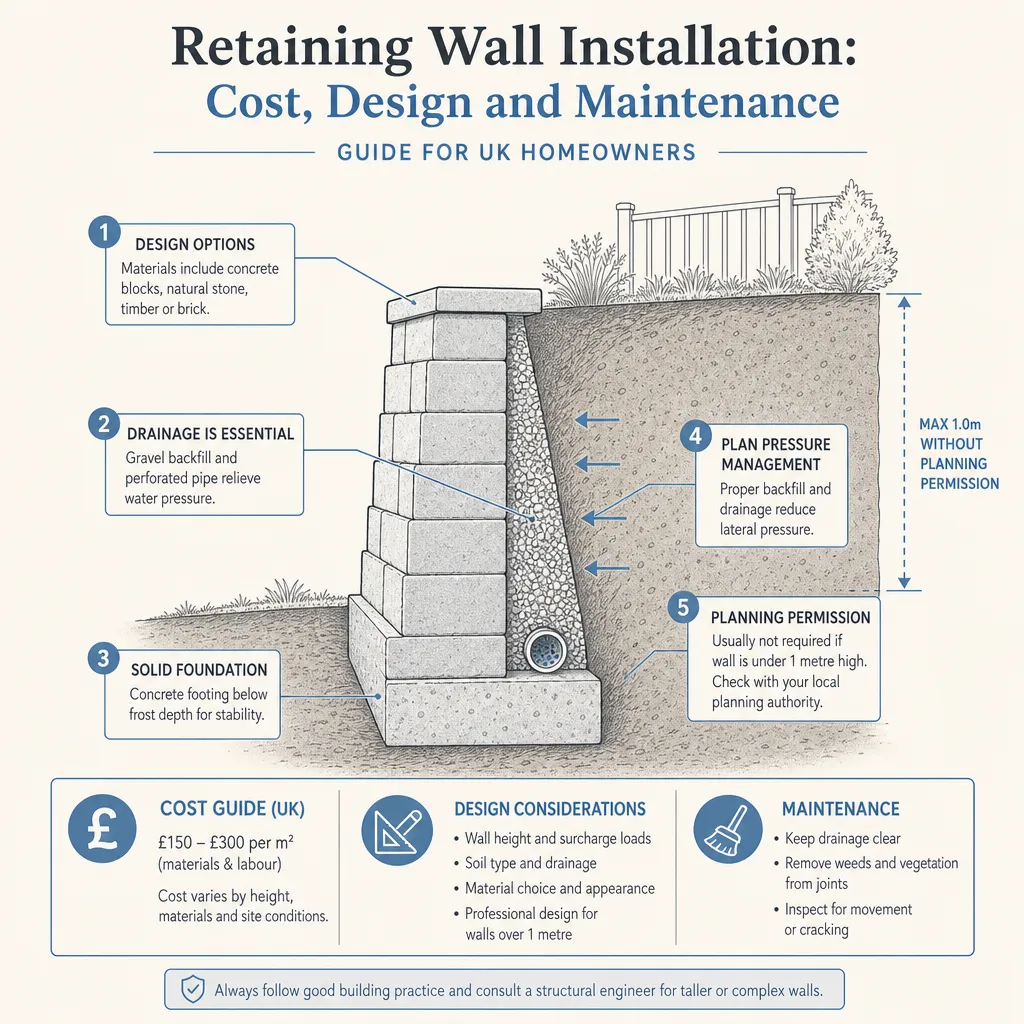
Retaining Wall Installation: Cost, Design and Maintenance
A retaining wall holds back soil on a sloped or banked site.
 Improvement & Build
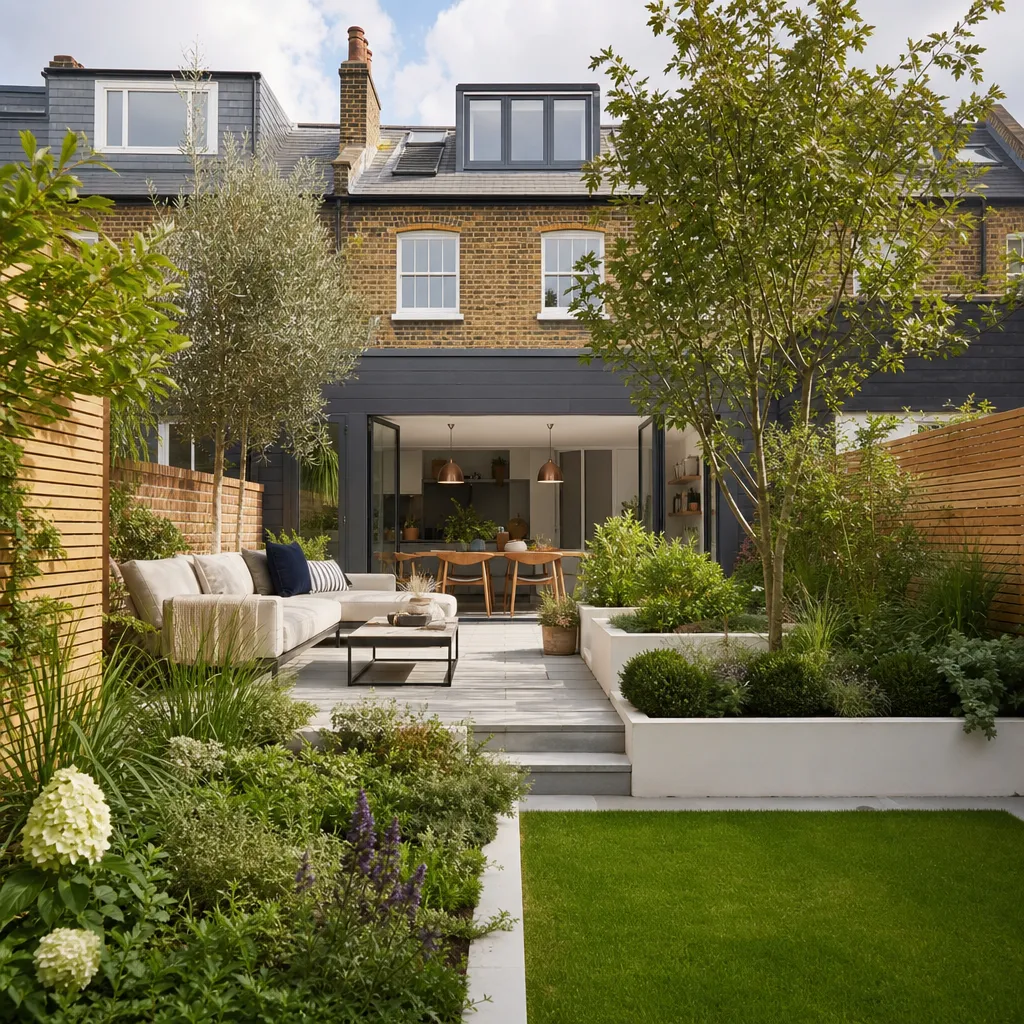
Seasonal Garden Transformations and Outdoor Design Ideas
A successful garden transformation in the UK works with the seasons rather than against them — establishing structure and hard landscaping in autumn or winter, planting in spring, and enjoying the results through summer.
 Improvement & Build
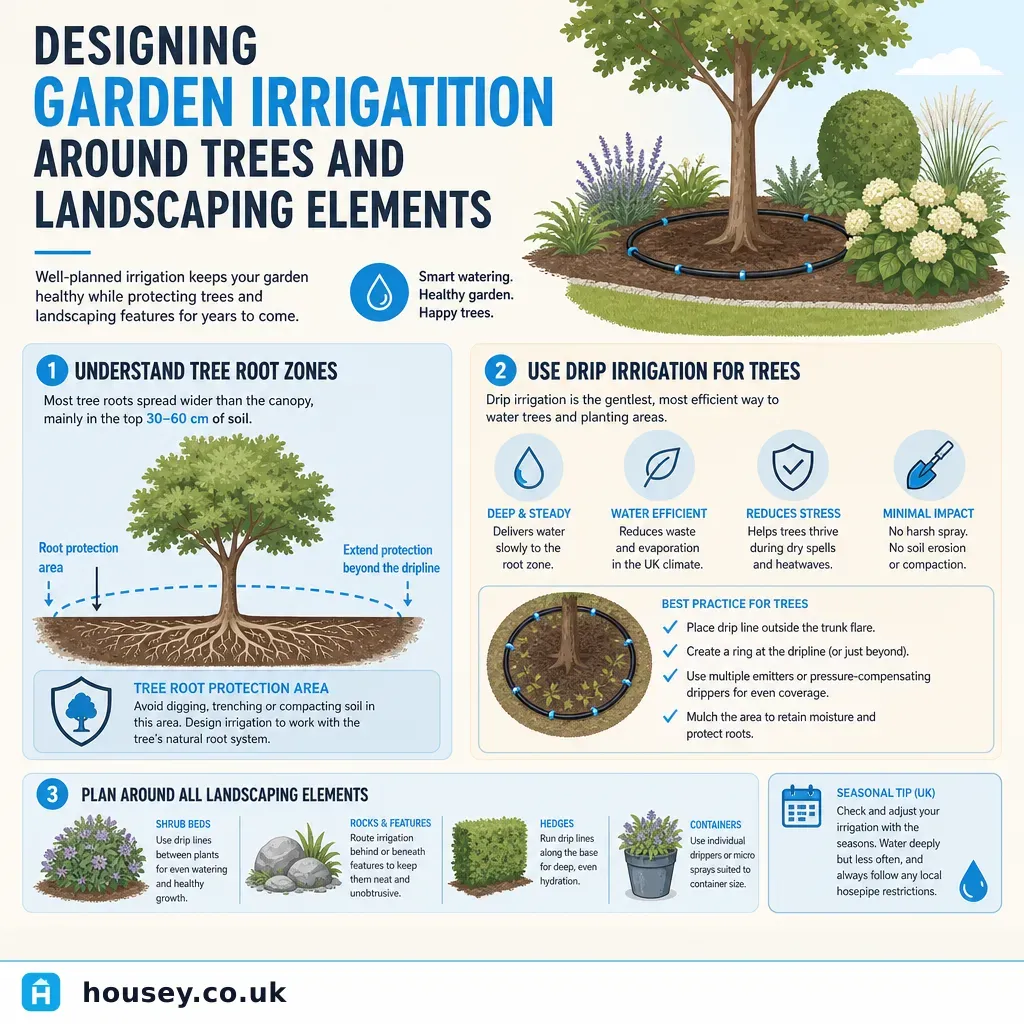
Designing Garden Irrigation Around Trees and Landscaping Elements
Design irrigation around trees by respecting the root protection area defined under BS 5837:2012, using drip or leaky pipe delivery rather than spray heads, and putting the tree zone on its own circuit.
 Improvement & Build
Garden Design Trends and Contemporary Landscaping Ideas
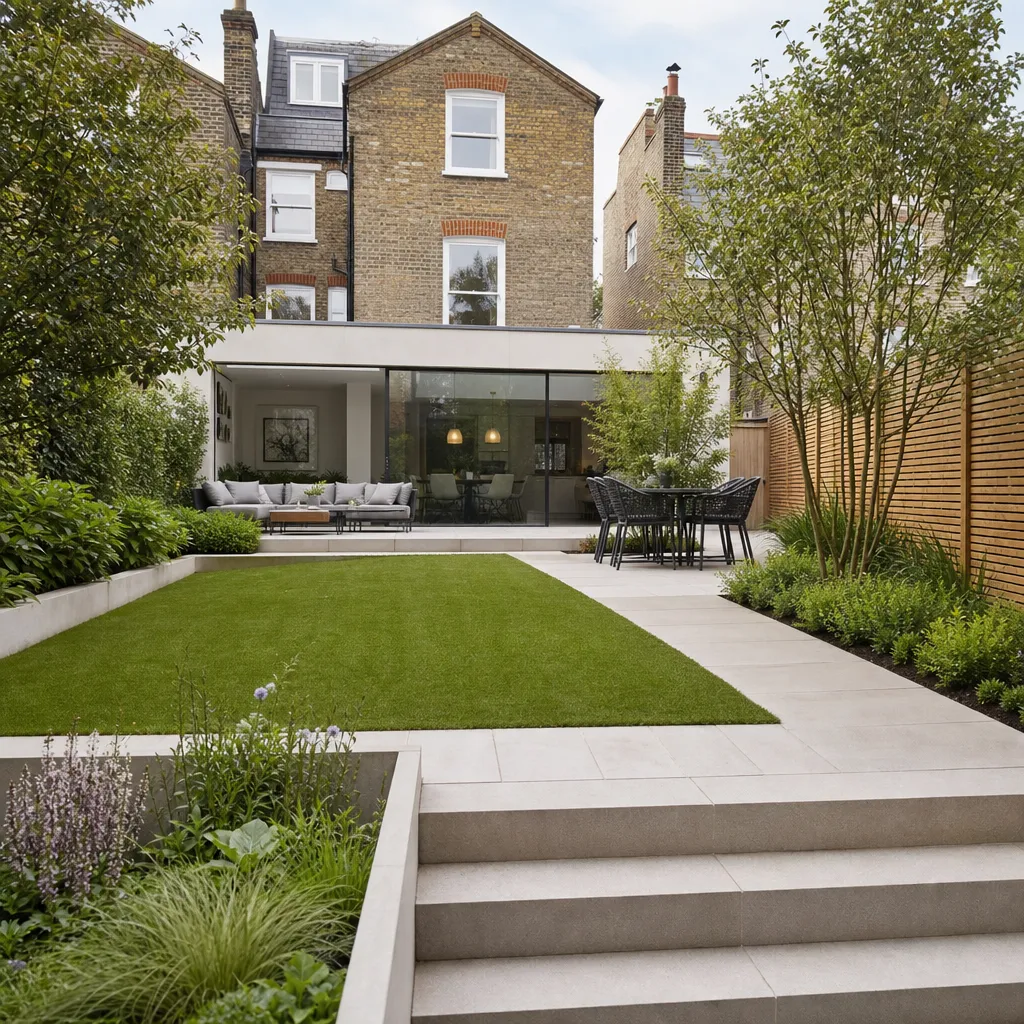
Contemporary UK garden design centres on low-maintenance naturalistic planting, multi-functional outdoor spaces, sustainable hard landscaping materials, and wildlife-friendly rewilded areas.
 Improvement & Build
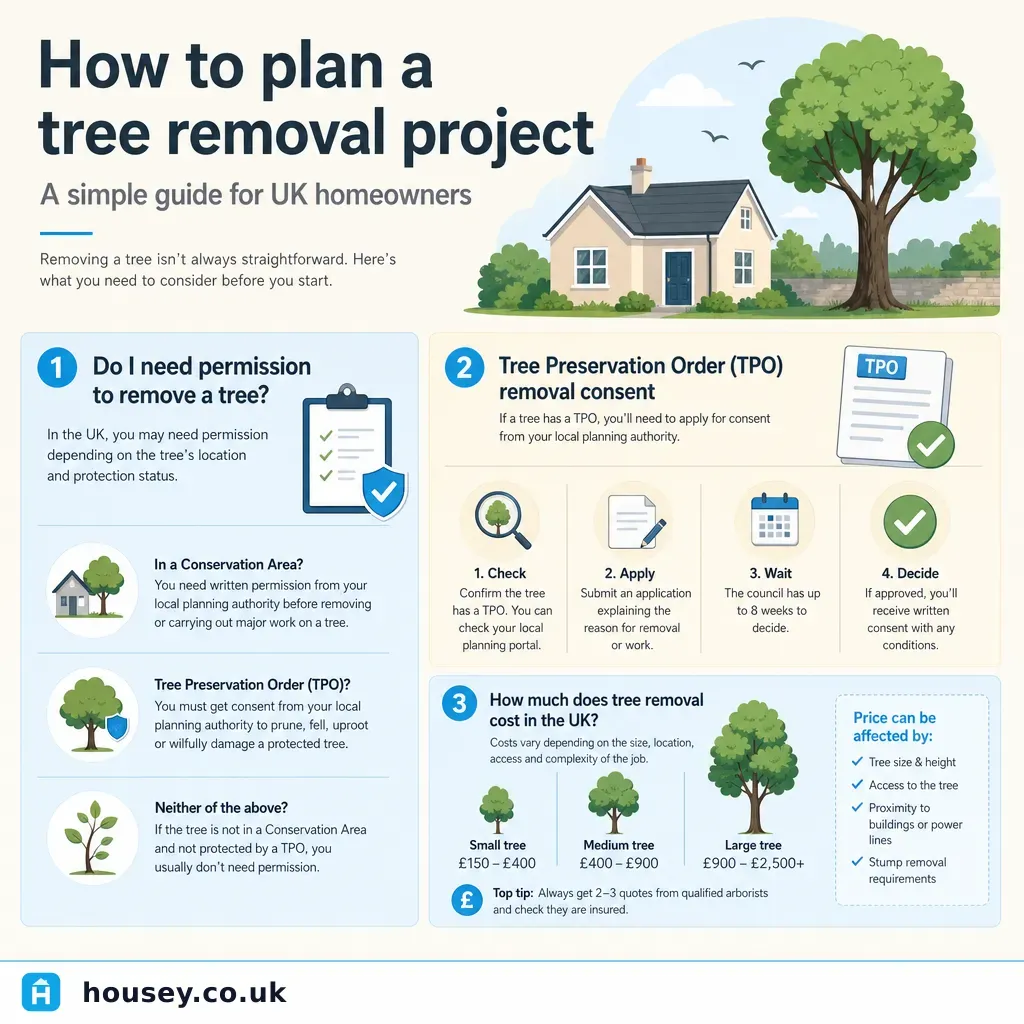
How to plan a tree removal project
Planning a tree removal project starts with checking whether the tree is protected by a Tree Preservation Order or sits in a conservation area, as both require council consent before any work begins.