Yard waste removal: recycling, donating and reusing options
By Housey · Last reviewed 19th of May 2026
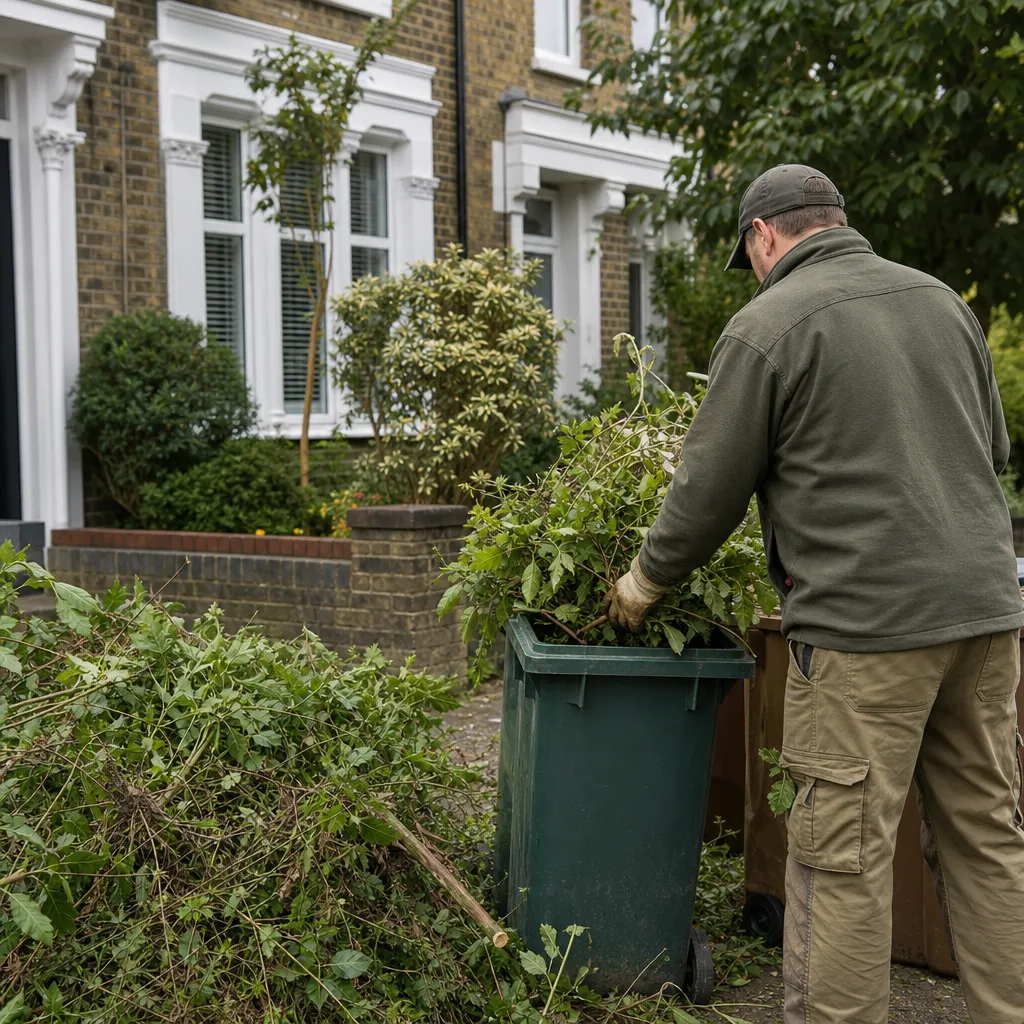
Yard waste removal: recycling, donating and reusing options
Garden clearances, seasonal tidying, and landscaping projects all generate significant volumes of organic material — and disposing of it responsibly takes more planning than most homeowners expect. Whether you are clearing a mature plot ahead of building work or managing routine hedge and grass clippings from a 1930s semi, knowing your options helps you choose the cheapest and most sustainable route. Getting it wrong can mean unexpected disposal costs, failed skip deliveries, or — in the case of invasive species — legal liability.
Key points
- Most UK local councils offer a kerbside garden waste collection service; annual fees typically range from £30 to £70 depending on the council — check your council website for current rates (indicative UK costs, last reviewed 2026-05-19).
- Household Waste Recycling Centres (HWRCs) in England, Scotland, and Wales accept most domestic garden waste free of charge, though many now require an advance booking.
- Soil, rubble, and hardcore are not classified as garden waste and must be separated for disposal via a licensed waste carrier or specialist skip.
- If you place a skip on a public highway, you need a permit from your local council under the Highways Act 1980; local authority fees typically range from £10 to £60 (indicative, last reviewed 2026-05-19).
- Home composting can produce usable soil improver within three to twelve months, depending on materials and method.
What counts as garden waste — and what doesn't
Garden waste, sometimes called green waste, typically includes grass cuttings, leaves, hedge and shrub trimmings, spent plant material, soft prunings, and small branches.
It does not include:
- Soil, clay, and rubble
- Treated or painted timber
- Large tree trunks or root balls (these often require a specialist groundworker or arborist)
- Invasive species such as Japanese knotweed, classified as controlled waste under the Environmental Protection Act 1990 and requiring specialist disposal
Misclassifying waste can result in rejection at your local HWRC or additional charges from a skip company.
Council green waste collections
Most local authorities in England offer a separate garden waste collection service, typically using a brown or green wheeled bin or biodegradable sacks. Collections are usually subscription-based — you pay an annual fee and the council collects on a set schedule.
Use your local council's website or the GOV.UK find your local council tool to check:
- Whether your area offers a kerbside garden waste service
- The current annual subscription fee
- The collection schedule and any seasonal gaps (many councils pause collections over winter)
- What materials are and are not accepted
Some councils include garden waste in their standard recycling service; others have suspended kerbside collections in recent years. Always check before generating a large volume of material.
Household Waste Recycling Centres (HWRCs)
Household Waste Recycling Centres — often called the tip or civic amenity site — are available to residents free of charge in most local authority areas. Garden waste dropped here is usually composted or processed into biomass energy.
Before visiting:
- Check whether your nearest HWRC requires a booking. Many councils now operate a pre-booking system; arriving without one may mean you are turned away.
- Confirm your home address falls within the catchment area for the site. Some councils restrict access to their own residents and may charge non-residents.
- Check opening hours, which can change seasonally and at bank holidays.
- If travelling with a van or trailer, you may need to register the vehicle in advance through a free permit scheme designed to prevent commercial waste being disposed of at domestic facilities.
Home composting and on-site reuse
Composting is the lowest-cost and lowest-carbon option for most organic garden waste. Grass cuttings, leaves, soft plant trimmings, and spent vegetable matter all compost well. Woody material benefits from chipping first — a garden shredder, available to hire from most local tool hire shops, converts hedge trimmings and small branches into usable mulch.
The Royal Horticultural Society (RHS) and WRAP both publish practical guidance on home composting. WRAP's research consistently finds that home composting makes a significant contribution to diverting household waste from landfill.
On-site reuse options
Material | Reuse option |
|---|---|
Topsoil from borders | Level low spots in the lawn; use in raised beds |
Turf | Stack face-down for 12 months to make loam |
Leaves | Heap in a wire cage to produce leaf mould over 12–18 months |
Chipped woody waste | Spread as path mulch or add in small quantities to a compost heap |
Stone or gravel | Reuse in drainage layers, paths, or garden edging |
Reclaimed timber sleepers | Donate, sell, or repurpose as raised-bed edging |
Donating and rehoming garden materials
Before arranging a skip or a tip run, consider whether any materials have value to others:
- Freecycle and Freegle (freecycle.org, ilovefreegle.org): post surplus topsoil, turf, pots, or usable hardcore; collections are typically arranged within a few days
- Facebook Marketplace and Gumtree: suitable for bagged topsoil, stone, reclaimed timber, or garden ornaments with resale value
- Community gardens and allotments: may welcome donations of topsoil, compost, or structural materials; contact your local allotment association to ask
- Reclamation yards: will buy or accept reclaimed paving, stone, tiles, and timber in reasonable condition
Hiring a skip or waste carrier
For larger clearances, a skip or man-and-van waste removal service is usually the most practical option.
Skip hire checklist
For man-and-van clearance services, check that the contractor holds a waste carrier licence issued by the Environment Agency in England, Natural Resources Wales, or SEPA in Scotland. You can verify registrations via the GOV.UK waste carrier registration service. If an unlicensed carrier fly-tips your waste, you could face liability under the Environmental Protection Act 1990.
When to get professional help
For most routine garden clearances, the options above are sufficient. Consider professional help when:
- You are removing large trees or mature hedgerows — a groundworker or arborist will be needed for felling, stump grinding, and root removal
- Demolition of outbuildings, walls, or hard landscaping produces rubble requiring a licensed carrier and, potentially, an asbestos assessment if pre-2000 materials are involved
- Japanese knotweed is identified on the site — specialist treatment and licensed disposal are required
- The volume of material is beyond what HWRC visits or a single skip can manage efficiently
How Housey can help
If your garden clearance is part of a larger landscaping or build project, Housey can connect you with vetted groundworkers who handle bulk excavation, spoil removal, and site clearance — and who are required to hold valid waste carrier licences.
Frequently asked questions
Can I put garden waste in my general rubbish bin?
In most UK areas, no. Councils ask that garden waste goes in a dedicated green or brown bin or is taken to a Household Waste Recycling Centre. Placing large quantities in the general residual waste bin may result in the bin being left uncollected. Check your council's waste collection guide online for the specific rules that apply to your address.
Do I need a licence to take garden waste to the tip myself?
No licence is needed for your own household waste. UK law allows any householder to transport their own domestic waste to a Household Waste Recycling Centre free of charge. A waste carrier licence is only required if you are transporting waste on behalf of someone else, or if you carry out waste removal as a business activity.
Is Japanese knotweed classed as garden waste?
No. Japanese knotweed is classified as controlled waste under the Environmental Protection Act 1990 and must be disposed of at a licensed facility. It cannot be composted at home or placed in a standard garden waste bin. Always use a specialist contractor for removal and follow current DEFRA guidance on preventing the spread of invasive non-native plants.
Can I burn garden waste at home in England?
There is no blanket legal ban on bonfires in residential gardens in England, but smoke control zone designations, local by-laws, and fire regulations may restrict or prohibit them where you live. The Environment Agency discourages burning on air quality grounds. Always check your local council's guidance before lighting a bonfire, and be considerate of neighbouring properties.
Sources and further reading
- Find your local council — GOV.UK
- Home composting — WRAP / Recycle Now
- Waste carrier, broker and dealer registration — GOV.UK / Environment Agency
- Prevent the spread of invasive non-native plants — GOV.UK / DEFRA
- Composting advice — Royal Horticultural Society
Useful next reads
 Improvement & Build
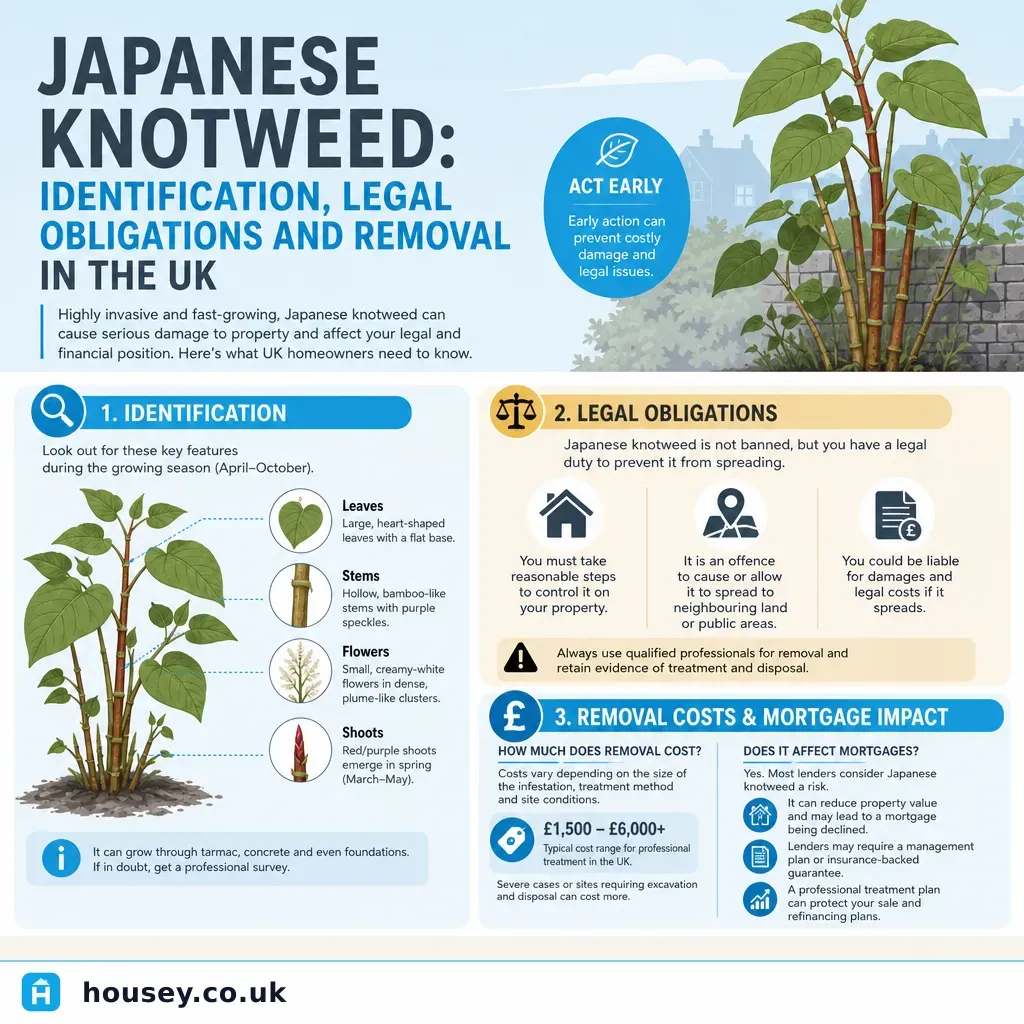
Japanese Knotweed: Identification, Legal Obligations and Removal in the UK
Japanese knotweed is a legally controlled invasive plant in the UK.
 Improvement & Build
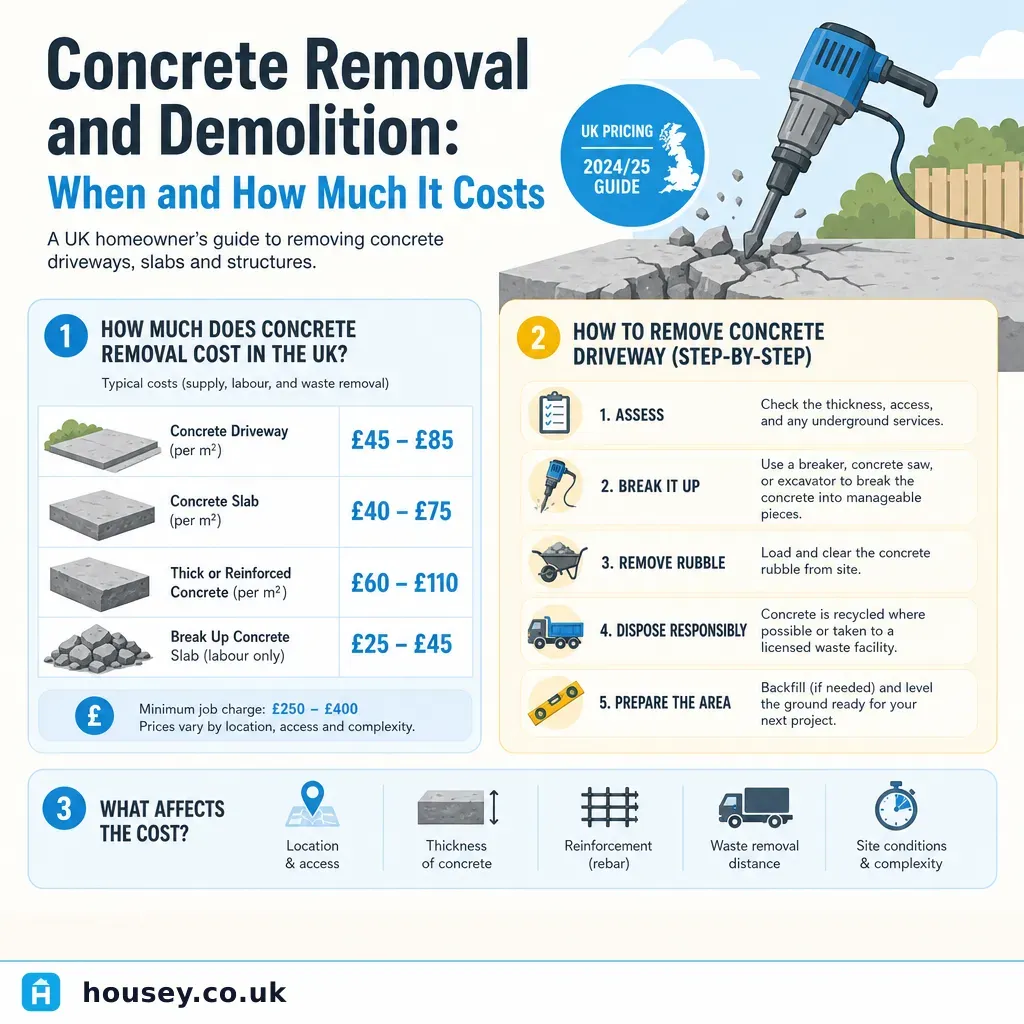
Concrete Removal and Demolition: When and How Much It Costs
Concrete removal in the UK typically costs £25–£65 per square metre for unreinforced slabs, rising to £55–£110 per square metre for reinforced concrete containing rebar.
 Improvement & Build
Pervious Concrete Surfaces: Modern Sustainable Driveway Solutions
Pervious concrete (also called porous or no-fines concrete) is a specialist concrete mix with large voids that allow rainwater to pass through the surface and into the sub-base below.
 Improvement & Build
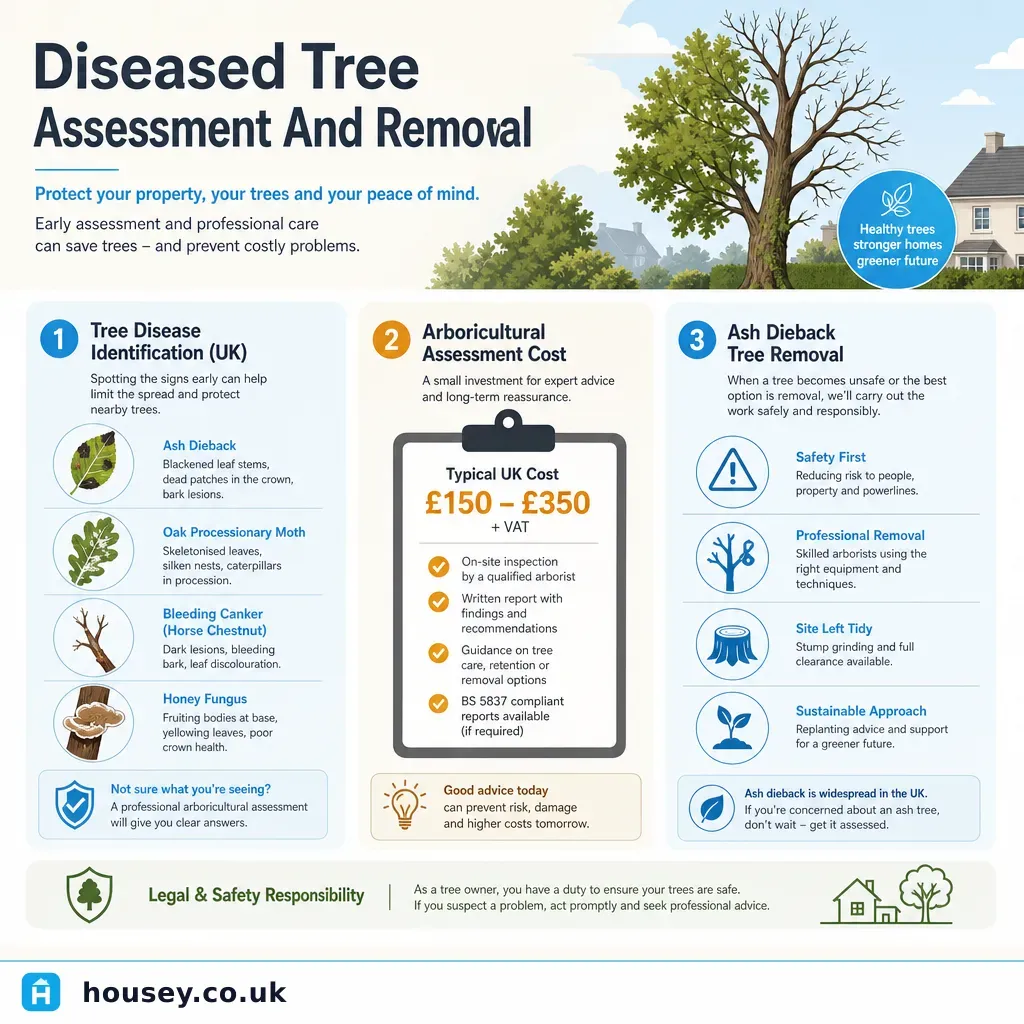
Diseased Tree Assessment And Removal
A diseased or structurally compromised tree can pose a serious safety risk, but not every unhealthy-looking specimen needs to come down.
 Improvement & Build
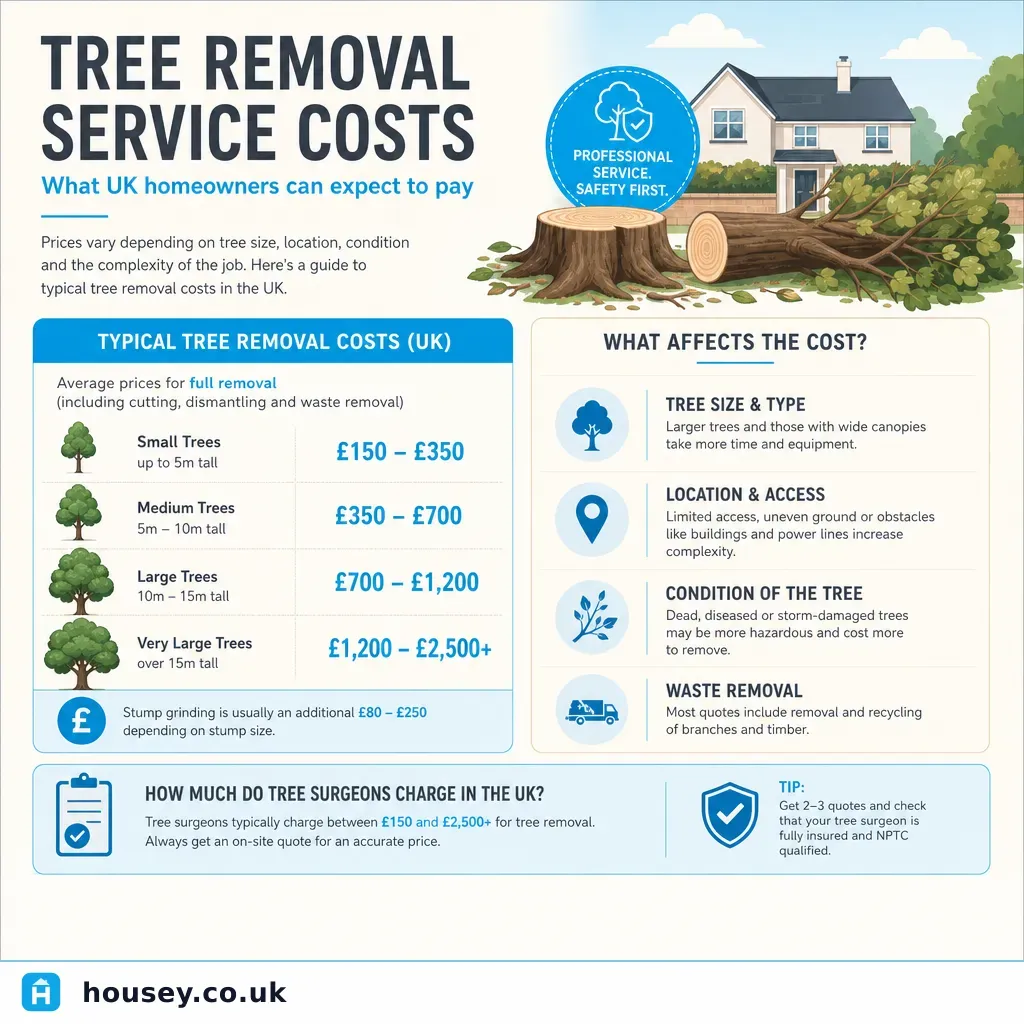
Tree Removal Service Costs
Professional tree removal costs in the UK depend on tree height, access, species, and the scope of work included.