Knowledge Base
Property advice that actually helps
Researched, UK-specific guides for every stage of homeownership — from buying and surveys to retrofit, planning and major works.
 Buying & Moving
Buying Property Overseas: A UK Buyer's Guide to International Property Investment
UK buyers can purchase property in most countries, but the legal process, tax obligations, and financing differ significantly from buying in the UK. You must instruct a local lawyer in every case, declare overseas rental income and capital gains to HMRC, and account for currency risk. UK conveyancing expertise does not substitute for local legal advice.
 Buying & Moving
What Is a Conveyancing Solicitor and What They Do for You
A conveyancing solicitor is a qualified lawyer who manages the legal transfer of property ownership in England and Wales. They conduct title searches, raise enquiries, review contracts, handle funds, and register the new owner with HM Land Registry. Without one, a property purchase or sale cannot legally complete.
 Buying & Moving
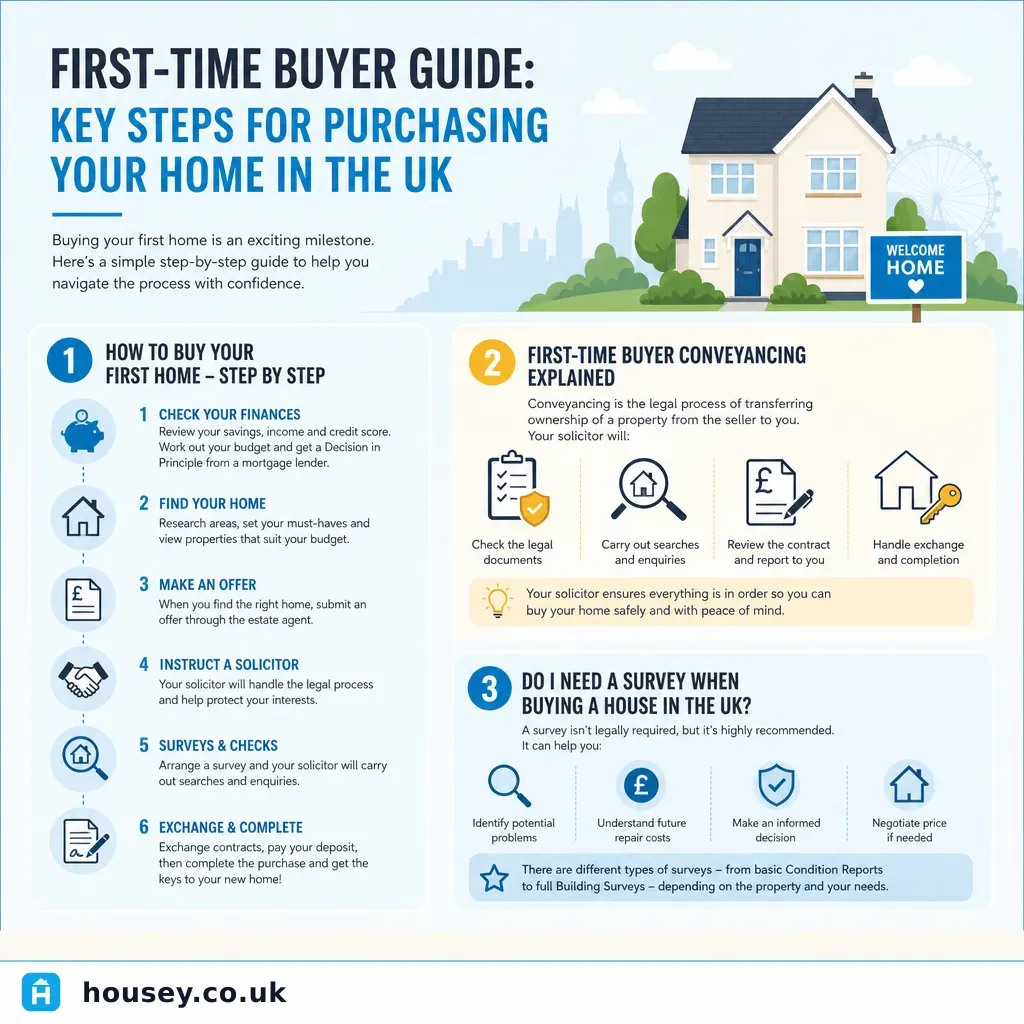
First-Time Buyer Guide: Key Steps for Purchasing Your Home in the UK
Buying your first home in England or Wales involves securing a mortgage in principle, instructing a solicitor early, commissioning your own survey separately from the lender's valuation, and understanding that the purchase is not legally binding until exchange of contracts. The process from offer to exchange typically takes 8–16 weeks, though chain complexity and local authority search delays often extend this.
 Buying & Moving
Selling Your Property Before Year End: Timelines and Action Steps
To complete a UK property sale before 31 December, you typically need to accept an offer by mid-September. Most sales take 12–16 weeks from offer to completion. Instructing a solicitor early, ordering your EPC before listing, and having paperwork ready can all shorten the process. Autumn buyers are often motivated, but solicitor availability tightens towards Christmas.
 Buying & Moving
Conveyancing Myths Debunked: What You Really Need to Know
Conveyancing in England and Wales only becomes legally binding at exchange of contracts — not when an offer is accepted. Your conveyancer checks legal title, not the physical condition of the property. Local authority searches cover planning and drainage, not structural issues. Leasehold transactions take longer and cost more than freehold. Cheapest is rarely best value once delays or missed title issues are factored in.
 Buying & Moving
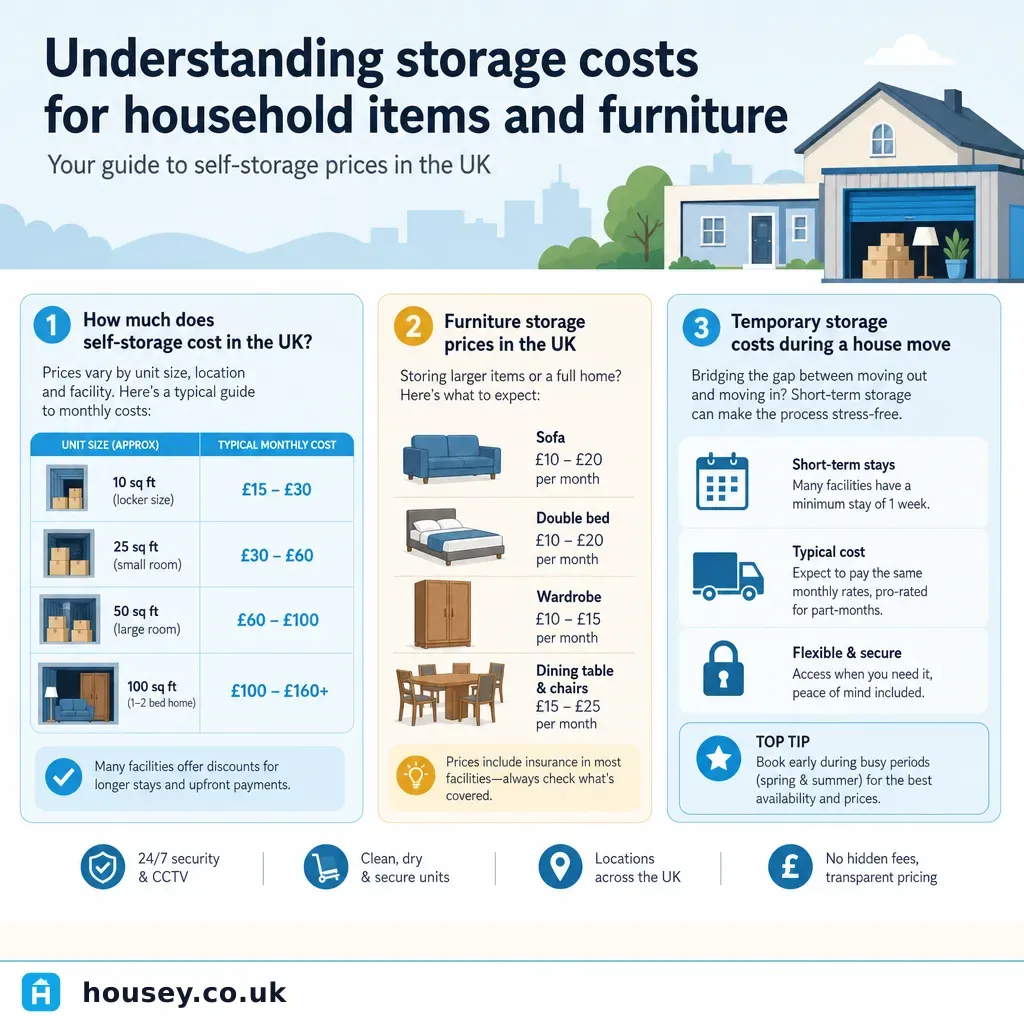
Understanding storage costs for household items and furniture
Self-storage in the UK typically costs £15–£80 per week depending on unit size and location, with London and the South East around 30–50% more expensive. Container storage is usually 20–40% cheaper but with less flexible access. Most contracts are rolling monthly, and standard home insurance rarely covers items held off-site.
 Buying & Moving
How Recent Regulatory Changes Affect Home Buyers
Recent UK regulatory changes affecting home buyers include the reversion of Stamp Duty thresholds in April 2025, the Leasehold and Freehold Reform Act 2024, and ongoing implementation of the Building Safety Act 2022. These affect your upfront costs, leasehold rights, and service charge exposure. A qualified conveyancer can advise how each change applies to your specific purchase.
 Buying & Moving
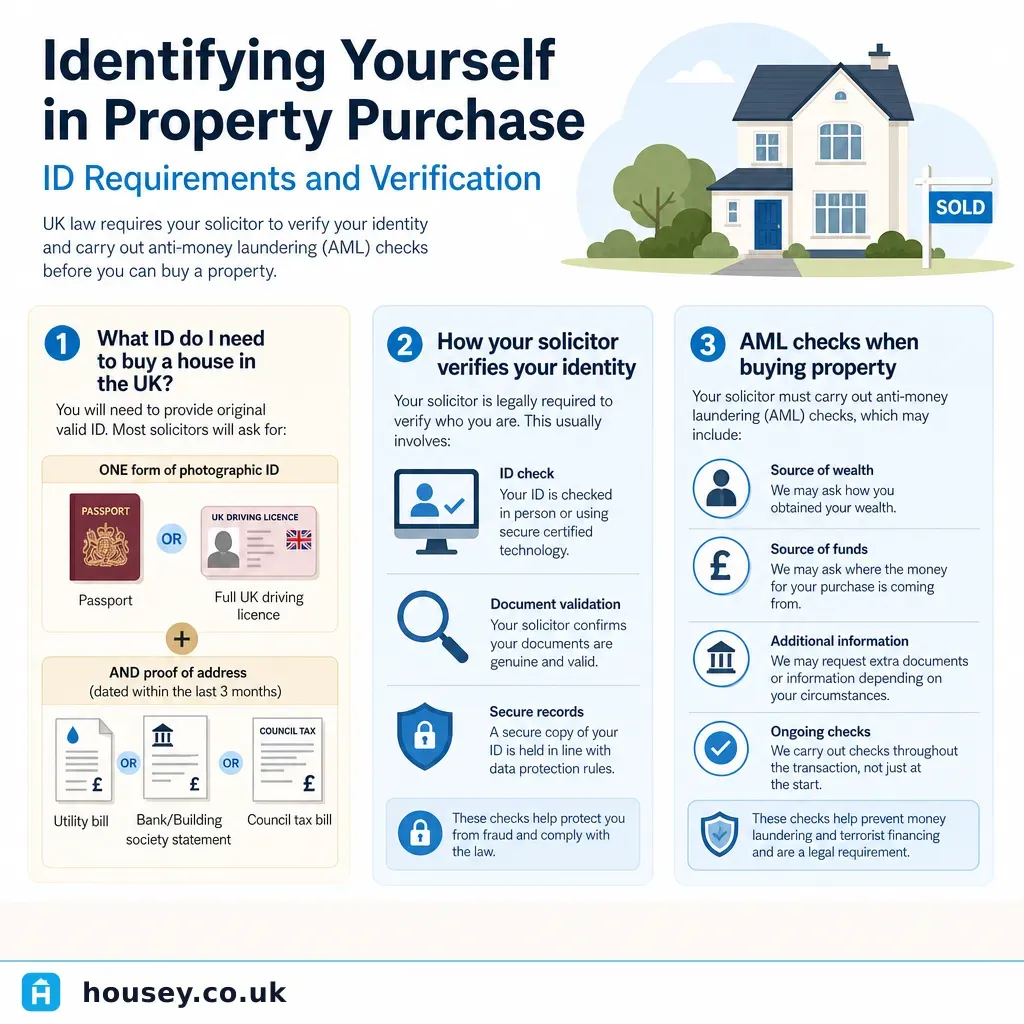
Identifying Yourself in Property Purchase: ID Requirements and Verification
Before a conveyancing solicitor can act on a property purchase, they must verify your identity under the Money Laundering Regulations 2017. You will typically need photographic ID such as a passport or photocard driving licence, plus proof of address issued within the last three months. Source of funds evidence — bank statements, gift letters, or a mortgage offer — is also required.
 Buying & Moving
The Advantages of Purchasing New Build Properties
New build homes in the UK typically come with a 10-year NHBC Buildmark warranty, covering defects for the first 2 years and structural issues for years 3–10. They must meet current Building Regulations including Part L, and usually achieve EPC A or B ratings. A professional snagging survey before legal completion is strongly advisable to document defects while the developer remains liable.
 Buying & Moving
Property Terminology Explained: Your Essential Glossary For UK Property Buyers And Sellers
UK property transactions use a specific vocabulary that can be confusing for first-time buyers. Key terms include exchange (when contracts become legally binding), completion (when you receive the keys), conveyancing (the legal transfer process), leasehold versus freehold (your ownership rights), and disbursements (additional solicitor costs). Understanding these terms helps you follow your transaction without delays or misunderstandings.
 Buying & Moving
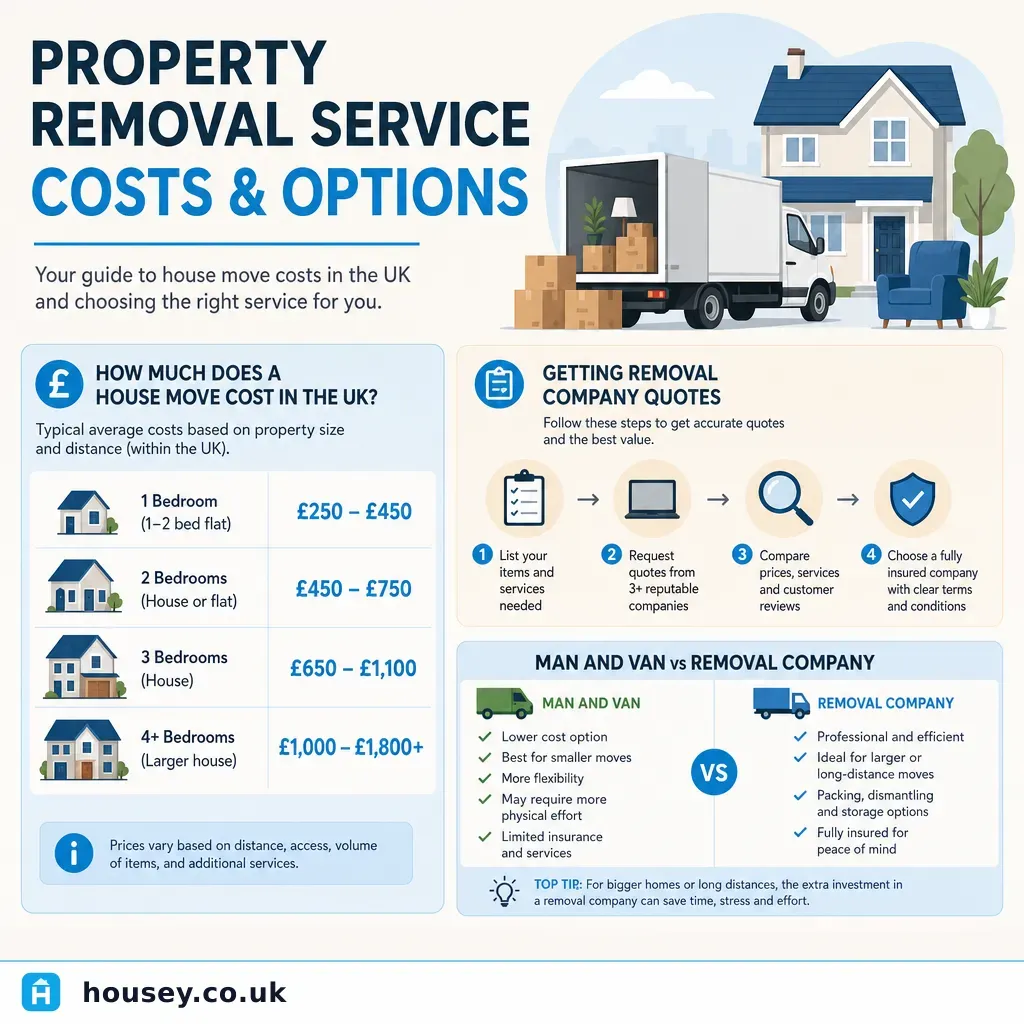
Property Removal Service Costs and Options
UK house removal costs typically range from £300 for a small local flat move to over £3,000 for a large long-distance house move. Costs depend on property size, distance, service level, and time of year. Full-service removal companies include goods-in-transit insurance and packing options; man-and-van services generally cover transport only.
 Buying & Moving
Planning Residential Moves Around Holiday Periods
Moving house around a UK bank holiday means CHAPS bank transfers cannot operate on the holiday itself, so completion must fall on a working day. Removal company availability also drops sharply around Christmas and Easter. Plan at least 6 to 8 weeks ahead for holiday-period moves, confirm your completion date is a banking day, and check your removal firm's closure dates in writing.