Knowledge Base
Property advice that actually helps
Researched, UK-specific guides for every stage of homeownership — from buying and surveys to retrofit, planning and major works.
 Buying & Moving
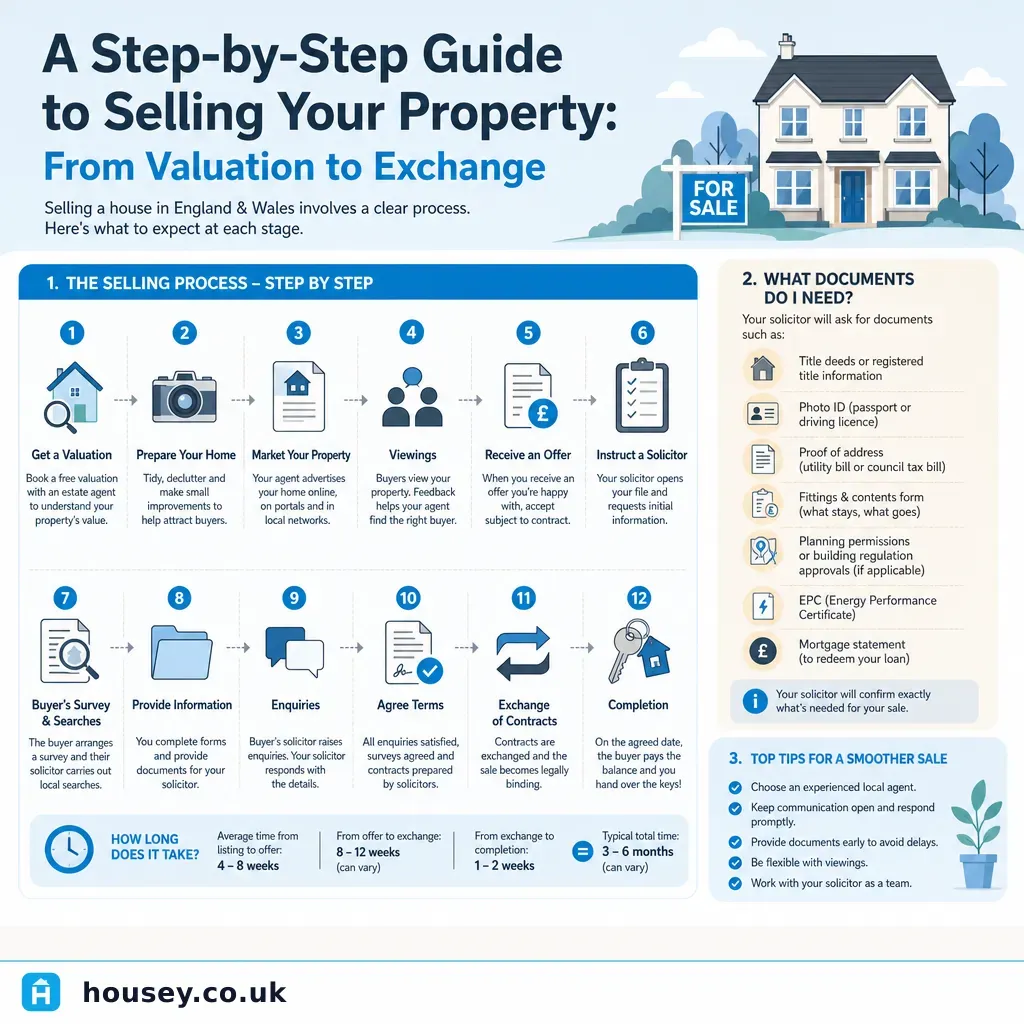
A Step-by-Step Guide to Selling Your Property: From Valuation to Exchange
Selling a property in England and Wales typically involves five key stages: valuation and agent appointment, preparing your EPC and documents, accepting an offer, instructing a conveyancer, and exchanging contracts. The process usually takes three to six months from listing to exchange, though chains and mortgage delays can extend this. Instructing a conveyancer before you receive an offer helps reduce delays once one is agreed.
 Buying & Moving
The Evolution and Development of the Removals Industry
The UK removals industry has transformed from Victorian horse-drawn furniture wagons into a specialist logistics sector with professional accreditation, containerised storage, international moves, and digital booking. Today, reputable removals firms hold membership with the British Association of Removers (BAR) or carry Which? Trusted Trader status, offering insurance-backed services and fixed-price estimates before any move.
 Buying & Moving
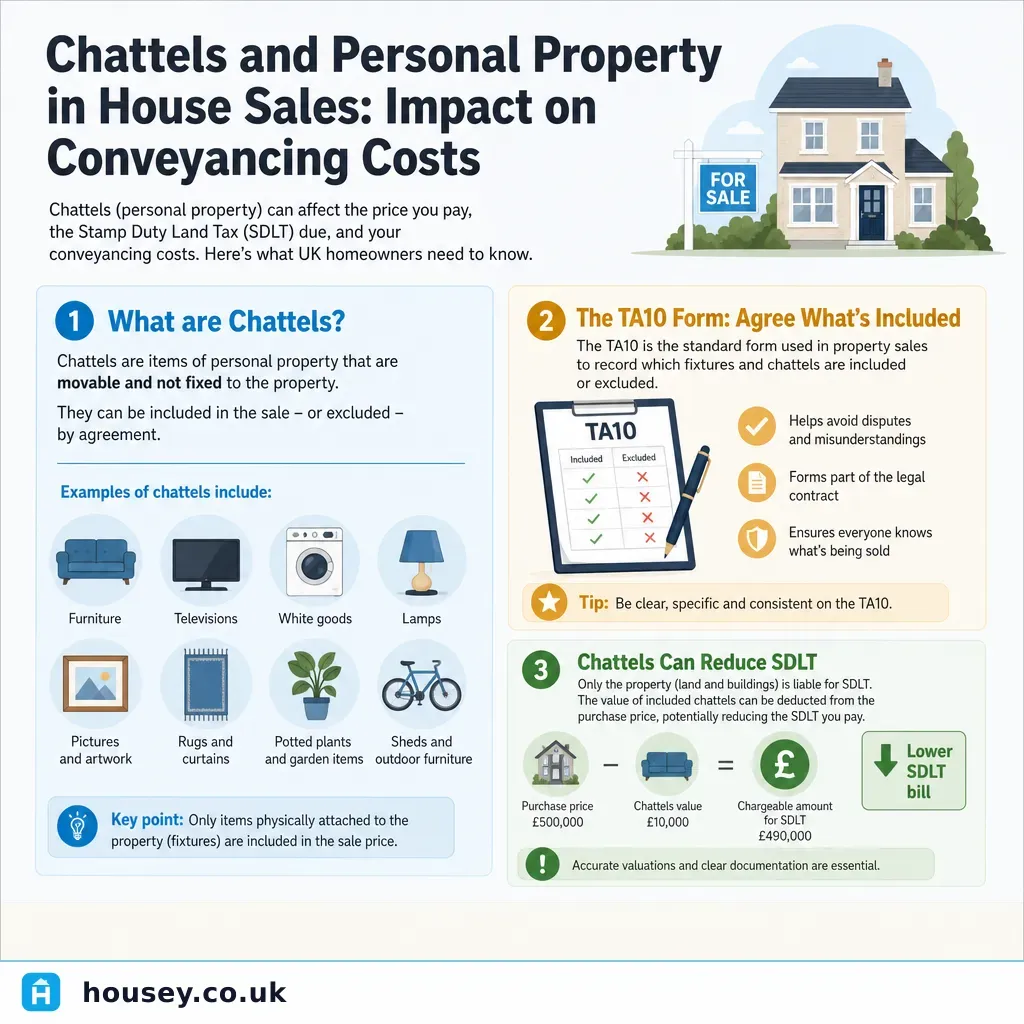
Chattels and Personal Property in House Sales: Impact on Conveyancing Costs
Chattels are moveable items — appliances, carpets, curtains, garden furniture — that a seller may include in or exclude from a house sale. Allocating a separate price for chattels can reduce the amount subject to Stamp Duty Land Tax, but HMRC scrutinises unrealistically high allocations. Your solicitor will use the TA10 Fixtures, Fittings and Contents form to agree exactly what is and is not included.
 Buying & Moving
Government-backed property schemes: support programmes for first-time home buyers
UK first-time buyers can access several government-backed programmes including the Lifetime ISA (25% bonus on savings up to £4,000 per year), Shared Ownership (part-buy, part-rent), and the First Homes scheme (discounts of 30–50% on new builds). Eligibility rules vary — check GOV.UK for current requirements before applying.
 Buying & Moving
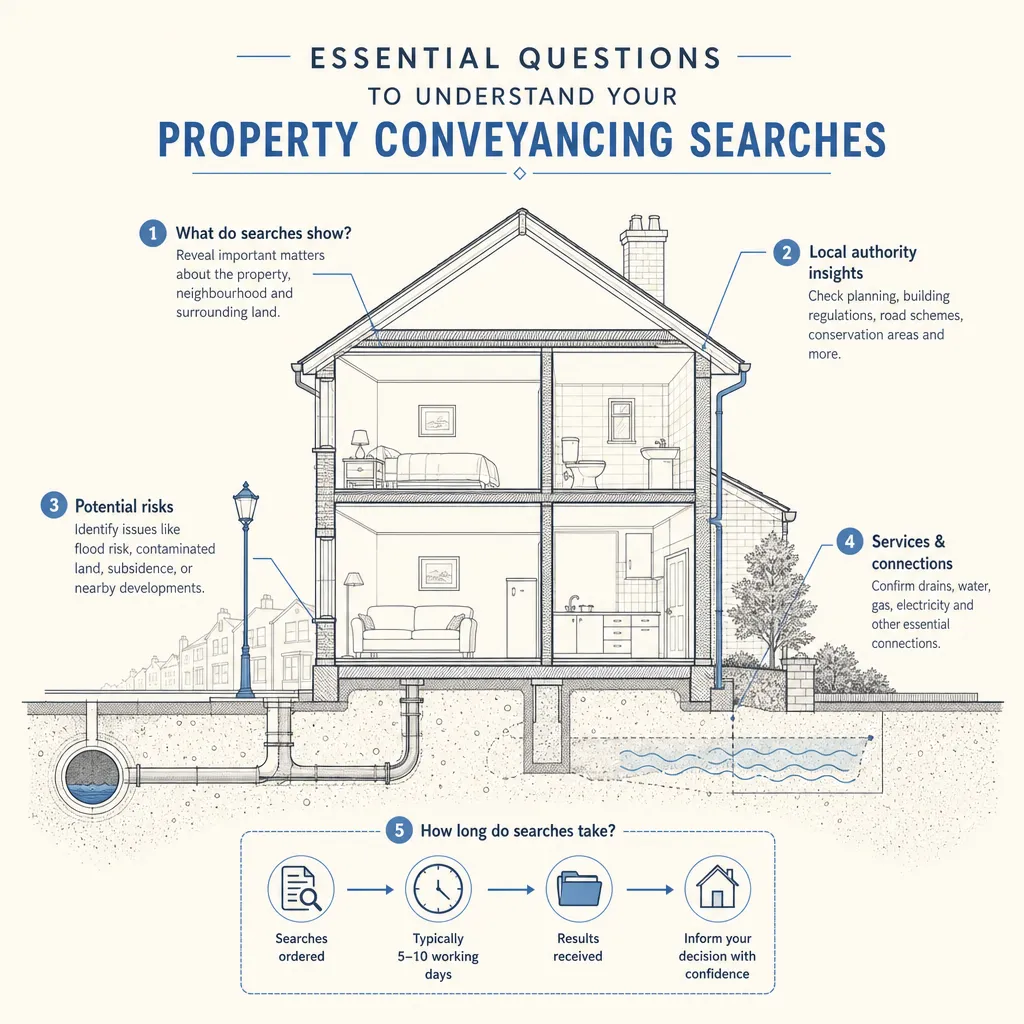
Essential Questions to Understand Your Property Conveyancing Searches
Conveyancing searches are formal enquiries to official bodies revealing planning history, flood risk, drainage infrastructure, and environmental hazards affecting a property. Standard searches include a local authority search (LLC1 and CON29), water and drainage, and an environmental search. Results take 1–30 working days and are usually required by mortgage lenders before exchange.
 Buying & Moving
Conveyancing Quality Scheme: Understanding Professional Standards and Consumer Protection
The Conveyancing Quality Scheme (CQS) is a Law Society quality mark for residential conveyancing firms in England and Wales. Accredited firms follow the Conveyancing Protocol and are audited annually. Many mortgage lenders require CQS membership as a condition of their approved panel. CQS is separate from, and in addition to, mandatory SRA regulation, which applies to all solicitors' firms.
 Buying & Moving
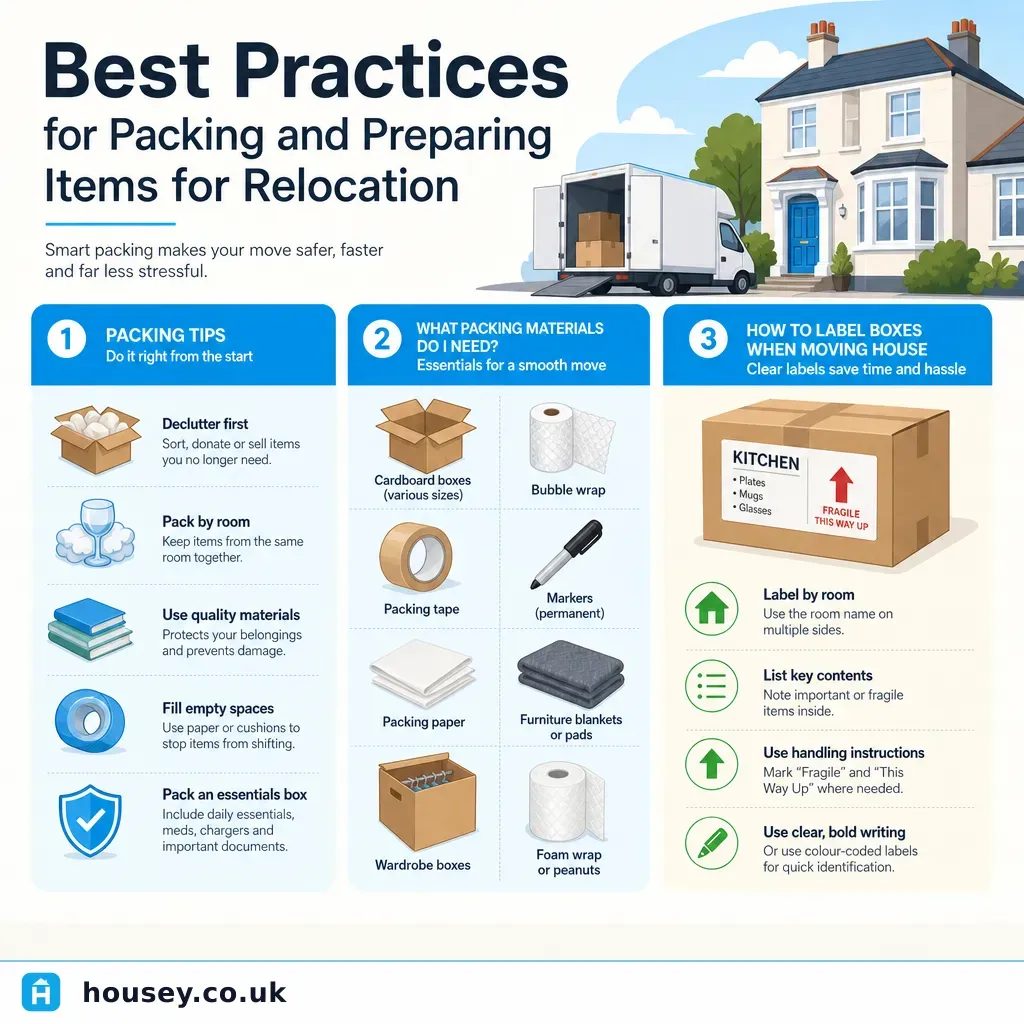
Best Practices for Packing and Preparing Items for Relocation
Good packing starts four to six weeks before moving day, following a room-by-room sequence from loft and rarely used spaces first. Use double-walled boxes for heavy or fragile items, label every box on the top and at least two sides with the destination room, and pack an essentials box containing kettle, charger, medications, and key documents for your first night.
 Buying & Moving
DIY Conveyancing: Self-Representation in Property Transactions
Self-conveyancing is legally permitted in England and Wales but is viable only for straightforward cash purchases of registered freehold properties with no title complications. If you are using a mortgage, your lender requires its own legal representation, making DIY conveyancing effectively impossible. The risks — defective title, SDLT errors, and registration failures — usually outweigh the fee saving for all but the simplest transactions.
 Buying & Moving
Effective Marketing Strategies for Selling Your Property
Effective property marketing in the UK combines professional photography, an accurate portal listing on Rightmove and Zoopla, a correctly priced asking price, and well-prepared viewings. Getting your listing live with quality photos and a floorplan from day one gives your property the best chance of attracting serious buyers quickly.
 Buying & Moving
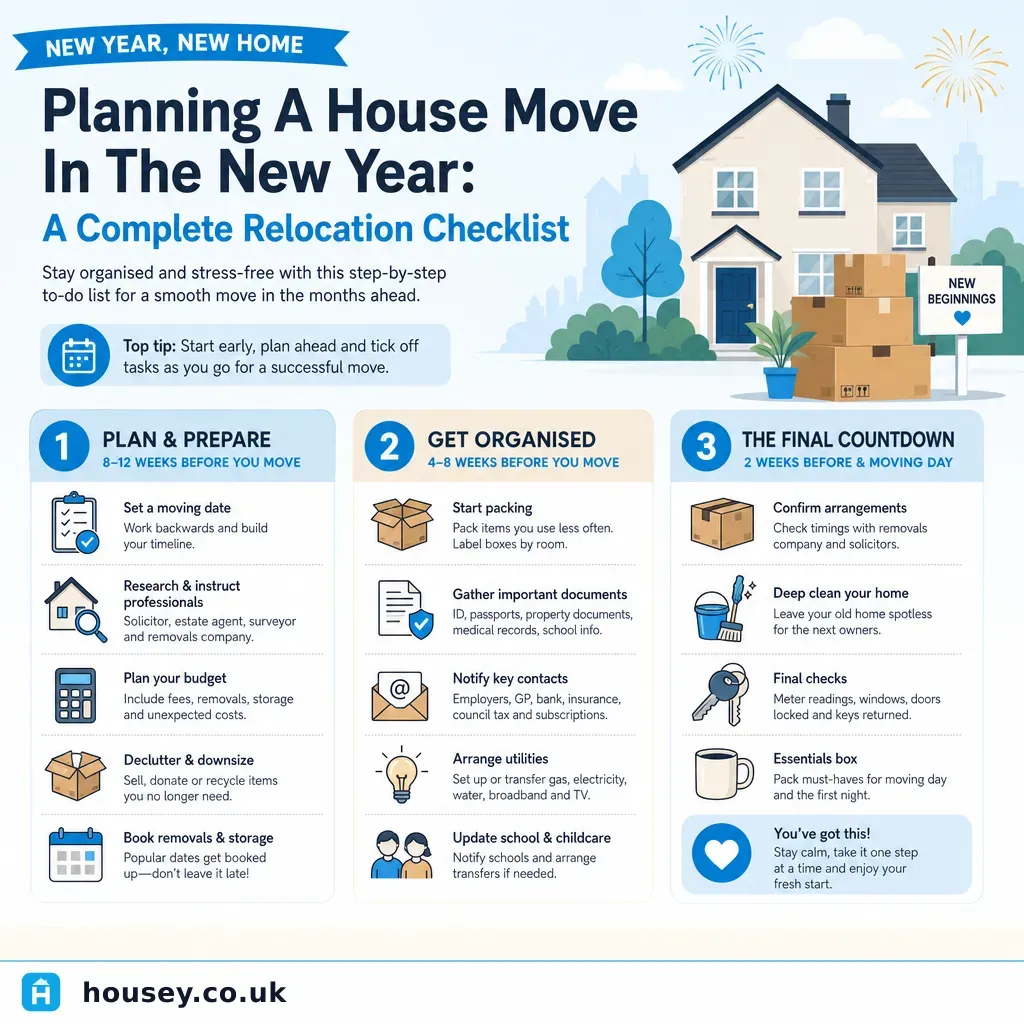
Planning A House Move In The New Year: A Complete Relocation Checklist
Planning a house move in the new year means coordinating removals, utilities, address changes, and legal completions across multiple parties. Start at least 8–12 weeks before your target move date, book removals early as January is a popular period, and work through address notifications and utility transfers systematically in the final two weeks before moving day.
 Buying & Moving
Preparing Your Home for Sale: Interior and Exterior Improvements
Preparing your home for sale means prioritising presentation over renovation. Declutter, carry out minor repairs, boost kerb appeal, and ensure you have a valid EPC. Neutral decoration, clean carpets, and tidy outdoor spaces typically deliver the greatest return for the least outlay. Major structural works rarely recover their full cost at sale — focus on what buyers notice first.
 Buying & Moving
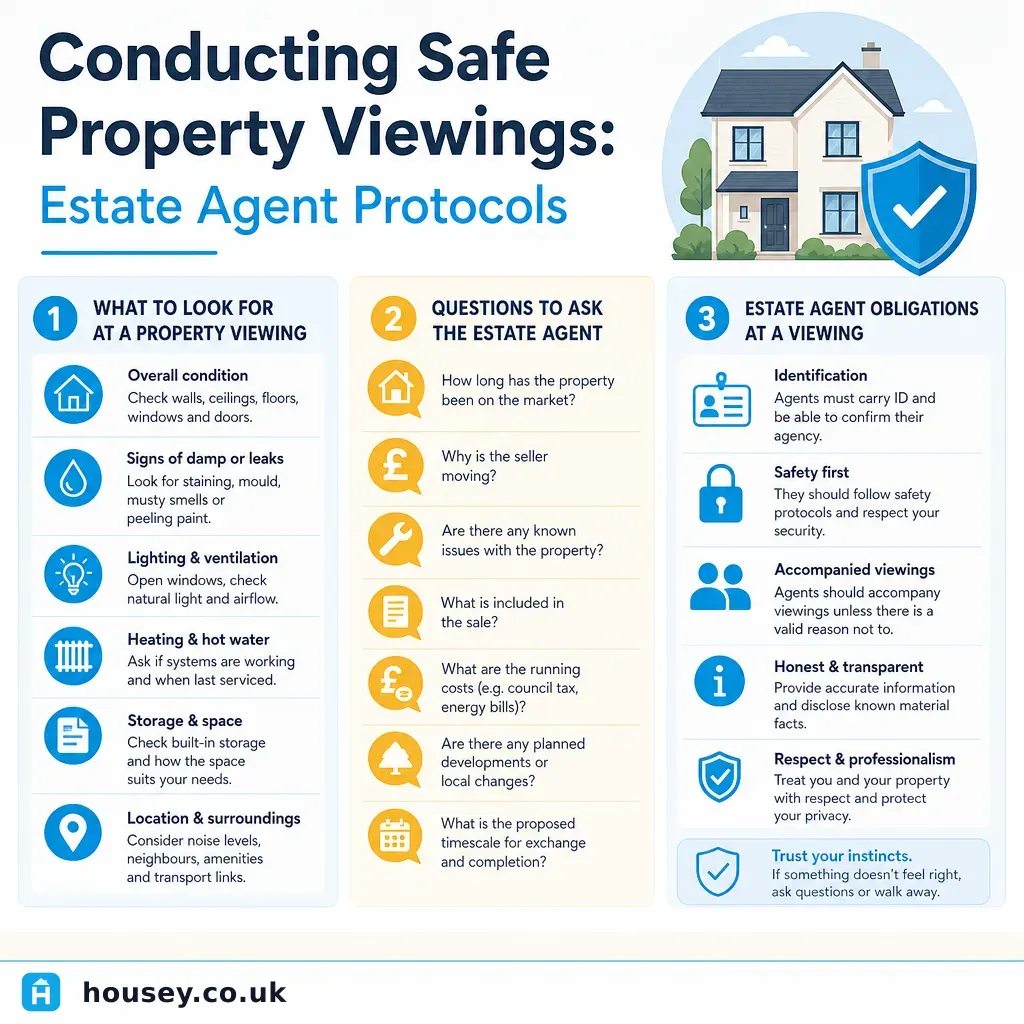
Conducting Safe Property Viewings: Estate Agent Protocols
A property viewing typically lasts 20 to 45 minutes — limited time to assess a home you may own for years. Arrive with a checklist, ask the agent directly about offers, the seller's chain position, and any known defects. Check for damp, cracks, roof condition, mobile signal, and natural light. Requesting a second viewing before making an offer is standard practice and agents should accommodate it without pressure.