Knowledge Base
Property advice that actually helps
Researched, UK-specific guides for every stage of homeownership — from buying and surveys to retrofit, planning and major works.
 Surveys & Inspections
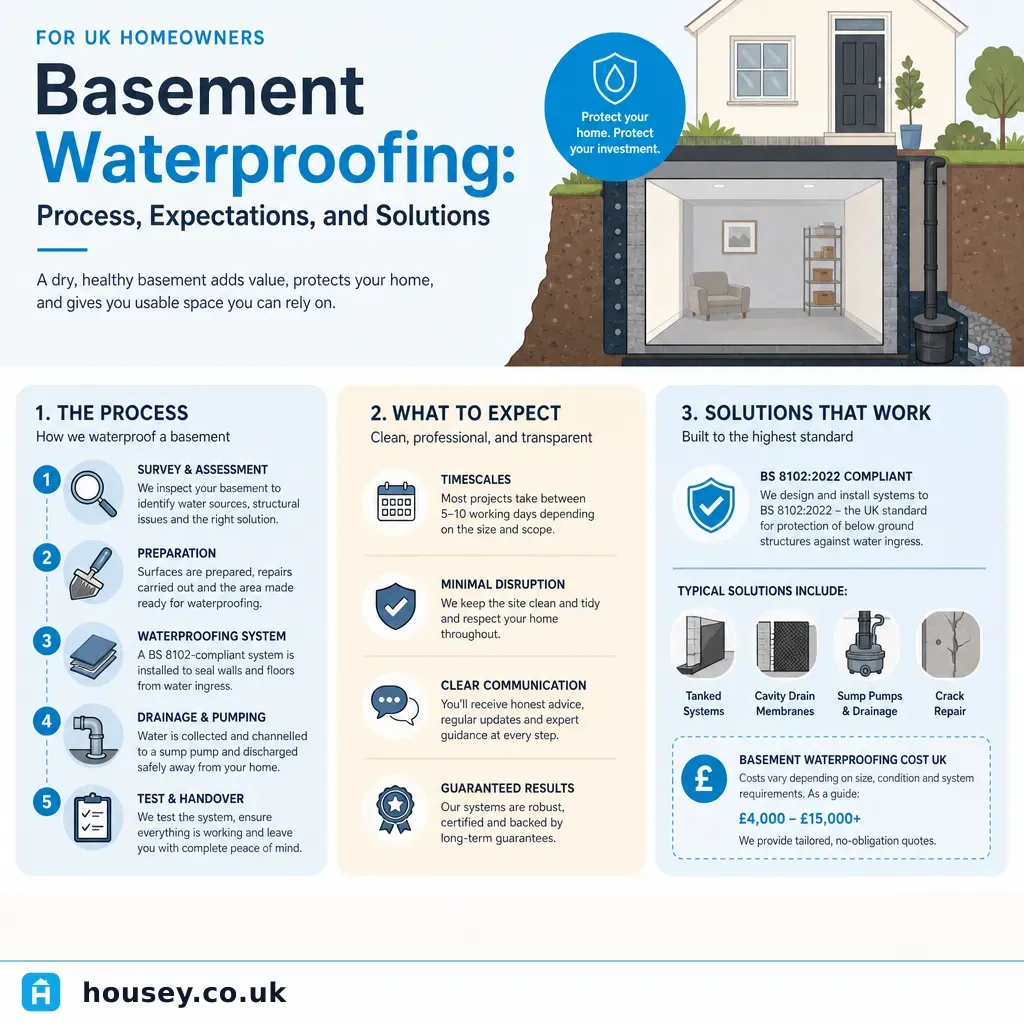
Basement Waterproofing: Process, Expectations, and Solutions
Basement waterproofing in the UK is governed by BS 8102:2022, which defines three protection grades and three system types: Type A barrier tanking, Type B structurally integral concrete, and Type C cavity drain membranes. Most retrofit conversions use Type C with a sump pump. Always instruct a PCA-accredited surveyor before specifying any system, as the correct solution depends on your ground conditions and intended use.
 Surveys & Inspections
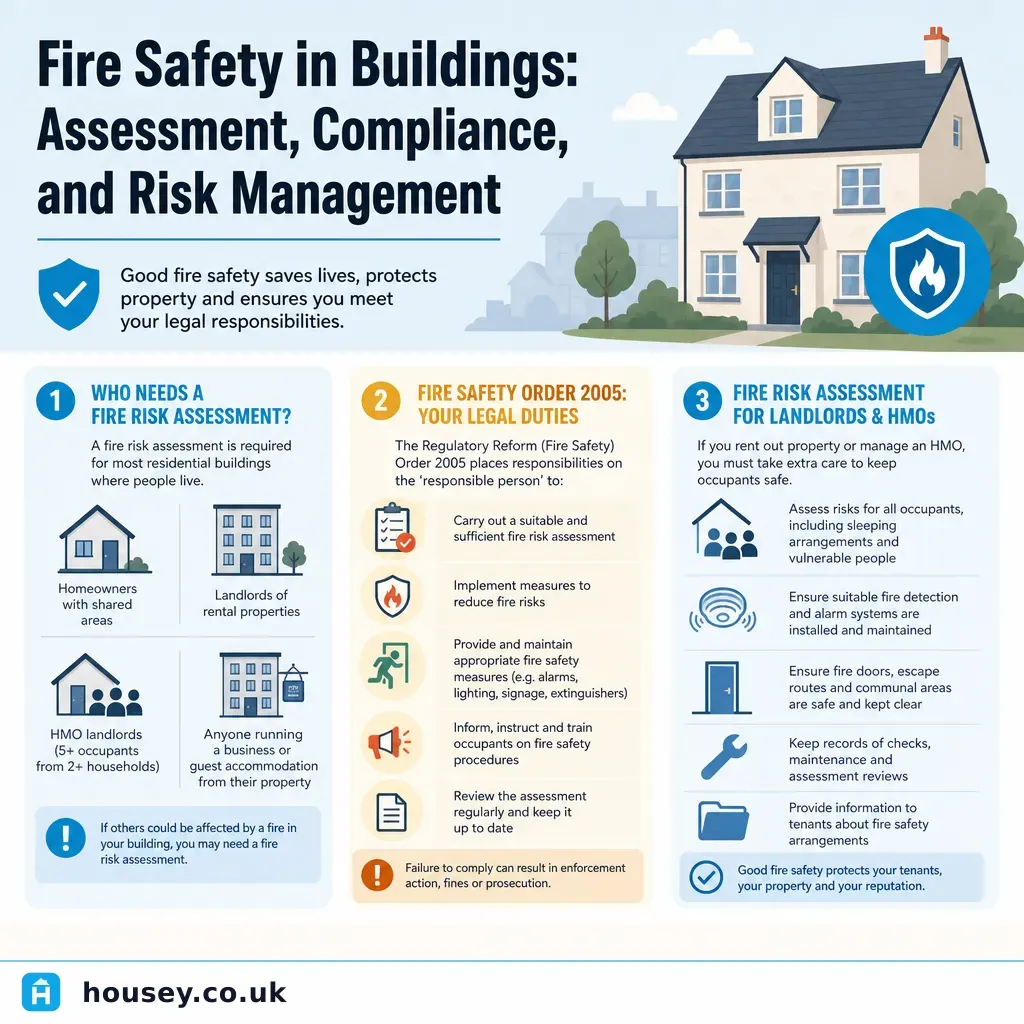
Fire Safety in Buildings: Assessment, Compliance, and Risk Management
The Regulatory Reform (Fire Safety) Order 2005 requires most non-domestic and multi-occupied residential buildings to have a written fire risk assessment carried out by a competent person. For HMOs and blocks of flats, this is a legal duty. Assessors should ideally hold BAFE SP205 third-party certification. Non-compliance can result in enforcement notices, prohibition of the building, or prosecution.
 Surveys & Inspections
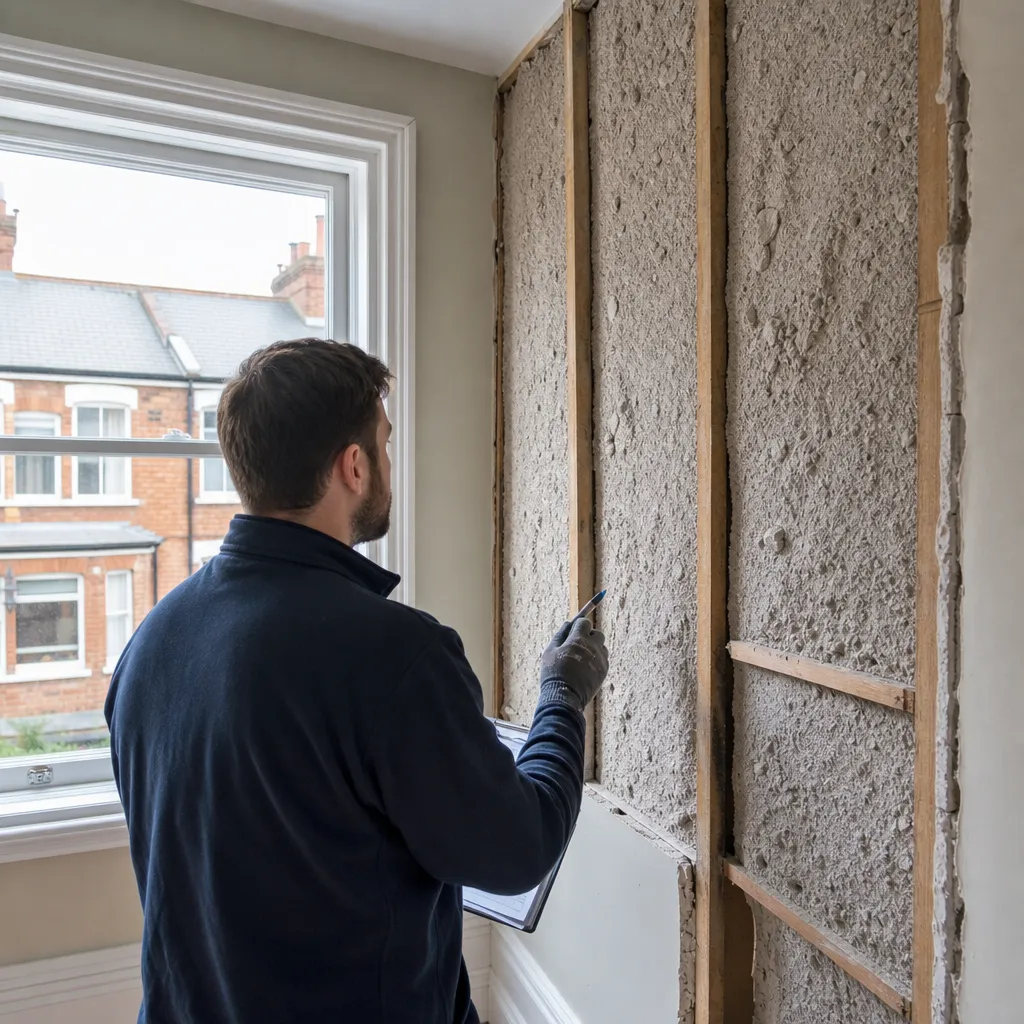
Identifying Asbestos in Drywall: Appearance and Safety Implications
You cannot identify asbestos in plasterboard or drywall compound by sight. UK properties built or refurbished before 2000 may contain asbestos in joint compounds, textured coatings such as Artex, and some board products. Only laboratory analysis by a UKAS-accredited professional can confirm its presence. Do not drill, sand, or disturb suspect materials until a survey has been carried out.
 Surveys & Inspections
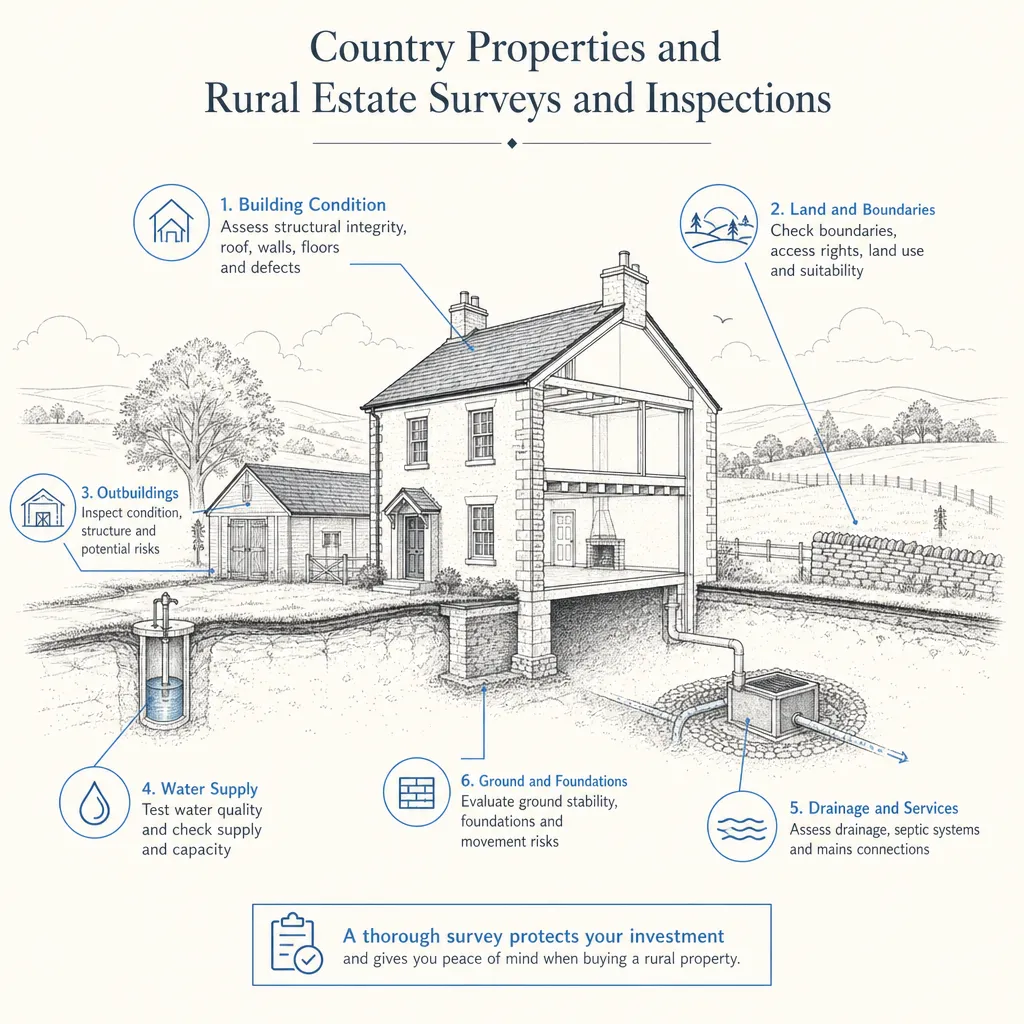
Country Properties and Rural Estate Surveys and Inspections
Country properties and rural estates typically need a broader range of surveys than urban homes, covering boundaries, trees, private drainage, private water supply, ecological constraints, and structural condition. A RICS Level 3 Building Survey is usually the starting point, but rural purchases often also need specialist reports from arboricultural, ecological, boundary, or drainage professionals.
 Surveys & Inspections
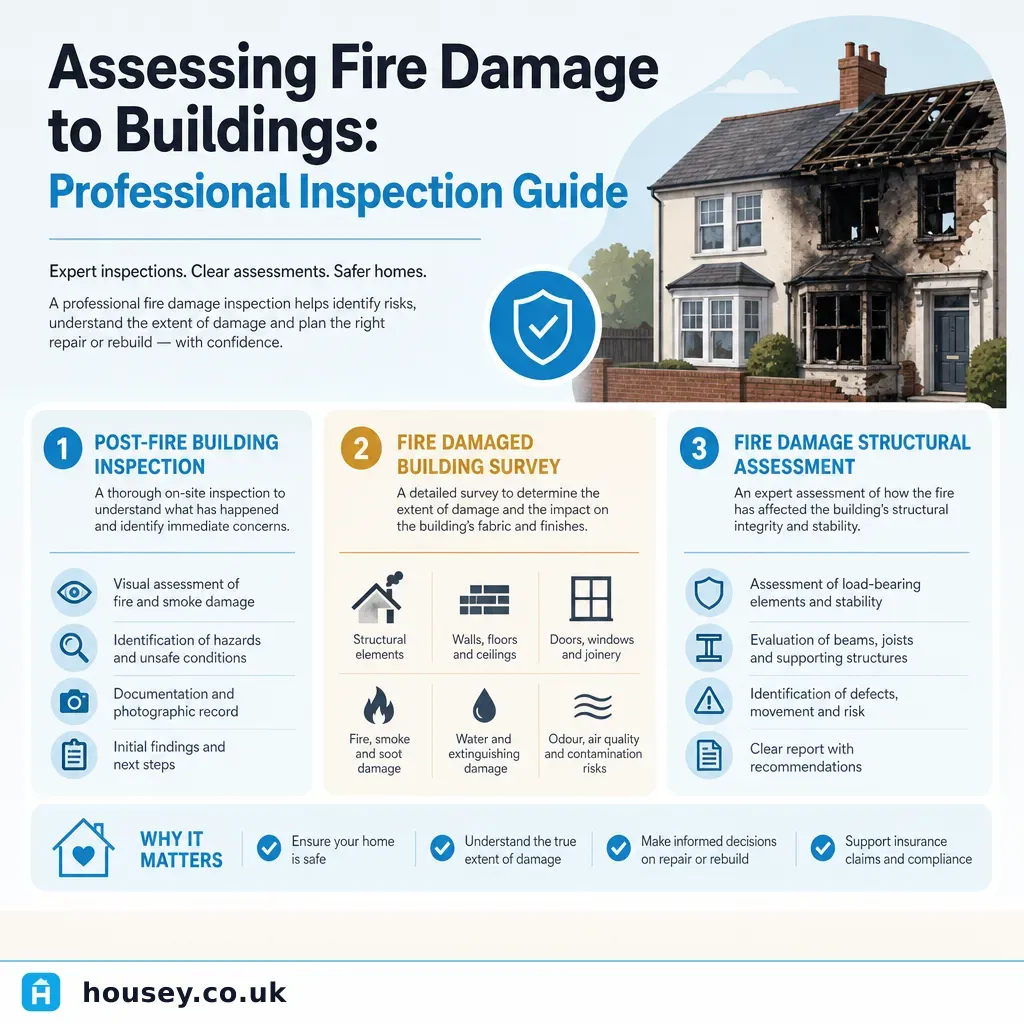
Assessing Fire Damage to Buildings: Professional Inspection Guide
After a fire, do not re-enter a building until the fire and rescue service has formally released the scene. A chartered structural engineer or building surveyor should then assess structural integrity before any repair work begins. Services — gas, electricity, and water — must be independently certified as safe. Smoke, soot, and fire suppression water cause damage well beyond what is visibly obvious.
 Surveys & Inspections
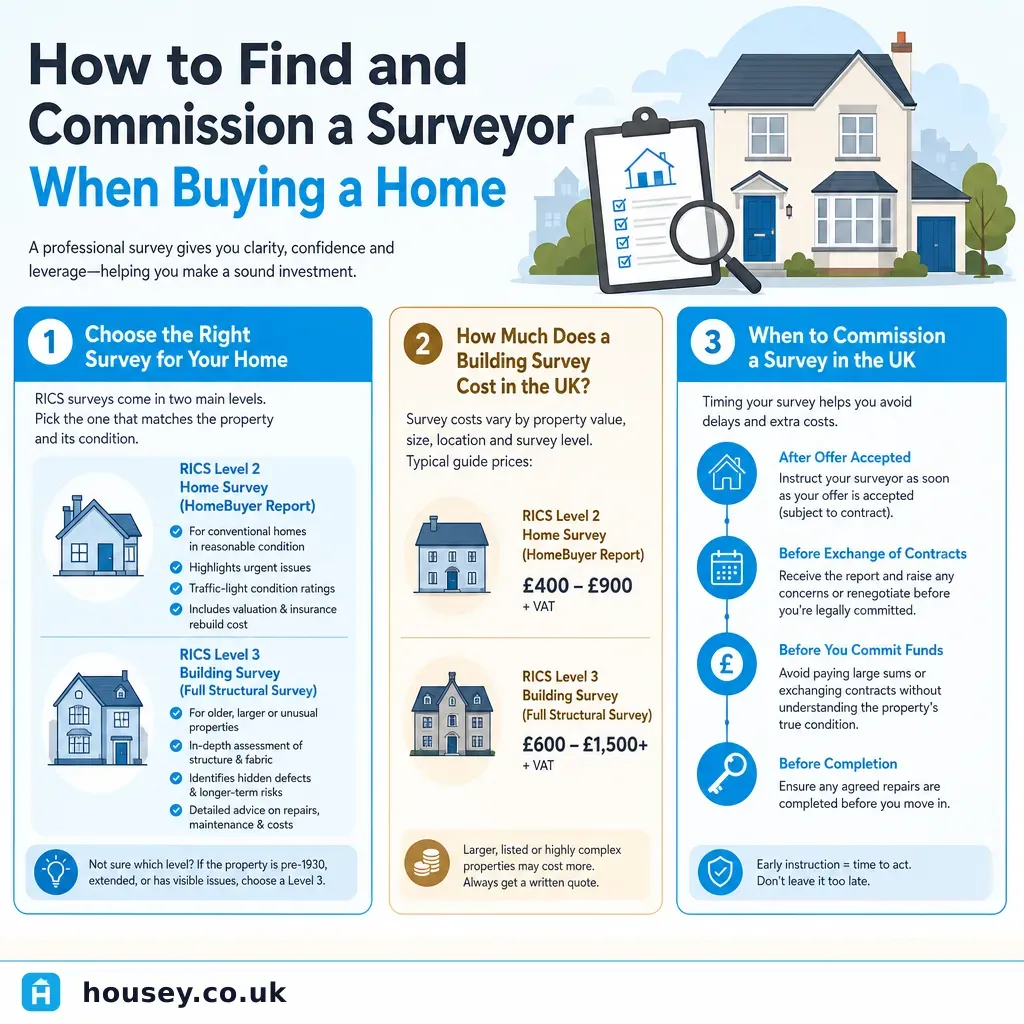
How to Find and Commission a Surveyor When Buying a Home
To commission a surveyor when buying a home, use the RICS Find a Surveyor tool to identify a regulated professional, choose between a RICS Level 2 Home Survey or Level 3 Building Survey based on the property's age and condition, and book as soon as your offer is accepted. Always appoint the surveyor directly rather than through the estate agent so that the duty of care runs to you.
 Surveys & Inspections
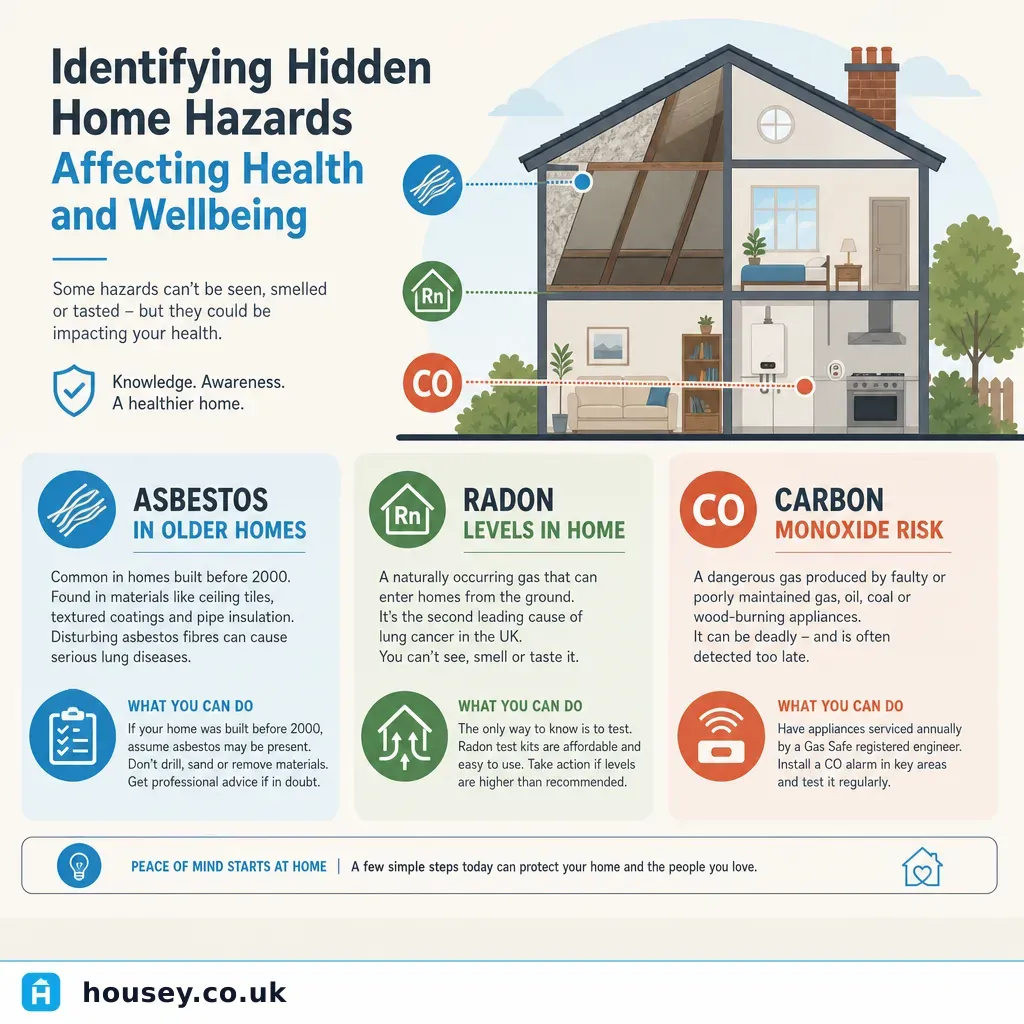
Identifying Hidden Home Hazards Affecting Health and Wellbeing
UK homes may contain multiple hidden health hazards including asbestos (in properties built before 2000), radon gas (particularly in South West England and the East Midlands), carbon monoxide from combustion appliances, lead paint in pre-1970 properties, and damp-related mould. Many hazards are undetectable without specialist testing. The right professional and type of survey depends on the hazard, the property's age, and whether renovation work is planned.
 Surveys & Inspections
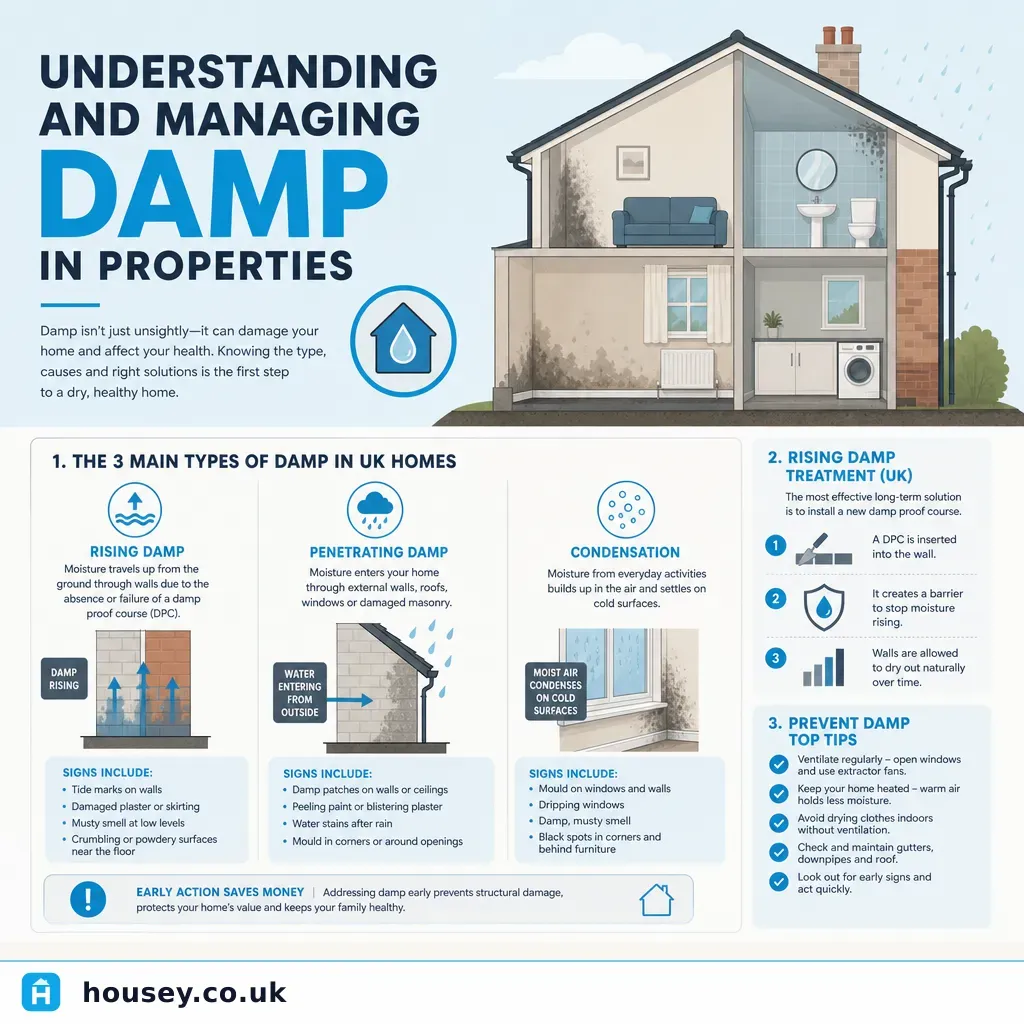
Understanding and Managing Damp in Properties
Damp in UK properties usually falls into three categories: rising damp, penetrating damp, and condensation. Each has distinct causes and treatments, from installing a new damp-proof course to improving ventilation or fixing external defects. A professional damp and timber survey identifies the root cause before any remedial work begins, preventing costly misdiagnosis and ineffective treatment.
 Surveys & Inspections
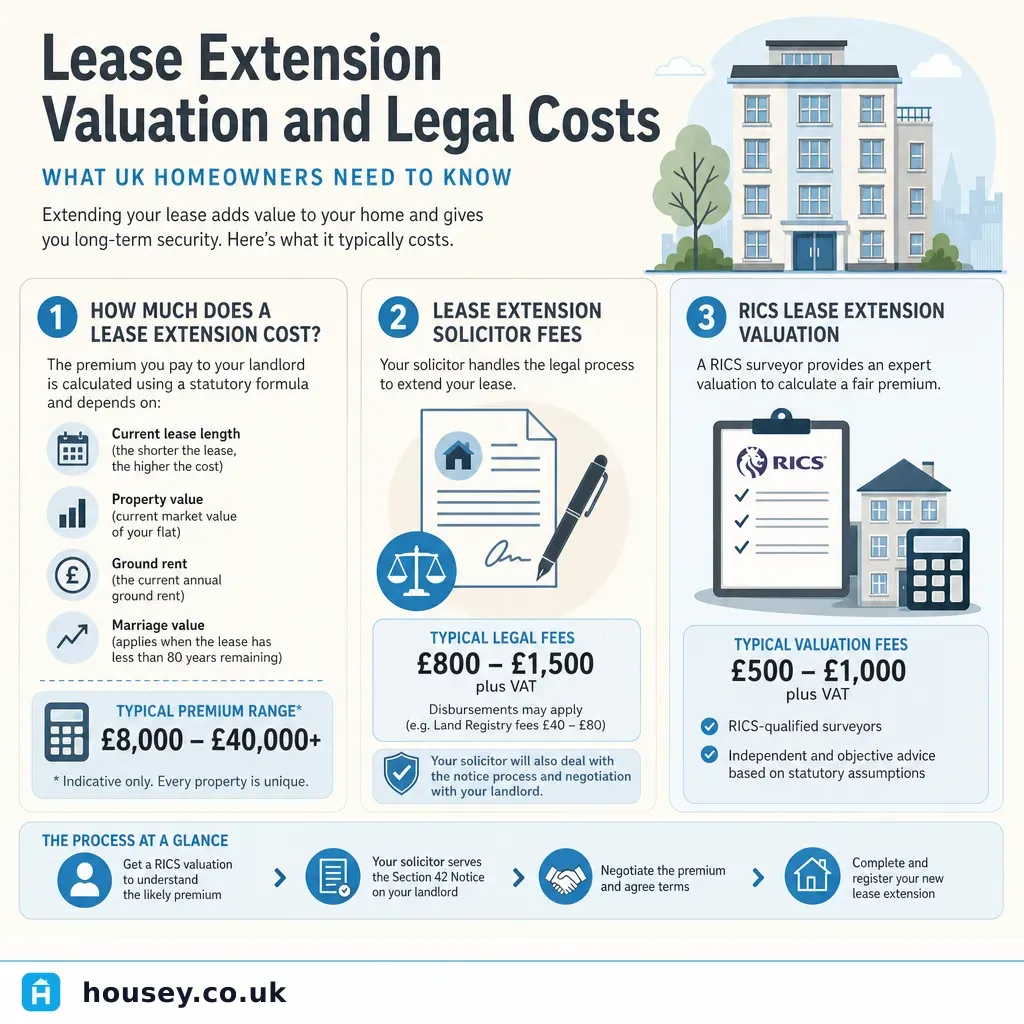
Lease Extension Valuation and Legal Costs
A statutory lease extension involves a premium paid to the freeholder plus your own surveyor and solicitor fees, and the freeholder's professional costs — all typically borne by the leaseholder. Total professional fees commonly range from £3,000 to £7,000, excluding the premium itself. Acting before the lease drops below 80 years usually reduces the premium significantly.
 Surveys & Inspections
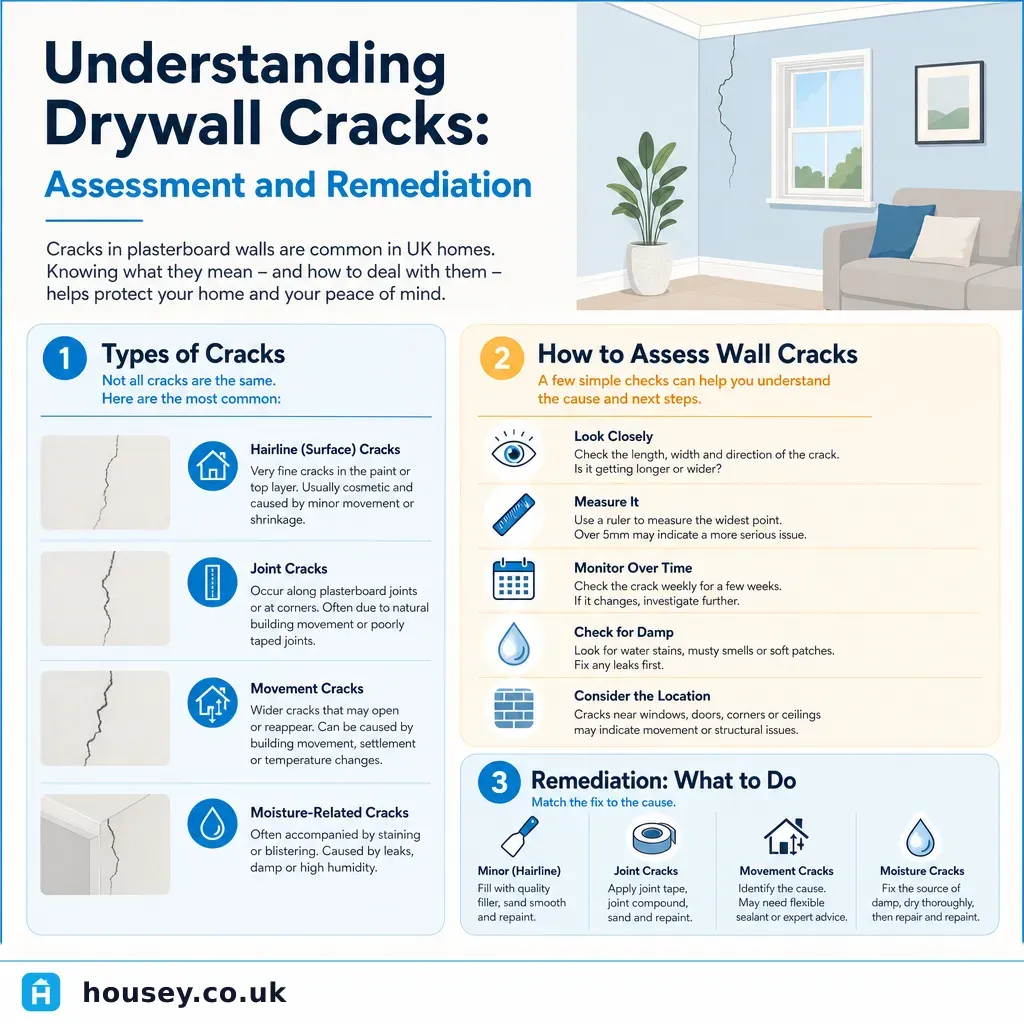
Understanding Drywall Cracks: Assessment and Remediation
Drywall cracks in UK homes range from minor cosmetic defects caused by thermal movement or poor workmanship to indicators of structural movement. Assessing severity involves measuring crack width, monitoring for extension, and checking for associated symptoms such as door binding or external cracking before deciding whether repair or professional assessment is needed.
 Surveys & Inspections
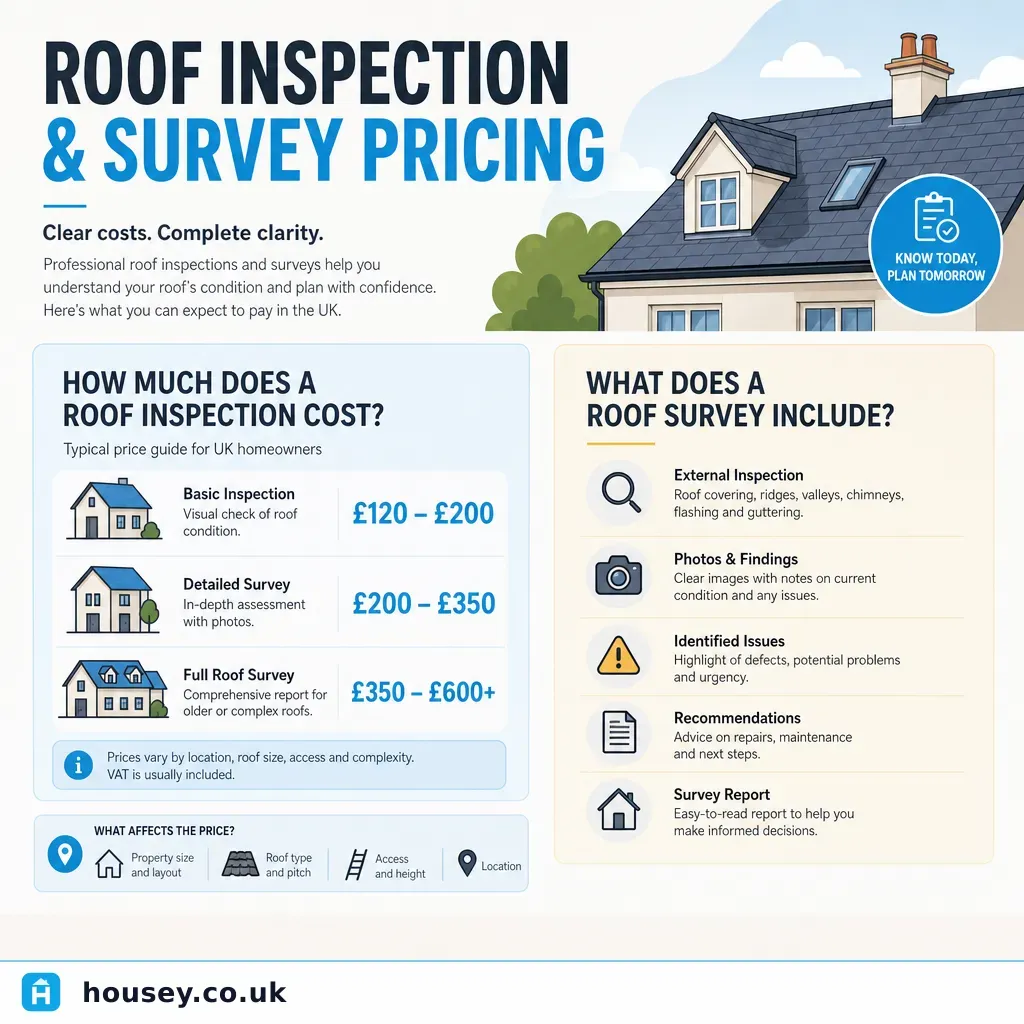
Roof Inspection and Survey Pricing
A professional roof inspection costs £150–£350 for a hands-on roofer survey, rising to £300–£800 for drone or thermal imaging surveys, and £600–£1,500 or more for a RICS Level 3 Building Survey. Cost depends on property size, roof type, access requirements, and the level of detail needed in the written report.
 Surveys & Inspections
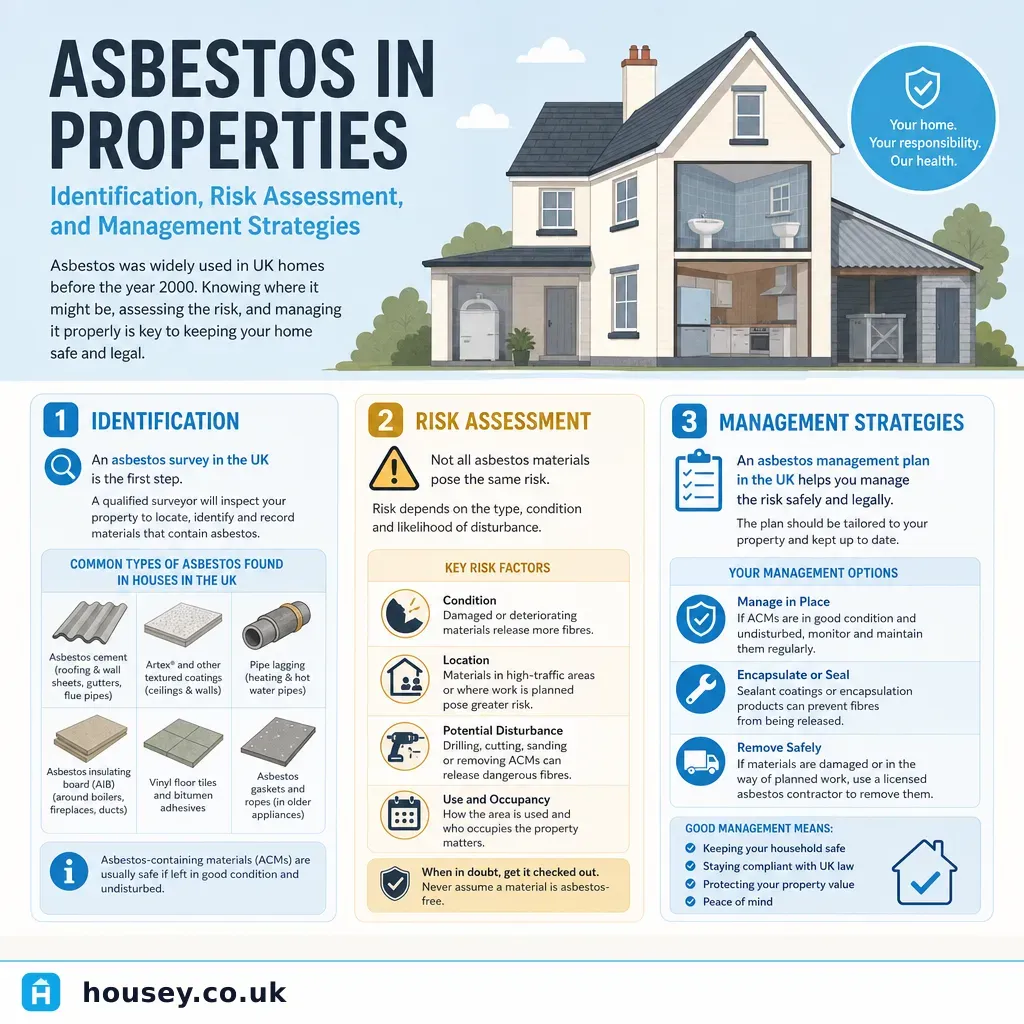
Asbestos in Properties: Identification, Risk Assessment, and Management Strategies
Asbestos-containing materials may be present in any UK property built before 2000. A UKAS-accredited asbestos survey is the only reliable way to confirm their presence, type, and condition. Undisturbed asbestos in good condition is often managed in place rather than removed. Disturbing suspected asbestos without a prior survey and professional oversight is unsafe and, in many premises, unlawful.