Knowledge Base
Property advice that actually helps
Researched, UK-specific guides for every stage of homeownership — from buying and surveys to retrofit, planning and major works.
 Surveys & Inspections
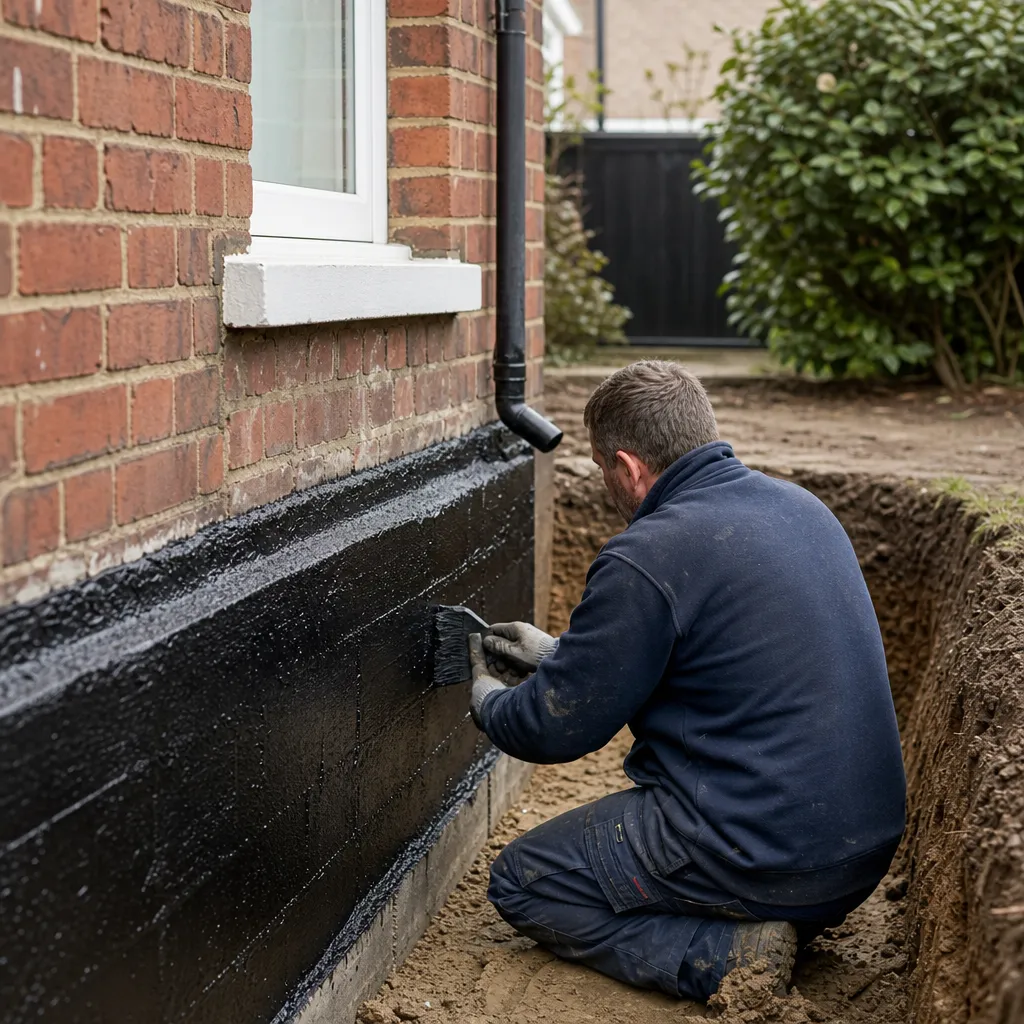
Foundation Waterproofing Fundamentals: Protecting Your Property
Foundation waterproofing prevents groundwater and soil moisture from penetrating below-ground structures. UK practice is guided by BS 8102, which defines three protection types: barrier membranes (Type A), waterproof concrete (Type B), and cavity drainage with a sump pump (Type C). The right system depends on your property's construction, ground conditions, and how the space will be used.
 Buying & Moving
Best Practices for Packing and Preparing Items for Relocation
Good packing starts four to six weeks before moving day, following a room-by-room sequence from loft and rarely used spaces first. Use double-walled boxes for heavy or fragile items, label every box on the top and at least two sides with the destination room, and pack an essentials box containing kettle, charger, medications, and key documents for your first night.
 Improvement & Build
Garden Waste Removal: Options and Service Costs
Garden waste disposal in the UK can be handled through council brown bin subscriptions (typically £35–£75/year), free Household Waste Recycling Centres, skip hire (£120–£350+), or man-and-van clearance services. The right choice depends on volume, material type, and budget. Landscapers and tree surgeons often include green waste removal as part of their quote.
 Improvement & Build
Drywall and Plasterboard Repair Services
Plasterboard repair in UK homes covers small holes from accidental impacts through to large sections of damaged boarding caused by water ingress or building work. A plasterer or dryliner can patch or replace affected areas, tape joints, and apply a skim coat ready for decoration. Most straightforward repairs can be completed within a day.
 Improvement & Build
Post-Disaster Property Recovery: Supporting Homeowners After Major Damage
After major property damage, the immediate priorities are safety assessment, insurer notification, and careful documentation before any work begins. A qualified structural surveyor or engineer should assess the property before re-entry or reinstatement. Work must be approved by the insurer and comply with current Building Regulations — not simply return the building to its pre-damage condition. A project manager can coordinate trades, CDM compliance, and insurer liaison.
 Energy & Retrofit
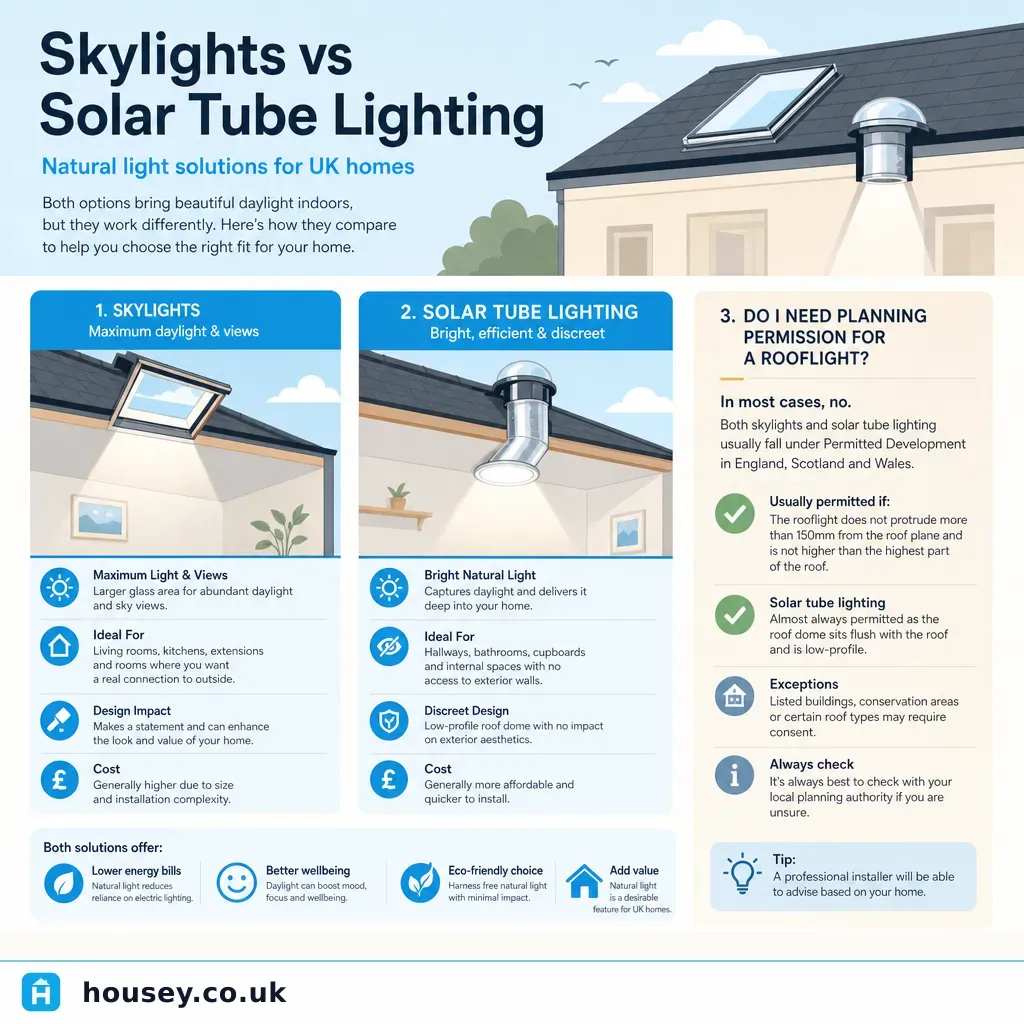
Comparing skylights with solar tube lighting systems for natural illumination
Skylights deliver more light and ventilation but involve more structural work, may need planning permission, and typically cost more. Solar tubes (tubular daylighting devices) are faster to install, work in rooms not directly below the roof, and often fall under permitted development, but are sealed units that provide no ventilation. The right choice depends on the room, roof type, and budget.
 Improvement & Build
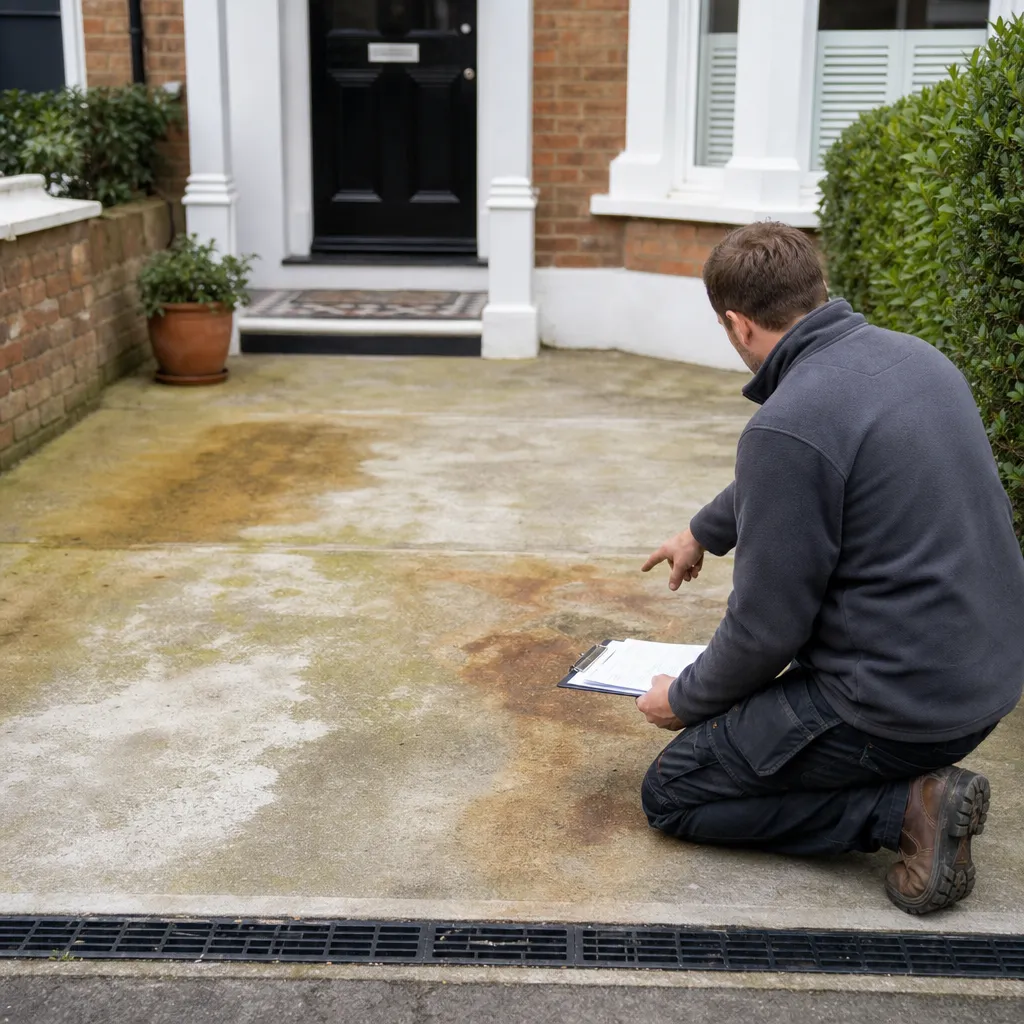
Surface Staining and Discolouration in Concrete Flatwork
Surface staining and discolouration in concrete flatwork has several distinct causes, each requiring a different remedy. Efflorescence — white powdery deposits — is common in new concrete and usually weathers away within two years. Oil and grease stains need alkaline degreaser or poultice treatment. Rust streaks often indicate corroding metal nearby. Matching the treatment to the stain type, then sealing the surface, gives the best long-term results.
 Improvement & Build
How Much Does It Cost to Install New Windows?
New window installation in the UK typically costs £300–£700 per uPVC double-glazed window (supply and fit), rising to £800–£2,500 for timber or sash windows. A typical 10-window home might cost £3,500–£7,000 for uPVC. Costs vary by frame material, glazing type, region, and whether scaffolding is needed.
 Improvement & Build
Common Window Problems and When to Call a Professional
The most common window problems in UK homes are condensation between panes (failed sealed unit), draughts from worn seals or warped frames, stiff or broken hardware, and rotting timber frames. Many issues can be resolved by a specialist without full replacement. A FENSA-registered installer or joinery specialist should assess any problem affecting security, water ingress, or structural integrity.
 Surveys & Inspections
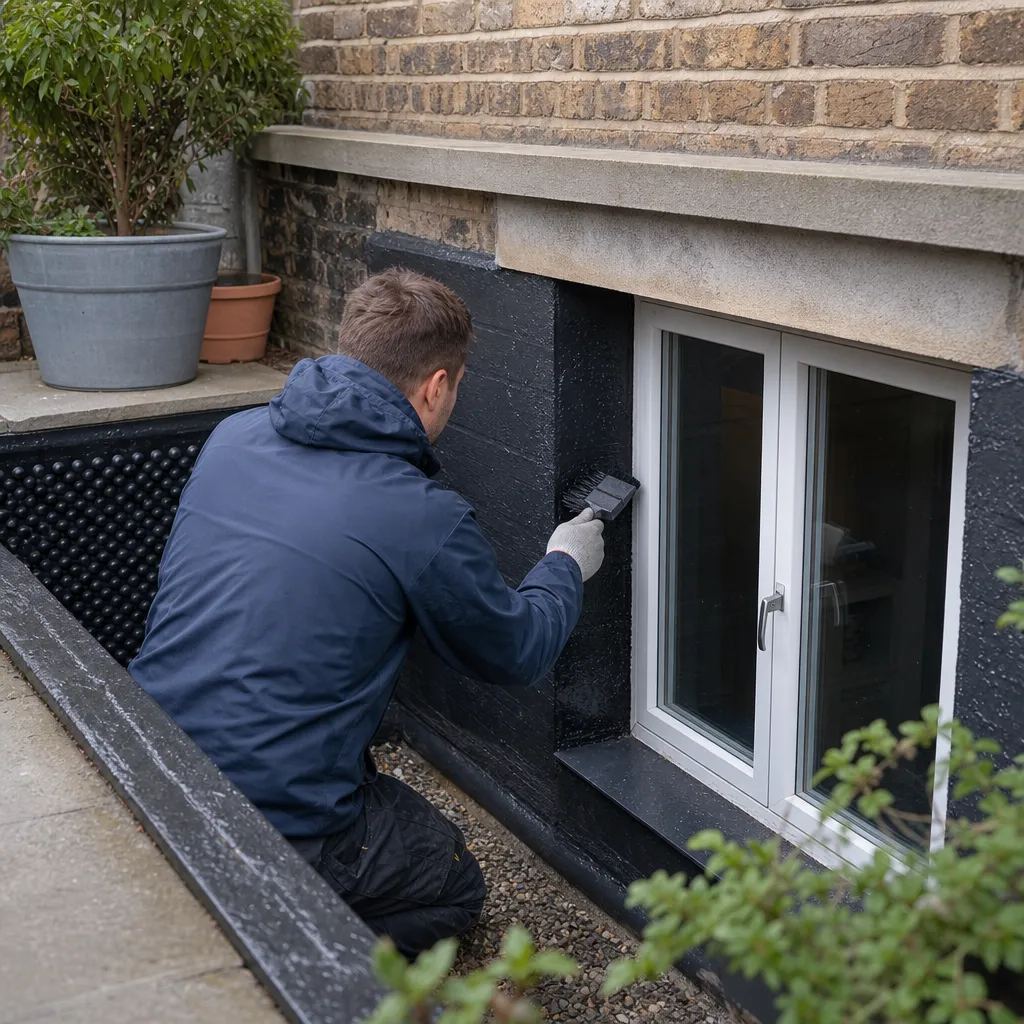
Securing Dry Basements: How to Prevent Moisture Intrusion
Preventing basement moisture starts with identifying the source: penetrating damp, rising damp, and condensation each need different fixes. Check external drainage and gutters first. A specialist survey should determine whether tanking, a cavity drain membrane, or improved ventilation is the right approach — misdiagnosis leads to repeated costly failures.
 Improvement & Build
Converting Space Into an Artist's Studio: Costs and Planning
Converting space into an artist's studio in the UK typically does not require planning permission for internal conversions or smaller garden outbuildings meeting permitted development conditions. Building regulations usually apply if structural or electrical work is involved. Costs range from a few thousand pounds for a room conversion to £40,000 or more for a custom garden studio, depending on scope.
 Improvement & Build
Preparing Your Garden with Mulch: Ground Preparation Guide
Mulching involves spreading a layer of organic or inorganic material over bare soil to retain moisture, suppress weeds, moderate soil temperature, and improve structure over time. In the UK, the best time to mulch is spring (March–May) or autumn (October–November), after clearing weeds and when soil is moist but not waterlogged. A 5–8 cm layer of suitable mulch suits most garden beds.