Knowledge Base
Property advice that actually helps
Researched, UK-specific guides for every stage of homeownership — from buying and surveys to retrofit, planning and major works.
 Improvement & Build
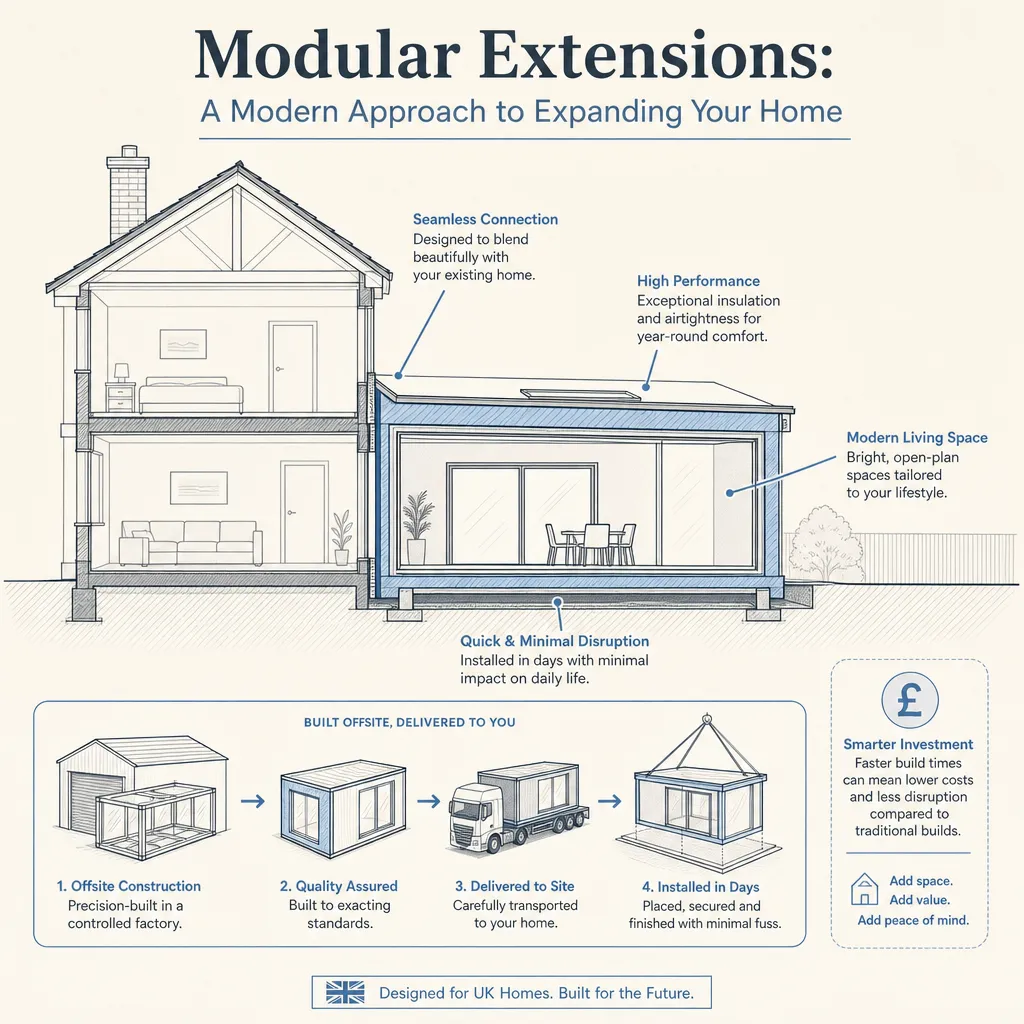
Modular Extensions: A Modern Approach to Expanding Your Home
A modular extension is manufactured offsite in a factory and craned into position on your property, typically cutting on-site build time to 2–6 weeks. Most still require planning permission and must meet the same Building Regulations as traditional extensions. They suit homeowners who want reduced site disruption and a more predictable programme, particularly for single-storey rear or side additions.
 Improvement & Build
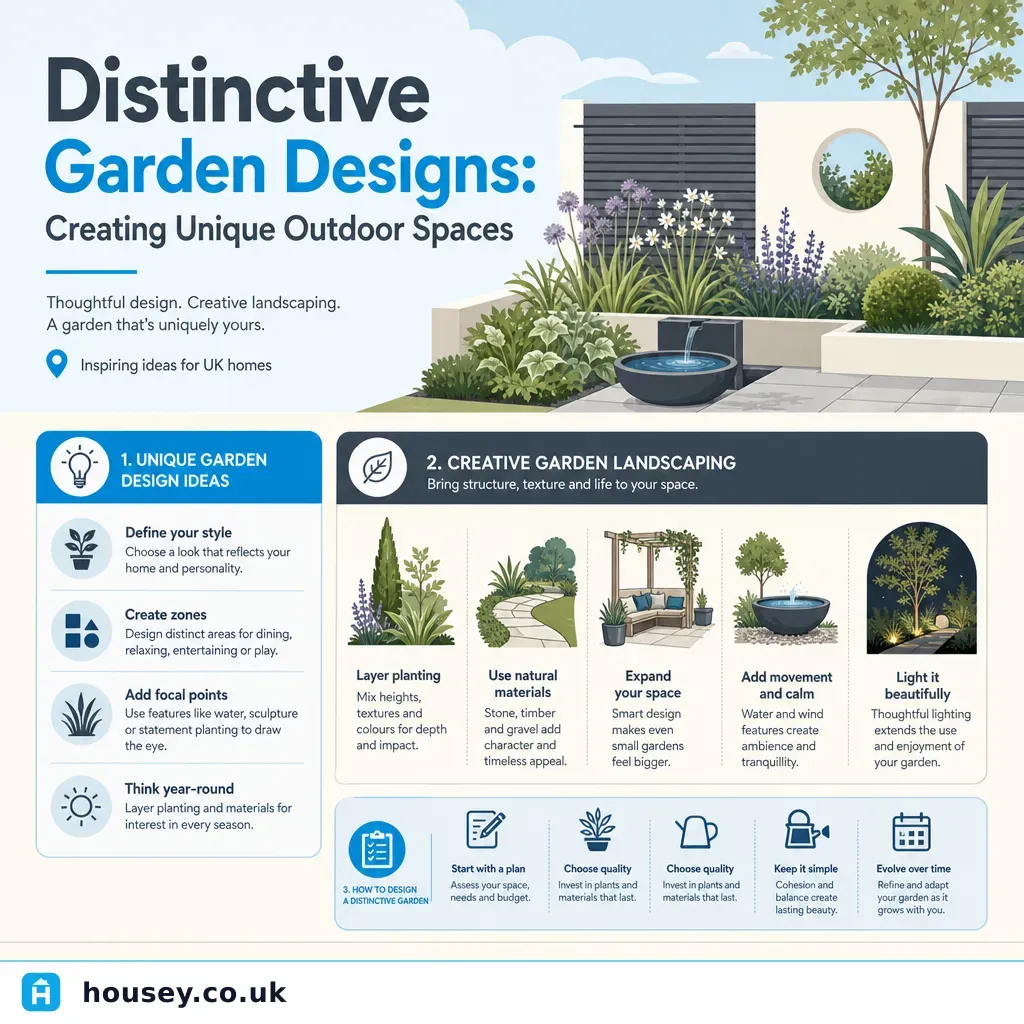
Distinctive Garden Designs: Creating Unique Outdoor Spaces
Creating a distinctive garden starts with a coherent design concept matched to your site's microclimate, soil type, and how you use the space. Choose materials and planting that work together, resolve practical elements like drainage and seating before planting begins, and check planning constraints — particularly for front gardens, trees with TPOs, and listed or conservation area properties.
 Energy & Retrofit
Are ground source heat pumps noisy? What homeowners should know
Ground source heat pumps are significantly quieter than air source heat pumps during normal operation as they have no outdoor fan unit. The indoor unit typically runs at 40–50 dB(A) — similar to a quiet conversation. The main noise impact comes during installation, when borehole drilling or trenching is required. Once correctly installed, a GSHP is unlikely to disturb neighbours or occupants.
 Planning & Pre-Build
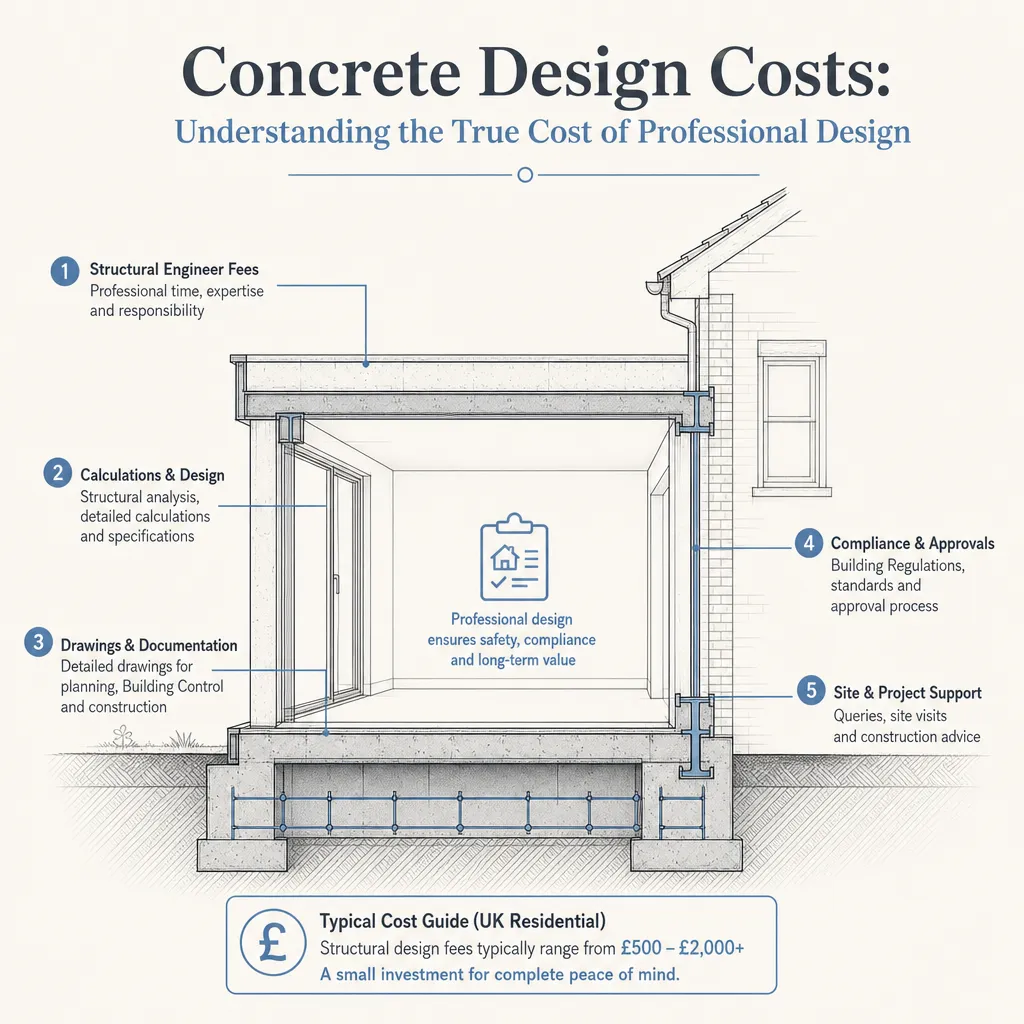
Concrete Design Costs: Understanding the True Cost of Professional Design
Professional design fees in the UK typically range from 5–12% of construction cost, or £500–£5,000+ as a fixed fee depending on scope and complexity. Structural engineers charge for calculations, drawings, and building control liaison. Understanding what each fee covers — and what triggers additional charges — helps you compare quotes accurately and avoid unexpected costs mid-project.
 Planning & Pre-Build
Movement Joints in Building Design: Planning for Structural Movement
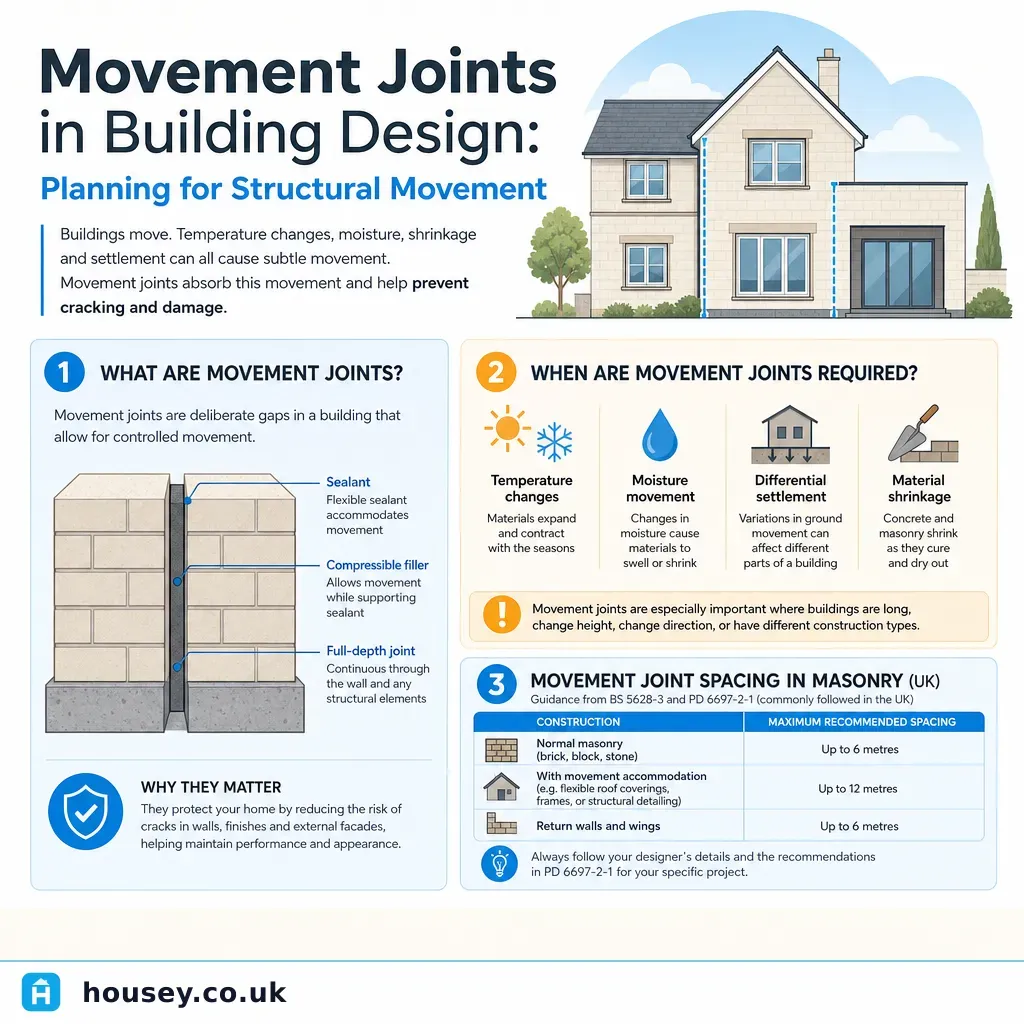
Movement joints are designed gaps built into structures to accommodate controlled movement from thermal expansion, moisture changes, and differential settlement, preventing uncontrolled cracking. BS EN 1996-2 and BRE guidance recommend vertical joints in clay brickwork at roughly 6–12 metre centres. Incorrectly placed or omitted movement joints are among the most common causes of diagonal cracking in UK masonry buildings.
 Improvement & Build
Managing Costs When Building a Swimming Pool: Hidden Expenses and Contingencies
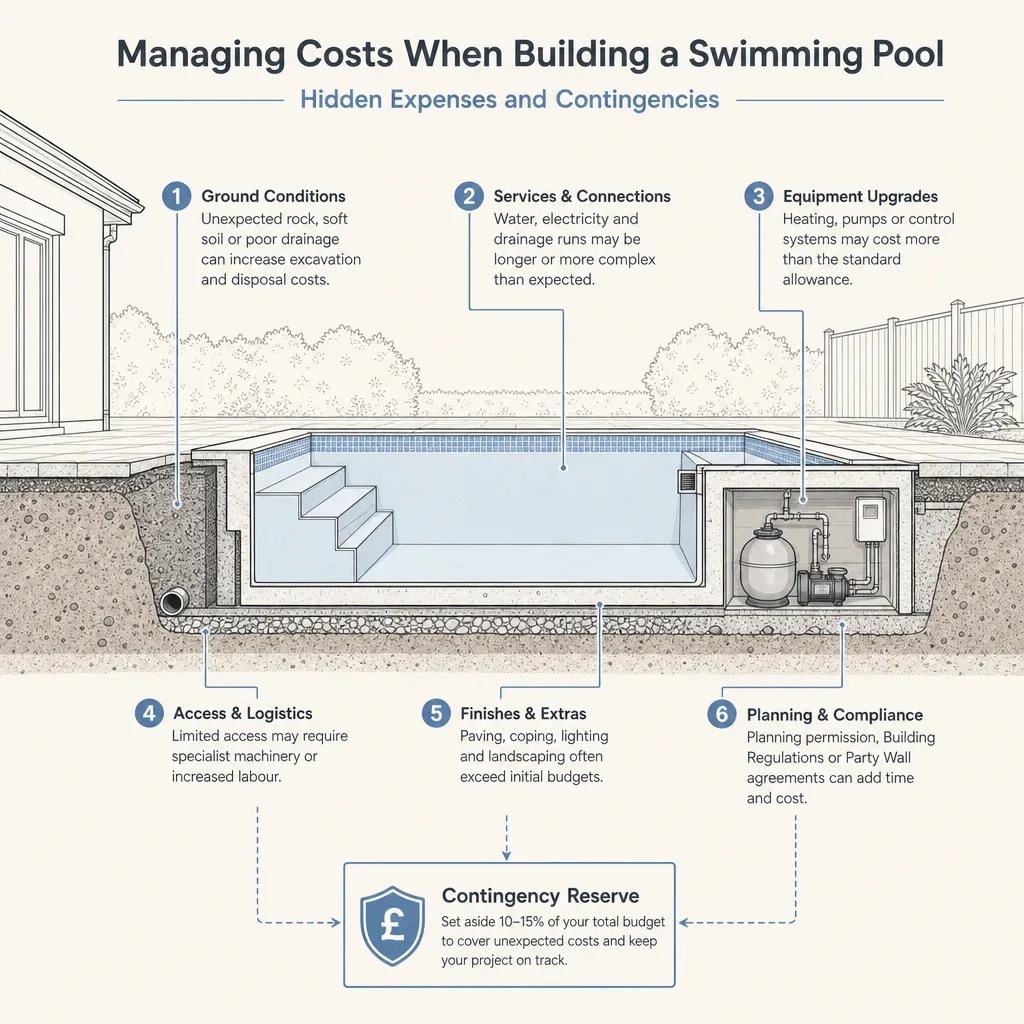
Swimming pool projects in the UK frequently exceed initial quotes due to groundwork surprises, hidden infrastructure costs, and items excluded from headline prices. Heating, pool cover, paving, drainage, and building control fees are commonly omitted from initial quotations. A 15% contingency is advisable, and any quote should be checked carefully for VAT inclusion and groundwork assumptions before you sign a contract.
 Improvement & Build
What to Budget for Installing a Walk-In Shower Enclosure
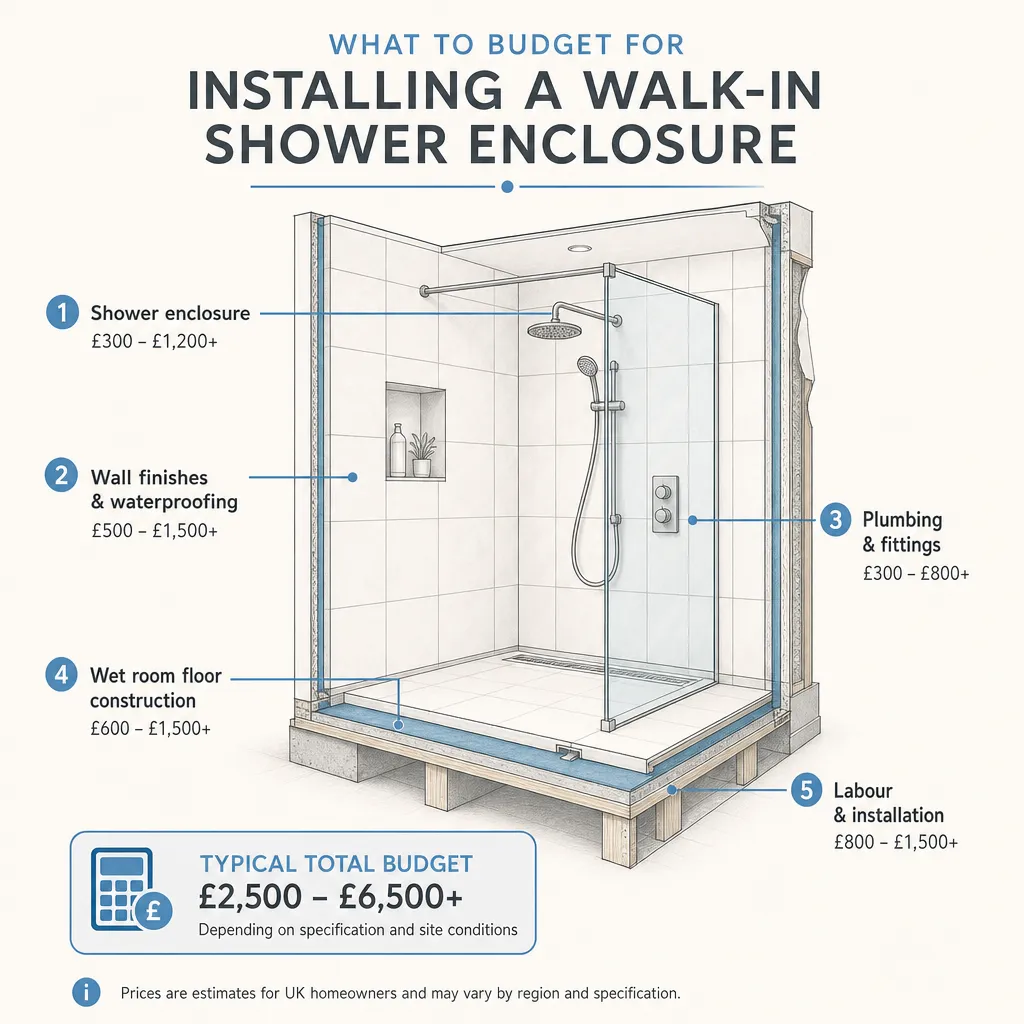
A walk-in shower enclosure with tray typically costs £1,500–£3,900 supplied and installed in the UK. A full wet room conversion — including floor tanking, tiling, and a level-access drain — usually ranges from £3,000 to £9,000. Costs are higher in London and vary with floor type, finish, and whether accessibility features are needed.
 Improvement & Build
Victorian-Style Windows: Authenticity, Restoration, and Modern Alternatives
Victorian windows are typically double-hung timber sashes, often with thin glazing bars. In unlisted properties outside a conservation area you can usually replace them under permitted development rules, but conservation areas and listed buildings require consent. Restoration of original timber sashes is often the most cost-effective long-term option and is usually preferred by conservation officers.
 Improvement & Build
Outdoor Living Spaces: Extending Your Home into the Garden
Outdoor living projects in the UK range from simple patios requiring no permissions to garden rooms and raised decking that may trigger planning or Building Regulations requirements. The main factors are structure height, proximity to boundaries, the proportion of garden covered by hard surfacing, and whether your property is listed or in a conservation area.
 Improvement & Build
Tree Trimming Safety: What Property Owners Should Know
Tree trimming is classified as high-risk by the HSE, with elevated rates of serious and fatal injury in the sector. Property owners have a duty of care under the Occupiers' Liability Act 1957 for trees on their land. Work at height above 2 m, chainsaw use, and any activity near overhead power lines should always be carried out by a qualified arborist, not attempted as DIY.
 Improvement & Build
Building Brick Steps: Construction and Installation
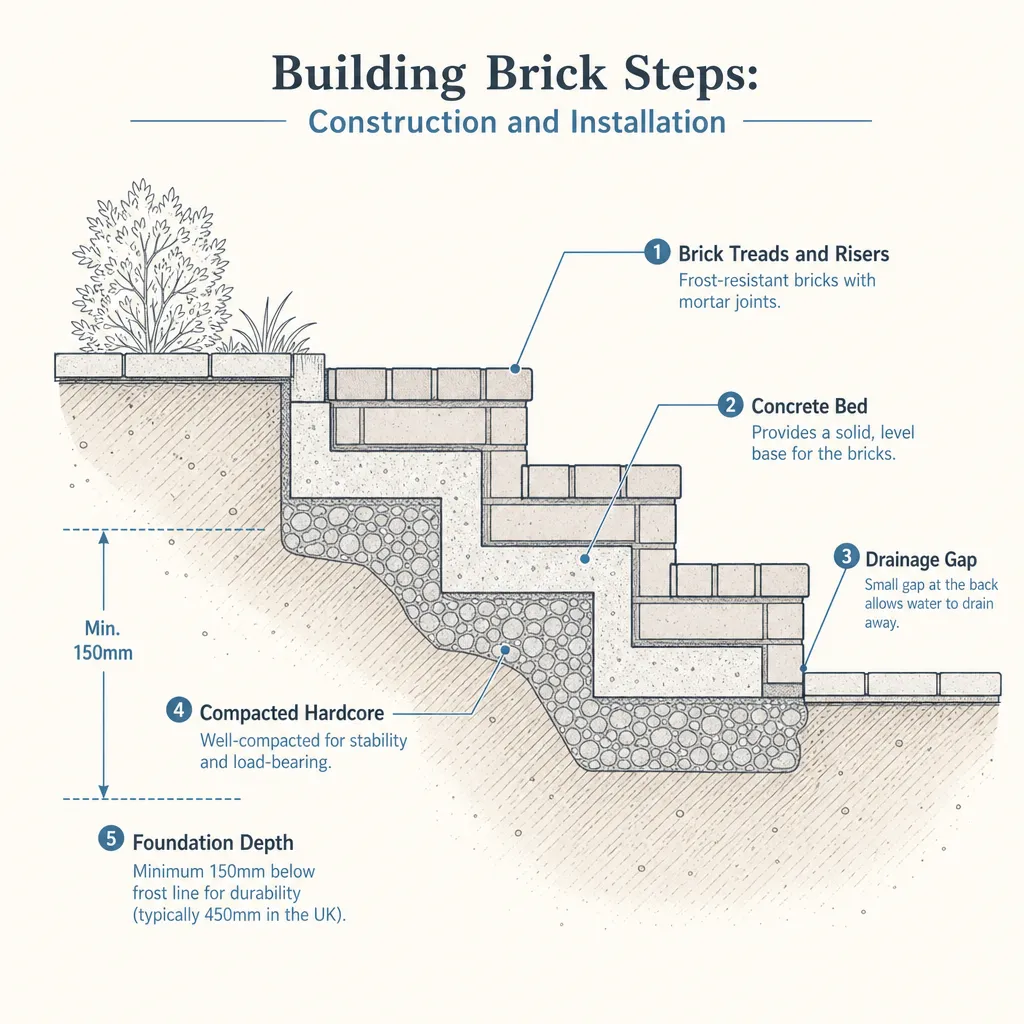
Brick garden steps require a concrete foundation, frost-resistant engineering bricks (Class B or FL), and correct proportions — typically a 150–175 mm riser and at least 300 mm going. Most domestic garden steps do not need planning permission or building regulations approval. A competent groundworker can complete a standard project; professional input is advisable where retaining walls or slope instability are involved.
 Surveys & Inspections
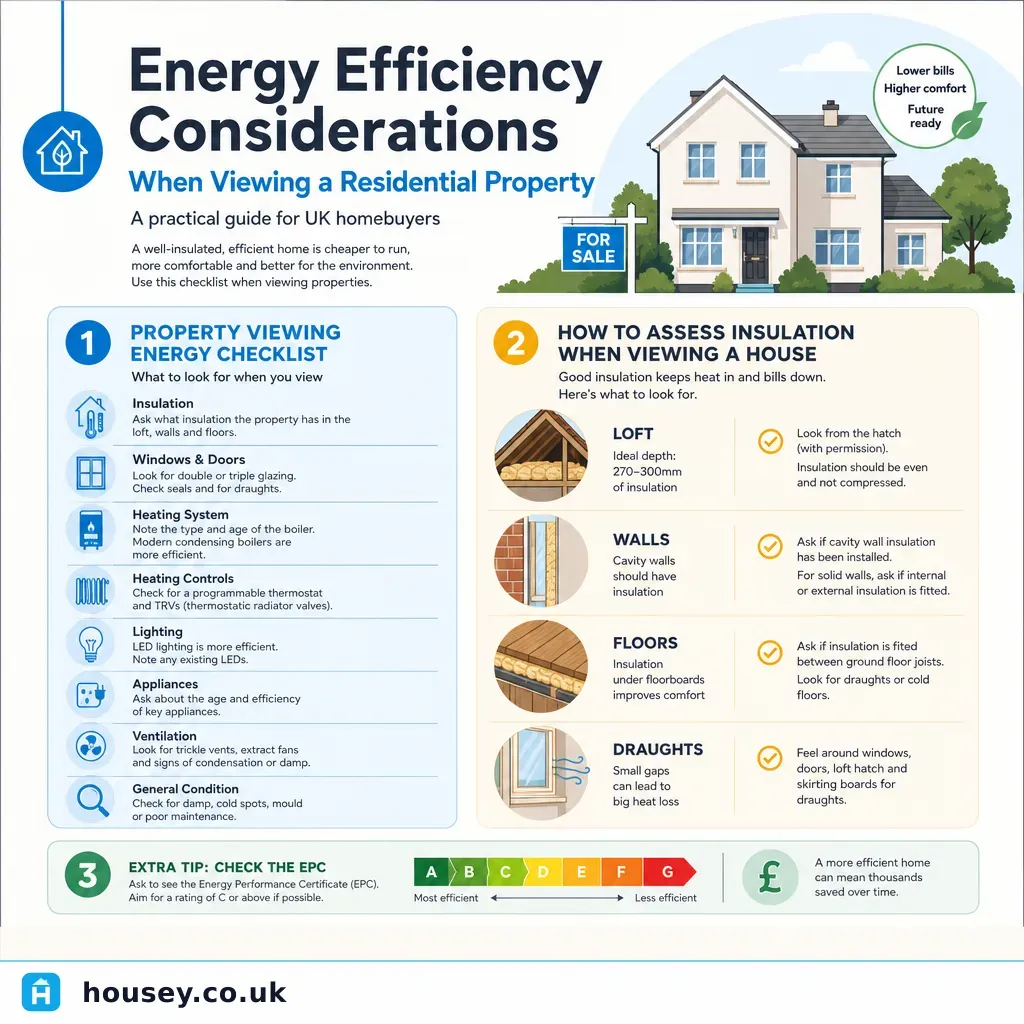
Energy Efficiency Considerations When Viewing a Residential Property
When viewing a residential property, check the EPC rating (aim for band C or above), look for double or triple glazing, assess visible insulation in the loft hatch, check the boiler age and heating controls, and note any signs of damp or cold bridging. These observations help you estimate future running costs before making an offer.