Knowledge Base
Property advice that actually helps
Researched, UK-specific guides for every stage of homeownership — from buying and surveys to retrofit, planning and major works.
 Improvement & Build
Mulching Guide for Gardens and Landscaping
Mulching means applying a layer of material over bare soil to retain moisture, suppress weeds, and moderate soil temperature. In UK gardens, the RHS recommends a 5–7.5 cm layer applied in spring or autumn, leaving a gap of several centimetres around plant stems and tree trunks to prevent rot and pest damage.
 Improvement & Build
Home Renovation Priorities: Where to Spend for the Best Return in the UK
UK professionals consistently prioritise structural and damp repairs first, followed by energy efficiency improvements that raise EPC ratings, then proportionate kitchen and bathroom updates. The best return on any renovation depends on your local market ceiling and property condition — spending beyond what your street can support leads to overcapitalisation and financial loss.
 Improvement & Build
Home Improvement Spending Growth and Service Provider Opportunities
UK home improvement spending has remained elevated as subdued housing transactions push homeowners to invest in their existing properties. Extensions, roofing, and window replacements are among the most common projects — each with distinct regulatory requirements including building regulations, planning permission or permitted development, and competent person scheme certifications for specific trades.
 Improvement & Build
Professional Landscape Design for Garden Boundaries and Edging
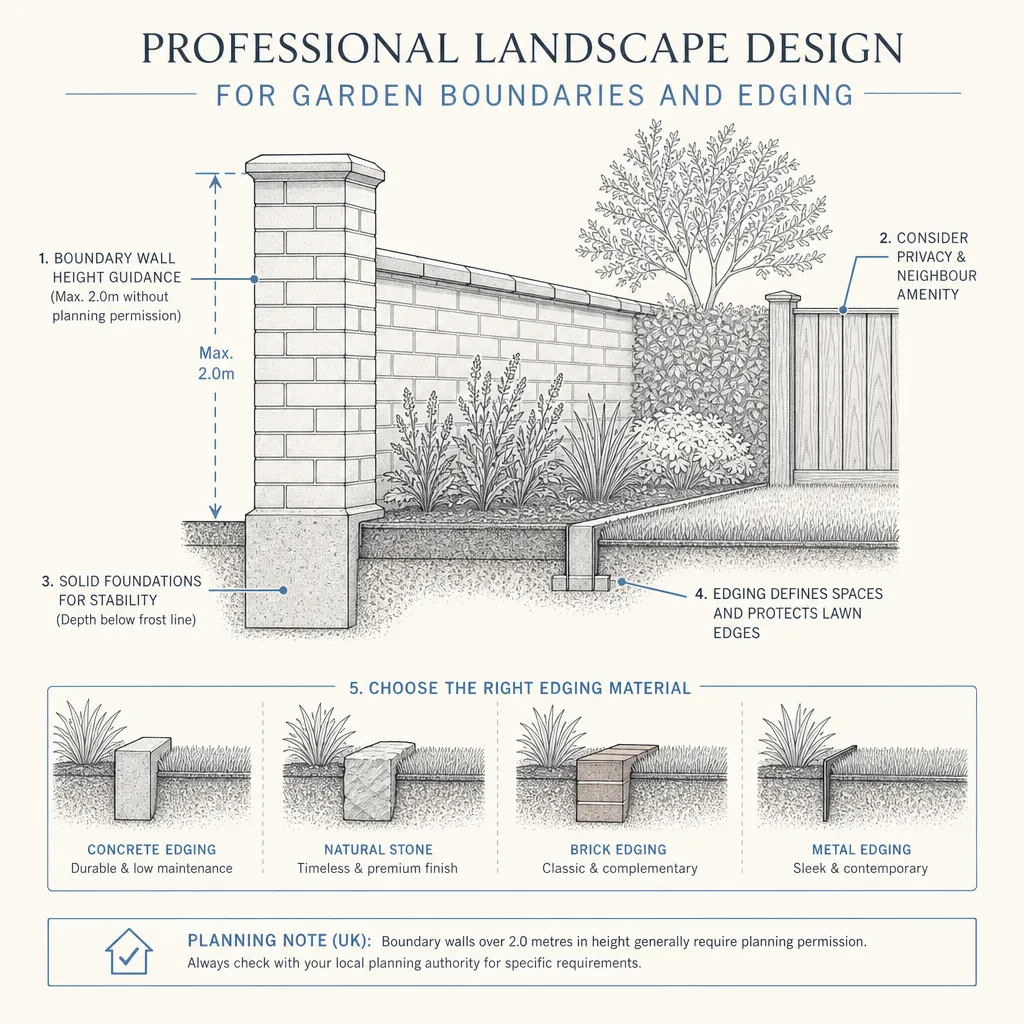
Garden boundaries and edging define structure, manage drainage, and mark the legal interface between properties. A landscaper or garden designer handles material selection, groundwork preparation, and any planning requirements. Steel and aluminium edging lasts longest; timber and plastic suit lower budgets. Always check whether boundary walls above 1 metre near a highway need planning permission before work starts.
 Improvement & Build
Finding Window Replacement Work: A Guide to Lead Generation
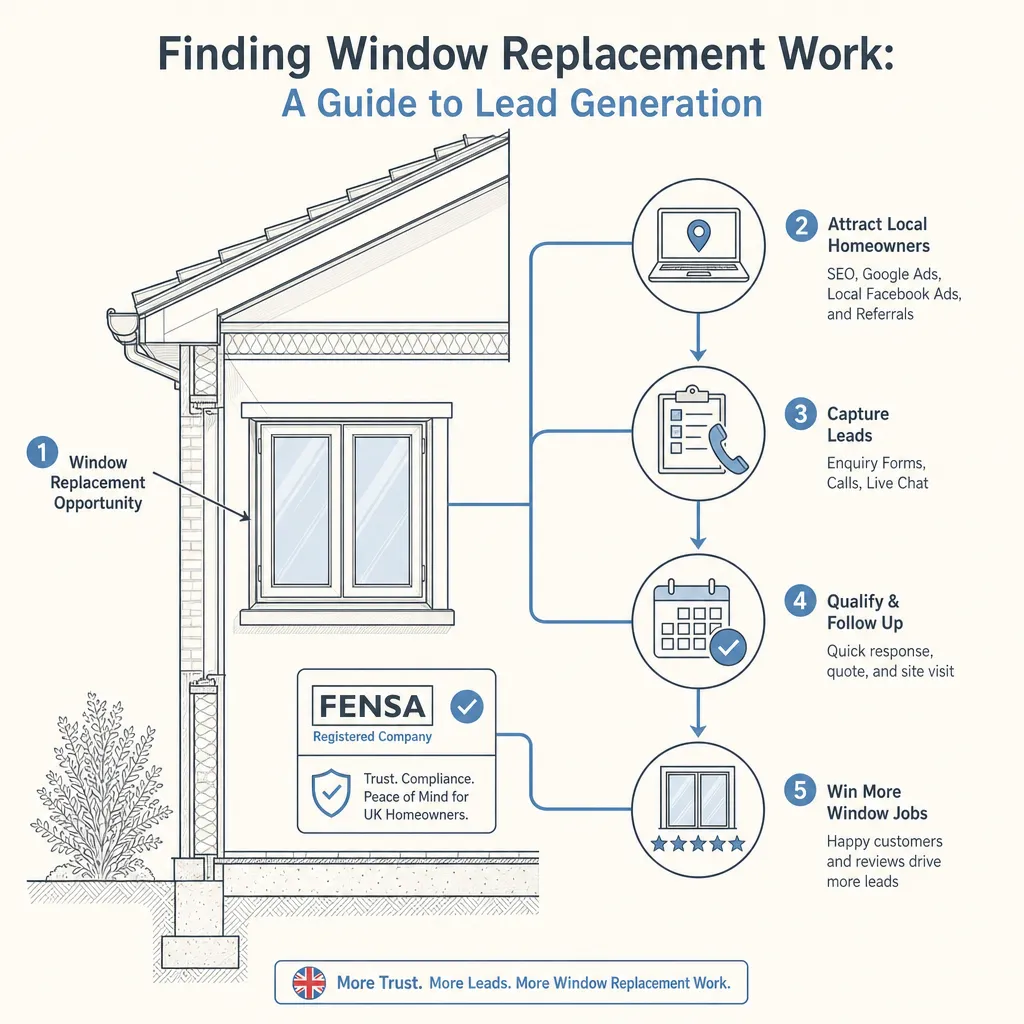
Window installation businesses in the UK find new work through a combination of pay-per-lead platforms, Google Business Profile, Checkatrade and Which? Trusted Traders profiles, and referrals from past customers. FENSA or CERTASS membership opens access to most platforms and acts as a trust signal for homeowners; responding within an hour of receiving an online lead significantly increases the chance of winning the job.
 Planning & Pre-Build
Architectural Services for Home Design and Development
Architects and architectural technologists handle design, planning applications, and building regulations drawings for UK home projects. Architects are ARB-registered and suited to complex or new-build work; architectural technologists (MCIAT) specialise in technical design and are often more cost-effective for extensions and conversions. The right choice depends on project complexity, planning sensitivity, and budget.
 Buying & Moving
Identifying Yourself in Property Purchase: ID Requirements and Verification
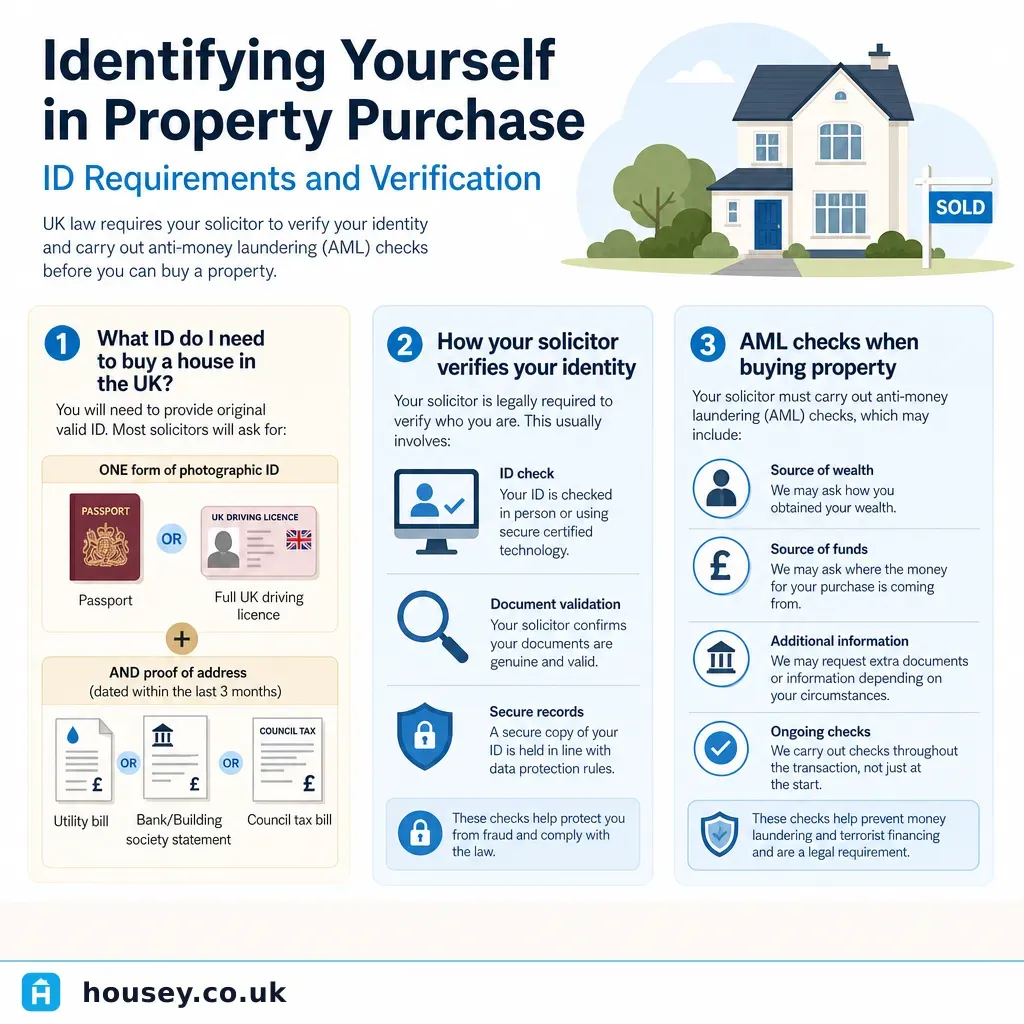
Before a conveyancing solicitor can act on a property purchase, they must verify your identity under the Money Laundering Regulations 2017. You will typically need photographic ID such as a passport or photocard driving licence, plus proof of address issued within the last three months. Source of funds evidence — bank statements, gift letters, or a mortgage offer — is also required.
 Planning & Pre-Build
Well Water Loss: Troubleshooting and System Recovery
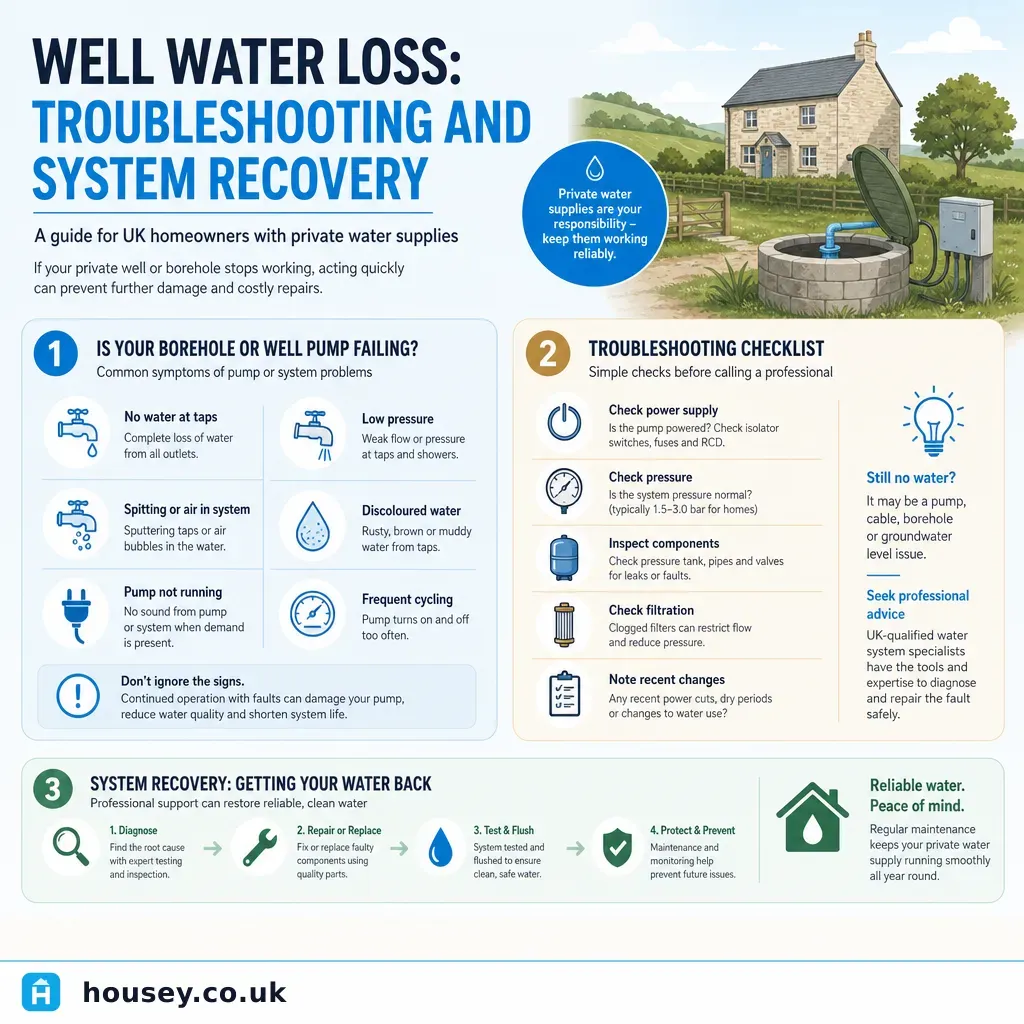
Well water loss in UK properties is most commonly caused by a tripped circuit breaker, pump failure, or a faulty pressure switch — not an empty aquifer. Check the fuse board first, then inspect the pressure tank. If electrical checks reveal no fault, a specialist borehole contractor should extract and inspect the pump. Aquifer drawdown is a less common cause, typically linked to prolonged dry weather.
 Buying & Moving
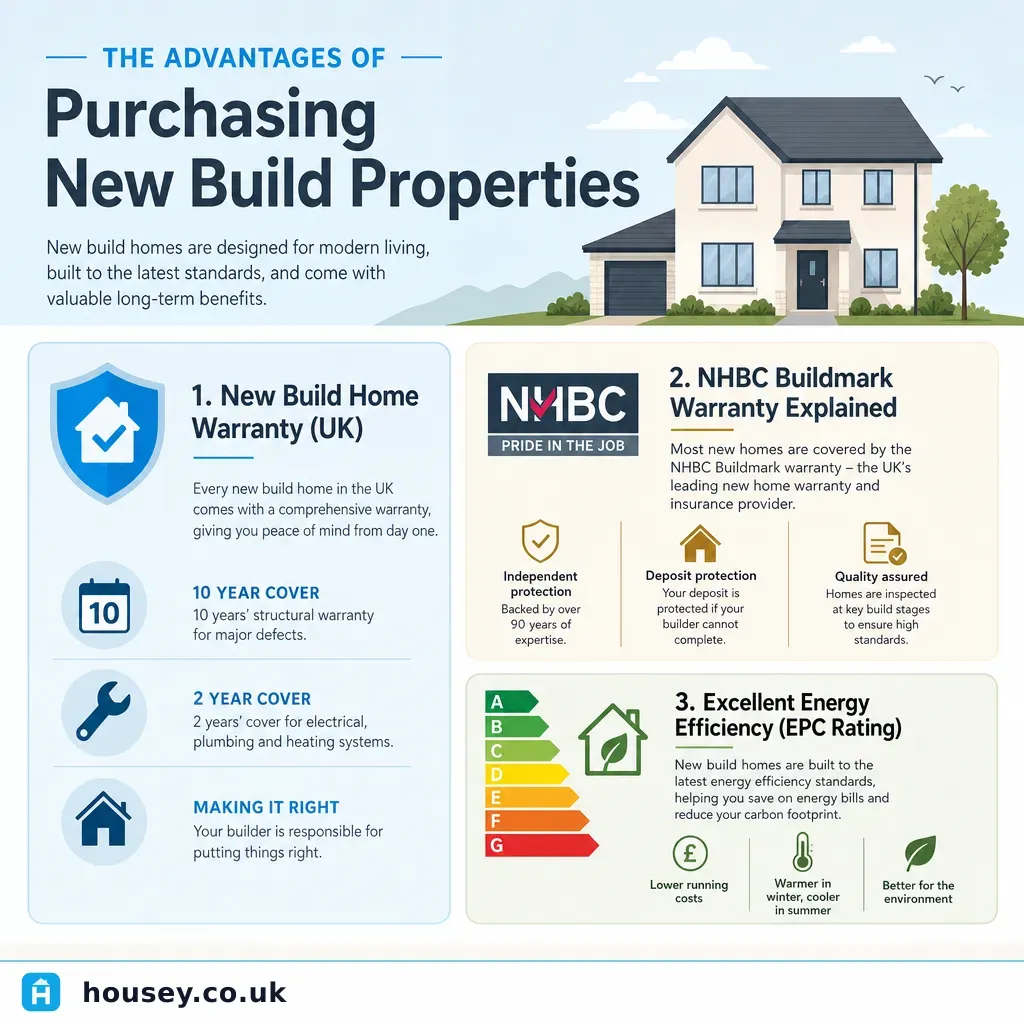
The Advantages of Purchasing New Build Properties
New build homes in the UK typically come with a 10-year NHBC Buildmark warranty, covering defects for the first 2 years and structural issues for years 3–10. They must meet current Building Regulations including Part L, and usually achieve EPC A or B ratings. A professional snagging survey before legal completion is strongly advisable to document defects while the developer remains liable.
 Improvement & Build
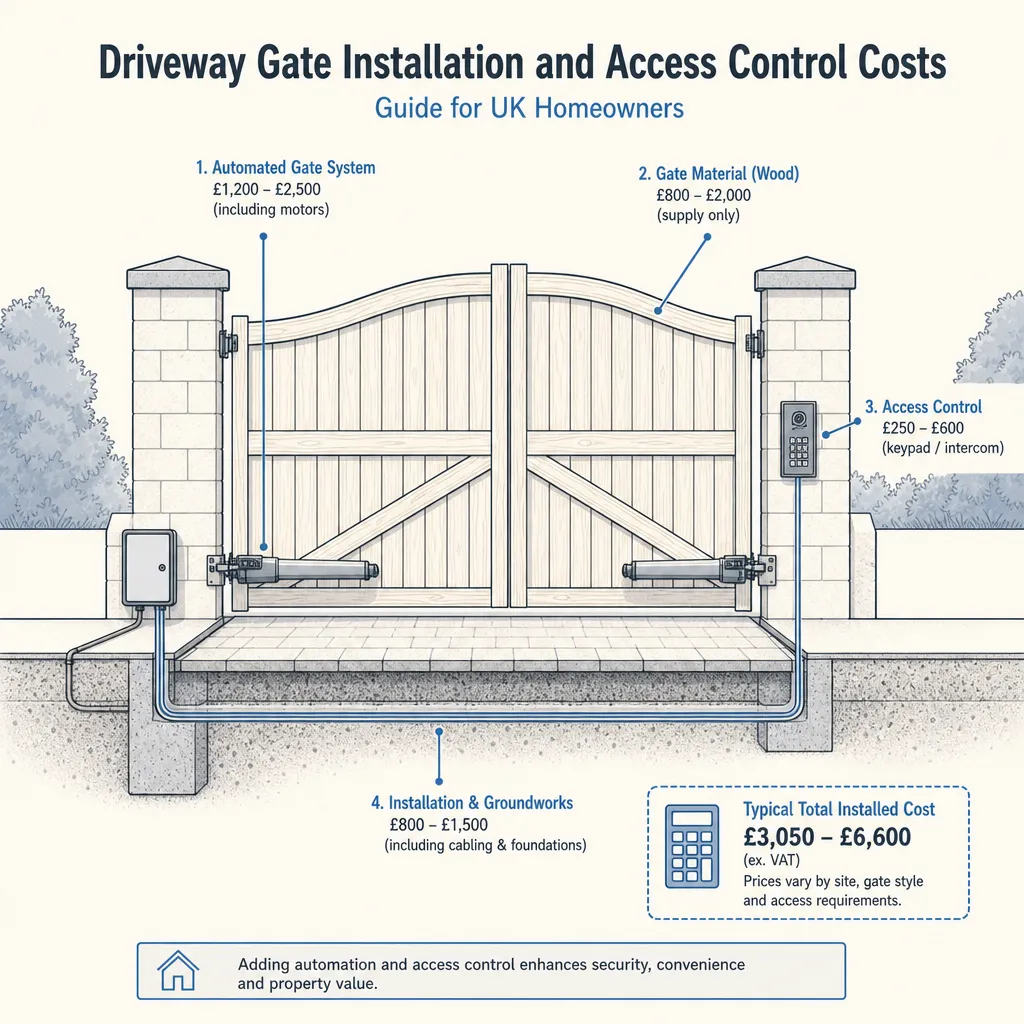
Driveway Gate Installation and Access Control Costs
Manual driveway gates cost roughly £500–£3,000 installed, while automated electric gates typically run £2,500–£10,000 depending on gate type, material, and access control features. Automated gates must meet BS EN 12453 safety standards and require a Part P-registered electrician for the mains connection. Gates over 1m high adjacent to a highway usually need planning permission.
 Improvement & Build
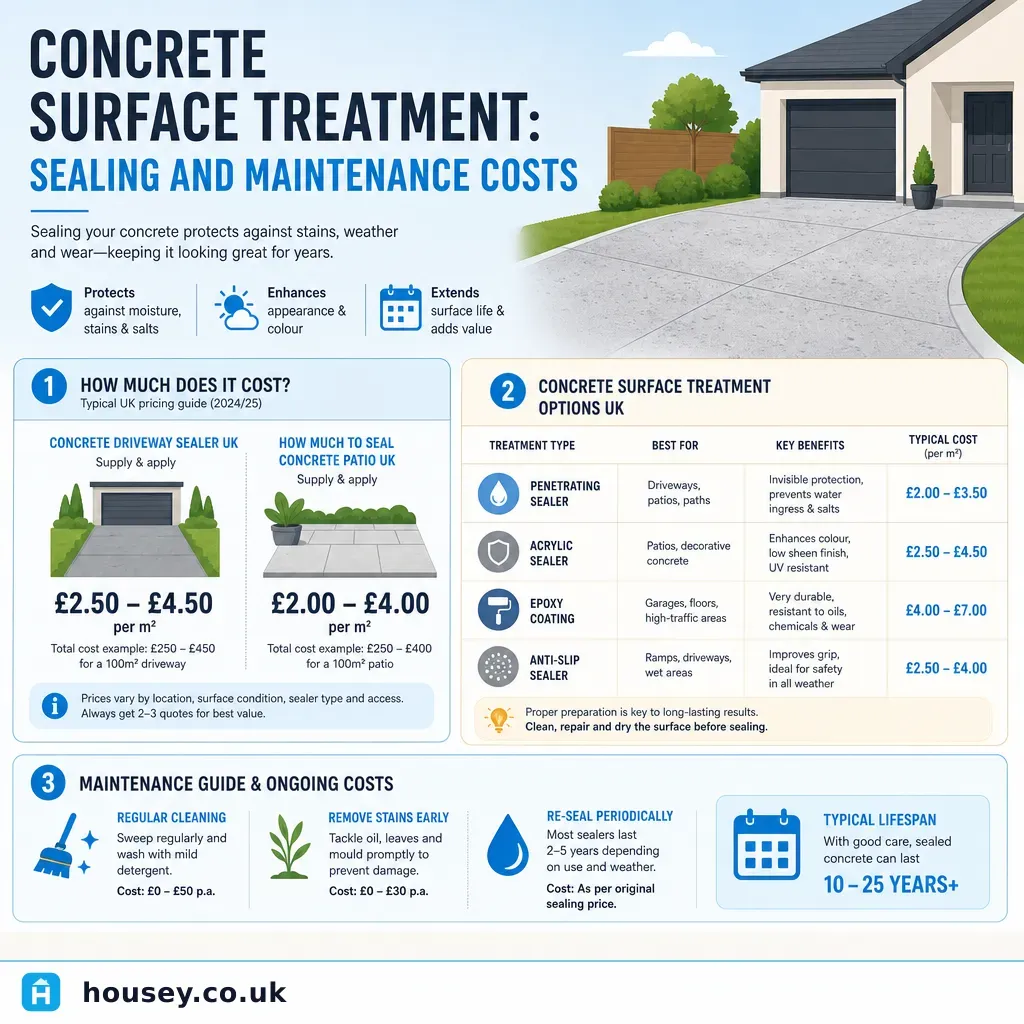
Concrete Surface Treatment: Sealing and Maintenance Costs
Sealing concrete in the UK typically costs £300–£1,200 for a standard driveway or patio, depending on area size and sealer type. Penetrating silane/siloxane sealers offer the best freeze-thaw resistance without changing appearance; acrylic surface sealers add a gloss finish but need re-applying every two to four years. Both options significantly extend surface life against UK weather conditions.
 Energy & Retrofit
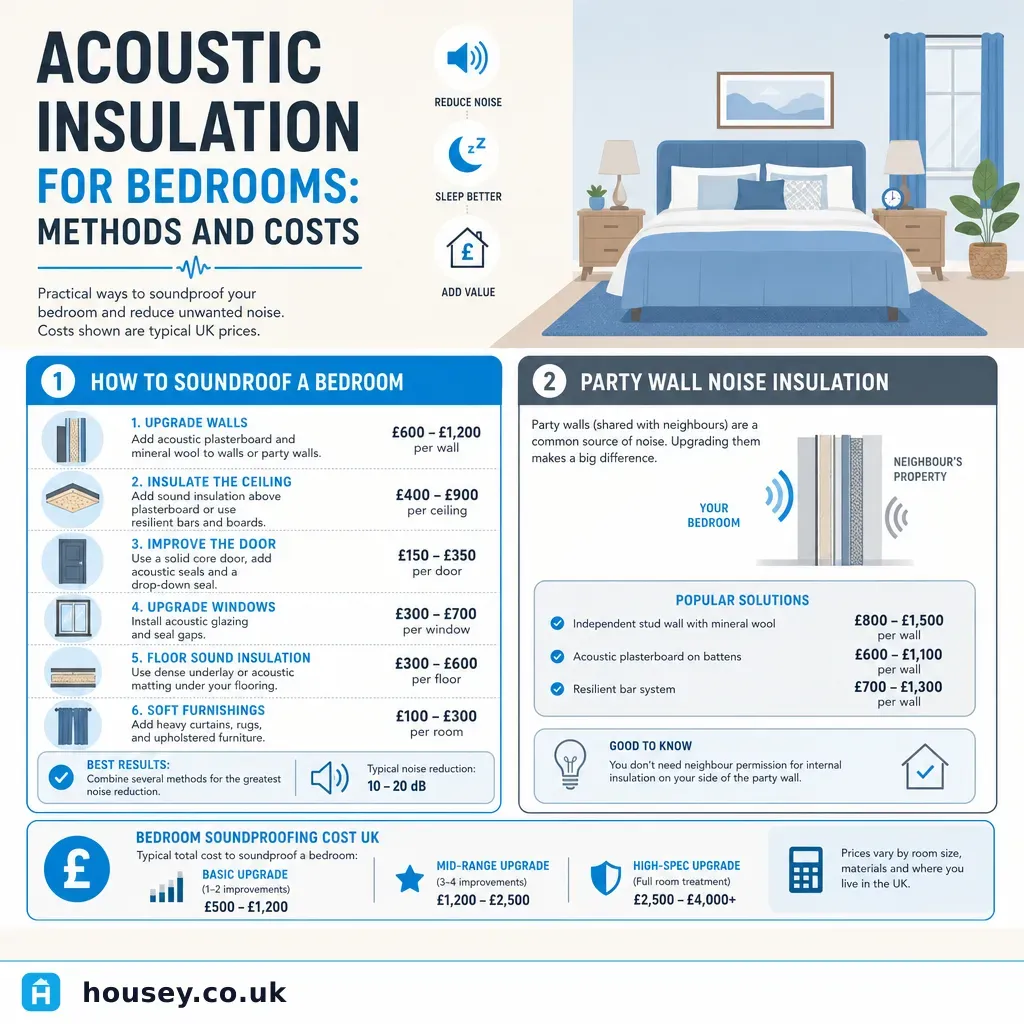
Acoustic Insulation For Bedrooms: Methods And Costs
Acoustic insulation for bedrooms works by adding mass, decoupling surfaces from the structure, or combining both. The right method depends on whether the noise is airborne, impact, or flanking. Independent stud wall linings give the best performance for party-wall noise; floating floors or resilient ceiling systems address impact noise. Expect to spend £800–£2,500 per treated element.