Knowledge Base
Property advice that actually helps
Researched, UK-specific guides for every stage of homeownership — from buying and surveys to retrofit, planning and major works.
 Buying & Moving
Planning Residential Moves Around Holiday Periods
Moving house around a UK bank holiday means CHAPS bank transfers cannot operate on the holiday itself, so completion must fall on a working day. Removal company availability also drops sharply around Christmas and Easter. Plan at least 6 to 8 weeks ahead for holiday-period moves, confirm your completion date is a banking day, and check your removal firm's closure dates in writing.
 Improvement & Build
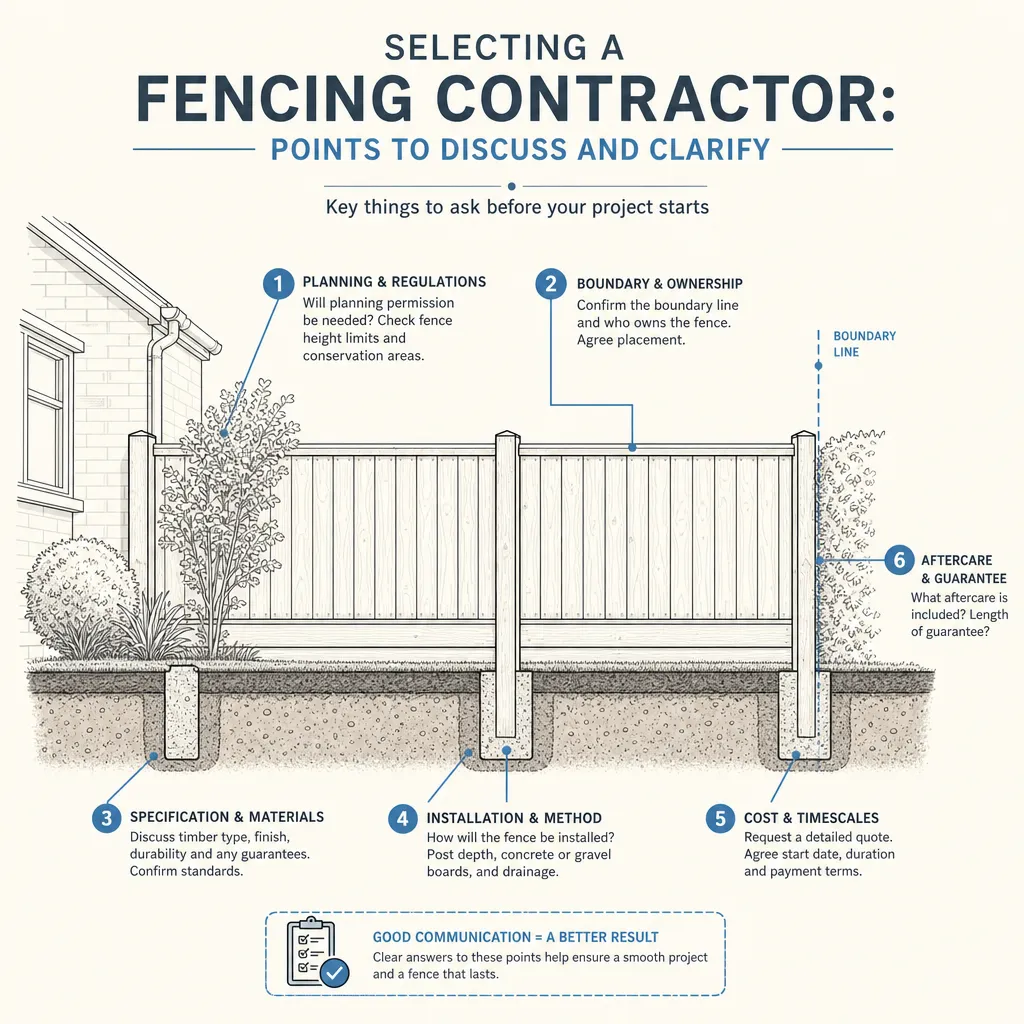
Selecting a Fencing Contractor: Points to Discuss and Clarify
When choosing a fencing contractor, confirm boundary ownership first, then ask for a written quote covering materials, post depth, removal of the old fence, and waste disposal. Verify public liability insurance, ask for references, and agree a payment schedule before work starts. Check whether planning permission applies if you are in a conservation area or near a listed building.
 Surveys & Inspections
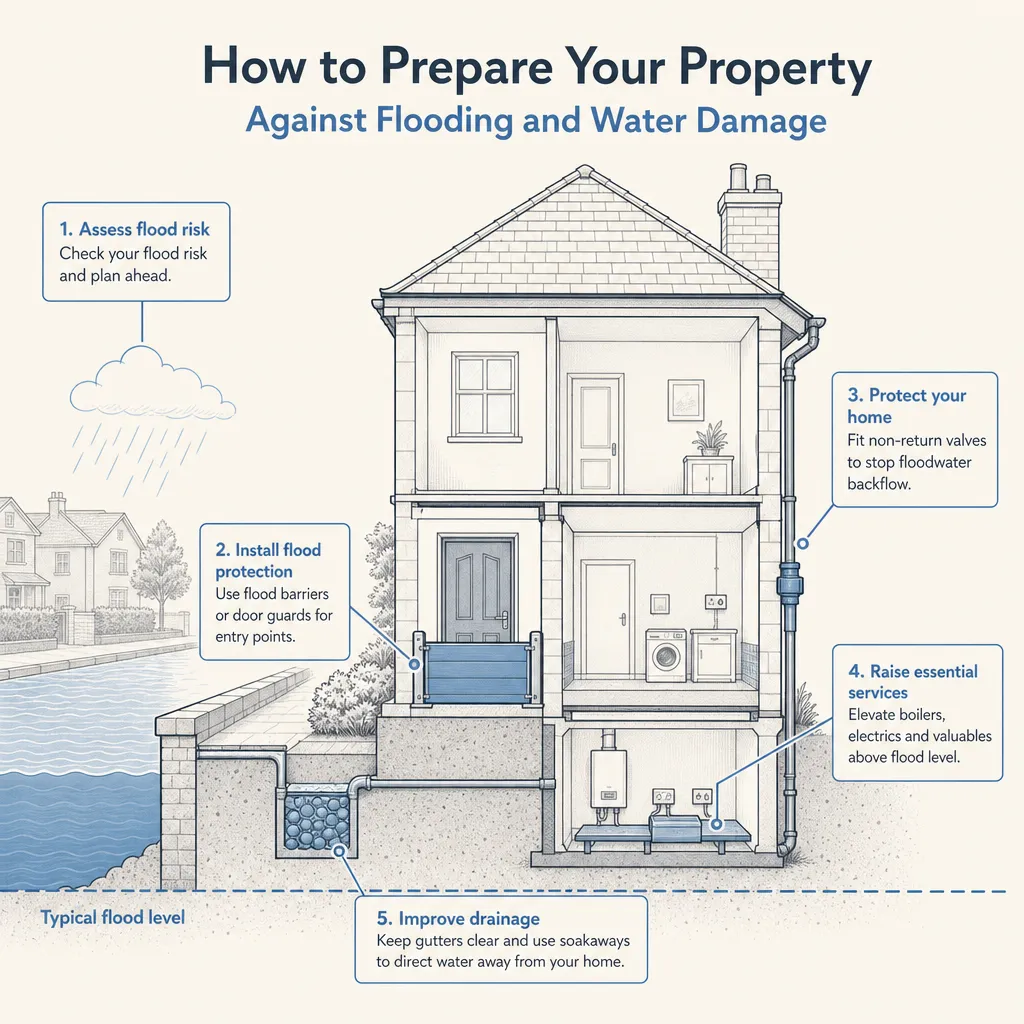
How to Prepare Your Property Against Flooding and Water Damage
Preparing your property against flooding involves checking your flood risk zone, improving drainage, fitting flood barriers and air-brick covers, and reviewing your buildings insurance. Simple steps — clearing gutters, sealing gaps at ground level, and registering for flood alerts — can significantly reduce damage if surface water or river flooding reaches your home.
 Buying & Moving
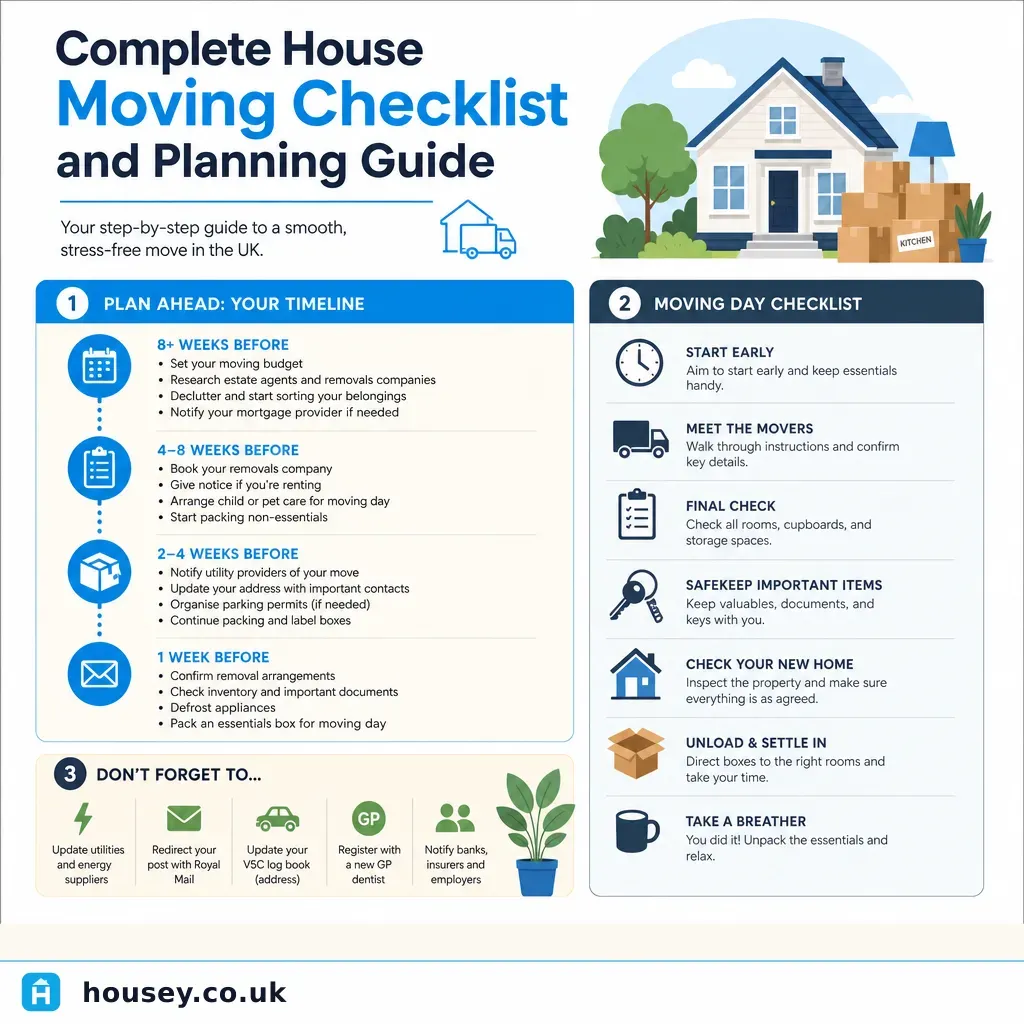
Complete House Moving Checklist and Planning Guide
A successful UK house move requires planning across 8 or more weeks: booking a removal firm early, decluttering before packing, notifying DVLA, HMRC, and utility providers, and confirming completion day logistics in advance. Most delays on moving day arise from poor coordination between solicitors, removal firms, and estate agents — build buffer time into every stage.
 Improvement & Build
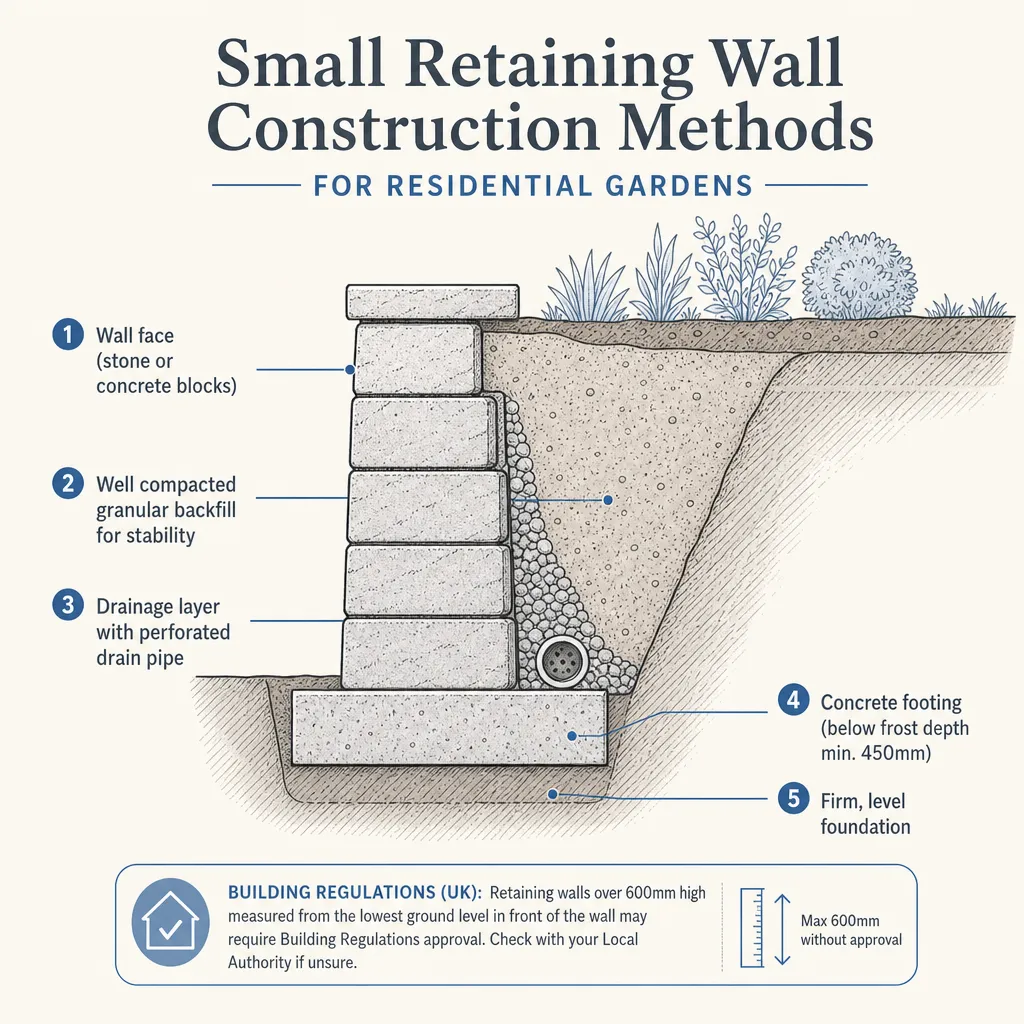
Small Retaining Wall Construction Methods for Residential Gardens
Small garden retaining walls up to 1 m are typically built using gravity methods, relying on mass to hold back soil. Common materials include natural stone, concrete blocks, timber sleepers, and gabion baskets. Drainage is critical — inadequate drainage is the primary cause of wall failure. Walls over 1 m, near buildings, or beside a highway should be assessed by a structural engineer and may need Building Regulations approval.
 Improvement & Build
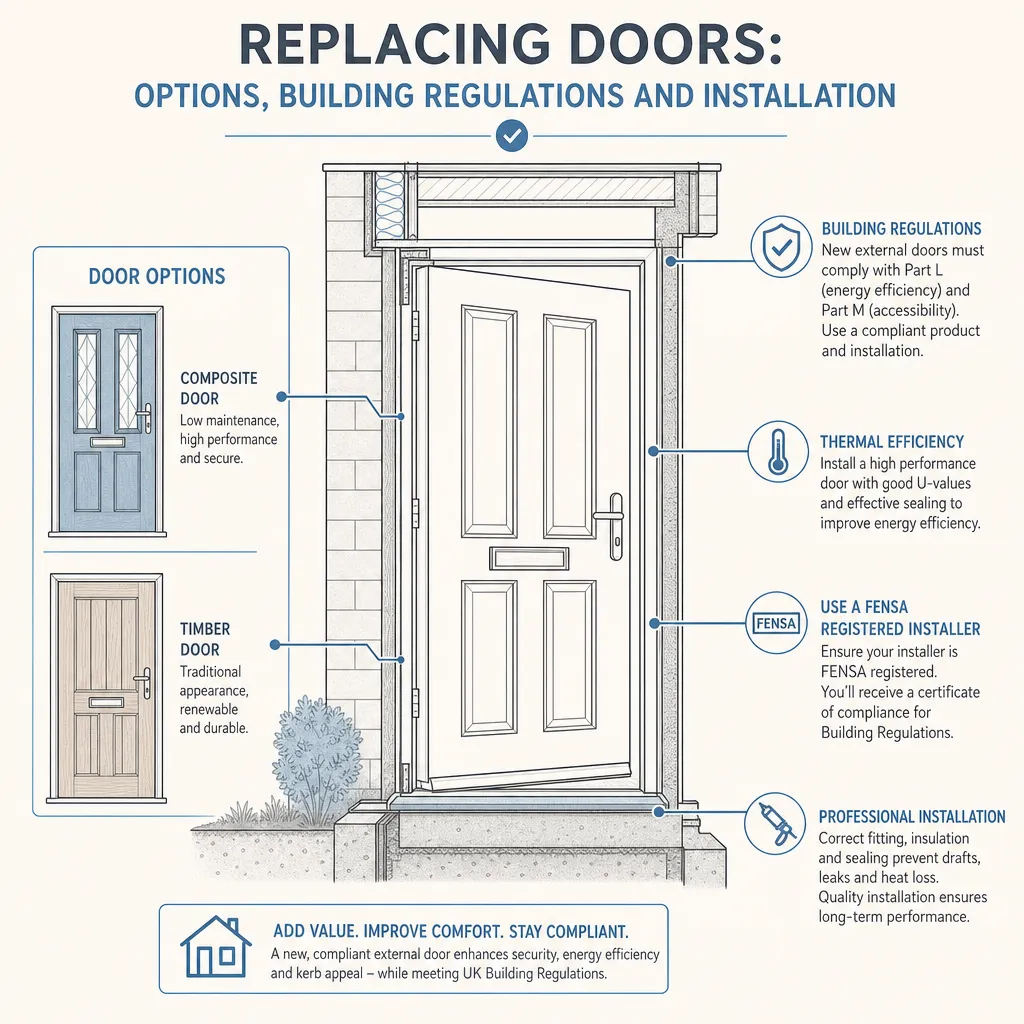
Replacing Doors: Options, Building Regulations and Installation
Replacing an external door in England requires compliance with Building Regulations Part L (minimum U-value 1.4 W/m²K) and Part Q (security to PAS 24:2016). A FENSA or CERTASS registered installer can self-certify without separate building control notification. FD30 fire doors are required between an integral garage and the house. Composite doors meet most performance requirements as standard for typical UK homes.
 Planning & Pre-Build
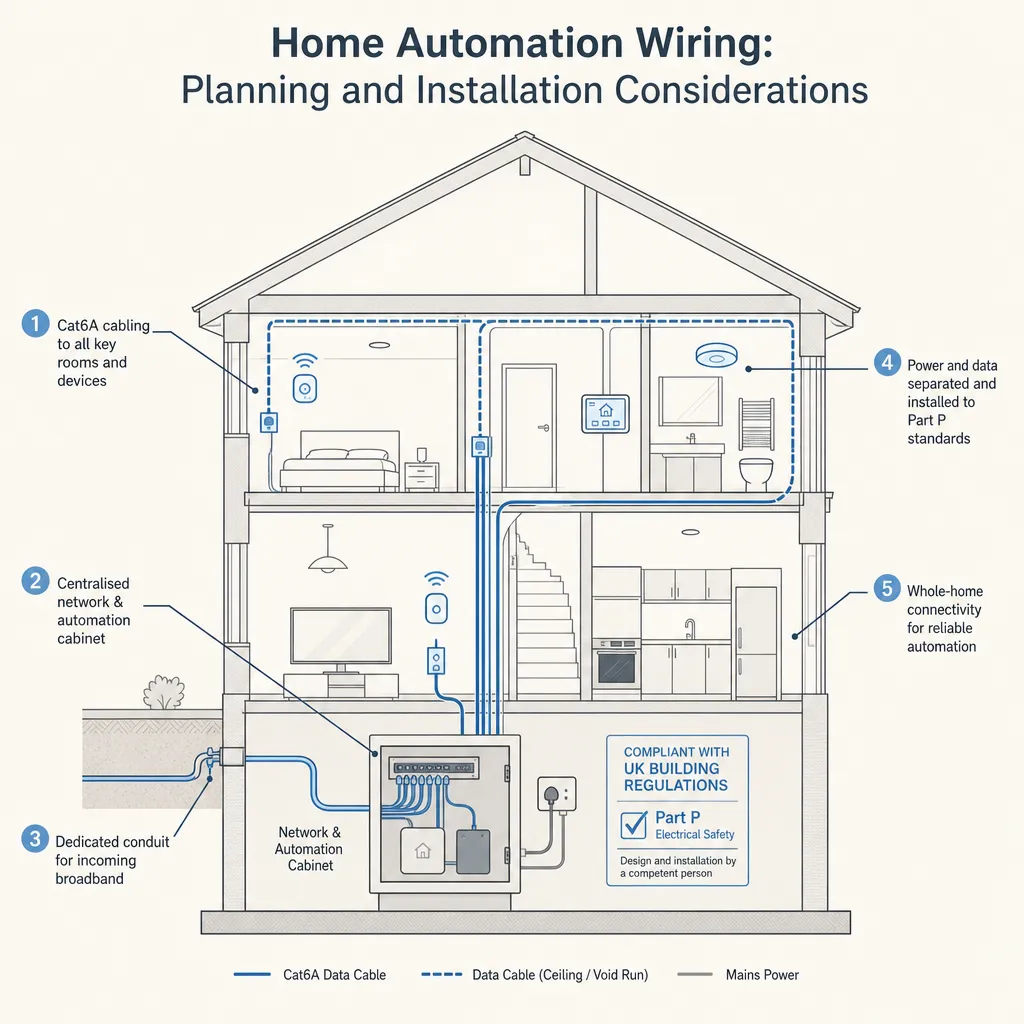
Home Automation Wiring: Planning and Installation Considerations
Home automation wiring decisions — data cabling, power circuits, control wiring — are most cost-effectively made during first-fix, before walls are closed. New mains circuits require a Part P-registered electrician in England and Wales; low-voltage cabling such as Cat6, speaker cable, and HDMI can be installed by a competent installer. Plan the full cabling schedule and obtain a floor plan before work begins.
 Energy & Retrofit
Geothermal Energy Systems for Home Heating
Ground source heat pumps (GSHPs) extract stable thermal energy from the earth via buried ground loops or boreholes, typically delivering 3–4 units of heat per unit of electricity consumed. They qualify for a £7,500 Boiler Upgrade Scheme grant in England and Wales, subject to MCS-certified installation and a valid EPC. Correct sizing, ground investigation, and adequate fabric insulation are essential prerequisites.
 Buying & Moving
Relocating your family home for better school access: planning your house move
Moving for a better school means timing your purchase against two hard constraints: the admissions deadline and the conveyancing timeline. In England, secondary applications close 31 October and primary on 15 January. Conveyancing takes 12–16 weeks on average, so offer acceptance needs to happen several months before the deadline — and you must be genuinely resident at the new address by application date.
 Improvement & Build
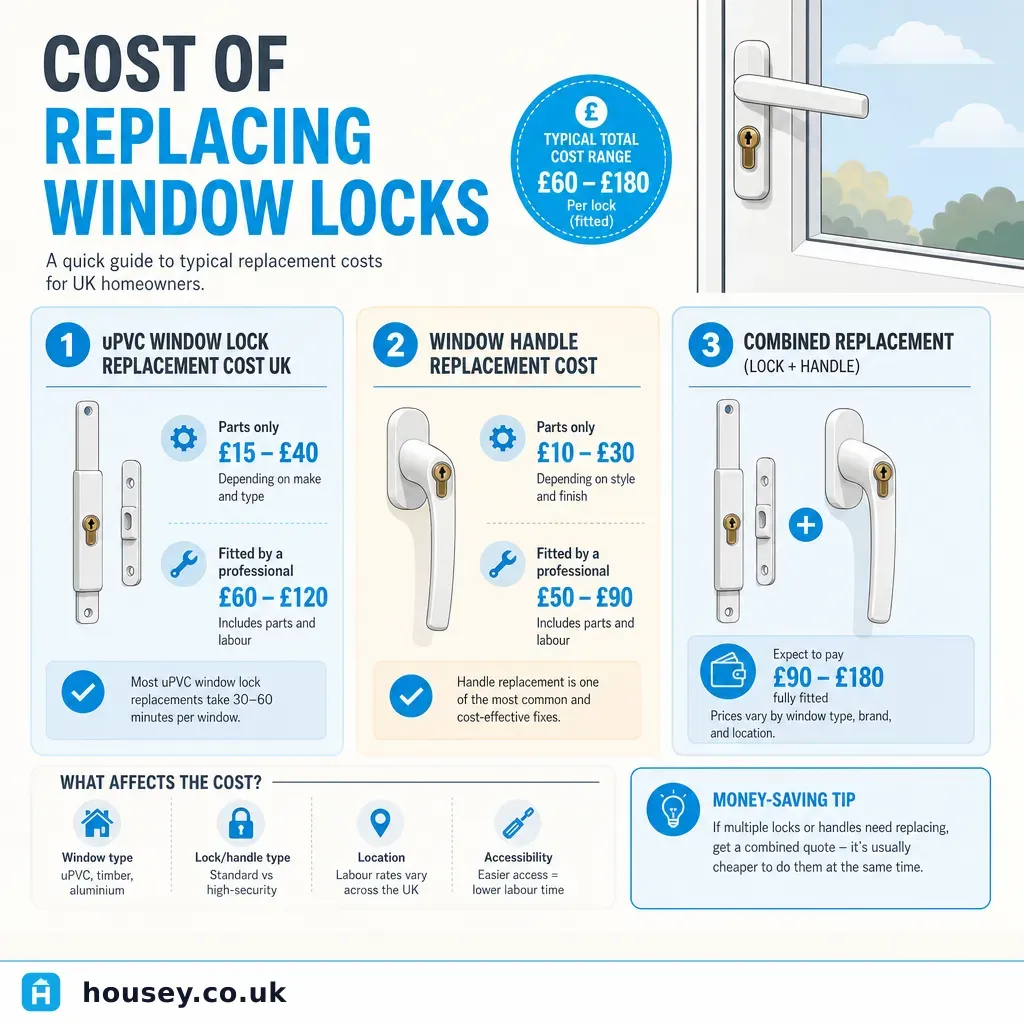
Cost of replacing window locks
Window lock replacement costs depend on the lock type. A simple casement handle swap can cost under £50 in total; a full uPVC multi-point locking mechanism typically costs £80–180 for parts and labour combined. Like-for-like replacements are most straightforward; upgrades to higher-security hardware cost more. Always confirm the security rating and check whether your home insurer specifies a particular standard.
 Improvement & Build
Garden Winterisation: How to Prepare Your Garden for Winter
To prepare a UK garden for winter, lift tender bulbs and perennials before the first frost, mulch borders to 7–10 cm depth, move vulnerable containers under cover, drain outdoor taps, and cut back hardy perennials. Most tasks should be completed between September and November, depending on your region.
 Improvement & Build
Soundproofing Materials and Acoustic Treatments for UK Homes
Effective soundproofing in UK homes combines three principles: mass (adding weight with acoustic plasterboard or mass-loaded vinyl), decoupling (breaking the vibration path with resilient bars or an independent frame), and absorption (filling cavities with dense mineral wool). The right combination depends on whether you face airborne noise, impact noise, or both, and which surface is the main transmission path.