Knowledge Base
Property advice that actually helps
Researched, UK-specific guides for every stage of homeownership — from buying and surveys to retrofit, planning and major works.
 Improvement & Build
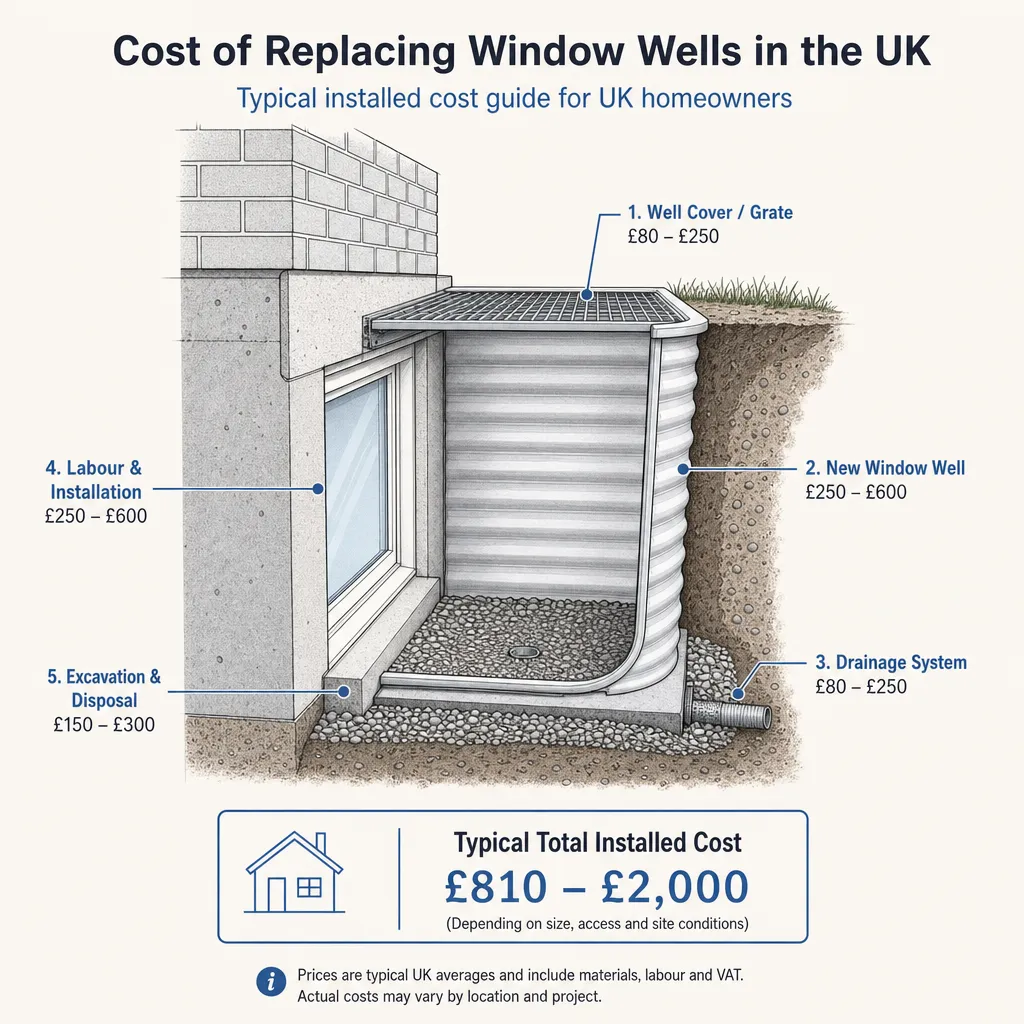
Cost of replacing window wells in the UK
Replacing a window well in the UK typically costs £210–£850 for a standard polypropylene liner installation including drainage, or £700–£2,600 for brick-and-block construction, depending on size, access, and ground conditions. Labour usually accounts for 50–60% of the total. Indicative UK costs, last reviewed 2026-05-19 — always obtain at least two written quotes.
 Improvement & Build
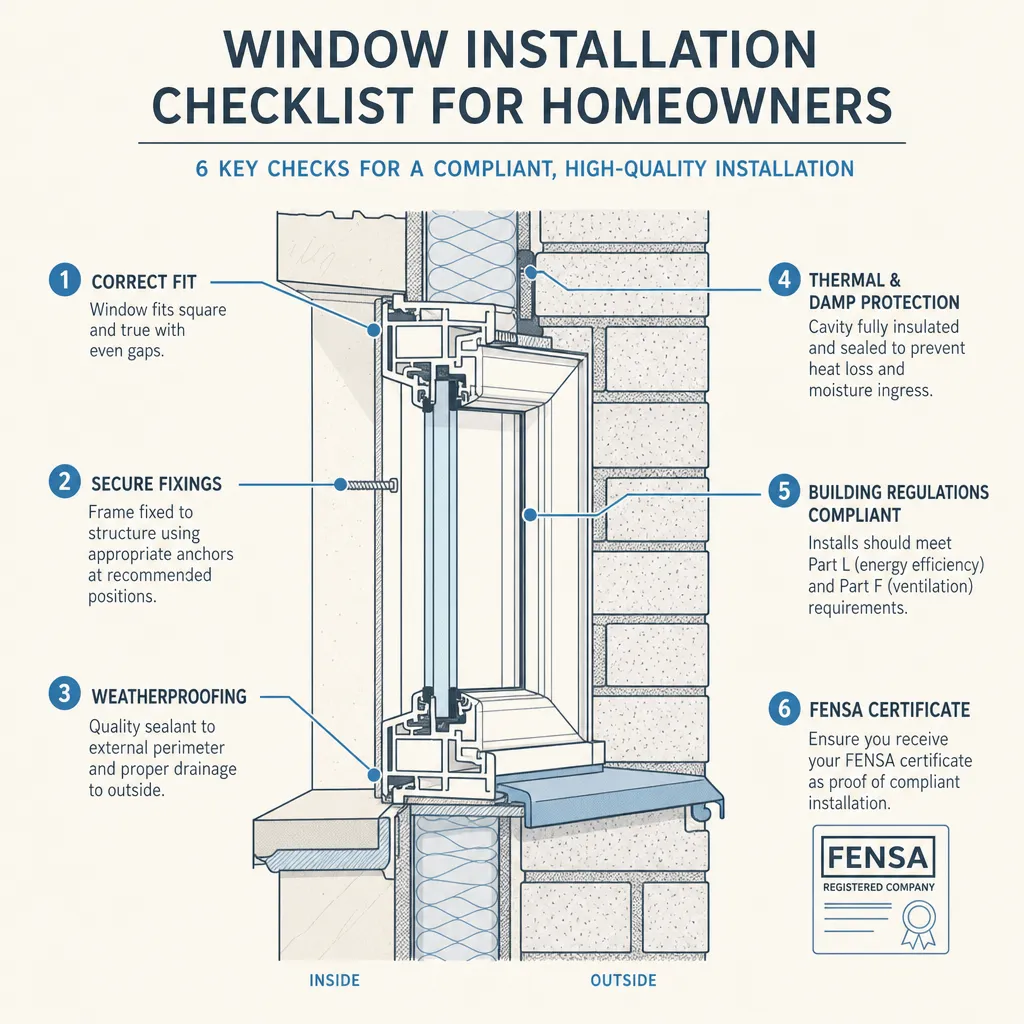
Window installation checklist for homeowners
Before installation, confirm your installer is registered with FENSA or CERTASS and can self-certify Building Regulations compliance. Check whether your property is in a conservation area or is listed. During the job, verify trickle vents are fitted, glazing meets safety requirements, and sealing is complete. Afterwards, collect your FENSA or CERTASS certificate — you will need it when you sell.
 Surveys & Inspections
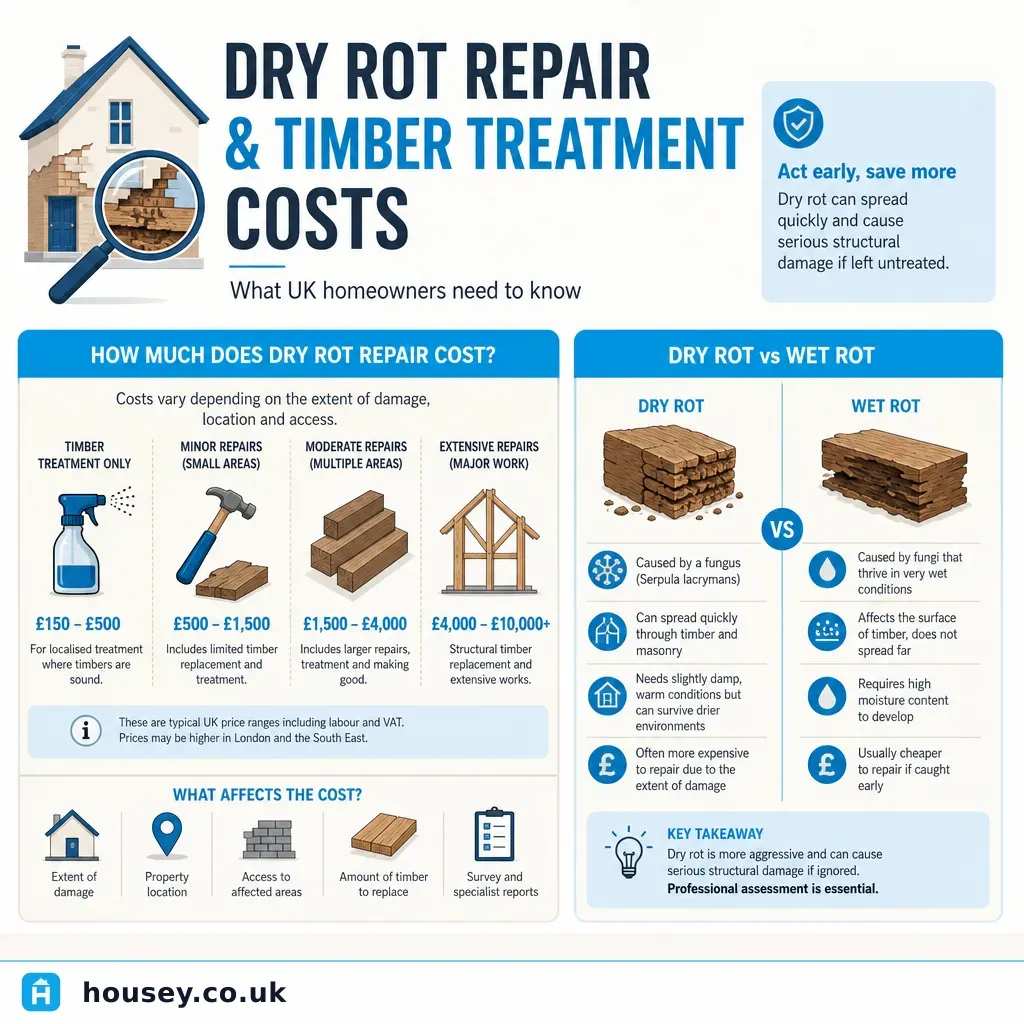
Dry Rot Repair and Timber Treatment Costs
Dry rot repair costs in the UK range from around £500 for a minor localised outbreak to £15,000 or more where structural joists or floors are significantly affected. A professional damp and timber survey should always precede any treatment. Costs vary by extent of damage, masonry involvement, property type, and region.
 Buying & Moving
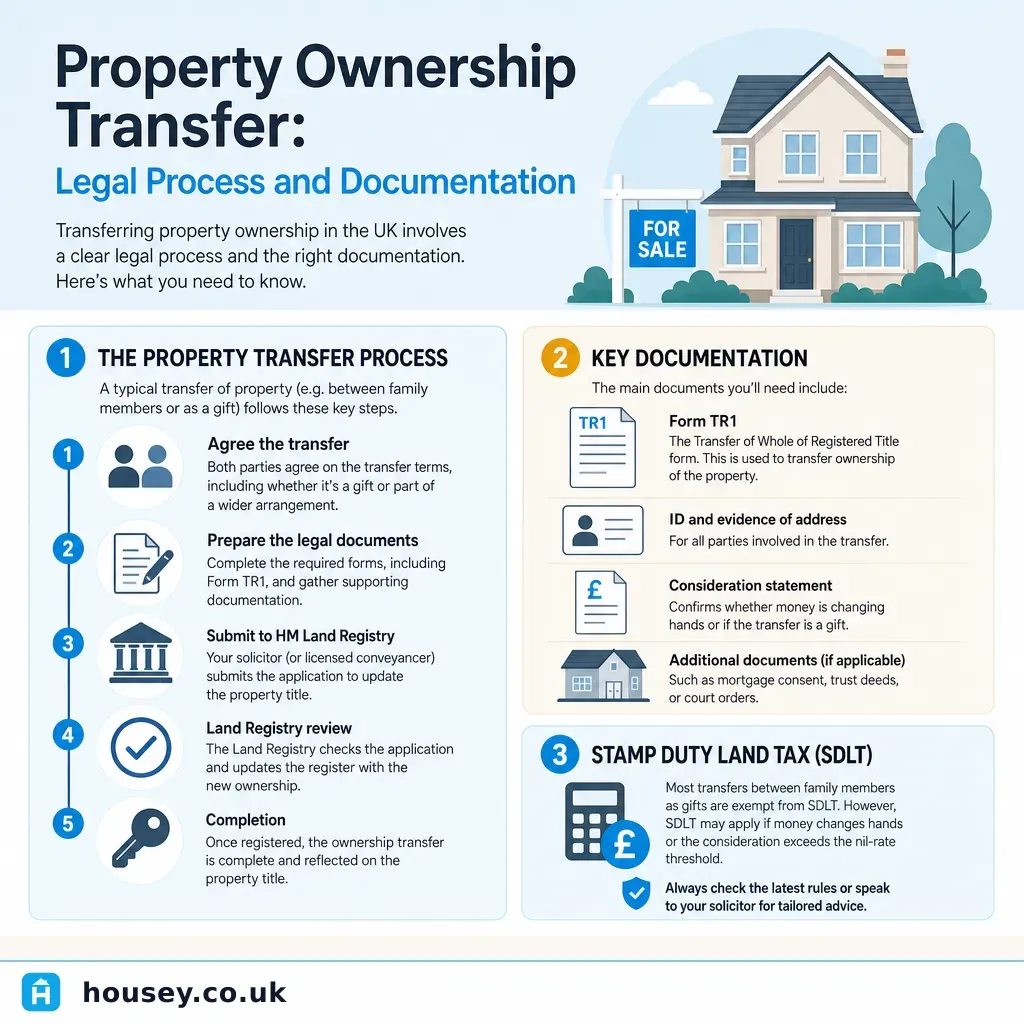
Property Ownership Transfer: Legal Process and Documentation
Transferring property ownership in England and Wales involves a formal legal deed — usually the TR1 form — submitted to HM Land Registry alongside an SDLT return filed within 14 days of completion. A solicitor or licensed conveyancer manages the process. The transfer is not legally complete until the Land Registry updates the title register, which can take weeks to months after completion.
 Energy & Retrofit
Attic Insulation Methods: Materials and Performance Comparison
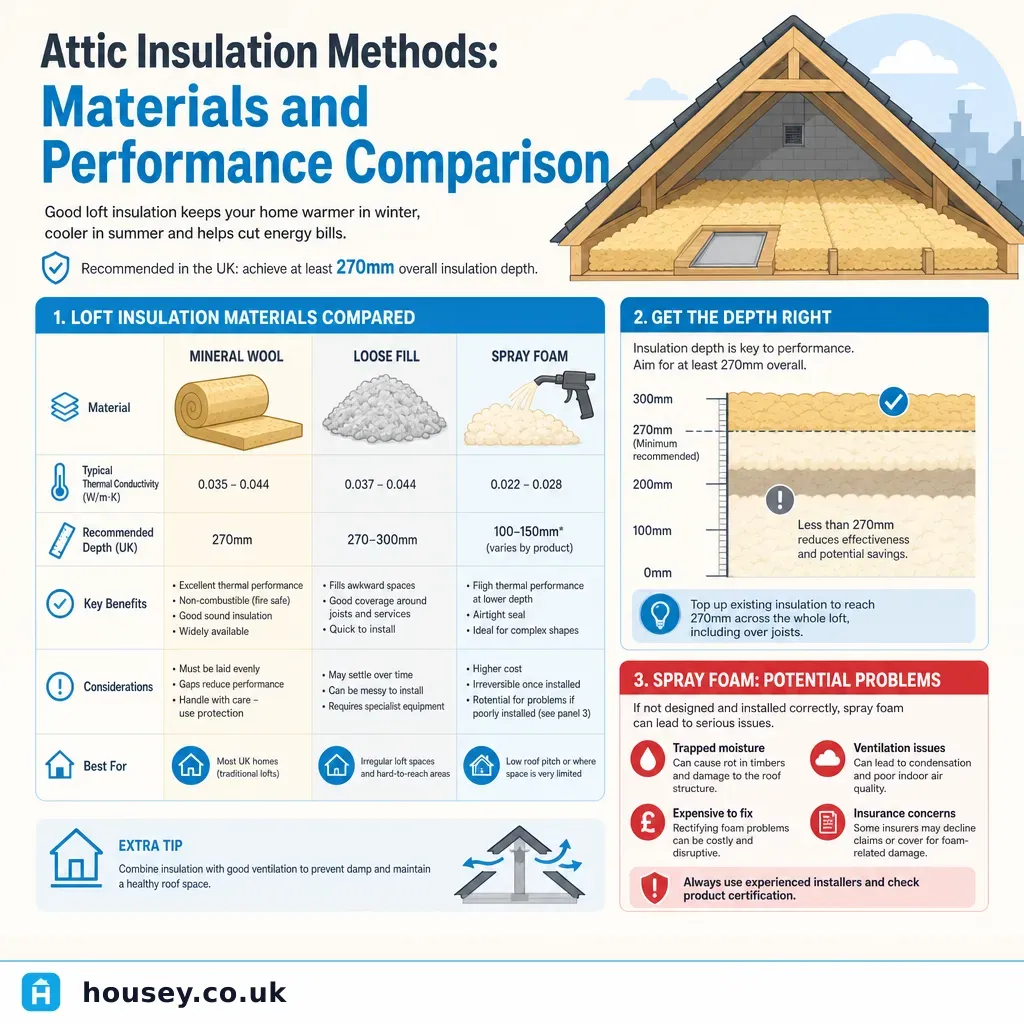
UK loft insulation options include mineral wool rolls (most common and grant-funded), blown loose-fill for irregular lofts, and rigid PIR board for warm roof conversions. Each varies in thermal performance, installation method, and cost. Spray polyurethane foam should be avoided — it can make a property unmortgageable. Mineral wool at 270mm depth is the standard recommendation for accessible cold lofts.
 Buying & Moving
First-Time Home Buyer's Guide: From Search to Completion
Buying your first home in the UK typically takes 3–6 months from offer acceptance to completion. You'll need a deposit (usually at least 5–10%), a mortgage in principle, a solicitor for conveyancing, and a property survey. Exchange of contracts legally commits both parties; completion transfers ownership. Budget for stamp duty, survey fees, legal costs, and moving expenses.
 Surveys & Inspections
Fire Resistance of Concrete Masonry: Understanding Safety Ratings
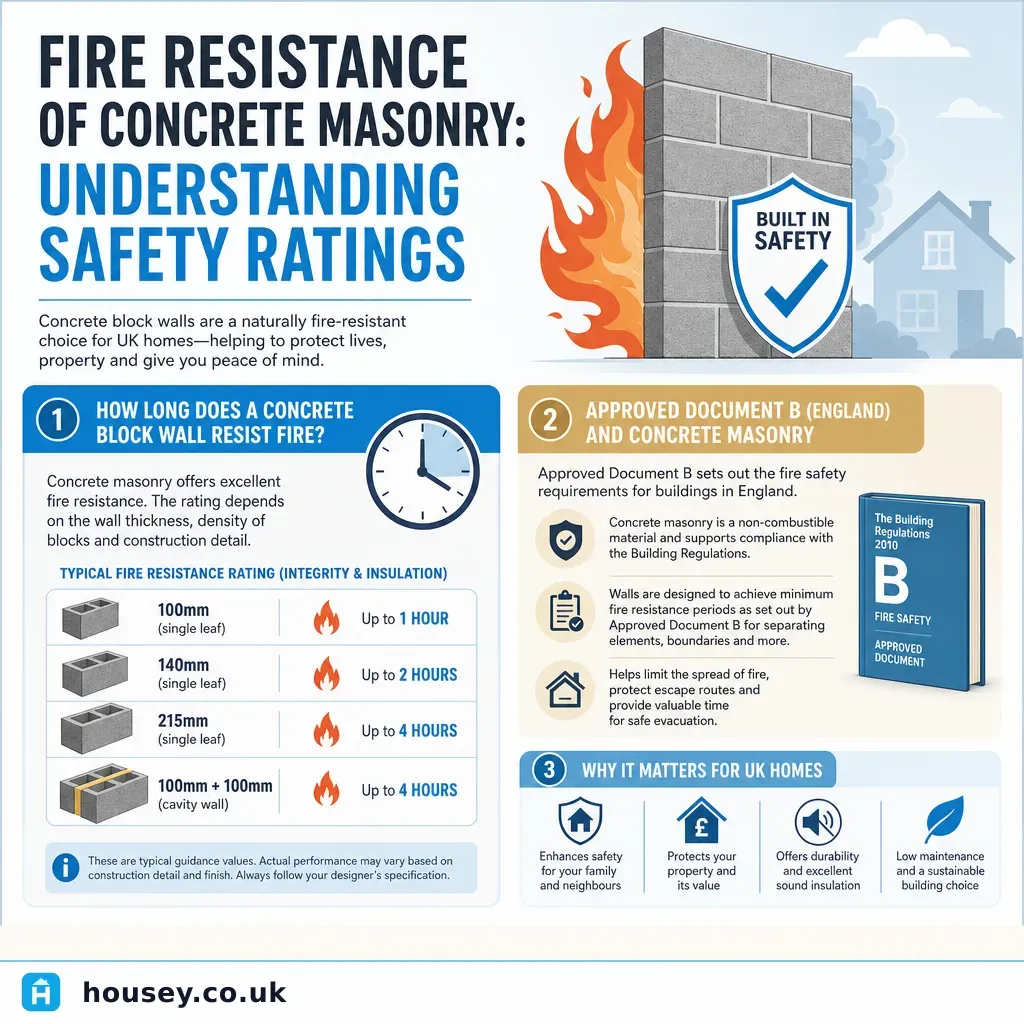
Concrete masonry walls typically achieve 60 to 240 minutes of fire resistance depending on thickness, aggregate type, and construction method. Fire resistance is classified using REI criteria per BS EN 1996-1-2, and minimum periods are set by Approved Document B of the Building Regulations for England and Wales.
 Buying & Moving
Essential decluttering and preparation before house moves
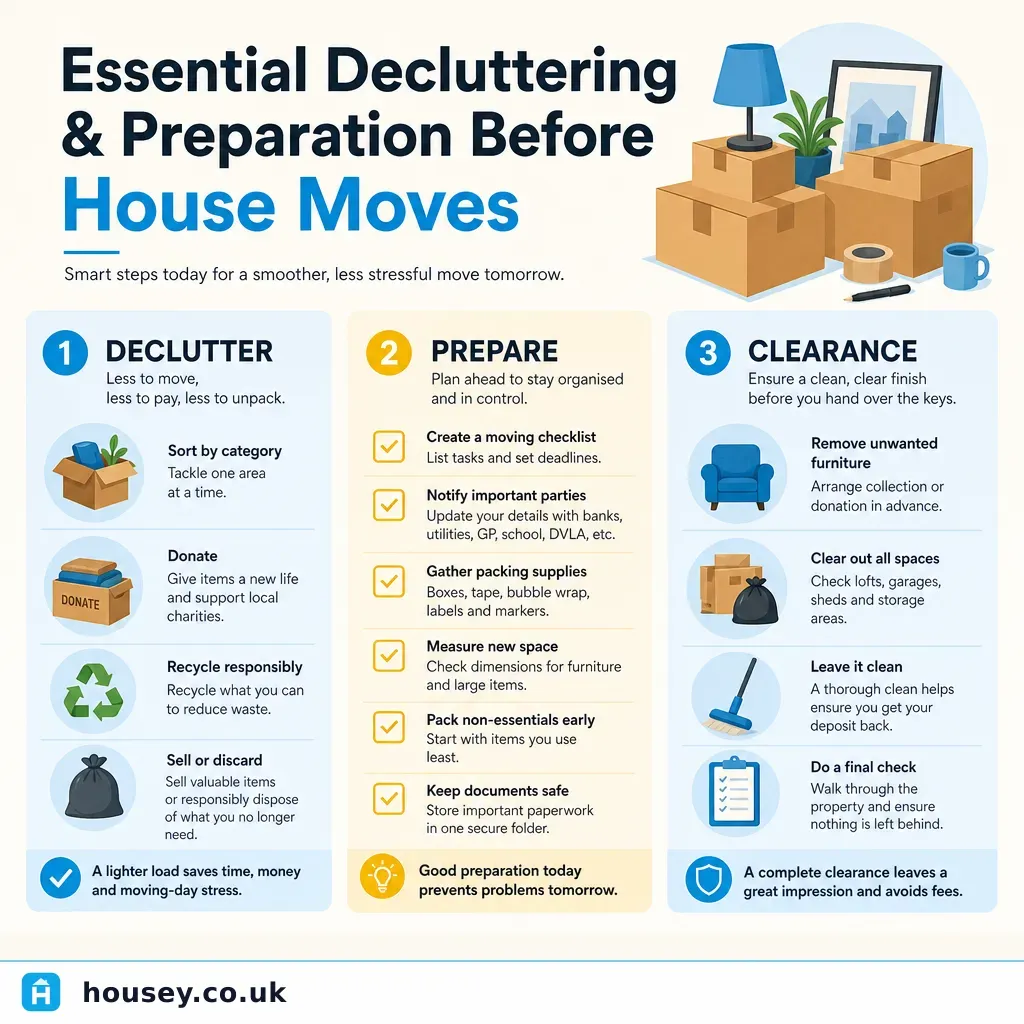
Decluttering before a house move reduces removal costs, improves property photographs, and simplifies unpacking. Start eight to twelve weeks before your target moving date using a four-category system: keep, sell, donate, and dispose. Prioritise the kitchen, bedrooms, garage, and loft. Hire a clearance company if you have a full property to empty or face a tight completion deadline.
 Buying & Moving
Recognising the Right Time to Sell Your Property
The right time to sell is shaped as much by your personal circumstances as by the property market. Spring and autumn are traditionally the strongest windows in the UK for buyer activity, but life events, financial needs, and property condition often matter more than calendar timing. An independent valuation before you list can prevent costly misjudgements.
 Improvement & Build
Cost of installing a wood burning stove
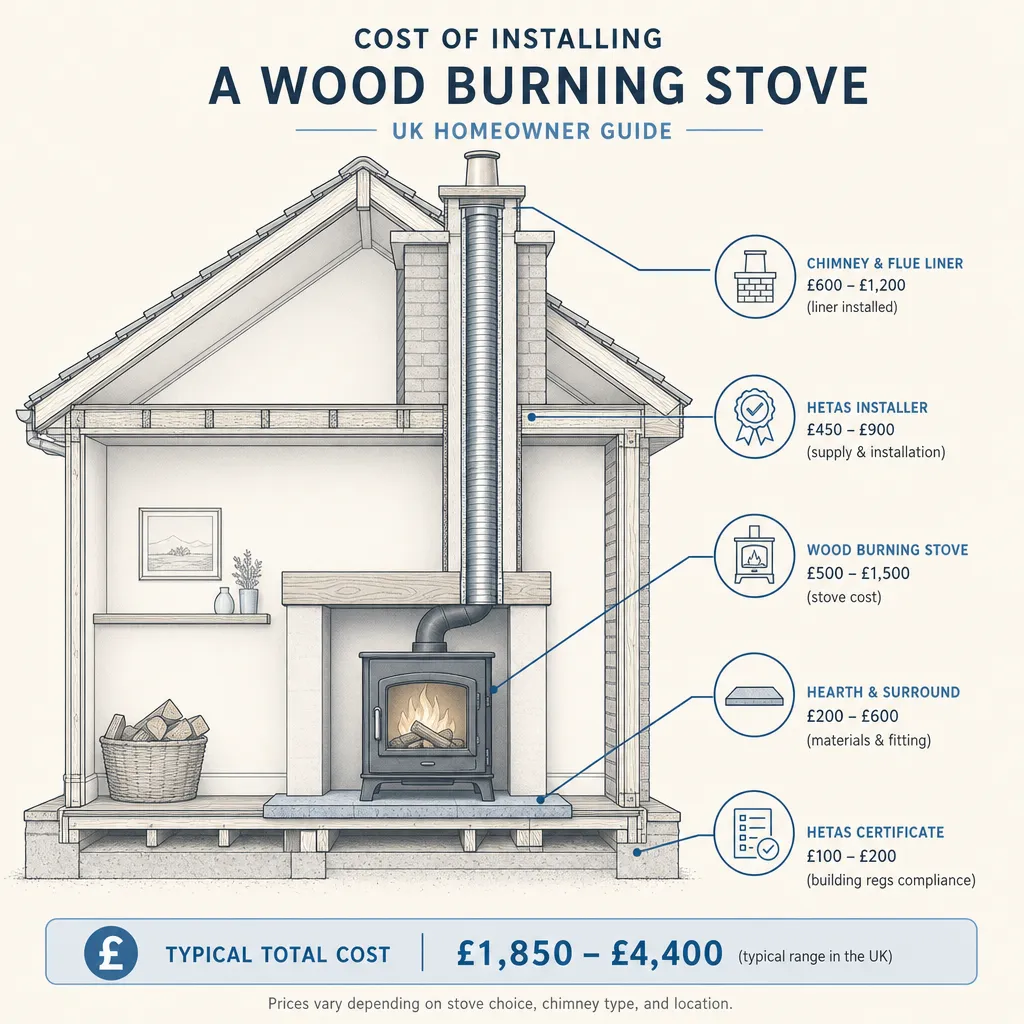
Installing a wood burning stove in the UK typically costs £2,000–£5,500 in total, covering the stove, flue liner, hearth, and HETAS-registered installation. Costs vary depending on whether you have an existing chimney, the flue run length, and stove specification. Always use a HETAS-registered installer and ensure building control is notified under Approved Document J.
 Planning & Pre-Build
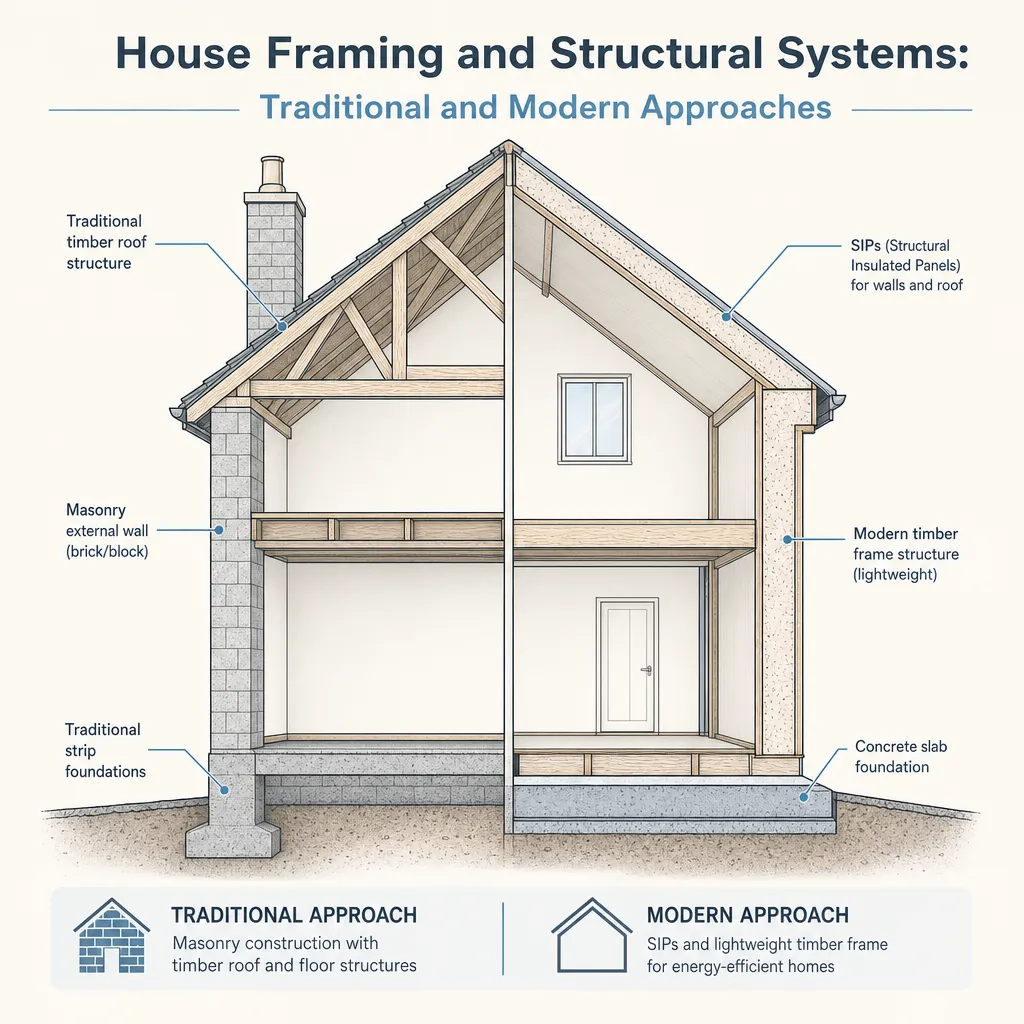
House Framing and Structural Systems: Traditional and Modern Approaches
UK homes are built using four main structural systems: traditional masonry (brick and block), timber frame, structural insulated panels (SIPs), and insulated concrete formwork (ICF). Traditional masonry dominates the existing housing stock, but timber frame is common in new builds — especially in Scotland. The right system depends on site conditions, budget, thermal performance targets, and planning context.
 Improvement & Build
Selecting and Hiring a Remodelling Contractor
Hiring a remodelling contractor starts with a written scope of works and a shortlist of at least three companies registered with TrustMark or the Federation of Master Builders. Check public liability insurance, request verifiable references, and insist on a written contract — ideally JCT Minor Works — before work begins. Compare all quotes against the same specification to avoid scope-gap disputes.