Knowledge Base
Property advice that actually helps
Researched, UK-specific guides for every stage of homeownership — from buying and surveys to retrofit, planning and major works.
 Buying & Moving
Hot Tub Removal and Disposal Costs
Hot tub removal in the UK typically costs £150–£450 for a straightforward garden removal, though prices rise if electrical disconnection is required, access is difficult, or specialist disposal is needed. Size, weight, and location all affect the final quote. Always check whether WEEE-compliant disposal and a waste transfer note are included in the price.
 Buying & Moving
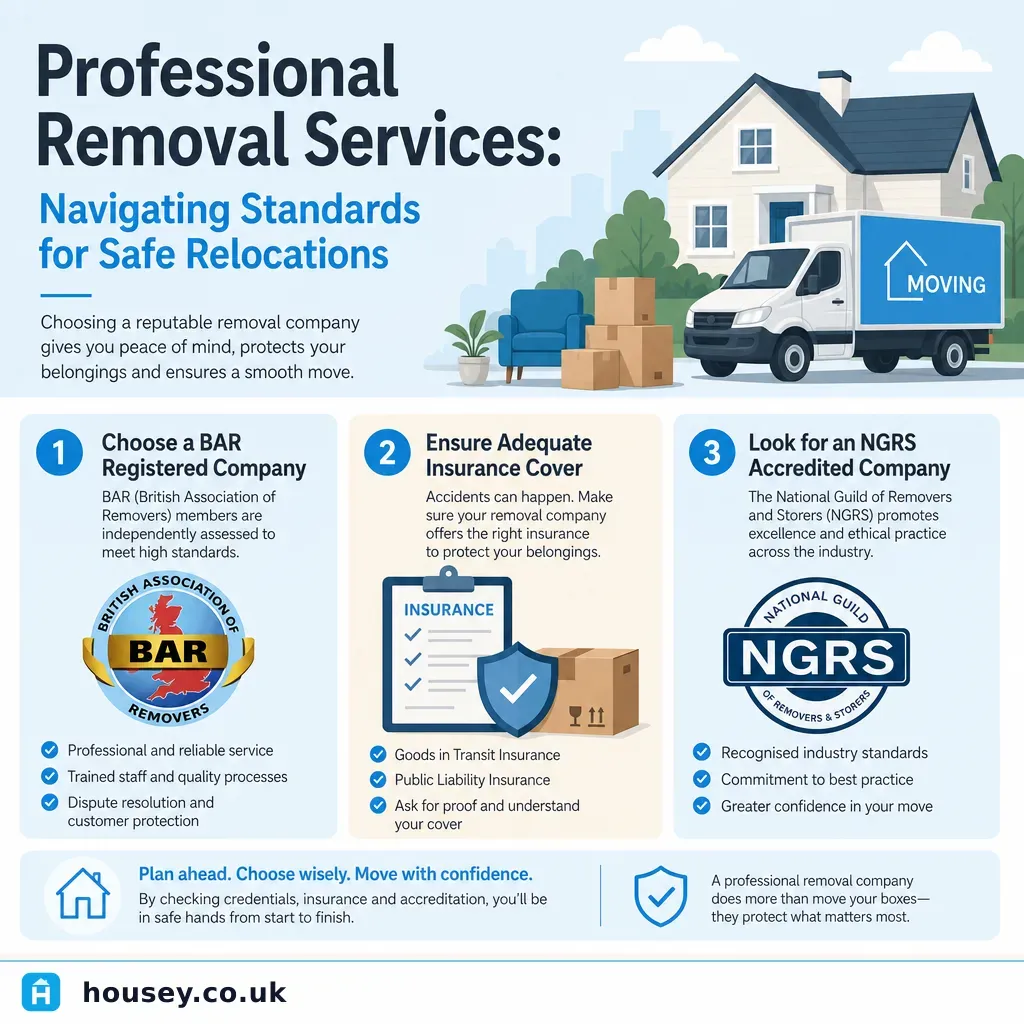
Professional Removal Services: Navigating Standards for Safe Relocations
A professional removal company in the UK should hold British Association of Removers (BAR) or NGRS membership, carry adequate goods-in-transit insurance, and conduct a pre-move survey before quoting. Always confirm insurance limits, specialist item coverage, and cancellation terms in writing. Book after exchange of contracts to avoid costly rescheduling fees if your completion date changes.
 Buying & Moving
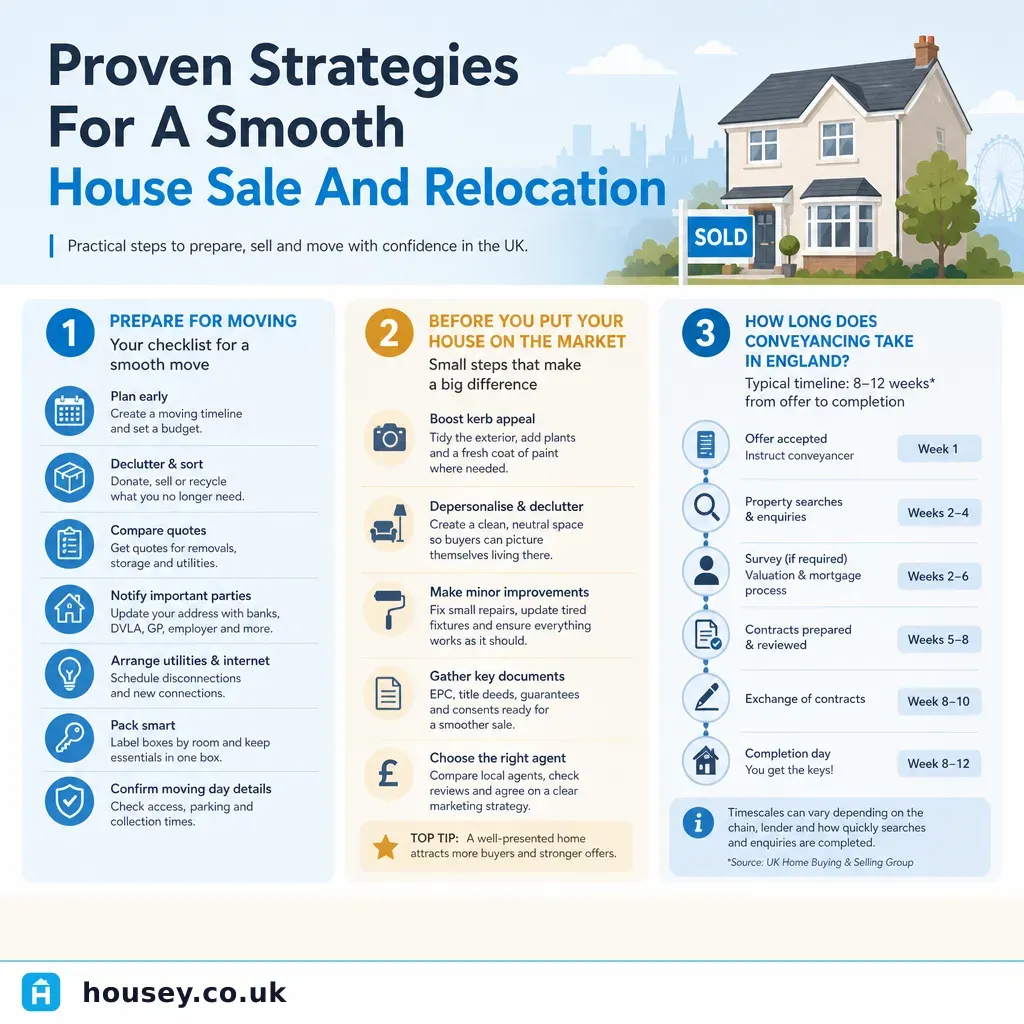
Proven Strategies For A Smooth House Sale And Relocation
Selling a house and relocating smoothly in the UK depends on preparation at every stage: instructing a solicitor early, presenting the property well for marketing, and booking removals before your completion date is confirmed. A phased timeline covering marketing, conveyancing, packing, and moving-day logistics reduces delays and last-minute costs.
 Buying & Moving
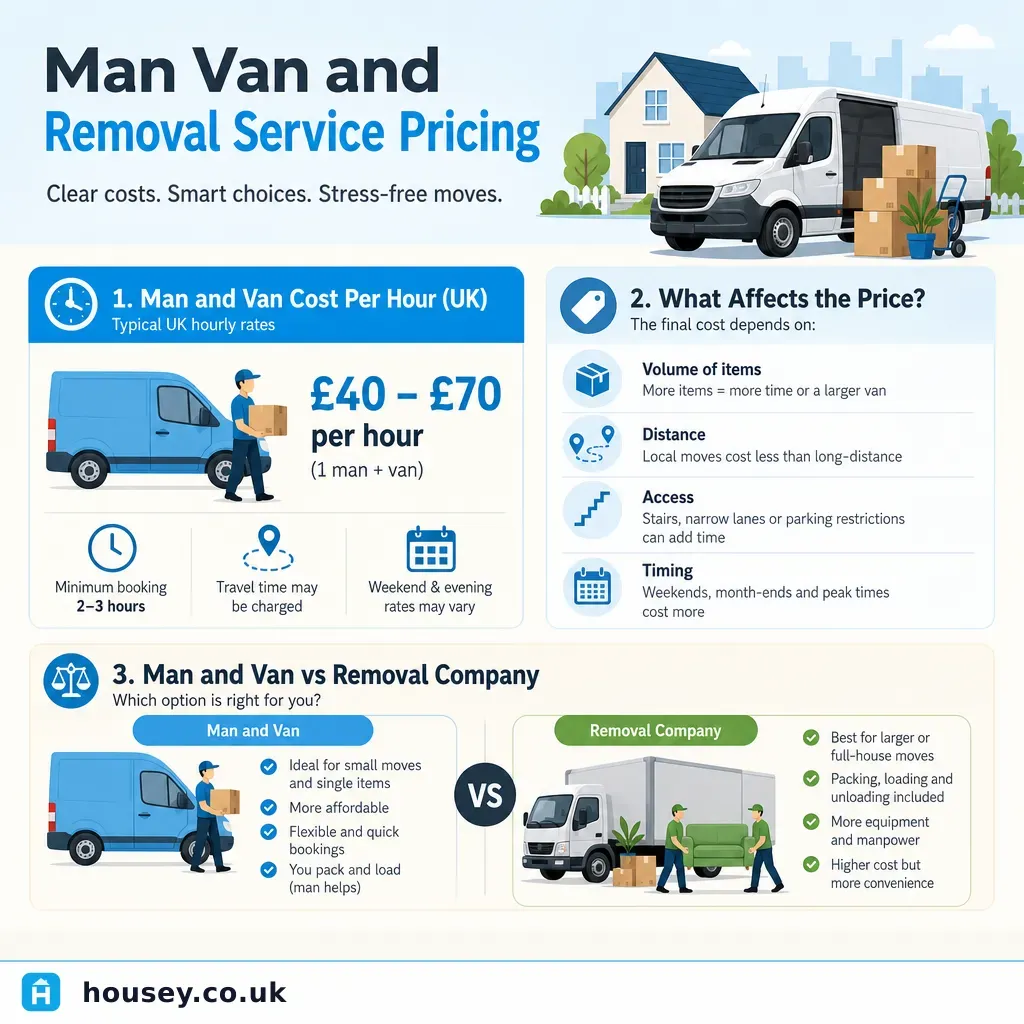
Man Van and Removal Service Pricing
A man and van in the UK typically costs £30–£80 per hour, with most small moves priced as a half or full day. For a one-bedroom flat move, expect to pay £150–£350 including loading and unloading. Prices vary by region, vehicle size, distance, and whether a second operative is needed. Always confirm insurance coverage before booking.
 Buying & Moving
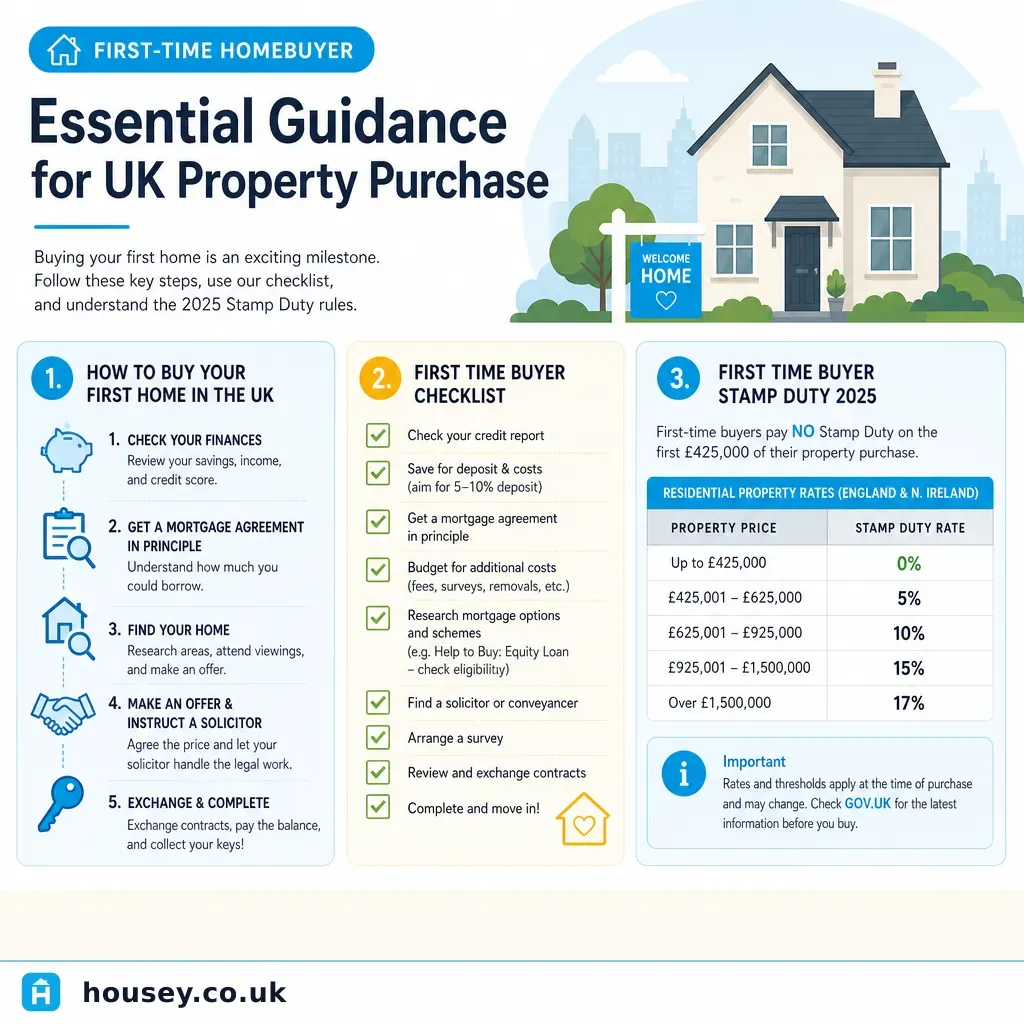
First-Time Homebuyer: Essential Guidance for UK Property Purchase
Buying your first home in the UK involves securing a mortgage in principle, making an offer, instructing a solicitor for conveyancing, commissioning a RICS Home Survey, then exchanging and completing contracts. Budget for solicitor fees, Stamp Duty, survey costs, and removal expenses on top of your deposit. The full process typically takes three to six months from accepted offer to completion in England and Wales.
 Buying & Moving
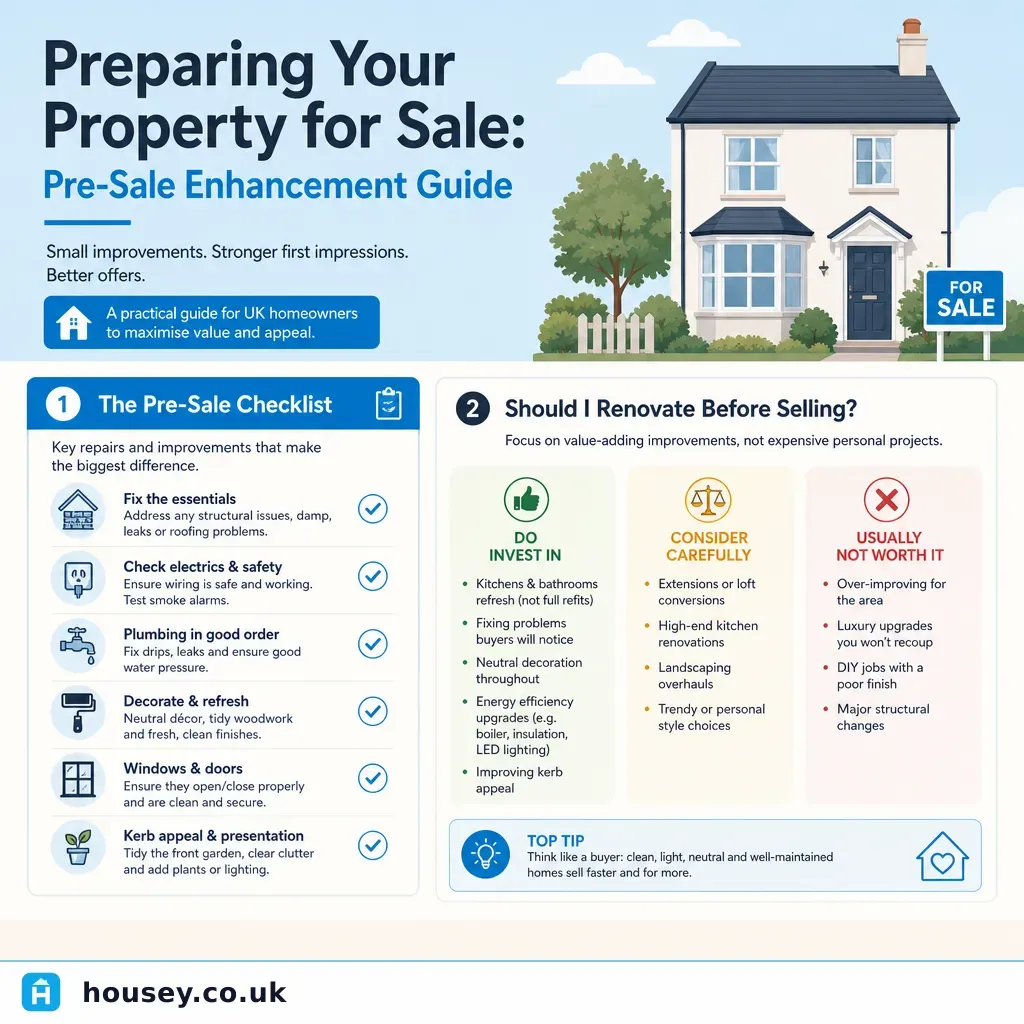
Preparing Your Property for Sale: Pre-Sale Enhancement Guide
Getting a property ready to sell usually means fixing visible defects, refreshing décor to neutral tones, improving kerb appeal, gathering documentation, and commissioning professional photography. The goal is honest presentation, not full renovation. Addressing known issues before listing reduces survey-triggered renegotiation and helps buyers engage confidently with the property.
 Buying & Moving
Essential guidance for first-time property owners in the UK
As a new UK homeowner, your first responsibilities are buildings insurance from exchange, utility transfers, council tax registration, and gathering key documents including the title register and EPC. In the first year, service the boiler with a Gas Safe engineer, check smoke and CO alarms, and commission an EICR if no recent electrical record exists.
 Buying & Moving
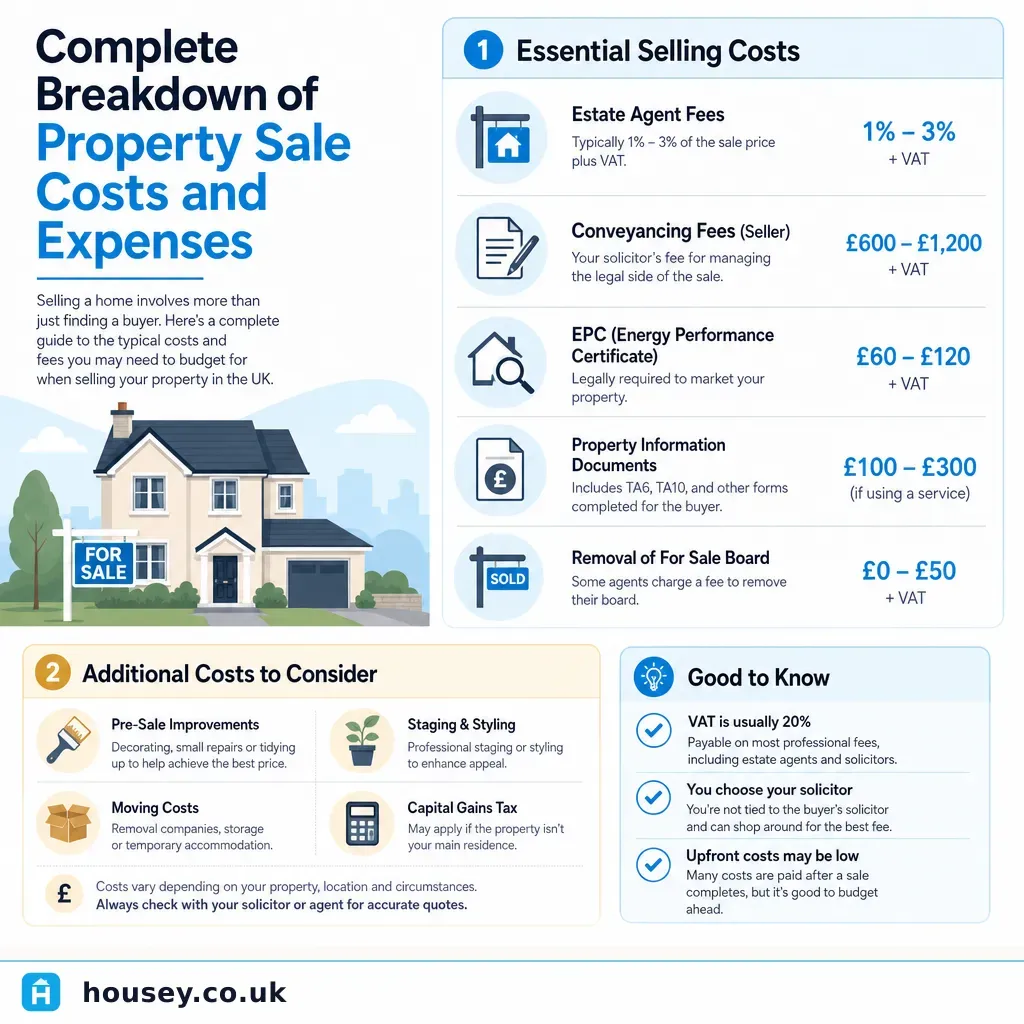
Complete Breakdown of Property Sale Costs and Expenses
Selling a house in England and Wales typically absorbs 3–6% of the sale price. Main costs include estate agent fees (1–3% plus VAT), solicitor fees (£800–£1,600), a mandatory EPC (£60–£150), and removals. Capital Gains Tax may also apply if the property is not your main residence.
 Buying & Moving
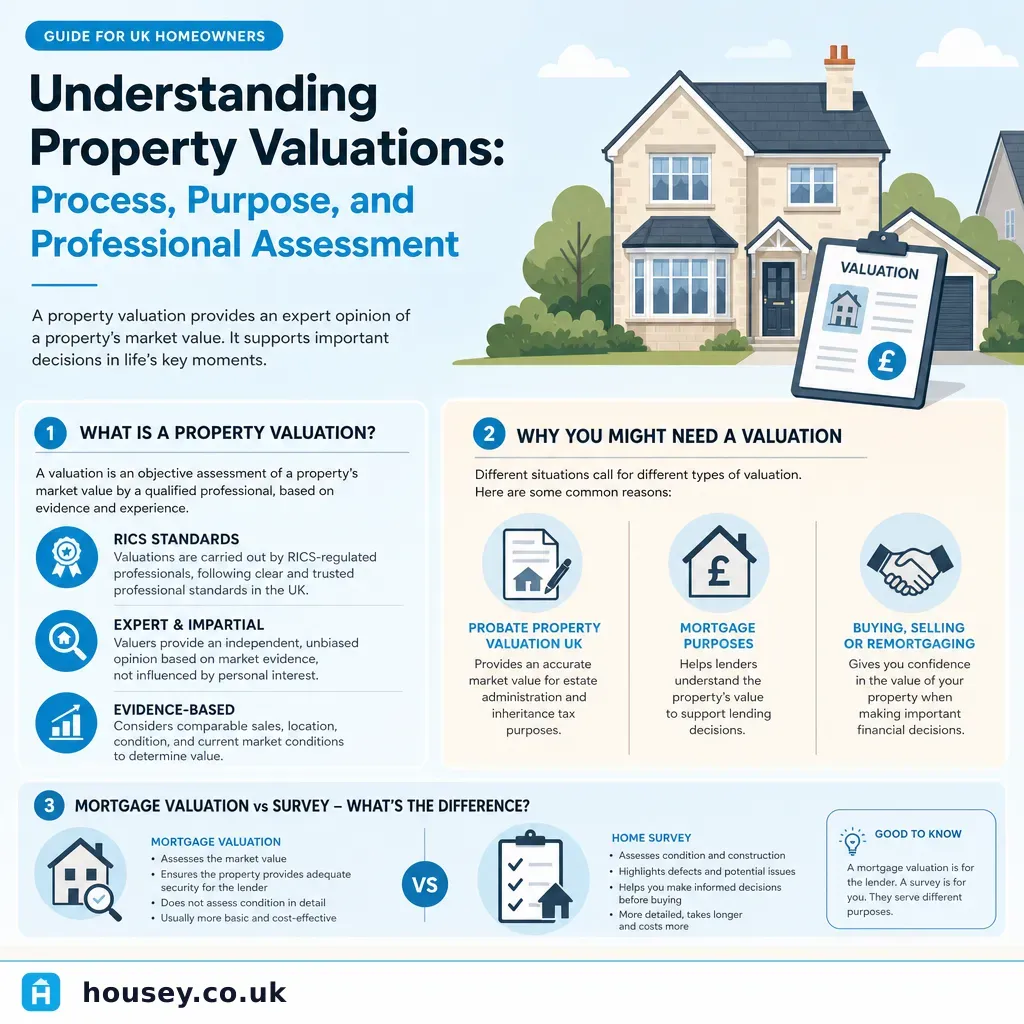
Understanding Property Valuations: Process, Purpose, and Professional Assessment
A property valuation is a professional opinion of a property's market value, carried out by a RICS Registered Valuer after a physical inspection and comparable sales analysis. Formal valuations are required for mortgage lending, probate, Inheritance Tax, Capital Gains Tax, and divorce proceedings. The result is a written report stating a value at a specific date, governed by RICS Valuation — Global Standards 2022.
 Buying & Moving
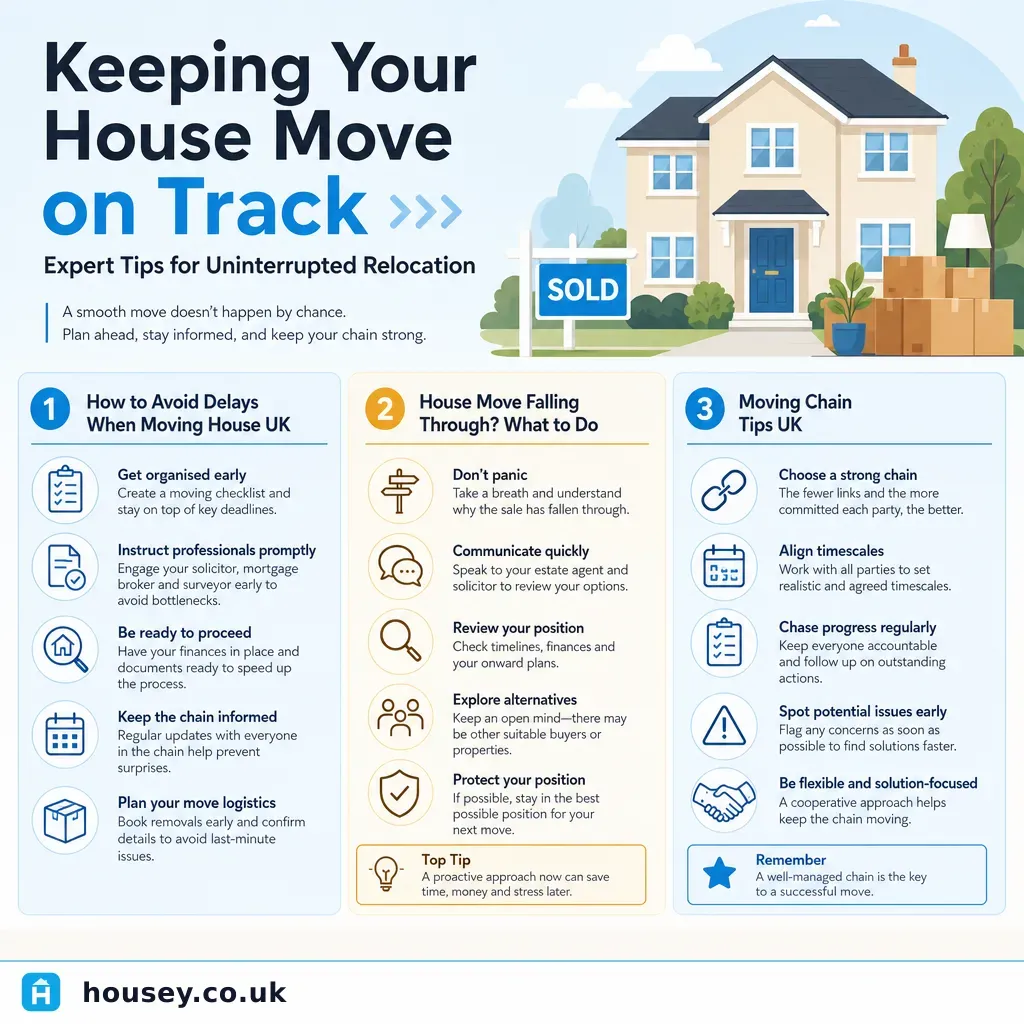
Keeping Your House Move on Track: Expert Tips for Uninterrupted Relocation
Keeping a house move on track means managing legal, survey, mortgage, and chain risks simultaneously. Building a document pack before your solicitor needs it, booking removals early, and staying in close contact with your estate agent are the most effective steps. Most moves take 12–16 weeks from offer to completion; knowing where delays typically occur lets you act early rather than react.
 Buying & Moving
Shared Ownership: Building Your Path To Property Ownership
Shared ownership lets you buy a share of a home — typically 10% to 75% — from a housing association and pay subsidised rent on the remainder. You can buy more shares through staircasing, potentially reaching full ownership. Eligibility is income-capped, the property is always leasehold, and independent legal and financial advice is essential before you commit.
 Buying & Moving
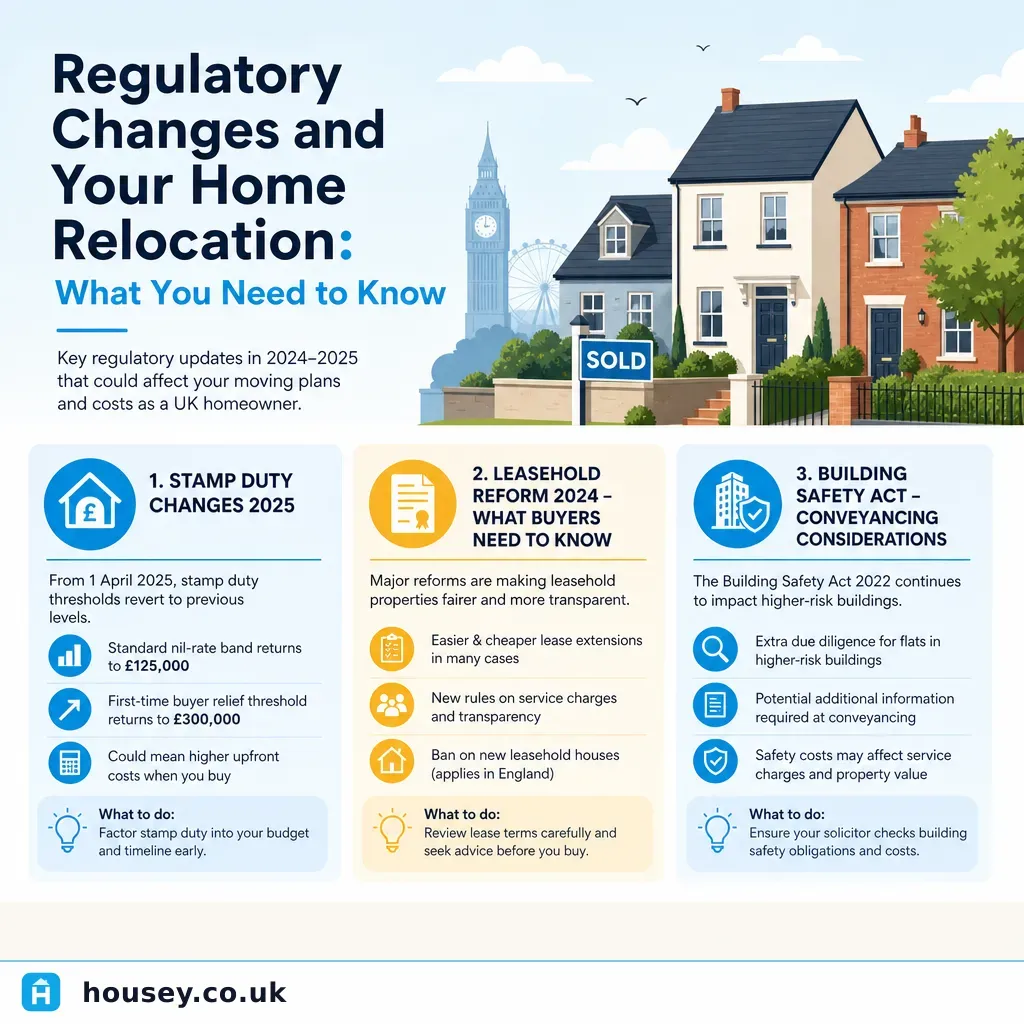
Regulatory Changes and Your Home Relocation: What You Need to Know
Several regulatory changes currently affect UK home movers, including a return to standard stamp duty thresholds from April 2025, tighter anti-money-laundering checks in conveyancing, and Building Safety Act documentation requirements for qualifying leasehold buildings. Leasehold reform under the 2024 Act also changes how lease extension premiums are calculated. A regulated solicitor should advise on your specific transaction.